How You Ship Your Products Can Make or Break Your Business
With over 10,000 3PLs in the US alone, choosing the wrong fulfilment partner can sink your e-commerce business. Dave Gulas, who transitioned from the high-stakes pharmaceutical industry to e-commerce logistics, shares the horror stories he's witnessed and the questions that reveal whether a potential partner will help you scale or leave you digging out of a very big hole. Learn why treating logistics as a commodity is a mistake, what technology red flags to watch for, and why the best client relationships start with the most
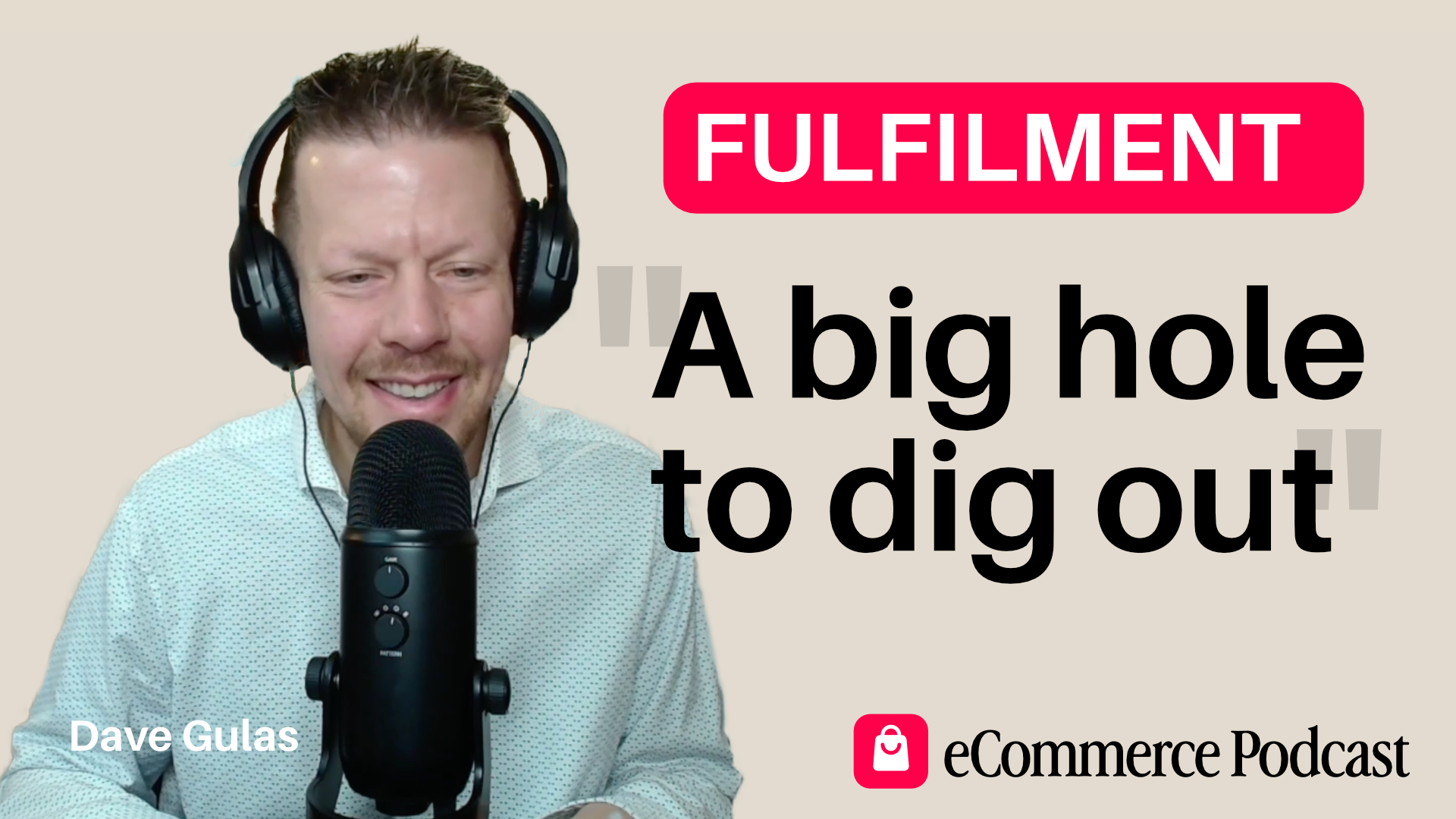
With over 10,000 3PL companies in the US alone, how do you know which one won't destroy your business? Dave Gulas, founder of EZDC 3PL, has seen it all. Warehouses going bust without telling their clients. Inventory tracked on spreadsheets. Response times measured in days, not hours. After transitioning from the high-stakes pharmaceutical industry, where everything ships overnight, and urgency is non-negotiable, Dave brought a different idea to e-commerce fulfilment.
His background is unusual. The pharmaceutical industry taught him that problems happen constantly, and survival depends on solving them fast. When Dave saw e-commerce brands struggling with their logistics partners, dealing with late shipments, poor communication, and what he calls "complacency," he spotted an opportunity. Now his company serves brands shipping between 1,000 and 10,000 orders monthly, and he's learned exactly what separates logistics partnerships that scale businesses from those that sink them.
The Partnership Mindset Shift
Before diving into the practicalities, there's a fundamental mindset shift that separates brands that thrive from those that struggle with their logistics.
"It truly is a partnership," Dave explains. "When you get into a business partnership with somebody, are you just going to look someone up online, ask a couple of questions and sign the contract? I hope not."
Yet that's exactly how many e-commerce founders approach their fulfilment decisions. They treat logistics as a commodity, shopping purely on price, and sending the same email to 10 providers asking, "What's your pricing?" without context or conversation.
Dave's response to these enquiries? He typically doesn't engage. "If someone reaches out and says, yeah, what's your pricing? I'll say, listen, we really need to have a call first and just figure out if we're even a fit." The brands looking for the lowest price aren't his customers. And honestly, they probably shouldn't be yours either when you're choosing a partner.
Think about it differently. Your logistics partner handles your product after you've done all the hard work. They're the last touchpoint before your customer receives their order. They represent your brand in that final, critical moment. Is that really where you want to cut corners?
The Three Ways Fulfilment Goes Wrong
Through countless conversations with brands who've been burned, Dave has identified the common patterns that lead to logistics disasters.
The Technology Gap
"I'm shocked at how many actual 3PLs are out there where they're tracking inventory on spreadsheets and they're doing things manually," Dave shares. "I have brands talk to me like, can you connect to our Shopify? Is that possible? They don't even realise that's possible because they're coming from a warehouse that doesn't do that."
In 2024, if your fulfilment partner can't integrate directly with your shopping cart, that's a massive red flag. Orders should flow automatically. Tracking should update without manual intervention. Inventory should sync in real-time. This isn't cutting-edge technology anymore. It's table stakes.
The Communication Breakdown
Dave came from the pharmaceutical industry, where everything is urgent. Medication needs to arrive on time. Problems get solved immediately because lives depend on it. That urgency shaped his approach to customer service.
"We take pride on responding quickly, solving problems quickly. If we do make a mistake, we certainly own it."
The contrast with what many brands experience is stark. Slow response times. Emails that disappear into the void. Problems that drag on for days. When your customer is waiting for their order, and you can't get answers from your fulfilment partner, that's not just frustrating. It's damaging your brand with every passing hour.
The Horror Stories
And then there are the catastrophic failures. Dave has heard them all.
"We've heard all the horror stories you can think of from literally the warehouse going out of business because they defaulted on their lease and not telling the brand and basically stealing inventory."
These aren't edge cases. They happen more often than anyone in the industry likes to admit. And when they happen to you, it's "a big hole to dig out of," as Dave puts it. Sometimes businesses don't recover.
The Questions That Reveal Everything
So how do you avoid becoming another horror story? Dave's advice is beautifully simple: ask more questions.
"The best clients, the best long-term relationships are the ones that ask the most questions on the front end. So we're happy to answer them. You can't ask too many."
Here's what to dig into:
Technology Stack - What warehouse management system do they use? How does it integrate with your platform? Dave's company uses ShipHero, one of the leading WMS solutions for direct-to-consumer e-commerce. The specific system matters less than having a proper one at all. If they mention spreadsheets, run.
Communication Protocols - What happens when something goes wrong? What's their average response time? Who do you contact? Get specifics, not promises.
References - Ask for them. Actually call them. Ask those references what went wrong and how it was handled. Every partnership has problems. What matters is how they're resolved.
Site Visit - "If you can ever do a site visit, I would always encourage that," Dave recommends. If geography makes that difficult, ask for a virtual tour. You'll learn more in thirty minutes walking a warehouse floor than in ten sales calls.
The goal isn't to catch them out. It's to establish clear expectations on both sides before you commit. Dave notes that his sales cycle typically runs several months. That's not inefficiency. That's thoroughness.
When Does Outsourcing Make Sense?
Not every brand needs a 3PL. Dave is refreshingly honest about this.
"Some can maintain and really scale doing self-fulfilment. But for most e-commerce companies, it is the right decision to outsource."
The tipping point usually comes when logistics starts consuming time and energy that should go elsewhere. When you're spending more hours managing shipping than growing your business. When you're faced with decisions about bigger warehouse space, hiring staff, negotiating carrier rates, and upgrading software.
Dave suggests the sweet spot for his company is brands shipping between 1,000 and 10,000 orders monthly. Below that, you might not get the attention you need from larger providers. Above that, you might need enterprise-level solutions.
But the real question isn't volume. It's opportunity cost. What could you be doing with the time you're spending on logistics? If the answer is "growing my business," outsourcing probably makes sense.
The Amazon Effect
There's an elephant in every e-commerce fulfilment conversation, and it's called Amazon.
"The Amazon effect is real," Dave acknowledges. "As a customer, it's so convenient to use Amazon and they're so good in terms of what they've built for creating that customer experience. That kind of puts pressure on the whole rest of the industry to keep up."
Your customers have been trained to expect fast shipping, real-time tracking, and seamless delivery. They don't consciously compare you to Amazon, but that experience has shaped their expectations.
This means your fulfilment has to be invisible. When it works perfectly, customers don't notice. They just get their product and feel good about buying from you. When it fails? That's when they notice. And they remember.
Dave frames the cost of failure vividly: "If you think about when you buy something online and you're excited about this new outfit. And boy, I hope it's here by the weekend when I'm going out and I can wear it. And then you don't get anything. And you have to email again, hey, is my order shipping? Maybe that's the first time they order from you and they have a bad experience. Do you really think they're gonna come back?"
The Efficiency Details That Matter
For those running their own fulfilment or evaluating potential partners, Dave shares some operational insights worth noting.
Scanning at Both Pick and Pack - When asked whether his team scans products when picking from shelves or when packing orders, Dave's answer is simple: "Both." This double-verification dramatically reduces errors. One scan confirms you picked the right item. The second confirms it went in the right box.
Warehouse Layout Based on Velocity - "All the fastest moving stuff should be as close to the picking or the packing area as possible," Dave explains. This seems obvious, but many warehouses still organise alphabetically or by product category rather than by how frequently items ship. The time savings compound quickly.
Carrier Rate Negotiation - Volume equals leverage with carriers like UPS and FedEx. "Most can't negotiate with the big carriers on their own," Dave notes. "Most are gonna benefit from using a company that can aggregate the volume and pass on that better rate to them." If you're shipping hundreds of parcels monthly, you're probably paying more than you need to.
Looking Ahead
When asked about the future, Dave is bullish on e-commerce but measured about technology hype.
On robots replacing humans in warehouses? "We use people. We haven't got to the point to where we're using robotics yet." He's talked to large 3PLs who looked at robotics and concluded it wasn't saving money. The economics don't work for everyone.
On drones? "It's kind of too soon to tell. At some point, yeah, I'm sure that's gonna become a lot more normal. When that is, I don't really know."
On AI? That's different. "We're in the process of putting in some AI tools that are gonna automate some lower level tasks and just allow us to continue to expand and be more efficient."
The fundamentals, though, aren't changing. Products still need to move from warehouses to customers. That physical reality remains constant regardless of how the order was placed or what technology manages the process.
Your Next Steps
If you're evaluating your fulfilment situation, here's where to start:
- 1Audit your current state. How much time are you spending on logistics? What's your error rate? What's your customer feedback saying about shipping and delivery?
- 2Define your requirements. Before talking to any provider, know your monthly order volume, your product types, your peak seasons, and your must-have integrations.
- 3Take your time. Dave's sales cycle runs several months for good reason. Don't rush this decision because you're frustrated with your current situation. A hasty choice often leads to another move in twelve months.
- 4Ask uncomfortable questions. What happens when things go wrong? Can I see your facility? Who are your unhappiest customers and why? The answers reveal more than the polished pitch.
- 5Trust your gut on the visit. When you walk through a warehouse or do a virtual tour, pay attention to how organised it feels, how the staff interact, what the energy is like. These intangibles matter.
The Bottom Line
The right fulfilment partner lets you forget about logistics entirely. Orders flow out. Customers receive their products. Problems get solved before you even know they existed.
The wrong partner? That's a hole you'll spend months digging out of. Lost inventory. Angry customers. Damaged reputation. Time and energy that should have gone into growing your business instead is spent on firefighting.
As Dave puts it: "The right 3PL can make or break your business and you don't want to be the one that had them break your business because we've seen that happen."
Take your time. Ask the questions. Do the site visit. Because how you ship your products really can make or break your business.
Full Episode Transcript
Read the complete, unedited conversation between Matt and Dave Gulas from EZDC 3PL. This transcript provides the full context and details discussed in the episode.
Full Episode Transcript
Read the complete, unedited conversation between Matt and Dave Gulas from EZDC 3PL. This transcript provides the full context and details discussed in the episode.
Matt Edmundson (00:04)
Well, hello and welcome to the e-commerce podcast. My name is Matt Edmundson It's great to be with you this week, this very sunny day at the time of recording. I hope you're having a good day wherever you are in the world and wherever you're listening to this or watching this. Hope life is good for you right now. ⁓ We, I don't even know what episode number we're on, but we are, we are fast approaching episode number 300. That much I do know.
⁓ and so it's great for those of you who've been on the journey where there's a very warm welcome back. Great to be with you again. ⁓ I'm always amazed. ⁓ and Dave, I know we've not done the proper instruction, but you're on the screen. And before we hit the recording, you said that you do, you do your own podcast. Maybe you have this as well. ⁓ I get messages from people from time to time saying, I love the podcast. So I've gone back to listen from, from episode one.
Dave Gulas (00:58)
Heheh.
Matt Edmundson (00:59)
which is, it's a little bit, I feel sorry actually for people that do that. Because that is way too much matte in your ears. But Dave, do you ever get that?
Dave Gulas (01:13)
about someone say, hey, I go all the way back to listen to episode one, but certainly have some long time listeners and I get some incredible compliments that just still surprise me. ⁓ Particularly, I don't know about your journey, but my journey, I just had this crazy idea and I started right away with no equipment and I just never stopped doing it and it's really blossomed well and I feel like I'm a real podcaster now, but when I started, I had no idea what I was doing, I just was doing it.
Matt Edmundson (01:40)
Yeah, I'm with you. just, when we started the e-commerce podcast, we're like, what, what are we going to do? I don't know what we call it, the e-commerce podcast, because we couldn't think of a better name. And so we were like, let's just start this thing. ⁓ we had a computer and I had an old microphone somewhere. ⁓ and I think I had an old analog sound desk is how I think we did it. ⁓ but yeah, like you, we've got, we've got, lots of long-term listeners, which is great. And I just encourage you listeners, just get in touch with me.
And if you'd listen to Dave's show, get in touch with Dave because we just, genuinely the comments just keep us going, right? Because we do this thing and sometimes you feel like you're talking into the ether. ⁓ but when the comments and the stories come in, that's just wonderful. So hit me up on LinkedIn. Just go find me on LinkedIn, Matt Edmundson. It's easy enough to find me or you can follow the links from the website, which is e-commerce podcast.net. You'll find everything there is to know about me on there.
but it'd great to connect with you. Yeah. Great to catch up and great to hear your stories. And of course, if this is your very first time with us, a warm welcome to you as well. ⁓ just it's great. We talk about all things e-commerce. have experts on, we have founders. we talk all things e-commerce. There's a whole bunch of stuff, ⁓ on our newly vamped website. You can go find some really funky stuff on there about e-commerce. If you've got any questions about anything, ⁓ go and see what's going on there. It'll be really, really helpful for you.
⁓ and if this is your first time with us, you are more than welcome to listen to the show from episode one. I don't know if I, I don't know if I would recommend it necessarily. ⁓ but the people that do it loved it. So, you know, who am I to, to, to, say otherwise? ⁓ that's just an awful lot of me and I can only apologize. Anyway, all of that said, let's crack on with the show, Dave. Welcome to the show.
⁓ what is your podcast? Just tell everybody what your podcast is called.
Dave Gulas (03:33)
Yeah, it's called Beyond Fulfillment. And so I interview entrepreneurs about what their journey is really like. So not the Facebook version, but really the good, the bad, the ugly, the pivots they had to make, the challenges they had to overcome when everything fell apart and they had no choice but to figure it out. So it's those type of entrepreneurial stories that we all love and ⁓ that also keep us going.
Matt Edmundson (03:51)
Mm-hmm.
Yeah, that's great. We do love those stories. We do love those. Why did you start that? Why did you start the podcast?
Dave Gulas (04:04)
So on my founder journey, right, in the beginning it was very difficult and I had a lot of challenges and I found that the biggest source of learning I had was talking to other founders, other entrepreneurs on the same journey. And then one day the idea just hit me is, hey, if you turn this into a podcast, the audience could benefit from these conversations, the guests would get exposure, it would help you, it be a true win-win. And I literally just went into action when I had the idea.
Matt Edmundson (04:17)
Mm-hmm.
Dave Gulas (04:29)
and never stopped. yeah, now we've published 221 episodes, ⁓ got a lot of traction on YouTube and all the other channels. And yeah, it's been a lot of fun and a very powerful networking tool as well.
Matt Edmundson (04:35)
Well done.
Yeah. It's interesting, isn't it? I totally get what you're coming from. Cause one of the things that I think I've learned from doing this podcast is actually just having a show like this, it becomes easier to go and find experts and say, come on to the show and talk to me about your expert subject matter. And the amount I learn,
is extraordinary because obviously I've listened to every single episode. I've been in every single episode. I take notes in every episode. I get to ask all the questions from, from all the guests. So yeah, talking to the experts, talking to the founders is good, which is why dear listener, I would encourage you to reach out to the guests. Let's say, how's it start conversations with them? Dave, we normally do this the end. Let's do it. Now, how do people reach you? Are you a LinkedIn guy? Are you an Instagram guy? What's the best way?
Dave Gulas (05:32)
Yeah, I'm a LinkedIn guy, so for sure you can find me at DaveGulas, G-U-L-A-S. ⁓ Or if you want to check out our website, EZDC3PL.com, you can always email me directly, dave at EZDC3PL.com.
Matt Edmundson (05:49)
EZDC or EZ actually, if you're listening in England, EZ rather than EZ. It's funny, isn't it? Cause I was, when I was a kid, I was always like, why do Americans write EZ everywhere? Um, and of course it took me a real, a little while to realize that you don't pronounce it Zed, you pronounce it Z. And so I thought, that's quite clever. save two letters, which is, uh, which is fun.
Dave Gulas (06:13)
Yeah, you literally pronounced the letter ZZ. That's how you learn your alphabet. Wow. That's wild. XYZ. Okay. ⁓
Matt Edmundson (06:17)
Yeah. Yeah. Yeah. XYZ. Yeah. Yeah.
But I think because we're so entwined now with the American culture, especially through TV, everyone understands ⁓ easy is not easy. And there's this big dilemma in the States. And I know this is very off topic, but we'll get onto topic in a second. There's a big dilemma here in the UK. Is it Gen Z or is it Gen Z?
And no one really knows the answer is the right answer actually. So you'll hear it pronounced both ways here in the UK, but that's another story. Dave, tell us a little bit about what you guys do, what your specialty is and how you help e-commerce people.
Dave Gulas (07:06)
Yeah, so we provide warehousing fulfillment transportation services for manufacturers and e-commerce brands, specifically those that, you know, shipping between 1,000 and 10,000 orders a month. And the way we, the reason we started the company too, is we were in the pharmaceutical industry. We were looking for another vertical to get into. We knew several e-commerce companies that were having problems with their 3PL to where, you know, orders weren't shipping on time, response time was very slow.
just overall a very poor customer service experience, particularly from what you'd call the big box 3PLs. And our experience from the pharmaceutical ⁓ industry where we were on the secondary market where everything's urgent, everything's going overnight, ⁓ medication, and things go wrong all the time. So to even survive in that business, you have to have a very high touch customer service approach.
So we're just used to solving problems on the fly, responding fast, making sure everything gets where it needs to go. So when we saw these issues, these e-commerce companies were having, we thought, you know what, we'd be a great fit for the 3PL industry because we saw a lot of complacency and yeah, we jumped in and did it.
Matt Edmundson (08:18)
Fantastic, fantastic. It's interesting to me how many times businesses, certainly in this industry, come out of something else. You were doing this thing over here and you spotted an opportunity. You're like, well, let's just try that and see if that works. And here you are with your 3PL company. For those, maybe then, that are new to e-commerce or run a smaller e-commerce business, just explain to...
the listener what 3PL is and what you guys do and why companies don't necessarily have their own warehouse. Why do they choose to use companies like you?
Dave Gulas (08:57)
Yeah, so 3PL, it stands for third party logistics and it basically means outsourcing of logistics to a third party. ⁓ So with every e-commerce company, there usually comes a point to where they graduate from, if they start off self-fulfilling, which the vast majority do, there comes a point where they graduate to outsourcing their fulfillment. I mean, some can maintain and really scale doing self-fulfillment.
But for most e-commerce companies, it is the right decision to outsource. And there are a lot of 3PLs in the US. ⁓ I've heard over 10,000 is kind of the consensus number. There's a lot. ⁓ So basically, you're growing your e-commerce company, as you're scaling, when logistics reaches a point where it becomes counterproductive from packing and shipping all the orders, and then do you want to necessarily get a bigger warehouse? Do you want to manage staff?
Matt Edmundson (09:31)
wow.
Dave Gulas (09:51)
Do you want to try to negotiate your own parcel rates with these big carriers, UPS, FedEx, et cetera? Do you want to continue to upgrade and pay for all this expensive software that you really need to scale appropriately? So the point comes where you're faced with all these decisions and reach that graduation point where then it's time to outsource so you can continue to operate in your zone of genius and grow your business and then leave the logistics to someone that specializes in that.
Matt Edmundson (10:21)
Yeah, that's great. Thank you. It's interesting, again, listening to you talk, because I think you're right. I think every e-comm business sort of goes on a journey. I remember when we started our very first e-commerce business. I mean, I'm going back to 2002, right? So it's a while ago, And I remember we would get orders online. We would pack them in the back room of the house where our office was. And I would walk down to the local post office.
with, you know, 30, 40 parcels in my hand. And I would stand in line because I would have to pay the lady, she would have to weigh each parcel, would have to pay her for the postage for each parcel, because we weren't big enough to even have an account with the Royal Mail. And I remember doing this for weeks. And I remember the sort of the different stages that we went through and feeling very pleased, you know, when you went up, when we graduated to a place where the Royal Mail were actually happy to give us a franking machine and, know, so I didn't have to go stand in line. And then they
We got big enough where they would come and collect the mail. so that was always nice, you know, and it sort of got easier, but like you say, as it, as we get easier, gets, it gets bigger and it gets more cumbersome. Doesn't it really? if you, I, one of the questions I'd like to ask, Dave, the guests is if you could, right, if you could wave a magic wand, you've obviously got clients all going through what they're going through. And I appreciate every client is different, but there'll be some common problems. I'm sure if you could wave a magic wand.
and solve the key complaint or the key problem customers have, what would it be and why?
Dave Gulas (11:56)
Well, I mean, for us, every customer we deal with is trying to scale their business and grow their business. And they all have a vision of where they want it to go. And I think the biggest challenge that people have, and I've heard from multiple people, is just how to scale effectively and profitably, right? To where sometimes they're doing a lot of ads, meta ads and whatnot. Sometimes it's the influencer marketing.
⁓ Sometimes they go the big box route, but that has all sorts of challenges to where you're dealing with these big box companies and they have the leverage and the relationship and you're kind of playing by their rules and they insist on a certain margin and you're really making very little just to get in there to get more brand exposure. So I mean, I think that would be the biggest problem across the board that I see ⁓ companies going through is just how do they scale profitably?
Matt Edmundson (12:52)
Yeah. Yeah. That's a bit, yeah. It's always the big question, isn't it? Always the big question. How do you, so how do, if I want, if, they're coming to you, like, you know, they want to scale. I appreciate this answer might be obvious to some, but let's go through it anyway, in terms of how does 3PL help me scale, right? how does, how does what you do help me solve that problem?
Dave Gulas (13:20)
Well, just again, logistics, oftentimes, if you're not specializing in it, the bigger you get, it can become such a bottleneck in terms of the amount of orders you get when they come in, ⁓ your service levels that you guarantee to your clients, just the tech aspect of it as well. So, mean, we connect right to their Shopify with our WMS system and orders come through, they flow through, we pick pack and ship them, the tracking gets up.
updated automatically. And then, oftentimes we can ship later in the day and just offer a great customer experience to where, you know, because if you think about when you buy something online, and I mean, right, like, listen, we're all kind of the Amazon effect is real to where as a customer is so convenient to use Amazon and they're so good in terms of what they've built for and creating that customer experience. So that kind of puts pressure on
the whole rest of the industry to kind of keep up with that. So if they're a brand and they're selling through their own website and customer places an order right away and it gets updated and the Shopify is updated right away and then there's the tracking within a couple hours of the order, mean, just having that smooth, seamless customer experience and then they can, you know what I mean, kind of marry that with however they're marketing and however they're.
engaging with their community, their customers. And sometimes maybe we take that for granted, right? But if you look at the flip side, what if it doesn't go? And what if the order doesn't ship on time? And you're excited about this new outfit I bought. And boy, I hope it's here by the way I ordered in time. I hope it's here by the weekend when I'm going out and I can wear it. And then you don't get anything. And you have to email again, hey, is my order shipping? All these things that you could take for granted if you don't have a solid partner,
and the customer, maybe that's the first time they order from you and they have a bad experience. Do you really think they're gonna come back? So it's just being that steady, reliable piece of the supply chain to where the founder of the, e-comm founder has so many other things to worry about as well, right? Like the last thing you want is your logistics falling apart. ⁓ So just having a reliable logistics partner that can be that extension of your business and be solid.
Matt Edmundson (15:35)
Mm-hmm.
Dave Gulas (15:40)
and operate efficiently and well is powerful.
Matt Edmundson (15:47)
So if I, I guess, let's go through these questions that I've got down here, slightly logically, if I can. If I'm an e-commerce business, at what point...
I guess as hear myself ask the question, it's a bit like how long's a piece of string? At what point does it make sense for me to think about third-party logistics?
Dave Gulas (16:13)
Yeah, I mean, it's different for everybody, but there's certainly signs or red flags, you know, where if you're spending more time on logistics than you are on growing your business, or if it's, you know, it just becomes a headache, something you think about, things aren't working right. If you're trying to manage employees when maybe that's not really what you're cut out to do and you're having turnover issues, ⁓ you know, certainly if the costs are kind of impacting your bottom line and you're not really
operating profitably to where, because it's interesting too, so many people before they get a 3PL, maybe they look at it as just an expense or they look at it as an extra expense when in reality, ⁓ if you compare it to the cost of self-fulfilling, particularly as you're trying to scale, it can be so much more cost effective and you free up the bandwidth to continue to put.
your energy, your creative energy, and your genius indeed growing your business. So what we love when we hear people say, wow, know, signing with you was the best decision we ever made for our business. And I mean, that's what we aim to do because again, right, clearly there's a cost involved, but you know, it's not like what does it cost? It really it's what is it worth? You know, what is it worth from getting all that time back? What is it worth from kind of getting this?
these responsibilities off your plate from having to figure out how to hook up the software and having to make sure all your employees are doing what they're supposed to do in the warehouse and, and, know, having to make sure your parcel rates are as competitive as they should be for your, your volume level and all these other things. So it's, it's a big headache that we can alleviate for brands. And as far as when is the right time, it's different for everybody. But if you're even thinking about it, because there's, there's a lot of problems you're having, then it's, it's probably time to start.
looking at that seriously.
Matt Edmundson (18:06)
Okay. And if I am then going to start thinking about 3PL, what are some of the things that I should think about? Because if you, mean, in the States, if you've got 10,000 3PL companies, that's just in the States, goodness knows, you know, when you think about the rest of the world, there's going to be good companies, there's going to be bad companies. Obviously you're the best, Dave. Let's just take that as read, right? So how do I find a good 3PL?
What are some of the things I should be asking? What are some of the things I should be thinking? Yeah, where do I go?
Dave Gulas (18:41)
Yeah, so there's a lot of variables. I mean, it depends on the type of business you have. ⁓ Oftentimes, geography is a very important piece of it, meaning if your business is regionalized and you have a lot of customers centralized in a certain area, clearly you'd want your warehouse to be in close proximity. So us specifically, we're headquartered in Kentucky. We have a couple of warehouses within Kentucky, which is an excellent central location if you're to have one location shipping nationwide.
So we cater to emerging brands, typically Shopify sellers and smaller items such as supplements, beauty products, home goods, things like that. And as far as what to look for, mean, clearly you wanna do your homework, you wanna have a good call with them and you wanna vet them. You certainly wanna get references from other customers. You certainly wanna check online reviews. And I mean, me personally,
Matt Edmundson (19:11)
Mm-hmm.
Dave Gulas (19:40)
When I first got into this business, ⁓ I was from the pharmaceutical world to where it was totally different, to where you didn't really need to be visible online and do content marketing. Everyone kind of knew who the customers were. It was a lot of traditional B2B phone selling, to where in logistics, it's very hard to, ⁓ especially as you're just coming into this industry, to get noticed and get attention if you're not.
out there making appearances and posting content and that sort of thing. ⁓ But we found too, really helps differentiate us because so many operate as faceless, nameless brands. So if we can get out there and really talk about the way we do business, the way we treat customers, how we're different, how we started in this industry because of the complacency we saw. ⁓ And then people, I mean again, right,
In my opinion, I don't think that's anything that's ever going to go away. It's just the type of experience that people get from a big box competitor where they feel like they're just a number versus a ⁓ smaller business that ⁓ really ⁓ can give that personal service and flexibility and really treat the customer like they want to be treated and not just like a number.
Matt Edmundson (20:41)
Yeah.
Yeah, that's great. All good advice. I think having done this a couple of times, I'm curious how actually if I was talking to you, one of the obvious things in my head would be, can I come and look at your warehouse? You where you're going to distribute the products from? Do you guys do that? Is that something people do? I'm curious.
Dave Gulas (21:21)
Yeah, yeah, absolutely. We totally open to any time people wanna visit. I mean, we've had that happen numerous times. Sometimes if it's not ⁓ convenient for the brand, we do virtual tours as well. But yeah, that's always, and yes, for sure, if you can ever do a site visit, I would always encourage that as well. That's a very important thing to, ⁓ a piece of the puzzle for sure.
Matt Edmundson (21:45)
Yeah, it is for me, but I mean, people always talk a good game, right? Salespeople are salespeople. They're always going to tell you the good stuff. ⁓ but actually when you walk around some, and I've walked around a lot of warehouses over the years, let me tell you, I think you instantly get a vibe, don't you? You sort of, get a feel like how well organized is it? How, what are the staff like? What are the, you know, what, what's going on in that warehouse? And just sort of thinking that through a little bit, I think is, super, super helpful. So. ⁓
This is all, yeah, it's all very helpful. And I, and I'm kind of thinking, is it then a case of if someone's thinking about 3PL? ⁓ David, I'm just trying to think about how, different people maybe would, would ask this question. ⁓ if people are thinking about 3PL, is it a case of, well, we're just gonna, if we're gonna decide to do it, you're going to figure out your costs. I'm going to figure out if I can afford it, I'm going to send you a shed load of stock. We're going to get our website connected and away we go.
Dave Gulas (22:45)
Well, is it that simple? I suppose it could be, but I wouldn't recommend it being that simple. mean, you definitely want to have several cars. know, because that's typically too, right? And so I think oftentimes when people have challenges is when they try to commoditize this industry where they look at it as just an expense and maybe they're talking to several. Like I typically don't even respond. If someone reaches out and says, yeah, what's your pricing?
I mean, I'll say, listen, we really need to have a call first and just figure out if we're even a fit and we need to thoroughly understand what your project is before we price it because every quote is custom. And oftentimes if they say, nah, just send me your pricing, then it's not a good fit because we don't want people that are just looking for the lowest. We're not going to be the lowest price. ⁓ But at the same time, it's...
You want to make sure you're the right fit. You want to make sure you have clear expectations on both sides of what needs to be done. And you want to have, because it truly is a partnership. you want to, because to think about when you get into a business partnership with somebody, are you just going to look someone up online, ask a couple of questions and sign the contract? I hope not. You know what I mean? I mean, you want to take time to get.
Matt Edmundson (23:51)
Mm.
Mm.
Dave Gulas (24:04)
get to know people, understand who they are, and then set clear expectations about what each side's gonna be responsible for so you can have a very good ongoing successful working relationship. So I would say certainly take your time. I mean, our sales cycle typically is always several months. I mean, yeah, clearly sometimes it can happen quicker if someone's in a hurry and sometimes it takes longer, but I mean, it's usually a longer sales cycle so you can make sure it's the right fit.
Matt Edmundson (24:31)
So yeah, which all makes sense, right? And I think it's one of those, isn't it? If 3PL is right for you in your e-commerce business, your 3PL service provider is absolutely critical. And I think you've got to get on well with them. You've got to actually enjoy working with them. Don't know if you're going to figure that out in the first phone call. ⁓ But the actual process itself, you've made the decision to go for it,
⁓ I'm assuming is relatively like there's an onboarding process that people have to go through. then, and then it is just literally one day they're shipping the products. The next day you're shipping the products when you switch it all on.
Dave Gulas (25:16)
Yeah, yeah, there's an onboarding process, a minimum one call, sometimes several calls, sometimes there's testing, ⁓ sometimes there's... ⁓
⁓ You know, just depending on the complexity of the project that there's a lot that goes into it. mean, obviously we have to, you know, we do maybe kind of like a dry run before the official go live date. Clearly we got to get the inventory in here. ⁓ You know, they have to understand our routing guide and how that plays into it. So, I mean, it's a process, but again, it's something that is a partnership. So, everyone's participating and we always want to set clear expectations of what people need to do.
to a good partner and what we're gonna do to be a good partner. then, yeah, then you go live and even then, right, things are never perfect, right? There's stuff that goes wrong, carriers mess up, ⁓ manufacturers mess up. Oftentimes we'll get stuff shipped here directly from the brand's manufacturer and then it's labeled wrong or.
Matt Edmundson (25:58)
Mm.
Mm.
Dave Gulas (26:22)
this
is wrong or this happened and know, UPS messes up one day and then, ⁓ you know, whatever, right? So you have to establish clear lines of communication and how, how, when the inevitable problems come up, how they're going to be solved and, know, to make sure everyone's on board so they can do what they need to do and us as well.
Matt Edmundson (26:45)
Yeah, absolutely. Yeah. It's, it's the same in any industry, including e-commerce, isn't it? It's all about what happens when it goes wrong. Um, and figuring that out as much ahead of time is super, super helpful. Um, I'm curious, right? Cause you've, you've done the warehousing for a while. You've obviously got big warehouses. You're shipping out lots and lots of products. Um, if I can switch tax slightly, Dave, what
What are the key like I'm just thinking about maybe the guys that have their own warehouses, you know, maybe they're running like small warehouses. ⁓
What makes a good warehouse? Well, how does, how does, how does a good logistics warehouse work? What are some of the lessons that you've learned? I'm really interested if I may to pick your brain for you to go. Well, actually when we did this in our warehouse, that actually changed everything. ⁓ I'm curious what those would be.
Dave Gulas (27:43)
Yeah, well, I mean, oftentimes you don't really appreciate having a good partner till you've had a bad partner. So, in terms of fulfillment. So, we've heard all the horror stories you can think of from literally, ⁓ you know, the warehouse going out of business because they defaulted on their lease and not telling the brand and basically stealing inventory.
to just the typical lack of response time, to the can't get anything right, to not having software and keeping track of inventory on spreadsheets and all that stuff. So, I mean, for us, wanna be technologically sound to where we leverage technology these days so everything can be seamless and automated as much as possible ⁓ for the order process. We want to, ⁓ you know, we... ⁓
got very competitive parcel rates and we're happy to show those to brands and give them a sense of what they could be saving. I mean, again, if you can do it on your own and negotiate with the big carriers, which is always volume-based, I mean, that's fantastic, but most can't and most are gonna benefit from ⁓ using a company that ⁓ can aggregate the volume and pass on that better rate to them. ⁓
customer service experience, just having ⁓ clear expectations for when something does go wrong, what the process is, how quick they're gonna get a response. So I mean, we take pride on responding quickly, solving problems quickly. If we do make a mistake, we certainly own it. ⁓ And yeah, then just obviously want accuracy at all times, which again goes back to the software. We invest heavily in great software so we can...
pass that on and allow the brands to utilize that. ⁓ And really we just don't want them to have to even think about logistics. We want the orders to go and get shipped smoothly and the brand can focus on growing their business. And when something goes wrong, which is inevitable, they know they have a partner that's going to take care of it and they don't have to wonder about their customer being taken care of or is this person going to respond or where's the order? All those things should be. ⁓
when any of those things happen, they should be solved quickly. So we just want to give the customer peace of mind and just really create an outstanding experience where they're glad they used us and they don't even have to think about the logistics.
Matt Edmundson (30:07)
Yeah, I appreciate that. And I, ⁓ and I, I'm curious to dig into your, actually how you do it a little bit more if I can. ⁓ you use the latest technology, right? Or maybe not the latest technology, use the best technology that makes sense for you and what you guys are doing, right? To for speed, for efficiency, for accuracy and all of those sorts of things. ⁓ I remember when we first, in our first warehouse, we would distribute products.
back when we had a beauty business. And it was all done manually, right? So you would print off the packing slip, the guys would pick the products from the shelves, they put them in the box and they'd ship them out. But we were getting a whole bunch of errors as a result of that. And so we had our dev team because we don't, ⁓ well, even now we don't use Shopify, but back then we didn't use Shopify, definitely. And so we had to write our own bit of code.
uh, the devotee match, write their own bit of code with some scanners, you know, some cheap 20 bucks scanners we got off Amazon. Um, and we started to scan the orders before they went out. And this is just a, you know, serve as an example. Well, our accuracy rate was, went from whatever it was to sort of 99.9 % accuracy. And we saved that year alone. I, I, I remember sitting down, working it out, um, in terms of
not sending out the wrong product, which, you know, was always a question mark, whether you're going to get that product back from the customer or do you give it to the customer? Either way, you've got to pay shipping twice because you've shipped the wrong order and now you're shipping the right order. You've got to pay another shipping costs. There's a whole bunch of stuff around the cost of being inaccurate. And we, we made tens of thousands, if not hundreds of thousands of pounds just by instituting scanners.
in the system when picking and packing the orders, right? Just by getting that accuracy rate like super high, the money it saved us was unbelievable. I mean, it was gargantuan if you think about how many sales I had to make to make that profit that we were in effect losing. And it's always struck me actually that the thing about a well-run warehouse then actually uses or leverages.
good technology to get the orders out both quickly and accurately. And I'm so I'm curious what kind of tech you guys use.
Dave Gulas (32:37)
Yeah, so our WMS is called Ship Hero. It's one of the top commercial WMSs specifically for direct to consumer e-commerce 3PLs. You know, they're building out their B2B capabilities as well, but they specialize in direct to consumer e-commerce. And they're always on the cutting edge. They've won numerous awards lately as far as being the best WMS. And the owner, the founder's been a good friend. He's always accessible.
⁓ And they're just always on the cutting edge of evolving and how can they help 3PLs be better? And therefore, he started as an e-commerce company and then he built a 3PL network as he built a software. So he kind of has a little testing lab to experiment and figure out what else he should tweak with the software. I they put on great events that they invite all their 3PL partners to where you can network and learn.
Matt Edmundson (33:25)
Yeah.
Dave Gulas (33:33)
and test things and just really talk about best practices. I mean, that for us has been an incredibly ⁓ important relationship. And to your point too, so when we first started this company, right, we had a consultant, because we were new to the industry, and he told us, look, you can't even open for business if you don't have a good WMS system. Like that's like table stakes. So we said, okay, that's what we did.
As we get into it and we're talking to all these different customers, I mean, I'm shocked at how many actual 3PLs are out there where they're tracking inventory on spreadsheets and they're doing things manually. I mean, I have brands talk to me, like, can you connect to our Shopify? Is that possible? Like, they don't even realize that's possible because they're coming from a warehouse that doesn't do that. So, it is shocking. So, again, back to your earlier question of what do you ask when you're... ⁓
Matt Edmundson (34:10)
Yeah.
Dave Gulas (34:29)
You're vetting a 3PL. mean, the technology stack is a big, big part of that for sure.
Matt Edmundson (34:33)
Mm-hmm.
Yeah, it is definitely don't get involved with the company that tracks it on spreadsheets. I think technology has moved on substantially since then. Just explain Dave for those that might not know what a WMS is.
Dave Gulas (34:48)
Yeah, it's a warehouse management system. So it just tracks the inventory and the orders and everything for all your various ⁓ 3PL customers. then it connects to, mean, ours has pre-built connections to all the major shopping carts and a wide variety of different softwares. And it's really essential for a ⁓ 3PL to have to operate efficiently in today's day and age.
Matt Edmundson (35:14)
Yeah, great. Thank you. So you've got a great warehouse management system. I think you said Ship Hero, which you use, to help run your warehouse systems. And again, I think if you're in e-commerce and ⁓ whether you're just shipping from your back room, whether you're doing your own fulfillment, whether you're thinking about sourcing to a 3PL, the system that makes it all work is critical. And tying that in with your website is super, super important.
And they're called warehouse management systems. you know, in fact, the spreadsheets tracking things would technically be a warehouse management system. I just don't know if it would be a very good one. What I'm curious, what other tech do you play with? I guess one of the questions people I hear people ask a lot, right. And I think it's sort of come from the whole Amazon thing. It's come from the whole ⁓
I suppose, sci-fi type thing. Is it robots packing or are we still using people?
Dave Gulas (36:20)
Yeah, we use people. We use people. We haven't got to the point to where we're using robotics yet. ⁓ know, nothing wrong with that. A lot of the big box companies do, but so we use, we still use people. ⁓ You know, can't, I guess, and again, I know some very large 3PLs too that have just told me, listen, we had a demo, we looked at it and yeah, it looks cool, but it's really not saving us any money. So.
I mean, you really got to be, it really depends on your operation and what that entails. And again, if it's right for you. yeah, that's, ⁓ and again, right, Amazon is the world leader in efficiency with logistics and we all love them as customers.
I mean, dealing with them in a vendor relationship is another story I'm sure many people can speak to. But in terms of what they do for being a customer-centric company, I nothing but good things, I would have to say.
Matt Edmundson (37:19)
Yeah. Yeah. It's an interesting one. I mean, they're a little bit old and I'm not saying that these were true Amazon, if you're listening to it. But there was some reports years ago about ⁓ Amazon's warehouse pickers and packers not necessarily being treated the best, shall we put it like that? And I get that people are just going to complain anyway. So how true it is or not, I don't know. But how do you make the environment that you have
good for the workers that you hire? How do we keep people interested? How do you keep people motivated in the warehouse? That would be an interesting question.
Dave Gulas (37:57)
Yeah, well, mean, it starts from the top too, right? Like we really invest in our higher level positions and making sure we have the right people and they're well taken care of. ⁓ And then, you know, there's always going to be some ⁓ sort of turnover, right, within a warehouse. But I mean, we always really aim to, you know, have a good team environment, let them be able to, you know, ⁓ guess, have fun.
⁓ But it also, obviously, always get the job done and we want to have clear expectations, what we expect from them. ⁓ I mean, we do outings too with the entire team pretty ⁓ frequently where we have these team building type of things. ⁓ we offer them incentives as well ⁓ in terms of performance and that type of thing.
even just small things like buying lunch for everybody, particularly when it's a really busy day or when they've kind of had to stay late to maybe finish an important project, that sort of thing. So I mean, just all those little things and just letting people know they're valued and when they do have an issue, a personal issue, which everyone does from time to time, just being a sense of that and treating people like human beings. I mean, just...
Matt Edmundson (39:10)
Mm.
Dave Gulas (39:11)
I mean, just, I guess all the things you would do to just be a good boss, be a good ⁓ coworker all that time. we just wanted to do the right thing and have a workplace that people feel good about coming to.
Matt Edmundson (39:16)
Mm.
Right. And do you have your guys, there's always a big debate, isn't there? Do you scan at the time you pick? Do you scan at the time you pack or do you do both?
Dave Gulas (39:37)
Both.
Matt Edmundson (39:39)
That's what you found works best for you guys. And OK, and do you use like the handheld trendy scanners that people are using now that are all portable with iPads, not iPads, iPods?
Dave Gulas (39:41)
Yep. Yeah.
Yeah, we use iPad. Yeah.
iPad pads. Pod is the, I don't think the pod is used anymore. Yeah. iPads. Yeah.
Matt Edmundson (39:53)
Okay. They don't do those anymore, do they? Yeah.
Okay. Very good. And just for those that might not know, and again, just love your thoughts on this, Dave, if I can. Setting out your warehouse, right? When we first set out our warehouse, we literally started in one corner with product one and moved to the other corner with product Z or Z. Do you know what mean? We went from A to Z.
And we put our products out. Turns out that probably wasn't the most sensible solution. And then we eventually started to realize actually we needed to group together products that were picked, that were often purchased together to save on picking time. And also we then started to figure out actually let's put the most popular products near where the pick and pack stations are versus right over into the corner of the warehouse. And they call it heat maps, don't they? And just sort of ⁓ figuring out your warehouse
according to those. Is that something you guys do? I'm curious again, how do you guys do that? How do you set out your warehouse for optimal efficiency?
Dave Gulas (40:59)
Yeah, 100%, right? And again, it's funny, when we first started, we didn't think of that. And then when we've hired a true expert, that was the first thing he changed, is like, no, we have to, like you said, all the fastest moving stuff should be as close to the picking or the packing area as possible, right? So we'd saved a lot of time doing that. And then it's always in flux because you're having new customers come in, things are changing, you have your replenishment area, you have your schedule.
so, me, I'm not necessarily like a warehousing expert. more of like a sales sales and marketing guy, but I mean, again, we have experts on my team, you know, and that's what we, that's what we, you know, that's what we pay them for is to, you know, make all those decisions and to understand all that. And that's, that's the important part too, is having a well diversified team where everyone has their area of expertise. We can all work together and we're all.
Matt Edmundson (41:36)
You
with you. Yeah, don't get involved. Yeah.
Dave Gulas (41:54)
We're all rowing in the same direction for a common goal. But yeah, everything you just mentioned, yeah, absolutely imperative to have the warehouse set up properly to maximize your efficiency.
Matt Edmundson (42:04)
⁓ Where do you see it all going, Dave, over the next five years? I mean, just from your point of view, your, you know, not, ⁓ where, where do you see the technology going? Where do you think you guys have to be in five years time? Are you going to, is it going to be the same, but just three times more warehouse space? Cause you're three times bigger. it going to be actually technology is going to be playing a part here? AI is going to be playing a part. don't know. I'm curious to try and figure out where it's going.
Dave Gulas (42:29)
Yeah, well, 100 % AI is gonna play a part. We're in the process of ⁓ putting in some AI tools that are gonna automate some lower level tasks and just allow us to continue to expand and be more efficient. ⁓ I mean, just in general, the e-commerce, the business of e-commerce has such huge potential ⁓ in the coming years.
And I don't even necessarily want to, I mean, I know they have forecasts out five, 10 years or what, but the way technology is advancing and AI is advancing, and now you're seeing shopping carts being connected to these LLMs to where, and them really replacing the search engines is the true method of search ⁓ and the rise of social shopping and all of that, I think is going to continue. I mean, I don't know a whole lot about what it's like in the UK, but one thing here in the States,
Matt Edmundson (43:05)
Hmm.
Dave Gulas (43:22)
⁓ There's not gonna be any slowdown in consumption. mean, America is a consumption nation and thus, as things evolve and as more and more options become available, there's just, e-commerce is just gonna continue to expand. So we wanna certainly be... ⁓
Matt Edmundson (43:42)
Mm.
Dave Gulas (43:45)
you know, staying on the cutting edge of the technology we use for our size. And we're certainly scaling and expanding and planning to keep building and, you know, getting more space. So I'm very bullish on the future of e-commerce and we're just focused on being the best we can in terms of our role within that, within that, ⁓ that chain.
Matt Edmundson (44:05)
Yeah, that's really interesting. Really interesting. I'm curious, do you see drone technology as part of your future? Are you going to be flying parcels to client clients like Amazon or are we not going that route?
Dave Gulas (44:16)
You know, I don't know. Like I've seen the videos, I've seen companies that are experimenting with that. I mean, it's kind of too soon to, I mean, at some point, yeah, I'm sure that's gonna become a lot more normal. When that is, I don't really know. ⁓ But, you know, even without that, without the drone technology where, you know, I mean, I've seen, I've seen like there's people, drones delivering your coffee.
Right, like you order a Starbucks and a drone to live, right? Like maybe that'll become the norm one day, but even without that, I mean, I think just even the normal distribution channels, there's so much room for growth in e-commerce. And, you know, I think everyone within the industry that I know is very excited about that.
Matt Edmundson (44:49)
Yeah.
Mm.
Yeah, no, you and me both. You and me both. think the number of channels in which to sell is going to increase, especially with, you know, the LLMs, like you say, social commerce, even with the rise of YouTube becoming more like TV. I think that there are definitely going to be more of these channels available, but fundamentally, from your point of view, the key problem remains the same. We have still got to get a physical product.
to the customer from, we've got to ship it from somewhere to the customer, haven't we? And how we do that may or may not change. I can't see it changing that much over the years. can't see there being a half a million drones in the sky. You know, I just, I how are you going to do that near an airport? don't, anyway, it's not my problem. So, ⁓ so I think there are this, there are these fundamentals which will remain unchanged. And one of them is going to be obviously shipping out the
products, which is why it's been great talking to you, Dave. And I really appreciate you coming on the show, man. If people want to reach out to you, if they want to connect with you, I mean, you gave us a bit of a heads up at the start. just reaffirm that or just tell us again, how do people reach you? How do they find out more about what you guys do as a three PL company? Maybe go.
Dave Gulas (46:18)
Yeah, yeah, you can check me on LinkedIn. So Dave Gulas, G-U-L-A-S. If you want to learn more about our 3PL, go to E-Z or E-Z-D-C-3PL.com or just Google us. It will pop right up where easy to find. And also if you want to hear some really cool entrepreneurial stories, you can check out the Beyond Fulfillment podcast on YouTube and then everywhere else podcasts are heard.
And yeah, if you're looking at outsourcing fulfillment or fulfillment's a headache for you and you want a good central option within the states, we'd love to talk to you and feel free to reach out.
Matt Edmundson (46:52)
Absolutely. Doesn't know how to have the conversation. Dave, listen, one of the things I need to do actually before we close the show, what's your question for me? This is where I ask guests for a question. I will go and answer that question on social media. But Dave, what's your question for me?
Dave Gulas (47:08)
Okay, Matt, my question for you is what made you decide to start a podcast?
Matt Edmundson (47:13)
Okay, what made you decide to a podcast from a fellow podcaster? That's a very good question. I will of course answer that question over on social media. Come follow me on LinkedIn. Come connect with me. ⁓ Just if you do connect with me on LinkedIn, just write in the you know, you can send a note with it, can't you just say, listen to you on the e commerce podcast because I a lot of people wanting to connect with me, I have no idea who they are. ⁓ And I just am in fear that they're to spam me with all kinds of nonsense. So I just say listen to you on the e commerce podcast.
be great, come connect with me and we'll connect with each other. But yeah, you'll see me answer that question there. Now, Dave, listen, before we end the show, we have this final section called saving the best till last. And this is where for those that have remained thus far, that are those who remain to the end and listening to the show to the end, I would love it if you could give us your best top tip for the next two minutes.
that you've not already talked about, but just going to really make a big difference for people listening to the show for the e-commerce of the world. Dave, the microphone is over to you, my friend. Go.
Dave Gulas (48:20)
Okay, well, I probably did talk about this a little bit, but I still think it's the best. So if you're an e-commerce brand, you're scaling, and you're searching for a 3PL, please understand that not all 3PLs are the same, and please take your time when you're deciding who to use. Ask a lot of questions, ask for references, do a site visit if that's possible. If it's not feasible, do a virtual ⁓ tour. For sure, do your homework, do your due diligence, and ask.
ask questions. And we find too, the best clients, the best long-term relationships are the ones that ask the most questions on the front end. So we're happy to answer them. You can't ask too many. And I would just say, take your time because ⁓ again, the right 3PL can make or break your business and you don't want to be the one that had them break your business because we've seen that happen.
Matt Edmundson (49:14)
Yeah. Yeah.
Dave Gulas (49:16)
It can be a big hole to dig out of. So I would say take your time and make sure you got the right 3PL before you make that jump.
Matt Edmundson (49:25)
Such good advice. love that. in Britain. I don't know you have the same issue in the States so much, but in Britain, we're because we, you know, we're terribly polite in Britain. We, we don't like to be a nuisance. ⁓ and so we'll ask one or two questions, but we start to feel like if we're asking more, we might start to become a nuisance. And like you say, actually the people that ask the more questions at the start, they tend to make the best long-term customers cause you've dealt with all their objections.
Right. And you've got that out and they, ⁓ so do ask, don't be polite to British people and be a, be a slight nuisance. mean, be a polite nuisance is maybe the best way to put it. ⁓ and ask the questions. Dave, listen, man loved every minute of it. Thank you so much for coming on the show. ⁓ hope it goes well with beyond fulfillment. The podcast there, go check it out listeners. And of course, hope it continues to go well for you, With your EZ or EZ, ⁓ 3PO logistics company.
But thank you so much for coming on the show, man. Really, really appreciate it.
Dave Gulas (50:25)
Hey, thank you so much for having me, Matt. I had a blast. Appreciate it.
Matt Edmundson (50:29)
Great. Wonderful. So there you go, ladies, gentlemen, another great podcast recording. Thank you so much for joining me. Make sure you like, subscribe and do all of that good stuff. Stay connected with us because we have more great conversations coming up and I don't want you to miss any of them. I really don't. And of course, in case no one's told you yet, let me be the first. You are awesome. Yes, you are. Created awesome. It's just a burden you've got to bear. Dave's got to bear it. I've got to bear it. You've got to bear it as well.
So yes, that's it. That's it from me. That's it from Dave. Thank you so much for joining us. Have a phenomenal week wherever you are in the world. I'll see you next time. Bye for now.
Meet your expert
Dave Gulas
Dave Gulas
EZDC 3PL