Are You Running Ads to Products People Can't Buy?
Merchandising might be the most overlooked driver of conversion in ecommerce, and most stores are quietly losing sales and ad spend because of it. Leon Bart-Williams, co-founder of Akikumo and a veteran of NBCUniversal and Amazon, joins Matt Edmundson to explain what merchandising really is and where stores go wrong: out-of-stock products in prime collection slots, ads pointed at sold-out variants, and the 80/20 rule hiding at the variant level. They dig into why curation beats volume, how to test collections rather than launch on a hunch, and how to plan inventory around real sales velocity so cash is not left sitting on the shelf.
Most of us assume we have a traffic problem or a conversion problem. Leon Bart-Williams reckons a lot of us have a merchandising problem instead, and we probably don't even know it. Ecommerce merchandising is the unglamorous work of getting the right product in front of the right person with the stock to back it up, and it turns out to be where a surprising amount of money leaks out of a store.
Leon is co-founder and CEO of Akikumo, a merchandising tool for Shopify brands, but his view on this is earned the hard way. He started in business development at Comcast and NBCUniversal, was recruited by Amazon in 2014 to help young brands scale on the marketplace (a front-row seat to brands going from nothing to millions), then went back to NBCUniversal on the founding team that built shoppable TV, the kind where you scan a product on screen and buy it with a quick-pay method. The idea for Akikumo started when he watched a world-class merchandiser on his own team drown in product feeds and inventory reports. So this is an operator talking, not a founder with a pitch deck.
What Ecommerce Merchandising Actually Is
Ask ten people what merchandising means and you will get ten grandiose answers. Leon's answer:
"Putting the right product in the right place at the right time in front of the right audience, and having the right inventory to satisfy that demand."
That is it. Merchandising is the process of taking your inventory and converting it into sales.
Most of us picture the retail version, the shop window, the dressed mannequins, the store decked out for Christmas. The point Leon makes is that the same discipline applies to our ecommerce storefront, and almost nobody treats it as a deliberate strategy for lifting conversion. It sits at the centre of operations, marketing and inventory all at once, which is probably why it falls through the cracks so easily.
The Mannequin With Nothing On
When I asked where we are all going wrong, Leon pointed out that the first place are the out-of-stock products sitting in the prime slots of your collections pages, like the first ten positions of your bestsellers, your new arrivals, your men's or women's pages. He has lost count of how many brands do not even realise they have sold-out items in the best real estate on their site.
"Think of the first ten slots of your website as the moment people walk through the door of a physical store and see a mannequin with nothing on."
The second place we often make mistakes is where we point ads at products that are out of stock. Leon was about to chat with a brand called Johnny O, so he did a quick search of them in Meta's Ad Library, and found one of their top-selling products had three-quarters of its variants sold out while sitting in the top ad slot. One email to their team and the ads got repointed. He was clear this is not a big-budget problem or a small-budget problem. It happens everywhere, and it is almost always human error rather than bad strategy. His co-founder Jared, who came from Figs and Chewy, sums it up.
"Most of ecommerce is just fixing human errors. Self-inflicted wounds."
Here is the part that caught me out. It is not just about fully sold-out products. It is about the variant. Roughly 20% of a product's variants drive about 80% of its sales, so every product has a hero. The dress in blue, size 2, might be 80% of that dress's sales on its own. If that one variant is gone, the listing still looks healthy, the ad still runs, but for all practical purposes we are advertising a sold-out product.
Curation Beats Volume
The instinct when sales are soft is to add more. More SKUs, more variants, more options, a longer scroll. Leon thinks that instinct is backwards. More does not mean more sales.
"People want fewer options. People want to be told what to do."
I mentioned the jam experiment to him, the well-known psychology study where a supermarket display of six jams outsold a display of a couple of dozen. Faced with too much choice, shoppers freeze and walk away. Leon's experience backs it up. The brands he admires most are tight, specific and intentional. They are happy to tell a customer that if they want something else, they can go down the street and get it elsewhere.
Practically, that means curating collections down to something manageable, 50 SKUs or fewer where the catalogue allows, so you can actually keep every variant in stock. But the other half of good ecommerce merchandising is storytelling, and this is an art, not a science (and the half he says he is less good at). Build a collection the way you would dress a look. Hero product, then the handbag, the shoes, the accessories that go with it. Write content around it. He pointed to Cara Cara NYC as a brand that curates and tells its story well, and to Care/of's travel edits, the "you're going to Mykonos, here is what to pack" approach that sells the customer's own story back to them rather than just listing products.
"Curation beats everything."
Test It, Don't Just Build It
The flip side of curation is that it is easy to do on gut feel and never check whether it worked. Leon described one of his brands, Vince at the Texas golf label Bogey Brothers, who used to build sale pages by hand from memory, guess the pricing, guess the discount, get it approved, launch it, and then move on. When Leon asked how the collection performed, the honest answer was that there had been no test at all.
Testing should sit under everything. A/B test the collections, the layouts, the price points, the new products, not just the checkout. The guardrail Leon adds is important though, because merchandisers love to merchandise and will happily tinker forever. Give every test a hypothesis and a goal. We are moving this product to this price point, we expect conversion to shift by this much, we will measure it, and then we will stop and move on.
"You can't optimise your way to success all the time."
Merchandising Is Also Inventory Planning
The bit of ecommerce merchandising that gets forgotten is that it reaches all the way back to the purchase order. If you know your sales velocity at the variant level, you know what to reorder. If you do not, you restock all the same sizes and colours a product sold last season, and come the end of the next one there is dead stock sitting on the shelf because you never worked out which variants were actually driving the sales.
Leon's customer Brooke runs two ecommerce sites and two physical stores for Simply Moab and Desert Soul in Utah, and she spends 20 to 30 hours a week walking the aisles with a pencil and paper, noting what has sold out to reorder, then asking her sales staff and her suppliers what is moving. That is a lot of hours spent guessing at something the data could answer.
And guessing is expensive, because of the opportunity cost. As I put it to Leon, stock on the shelves is cash that is not doing anything. Spend it on the wrong variants and you cannot spend it anywhere else. That risk scales with your lead times. In our beauty business we carried about seven days of stock because the supplier held the risk and we could reorder at will. In the supplement business some products carry an 18-month lead time, and as Leon pointed out, that is when your data really has to be dialled in, because a mistake there locks up your cash for a year and a half.
Where to Start With Ecommerce Merchandising Tonight
Leon's advice for anyone starting out, short on time, space and money, was reassuringly hands-on. Here is where to start this week.
- 1Open your top collections and check the first ten slots. Make sure nothing in your prime positions is out of stock. That is the mannequin with nothing on, and it is the quickest win you have.
- 2Find your hero variant for each key product. Work out which size or colour drives most of the sales, and make sure that one is fully stocked before you worry about the rest.
- 3Check your ads against your stock. Spend ten minutes in Meta's Ad Library on your own brand. If an ad points at a sold-out or part-sold-out product, repoint it to the collection, or to a hero SKU you can actually fulfil.
- 4Tighten your collections. Archive what is not selling, push out-of-stock items to the bottom, and cut each collection down to something you can genuinely keep in stock.
- 5Give one change a goal and test it. Pick a single collection or price point, write down what you expect to happen, and measure it.
As Leon said, you do not have to pay for his tool to do any of this. It just takes the diligence to do it every single day.
One Rule Above the Rest
Somewhere in the middle of all the tactics, Leon landed on what he only half-jokingly called rule number one of merchandising. Right product, right place, right time, right inventory, and above all, do not annoy the customer. Everything else is in service of that. If the thing they want is in stock, findable and part of a story that makes sense, we have done our job.
So, if you ran a search on your own brand in the Ad Library right now, how much of your budget would be pointing at products nobody can buy? Have a look tonight. I suspect most of us would not love the answer, and that is rather the point.
Full Episode Transcript
Read the complete, unedited conversation between Matt and Leon Bart-Williams from Akikumo. This transcript provides the full context and details discussed in the episode.
Full Episode Transcript
Read the complete, unedited conversation between Matt and Leon Bart-Williams from Akikumo. This transcript provides the full context and details discussed in the episode.
# EP 308 — Leon Bart-Williams (Akikumo) — Transcript
*Cleaned from AssemblyAI diarized output. Proper nouns corrected; otherwise verbatim.*
**[00:04] Matt Edmundson:** So welcome to the eCommerce Podcast. My name is Matt Edmundson, and it is great to be with you as always, wherever you are in the world listening to or watching the show. Great to be with you. We are going to be talking about ecommerce. If you're new, let me just introduce myself a little bit. If you don't know me, I've been around ecommerce since nineteen. No, 2002 was when I launched my first e-com website. 1998 was when I did my first website. Uh, so I've been around a while. I still run my own e-com businesses. In fact, right now the studio that I'm in, our brand new studio, is actually on the edge of one of our warehouses. So if you hear people, you know, throwing boxes around, it's because I'm actually in a warehouse. We still ship products all over the world. And so I love doing this show where I get to talk to e-com experts and founders just like yourself. from around the world, ask him some really interesting questions about how I can run my business better, uh, and you get to listen in to that conversation. So you're very welcome here. If you want to know more about the show, check out the website ecommercepodcast.net. You've got our complete archive there of all our episodes, all 300+ of them. And, uh, you'll get today's show notes. Everything like that is on the website. You can sign up to the newsletter. You can find out about our cohort groups. There's all kinds of stuff going on, uh, over there that you're going to want to check out. So that's ecommercepodcast.net. Anyway, that's enough from me. Let's find out who we got on the show today. So, uh, Leon, welcome to the show, man. How are we doing?
**[01:38] Leon Bart-Williams:** Doing well, Matt. Thanks for having me.
**[01:40] Matt Edmundson:** No problem at all. I've been looking forward to the conversation. Uh, we spoke a couple months ago before the summer, uh, and, um, and so yeah, just great to have you on. Finally we get to make it happen. But for those that don't know you, just give us a sort of a brief insight into your world, what you do and why you're here.
**[01:59] Leon Bart-Williams:** Yeah, my name is Leon Bart-Williams. I'm the CEO of Akikumo. We are a Shopify tool that helps with your merchandising. It gives small, lean teams the power of an entire merchandising team. We do everything from collection sorting to collections intelligence. Merchandising is one of the most important And often overlooked functions within an ecommerce business. And so we're helping teams get some more visibility into that part of their, into that part of their business, because we feel like that is the upstream and the driver of all sales and engagement with the customer, and ultimately drives a better customer experience and higher conversion. So my background has been pretty varied. Mm-hmm. As an entrepreneur and an intrapreneur, I started my career in business development in media. So working for Comcast, NBCUniversal, those big, big media companies. And then, but pretty much quickly knew that I wanted to help with startups and help businesses from the ground up, specifically with brands. Was tried and failed at a lot of different other ideas, as one does, trying to, trying to build products from the ground up. Mm-hmm. And through that failure was actually recruited by Amazon back in 2014 to their marketplace and had an amazing experience helping young brands scale in that marketplace, helping them grow. And so I got a front row seat watching brands go from $0 to millions of dollars overnight and watching people literally have their lives change in the blink of an eye. And I got to help them along that journey. On that journey, I learned a lot about the problems that a lot of brands face as they start scaling, as their product catalogs get bigger and larger and their teams get sometimes leaner and all of the problems that come along with it. So I was recruited back to— I was recruited to NBCUniversal to help launch their commerce business, which we call sort of live livestream shopping or shoppable TV. I think people are probably a little familiar with Whatnot, which is a new sort of livestream shopping platform. Yeah. So this was kind of at the infancy of live shopping and shoppable television. So I was part of the founding team that built that product for NBCUniversal. So if you're watching a TV show and you love a product, you could take out your phone, you can scan it, you could buy it with quick pay method. So it was really frontier work that I was doing at a major broadcaster in ecommerce. And again, just working with great brands and really understanding their challenges. And while I was there, sat next to a world-class advertiser by the name of Lexus, and she was really struggling as our merchandiser, helping us build our business because her entire world was just built on product feeds, ingesting product feed, analyzing inventory reports from our different brands that were integrating into our platform. And so I saw firsthand a lot of the challenges that she was having and struggling with as a member of my own team scaling our business. And that's where the idea for Akikumo first sort of started germinating about just making that process a lot easier, just because when you're a brand and you sit on top of Shopify or you shop, sit on top of an ecommerce platform, there's so much data that just sits there untapped into, unused.
**[05:38] Matt Edmundson:** Yep.
**[05:38] Leon Bart-Williams:** That takes a lot of time of downloading Excel spreadsheets and doing pivot tables. And so, you know, Akikumo is a solution for that. And so, yeah, we've been We've been around for a short amount of time, but we're scaling pretty quickly and we have a lot of world-class brands working with us. So we're pretty thrilled.
**[05:57] Matt Edmundson:** Yeah, no doubt. And it sounds— I mean, the whole Amazon thing would have been fascinating. But before we get too far into it, Leon, let me ask a really, maybe an odd question. Let's define at the start what merchandising is.
**[06:11] Leon Bart-Williams:** I've been asked this question quite a bit. And I think there are a lot of very grandiose terms about what merchandising is. I
**[06:20] Matt Edmundson:** think we've used all of them, to be fair.
**[06:22] Leon Bart-Williams:** We use a lot of different terms to describe it, but I tried to actually, thinking about our conversation, I really tried to distill it down to just a soundbite that people can really understand. And what merchandising comes down to effectively is putting the right product in the right place at the right time in front of the right audience. and having the right inventory levels to satisfy that demand. That's it, right? So merchandising is really the process of taking your inventory and converting it to sales. That's fundamentally what it is. Now, some people think of— when most people think of merchandising, they think of the retail experience, going into a store and seeing the mannequins, and the mannequins are dressed a certain way. Maybe the store is decked out in Christmas, right? But merchandising applies to your e-com storefront. And I don't think a lot of retailers, a lot of brands really pay attention to that and really commit to really focusing on merchandising as a strategy to drive conversion rate. And so hopefully, you know, these type of conversations at least bring that topic to people's minds. Yeah,
**[07:32] Matt Edmundson:** well, this is why I've been intrigued by or been looking forward to this conversation, because I think I said to you last time, we don't talk about merchandising much on the show.
**[07:40] Leon Bart-Williams:** No.
**[07:40] Matt Edmundson:** Um, no. And if I— when I think about merchandising, I, um, I, I instantly in my head, and maybe it's an age thing, Leon, I don't know, I instantly go to the movie Mannequin, right? Which is this sort of 1980s movie. Yeah. Uh, that, that I just thought—
**[08:00] Leon Bart-Williams:** That's a reference. That's a, that's a good reference. That's a good '80s genre movie reference, Mannequin. Yeah,
**[08:06] Matt Edmundson:** I think I've just lost about 3 quarters of our audience. Um, but that's okay. Look it up, kids. Yeah, look it up. Go watch Mannequin. Uh, I think it was Kim Cattrall that did that movie. Um,
**[08:17] Leon Bart-Williams:** anyway, that was, that was also, that was vintage Kim Cattrall. Yeah, it was before Sex and the City.
**[08:22] Matt Edmundson:** Yeah, yeah, yeah. And so, um, Nothing's Gonna Stop Us Now was the theme tune. I remember that. And listen, this is not an '80s movie show, so that's That's what springs to my head when we think about merchandising. So I'm looking forward to talking about it. And I'm super curious, right? You've been around a while doing this. You've got a lot of experience, a lot of great clients. What is the biggest mistake we're all making when it comes to merchandising? Let's start there. It's my favorite question. Where are we all screwing up? And how do we fix it?
**[08:56] Leon Bart-Williams:** Well, can I first say, you say this is not an '80s show, but you're also wearing a Back to the Future t-shirt. So I just want to point that out. Just want to point that out for the audience that may not be watching this.
**[09:08] Matt Edmundson:** Yeah, yeah, yeah. I am wearing a Bikes for the Future. And we have neon lights.
**[09:11] Leon Bart-Williams:** So yeah, neon lights back there. So I'll just say that. So I think there are a lot of things and a lot of things that brands can do when it comes to merchandising and a lot of misconceptions. I think there's a lot of just fundamental sort of what we say here in America, to use a football analogy, blocking and tackling that a lot of brands don't do. It's as simple as just one thing that comes to mind is just making sure that out-of-stock products aren't in the first 10 positions of every single one of your collections, whether that's bestsellers, whether that's your new arrivals, whether that's a men's or women's collections, or if you create, you know, subcollections. I couldn't tell you the stories of how many times brands don't even realize that they have out-of-stock products in the prime parts of their website. And think of the first 10 slots of your website as, you know, the moment people walk through the door of a physical store, and they see a mannequin with nothing on, right? So that, that in and of itself is the first thing that brands can do to, to merchandise better.
**[10:26] Matt Edmundson:** Yeah.
**[10:26] Leon Bart-Williams:** Is just take an active role in making sure that their, their products are And then to take it, to take it a step further, you know, because I know your audience runs a lot of ads, making sure your ads aren't pointed to products that are out of stock as well. You would be shocked, even people with budgets not in the millions of dollars, but are pointed to products that don't have any inventory. And in a funny story, they're not even one of our customers, but we're working with an amazing brand here in the US, or we're You know, friends with an amazing brand here in the US called Johnny O. Good friends with their team. We were about to chat with them. I went on to, and I'm sure your audience knows about this, Meta's Ad Library.
**[11:15] Matt Edmundson:** Yep.
**[11:16] Leon Bart-Williams:** Which is an amazing website, right?
**[11:18] Matt Edmundson:** Yeah, yeah.
**[11:19] Leon Bart-Williams:** I did just a quick search on their brand and noticed that one of their top-selling products had 3/4 of the variants sold out and it was in the top slot. And so I emailed Allison and said, hey, This ad is right here. She goes, "Oh, let me just email my ads team and tell them to point it somewhere else." So you know, it's just basic, basic things like that.
**[11:38] Matt Edmundson:** That's really—it's fascinating, isn't it? And I suppose, is it a case of the more products you have in your product range, the more likely this is to happen, right?
**[11:49] Leon Bart-Williams:** Yeah, it—it is because I listen. Every every brand has their own strategy for growth. Some some brands want to add more SKUs, want to add more what I call variants, which is. Size, color, style variants to their catalog. It's just natural as you grow your business, especially in the apparel space, right, where you have those type of variants. It happens quite a bit as your catalog gets bigger. You tend just to not have control or full visibility. And this happens when I say grow, I don't even mean tens of thousands of SKUs. Sometimes things get out of hand by like 400 SKUs, 500 SKUs, right? When you start adding those variants in. So it happens quite a bit. I think that's where you need, you know, your head of e-com or your director of e-com really needs to be on top of things as they change every day. Because these things kind of slip through the cracks. And when you're working with teams and everyone's working on their different silo of the business, communication tends to break down. People aren't communicating, or sometimes people just have knowledge in their head and they just forget to share. Yeah. Right? Like, oh, this product ran out. Let's, let me tell my, my coworker, hey, let's stop pointing the ad there. It's, it's just human error sometimes.
**[13:11] Matt Edmundson:** Well, I, I'd imagine it's human error most of the time.
**[13:14] Leon Bart-Williams:** Yeah. Yeah. Actually, it is.
**[13:16] Matt Edmundson:** To be fair.
**[13:17] Leon Bart-Williams:** You know, my, it's funny, my, my cofounder Jared, you know, he says this, he, he came from Figs and Chewy. So he was one of the principal engineers working with the CTO of those 2 amazing e-com companies. He always says that most of ecommerce is just fixing human errors and fixing, you know, and fire drills and fixing. And it's mostly, it's mostly self-inflicted wounds that we're trying to fix. And so, yeah, so this tool, you know, our product is really aimed to just solving all of those challenges within ecommerce, which is pretty ambitious, but all of those sort of manual tasks, because it all comes down to manual tasks. Yeah.
**[13:57] Matt Edmundson:** Yeah,
**[13:57] Leon Bart-Williams:** you know, sometimes you can't fix those errors.
**[14:01] Matt Edmundson:** No, I guess I'm kind of curious, you know, in the sense that obviously if people don't have your software, how do we, how do we go about creating a system whereby we are monitoring these types of things? Well, you know, like making sure, like you say, with the ads, making sure that out-of-stock products aren't listed? Is it a case of someone's just got to go look at that every day? Is it a case of a spreadsheet can help you do a chunk of the things? How do we create those systems?
**[14:35] Leon Bart-Williams:** Well, I think it starts in 2 places. One, and this is sort of a best practice that we've learned along the way as far as curation goes, I think curation plays a big part of it to begin with. So when you're, when you're, when you have a brand and you have products, when you're creating collections, Managing the number of SKUs within those collections will help you first and foremost, right? Yep. So curating a collection of, let's say, 50 products or less is a lot easier to manage, a lot easier to check whether you have all of the variants available for stock. So we always recommend to our customers, the more curated, the more tighter, the more focused the collection, whether it be, you know, Mother's Day holiday, whether it's, you know, any kind of special capsule collection, curation beats everything. More does not mean— more products does not mean more sales. So that's first and foremost. Then I think if you're doing this manually, which a lot of people are, I think having a system in place, whether that's just, you know, daily checks that you're making on inventory, making sure that all of the inventory of your best sellers— well, first identifying what your best sellers are, but also how quickly you're selling those sellers, right, in terms of sales velocity.
**[15:58] Matt Edmundson:** Yeah.
**[15:59] Leon Bart-Williams:** Whether you're selling on a daily— whether you're selling on some brands hourly basis, daily basis, weekly basis, how much inventory you're going through, identifying what those top sellers are, and at least just making sure your top sellers at the variant level, which is key, are fully stocked. And what I mean by that, if I could take it one step further, is I think one thing that a lot of brands don't fully appreciate is the 80/20 rule, which is, you know, 20% of your variants are going to drive 80% of the sales of that specific product. And every brand should know what specific style, size, or color of this product, if they have a multi, you know, multivariate product, is driving a majority of my sales. If you can't answer that for all of your products, like knowing that the, let's say it's a dress, The dress in blue size 2 is driving, you know, 80% of the sales of this specific product. You need to, you need to know that and you need to at least be fully stocked in that product. Yeah, which then goes back to the whole ads, right? Because you could be running an ad maybe not to an out-of-stock product, but what if you're running it to a partially out-of-stock product?
**[17:13] Matt Edmundson:** Yeah.
**[17:13] Leon Bart-Williams:** With that, with that specific core variant, that specific dress size 2 sold out. So you're effectively running an ad to a product that is effectively, for all intents and purposes, sold out because it's driving 80% of your sales, right? So it's, it's things like that. So I think at a basic level, just understanding your sales velocity, understanding your top sellers, and curating your collections and then just doing it every day, right? Every day you just do a morning check, see where you are inventory-wise, and then make decisions from there.
**[17:45] Matt Edmundson:** That's really good. I guess, are we tempted, listening to you talk, are we tempted, going back to your dress example with the size 2, are we tempted to go, well, that's our best-selling dress in this range, but I've got a few of these other products still in stock. I've got the size 4 and I've got the red one. So if I keep the ad running, maybe I'll sell those. Or is it a case of,
**[18:09] Leon Bart-Williams:** yeah,
**[18:10] Matt Edmundson:** Actually, let's take our ads and point them either intentionally to that variance and make sure that, you know, the red dress is in the image. Or do we look at our next best-selling product with a high sales velocity where we know we've got stock and spend our ad budget there, perhaps?
**[18:26] Leon Bart-Williams:** I think both, both are legitimate strategies, right? But have a strategy when it comes to that. I think, I think, I think you can make, I think you can make strong arguments for both.
**[18:38] Matt Edmundson:** Yeah.
**[18:38] Leon Bart-Williams:** I think if you're fully stocked out of a product and it's gone, but you have other products that you can point to, depending on what the ad creative is, if the ad creative just has that product in blue, that blue dress in the creative, it probably doesn't make sense to point it to that product. But what you could probably do is point it to the category, right? Or to the collection so people can see the full assortment of those products if the creative is just of that blue dress. If you have multi-variants of that specific product in the product image, Or in the— sorry, in the ad image, you can then probably point it and get away with pointing it to the red dress or the green dress or the other products. So if when in doubt, point it to the collection. If that doesn't work, point it to the website in general, if it's one of your hero SKUs. Yeah. But just keep that discovery going and try not to piss off your customer too much by not having that product out of stock.
**[19:34] Matt Edmundson:** That's the essence of ecommerce there, right? Yeah. It's just don't piss off the customer.
**[19:39] Leon Bart-Williams:** That's what it comes down to. So maybe that's another rule of merchandising is right product, right place, right time, right inventory. Don't piss people off.
**[19:49] Matt Edmundson:** Yeah, rule number one, right? Yeah, brilliant. So yeah, I, I guess what I, I'm intrigued actually, I've not looked at, um, and I— a conversation I need to get into actually now with our team I think is going to be measuring the performance of ads when they point directly to products alongside the sales velocity of that product, right? Which would be a really interesting little experiment in terms of measuring that in terms of profitability and sales. But yeah, it'd be an interesting one. You said curation plays a big part. I love the word curate, by the way. I think of a museum when people say curation. Yeah. Um, although maybe it's a little bit, um, I was listening to, uh, who was it, The Freakonomics. I don't know if you listen to The Freakonomics podcast.
**[20:41] Leon Bart-Williams:** I've heard a few episodes. Yeah, they're really popular.
**[20:44] Matt Edmundson:** Yeah, really great podcast. And they were talking about museums and how museums need to hand back half the pieces that they've got because the collection methods was slightly dubious 200 years ago. Um, but that said, curation is a really interesting idea, isn't it? Rather than just going and grabbing anything, but curating Talk to me about that. How do we curate well?
**[21:05] Leon Bart-Williams:** Well, I think it comes down to what your brand strategy is, and who you are as a brand and the story you want to tell to your audience, right? For one brand, you know, and I'll think of a specific customer, but for one brand, it can be, you know, we have a hero SKU that we really want to highlight, we really want to talk about. And so everything we build around that specific product is curated. So anything that complements that product is a curation of that hero product, right? So it's the hero product plus maybe an accessory. I'm talking apparel now.
**[21:41] Matt Edmundson:** Yeah.
**[21:41] Leon Bart-Williams:** Let's say the hero product is that dress and then, you know, curation around that is the handbag, is the shoes, is, you know, the other things that tell that brand story.
**[21:52] Matt Edmundson:** Yeah.
**[21:53] Leon Bart-Williams:** A lot of brands really do this well. I think of a brand in New York City. We don't work with them, but they're a fantastically curated brand, Cara Cara NYC. It's a women's brand here in New York City. They do a wonderful job storytelling and curating. Okay. So I think they do a wonderful job doing that. One of our customers, Brooke, at Simply Moab and Desert Soul, they're a luxury boutique in Moab, Utah. So one store actually does souvenirs and one stuff is more homeware and beauty. She does a wonderful job curating not only her store, but also her e-com experience, and those 2 experiences tend to match. So, you know, feeling of home, she tries to build that in terms of product imagery, in terms of the products that she features and she rotates. So that's just on like the, I guess, the brand storytelling side. When it comes to the physical curation, as I mentioned before, less is more, I believe. Yeah. And I think curation is, you know, at a tactical level, you know, 50 SKUs or less if you're working, if you have a catalog that warrants it, 50 SKUs or less, mixing the curation. So maybe, yes, you have, take men's, for example, men's polo, shorts, pants. But if you're curating a collection of, you know, bestsellers or top looks, or you're curating based on an event, having, you know, 10% polos, you know, 10% shorts, 10% hats, some accessories, Like build, build what we say with, with collections, try to build a story. Like what's, what story are you trying to sell or share, but also sell to your customers about who your brand is? So it really comes down to whatever your brand strategy is. That's where merchandising is. That's the— when you think of merchandising, it's part art, part science. That's, that's the art part that comes into it. And then the science is how many of those products do you, do you curate?
**[23:58] Matt Edmundson:** Yeah. Yeah. No, I love that because I think brand story or telling a story well is the trick, isn't it, in ecommerce these days?
**[24:05] Leon Bart-Williams:** Absolutely.
**[24:05] Matt Edmundson:** In a way that sort of resonates with your customer. And I love what you're talking about here. It's like, don't just get the dress, go and get all the things that go alongside the dress, make it easy for the customer to—
**[24:15] Leon Bart-Williams:** And write content, write content around it. I think, again, I use Care/of as an example because they actually do this. They actually write, I think, a travel edit, right? If you're going to, I'm picking Mykonos for the for the weekend. Here are all the things you want to pack, right? And and they don't just talk about their own products exclusively, or I think they might. I might be making this up, but maybe you should steal this idea. You know, but they talk about all of the things that you actually we did this at when we launched our commerce business at NBC. We we would curate products from different brands and say, "Here's the lip balm you want in your bag. Here here are the sunglasses you want. Here's here's where you go," right? And actually write that. Yeah. Here. are the places you should stay. Here's what you should eat, because you're essentially telling the story of your customer, right? If that is the customer you're targeting, tell that story. Where are they going on the weekend? What are they doing? Are they playing golf? Are they playing tennis? You know, are they more of the, you know, relaxing clientele? They love the tropical islands. Tell that story. So I think that's the art part. That's the part I'm not good at. I'm part of— I'm good at the science part. But that's part of the— Art part.
**[25:29] Matt Edmundson:** Yeah, that's, um, oh, that's back to mannequin, isn't it? Now we're— yeah, it's back to mannequins. Yeah, it's the storytelling, it's the, it's the art form of it. And I think people have for the longest time just threw stuff up on the website and expected people to make the connections. And I even see this a little bit now, um, on platforms like, uh, Pinterest Shop the Look, and you can take one photo and it will pull in you know, products from different websites to create that look. And you see, I think you see it on furniture sites now more and more appearing, isn't it? It's like, actually, here's a photo and here's everything in that photo and here's how that thing's compiled.
**[26:09] Leon Bart-Williams:** Yeah. And it's interesting because now you're starting to see a lot of AI startups that are, that are, I won't say attacking the space, but are trying to build discovery apps, discovery platforms for people to just type in a word and say, you know, I'm going, I'm going to dinner, you know, what should I wear? I'm going on vacation.
**[26:33] Matt Edmundson:** Yeah.
**[26:33] Leon Bart-Williams:** To Mykonos. What should I wear? And it's pulling in all of these products and kind of giving you narration about what you should do and what you should wear. And, you know, it's quite interesting because I think people want— and sorry not to get off on a tangent— I think people want less options. I don't think people want more options. I don't think people want more products. I think people want to be told what to do. I think that's, that's both for consumers and for businesses. Just tell me, tell me what I should wear. Tell me what, tell me what the best thing is. And this is one of our major gripes around, you know, endless scroll, right, on a website, right, where, where you are on a website and this is more big box, but this applies to, I think, most brands that have a lot of products and you're just scrolling and you're scrolling and you're scrolling products with no curation at all.
**[27:20] Matt Edmundson:** Yeah.
**[27:21] Leon Bart-Williams:** It just keeps going and going and people think more is more, right? They think if I show people more options, they're likely to purchase more. But I think it's actually the opposite. I think curation and being limited and being specific and intentional about the collections that you build and your curation is actually what's going to drive higher conversion. than just more products.
**[27:47] Matt Edmundson:** Yeah, I, I'm reminded of the, uh, the famous— I'm trying to remember the book that I read, and I think it might have been Persuasion. I can't remember. But the, the idea of the jam experiment, right? The very famous sort of psychology experiment where they, they went to a supermarket and they just put out, um, I think it was 6 jars of jam and the standard flavors, you know, like strawberry and blackcurrant and all that stuff. And, um, they monitored sales of those products. And then the following week, same location, everything was the same. The one thing that they changed was instead of having 6 flavors of jam, there were 36 flavors or something like that. And they were quite exotic, like pineapple and mango and all those sorts of things. Um, I might not be getting the facts entirely right, but in essence, this is the, the story. And they monitored sales and sales fell. Um, the theory being that if you had more choice, you would buy more. Actually, the more choice you have, the more paralysis there has or that becomes in that choice, right? And so I totally agree. And the science backs it up. The less you have, but curate what you have, the more you sell.
**[28:55] Leon Bart-Williams:** That's correct. I think that story is— I think they've replicated that in many different studies. So I think you're spot on for that. I think, you know, people, I think, tend to want to just say, and I also have this and I also have this and I also have this. Please buy something from me, right? I think that's what what brands really want is just to give people as many options as, as they can. But I think the best brands in the world, I mean, you think luxury brands, it's, it's, it's tight, it's specific, it's intentional. They storytell and they say, you know, if you want this other type of product and I don't have it, you can go down the street, you can get it from somebody else. This, this is the products that we sell and we're, we're happy to do it.
**[29:36] Matt Edmundson:** Yeah, no, I like that. And again, I'm, again, I'm thinking of specifically clothing brands that do this well. It's like, here's the outfit, here are the accessories. But it— when they show you the accessories, it's just one. One handbag, one pair of sunglasses, one whatever which goes with that dress. It's not like choose from this range of bags to go with this dress. When you shop the look, yeah, this is what you want. We're giving you a single option. Um, and you're, you're right, sales increase as a result. The other thing where this begins, where this starts to get a bit interesting I'm off on a tangent now, Leon. Sorry. Yeah, I love it. This is where it starts to get interesting is when you go to checkout and you do the standard upsell, right? So it's kind of like you have bought this, customers who bought this also bought dot dot dot, right? And so we want to do the upsell to increase the average order value of that customer. What is the optimal number of times you do Right? Because if you, in theory, if you just kept offering more and more and more and more products until they said no, that you— they could have bought 100 products, um, you know. And, and it's kind of like, would they though? Yeah, when they go see the checkout total. But what's interesting actually, if you restrict that, that upsell to just 1, 2, or 3, you'd have to test it on your own sites, but you have a much higher uptake on On the upsells, if you limit the amount of upsells you give a customer before actually taking them to the checkout.
**[31:09] Leon Bart-Williams:** That's interesting.
**[31:11] Matt Edmundson:** Yeah.
**[31:11] Leon Bart-Williams:** Yeah. I don't know. I don't know too much about upsells and right before the point of checkout, but I think you bring up a very interesting point around testing. I think more brands should be testing, A/B testing, not only just their checkout experience, but also the way they merchandise their collections, how their stores are laid out, right? Ecom stores are laid out. I think testing is absolutely critical and every store should, if they're not already, incorporate some kind of testing. I think one of the big challenges that brands have is that they'll create, they'll launch a product, they'll create collections, they kind of create collections sort of willy-nilly. They just kind of throw things together.
**[31:53] Matt Edmundson:** Yeah.
**[31:53] Leon Bart-Williams:** You know, one of our brands that we work with, Vince, at a golf brand called Bogey Brothers based out of Texas, this is what he would do for sale pages. Is kind of go, go in. He would by hand kind of pull products from memory that he thought might sell, kind of throw it all together. No curation whatsoever. Then he would take him about a day to kind of get all the pricing right. He would guess on the pricing, guess on the discount. He'd get all, you know, he'd get his leadership to approve. He talked to his marketing team to make sure that they could run ads there. He'd launch the page. And then he'd, you know, job well done. Yeah, he'd leave afterwards. And then I would ask him, well, what did— how did the collection perform? What did you do? How did you test whether what you did was effective? And it's just,
**[32:44] Matt Edmundson:** yeah,
**[32:44] Leon Bart-Williams:** nothing. I didn't, I didn't test. And so I think you bring up a really good point about testing. It should be done on everything you do. You launch a new product, you should test how it does. You should A/B test how it does.
**[32:57] Matt Edmundson:** Yeah,
**[32:57] Leon Bart-Williams:** you put it into a collection, you should A/B test how that collection performs. And I think I think that's what we're trying to do. I think the challenge though is a lot of people don't have time for that, right? Yeah, it takes a lot of intentionality to try and test everything you're doing, but, but it's absolutely important.
**[33:12] Matt Edmundson:** It really does. I suppose the opposite problem to finding time to test is, um, I guess it would depend on your personality. Some people would just spend their whole life curating. Do you know what I mean? It's, um, I, I can see how that would be quite tempting. We have people here that curate products, and I can, I can see the allure of, you know, trying to create the combos and the, the collections and the ideas. And,
**[33:41] Leon Bart-Williams:** um, do you think that's a bad thing? Do you think you, you, you sound— you make it sound like it's very tedious. Do you think it's—
**[33:47] Matt Edmundson:** No, I don't think it's tedious. I think it's, um, I think it's a wonderful thing to do. I, and I, I think it depends on the size of your company because it can become a little bit distracting or a little bit shiny object syndrome, right? So if you're a small company and your, your thing is merchandising, that's what you're going to do, right? Um, if your thing is email marketing, you're going to spend most of your time there. But different parts of your business struggle. I liken it to going to the gym and just working out your arms, right? It just looks weird. Um, and so if you're a, if you're a small company or solo, you know, solopreneur or any of that kind of stuff, I think you've got to wear multiple hats. But I think as your company gets bigger, you definitely want people whose sole job it is to just do merchandising. And part of me, I think when I was back at school, part of me thought this would be an ideal job. It's like, I just want to go and buy stuff.
**[34:40] Leon Bart-Williams:** No, I think you make a very valid point that merchandisers tend to want to merchandise and You know, email marketers just wanted to optimize all their email marketing. I think when you have those people that want to do those things, I think it's probably most important to set up, well, what are the rules, right? What are we testing for? What are the goals? Almost like a hypothesis. We're gonna move a product to a certain price point. We're gonna move a product from one collection to the next. Let's test it. Let's measure it. But let's get some Let's get some theories on how that product should perform, right? Or how that collection should perform. So those tests should happen. I think they should happen. I think those merchandisers should merchandise, but I do think they should have goals, right?
**[35:32] Matt Edmundson:** Yeah.
**[35:33] Leon Bart-Williams:** What are we trying to do? Don't just merchandise for the sake of merchandising, but let's have a goal around, are you moving this? Are you moving conversion, you know, 0.2, 0.5, You know, 2 points, 2 basis points, right? Like, what is the goal? And then yes, incrementally merchandise to get to that goal, but it should be finite. It should be, and then you've got to move on to something else because you can't, you can't just optimize your way to success all the time.
**[36:01] Matt Edmundson:** It would be nice. It would be nice.
**[36:03] Leon Bart-Williams:** I know.
**[36:03] Matt Edmundson:** The thing about all of this, of course, is On the other end of merchandising, you are buying products obviously for a reason. You think they're going to sell. So you have to be aware of seasons, you have to be aware of trends. But I think also you have to be aware of suppliers, right? And who you're actually buying from and can they deliver what it is that you need? Have you got any tips for us there on how to manage supply as well?
**[36:33] Leon Bart-Williams:** Yeah, it's interesting that our product, we really Because merchandising really focuses on operations, it focuses on marketing, or it's at the center of operations, it's at the center of marketing, and it's also at the center of inventory management and inventory planning. I think managing your inventory is really important.
**[36:56] Matt Edmundson:** Yeah.
**[36:57] Leon Bart-Williams:** I think I said before, understanding sales velocity of a specific product down to the variant level. Is really important. How well you're selling a specific variant is important. And why I think that's important is because, you know, and depending on your business, when you're looking to buy and restock specific products, you need to know that information before you place that purchase order, right? We see brands all the time working and just really guessing If a product did really well, they restock all the same sizes, all the same colors, all the same variants, right? And then by the end of the season, there's still some product left on the shelves.
**[37:44] Matt Edmundson:** Yeah.
**[37:44] Leon Bart-Williams:** Because they didn't really truly understand, okay, again, 80/20 rule, what actual variants were driving, you know, the sale here, right, of this specific product. And now they've wasted their money purchasing products. or purchasing variants of that product that are gonna sit on shelves and now they have to burn through it with sales. So understanding velocity is absolutely critical, but also understanding demand. How many reds am I selling? How many blues am I selling? How many size 2s, size 3s am I selling? And again, all of that takes a lot of work because you have to go through, let's say Shopify, pull your pull all of the data that sits underneath it. Sometimes Shopify doesn't capture all of this information. You've got to now manually say, okay, well, how many greens did I sell? How many blues did I sell? How many yellows did I sell? And if your Shopify isn't set up right at the beginning of your business where you actually tagged and identified and categorized all of those things, that analysis is very difficult to do, which is another reason why we started this product is because you need to do that analysis beforehand before you cut POs. to those vendors to resupply you, to restock you for the season. You need to know going in what is the most, not only what is the most demanded product that I need to restock, but at what specific variant level do I need to restock those specific products. So sometimes you may not even need to restock the red, right? Or restock the green as much as you think. And you don't, and that money can then now be allocated somewhere else. So I think having intentionality going in, you know, To go back to my example with Brooke, one of our customers, she not only runs an e-com site for— 2 e-com sites, one for Desert Sol and Simply Moab. She also runs 2 brick-and-mortar stores that support those 2 brands online. And so she spends about 20 to 30 hours a week with pencil and paper walking through her store. Yeah. trying to identify the products that sold out to reorder. And that's a lot of time that she's spending just walking, walking the aisles, right? And jotting things down. And not only was she doing that, she was also talking to her, her salespeople. Hey, what's selling? What should I resell? And she was asking them, and sometimes they didn't really know because she didn't, she didn't have that data available. And she would also go and ask the vendors, the people that she was buying from. Hey, what products are really selling well at other stores? Right. And she would have to rely on the people selling to her to tell her what was popular. So, you know, a lot of this is pre-planning. And so, you know, understanding what's selling, how much it's been selling, how quickly it's been selling, and down to the detailed level is absolutely important before you cut that PO. So I know that was kind of a long-winded way of saying better planning, but it's absolutely about better planning. That way you're not wasting money on inventory that's just going to sit on your shelves. Yeah.
**[40:49] Matt Edmundson:** Well, that's the opportunity cost, isn't it? You're talking about there that actually once I've spent this money on stock, I can't spend it elsewhere. Yeah, exactly. And stock on the shelves is cash and cash not doing anything. Absolutely. So yeah, it's every business's dilemma. How much of this should I order?
**[41:05] Leon Bart-Williams:** Every business.
**[41:06] Matt Edmundson:** Right.
**[41:06] Leon Bart-Williams:** How much should I reorder? Right. And understanding demand, which is interesting because I think, yes, you can look at like sales of a specific product, But what about products that have long sold out? How do you know what product that sold out to restock, right? How do you prioritize what, you know, the shirt in blue? Well, that was sold out. How many, you know, do we, do I stock that before the one in green? How do I decide, right? And so there are a lot of these questions that brands have and they're all questions, right, that they're trying to answer and try to make the best guess. But a lot of it is guessing. You think, well, okay, I stocked out of this first, maybe I'll restock it first, right? Or I just ran out of this, but my supplier says I can get it faster, maybe I'll just restock this and hope that sales are good. And again, a lot of it is just guessing, and a lot of it is just intuition. A lot of it is not based on data. And so, you know, I think there are tools that can help you do this, but you need to stay on top of it.
**[42:09] Matt Edmundson:** Yeah, so true, so true. I, I'm thinking of when we had the beauty business, uh, we carried 7 days worth of stock. That was a good thing for us, but we, we knew we didn't have to carry much more stock because we could buy whatever products we're selling from the manufacturer. And it— and actually managing all of that was their problem. I just would order it and I'd get it. We now have other businesses, a gift business, we've got a supplement business. With the supplement business, some of our products you have to order 18 months Right. So this is a phenomenally different experience. And so better planning, definitely. And just thinking what makes sense for your business and where you're at right now is so crucial.
**[42:52] Leon Bart-Williams:** Well, especially if your lead times are that long. I mean, Matt, you have to make sure your data is accurate because you're stuck. You're stuck for 18 months if you make a mistake. I mean, that's, that's money that you can't get back. So, I mean, that's when your data really has to be dialed in. And you really have to make sure that what you reorder is, is what's actually going to sell. And I really like that model of keeping, you know, keeping it lean. But again, with multivariate brands, sometimes it's not a possibility, right? And they have to stock the shelves.
**[43:21] Matt Edmundson:** Yeah, no, I appreciate that. And I think it's— I'd rather have a product on the shelf and get it to the customer quick than say to a customer, well, we'll get it soon and ship it to you in 3 weeks. You know, I just— that customer's never coming back.
**[43:34] Leon Bart-Williams:** And, and hope that they maybe leave their email with you, which, you know, I, I have— sometimes I take issue with those type of—
**[43:42] Matt Edmundson:** those type of subscription business.
**[43:44] Leon Bart-Williams:** Leave, leave us your email, we'll tell you when we're back in stock.
**[43:46] Matt Edmundson:** Yeah, no, just have the bloody thing in stock. What's wrong with you people? Anyway, I, I'm, I'm now venting my frustration As a consumer rather than someone who runs a business, Leon. Listen, I'm aware of time, but before we get carried away too much, let me ask you a question. I'd like a question from you for me. The question for Matt: This is where I take a question from you, and I will go away and answer on social media. Question could be about anything. So what is your question for me, sir?
**[44:15] Leon Bart-Williams:** Well, I think, Matt, the question that comes to mind for me: You've you've interviewed so many guests over the years, and congratulations. I think it was three hundred episodes. Yeah,
**[44:24] Matt Edmundson:** yeah, yeah.
**[44:25] Leon Bart-Williams:** 300 episodes in, you've, you've talked to a lot of folks, a lot of very successful entrepreneurs, people on the brand side, people running businesses, technologists like me. I guess what is the most common thing you've seen in successful store owners? And what's the one common thing that you've seen owners struggle at over the course of time?
**[44:56] Matt Edmundson:** Fantastic.
**[44:57] Leon Bart-Williams:** I would really, I'd really like to know if there's a common, a common thread or a common thing that you see in success and failure.
**[45:02] Matt Edmundson:** Okay. Very good. If you want to know my answer to that question, come follow me on social media and I will post the answer there. But Leon, listen, man, how do people reach you? How do they connect with you if they want to do that? What's the best way?
**[45:13] Leon Bart-Williams:** Yeah. If you're a store owner and you're running a brand and you want just more insight into, you know, your store understanding and getting just more intelligence out of your store, whether it's collections intelligence or data intelligence or product intelligence, and have just better collections and a better customer experience in terms of curation in general, I humbly ask you check out Akikumo. We offer a 30-day free trial of our product. Come in, you'll learn a lot about your business very quickly. So please check us out at akikumo.com. That's A-K-I-K-U-M-O dot com. We're also available in Shopify App Store. So you just, just download it, couple clicks. So no big integration there. If people want to reach me directly, they can reach out to me on LinkedIn, Leon Bart-Williams, you can find me there, happy to answer questions, or send me an email, leon@akikumo.com. But I'm happy to help brands, other entrepreneurs on the journey, happy to share information whenever I can.
**[46:15] Matt Edmundson:** Fantastic. That's great. And we will of course put all of those links in the show notes. Uh, which if you're on a podcast app, just scroll down, they'll be there in the description. If you're watching on YouTube, it'll also be in the description. If you sign up to the newsletter, it'll be in the email. If you're on the website, it'll be on the blog post. And of course, if you're connected to our AI system, just go and ask Sam and Sam will put you in touch with them. Anyway, there's so many ways to get in touch with people now. It's phenomenal. Uh, it's a lot.
**[46:41] Leon Bart-Williams:** You can find me anywhere. Yeah, I'm everywhere.
**[46:43] Matt Edmundson:** Uh, back to— I wonder if this is the too much choice dilemma. It's like, here's my number, call me. That's it.
**[46:48] Leon Bart-Williams:** Yeah. I think that's all you need to do at this point.
**[46:52] Matt Edmundson:** Yeah, yeah, yeah. Here's my number. Just call. Old school. Back to old school. Uh, but Leon, listen, man, um, we love it, love it, love it, love it. We'd love to do this thing called saving the best till last. If you've got a few moments, um, what's, what's your top value advice for anybody just starting out their ecommerce journey? They're starting, they're listening to you thinking this might apply in 5 years' time, but they're But how do you do it right at the start?
**[47:19] Leon Bart-Williams:** In terms of starting a brand or how they scale a brand?
**[47:24] Matt Edmundson:** I'm starting, I've got an idea, I've got some products, I want to do merchandising well, but I'm limited by time, space, and money.
**[47:33] Leon Bart-Williams:** Yeah, time, space, and everything. I think just doing the basics. I come back to the basic 101 of merchandising, putting the right product at the right place at the right time with the right amount of inventory. I think go into your top collections tonight, make sure you're fully stocked, make sure you have all of your collections tight and they're curated. I think archive products that aren't well, push products down if they're out of stock or out of inventory, push them to the bottom of the page. They're basic things that can move the needle that you can do today that doesn't take a tool to do. It just takes intentionality and it just takes the diligence to do it every single day. You know, you don't have to pay for my tool to do it. You can just do it automatically. But if you want to do it automatically, we're happy to do that for you.
**[48:22] Matt Edmundson:** That my tool is—
**[48:23] Leon Bart-Williams:** And we're happy to do more.
**[48:24] Matt Edmundson:** Yeah. Yeah.
**[48:25] Leon Bart-Williams:** We're here to serve. So, yeah.
**[48:26] Matt Edmundson:** I can take that away. I think it's such a great name that I really like it. Yeah. But Leon, thanks for coming onto the show, man. Genuinely appreciate you. Appreciate you coming on, sharing the value. Love the conversation. Love what you guys are doing. And yeah, this has been great.
**[48:40] Leon Bart-Williams:** Thanks, man. Really appreciate time.
**[48:42] Matt Edmundson:** Well, there you go. Another fantastic conversation. Love that. Love that. Love talking about merchandise. I'm not doing that for a little while. So yeah, if you enjoyed that, make sure you like and subscribe and do all of that good stuff because we've got more great shows coming up. And of course, I don't want you to miss any of them. But yeah, that's it from me. That's it from me. And thank you so much for joining us wherever you are in the world. Have a phenomenal week. I'll see you next time. Bye for now.
**[49:07] Leon Bart-Williams:** Bye.
Meet your expert
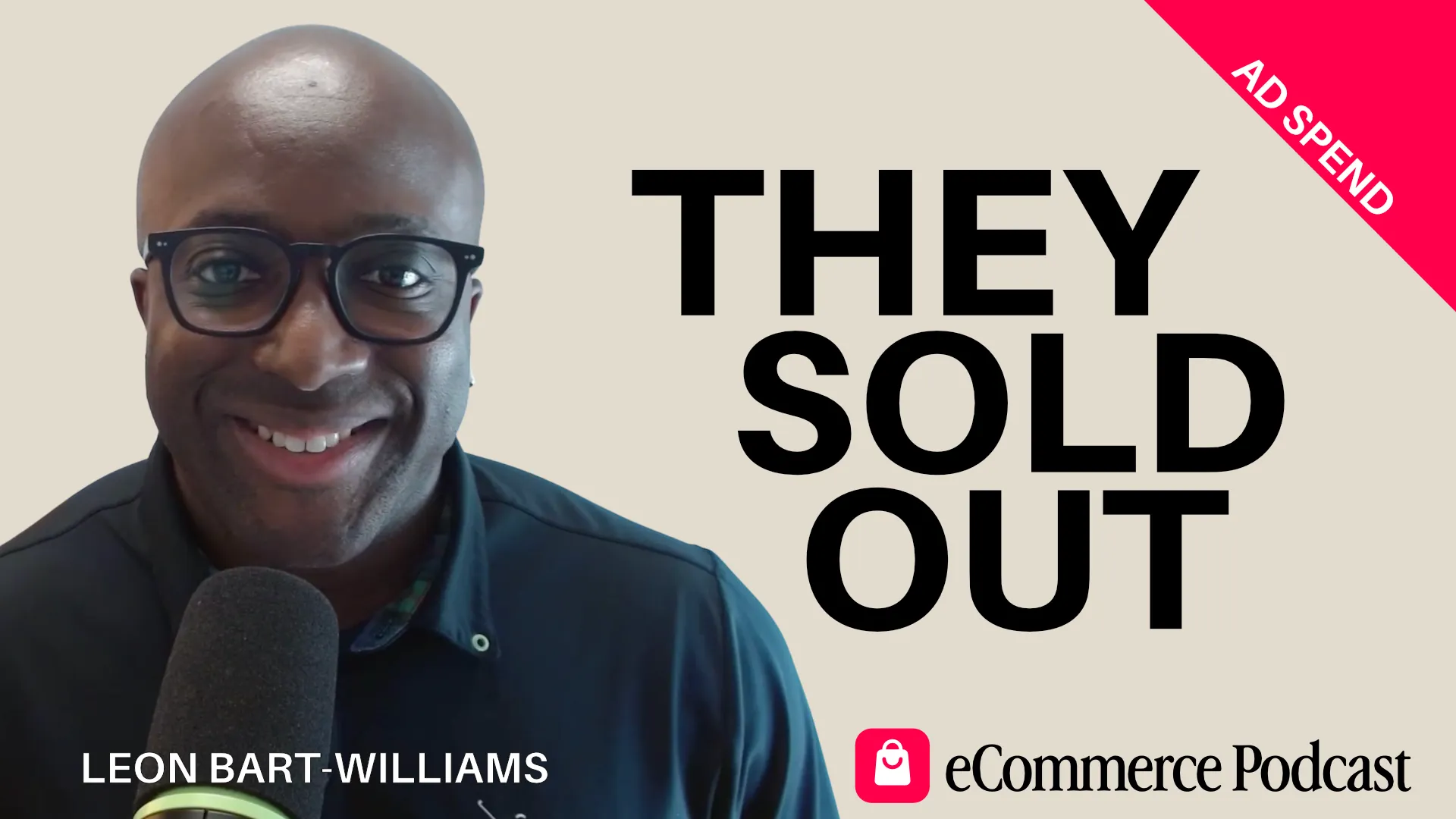
Leon Bart-Williams
Leon Bart-Williams
Akikumo
Even more episodes...