The STORY-SEO Product Copy Framework
Most ecommerce businesses either copy-paste the manufacturer's description (invisible to Google) or throw it at ChatGPT and publish whatever comes out (forgettable to customers).
What if you had a proven framework that showed you exactly how to write product descriptions that rank on Google, convert browsers to buyers, and actually get remembered?
- A Six-Step Method for Product Copy That Ranks and Converts
- A Ready-to-Use AI Prompt You Can Paste Straight Into ChatGPT or Claude
- Real Before-and-After Case Studies From a Live UK Ecommerce Site
Get your free copy
Free · Instant download · No spam, ever
Created by Matt and the team who not only host the eCommerce Podcast, but also have a portfolio of eCommerce brands.

The Real Reason Your Product Pages Are Not Converting
You know your product descriptions could be better. But where do you actually start?
- "I'll just use the manufacturer's description" – So will every other retailer. Google sees duplicate content, customers see nothing worth remembering, and you become invisible.
- "I'll get ChatGPT to write them" – Without a framework, AI produces generic, soulless copy that sounds like every other AI-generated description. Different words, same forgettable result.
- "SEO or storytelling – pick one" – But narrative copy naturally delivers exactly what Google rewards. You do not have to choose.
The brands with exceptional conversion rates are not doing anything complicated. They are just intentional about turning product descriptions into stories that rank, resonate, and get remembered.
Loading content...
<h2>The Real Reason Your Product Pages Are Not Converting</h2>
<p>You know your product descriptions could be better. But where do you actually start?</p>
<ul>
<li><strong>"I'll just use the manufacturer's description"</strong> – So will every other retailer. Google sees duplicate content, customers see nothing worth remembering, and you become invisible.</li>
<li><strong>"I'll get ChatGPT to write them"</strong> – Without a framework, AI produces generic, soulless copy that sounds like every other AI-generated description. Different words, same forgettable result.</li>
<li><strong>"SEO or storytelling – pick one"</strong> – But narrative copy naturally delivers exactly what Google rewards. You do not have to choose.</li>
</ul>
<p><strong>The brands with exceptional conversion rates are not doing anything complicated. They are just intentional about turning product descriptions into stories that rank, resonate, and get remembered.</strong></p>
Related Episode
Dive deeper into this topic with this podcast episode
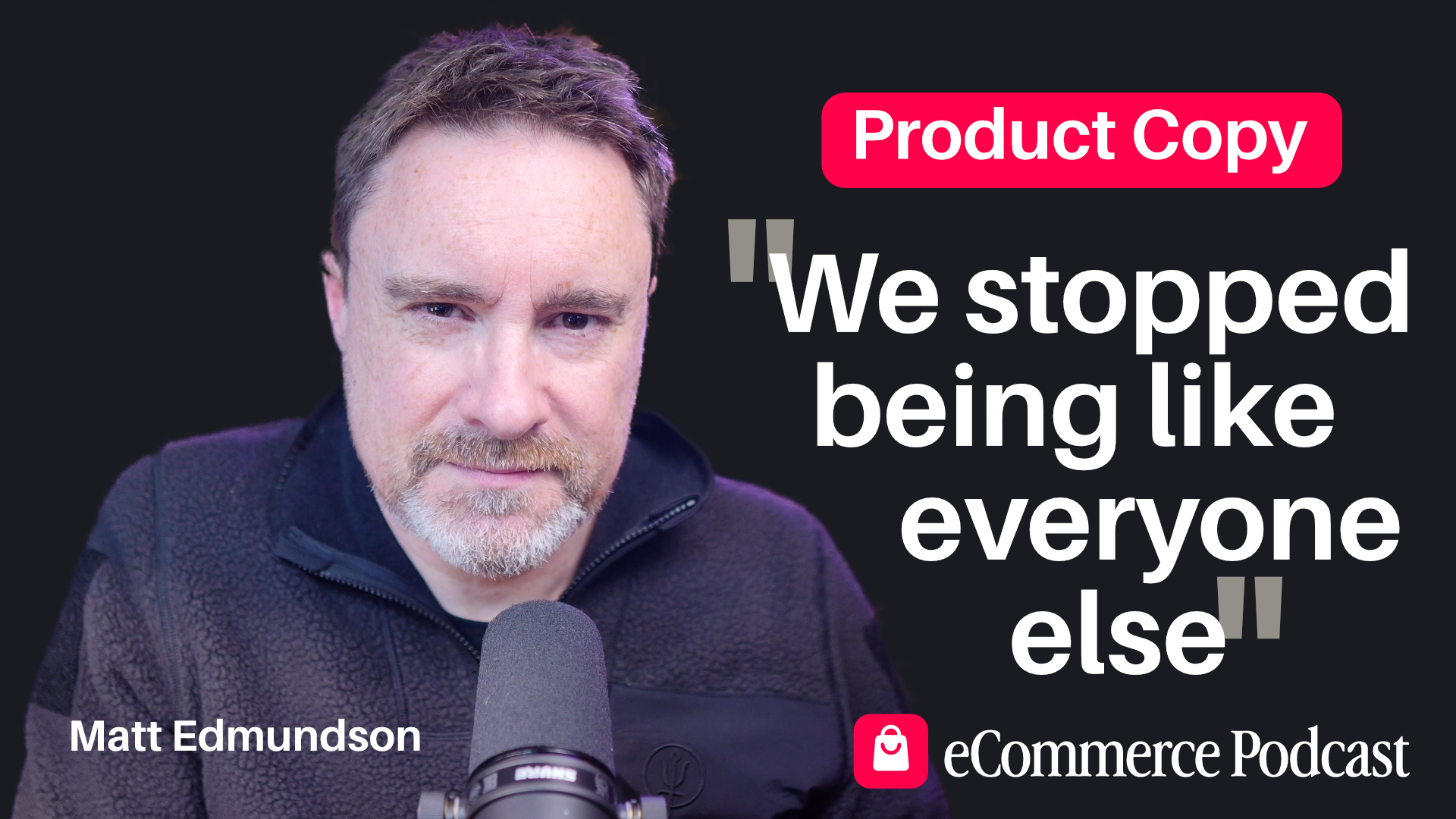
Product Descriptions That Actually Convert
Most eCommerce product descriptions are invisible. Copied from the manufacturer, pasted without thought, identical to every competitor. Matt Edmundson shares how rewriting 400 product descriptions at Jersey Beauty Company transformed a commodity site into a brand with personality, and reveals the narrative binding framework from cognitive science that makes copy 42% more memorable after 30 days. Through real examples — a framing square, a fountain pen, a USB disco light, and an airsoft tactical vest turned mission briefing — discover the three principles that turn forgettable spec sheets into stories that actually sell.