Why Your Products Should Be on 60 Marketplaces, Not Just Amazon
There are 1,300 marketplaces worldwide and most ecommerce brands are stuck on just one or two. Jorrit Steinz, CEO of ChannelEngine, reveals why the biggest mistake sellers make is not exploring marketplace selling at all. He shares a practical framework for choosing the right platforms using seller-to-buyer ratios, explains why marketplace ad spend builds organic ranking in ways Google never will, and tells the story of a German customer running 60 marketplaces with just two people. Whether you are established and looking to expand or just starting out, this episode maps a clear path from Amazon-only to multi-marketplace scale.
There are 1,300 marketplaces worldwide and most ecommerce brands are only on one or two of them. Jorrit Steinz, CEO and founder of ChannelEngine, has built the world's largest marketplace network connecting brands to all of them. His message is blunt but backed by data. The biggest mistake ecommerce brands make isn't getting marketplaces wrong. It's not doing them at all.
Jorrit has been in ecommerce for nearly 20 years, building expertise across B2C, B2B, and D2C. He founded ChannelEngine after running his own ecommerce sites and discovering first-hand how painful it was to manage stock across multiple channels. Today his platform connects thousands of brands to marketplaces across the globe, and one of his German customers runs 60 marketplaces with just two dedicated people. That's the kind of scale automation makes possible.
The Marketplace Explosion You Might Have Missed
If you think marketplaces means Amazon, eBay, and maybe Walmart, you're missing the full picture by a long way.
Every major retailer is becoming a marketplace. Nordstrom's in North America, Decathlon and Media Markt in Europe, Next in the UK. The shift accelerated during COVID when retailers didn't want to carry so much inventory on their balance sheets. They started asking brands to augment their collections through marketplace and drop-shipment models.
"The interest rates went up and all these retailers didn't want to carry that much inventory," Jorrit explains. "So they asked a lot of brands to start augmenting their collection. Sell the rest in drop-shipment or marketplace form."
On top of that, every country has what Jorrit calls a "local hero" marketplace. Bol.com in the Netherlands. Allegro in Poland. Shopee and Lazada in Southeast Asia. Then there are the vertical specialists. Zalando, Otto, and About You for fashion. Each one represents an audience of buyers who are already searching for products like yours.
Why Amazon Alone Isn't Enough
Amazon is the obvious starting point and Jorrit doesn't dispute that. But here's the problem with putting all your eggs in that basket.
Amazon has over 600 million products. The competition is fierce, sophisticated, and deeply entrenched. Sellers who've been optimising their listings for years are hard to displace. And then there's the control issue. Amazon can take you down on a competitor's complaint, and it took one brand 13 months to get reinstated. By then their business had imploded.
"That's also why a lot of brands now don't purely want to rely on Amazon as a channel," Jorrit says. "Start selling on all the other marketplaces that make sense for you. Even if Amazon does something weird, you still have your revenue running."
The maths can actually work better on smaller marketplaces too. Fewer products competing for the same search terms means it's easier to rank. A local marketplace with less traffic but less competition can deliver more visibility than fighting for scraps on Amazon.
The Ratio That Matters
Jorrit shared a simple framework for evaluating any marketplace. Look at the ratio of sellers and products to buyers. How many products are listed versus how many people are searching?
On Amazon, that ratio is brutal. 600 million products and every category is saturated. But on a specialist or regional marketplace, the ratio might be dramatically more favourable. Fewer competitors, the same buying intent, and often more relaxed rules about how you can influence your ranking.
"Sometimes it's way more favourable and easier to rank on a local marketplace with fewer customers," Jorrit explains, "because it's easier to rank high in a certain category on a certain search term."
He also suggests using tools like Claude or Perplexity to research marketplace options. Pull the full list from ChannelEngine's network, feed it to AI, and ask where similar products are already selling. Let the data guide the decision rather than defaulting to the obvious.
The Contrarian Ad Strategy
If you're starting out or looking to expand, Jorrit argues you should spend your advertising budget on marketplaces rather than Google Ads or Meta.
The reasoning is pretty compelling. On a marketplace, people are already searching with buying intent. They have a checkout ready. And the biggest difference from Google Ads is that spending money on marketplace advertising also influences your organic ranking.
"On the marketplace, spending money on ads also influences the organic ranking. The normal free ranking," Jorrit says. "If you start selling faster and faster for specific keywords, you will show up in the organic ranking."
That's a compounding effect you don't get with Google Ads, where your organic and paid channels are largely separate. On marketplaces, paid activity builds organic visibility. You can even drive external traffic from cheaper ad networks to your marketplace listings to boost that organic ranking further.
Start With Six, Scale to Sixty
The natural question is how many marketplaces should you be on? Jorrit's advice is measured and practical.
"I would start slow. Next to Amazon, start with one or two marketplaces. Once you have the hang of it, then you can rapidly scale up."
His recommended first-year target is six or seven marketplaces, chosen with care and given proper attention. Start in countries where you already have logistics and customer service infrastructure. Once you're established in a country, adding more marketplaces there is relatively easy because the operational foundation already exists.
The German customer running 60 marketplaces with two people didn't start there. They built up over time, with a strong ecommerce operation and logistics behind them. The marketplace team just manages the channel connections, because automation handles the heavy lifting.
The Inventory Problem That Gets You Banned
If there's one operational lesson that comes through loud and clear, it's this. Stock synchronisation is non-negotiable.
"As soon as you sell on multiple marketplaces, you need automation in place," Jorrit warns. "If you have 10 items and you sell 10 at the same time on eBay and Walmart, then you have sold 20."
Overselling is the fastest route to getting banned from marketplaces. Amazon in particular has strict pre-fulfilment cancellation rules. Sell something you don't have, cancel the order, and strikes accumulate fast. Jorrit has seen brands come to him after their seventh strike and a marketplace ban, asking to be unbanned. By then it's usually too late.
The solution is a centralised inventory layer that updates in real time across every channel. When an order comes in on one marketplace, stock is immediately reduced everywhere else. Orders flow into your existing fulfilment pipeline regardless of which channel they came from.
Your Next Steps
- 1Research your marketplace options. Use AI tools to analyse where similar products are already selling. Look at ChannelEngine's marketplace network as a starting point and evaluate the seller-to-buyer ratio on each platform.
- 1Pick your first expansion marketplace. Choose one where you already have logistics in the country, competition is manageable, and your product vertical is well-represented. A curated fashion marketplace will serve a clothing brand better than another horizontal platform.
- 1Get your inventory synchronised before you list. This is the foundation everything else depends on. Whether you use ChannelEngine, another integration platform, or build it yourself, real-time stock updates across every channel are non-negotiable.
- 1Experiment with marketplace advertising. Shift some of your Google or Meta budget to marketplace ads where buying intent is higher and paid activity compounds into organic ranking. Track the ROAS difference.
- 1Set a first-year target of six to seven marketplaces. Start with one or two beyond Amazon, learn the operational rhythm, then scale. The goal is sustainable expansion, not a sprint that breaks your fulfilment.
The cost of not doing this is going up every year. As Jorrit puts it, "The cost of doing is going down because you can automate. And the cost of not doing it is incrementally increasing." The opportunity cost of staying on one or two channels while 1,300 marketplaces exist worldwide is measured in millions of pounds left on the table.
What's stopping you from listing on your next marketplace this month?
Full Episode Transcript
Read the complete, unedited conversation between Matt and Jorrit Steinz from ChannelEngine. This transcript provides the full context and details discussed in the episode.
Full Episode Transcript
Read the complete, unedited conversation between Matt and Jorrit Steinz from ChannelEngine. This transcript provides the full context and details discussed in the episode.
[00:00] [Intro Bumper]
[00:05] Matt: Well, hello and welcome to the E-Commerce Podcast. My name is Matt Edmundson and it is great to be with you today. If you're new to the show, very warm welcome to you. Make sure you like and subscribe and do all of that good stuff. If you want to know any more about the show, what we do, what we get up to, the community that we've got, the cohorts you can join, all of that sort of thing, you can find out more information at ecommercepodcast.com. Everything is there. Come check it out. We're good to see you there. But given that this is the second time recording this podcast, we had a slight echo issue the first time. So without further ado, Jorrit, welcome back to the show again.
[00:47] Jorrit: Well, again, thanks a lot, Matt, for having me. So always great to talk to someone that has been in the e-commerce space for a long time. So looking forward to the conversation again.
[00:58] Matt: Yeah, yeah, yeah. No, it's good. And hopefully we fix the echo problem now. I'm monitoring my sound meters very, very— in fact, let me put them on. There we go. I can see them better there. But yeah, it's great to have you all the way from the Netherlands, it seems.
[01:14] Jorrit: Yeah, correct. I'm in a place called Leiden, half an hour below Amsterdam, close to the beach. That's important.
[01:23] Matt: Has the weather turned for you yet? I mean, it started to get a little bit better here.
[01:27] Jorrit: It's sort of sunny a few days so far. So you never know in the Netherlands, but it's looking good so far.
[01:36] Matt: You never know in England either, to be fair. I don't think it's just a Dutch thing. It's all over the place, isn't it? Tell us a bit about ChannelEngine, what you guys do, and about your software.
[01:49] Jorrit: Yeah, sure. So ChannelEngine is a multi-channel e-commerce marketplace integration and automation solution. I can make it longer. A lot of people call it marketplace integration solution, marketplace integrator. The whole idea is that brands, sellers can use our solution to connect all the different e-commerce channels worldwide. Marketplaces, social commerce, agentic commerce is coming up. And basically you plug into all these different channels, whether it's Amazon, Walmart, Macy's, in Europe, Zalando, ASOS, etc. And you can sell at scale. while automating a lot of processes that typically take up a lot of time. Yeah.
[02:29] Matt: Yeah. I think, we were saying before we had to start recording again, but there seems to be this default belief that there's one or two channels that you sell into as an e-commerce entrepreneur. So I have my website, we sell on Amazon. If I'm in America, I might sell on Walmart. And I think, yesterday we were talking as a team, do we even sell on Etsy? I mean, steady on, we were starting to get to 4 there. There's obviously a lot more to the marketplace. There's a lot more channels that I can sell through, right?
[03:09] Jorrit: Absolutely. Not a lot of people are aware. So we currently have the largest marketplace network in the world with 1,300 marketplaces. And we even have to prioritise the next marketplace. Which ones are we going to do first? And it has to do with the big players, Amazon, Walmart, but all retailers are becoming marketplaces or have become marketplaces as well. So for instance, in North America, Nordstrom's, those are curated marketplaces. You see the same thing happening in Europe. Media Markt, Decathlon all became marketplaces. And next to that, every country has their own local hero. So in the UK, Amazon is super big, Germany, Spain, but in other countries, for instance, Netherlands, Bol.com, Poland's Allegro, every country has their large local marketplace, local hero that is already present. And then depending on the vertical, there might be some vertical marketplaces. Think of fashion, apparel, Zalando, Otto, About You in Germany. But they have marketplace across Europe. You see the same things happening in Southeast Asia. Shopee Lazada, nice horizontal marketplace where you can sell everything, and then Zalora, more on the fashion side. So lots of those marketplaces, and we do that across the globe.
[04:26] Matt: Yeah, it's really interesting, isn't it, how this has all turned. I noticed this, I think, a few years ago with, we had a beauty company and we were selling these beauty products. And I noticed those beauty products starting to appear on Next, which is a clothing brand right here in the UK. And it's like they'd made a deal with a beauty company to sell the same products on their website. You're like, well, goodness me, that's quite fascinating. You don't have to— they weren't stocking it necessarily, but they'd made an agreement to sell it on their website. And you kind of saw a lot of these bigger brands going, let's be—
[05:06] Jorrit: let's do what Amazon did and do the whole marketplace. Yeah, you see that happening a lot, especially during COVID. It kicked off and then the interest rates went up and all these retailers didn't want to carry that much inventory on the balance sheet. So they asked a lot of brands to start augmenting their collection. So typically they buy the fast movers and then said, well, can you sell the rest of the collection on our website in drop shipment or marketplace form? And that really kicked it off. And now it's a worldwide phenomenon. So you have centralised locations where brands can sell on Amazon and the other marketplaces, as well as to the retailers that typically buy wholesale.
[05:49] Matt: Yeah.
[05:50] Jorrit: But now as the next level, they augment that with marketplaces. And I do see a shift also for Amazon, for instance. Amazon always was a big 1P vendor-buyer, but that is shifting as well. So they're raising the thresholds. I think in the US it's actually— they went to— you have to do at least $20 million a year to actually get a vendor account. So they're pushing more towards the seller accounts. A lot of our customers have both, so they don't get purchase orders for all their products. So it's always good to go hybrid. So 1P 3P, and that's different. That same model happens on all other marketplaces as well. Walmart, same thing. Target, same thing. So depending on your product, and it also happens, for instance, in shoes, where a retailer wants the full range of sizes but maybe doesn't want to stock the very large or very small sizes. So you can backfill or size fill with a marketplace model. So that's happening more and more.
[06:52] Matt: Yeah, it's interesting, isn't it? I suppose there's two routes, there's two lots of questions appearing in my head, Jorrit. One is, should I start my own marketplace? And the other is, what marketplaces should I be looking at for my own stuff, right? And I suppose it intrigues me because you mentioned you're now prioritising obviously marketplaces, so this is becoming a bigger and bigger thing and more and more popular thing, isn't it? With the marketplaces coming on board?
[07:20] Jorrit: I happily answer both. So the first one, no, don't start a marketplace. Don't start a marketplace unless you have a website, retail webshop with a, with a lot of physical stores where people already know you and can find you and know how to find you without doing a lot of top-line advertising. Yeah, because it's really hard to crack that supply and demand on a marketplace. So you need to have a lot of traffic. So that's why it works for TikTok. They had a lot of eyeballs, a lot of traffic already driving traffic to e-commerce sites. And then it's easy to become a marketplace and become transactional. Yeah, similar to very large retailers that you know already and you visit already. And then if you see other products, you already trust that brand, you can buy it. Building up a new marketplace is super hard to do, especially now, because where are you going to get the traffic? All the social media is going to be transactional. Google's becoming transactional. All the AI answer engines become transactional. So there will remain top-line advertising, and it's impossible to win from other guys. So I wouldn't do it. We still get monthly new players with a beautiful idea, we're going to launch the next marketplace. Unless you have a shit ton of money, it's not going to work. Yeah. So I do see new ones popping in. So in Europe as well, JD launched Joybuy, and they come in with a lot of money. They're buying their own logistics infrastructure at a scale— even in the Netherlands, they invested €150 million just for logistics, just to start off. Yeah. And that's the scale. And then you need a lot more money to drive traffic.
[09:10] Matt: Yeah.
[09:10] Jorrit: So yeah. Question 1, no, don't do it. What was question 2 again? Yeah.
[09:17] Matt: What marketplaces should I sell on? I suppose that's probably where we'll spend most of the time focusing, isn't it? If I'm running my own e-commerce business, how do I think about getting onto these other marketplaces? What things should I think about? What things should I look for? Although I do have— before we get into that, I do have one other question. So you mentioned, for example, the shoe company, and yeah, they— I might not want to retail the extreme sizes, but I want to be able to put them on my site and have a deal with the supplier. I am seeing that more and more across e-commerce sites. So it's not technically a marketplace. It's like a mini version of it, isn't it? A just-in-time fulfilment thing where it's gone, actually, I want to sell all your stock, but I don't want to carry all of your stock. And I need some integration that allows me to do that.
[10:14] Jorrit: Yeah, it's a form of drop shipment. So drop shipment and marketplace sales are very similar. The biggest distinction is that it's very transparent who's selling it. So if it's a marketplace, you see sold by. And that is more also a legal and fiscal thing. So the person selling it, where it's transparent who's selling it, is responsible for the transaction. So then the marketplace is sort of a transaction facilitator and takes a fee without bearing the risk. And the biggest difference is that the seller can determine the price. If it's drop shipment, the marketplace or the retailer determines the price.
[10:52] Matt: Yeah. Yeah, that's fair play. That's fair play. Okay, so back to my second question.
[10:59] Jorrit: Where do you sell?
[11:01] Matt: Oh, we sell all kinds of stuff. We've got gift stores, we've got supplement businesses. I mean, there's all kinds of things that we sell across the world, right? We take the supplement business, we sell those all over the world. We sell on our site, we sell on Amazon. I think we do Walmart in the US. Our gifting business is purely our site and not on the high street, which again is another marketplace in the UK, on Amazon, but it's all UK only, if that makes sense. So I've got those two companies that I can talk from and think from. How would I approach this? What would be a good route forward?
[11:45] Jorrit: Yeah, first thing is you set up a podcast with me and then we'll make sure you're using marketplaces. And then in a year from now, you can report how well it went.
[11:56] Matt: Yeah, exactly. That's exactly what I do. I should do.
[11:59] Jorrit: Yeah. I think choosing a marketplace, everybody thinks of Amazon, which makes sense because the majority of the buyers are on Amazon.
[12:09] Matt: Yeah.
[12:09] Jorrit: But also there's competition. So on Amazon, there's 600 million products at least.
[12:14] Matt: Yes.
[12:14] Jorrit: That you have to compete against. And a lot of them, a lot of the sellers on Amazon are very sophisticated, very focused for a very long time. So it's hard to win those listings, to show up in the rankings unless you really know what you're doing. So yes, you can be super successful on Amazon, but that needs a specific type of focus and investment to do it well. Definitely start using Amazon, but next to that, look at your specific product vertical and then see what is the competition like, how many products are on the marketplaces versus how many visitors are on the marketplace. So look at the ratio of sellers, number of products versus number of buyers, and sometimes it's way more favourable and easier to rank on a local marketplace with less customers and then reach more customers because it's easier to rank high in a certain category on a certain search term. It's easier to do what now is called black hat tricks that are not allowed or not tolerated on Amazon. You can do them on many other marketplaces because they're not aware of those kind of things. How do you influence the search ranking by increasing your seller velocity, your sales velocity, and stuff like that? Also, depending on your vertical, what kind of products. If it's fashion, then start selling on Amazon, start, try to get on the fashion-oriented marketplaces. And that's also where you can load your brands. So if it's a brand in a new country, it's easier to spend some money and have the right brand adjacency to other brands in that region. And we actually see a halo effect if you have physical stores as well, where people see it on the marketplace and then buy it in the physical stores, right? So lots of information there to digest. Nowadays, tools like Claude and Perplexity can do research for you. We have a big data set. We can also help you out with the specific selection. Not every marketplace is open to every seller. So on Amazon, eBay, everybody can just sign up and sell. And a lot of the more niche marketplaces are curated. So you have to have a quality brand, of a certain price point to get on there. So that's a bit of pathfinding. We can help out, but it's figuring out where you can win.
[14:36] Matt: It's a really interesting one, isn't it? Yeah.
[14:40] Jorrit: Yeah.
[14:41] Matt: I mean, I can see me going to Claude and going, Claude, right, give me some marketplaces that I need to think about. And Perplexity as well, and seeing what it comes up with and then doing a little bit of research about them. And I do.
[14:58] Jorrit: You can even ask Claude, just grab the whole list on ChannelEngine and then start seeing where similar products are being sold.
[15:04] Matt: Yeah, that's true. Just scrape the data and just come back and tell me what's going on. It's an interesting one, isn't it? How many— I realise as this comes out of my mouth, it's a bit like how long is a piece of string, but how many marketplaces should I be looking to get on, do you think? If I'm an established e-com brand, I'm doing a couple of million a year, my website's doing pretty good, I want to start to expand, what would be a good aim over the next—
[15:40] Jorrit: I don't know, depends a little bit on your team size and sophistication. I would start slow, so start doing next to Amazon one or two marketplaces. Once you have the hang of it, then you can rapidly scale up. Typically, it's easier to start selling on other marketplace in a country where you already sell because you have to set up the logistics and the customer service and stuff like that. Once you're in the country, you can just add more marketplaces while you're going. Yeah, if I look at some more sophisticated sellers. I'm thinking of a German customer, they're running 60 marketplaces with a team of 2 people focused on those marketplaces because it's connected to their normal e-com stream. And that's going very successfully. I would say first year, aim for 6, 7 good marketplaces with the right attention, right focus, and then expand from there once you have the knowledge and expertise.
[16:40] Matt: To sort of reshare. I guess the— I mean, you mentioned something there about the chaps in Germany, 2 people handling 6 marketplaces, 60 marketplaces.
[16:49] Jorrit: 60. Yeah. Yeah.
[16:51] Matt: I mean, well done them. That just sounds like a headache and a nightmare. And I suppose this is probably where I'm guessing your software helps, but I guess this is also the biggest nightmare people have got in the sense that managing marketplaces in itself becomes a nightmare. You've got to obviously make sure the listings are right, you've got to make sure the pricing's right, and if it's out of stock, and then how do you get the orders into your system, and how do you fulfil the orders? And what are some of the things there then that you see people doing entirely wrong? Like, if you could wave a magic wand and fix the biggest single problem that people have when it comes to selling on other marketplaces, what would that be?
[17:36] Jorrit: So maybe step back. I started ChannelEngine because I was running e-commerce sites for a very long time and then started selling on marketplace, and we didn't want to run out of stock, so I built ChannelEngine as a solution to solve that. The processes, if you look at it, typically most time-consuming is getting your product information or your products listed on the marketplaces, and that's where ChannelEngine grabs the content out of your e-com platform PIM system and transforms that into what is required for the marketplaces. But marketplaces typically have way more attributes and specifications that they want than most sellers have. Think of the ingredients of your food supplements, packaging size and stuff like that. So if it's there, if you have that in your site, great. And otherwise you need to apply rules. You can do prompting to get that in the right format. But that's a one-time exercise. Operationally, it's essential to have a connection to your whatever warehouse management system you're using, whether it's a 3PL, a combination of Fulfillment by Amazon and a 3PL, or your own warehouse, because stock is essential. As soon as you sell on multiple marketplaces, you need to have an automation in place, because if you have 10 items and you sell 10 at the same time on eBay and Walmart, then you have sold 20. So as soon as an order comes into ChannelEngine, we take it off of all the other marketplaces, then send it to the 3PL, get back the new stock levels, and then syndicate, synchronise it. So making sure you are not overselling, that's the essential one. Getting any orders automated and streaming it into your normal D2C flow. So you have one inventory layer, the orders are flowing in, and you see which marketplace it is from. But then let automation make sure that it's not available on another marketplace or on your D2C site at the same time. Yeah.
[19:31] Matt: Yeah. Well, there's a lot there. Have you seen people run these things manually?
[19:36] Jorrit: Yes. And a lot of them then get banned on marketplaces and then after their 7th strike and getting banned, they come to us. Can we please automate and can you get us unbanned? That's too late. It can happen, but it's, we've seen it. You see it a lot in Asia as well because manual labour is— people are used to it, but it's getting less and less. So our most happy customers are the ones that used to do it manually or that try to automate it themselves because they said, how hard can an API be? API, maybe not, but then all the processes and the unhappy flows and optimisations, that's where it gets hard. The edge cases. How do you do reservations so you don't do double reservations? How do you balance from FBA runs out of stock on your own 3PL? That's where we come in. So I always prefer people that have that experience before, they know how not to do it, and then they can benefit from the automation we have.
[20:35] Matt: Yeah, no doubt, no doubt. So what is, do you think, the biggest single mistake we're making when it comes to selling on other marketplaces?
[20:47] Jorrit: Not doing it. That's the single biggest mistake. A lot of people say, I've got my D2C shop and I'm selling on Amazon. So that's about it. So not exploring other marketplaces where there's a massive opportunity. That's a big mistake. Another big mistake I see even with gigantic customers, large enterprise customers, is underinvesting in a marketplace team, I think it's strategically important to do marketplace sales and multichannel sales well and then just hire the right people. So sometimes I see the equivalent of 2 interns. Oh, they can do the product listings and the strategy and the price optimisation and all the different marketplace and the customer service all at once. It's impossible no matter how much automation you do. So take into account the strategic importance and put the right resources into it. Also, if you have your own brand, your own product, it's also a search engine advertising optimisation problem. Amazon is a massive search engine. You sell on Amazon, so it's not that easy. There are other food supplements. How do you rank high? Which keywords are you doing? Do you do advertising? Do you spend your money just trying it out? You will never rise in the organic ranking. So, or do you have a launch plan? So just Google launch plan Amazon and you'll get the best way to do it. You probably have podcasts around it, but how to do that well, because the sales velocity ramping that up with the right budget that influences your organic ranking. Make sure you don't run out of stock because then your ranking will drop again. So it's again, all the information is out there. Everything is on YouTube. You can just Google, ask ChatGPT, Claude for whatever. To do it, but don't underinvest. I think the biggest problem is the opportunity cost. People don't want to spend a couple of thousand and then missing out on hundreds or millions of euros or pounds or dollars in revenue.
[22:52] Matt: Yeah, no, that's a fair comment. I think there's a couple of things there then, isn't there, really? Let me— we'll come back to the opportunity and the investment. So the first thing you said is obviously people aren't taking advantage of the opportunity in terms of selling on marketplaces. And it sounds like, listening to you talk, if I was starting out in e-commerce today, I'm listening to you talk going, there's a lot I need to do that well. There's opportunity there, but it sounds like there's, on the other hand, I need to put resource into that. And I'm starting out, I don't necessarily have that. But then I hear you talk about two guys in Germany managing 60 marketplaces. So I'm—
[23:34] Jorrit: what, there's a whole operation behind it, right? So they have an e-com operation and logistics, and then two people only run the marketplaces, right? Okay.
[23:42] Matt: So at what point in my e-com career, if I can put it that way, my e-commerce journey, I've started my business. At what point do I start looking at marketplaces? Is it from day one and just need to rebalance where I structure my time? Or is it I should get at least somebody who can run this full time to start out with and have to then think about building that team as we build the marketplace out?
[24:11] Jorrit: Yeah, so two answers on that. If you're a professional brand already running a sizable business get an agency to help you with the launch, get the automation in place connected to your ERP system, and hire and train people on the job with an agency checking in from time to time for optimisation. That's the fastest path to do. If I would start it myself, not super much budget but a great product, I would definitely start on marketplaces but also launch a D2C shop with a great brand at the same time. So make sure the D2C shop looks great, you can find it, but then spend my advertising money on marketplaces because people will find your product. And especially in supplements, just nice QR codes, promotion, get them in your own loop, and then you can target them for your own D2C shop, or people start Googling, or ChatGPT or Perplexity to get there. And I think that's the ideal combination. So if you start purely on the marketplace, I would always launch a D2C shop next to it, because there will always be people that go directly and you'll grab that. But most budget I would put into the marketplaces.
[25:30] Matt: That's a really interesting idea in the sense— so would you, if you were starting out, I mean, you've obviously built your own e-com sites, right? So this is your supplement business, you're starting this supplement business. Are you putting your money into advertising on marketplaces versus money going into, say, AdWords or Meta?
[25:49] Jorrit: Yes. The reason being, I started my e-commerce journey with search engine optimised e-commerce sites because back then there was no Google Shopping, there wasn't Google Ads. So it was super easy or relatively easy to do. Eventually, it's all about finding that consumer. So consumer searching somewhere for a typical product that you have. Where are they? Their start, their journey starts on marketplaces. So the advantage as a consumer is there. You can reach a different type of consumer on a different marketplace. And the biggest difference between Google Ads in combination with organic search in Google is that on the marketplace, spending money on ads also influences the organic ranking. So the normal free ranking. So if you start selling faster and faster for specific keywords, you will show up in the organic ranking. And there are people searching very specifically for products. So that's their purpose. They already have a checkout. So I would invest my money there and then have the spin-off effects to your own D2C store.
[26:53] Matt: Interesting. An interesting customer acquisition strategy. And I'm— I think we might experiment with this a little bit because It's getting harder and harder, isn't it, to acquire customers now on Google, Meta? This is the biggest complaint I'm hearing a lot at the moment. People are struggling with it. And so shifting that out into marketplaces where it might be— I guess you're going to get a higher ROAS, it's going to be much more targeted. And you can definitely experiment with it, can't you? And you can even do—
[27:25] Jorrit: yeah, you could even go to other ad networks, drive traffic to your product listing on any of the marketplaces to influence your organic ranking, because typically that can also be cheaper per click, per transaction versus advertising on the marketplace itself. And the marketplace likes it because they get free traffic, right? So it's like it's not penalised in any way. It's like there's traffic coming on the listing, awesome, and they buy. That's all they care about. So that's a great way to experiment. I know other people that even use all kinds of comparison sites and get relatively cheap clicks and then send them over to listings using social networks. So there's a lot of options there to do it in a different way. And then that way you can build your own brand as well. And there are some brands that started on Marketplace and then spun out to physical retail to their own D2C shop to do. So it's basically the other way around, and that works because you always have to look at where is the consumer.
[28:30] Matt: Yeah.
[28:30] Jorrit: And find that consumer with their intent. Yeah. And if you're not there with your product, they're gonna buy your competitor.
[28:38] Matt: Yeah, that's so true. Always be where your customers are, right? It's a standard theory, isn't it? I guess one of the questions that I've heard people bring up a lot when it comes to selling on different marketplaces. I suppose it's the biggest issue people have with Amazon, other than Amazon's crazy-ass fees, is the fact that they just increased again. Yeah, thank you, Amazon. God bless you, because you're not making enough money, obviously.
[29:06] Jorrit: It was a big wedding. Yeah.
[29:13] Matt: Yeah. It's gotta pay for itself.
[29:15] Jorrit: You know how much diesel costs for a yacht.
[29:20] Matt: Oh, goodness me. I suppose the two complaints then, something like Amazon fees would be one and two is the lack of control, right? So Amazon, I think in many ways you can make money on Amazon, but Amazon's a bully. In so many ways towards the resellers. Part of me gets it, part of me thinks it's a bit overboard on occasion.
[29:48] Jorrit: I— where do you notice it? Sorry, selling on Amazon. Where do you notice it in terms of—
[30:00] Matt: I mean, there's obviously very strict criteria that you have to go through, certainly with supplements. And the— for example, a classic example, I've been asked possibly to mediate, or to become an expert witness, which always intrigues me in a case where someone was selling on Amazon, one of their competitors complained to Amazon, Amazon took them down, it took 13 months to get reinstated, by which time their whole business had imploded really. And it's very much a case of you're playing by their rules. So there's not the control. At any point they can switch you off and go— and you've seen this, right? Amazon are notorious for it. So we'll start making our own vacuum cleaners and start promoting those because we can. We now see the demand. Thanks for generating the demand. We'll sell them, you've got nowhere to go kind of thing. And so that's what I mean in terms of the schoolyard bully. It's like, it's our way, we're not talking to you. In fact, if you try to talk to a person at Amazon, it's almost impossible. So I think these are the two biggest complaints, are they? So I'm thinking, I'm multiplying this out, I'm multiplying fees, which I guess is just a simple mathematical calculation. Is it worth it? Yes or no? But each marketplace in my head is probably going to have its own quirks, its own set of rules. I don't own that customer, and I have a distinct lack of control. How can I mitigate against that?
[31:42] Jorrit: Yeah, so first of all, it is well known what you say about Amazon, both on the vendor side as well as on the seller side. So there's a lot of negotiations, so Brands start moving from a vendor to seller as well, so they're more flexible. And that's also why a lot of brands now don't purely want to rely on Amazon as a channel. So you start selling on all the other marketplaces that make sense for you. So even if Amazon does something weird like that, then you still have your revenue running. The things they are very strict at that I do like is pre-fulfillment cancellations. So basically everything for the consumer experience. Yeah, that's great. Yeah, the examples you mentioned, that's definitely something I've seen in the market space where people are taken down because there was a claim of having fake products, and there are actually teams of your competitors that can submit that. Yeah, that's where they need to step up and automate and validate way, way quicker because it just costs completely amazing businesses, their full business. So there's no solution I've seen yet. I know they are aware of it, but the sheer scale of Amazon sometimes makes it hard to do that. But that shouldn't be an excuse, especially with all the money they get in. So they should fix that. So they're ruining some businesses, especially smaller businesses that don't have any way to fight it. Yeah, so let's hope that works. And that's also why it makes sense to start selling on other marketplaces as well. That will hopefully in the future give some more pressure on Amazon to fix these kind of situations.
[33:27] Matt: Yeah, we should wait and see. We should definitely wait and see. So how do I— what are some of the creative ways then that I can get access to the customer data. So again, if I sell a product on Amazon, I don't get that email address, right? They're very, very protective about that email. And in fact, they've all kinds of rules about what I can and can't put in the box to try and get that customer to contact because it's their customer. And I get it. I totally understand that.
[33:57] Jorrit: Yeah.
[33:58] Matt: But obviously I want, I want email addresses. You know, it's the second most important thing that I get after the sale, isn't it, is your email.
[34:04] Jorrit: So 'what are some of the creative ways that I can do that?' Yeah, so Amazon, be very careful doing that because they will just kick you off if you get caught. And you will get caught, you will get caught. They have a massive amount of algorithms to check it. Also asking for 5-star reviews and then landing on a page where you click on 3 stars and then redirecting to a different page instead of to Amazon. You're gonna, you're gonna be banned. So it's gonna be very short-lived. So I would say use their rules, adhere to their rules as much as possible, build a strong brand that people like and want to repurchase, and then have a D2C shop that people can find, and then hopefully they come there. Otherwise, just use Amazon, accept the fees, and drive more revenue. Other marketplaces, it's a bit easier, so they're a bit more relaxed. I would say look at TikTok Shop. I do see customers that are using that really well, are doing a lot of volume, and they just give you the customer details. So that's the difference. So they are more the transaction, so that's an opportunity to do it, but be careful in getting them back into the funnel. You can always do register for warranties and those kind of things, but please be careful because they can take away your full revenue. Talking about right away being reinstated and stuff like that, it's easier on other marketplaces. They're more seller-friendly. It's a lot of marketplaces where you can just get in touch with the seller team, actually on the phone and emails, and it's the same person instead of a randomised person somewhere in the world that answers tickets, hopefully.
[35:59] Matt: Very good. You're right, listen, I'm aware of that.
[36:02] Jorrit: That's another advice, by the way. If you send in a ticket and you don't get the right response, change the subject a little bit and then send in a new ticket, and then there's some sort of randomised algorithm and hopefully you get somebody that does.
[36:14] Matt: Okay, yeah, yeah, spam the ticket systems.
[36:18] Jorrit: Why not? Not too much, but it's like if you don't get a resolution, change the title a bit and then do it again.
[36:25] Matt: Absolutely. No, totally. I'm with you. I do it all the time. You're right. I've just looked at the clock and I'm like, goodness me. So I guess firstly, how do people reach you? How do they find out more about ChannelEngine if they want to know more about that? If they've got questions for you, how do they connect? What's the best way?
[36:47] Jorrit: Yeah, so the best way is to go to channelengine.com. To the website. You can reach our company and me on LinkedIn. So we share a lot of information also on our website. Even if you don't want to use ChannelEngine, there's a lot of resources with starter kits on marketplaces, checklists, stuff you can download. We did a research report, a few research reports about the marketplace to get more information. Just go there, it's free. Some are gated where you have to sign up and you get a whole bunch of useful email addresses from us. Emails from us, and then you can sign off if you want. But it's, it's valuable information, so start using that. And otherwise, just reach out to me or our team.
[37:29] Matt: Fantastic. We will of course link to your— in the show notes, which you can get along for free with the transcript and all of that sort of good stuff at the website ecommercepodcast.net. They'll be in the show notes if you scroll down on your app. They'll be there. If you're on YouTube, they'll be in the description, so you don't actually have to go to the website, but obviously go to the websites. Just do that, it blesses everybody. But yeah, it's one of those, isn't it? I think you— I'm curious to see how many people go to your website and start looking at it, because I'm definitely going to go in there and I'm sending Claude at least.
[38:08] Jorrit: Yeah, let me tell you, tell me what Claude says.
[38:13] Matt: Yeah, absolutely. But genuinely eye-opening conversation, Jorrit, and it's made me think again about marketplaces. So thank you for stirring that and challenging our thinking on a few things. And I agree, we should definitely be thinking about this an awful lot more. So if you're listening to the show, do reach out to Jorrit on LinkedIn. We'll put the LinkedIn profile and all that sort of stuff in there as well. And just even if to say hello and you enjoyed the show. I'm sure he'd appreciate hearing from you. But let me ask you two questions actually before we close the show, if I can. Question number one, what's your question for me? This is the segment of the show where I ask for a question for Matt. I'll take the question, I'll go and answer it on social media.
[39:02] Jorrit: Okay, Matt, what is the weirdest thing you used AI for?
[39:08] Matt: Oh, that I can tell my wife about, right? I love it. What a great question. I'm going to look forward to answering that. So if you want to know how I'm going to answer that question, come follow me on social media. And Jorrit, in closing, I'm going to give the microphone to you, my friend. And this is where I ask you, for those that have remained to the end, top value, what's your top tip just on the whole? We've talked about doing marketplaces. What's the number one thing people need to know to do this like really, really well?
[39:50] Jorrit: Yeah, I think first of all, start doing it, not just think about it and hope for the best. So yesterday I was at a Microsoft event and I saw One of the speakers had a great overview with two lines, one going down. So the cost of doing is going down because you can automate a lot. So you can do that really at scale. And we have a lot of AI implemented. There are all kinds of tools you can use. And the cost of not doing it is incrementally increasing. So the opportunity cost, and especially I would say in Europe, people are way too focused on the out-of-pocket cost versus what they lose in terms of opportunity. I see a difference in the US. People are going for the opportunity and are happy to spend some money to get there. But Europe sometimes are way too much focused on saving $1,000 and then debating it for 3, 4 months, and then they just leave millions in revenue and hundreds of thousands in profit on the table. So really act, automate, do it, experiment, and go for it. And the information is out there. The information is everywhere. So go to your whatever chat engine, ask questions, let them be the marketplace expert, and then guide you along the way. And of course, if you have a certain skill and you want to automate stuff, come to us.
[41:13] Matt: Fantastic. You're right. Thank you so much, man. Genuinely appreciate you coming on the show. Really great to chat, and thank you for your patience earlier with the dodgy recording. I don't know what that was all about anyway, but this has come out well. Thank you so much, my friend. It's been an absolute treat.
[41:29] Jorrit: It was fun, Matt. Thanks.
[41:32] Matt: There you go. What another great episode that is. Thanks again to Jorrit for joining me. And of course, like I said, all the information, show notes, everything will be in your descriptions, wherever you're checking out this podcast or on the website ecommercepodcast.net. But that's it from me. Thank you so much for joining us. Have a phenomenal week wherever you are in the world. I'll see you next time. Bye for now. Awesome.
Meet your expert
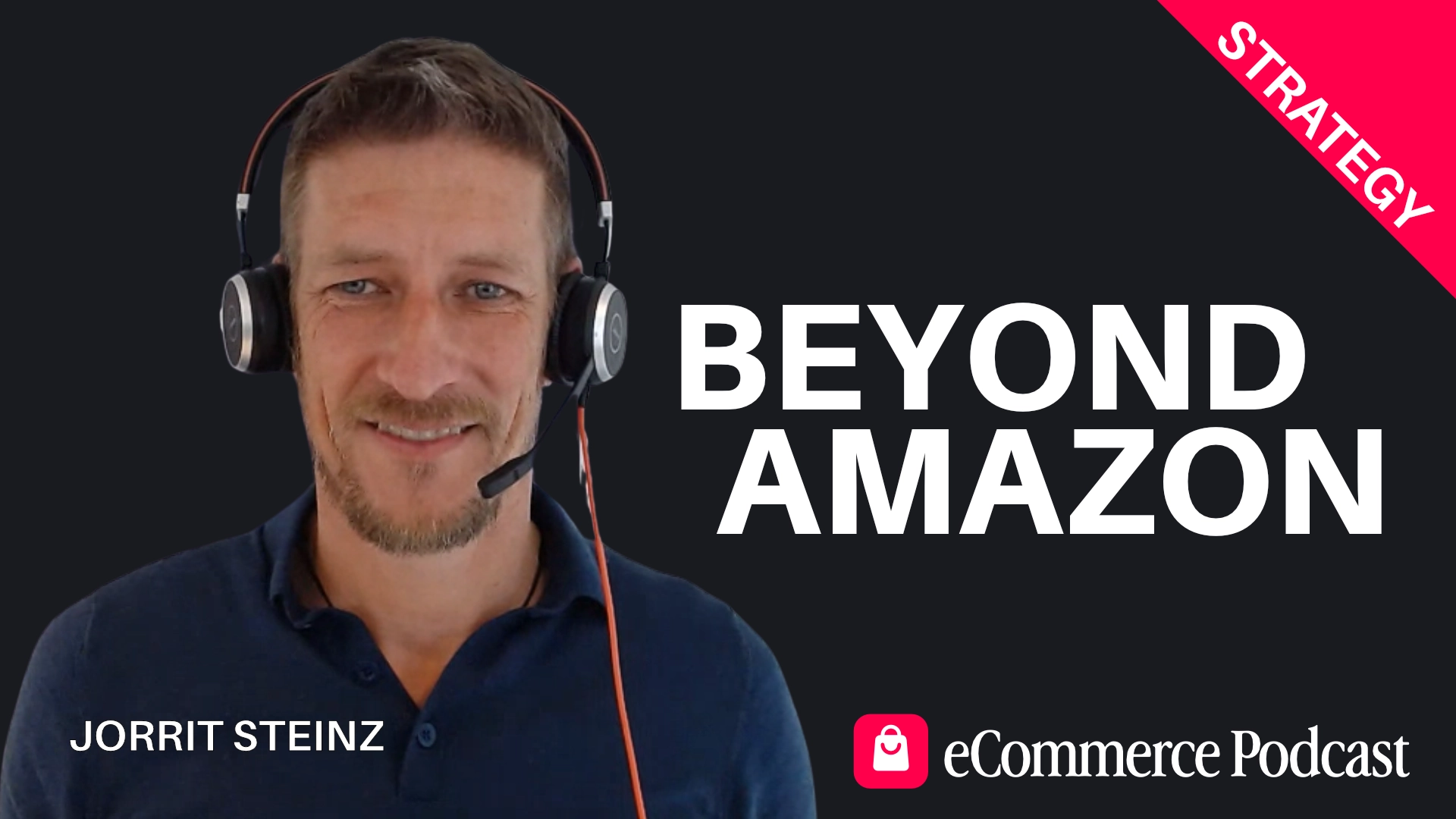
Jorrit Steinz
Jorrit Steinz
ChannelEngine