How AI Is Quietly Killing Your eCommerce App Stack
There are thousands of software companies all chasing the same small pool of brands on Shopify — and AI is quietly dismantling the bloated tech stacks they built. Neal Goyal, a go-to-market advisor who's led sales at some of ecommerce software's biggest names, explains why the "uninstall rate" is surging, how the ecosystem commoditised in three waves, and why agentic commerce is about to change everything again. His advice for anxious founders is bracingly old-school. Stop chasing shiny objects, do the Business 101, and invest in the human relationships AI can't replace. The thing that sets you apart was never the software.
There are thousands of software companies all chasing the same small pool of brands on Shopify. So, for every serious brand worth selling to, there maybe ten or twenty software companies fighting for the contract. And we've become used to the sales machine and bolt on app after app to our Shopify stores chasing the latest sales and improvements. But how many do you actually need?
Neal Goyal has spent the last eight or nine years inside that ecosystem, leading sales teams at some of the most recognisable names in ecommerce software, including Tapcart. He now advises five or six earlier-stage software companies on how to grow. From that vantage point he's watching something that should matter to every founder. "The uninstall rate of software tools in the last 90 days is huge," he says. Brands are quietly tearing apps out of their stacks, and AI is the reason.
The Great Uninstall
For years, the default response to any new problem in ecommerce was to go and find a tool for it. New challenge, new app. The result, as Neal puts it, is that you "bat your eyes and all of a sudden, next thing you know, you have this incredibly bloated tech stack."
That reflex is now reversing. When a founder can sit down with Claude Code and build something tailored to their exact business in an afternoon, the calculation behind every monthly subscription changes. The question stops being "which tool solves this?" and becomes "do I even need a tool for this at all?"
I've watched this happen in my own business. The number of software subscriptions we run has roughly halved, because the amount we now build ourselves has doubled. We're not hiring a marketing manager for the next role, we're hiring someone whose entire job is AI. That's not a prediction about the future. That's a hiring decision we're making now.
Why So Many Apps Chase So Few Brands
To understand why the stack is collapsing, you have to understand how it got so big in the first place. Neal breaks the commoditisation of ecommerce software into three waves.
The first was COVID. Brands on Shopify went from two million to four million "in a hot second," and an equally fast race kicked off to build the software companies that served them. The ecosystem roughly doubled from 5,000 software companies to 10,000 almost overnight.
The second wave was AI as an engineering tool, around early 2023. Suddenly four people in a basement could ship a compelling, high-quality product in 90 days and offer it at a fraction of the old price. Every category, from loyalty to reviews to mobile apps, got disrupted by a player built almost overnight. The count climbed again, from 10,000 to 15,000 in roughly a year.
The third wave is the one we're in now, and Neal thinks we're only at the start of it. Part of it is agentic commerce — the idea that the days of forcing a customer to visit your website, add to cart from a product page and fill in checkout details are numbered. "We don't really know what it's gonna be today," he says. "All we know is it's gonna be different than it is today." The other part is what's already on your desk. The ability for the average person, with no engineering background, to build their own software.
The effect of all three waves is the same. There is an alternative for everything, loyalty is thin, and a brand can sign off a tool as fast as it signed on.
Shiny Object Syndrome
The temptation right now is to believe that if you're not adopting every new AI tool the moment it lands, you're falling irreversibly behind. Neal doesn't buy it. "At the end of the day, we are still selling a physical good here. We're still selling a t-shirt. We're still selling a supplement." The early movers will benefit, and they'll be ahead. But the learning curve is going to be gradual, because this is not a fad that's passing through. It's here to stay, which means the tools and the help to use them will keep getting better and more accessible.
His warning for the anxious founder is the opposite of urgency. The danger isn't that you're too slow to adopt AI. The danger is that you chase the shiny object instead of doing the unglamorous Business that actually moves the needle.
What the Stack Can't Replace
If software is commoditising and stacks are shrinking, what's left for a brand to compete on? Neal's answer is, the human stuff.
As tools get more similar, the decision about which one to buy comes down to something basic. "These people building this software — well, there's a lot of similar software like this being built, but I like those people more. They're really responsive, they're really kind." The more commoditised the product, the more the relationship behind it matters. As budgets tighten, a lot of software companies are cutting exactly the customer-facing people who build those relationships. That, Neal argues, is precisely the moment to do the reverse.
He puts his own money where his mouth is. Of the ten largest deals he's closed in recent memory, he went and met all ten in person. Ten out of ten. Email, meanwhile, "is eroding, or completely eroded already, as a trust channel." When thousands of companies are flooding the same small pool of inboxes, the inbox stops being a place anyone trusts.
So the bet he's advising his clients to make is the counterintuitive one. "Do the things that don't scale." Give before you take. Win attention rather than compete on features. As he frames it, "we're not in the business of competing against other providers in the space for that brand's business. We're in the business of competing against every other software company for attention."
Built the Plane While Flying It
There's a reason this resonates with founders specifically. Most Shopify brands didn't start with a business background. They started at the kitchen table with a dream and a Shopify account, and they figured it out as they went.
Neal describes it perfectly. They "built the plane while they flew it. It was like putting duct tape on the wings as it's taking off." Every new challenge, from COVID to tariffs to iOS 14, was met by looking left and right and asking the person next to you what they were doing about it. That's why social proof drives the whole ecosystem. Nobody has the definitive answer. Everyone is experimenting and comparing notes.
AI hasn't changed that instinct. It's supercharged it. "We've all become superhuman in our own light," Neal says, and the proof is in what a non-technical founder can now do. After one recent podcast episode, I asked Claude Code to fact-check the guest and tell me what they hadn't mentioned. Within half an hour I had a deep research paper. A couple of hours later I'd used the same tool to analyse our website and write up exactly what to change. A few weeks on, our mobile conversion rate is now 400 to 500% higher than it was. I'm not a developer. That was a few hours of work, not a subscription and not an agency.
Where to Start
If you're a founder reading this and feeling behind, Neal's advice is helpful. You're almost certainly not behind. You only feel that way because of the few loud voices on LinkedIn and Instagram talking about it.
Here's where to point your energy instead.
- 1Audit the stack before you add to it. Look at every app you pay for and ask the uninstall question — is this solving a real problem, or did I add it during a shiny-object moment? AI has made "build or cancel" a genuine third option alongside "keep paying."
- 2Do the Business 101 first. Before the new tool, fix the unglamorous fundamentals. They solve more than the app will.
- 3Invest in the relationships AI can't fake. Whether you're selling software or supplements, the responsiveness and trust you build will matter more as everything else commoditises, not less.
- 4Get your hands dirty with the tools you do keep. The brands pulling ahead aren't the ones with the most apps. They're the ones learning to build and tailor for themselves.
Neal's single best tip, saved for the end of the conversation, doubles as the whole philosophy. Forget the textbook. "Go strike up 20 interviews" with operators who live and breathe this work. Walk in their shoes, understand their day, and you'll learn more than any course could teach you. He should know. He has an MBA in marketing and says the 20 conversations taught him more than the degree ever did.
Full Episode Transcript
Read the complete, unedited conversation between Matt and Neal Goyal from SaaS Class. This transcript provides the full context and details discussed in the episode.
Full Episode Transcript
Read the complete, unedited conversation between Matt and Neal Goyal from SaaS Class. This transcript provides the full context and details discussed in the episode.
[00:04] Matt: Well, hello and welcome to the eCommerce Podcast. My name is Matt Edmundson, and it is great to be with you here on what can only be described as an insanely hot day in England. Yes, we do get them on occasions, and today is one of those occasions. But it's great to be with you, great to be recording this show. We are talking to the world's best dad. Yes, we are. Which I'm really, really looking forward to. Not self-proclaimed, I hasten to add, but if you're watching the video, you'll see why he's the world's best dad. But welcome to the show. It's great to be here. Great to be with you. For those of you who are new to the eCommerce Podcast, let me just explain that if you want to know anything about the show, today's guest, the links, all of the stuff we talk about, there's a really highly detailed blog post and all that sort of good stuff. You can find it at ecommercepodcast.net, our website. You can find all our episodes there, the whole archive. You can find out about all the different things we've got going on, from cohort groups — if you want to come and meet other e-commercers from around the world and chat with them — all the way through to the AI systems that we use. You can find all that kind of information there. And if you do use our AI system, you'll be able to talk to it directly about today's episode and how it's going to help you in your business, because that's just the beautiful thing about what you can do. So you can check all of that out. Like I say, ecommercepodcast.net. If you are a regular to the show and you're coming back — awesome. You're a legend. Thanks for coming back. Thanks for keeping me doing this, which is — I just love doing the podcasting. So thank you so much for listening. Thank you for joining us. And without any further ado, Neal, the world's best dad. Welcome to the show, man. How are we doing?
[01:41] Neal: Hey, Matt. So excited to be here. I've been watching the show for a really long time, so having the opportunity to join you today is an absolute honour. Super excited.
[01:49] Matt: It's great to have you, man. Thanks for joining us. I'm looking forward to this conversation because it's fair to say, dear listener — if you don't know the way this podcast works — I always do a pre-call with the guests. So we do this sort of call, don't we, where we chat about what we're going to chat about on the show and get to know each other a little bit. Is it going to work? Not everybody who does a pre-call gets on the show, I hasten to add. That's the whole reason why we do them. But I loved our conversation. And we were talking about this before we hit the record button — the AI that listens in to said conversations gives me a summary of the points we talk about. And it gave me a really interesting view of your good self, Neal. So before we get into what AI thinks about you, why don't you just tell everybody listening to the show who you are, what you do, and why you're here?
[02:36] Neal: Well, I'm so excited to be here. My name is Neal. I've worked in ecommerce for the last eight, nine years, primarily leading teams in ecommerce software, particularly in the Shopify ecosystem. So one of the things I've gotten to do throughout that time is work with some of the coolest, hottest, most exciting brands on Shopify — help them scale through various tooling strategies, all in the name of increasing the number of customers that come into their funnel and retaining them all the while.
[03:06] Matt: Mm.
[03:06] Neal: And over the course of that journey, I've led a number of sales teams at ecommerce software players, some of the most successful names that we know today. And I sit here today with an amazing bird's-eye view of what has worked, what has not, and now primarily focus on GTM advisory for various other software companies in the ecommerce ecosystem.
[03:28] Matt: Very good. And before we get too deep into it, for those who don't know what GTM stands for, just give us a quick review.
[03:34] Neal: Go-to-market. GTM stands for go-to-market. So when you think of the sales, marketing, partnerships, customer success motions — go-to-market is how a brand, how a software company, goes into the ecosystem and penetrates and lands more customers.
[03:51] Matt: Fantastic. Fantastic. And this is what you do day in, day out, right?
[03:57] Neal: Exactly. I started in the ecosystem largely as a seller myself. I got started understanding that I wanted to spend my career in ecommerce. I have this incredible love for brands, and every brand in this ecosystem — largely because of how they all got started, right? They all effectively got started in their basement, or their living-room table, husband and wife, a couple of partners, just a dream and a Shopify account. All of these brands that exist today started from that same exact place. So that makes it super exciting. It's like, who you're interfacing with — you're working with some of the most motivated, hungry, high-grit individuals on the face of the planet, those that chose to bet on themselves. And as they continue to bet on themselves and scale over the course of their journey, it's just been an amazing journey for me, having the opportunity to support them and watch them with a front-row seat.
[05:00] Matt: That's really — it's interesting when you think it through with Shopify. If you were going to start an ecommerce business, default-wise you're going to go down the Shopify route most of the time, I would have thought. There's no coding, there's no technical requirements, there's an app store, you can pretty much do this out of the box straight away. And they've cornered that market quite well. So I guess I'd never thought about the fact that most people you speak to who have a Shopify store started off in the basement, around the kitchen table, because they had this dream but they didn't have the ability to put the website together.
[05:39] Neal: Spot on. Spot on. I mean, that's where Shopify got its start. That's where it built its moat — with the small, mom-and-pop individual and a dream and a Shopify account. As time has gone on, they've scaled upmarket in a huge way, and Shopify's future growth path really is coming from enterprise, right? Those that are built on traditional, more legacy platforms — Salesforce Commerce Cloud, Magento, custom stacks — and wanting to simplify their toolkit, simplify their total cost of ownership, and replatform to Shopify. So that's where Shopify's putting the absolute bulk of their energy right now. That said, it still cannot be ignored that 95% of the companies on their platform are still considered small and mid-market. They're still in that startup mode.
[06:30] Matt: Yeah. Yeah. How important do you think that is for Shopify — that they keep this startup thing going?
[06:37] Neal: You know, there are two very polar-opposite opinions out there. On one hand, I'd say the bulk opinion is that enterprise is everything. Enterprise is where you can really achieve scale. Enterprise is where the bigger brands are doing bigger things. And Shopify, more than anything, is a payments company, right? So when you think of how they're really able to scale, it's going to come from the ability to drive more volume down the payments category, and that's going to come from enterprise. On the flip side, think of how Shopify was built in the first place. I think the key to Shopify's long-run success is continuing to harness the love that they have for the ecosystem. Shopify has done a couple of things that bring that into question — some restructuring with their partnerships orgs, and limited functionality or limited offerings of service to the smaller businesses, that kind of shy away from where their original roots were. And that's okay. That's a business decision. That has its value points. But at the same time, if you look at software, software is increasingly becoming commoditised. So even though it's hard to say that Shopify would be truly displaced by another software up-and-comer, the reality is that the key is there's a very cult-like following of Shopify. And that really comes from that small and mid-market space. As long as they hold onto that, I think they're going to continue to retain their moat as well.
[08:20] Matt: Yeah. That's a really good point. I'm reminded, as you're talking, Neal — as odd as it sounds — of years ago, I had a conversation with a guy called Stefan Schoellhammer. Now Stefan was the MD of a company called KLAFS, a German sauna company. And the thing about this company was, I used to import and sell their saunas, right? As odd as it sounds. And I remember Stefan sitting down with me, and he basically said, this is how you build a successful company in this space. Everybody, he said — everybody we partner with wants to go after the big contracts, right? So in ecommerce we'd call them enterprise. The big hotels, the big spas, where you're selling a million pounds' worth of health-spa products. And he said the profit margins are good and you want to do those. But the problem is it's very boom-bust, because the sales cycle takes such a long time. So what you want to do is understand what your basic costs are to operate as a business and go and sell domestic saunas. They're not as sexy, they're not as expensive, but that'll make your bread and butter. And then on top of that, you can build these bigger projects. That is the only way to stay around. The ones that just go after the bigger projects never last. And I've called that for years — I remember this conversation, he drew it on a map — I call it the Schoellhammer Effect, right? It's just this concept, this idea. So as you're talking, I'm thinking Shopify was built, in effect, selling the smaller products, the smaller domestic products. And going after enterprise gives you the bigger profits, but the sales cycle is longer, it's very boom-bust, and when they go you've got a problem if all your eggs are in that basket, and so on and so forth. So fundamentally — it's my long way of saying, Neal — I fundamentally agree that for Shopify to be around, they've got to really carry on doing well with the startup and the SME market that just love them for what they do.
[10:21] Neal: A thousand percent. I mean, that draws a perfect parallel to almost every single role I've had at every single ecommerce software company that I've been a part of. And that is: if you divide the target market into an SMB / mid-market segment and an enterprise segment, it's the SMB / mid-market segment that keeps the lights on. So when you talk about sales cycle, the average sales cycle in SMB / mid-market is typically 14 to 30 days, right? From the moment you have your first conversation with that prospective customer to when they decide to ultimately sign on. And that's a function of fewer rungs of the ladder that you have to go up, fewer decision hurdles, quick access to the top, shorter buying cycles afterwards. Whereas when you think of enterprise, those cycles can go six months, eight months, ten months, twelve months. So if you're betting everything on that enterprise, it's either you're hitting a home run or you're striking out. And spot on — when you look at Shopify specifically, I would argue that every single brand on Salesforce Commerce Cloud is in a Shopify sales cycle right now. They just haven't pulled the trigger yet for a host of other reasons. A — they move slower, just as a breed. Number two, they're much larger, more established organisations. The switching costs are a real thing that they have to take into consideration. Timing is everything. They have a very short window before peak season to be able to implement such a replatform. So you could argue that Shopify are betting everything on enterprise, but at the end of the day almost every one of those Salesforce Commerce Cloud players is in a Shopify cycle right now. It's just: why haven't they pulled the trigger? And that speaks to how difficult it is to land that enterprise customer. But again, once you do, the holy grail still is enterprise, for two reasons. Number one, these are the customers that are going to be a perfect fit for your solution, they're going to pay you the most, and they're going to stay forever, or near forever. And on that last part — forever — because the switching costs are so high, because they move slowly, churn actually goes way down. And so that's something that has kind of plagued the entire Shopify ecosystem. You have 21,883 software companies all chasing the same 2,000 brands on Shopify. So there's an alternative for everything, and the patience that brands have is next to nothing. There's always someone offering a better price, a faster implementation, a better tool, a better team. There's always someone doing it a little bit better. And there's very little loyalty in that ecosystem because there's so much competition. So that's the challenge of SMB, the challenge of mid-market — the switching costs. They can change their mind so quickly — as quickly as they can sign on, they can sign off just as fast.
[13:15] Matt: Yeah, absolutely. And you talked about this a second ago — this is made all the more easy now with the commoditisation of software. If I want to, if I'm so inclined, without any real coding knowledge, I can sit down with Claude Code, have a conversation, and have something up and running relatively quickly.
[13:38] Neal: Spot on. Spot on. I think that's part of where I have this very inner conflict about the ecosystem itself — the concept of commoditisation. And for me, it really happened in almost three different stages. When you rewind the clock back to COVID, we talked about, oh wow, there were two million brands on Shopify, and that went to four million in like a hot second, right? As soon as everything shut down with COVID, everyone became a stay-at-home entrepreneur. Everyone opened up their Shopify store. And as easy as it was to open up a Shopify store, there was equally that much demand to create a software company that supported that growing ecosystem as well. Right? So you had this race to build brands, and an equally fast race to build software companies that supported those brands. That became the start of it. As price and commoditisation began, there was always an alternative. We went from 5,000 software companies supporting the ecosystem to virtually 10,000 virtually overnight. And then phase two really came around — let's call it early 2023 — where you had AI becoming a much bigger thing. AI had been around for much longer, but in terms of ecommerce software, AI to build software became a new thing. And I'm not talking about AI as we know it today; I'm talking about AI that only the engineers knew how to use and deploy. So you see every single category in the ecosystem — whether you were a loyalty provider, a reviews provider, a mobile app provider — every single category was getting disrupted by this new player that was essentially built overnight. And I saw that — I was at Tapcart at the time. Tapcart, amazing company, built an incredible platform for mobile apps. And then all of a sudden we see these up-and-comers come in and start building some very compelling solutions in like 90 days. With like four guys in a basement. And in 90 days, very compelling, high-quality solutions too. And they were able to do it at such a low cost and offer it at a low cost. So AI increased that commoditisation further. That's where we went, in 2023, from 10,000 software companies to 15,000 software companies in the span of just a year. And then this third part — and this is the part where the commoditisation has just gone completely rogue, and I feel like we're only at the start of it — that's divided into two parts. One is this concept of agentic. What does agentic commerce mean, right? Not agentic in how to use agents to build software — agentic commerce. How do consumers ultimately shop?
[16:50] Matt: Yeah.
[16:50] Neal: And I think the days of forcing a consumer who's interested in your product or brand to go to your website.com, add to cart a product from the product page, go input checkout details — that's gonna — it already feels like an archaic process, and it's only gonna increase over the course of time. Because agentic commerce — we don't really know what it's gonna be today. All we know is it's gonna be different than it is today. And it's radically changing. And the value of a brand's website, I think, is going down over time. And so then the question is, that brings into question all the software companies — like, how much value are they in the eyes of the actual end buyer, which is the brands? And then combine that with what you just mentioned at the top, the Claude piece, right? The ability to build software by the average Joe. I'm building some software right now. I have no business building software, but I am. So at the end of the day, these are the things that are just increasing that commoditisation at a faster clip. And so it doesn't mean death of the industry, it doesn't mean SaaSpocalypse like everyone's talking about — no, I'm not in that camp — but it is going to present a lot of challenges, and it's going to require a whole lot of other ways to truly stand out.
[18:13] Matt: Yeah. I mean, there's a lot there, Neal. Absolutely. It's interesting, isn't it? Well, we were talking about this the other day in our office, because the amount of subscriptions we now have on software has halved — because the amount of stuff we've done ourselves through Claude, to be specific to us, has doubled. So we're now going to hire two roles, actually. We're just about to hire for two roles. And the whole thing about their role is: you're going to do whatever we need to do on AI. You are the AI guys. And people are now hiring for these roles. So I'm not hiring a marketing manager, I'm hiring an AI guy. To be fair, I don't need a marketing manager because the one we've got is awesome — especially if she listens to this show. But it's interesting how we've started to go down this road of being able to quite rapidly deploy solutions for our own business that really are tailored to what we want to do. Whether we should is a different question entirely, right? But a lot of people are right now. You can't move for — what was it that came up on my YouTube stream? "Oh, I built a productivity app because I couldn't find one that worked for me." It's really interesting, isn't it, that people are now starting to do all of these kinds of things.
[19:44] Neal: Spot on. And that's happening from a workflow perspective, but it's also happening from an actual business-management perspective — the way you view your business, right? The concept of an ecommerce brand looking at a dashboard and wondering what performance looks like and where it's coming from and all the whys — I think that's the huge piece that we've talked about for like five, seven years: that these brands are sitting on this absolute war chest of data and are only scraping the absolute surface, the 1% of what they could possibly be doing with it. And so now it brings into question — okay, I actually can tap into all of it. Now how do I go about doing that? And do I need an expensive piece of software in order to do that? The answer is maybe not. Maybe I could just figure this out myself, with just my thoughts and a prompt — and not even a prompt, have an agent just do the thinking for me. All of that has created this change in mentality of, do I need to hire that extra person?
[20:51] Matt: Yeah.
[20:51] Neal: Do I need to buy this extra tool? Do I need to have the software I was using for X purpose anymore? And so all of these things are causing — yeah, we're talking about the rapid change, but they're also causing a little bit of paralysis at the same time. In other words, buying cycles just kind of stopped.
[21:11] Matt: Yeah.
[21:11] Neal: It didn't mean they went and built something with Claude right away. It just — their desire to go explore software —
[21:17] Matt: Yeah.
[21:17] Neal: — the timeline might have shifted there.
[21:20] Matt: Yeah. That is fascinating. And as you're talking — I think I mentioned this on the show a couple of weeks ago — but as you're talking, I remember we had a conversation with a guest on the podcast. By the time that episode had finished, within an hour the whole thing had been transcribed. Claude had created the content that we were going to use for that, ready for edit — I hasten to add, there's always a human involved. But out of that, I did this — I'm not a developer. We have, for example, Mark, who's the head of our tech team. We don't use Shopify, we use a different system, but he heads up the dev team. So here I am with Claude Code after a podcast episode going, "Claude, some of the things he said in the episode, I want you to fact-check them for me. And I want you to tell me all the things he didn't tell me as well." Within half an hour I've got this really deep paper. Within two hours of that, I've written a bit of something with Claude Code — me, the non-tech guy — that's analysed our website and put together a whole paper on what we need to change. And you fast-forward a few weeks since it's done that, and the conversion rate — specifically around mobile conversion, which was where we were looking — our mobile conversion rate is now 400–500% higher than what it was. And that was a few hours of work with me, a non-tech guy, rather than a subscription which is generic and looking at stuff, or calling an agency who were just going to do the same stuff we were going to do, to be fair. But it fascinates me how, within seconds, you now have access to all of this information and this skill and this ability.
[23:04] Neal: A thousand percent. A thousand percent. We've all become superhuman in our own light, and that's just changed our view of what's possible with our business. And I think if you look at the ecommerce ecosystem specifically — again, going back to the top of the conversation — most of these folks started just building at their living-room table. Maybe they haven't run a business before, and now they're at a point where they have scaled their business, which is amazing. That represents all of Shopify's brands today. Well, how did they grow? They built the plane while they flew it. It was like putting duct tape on the wings as it's taking off. And what happens in that process? It's look left, look right — "Hey, what are you doing for this particular problem? What are you doing for this particular problem?" Asking who's on your left and right what they're doing to solve the problem. And that's why social proof is such a big thing. "Oh, you're using this tool? Oh, I'll use this tool too." It's a function of everyone learning together how to navigate the space, how to navigate their brand. Ecommerce brands have been dealt every possible challenge that could be thrown their way, in the most extreme sense — COVID happens, tariffs happen, iOS 14 happens. The ground is constantly shifting underneath brands. And so that goes to this whole conversation of AI: what are you doing? "I'm trying this, I'm trying this, I'm trying this." Nobody actually has a very definitive answer if you look at it. Everyone's experimenting. But it's all of that experimentation that says, "Hey, I don't know what the answer is, I just know I'm barking up the right tree to figure that out — which means I don't need this thing, and this thing, and this thing over here. And that I know for certain." So even if AI and the understanding of how to weave it into your ecommerce business is still in its infancy, what it actually has done is reduce the cost to run the brand virtually overnight. Because the uninstall rate of software tools in the last 90 days is huge.
[25:12] Matt: Yeah.
[25:12] Neal: Across the ecosystem. Because it's, "Do I really need this? Was my business really suffering from it? What value is it really giving to me?" Again, this is not painting a bleak picture — I'm not trying to paint a bleak picture. It just goes to show that every brand right now is shifting its mentality as we speak. And I imagine that mentality is also going to be different just 90 days from now.
[25:36] Matt: Yeah. Oh, without a doubt. The whole thing moves so quick, it's relentless. And I think one of the things we've noticed is there are a lot of people running ecommerce who think they're too late to the AI party. They feel like it's passed them by — "Where do I even start? How do I even get going?" It's part of the reason we developed — shameless plug here — it's part of the reason we developed Slingshot, the AI stuff that we've got that sits on top of Claude Code. Anyway, all that aside — what do you say to people who feel that way? "Where do I even start with all of this?" Because everything you're talking about makes a lot of sense, but I'm still sat around the kitchen table, Matt. I'm still scrabbling together my Shopify website. Where do we even start with it?
[26:26] Neal: Yeah, that's a great call. First, I think the ecommerce ecosystem suffers from a particular condition as a cohort, and that is what I like to call shiny-object syndrome.
[26:44] Matt: I don't think you're the only person who likes to call it that, but let's go with that.
[26:48] Neal: Yeah, yeah. Specifically in the ecosystem — blink your eyes every 90 days, and why do I have more software tools in my stack? I just started adding these things. "Oh, it can solve this one specific problem, or that specific problem." And you bat your eyes and all of a sudden, next thing you know, you have this incredibly bloated tech stack. And because these brands were built off their backs, learning as they go, the ground constantly shifting against them, every new challenge comes with, "What are the tools? How can I solve this?" When the reality is, it's just Business 101 that will really solve a lot of these challenges. But our natural inclination is to go chase this shiny object. So going back to your question, I think here with AI it's very much the same thing. Don't get me wrong — there'll be early adopters, there'll be huge beneficiaries of that. They'll figure things out. They'll definitely be ahead by doing so. At the same time, at the end of the day, we are still selling a physical good here. We're still selling a t-shirt.
[27:51] Matt: Mm-hmm.
[27:51] Neal: We're still selling a supplement. We're still selling a physical product. And so, as much as you'll see those early movers be early beneficiaries of how they're adopting AI — are you really falling behind so quickly that you're not gonna be able to compete? No. I think there's gonna be a learning curve that is gonna be fairly graduated, because this is not something that's coming and going. This is something that's here to stay — which means tools are gonna get better, and the tools to help you learn it are gonna get better, more accessible. I think there's something to be said for: we have all these really cool AI tools, but very little enablement on how to make the most of them. And so that usually comes as a second part. And I think the AI players — anybody that's sitting on top of Claude right now — the ones that are gonna be huge beneficiaries are the ones that invest in the enablement piece. They're the ones that are gonna help that cohort, because we have the early adopters, but that really represents the top 5%. What about the other 95%? You invest in your enablement systems to get that cohort ramped up. We haven't even grazed the surface there yet. So I think it's just a function of time. I don't think anyone's actually behind. But when you go onto social, you open up Instagram, you open up LinkedIn — you're going to feel remarkably behind, by the few louder ones who are openly talking about it.
[29:23] Matt: Yeah. Yeah, I love that. Love that. Where do you think this all goes for Shopify, then? And platforms like Shopify?
[29:30] Neal: Yeah. I think Shopify is not going anywhere. At the end of the day, Shopify, if anything, is one shaping what agentic commerce is going to be — or at least they seem to be. They're definitely investing in it. And if there was one clear winner as a result of this whole agentic commerce revolution — put the agentic-workflow revolution aside, agentic commerce is much further behind — but Shopify is the one that is part of the process of creating what that future's gonna look like. So Shopify is not going anywhere. As it pertains to the other software companies — okay, there are 21,883 software companies supporting the Shopify ecosystem. What does it mean for them? I think it's going to go into three different cohorts. It's going to go into the legacy players, the ones that have been around since early Shopify days, that are trying to make these dramatic pivots. Unfortunately, the challenge there is — listen, these companies won't go away, it's just that they're never gonna be able to command the premiums of the 2021 days that existed before, for traditional software and SaaS models. So there's a lot of bolt-on AI taking place over there. And then as we move further down to the rest of the software companies penetrating the space, it's really gonna come down to: do I want to work with — do I like the people at this software company? Really basic stuff. As much as AI is gonna advance and commoditise a lot of things, the old-school stuff is actually gonna matter a whole lot more. "Oh, these people building this software — well, there's a lot of similar software like this being built, but I like those people more. They're really responsive, they're really kind, they bend over backwards to make me happy as a customer. Great — I want to work with them." So the concept of the human relationship is only gonna be magnified over time.
[31:41] Matt: Mm-hmm.
[31:41] Neal: And then there's the trust cycle. Because, again, as you have this many software companies, how does a brand truly know who to trust? When there are 10 new copycats popping up virtually overnight.
[31:55] Matt: Yeah.
[31:56] Neal: And again, it really comes down to who is investing in the enablement, who's investing in the actual customer, who's making the customer feel valued. Because the reality is, as budgets come down, as cuts take place, a lot of the customer-facing relationship builders are getting cut in that process too. So this is the opportunity where certain software players that choose to zig when everyone else is zagging — and continue to double down, triple down, quadruple down on investing in the customer, not with AI — they're the ones that are ultimately going to see that relationship part cut through the noise as well.
[32:32] Matt: Yeah. Fascinating. Listening to you talk — yes, I wholeheartedly agree. I think old-school skills are going to become more and more important, aren't they, in the world of AI automations, AI slop, whatever you want to call it. I think the ability to shake someone's hand and look them in the eye, and win them over with your charm and personality, is actually going to count for a lot. I really do. It has to, in many ways. And I quite like that. I don't know if we've ever lost it entirely, but we tried to give it up, I think, in the dot-com boom, didn't we? "Let's just get rid of everything human, everything's online." But that's not the way I've seen it. It's interesting that you mention how Shopify seems to be shaping the whole agentic-commerce thing a little bit. They've just released that llms.txt file on Shopify, haven't they? Which was doing the rounds a few days ago. Everyone was chatting about that. So it seems that's becoming a bit more cemented. The other thing I'm interested in your thoughts on — because what I've noticed is, it's interesting you said Shopify is, in effect, a payments company first and foremost. A bit like McDonald's was always a land company, wasn't it? It's always been a land-and-buildings company that just happened to sell hamburgers. We acquired a website last year, and we're like, right, let's replatform this website, let's put it on a new platform. And we could have gone with Shopify — there are reasons we didn't, I won't bore you with them, but we could have. What we did, and what we're experimenting with — because it's not launched yet, but just some insight into where we're at as a company — is we're like, what's a really great platform that interacts with AI well? It's not necessarily — I don't want to write something from scratch with Claude Code, because that would just be unnecessary, but is there something that Claude Code can interact with? So, back to your point about a data scientist — can Claude monitor this website 24/7? Can it understand the data coming through? Can it make recommendations? Can it automate a lot of these processes? It's the first time I've ever thought like that for an ecommerce platform when looking at one, where its primary reason for my considering it is how well I can connect AI to it. I would never have said that two, three years ago. But such is the shift now. This is where my head's at.
[35:26] Neal: Yeah, I couldn't agree more. I think everyone first thinks Shopify, they think website builder, right? They think ecommerce store builder. That's the default thinking, the outside perception. But, just like you said with the McDonald's analogy, payments company that happens to offer websites. And if you're seeing what Shopify is doing with each new latest release of Editions, they're slowly — I hate to say this — kind of eating their own ecosystem, to a degree. They're building new tools that are essentially replacing pieces of software that you didn't need in that ecosystem. Sidekick is off to the races in terms of what it's capable of doing, compared to when we saw Sidekick 12 months ago and we were like, "Wow, this is wild — but what can it really do for me?"
[36:17] Matt: That was the question.
[36:18] Neal: Now it's just — you can't help but have your eyes fall out of your face when you see what's possible with it. And that's all coming to Sidekick saying, "Hey, what can I do to scrape the data? What can I do to dig deeper and use the data?" And you're absolutely right, connecting AI is gonna be a critical part of that. But at the end of the day, gone are the days where it's like, "I'm here at Shopify because it allows me to build a website." There are other tools. Now, what's gonna make folks sticky to Shopify is the fact that they have their entire stack hooked up, that's already functioning quite beautifully. Is there a very compelling need to remove Shopify?
[36:57] Matt: Yeah.
[36:58] Neal: As the website builder, is there a true pain point that exists? That has to be a little bit more pronounced than it is today to make anybody really second-guess the value of Shopify as the website builder — even though that is not their real product that they're monetising.
[37:14] Matt: No, absolutely. Like you say, the cost of replatforming is a serious cost you have to think about. When we were thinking about this site, as an interim we put it onto the system that we've used on all our ecommerce sites, because it was a quick, easy thing to do. But I'm like — huh, I don't think the system we use currently is going to be up to scratch in a year or two's time. So let's use this site as an experiment to figure things out. But there's been a cost to that, right? Even with our guys who are tech-savvy, and we can get Claude Code to help us — but fundamentally a lot of the guys understand code. So you do look at it and go, there has been a cost to this new system. As with all things, Neal, I was probably blindingly optimistic at the start about how much that cost would be. But the reality is it's been greater than we thought it was going to be, because things always take more time. But I think, like you say, it's going to be the cost. You've got to look at it and go, does it make sense for me to replatform? What are the costs of that — not just in terms of money, but time and energy and thinking?
[38:30] Neal: Spot on. Couldn't have said it better myself, my friend. You could write a book on that entire subject right there.
[38:34] Matt: Yeah, let's not do that. There's a friend of mine, he's got a podcast called Replatform. Let's go listen to his podcast. Mine would be entitled Don't Read My Book. That's fun. But yeah, it's interesting. It is interesting. Where are you — I mean, you've got an interesting role now with what you do. Where are you placing bets at the moment? Let me ask you that question.
[39:04] Neal: Yeah, great question. So there are two types of bets you can place. There's the "who's going to be the winner" bets, or "what is the strategy in order to be successful in any type of go-to-market motion?" And it's the second question that I'm focusing the most of my time on. Right now I'm consulting anywhere between five to six ecommerce software companies — earlier stage, seed stage, Series A stage — on how to achieve success in penetrating the Shopify ecosystem. These are software companies that have maybe 20 to 100 customers, looking to get to 1,000 customers. And when you think about go-to-market, where am I placing that bet? AI has created so many amazing things, but it's created so much trash and slop at the same time when it comes to a go-to-market motion. And what I mean by that is automations. These are 21,883 software companies all chasing the same 2,000 brands on Shopify. Can you imagine the amount of emails these poor CMOs at these brands are getting right now?
[40:25] Matt: I know how many I get.
[40:26] Neal: Yeah, yeah. Can you imagine, if you were a top-2,000 brand on Shopify, what your email inbox looks like right now? It's incredibly crowded, it's noisy, it's an absolute mess. In fact, email is eroding — or completely eroded already — as a trust channel. So when you think of what an outbound motion looks like, what I'm consulting on is: hey, you know what? You're interested in that customer — go make them feel special. I don't know, fly out and go see them. Because if I look at the 10 largest contracts or deals I've landed in most recent memory, out of those 10, 10 of them I went and met in person. Ten out of ten. And so that's where the concept of, if there are that many software companies, who do you trust? How do you cut through that noise? It's in-person go-to-market. So where am I placing bets? LinkedIn. LinkedIn is the greatest go-to-market and untapped motion in existence, in my view. I've bet my entire career historically on LinkedIn. That's where I've achieved almost all of my success in go-to-market. And now I'm advising the same thing. So when you think of that — okay, how do ecommerce software companies get in front of brands? Email inbox is completely dead as a channel.
[41:44] Matt: Yeah.
[41:44] Neal: As we talked about. Cutting through the noise, standing out, being active on social — not just through content, but through a social-led outbound strategy that ultimately harnesses and holds the attention of those brands. So we're not in the business of competing against other providers in the space for that brand's business. We're in the business of competing against every other software company for attention. And he or she that is able to win the attention game and hold the attention of the brands they're hoping to work with are the ones that ultimately win. So, placing bets — it's old-school relationship building, old-school trust building, giving before you're taking. The things we all learned in preschool — bring those back, bring those skills back. Because we've lost a lot of that with all the AI automations and shortcuts that people want to use to get to success. Those who choose to do the things that don't scale are ultimately the ones that are going to be huge beneficiaries of that.
[42:50] Matt: Yeah, that's really fascinating. I like the social outreach, the whole thing on LinkedIn. LinkedIn fascinates me. Absolutely fascinates me as a channel and a tool — more so, in many ways, than Instagram or Facebook. But that's another episode, that's another story. Neal, listen, man, I'm aware of time. I'm enjoying the conversation, but if people want to reach out to you, if they want to find out more about what you do, how you can help them, what's the best way to do that?
[43:18] Neal: As I just said, I live on LinkedIn. I live and breathe LinkedIn. So if you want to find me, come find me on LinkedIn.
[43:25] Matt: I'll be there. Fantastic. We will, of course, link to Neal's LinkedIn in the show notes. So if you're listening on a podcast app, just go down into the show description, it'll be in there. If you're watching on YouTube, just go into the YouTube description, it will be there. Go and connect with Neal. I'm sure he'll happily connect and answer any questions you've got, within reason, obviously. And talking of questions within reason, Neal — great segue — let's do the question for Matt. This is where I ask you for a question for me that I'm going to answer on social media. What's your question for me?
[43:56] Neal: Yes — Matt, what is the most audacious and ridiculous request you've ever received from a client that you said yes to?
[44:11] Matt: Love that.
[44:13] Neal: Okay.
[44:14] Matt: Without breaking the confines of confidentiality, of course, I will tell that story on LinkedIn. And yes, it involves an Austrian castle, by the way — just to give you a teaser. Anyway, I won't go into it. So, Neal, I like to do this thing at the end of the show called Saving the Best Till Last. This is where we ask our amazing guests, like yourself, for those that have stayed behind — just take the mic for two minutes and give them your best, value-driven tips for anyone who's made it this far, who is in this space. They've either started an ecommerce business, or they've been up and running for a few years and they're thinking, "Oh my goodness, this sounds both fun and crazy and hellish all at the same time." What are your top tips?
[45:02] Neal: When we think about what it means to work in the ecommerce ecosystem, we are interfacing with, working with, some of the coolest brands on the planet. I would argue that every single brand I have the opportunity to interface with is 10 times cooler than I ever will be. What does that mean? It makes our jobs super fun, really exciting, different every single day. And at the same time, you have this incredible level of respect for those that you get to serve. You almost see a part of yourself in what they're building too. Because every single person is going through their own personal journey, their own personal challenges. They're building their own personal plane as they fly it. And so, working in this Shopify ecosystem, you have the opportunity to work directly with brands that are doing that exact same thing as they build their businesses. So when you take all of that into account, what does that mean if you're hoping to work with them? If you have the desire to work with some of these brands, the best thing you can do is put yourself in their shoes. Try to live the world they're in, walk in their shoes, understand what their day looks like day in and day out. And then, over the course of that journey, I invite you to go reach out and interview 20 of them — because that'll be the single best MBA you could ever potentially receive. I always thought, when I got an MBA in marketing way back when, that I would become this master marketer. And boy, was I wrong. It was ridiculously wrong to think that anything in a textbook could ever help me become a great marketer. It was 20 conversations with operators who live, breathe, eat, sweat ecommerce, who have weathered every possible challenge that has come their way and are still standing to this day. You will learn an exponential amount from a person like that. So I invite you — regardless of where you sit in the brand community, whether you're brand-side, software-side, agency-side — go strike up 20 interviews just like the one we're having today. Understand what their world looks like, and that'll teach you more than you could possibly imagine, and help you be much more successful in any endeavour you choose in supporting that effort.
[47:14] Matt: Fantastic. Love that. And actually, Neal — confession, can I confess now? I think podcasting is a great medium to do said interviews. Just putting that out there. We've had some success on that whole side of things. It's really straightforward, when you find someone, to say to them, "Do you fancy coming on the podcast?" How many of them will actually say yes? Incredible stuff, really. Anyway, top tip for you there. Now listen, man, I genuinely enjoyed the conversation. I really did. I thought it was really fun. I don't get to talk about this stuff that much — to plan and think about where it's all going, and the future in AI and all that sort of stuff. So I've really enjoyed it. Thank you for coming on.
[47:57] Neal: Hey, Matt, thank you so much. Again, I've been watching your journey for a long time. You've had an incredible level of success and wins over the course of your career, and then having the opportunity to sit here today and chat with you — it's just an absolute honour, and it was a total blast.
[48:10] Matt: Oh, bless you. You smooth talker, you. Listen — another great episode all wrapped up. Thank you so much for joining us. Like I said at the start of the show, if you want to know more about everything we do, go to the website, ecommercepodcast.net. If you want to connect with Neal, like I say, all the links will be there. If you're subscribed to the newsletter, it will be in your inbox. If you're a member of Slingshot, the AI platform that sits on top of Claude Code, it's going to be in SAM — so just go and ask, "Connect me with Neal," and it will do all the magic stuff for you. Or just click the link in the description. Any of those will work. Do connect with him — I'm sure he'd love to hear from you. But that's it from me. Thank you so much for joining. Have a phenomenal week wherever you are in the world. And of course, I will see you next time.
[48:56] Neal: Bye for now.
Meet your expert
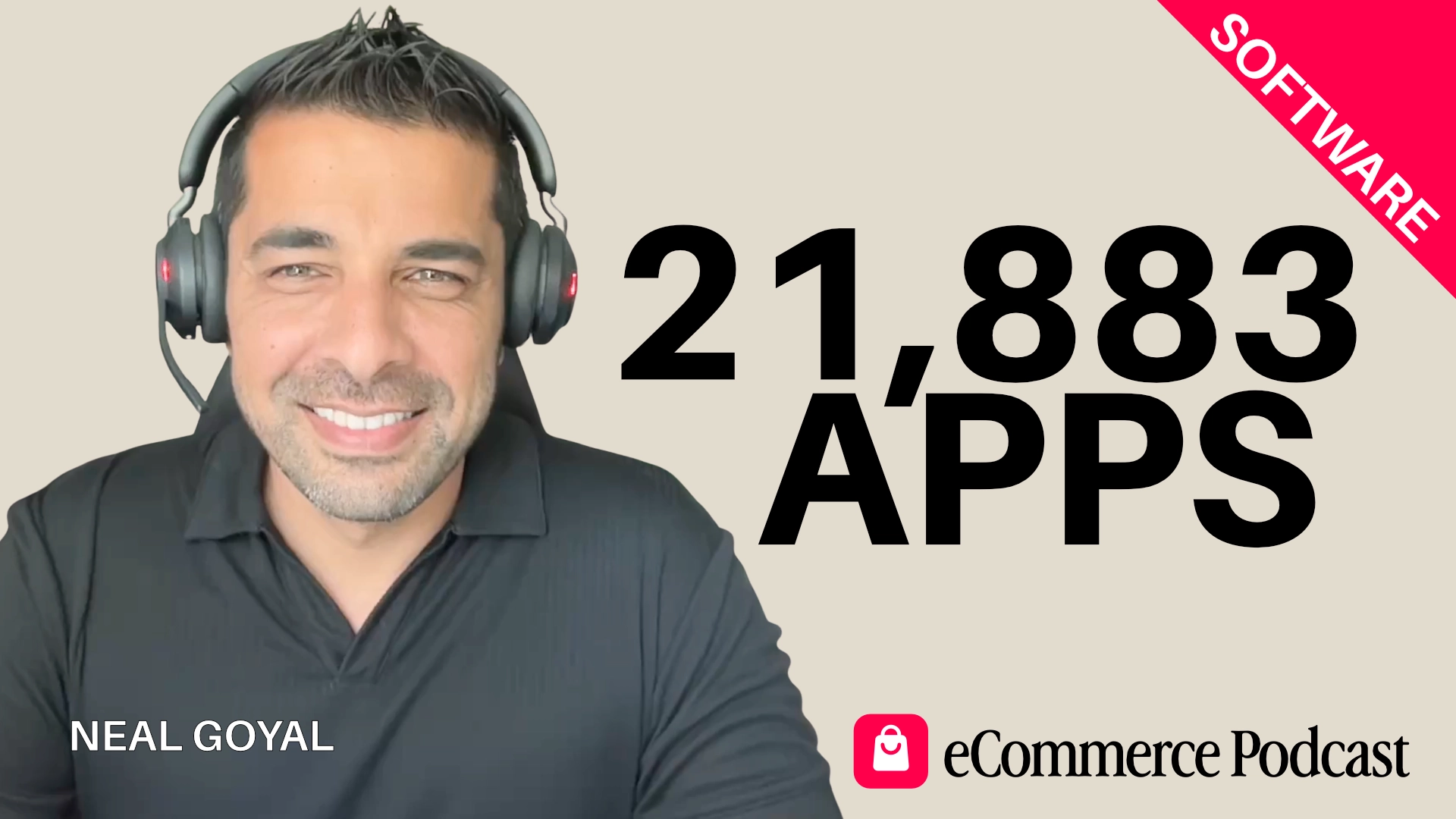
Neal Goyal
Neal Goyal
SaaS Class
Even more episodes...
Can Old-School Direct Mail Beat Email Marketing in Ecommerce?