How to Charge Double for Paper Plates (And Have Customers Thank You)
Selena Knight has spent 20 years in retail and knows exactly why most e-commerce businesses are undercharging. One of her favourite examples? An Australian party supplies company that charges $6 for $3 paper plates — and their customers keep coming back. In this conversation, we get into price anchoring, why the businesses that survived 2025 were the ones charging more not less, the three questions that close every in-store sale, and what she learned from Gary V's organisational psychologist about hiring people who actually think for themselves. If you're competing on price, this one might change your mind.
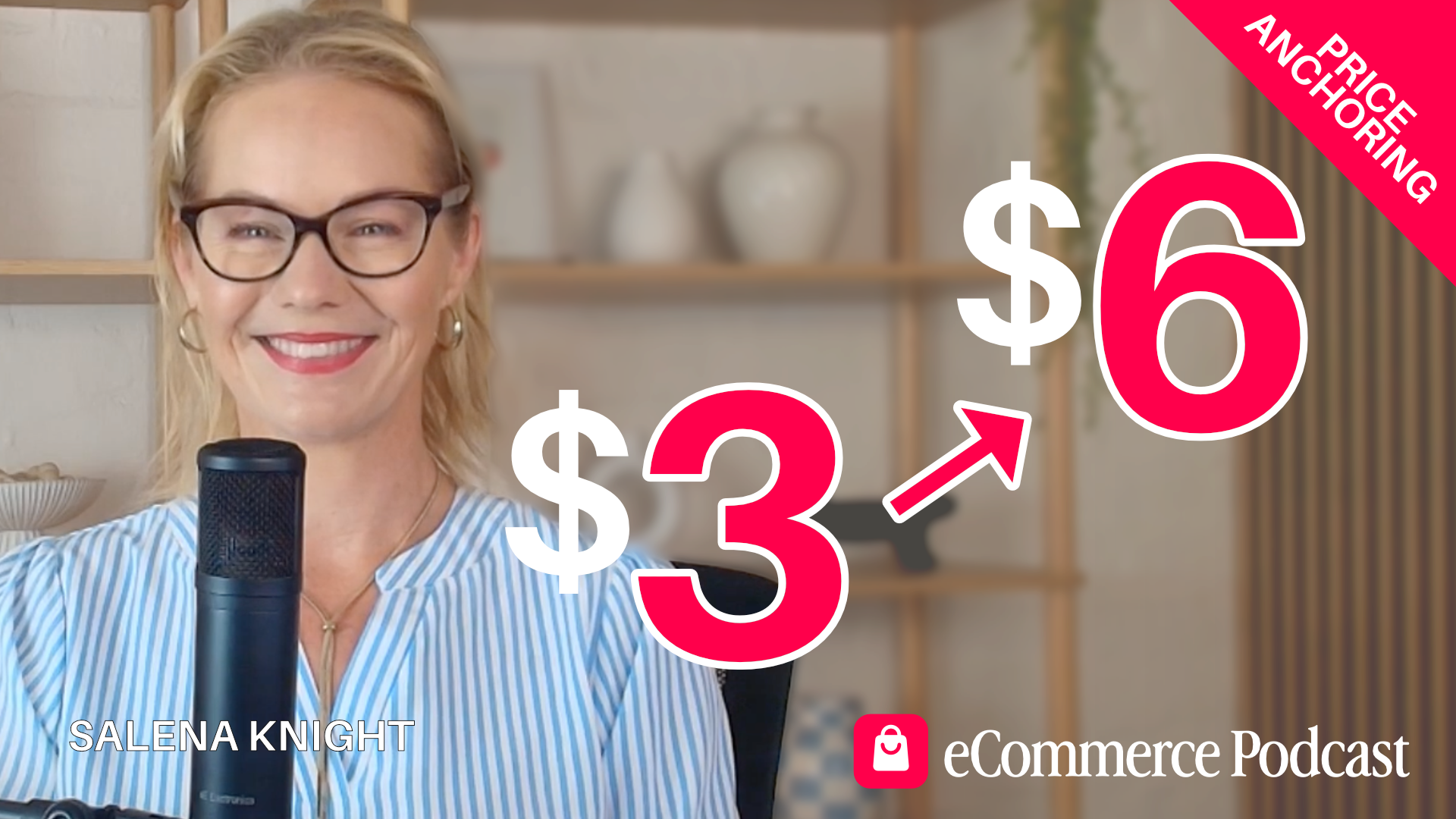
There's an Australian company called The Party People that sells paper plates for $6. The exact same plates are available elsewhere for $3. Their customers don't just accept the markup — they actually keep coming back. And this week on the eCommerce Podcast, Salena Knight, a retail growth strategist with 20 years in the trenches, explains why this seemingly simple pricing decision works.
Salena has built, grown, and sold a multi-award-winning chain of retail stores. She's worked with hundreds of independent retailers and e-commerce brands. And she's noticed that the retail businesses that thrived in 2025 weren't the ones racing to the bottom on price. They were the ones charging more. This episode unpacks exactly how they did it — from price-anchoring tactics to the hiring strategies that sustain premium positioning.
The $3 Plate Problem
When it comes to pricing, a common practice among many eCommercers is to look at competitors' prices and set ours slightly lower. It feels safe. It feels logical. But it slowly kills the business.
Salena challenges this thinking head-on with the example of The Party People. They sell paper plates, hats, piñatas — the most basic party supplies imaginable. Nothing proprietary. Nothing exclusive. Yet they charge twice as much as competitors for the same products.
Their secret? Range and convenience. When you're planning a Dora the Explorer party (or whatever kids are into now), you can get everything in one place — the piñata, the plates, the little paper bags, the hats. As Salena explains, "Their whole point of difference was that you can shop for everything in one place." Customers happily pay $6 for $3 plates because the alternative is a second order on a different site, which adds another $10 in shipping and the risk that it won't arrive on time.
The plates aren't the product. The convenience is.
What a £12,000 Cocktail Teaches Us About Pricing
Price anchoring isn't new, but most e-commerce businesses don't use it properly — if at all.
Matt said that at the Savoy in London, a gin and tonic costs £16. Outrageous, right? But then you turn the page and see cocktails for £300–400. Suddenly, £16 feels reasonable. Turn another page, and there's a flagship cocktail for £12,000. Now those £300 cocktails look almost sensible.
What happened? The first number we see sets our benchmark. Everything else gets measured against it. And this is behaviourally proven — our brains anchor to the first price we encounter.
Salena applies this directly to e-commerce category pages. Most stores default to sorting products alphabetically or in lowest-to-highest order. Her advice, which she usually reserves for her highest-paying clients, is different: "When somebody comes to a category section, I will always have at least two really high-priced products. And then I'll have the product that you really want to sell."
So if you're selling jeans and your sweet spot is £200, put the £300 pair first. Yes, some people will bounce. But as Salena points out, "They probably weren't gonna buy anyway." Everyone else now sees £200 as a bargain.
The £150 Burger Strategy
There's another pricing story from the episode worth unpacking. A burger restaurant was struggling — one of three on the same street, all selling burgers for £10. The advice? Don't sell a £10 burger. Sell a £20 burger. But don't just double the price — find a reason to charge it. Better ingredients. A different experience. Something that justifies the premium.
And then put a £150 burger on the menu.
It's the same principle as the Savoy. Nobody needs to buy the £150 burger (though you'd be surprised). Its job is to make £20 feel completely reasonable. Norm Farrar, a previous guest on the show, did something similar. He took a butcher's knife out of a cardboard box, put it in a wooden box, and charged four times the price for the same knife. Better packaging. Dramatically higher margins.
The lesson? Competing on price is a race nobody wins. Being the most expensive — with a clear reason — is almost always a better strategy.
The Three Questions That Close Every Sale
When Salena owned her eco baby product stores, she developed a great framework to help customers who didn't know what they wanted. It starts from the principle that if you give someone more than three choices, they probably won't buy anything.
When someone walked in looking for a gift, her team asked three questions:
- What type of person are they? Are they sporty? Crunchy hippie? Modern and minimal? This narrows the field dramatically.
- What pain point do you want to solve? Framed practically — are they the kind of person who'd love a candle, or antibacterial soap? This reveals intent without overwhelming.
- What's the budget? Now you can point them to exactly the right product.
From there, Salena would present three options: a high-priced item, a low-priced item, and a mid-priced item. And inevitably, people would buy the high-priced option.
The e-commerce application here is worth thinking about. Most online stores dump customers onto a category page with dozens of options and expect them to figure it out. But you control the canonical structure of that page. You choose what appears first, second, and third. You can guide that decision just as deliberately as a knowledgeable shop assistant would.
The Apple Store Diagnostic
Salena and Matt both keep coming back to Apple — and for good reason. Apple sells fewer products per square foot than almost anyone, yet generates more revenue per square foot than any other retailer.
There's a story from the episode that captures why. An elderly man walks into the Apple Store wanting "one of those eyes things — saucepans or something." He has no idea what an iPad is. He just knows his daughter told him to get one so he can see his granddaughter on screen.
The Apple staff didn't talk about screen resolution. They didn't mention battery life or the app store. They showed him how to make a FaceTime call. They even demonstrated it by calling across the store. Grandad walked out with an iPad.
The ability to quickly diagnose what a customer actually wants — in their language, not yours — is worth more than any discount. And as Salena adds, "If you give someone more than three choices, they probably won't buy anything." Apple understood this intuitively. Show people what solves their problem. Nothing more.
Why Premium Brands Won 2025
This isn't just theory. Salena shares what she saw across her client base in 2025 — a year where consumer spending tightened noticeably.
"Where I saw the people who did well were brands that I would call premium. Not luxury, not your Louis Vuittons, but they're charging above the average."
Which seems counterintuitive. When money's tight, shouldn't cheaper win? Not necessarily. Premium brands had already built their point of difference. They weren't competing on price, so price pressure didn't destroy them. Meanwhile, the businesses battling each other on discounts were left in a brutal race to the bottom.
The Party People could charge $6 for $3 plates because convenience was worth paying for. The burger restaurant could charge £20 because the experience justified it. Premium doesn't mean expensive for the sake of it. It means giving people a reason to pay more — and making that reason obvious.
Hiring People Who Actually Think
Premium pricing only works if the team behind it understands the vision. And this is where the conversation takes a fascinating turn into hiring and leadership.
Salena has a useful distinction: donkeys and unicorns. Donkeys are doers — your bookkeeper, your packer, the people who execute tasks reliably. You need them. But unicorns are thinkers. And if you want to grow beyond a certain point, you need people who can solve problems you haven't even identified yet.
"You can't be as smart as me," Salena tells her team. "You have to be smarter than me. Because if this whole business is only as smart as me, we're screwed."
She spent four months hiring for a CRM role because she refused to settle for someone who just wanted to tick tasks off an Asana board. Her operations manager was frustrated. But Salena knew they needed someone who could think independently — someone who'd say, "This doesn't work the way you want it to. Here's the solution."
The "Everything That Annoys Me" Exercise
Salena recently worked with Gary Vaynerchuk's organisational psychologist on her hiring process. The exercise was unexpected: write down everything that annoys you.
Everything. People who talk slowly. People who walk slowly. People who send long emails instead of bullet points. The list kept growing.
The insight? "When you ask people what they want, they can't usually tell you. But they can tell you what they don't want."
From that list, Salena could identify which frustrations were actually needs for her business. An operations manager who wants every detail before acting? Infuriating for a fast-moving founder. But absolutely essential for the business. The key is knowing the difference between personal irritation and genuine incompatibility.
This reframes hiring entirely. Instead of writing job descriptions for the job, write them for the culture. Be honest about what drives you mad — then figure out which of those things you need to make peace with.
Getting Your Team to Buy Into Premium Pricing
There's a moment in the conversation when Salena raises something many founders quietly wrestle with. Imagine you have a team member — maybe your e-commerce manager — who comes from a background where money was tight. Every time costs go up, their instinct is to absorb it rather than pass it on. "I think we should just keep the price the same."
This is a leadership problem, not a pricing problem.
Salena's approach starts with the job description itself. Rather than listing tasks, she talks about the mission. "Our mission is we create solutions that make money for your store. If you're not okay with that, this is not the place for you."
She runs group interviews where the first conversation isn't about the role — it's about who the customers are, what the company believes, and where it's heading. People self-select. Those who don't align leave. Those who do become the kind of team members who over-deliver — which, as Salena notes, is exactly what allows you to charge more.
Money Needs a Mission
Salena grew up in a very poor background and had to wrestle with the narrative that rich people are horrible and greedy. Her resolution is practical: "Every time you spend money, think about all the people you're supporting by doing that." The waitress. The bar staff. The supplier. Money in motion creates opportunity.
But money without mission is a problem too. As the episode explores, many wealthy business owners are deeply unhappy. They pour themselves into work because that's where they feel successful, while everything else suffers.
The businesses that attract great people and charge premium prices are the ones with a clear answer to "why are we doing this?" It doesn't have to be grandiose. It might be curiosity and experimentation, like Norm's knife business. It might be sustainability, like Salena's early eco baby stores. But it has to exist. And the founder has to articulate it clearly enough that the team can buy in.
Your Premium Pricing Action Plan
- 1Audit your category pages. What's the first price a customer sees? If it's your cheapest product, you're anchoring low. Restructure so premium products appear first.
- 2Identify your Party People advantage. What's the reason someone would pay more to buy from you? Convenience? Range? Expertise? If you can't articulate it, that's the real problem.
- 3Apply the three questions. Whether in live chat, email flows, or your site navigation — guide customers to the right product instead of overwhelming them with choices.
- 4Write down everything that annoys you. Use Salena's exercise to get clarity on what you actually need from your next hire versus what's just a personal frustration.
- 5Talk about the mission before the job. Next time you're hiring, lead with why the business exists and who you serve. Let people self-select based on values, not just skills.
Full Episode Transcript
Read the complete, unedited conversation between Matt and Salena Knight. This transcript provides the full context and details discussed in the episode.
Full Episode Transcript
Read the complete, unedited conversation between Matt and Salena Knight. This transcript provides the full context and details discussed in the episode.
Matt Edmundson (00:04)
Welcome to the e-commerce podcast. My name is Matt Edmondson and it is great to be with you today. I am chatting with Selena Knight all the way from the other side of the world, from the land down under, as we would say in Britain. What, in fact, Selena, let me ask you a question. What do you say about Brits? Are we the land down up? I don't know. How do you refer to it?
Salena Knight (00:28)
Well, my husband's from the UK and I think we just say from the UK or in the UK. You know what? It's kind of like, ⁓ can we look, I don't know if this is a great start. You know how you can edit this out if you're not happy with it, but you know how Americans, lot of Americans have like, I think it's like 90 % of Americans have never left their country.
Matt Edmundson (00:32)
Hahaha
Yeah,
it's a really big number,
Salena Knight (00:48)
And when you ask them, you there's those memes where you ask Americans to point out different countries and they can't find them. I feel like Australians are like that with anything that is remotely UK-ish. It's just the UK. And it could be, it could be Scotland, it could be England, it could be, it could be Paris, but you know what? It's just the UK.
Matt Edmundson (01:00)
Right?
the UK. Yeah, no, fair enough. Fair enough. That's brilliant. We just call it the UK. Why don't we just call it Australia? I don't know. Why do we have to call it the land down under? Who knows? Who knows? I'm sure there's some history buff somewhere that's going to give me, you know, LinkedIn message telling me why. But that's great. It's great to see you on the show. Thanks for coming.
Salena Knight (01:29)
No problems, thank you for having me.
Matt Edmundson (01:31)
I have to be honest with you, for those of watching on YouTube, you'll notice that you actually have a really good microphone. So I have slight mic envy.
Salena Knight (01:40)
Ooh, ooh, I love this microphone. Are we allowed to like digress this early in the podcast? I may well have many microphones, but I went, okay, we're talking about retail and the experience. Like this is, I'm just side barring and bringing this back in.
Matt Edmundson (01:45)
Absolutely. Yeah.
Yeah.
Salena Knight (01:57)
When I first started podcasting, which was 11 years ago, I had some crappy microphone and I remember somebody giving me a horrible review saying, oh, the audio is terrible. Because back then we didn't have video, we just had audio. And so I remember thinking, okay, I'm going to do this. I'm going to go to like a microphone shop, do they exist? And I'm going to see if I can find someone who will let me try microphones. Because I remember back in the day listening to people like Pat Flynn and
Matt Edmundson (02:01)
Mm.
Yeah. Yeah. Yeah.
Salena Knight (02:27)
I'm just trying to think of who else there was, but they had these like quite smooth microphones. And so I did, I did all this research and I found this store. actually wasn't too far away. It was a music store.
Matt Edmundson (02:29)
yeah, yeah, yeah
Yeah.
Right.
Salena Knight (02:42)
but they had a sound booth in there. And so you would go in and you're like, I would like to try a podcast. And I'm still, I still have literally no audio knowledge whatsoever, but they're like, do you want a bright pod? Do you want a bright microphone or a, I don't know, all these other words of microphones. I just want to sound, I want my voice to sound like husky and sexy.
Matt Edmundson (02:58)
Mm-hmm.
I want the
hucky and sexy microphone, that's what I want.
Salena Knight (03:07)
Yeah, but apparently there are different microphones that can change. I mean, you may know more than me. And so he put all these microphones through and I listened to this microphone and I was like, this is the one. And it was a brand I'd never heard of. It is an SE 2200. Yep.
Matt Edmundson (03:10)
Yeah, that's it.
Salena Knight (03:27)
and never heard of it, didn't care. It was reasonably priced, I'm going to say like $600. And you know, those Sinehouser microphones go for a ridiculous amount of money. This is my third one of the exact same microphone. So one I may have dropped. ⁓ One they did repair under warranty and it just started crackling. And so this is my third one and I absolutely love it.
Matt Edmundson (03:37)
Yeah, yeah.
Salena Knight (03:53)
I'm yet to find somewhere else. But here's the thing, if we can bring this back to retail, and I know that the people who are listening are e-commerce, it's how do you think about that customer experience? Like I will continuously go back to that store and I have bought many microphones from that store just because A, they know what they're talking about.
And B, they could provide something that no one else could, which was I could go in and try the thing and find the thing I wanted. Now, I appreciate you can't always translate that to online, but I'm gonna guarantee the people listening probably have a lot of experience in their field. And so my question would be, how are you translating that Insta experience to online? Because there are ways of doing it. So.
That's my little story about the microphone and I'm sorry I've just wasted about 6 or 7 minutes talking about microphones.
Matt Edmundson (04:45)
No, no, no. It's fascinating. You're right, aren't you? Because what they did listening to you talk, it reminds me of the Apple store, right? I have done this with folks. I've taken them into the Apple store and just like made them stand there and just watch the salespeople in Apple. Because I remember the first time it was made aware to me how well they actually did was I remember going into the Apple store. I was looking at something.
So, you I can't remember what it was, but I remember this, this old fella coming in the door and the person greeted him at the door and said, how can we help you? And he was like, I need to get one of those eyes thing. What are they? Saucepans or something? I don't know. And the guy goes, do mean an iPad? He says, I think so. I don't know what it is. I've just been told to come and get one. And he's like, what do you want to do with it? He says,
I do that thing where I call my granddaughter but I see her on the screen and the guy goes, ⁓ FaceTime. Now the granddad here has no idea what FaceTime is. He doesn't even know what the iPad is. He just knows what he wants, right? Like you, I want a microphone with the sexy and the husky settings, please. That's what I want. What they did in Apple was they got him an iPad.
And they showed him how to do a FaceTime call. They didn't talk to him about screen resolution. They didn't talk to him about battery life. They didn't talk to him about the app store because I was listening to every single bit of it. All they did was talk to him about how did FaceTime and they even showed him how easy it was by doing FaceTime calls across the Apple store. He was like, the guy was like, do this. I'm going go over the other side, hit the button and let's see how it works. And of course, Grandad goes out with an iPad. I thought it was
utter genius, the ability to quickly diagnose what it is they, the customer wants in the language that the customer wants it and deliver that. I think you're going to win every day.
Salena Knight (06:45)
And without overwhelming them. so I think what we, what I take away from that is I remember, I've been in retail a really long time. And I remember back when we had our stores, like I was on, I had an e-commerce store in 2007. Now that may not seem like a long time ago, but I like to reference it with guys in 2007, we had to push the number one button three times if we wanted the letter C. Okay. We did not have data on our phones.
Matt Edmundson (06:47)
Mm.
Mm-hmm.
Yeah
Salena Knight (07:15)
just to put it into reference.
Matt Edmundson (07:17)
Yeah,
we had dial-up as well. Oh no, do we have dial-up in 2000? Probably. Okay.
Salena Knight (07:21)
Oh, I feel like we're just a little bit past dial-up. Well, we
were here in Australia. So I had an e-commerce store then and Flash was our favoritest thing in the world. But besides that, I remember bringing in a, I don't know, a system.
Because I'm going to say I had a business degree, told me nothing about running a business. This is the kind of stuff they should teach you. So I remember people would come into my store and they would say, oh, I'm looking for a gift. So to give you some reference, we sold eco baby products, like eco baby products and gifts. So wooden toys, as well as things like reusable nappies back when eco wasn't even a thing. And so a lot of people, exactly what you just said, they would come in and they're like, oh,
Matt Edmundson (07:42)
Yeah.
Salena Knight (08:06)
I'm shopping for my friend and she's like a crunchy hippie person and so I've got to find like you guys seem like you might have something for them. And I was like, cool, okay. And so here's, we called it the three questions and gosh, hopefully I don't like crash and burn here and forget what the three questions were. But it was, it was something along, and I give myself the ability to come back and rectify this if I remember correctly, but it was.
Matt Edmundson (08:22)
no one recorded this.
Salena Knight (08:30)
Are you looking for, so when people would walk in, would be, you know, hi, have you been to the store before? And if they said yes, then we would have a little matrix, which was like, okay, great. ⁓
you know, it was something along the lines of, you shopping for yourself or for a gift? So the idea was that you never had yes or no questions. And are you shopping for yourself or for a gift? I'm shopping for myself. And then it would be, okay, what can I help you with today? And then if it was a gift, we had the three questions, which were, ⁓
what type of person are they? So are they a sporty person? Are they the crunchy hippie person? Are they the modern person who just wants to be a little bit eco? And then I guess the next question would be like, what sort of pain point do you want to fix? And so we would say something like, are they the kind of person who would like a candle or are they the kind of person who would like antibacterial soap?
And so we would start to get an idea of who this person was and what they would want. And then the last question was, what's the budget? And those three questions could usually mean that you could pinpoint where to point somebody, especially if they were like your granddad, not your granddad, the granddad, who didn't quite know what they were looking for. And so what I've learned is that if you give someone more than three choices, they probably won't buy anything.
Matt Edmundson (09:54)
Yeah.
That's true, yeah.
Salena Knight (10:04)
because they want a high price thing, a low price thing and a mid price thing.
And inevitably, I tend to find that they buy the high price thing, which is great. And so when we're thinking about like e-commerce, one of the tips I always give people is you have the ability to structure how customers are going to see your products when they come to a category page. It doesn't have to be highest to lowest. It doesn't have to be alphabetical. You get to choose, is canonical the right word? I think I feel like it's the right word.
Matt Edmundson (10:38)
Yes.
Yep.
Salena Knight (10:40)
You get to choose the canonical structure of your page. so one of my tips, and I only usually share this with like my really high paying clients is when somebody comes to a category section, will always have at least, assuming you have three across the page, two really high priced products. And then I'll have the product that you really want to sell. So like the best seller.
And it's usually, you know, maybe 30 % cheaper. But what we're doing now is price anchoring. And it's the same reason that when you go into some stores, stores change the way they do their layout, some will put discount stuff at the front, but some will put premium at the front, because the idea is the first number that we see, and this is behaviorally proven, is where we set our benchmark.
So let's say we're selling jeans and your average pair of jeans is $200, 200 pounds. If we put the first pair that they see at 300 pounds, yes, you may turn some people away.
But you know what, they probably weren't gonna buy anyway. But if they go to the next wall and all of those jeans are 200 pounds, they're a bargain compared to the first ones that I saw. And our brain has benchmarked the 300 pounds. So now what we're seeing, in fact, we're not even putting them at 200 pounds, are we? We're putting the 199. So we've gone from a three to a one and instantly they're more valuable. Does that make sense?
Matt Edmundson (11:52)
Yeah.
No, totally. I think price anchoring is a really interesting strategy and it's a really interesting. I've, I noticed this at the Savoy. I don't know if you've ever been to the Savoy in London, you don't need to go, but I, we went to meet a supplier there and the supply was buying me drinks and I opened the menu and the first, I just, I just have a gin and tonic. I don't need anything fancy. Give me a gin and good old fashioned gin and tonic.
Salena Knight (12:25)
I have not been to this point.
Matt Edmundson (12:42)
I opened the menu, gin and tonic was £16, Selena. I was, I was apoplectic. I was like, this is a Gordon's gin and tonic. Why are you charging me so much money? And then I turned the page and saw the cocktails and the cocktails were three or £400. I was like, that's just, not only is that nuts, it's itsy moral to spend 400 bucks on a cocktail. I turned the page and there was one cocktail, their super flagship cocktail for £12,000.
Right.
Salena Knight (13:12)
I think I've
heard this story actually in marketing.
Matt Edmundson (13:16)
It was.
Yeah. Yeah. Why I asked the lady, said to do you actually sell this 12,000 pound cocktail? So you'd be amazed how many we sell, right? The bankers that come and get their bonuses, they've just got a million pound bonus. They want, they're like, yeah, I'm just going to taste 12,000 pound cocktail cause I can. But what was happening? The reason I tell this story is same thing. And I recognize what was going on in my head. The first time I'm like gin and tonic 16 pounds is ridiculous. At that point I'm having tap water.
And then I saw a 400 pound cocktail and thought, well, maybe a 16 pound gin and tonic is not that bad. And then I saw a 12,000 pound cocktail and thought, 300 pound cocktails, not that bad. And the guy that was buying the drinks, the supplier was like, should we have a couple of cocktails? I'm like, we would never have had that conversation had we not seen the 12,000 pound cocktail. And it was all around pricing.
Salena Knight (14:08)
Can I say you're kind of person who I had to hang out with because I would be like you, I'd be like, you're paying but 16 pound cocktail, just give me some water, I'll be fine. So can I ask you a question then about how, when it comes to pricing, if we pull this back to e-commerce.
Matt Edmundson (14:17)
Yeah, yeah. That's ridiculous.
Salena Knight (14:30)
How do you tell people, or how do you advise people to charge, let's call in air quotes, ridiculous prices? What's your suggestion there?
Matt Edmundson (14:43)
absolutely. You should do it.
Salena Knight (14:45)
But how? How
do you... Can we talk about this? I've just like railroaded your podcast. I'm so sorry.
Matt Edmundson (14:48)
Yeah. No,
no, no. Let's take over time. ⁓ You know what, I do the same when I go to the people's podcast. It's like, well, let me ask you a question. It's like, no, no, Matt, I'm the podcast host. ⁓
Salena Knight (14:56)
So.
Well,
where I'm going with this is what I saw last year. Now, I'm sure it's the same in England. We've got some English customers and I'm sure it's the same there, which was 2025 was a bit tight. was some people saw growth, but we definitely saw a change in consumer spending. And so where I saw the people who did, who either stayed the same or did well, were people that were brands that would I, what I would call premium. So not luxury, not your Louis Vuitton's, but they're
Matt Edmundson (15:15)
Mm-hmm.
Yeah.
Salena Knight (15:34)
charging above the average for things. And some of those are very niche, so they can charge what they want. But others would just... And there's a company here in Australia that I always come back to because it is the most basic ghetto thing, and they charge more. So there's a company here in Australia called The Party People. They sell party supplies, paper plates, hats, Dora the Explorer piñatas, all that kind of stuff.
Now you can buy a set of paper plates for, I'm just gonna say dollars, because we're dollars here, you can convert, for $3. Pink paper plates, $3. However, they charge between $5 and $6 for the exact same plates.
because and I'm talking same brand same everything but their point of difference is that when you come to get your Dora the Explorer and clearly my kid has long since grown up if I'm saying Dora the Explorer
You can have everything. You can have the pinata, you can have the plates, you can have the little paper bag, you can have everything. You don't have to go to that store for the bags and that store for the hats. You can get everything. And so their whole point of difference was range and that you can shop for everything in the one place. And as a result, as the consumer, you're like, well, I'll pay $6 for the plates because if I go over there, I'm going to have to pay for shipping. And this is an online store, just FYI. If I
to that store, then I'm going to have to pay another $10 shipping and then what if they don't come? Like at least this, it all comes together in one thing. And so they can charge more because they have a different point of difference for something that is very basic. But what I found in 2025 was the retailers that did well were people who were charging above what everybody else was charging. And so I would love to hear your thoughts on
What do you say to your clients, to your retailers about, you know what, you're selling the same product as Joe Bloggs over there, but I think you should charge more.
Matt Edmundson (17:42)
Yeah, absolutely. I think it's, I mean, I do it. I have an e-commerce site and we, one of our sites is a supplement site. We sell vitamin C on that supplement site. You can get vitamin C for two pounds from the supermarket. We sell it for I'm never going to clean up selling vitamin C, but I, the people that buy it are just like, we know the brand, you know, you guys are going to make a good product and it's convenient. Right. And so that in itself has value. The other thing I like,
Salena Knight (17:53)
Yeah.
Matt Edmundson (18:12)
I remember talking to a lady who owned a restaurant. I appreciate this is not e-commerce, but this is just one story that springs to mind. They were struggling. They were burger restaurant and they were like, there was three of them on the street. I walked up and down the street and there was these three burger shops and they're all selling burgers for 10 pounds. And she's like, what do we do? How do we get more people in the shop? Cause they were just one of three. And at that point, when you're selling everything for the same price, there has to be a point of differentiation.
Salena Knight (18:40)
And there has to
be, doesn't it? Like, see, you say that to me and my first thought was, judge 15.
Matt Edmundson (18:46)
Well, I told her to double the price of the burgers. I said, don't sell a 10 pound burger, sell a 20 pound burger. Don't just double the prices, but find a reason to sell it for 20 pounds. And she's like, well, no one will buy because there's 10 pounds down the road. I said, they'll buy if you have a burger on your menu for 150 pounds. Right.
Salena Knight (19:01)
It's
look, it's like Kizmo. We're back to the same conversation. ⁓
Matt Edmundson (19:05)
Right? So this is how I think you do price anchoring. like you say, if you online go and find some, we had a guy called Norm come on the show. Norm was great. His whole philosophy in life was you take something from Amazon, like a knife. I think he used the example of a butcher's knife. Norm, Norm Ferroir, think, I can't remember, it's really bad. Sorry, Norm. But he took a butcher's knife, took it out of the...
the cardboard box and put it in a wooden box, charge four times the price for it because his photos now had a wooden box and sold gazillions of them at much higher profit margins. And I'm like, for me, that's how you figure it out. You sell, you figure out a reason as to why you become the most expensive. And I always think that's better than being the cheapest because then you're just selling commodities and you have to try and differentiate. And the way you differentiate is you just differentiate on price, which is rubbish. So I think
like you, I'm a fan of how do I put the prices up? How do I do that in a way that demonstrates value to the client where they feel like we're getting something here?
Salena Knight (20:14)
All right,
I love this conversation. If we tie it back to as the business owner, if you are stuck, and I don't know about you, but I know that most of the people that we work with, the owners or the founders are...
freaking amazing people. They will work themselves to the bone and they've built this business because of like a hard work tenacity, this sheer doggedness of, I was thinking this morning, why would anybody get into retail? Like, when you think about it, and I'm just side barring here and I hope you're okay with that, is that most retailers I know are very adverse to risk.
Matt Edmundson (20:35)
Mm-hmm.
Yeah.
Thanks for all you do.
Mm.
Salena Knight (21:03)
They, you don't know if I want to go into that new range or open another location, whatever. But then I sit back and think, I was doing my hair this morning, I was like.
How does it work that you, if you're that adverse to risk, that you decide to open a business where literally every decision you make is a gamble. It's a gamble that when you order the product, it's going to turn up. It's a gamble that anyone's going to buy it. And you are investing tens, if not hundreds of thousands of dollars in inventory on this hope that someone is going to buy it you will make some money. And that is one of the biggest gambles when it comes to business. It's not even like a service business where you
go out and do the work. That's pretty reliable. But retail, I'm like, how do you get into this? And so sometimes I do think, why don't we start retail businesses? ⁓ And so with that, my question to you, if the conversation we could have would be around when retailers are so, and e-comment, I'm just going to use the generic word retailers. When we're so used to buying everything at wholesale price, how do we combat
that idea of being affordable is the best place to hang out. And that we should be okay with telling our team that, you know, I'm going to go back to Norm. Like, imagine he has a team of people who take knives out and put them in the wooden boxes and the team potentially are saying, Norm, this is unethical.
How do we deal with that?
Matt Edmundson (22:44)
That's a great question. This is why I take people to the Apple store. Simply because they're the most successful retailer out there per square foot. No one sells as much as Apple per square foot. At least they didn't. They have the fewest products you would expect to have in a store. And it's just like go and look, right? Go and see what is going on there and figure out how you do that online. Because it's...
Salena Knight (23:08)
Yeah.
Well, they do it online.
Matt Edmundson (23:11)
Yeah, And they're magical with it in many ways, right? I think it's a really interesting success story. How do you do it?
Salena Knight (23:23)
⁓ I think there's a lot of things, if we draw back to, ⁓ if we draw back to what, let's go with Apple. What did they do well? Do you know what their product from what I hear.
the Google products and Android products can actually supersede Apple, but they've built that the cult status. to be fair, once I change and I can copy and paste between phones and iPads and things, that was my saving grace. I will never go back. And it's amazing how many people don't know how to do that. But if we take away, so one, think they have the cult status and they've done that through
things like pre-selling and like really building up the hype. But the reality is it's sexy. Like they made something very boring, very sexy. Whereas if I go to Google, they've made their phones fun. And I think that if we look at them, they're very different brands and they attract very different people. But...
there is an exclusivity that comes with Apple products and the people who buy them want other people to think that they're cool and I have the good stuff. And when it comes back to translating that online and the unethicalness, ⁓ I would say that what Apple have done well,
Matt Edmundson (24:33)
Yeah.
Salena Knight (24:56)
is have their team buy into the vision. I don't even know what Apple's vision is, but what they've bought into is the brand. And if you can build that, you won't ever lose employees and they won't question. I think the problem becomes when the, you hire people for the sake of hiring people.
Matt Edmundson (25:10)
Mm-hmm.
Salena Knight (25:22)
And you can fix this in the hiring process. And this is something I accidentally did very, very well. Like I didn't know it at the time. I've been doing it for 20 years and I still do it. I still tell my people to do it now, which is when I write a job description, I very rarely write it for the job. I write it for the culture. And I think there is a point in business where you can...
train someone to do anything versus when you have to have the expertise. And you will hit that usually around seven figures where you have to, you know, you can just train Sarah. She's gone from, you know, uploading products to now she's the e-commerce manager because she's just got the experience. But that gets a point where you need expertise.
regardless of which one of those stages you're at, if you're not really clear about where your business is heading and how customers value you and how you're going to turn up, it is really difficult to get people to buy into that. So I know that even to this day, I start my, I do a group interview to begin with, and even in store and online, I do a group interview and I start that with,
talking about the business, but not talking about the business. So what I'll do is I'll be like, our customers are these kinds of people and what we love about them is this. we're on a mission, you know, our, our, our mission in our company is we create solutions that make money for your store. And so if you're not okay with that, this is not the place for you. Like if you're not okay with helping people make money and become rich in whatever way that looks like for them.
this is not the place for you. And I have run into this problem before where as the business grew, our business manager hit that point where she could not think to the next level. And she was just stuck in the, like, I can't fathom what this business would look like at 20 million, 30 million, $40 million. And that's okay.
because who got you here won't get you there and what got you here won't get you there. And so coming back to that conversation of how do you make sure that your team are on board? This is a leadership thing. It's not even a hiring decision. is you as the founder, as the owner. If you don't even know where you're going, then how the heck do you get someone else to buy into that? If you are so busy working in your business and
Matt Edmundson (27:41)
you
Salena Knight (28:07)
Micro-managing, I always say that, you you could always tell the businesses that are stuck because the owner needs to know everything, everything about everything. But if you need to be that person, you won't get to $20 million. You might get to 10, but you won't get past that because your business cannot be capped at how smart you are. And I will always say, I've literally just hired a new marketing manager.
Matt Edmundson (28:15)
Yeah.
Salena Knight (28:36)
And I said, you're saying things I don't know, which is great because you can't be as smart as me. You have to be smarter than me because if this whole business is only as smart as me, we're screwed. I can't be smart in every single area of the business. I just need to be smart in this part of the business. You guys all need to be smarter than me and you need to come back and tell me what we need to do and I will make a decision. And so all of that comes back to
Matt Edmundson (28:56)
Yeah.
Salena Knight (29:05)
Sometimes I'm just again, sidebarring. My brain goes in like 700 different circles. But there is a point when you grow where what you wanted has now changed and that is okay. And when you start making good money, I think it can become a difficult thing to go, but why do I need to make more money? And here's my answer to that. If you make
Matt Edmundson (29:19)
Mm-hmm.
Salena Knight (29:35)
$100 million this year. One, on a personal level, you have choices. You don't have to decide, do I get medicine or not? Do I get surgery or not? Do my kids go to the best school or not? So one, money gives us choices. Two, you get to choose what to do with that money. And every time you buy something, whether that is a Lamborghini or that is a bottle of Coke or that is a $12,000 cocktail,
Think about all those people that you're supporting by doing that. So you've got, you know, let's go with the $12,000 cocktail. You've got the waitress, you've got all of the bar staff, you've got the supplier who brought in the cocktails. Yes, you've got the massive conglomerate who owned the Savoy, but all of those people work as well and all those people get paid. And so I came from a very, very, very poor background. And this is how I have resolved that is okay making money is that
Matt Edmundson (30:09)
Mm.
Salena Knight (30:34)
every time I spend money. And you know what, even if I don't spend it, if it sits in the bank and makes money, then all those banking, well, there's not many banking employees anymore, but there are a few banking employees who have jobs as a result of that. And so that is how I've resolved, because I grew up with money, rich people are horrible and rich people are greedy. And I think the media portrays that as well, which is especially for women, maybe it's different for men. But when you think about any movie you've ever watched,
Matt Edmundson (30:47)
Mm.
Salena Knight (31:03)
the female CEO or executive, she's either a bitch, sorry if I can't beep, she's not very nice person, or she's doing this at the expense of her family, or she's doing this at the expense of herself. And it's funny that men are not always portrayed like that. So I'm just taking from my bias. And what I have discovered is it doesn't need to be like that, but the more money you make, the more you have the ability to make the world the way that you might want it.
to be. And that's your choice.
Matt Edmundson (31:36)
really interesting point, isn't it? Because I think ⁓ people want to make a fewer if you're in business, you want to make money, even if it's to fund your mission. And I think, I think conversations about wealth are quite fascinating. You know, we were talking about wealth earlier on, like how you build wealth with us with a group of guys. ⁓ Stay talking about building wealth and you kind of like
Money without mission, I think is a waste of time. I think the people that struggle the most with wealth have no mission for their money, whatever that mission is. And, you know, I've, I've, I've been fortunate enough to know some of the wealthiest people on the planet, you know, and I've been on their private jets. So I could tell you all kinds of stories, which I won't bore you with right now, but most of them are like, I wish.
Salena Knight (32:10)
Mm. Yeah.
You're so fancy!
Matt Edmundson (32:32)
Most of them are unhappy. And they get their self-esteem from work, right? So they're not getting it at home from their family. So they pour themselves into work because they've made more money at work. So therefore they can feel better about themselves. At least they're successful here. And so I think you're right. I think you have to wrestle with this. What's the mission? What is success to me? What does that look like? Because hopefully you're going to get there.
Salena Knight (33:00)
Yeah, and if you know, and if you, sorry to cut in, but if you know that, how much easier is it to get people on board and get them to buy in rather than this is a job and you get paid and they're just waiting for somebody else to pay them more. And I think that that is what I accidentally did well.
Matt Edmundson (33:00)
and actually defining that is helpful.
Yep.
Yeah.
Salena Knight (33:25)
was that
I was so invested in what we were doing to change. As I said, this was before eco was a thing. I came from a background, well, I came from a job in sustainability. I was passionate about the planet. I was passionate about my kid's skin and what she was going to grow up like and where the world was going to be.
Matt Edmundson (33:28)
Mm-hmm.
Salena Knight (33:49)
If you know that and you can express it, you will bring the people in who want to be part of that. And I think that if we bring it all back full circle, think that Apple does that well, whether it's the mission or whether it is the cult status, what they've done is put a group of people together who love the product so much. And you know that, like you said, every time you go into an Apple store, they know the product inside out, that they're going to fix.
granddad's problem and then they're going to fix my problem completely differently.
It's so much easier to get people to stay and to help and to over deliver. And if someone over delivers, you can charge more. If they're bought in.
Matt Edmundson (34:37)
That's so true. And I think they buy into, if you're the leader, if it's your company, my experience is they, I've never had a member of staff sit down and interview with me, know, potential member of staff sit down and interview with me, Selena and go, how do I make you more money, Matt? I'm really, my whole life's goal is to make you richer, right? It just, that's never ever happened. And I understand why.
And because I don't think anybody that works for me, ultimately, I don't think their goal is to make me richer. I think they'd like the consequence of my wealth growing because they do better, right? It's always better to be involved in a company that's growing, that's dynamic and good things are going on.
So they have got to buy into it and it's got to be, I think what they buy into, like, don't think many people at Apple buy into making Tim Cook richer. I don't buy an iPhone to think, there you go, Tim, have that one on, that pints on me, right? Doesn't happen. I could care less in many ways. But like you say, they're bought into the brand. They're bought into the story and they're bought into the mission of the company.
And if the company makes a shed load of money, well, that's a consequence of the mission. That's a consequence of the vision being fulfilled. And so you hear of companies like Patagonia doing really well because they just people just love their story and it's so unusual. The whole guy just gives his company back to the planet. I mean, how does that work? I don't know, but everyone loves it.
Salena Knight (36:10)
We call
Patagonia Patagucci.
Matt Edmundson (36:15)
That's a good name. Yeah, they should trademark that. They should definitely trademark that. But no, I think you're right. think, I think money has to have a mission. People like to be involved in something which is bigger than themselves. ⁓ that has a mission, whether that's helping the planet, whether that's helping their kids, whether that's whatever it is, there has to be a reason for them to be involved. They got to feel like a member of a tribe, a community. ⁓ and I think if you can do those things.
Salena Knight (36:19)
you
Matt Edmundson (36:45)
you'll ultimately do well. The people that lose I think in the end are the people that are just no no no I'm not gonna I'm not gonna have that on over there because it will save ten bucks and that ten bucks I want in my pocket. Do know what mean? It's like I think people feel things like that.
Salena Knight (37:04)
Yeah.
I think they do too. I, what I would say there is when it comes to, if it, when it comes to you as the owner, as the founder, you said many, many rich people are not happy and coming out of 2025, I can tell you that many retailers aren't happy now either.
And I think that happens when we fall back into all of the doing and we lose sight of that bigger picture. And so maybe this conversation is you just thinking, why do I do this? And if the answer is so that I can have a million dollars in the bank and I feel secure and I can send my kids to a good school, well, that's fine. But know that that may not be the same thing that your team buy into.
Matt Edmundson (37:38)
Mm.
Yeah.
Salena Knight (37:57)
And if that's where you want to go, that's where you want to go. But I'm guessing that even if you want those things, the reason you did this was something else. I just know that most of the people that I work with love their product or they love their customer or they love their niche. I would love to know about Norm though. Like, why does he do it?
Matt Edmundson (38:17)
He, that would be a question for him. mean, from what I know of Norm, he's a great guy. I've been on his show a couple of times. He's been on this one a couple of times. I think he loves the hustle of it and, the people around him are like, yeah, you know, this is, this is kind of cool. It's got that kind of hustle vibe about it and it's dynamic and they're growing and they're, making stuff work over here and they can experiment and they can do all these kinds of different things. And they've got the capacity to do that.
Whereas I think if Norm just sold the same knives in the cardboard box, they wouldn't have the capacity to do that because then it's just a volume game, isn't it? It's just like, I've just got to sell the same thing 10,000 times to, you know, buy a Mars bar or something. And so...
I think people like that. think I'm curious to know why he is in it though. I mean, Norm must love people. I hope there'll be something in that.
Salena Knight (39:07)
You ⁓
But what I think you have highlighted there
is what I took away from that conversation, whether you meant it or not, was your dream doesn't have to be this great big thing. Your vision could just be, I like wanna find better ways to do stuff. And if we're talking about that example, it's kind of like their culture from what you're telling me would be like.
almost like testing and measuring. So, you know, it's this constant test. It's constant A-B test. What's this knife worth? What if we stick it in an aluminium box? What would happen versus a wooden box versus a, I don't know, a stainless steel box? And that curiosity, so what they're fostering there is curiosity. Curiosity and, you you said hustle, but I'm thinking it's, you curiosity and innovation and the success that comes with testing.
Matt Edmundson (39:56)
Yeah.
Yeah,
yeah, experimentation is that
Salena Knight (40:08)
That's
a good word. Thank you very much.
Matt Edmundson (40:10)
Yeah, and there are some people that are just thriving that they just learn.
Salena Knight (40:13)
Yeah, exactly.
And those people are probably not going to be great people at the Apple Store, because the Apple Store is, I'm going to say it's formulaic in the sense that this is our product and we solve this problem. Whereas that is a completely different environment to where you get to, you you get to take risks and you get to think about things that it's outside of the box or inside of the box, whichever way you want to put it. ⁓
Matt Edmundson (40:18)
Mm.
Mm.
Salena Knight (40:39)
And you're going to attract different people. And so I can imagine without knowing Norm, something along those lines is when he's hiring, it's kind of like, hey, if you're the kind of person who, you know, used to stick forks in electrical outlets to see if you would get electrocuted, this is the job for you. Please don't do that.
Matt Edmundson (40:56)
to every, every,
every young boy goes and applies for the job because we've all done it. That's great. Great. It's no, it's fascinating. ⁓ what you say, Selena and I, and I love it. think it's, it's, I don't know where you are listener in terms of your e-comm journey, right? I don't know you're just starting out. I don't know why you're doing what you're doing. I don't know if you're years into it.
But I think it's good to tap into the reason why you're doing it and to articulate that and to remind yourself of why you're doing it. To remind yourself of what it is you're trying to build. And to also remember why your team are doing this. Because like you say, Celine, don't, those two aren't always the same thing. But there has to be some congruency if you're to keep people long term. And to think about that.
And I was always told in leadership school that how do you know when you've talked about the vision enough in your company? I think the answer was well, when you're absolutely sick and tired of talking about it, because you feel like you've done nothing but talk about it all the time, then you're probably just about starting to talk about it enough.
Salena Knight (42:17)
My answer to that, I agree with that, but my answer would always be if you have the kind of people who come in early and stay late and don't expect to get paid for it, I'm not advocating don't pay your team, but if they are, if they want to go the extra mile, I think you've done a really good job.
Matt Edmundson (42:30)
Mm-hmm.
Yeah. Finding those people is like finding unicorns teeth. Really is. Yeah. It's it's remarkable. I think one of the biggest frustrations a lot of people have when it comes to hiring people, and maybe you've seen this as well, Selina, but it's certainly the people that I talk to is the people that they hire don't think like them. Now they're not going to do that because they're not the founder.
Salena Knight (42:39)
yes, ⁓ Donkeys and unicorns we call them.
Matt Edmundson (43:01)
But founders and entrepreneurs think everybody should think like a founder and an entrepreneur. What do you mean? We're just going to work a 12 hour day here to solve this problem. What's wrong with you? Just get on it. I don't care if you've got a family. What's wrong with where's your commitment? And there's a frustration which builds inside everybody when people don't think about the business the same way that you or I maybe would think.
Salena Knight (43:24)
Can I, are you saying more or can I talk to that? Okay. I'm just, terrible at cutting people off because you know, let's be honest, most business owners have ADHD of some, or are on the spectrum of some, which is why we're doing exactly what you just said. We're thinking about a million things where we can process a million different things. And I think we forget that neurotypical people don't work like that.
Matt Edmundson (43:27)
You go right ahead.
you
Salena Knight (43:54)
And we need those people. We need those people to be focused on one thing and get that thing done. And yes, it's annoying and yes, it's frustrating. But I've been through quite a bit of hiring through 2025 and I worked with Gary V's organizational psychologist. It's a of a name drop. And one of the things that she said to me was that even though I thought I had written these position descriptions quite well,
that I hadn't. And so one of the things she made me do was write down everything that annoys me. Everything. It's a really long list. It started off with people who talk slow, people who walk slow, people who send me very long emails instead of dot points. And I just, I just kept adding to that list, adding to that list. It was, and then...
Matt Edmundson (44:40)
Yeah. Yep.
Yeah, like therapy.
Salena Knight (44:52)
When you ask people what they want, they can't usually tell you, but they can tell you what they don't want. And so what I will say is if you have a direct report, you need to be honest with yourself about what frustrates you. And of those things, which one is the one that your business actually needs? And even if it frustrates you, you're just going to have to put up with it.
Matt Edmundson (44:56)
Yes, they can.
Salena Knight (45:16)
Because there were some things that I wrote down that I realized that like an operations manager, an operations manager, if you ever do Enneagram, it's going to be a one. Like they are process driven, that everything has to be data. And you need that.
Any business owner needs one of those people and they will frustrate the hell out of you because they want all the information. like, told you, I told this to you. At least I thought I mentioned it in my brain and you couldn't read that. And so there are a few things there. If we break that down, which is one, I think a direct report.
you need to understand how you communicate and the things that frustrate you, but also the things that you need to make a concession on and just deal with. The second one would be for your, I mentioned before, have donkeys and unicorns. So unicorns are the thinking people. Donkeys are doers. You need donkeys in your business. Like your bookkeeper.
These are just do the job, right? The job is not to think of great ideas. It's just to get the numbers done. And so understanding that as well, that when you're breaking down these roles, what do you realistically need this person to do? Not necessarily want, but I'm with you. Like my operations manager was so frustrated because we tried to hire for four months in a CRM role. And she's like, can we not just hire somebody? I'm like,
No, because we need someone who will think I need someone who goes, ⁓ this doesn't work like, like you want it to do this, it doesn't do that. So here's the solution. It's not my job to know how the CRM works. And she would get we go through round after six into six people on an interview, six people on an interview six people and she's like, you have to hire someone soon. And I'm like, what and what you just get frustrated.
because that person can't think for themselves. And then we've spent all this time building something that doesn't work because that person just wants to tick tasks off an Asana project. And we finally found somebody. It takes time. And again, this is where it comes back to, you've got to have the patience, but you've got to be really clear about who it is you want. But sometimes you just need people, like sometimes you do just need a body, but you the guy who's packing your pallets, maybe he doesn't need to be thinking outside the box.
But I will put, will hands down, hand on heart say that your sales associates or the person who is answering the chat on your e-commerce site needs to know what they're talking about. Because you and I both know that you get on that chat and it's in some offshore agency and they go, please call back, please call the store between nine and four. And you're like, well, you just wasted my time. Now I'm angry. What was this live chat even, what were you even here for?
Matt Edmundson (48:07)
Mm-hmm.
Salena Knight (48:14)
So this is where I AI.
Matt Edmundson (48:17)
I'm with you. The worst thing you can do is make customer angry. It's like, why would you want to do that? Why would you provoke that? It makes no sense to me at all. Selena, listen, I'm engrossed in the conversation. I feel like we're just scratching the tip of the iceberg, but I'm also aware of time. ⁓ And so if people want to reach you, if they want to find out more about you, get in touch. What's the best way to do that?
Salena Knight (48:47)
you can find me on the bringing business to retail podcast or on all of the socials. am the Selena night and selenonight.com. You can find me there and come and hang out with me and listen to me on my soap box. I do tend to get on my soap box. Thank you for allowing me to do that. And I feel like I, I, I, I took the conversation away for you to do your little like sidebar. Remember to do that after we've recorded of go and sign up.
Matt Edmundson (49:12)
Yeah,
yeah. Yeah, no problem. That's great. Now, we will of course put all the links to Selena in the show notes, which you can get along for free with the transcript at the website, ecommercepodcast.net. And of course, if you haven't subscribed to the newsletter, make sure you do you can do that at the same website, ecommercepodcast.net and all of these things will wang their way straight to your inbox every week without any drama. So you'll just get them all automatically, which is a beautiful thing.
Selina, thank you so much for coming on the show. Genuinely loved the conversation and getting carried away with it and going down all these little side streets. Love those kinds of conversations. It's been an absolute joy and privilege to just chat and hang out with you.
Salena Knight (49:56)
Thank you, thank you. I have one last question for you if that's okay. We finished up, but I had a conversation that I wrote down. We kind of talked about it, but not, I would love really ⁓ answers that you can put into action. So, and answers that you can put into action in a reasonably short period of time, if that's okay. So how do you...
Matt Edmundson (50:01)
You knock yourself out.
Salena Knight (50:22)
I'm going to say deal, but I don't mean, how do you manage a key leadership person on your team? So maybe that's a store manager or e-commerce manager who struggles with pricing.
when you are a premium brand. So we kind of talked about this in terms of vision and whatnot, but I would love some real life advice. So yes, go back and understand what your vision is and communicate that to the team. But if you are a premium store with your average order value is $250 and your e-comm manager or whoever is managing your inventory, every time a shipment comes in, they're like, look, cost of goods have gone up and like, I think we should just keep the price the same though.
because they come from, like me, a background where money was tight and they don't understand that people will pay for those things. And clearly they do because the business is in business and doing really well. But I would love to know some really actionable tips of how the founder could, this is obviously a real life scenario, how the founder can address this. Is that okay for me to ask?
Matt Edmundson (51:35)
That's entirely fine. I think it's a very good question. And I'll tell you what I'm going to do ⁓ is we have this section called question format, where I go and answer the questions on social media. So I'm going to answer that question on social media. I'll give you all my practical knowledge that I can possibly think of it take about 20 seconds. But no, will do that on social media. So thank you for that. That's good. Save to me the question format.
Salena Knight (51:49)
I love that.
Well, I wanted
to ask it and I realized we're out of time, but if you could do that and you could share it with your people and please tag me, I would love to hear the answers because I've just shared what I think, but I think like tomorrow when the founder turns up at work, what does the conversation look like? Because redoing your, you know, your vision and whatnot, that's not something we do overnight. But what are some real life things that this person could implement to help with that obstacle?
Matt Edmundson (52:31)
Fantastic. Fantastic. That is going to be answered shortly. So watch this space. Come follow me on LinkedIn if you want to find out how I'm going to answer that question. But Selena, genuinely, I feel like it's going to keep going. Four hours later we'll be going. This was a great conversation. But it was lovely. It great to meet you. Thank you so much for coming on. I really appreciate it.
Salena Knight (52:52)
Thank you.
Matt Edmundson (52:54)
Well, there you go. Another great conversation all wrapped up on the e-commerce podcast. Thank you so much for joining us this week. Make sure you like, follow and subscribe and do all that good stuff because we've got yet more great conversations lined up and I don't want you to miss any of them. And of course, if no one's told you yet today, let me be the first. You are awesome. Yes, you are. Created awesome. It's just a burden you've got to bear. Selena's got to bear it. I've got to bear it. You've got to bear it as well.
But that's it from me. That's it from Selena. Thank you so much for joining us. Have a great time wherever you are in the world. I'll see you next time. Bye for now.
Meet your expert
Salena Knight
Salena Knight
Even more episodes...