The Creative Engine That Stops Your Meta Ads Burning Out
Most e-commerce brands are guessing how many ads they need — and getting it badly wrong. Edwin Choi from Jet Fuel Agency reveals a data-driven framework for calculating your exact monthly creative requirements based on your account's decay rate and win rate. With Meta's Andromeda system now punishing creative sameness, discover how to build a diverse creative engine using existing content, raw founder videos, and strategic partnerships — without breaking the bank or losing your mind.
How many ads does your brand actually need each month? If you said five or ten, you're probably wasting a lot of your ad budget. Edwin Choi, founder of performance marketing agency Jet Fuel Agency, reveals on this week's eCommerce Podcast that some accounts need 77 pieces of creative per month just to keep their Meta ads performing. And that number can spike to 120 during peak trading periods.
Edwin's agency has been in the performance marketing game since 2017, specialising in food and beverage, health and wellness, and parts-driven e-commerce brands. Through years of testing, his team has developed a data-driven framework for calculating exactly how much creative a brand needs, where to source it, and how to structure campaigns so winners get the budget they deserve. The result is a system that takes the guesswork out of ad creative and replaces it with something far more useful: maths.
The Day Trading Mindset
Before getting into the mechanics, there's a mindset shift worth understanding. Edwin compares ad creative to day trading. "You're gonna have some winners and you're gonna have some losers," he explains. "Even if you're the best strategist in the world, you're not gonna win all the time. You might win 25 to 35% of the time."
That's a sobering number. It means roughly three out of every four ads won't work. Most brands don't account for this. They create a handful of ads, launch them with high hopes, and wonder why performance plateaus within a fortnight.
The brands that win aren't the ones with better creative instincts. They're the ones who've accepted the odds and built a system that accounts for a high failure rate from the start.
The Creative Fatigue Trap
There's a second problem compounding the first, and it's accelerating. Creative fatigue — the point at which audiences stop responding to your ads — is happening faster than ever.
It's easy to assume that in a world of infinite scrolling, people can't possibly remember specific ads. But Edwin challenges this. It's not about recalling the exact ad. It's about the feeling.
"If you survey a customer, they often probably can't recall the exact value props or offer ad copy that they've seen," Edwin explains. "But what they can probably recall is how that ad made them feel. Did the ad make them feel assured? Did the ad make them feel worried? Did the ad make them feel inspired?"
And here's where it gets interesting. If all your ads trigger the same emotional response — say, inspiration — then fatigue sets in fast. The audience recognises the emotional flavour even when the visuals change. Different faces. Different settings. Same feeling. Same scroll past.
"If people see the same type of emotional flavour, their palate will get tired," Edwin notes.
This is why volume alone isn't the answer. You need creative diversity — ads that trigger different emotions, speak to different personas, and address different stages of the buying journey.
Why Meta Punishes Sameness
If the emotional argument doesn't convince you, the algorithmic one might.
Meta's Andromeda system — a significant AI update rolled out across 2024 and 2025 — fundamentally changed how ads compete for attention. In the old days, you could take a winning ad, create ten close variants, and dominate the auction. Each variant got its own chance to reach audiences.
Not anymore.
Andromeda analyses the messaging, imagery, and sentiment of every ad in your account. If it detects that multiple ads are essentially saying the same thing — even if they look different — it treats them as a single ad. Where you once had a hundred chances to break into the auction, you now get one.
The consequences are brutal, including things like increased fatigue, decreased delivery, and higher ad costs. All because your creative library lacked genuine diversity.
"Meta as a platform, what they don't want is people spending time off the platform," Edwin explains. "The only way to do that is to make sure that consumers on the platform are not super tired of seeing the same ads over and over again."
So the platform actively rewards brands that produce diverse creative and punishes those that don't. The creative engine isn't optional anymore. It's infrastructure.
Edwin's Creative Engine Framework
Through running accounts across hundreds of brands, Edwin's team has developed a systematic approach to creative planning that removes the guesswork. It starts with two numbers that most advertisers have never calculated.
Step 1 — Find Your Decay Rate and Win Rate
Every ad account has its own fingerprint. Some burn through creative quickly. Others don't. The first job is to understand yours.
Edwin recommends going into your Meta account, hitting the breakdown button, and viewing performance by day at the ad level. You'll see patterns emerge — an ad doing 10 conversions, then 10, then 5, then 2. That decline is your decay rate.
The practical shortcut? Export the data to CSV and feed it into an AI tool. Give it your target cost per acquisition and ask it to calculate two things: your win rate (the percentage of ads that hit your target CPA) and the average lifespan of a winning ad.
"You're going to have those two numbers," Edwin says. "So based on those two numbers, you're going to have a pretty firm understanding of, okay, well my win rate is about 30% and my ads last about six days on average."
Step 2 — Calculate Your Monthly Creative Needs
With your win rate and decay rate in hand, the maths becomes straightforward. If you need 30% winners at all times, you're spending £50,000 per month, and your ads last six days in a 30-day month — some quick algebra tells you exactly how many ads you need.
Edwin's team is building a free tool to do this calculation automatically. Upload your numbers, and it tells you: you need 47 ads next month. Or 77. Or 120. Whatever your account actually requires, rather than whatever you've been guessing.
Step 3 — Line Up Your Creative Sources
Once you know the number, you need to figure out where the creative comes from. Edwin thinks of it like a factory with multiple suppliers. Each source has a different cost, for example:
- UGC content — maybe $83 per piece
- In-house ads — meyb $6.50 per piece
- AI-generated ads — maybe $0.17 per piece
The key is having multiple sources lined up in advance, just like a car manufacturer has backup suppliers for critical parts. If one source falls through, the engine keeps running.
Step 4 — Name Everything for Intelligence
This is the detail that separates amateurs from professionals. Every ad gets named in a structured way so reporting tools can scan performance by category. Is it a fear-based ad? Inspiration-based? Targeted at a busy parent? A frequent traveller?
"We need to organise it in such a way where our tools can go and scan the ad performance and we say, it looks like we're really crushing it with the mum persona. And the way that we're doing it is via relatability," Edwin explains.
Without this naming system, you have data. With it, you have intelligence.
Step 5 — Sandbox and Scale
The campaign structure itself is deliberately simple. Two types of campaigns:
- Sandbox campaigns — low budget, high risk. This is where untested creative goes. The budget stays small because you're experimenting. Some ads will fail. That's the point.
- Scaling campaigns — big budget, proven winners only. Ads graduate here once they've proven themselves in the sandbox. These campaigns get the serious spend because the risk has been removed.
"We have a high budget because they've been proven," Edwin says. "They've been proven in the sandbox. They work for us. We love it. Then we're going to graduate them to the scaling campaign so they can really take off and fly."
Finding Your Content Gap
Knowing how many ads you need is one thing. Knowing what to say in them is another.
Edwin's team uses AI to analyse three buckets of information. First, their own brand's content — what emotional territory are they already covering? Second, customer sentiment — mining reviews, support tickets, and customer service emails to find what people actually love and hate. Third, competitor content — what are the direct competitors saying?
When you layer these together, content gaps emerge. Maybe everyone in the category talks about product benefits, but nobody talks about convenience. Yet the customer reviews keep mentioning convenience. That's your gap. That's where your next batch of creative should live.
"Once we kind of have all that together, then we start to brainstorm where we can fill in the content gaps in a way that's strong for our brand and plays with our strengths," Edwin explains.
The Cooking Analogy
One of Edwin's most useful frames for thinking about creative diversity is his cooking analogy. Think of your ad account as a dish. Each type of creative is an ingredient.
AI-generated video? That's the black pepper. "You don't want the whole dish to be black pepper," Edwin says. "But you do want to sprinkle it here and there with everything else."
Maybe founder videos are your soup stock — the base that most of your content is built on. UGC might be the seasoning. AI creative the garnish. The proportions will differ for every brand, but the principle holds: you need a mix. Some customers respond brilliantly to raw, authentic founder content. Others engage with polished UGC. Some react to AI-generated creative. That's precisely why you need all of it.
77 Ads Without Losing Your Mind
The number 77 sounds terrifying. But Edwin's approach to getting there is surprisingly practical.
Start with what you already have. Most brands are sitting on a goldmine of unused content — old commercials, organic social posts, long-form videos. Repurpose and remix. "You might get 40 right there," Edwin says. "Get scrappy, remix it, use tools to help you polish it up."
Then go raw. Grab your phone. Record 15-second clips of the founder making the product, walking through the warehouse, comparing labels in a supermarket. "Raw and unpolished and organic and authentic is probably the way to go," Edwin advises. Customers are developing what he calls "AII" — they can smell artificial content a mile off. Authenticity isn't just nice to have. It's a competitive advantage you can't fake.
Finally, tap your existing network. Reach out to influencers, YouTube reviewers, or TikTok creators who've already featured your product. Offer them a box of your latest stock in exchange for the rights to use their existing content. "That could get you the last bit," Edwin says.
Put together, that's 90% of the way there without hiring a videographer or selling your soul.
Your Creative Engine Action Plan
- 1Export your Meta ad data by day and feed it into an AI tool to calculate your win rate and average ad lifespan. These two numbers are your foundation.
- 2Do the maths. Based on your budget, win rate, and decay rate, calculate how many ads you actually need per month. Be honest — and expect the number to be higher than you'd like.
- 3Audit your existing content. Pull together everything you've already created — organic posts, old campaigns, product videos, customer testimonials. You'll be surprised how far this gets you.
- 4Build your creative source list. Map out where the rest will come from: in-house, UGC creators, partner content, AI tools. Assign rough costs to each.
- 5Set up sandbox and scaling campaigns. Test new creative at low budget. Graduate winners to high budget. Keep the engine turning.
Stop Guessing, Start Calculating
Let's stop running our Meta ads on gut feeling, a handful of ads, and a vague hope that something will stick. Then we can avoid that genuine surprise when performance dips after a week or two.
Edwin's framework replaces hope with data. It doesn't make the creative process easy — you still need to produce a significant volume of diverse content. But it does make it predictable. And in a world where Meta's algorithm actively punishes creative sameness, predictability might be the biggest competitive advantage you've got.
The question isn't whether you can afford to build a creative engine. It's whether you can afford not to.
Full Episode Transcript
Read the complete, unedited conversation between Matt and Edwin Choi from JetFuel Agency. This transcript provides the full context and details discussed in the episode.
Full Episode Transcript
Read the complete, unedited conversation between Matt and Edwin Choi from JetFuel Agency. This transcript provides the full context and details discussed in the episode.
Matt Edmundson (00:04)
Welcome to the e-commerce podcast. My name is Matt Edmondson and it is great to be with you today. We are recording This podcast transatlantic Today which is very exciting. We have We have a dark evening approaching for me and for Edwin and there's sort of a cloudy but bright morning So hence if you're watching this on YouTube the two very different backdrops
But it's great to be with you. Looking forward to this conversation. Edwin, how are doing?
Edwin Choi (00:34)
I am doing fantastic, how are you today?
Matt Edmundson (00:37)
Yeah, good, the day's practically over. you know, after we recorded this conversation, I'm gonna go and get my dinner. So I'm all kinds of happy right now. I am just an hour away from a delicious meal, which my beautiful wife is cooking. So I'm very happy. But yes, no, it's great to be with you, man. Thanks for joining us on the podcast today.
For those of you who don't know about ⁓ Jet Fuel Agency, just give us a quick 20 second snapshot of what it is you guys do.
Edwin Choi (01:11)
Yeah, absolutely. So Jet Fuel Agency is a performance and creative marketing agency. Been around since 2017. And we do exceptionally well in kind of three facets, right? So we have our retention marketing, our email and SMS. We have our search marketing, which is SEO, page search, Google ads. And then we have our page social, which is your meta, Instagram, TikTok ads. And we primarily focus on better for you food and beverage, CPG.
health and wellness, and parts-driven e-commerce brands. So those are kind of our three niches that we've been fortunate to do well in.
Matt Edmundson (01:48)
Very good. And I love how across the Atlantic you say niches, but we would say niche. And I don't know why. I don't know if I carry enough to go find out, it's the salt is of language, which always intrigues me. Well, it's good to have you on, Looking forward to getting into the conversation. But before we do, ladies, gentlemen, let me just tell you about the newsletter that we have. If you're not signed up to it yet.
Edwin Choi (01:54)
⁓
Yeah.
Matt Edmundson (02:16)
It's just called the e-commercer and once a week we email out the notes from the podcast. So the guests come on the show, we take the notes, we email those out to you along with all the links to the guest. that the guest has mentioned, we put in those notes. That just makes it super easy because we know a lot of you guys listen to the show on the moon.
So if you haven't done so already, just head over to ecommercepodcast.net and just sign up to the newsletter. It'd be great to send it out to you. We send it out to thousands of people every week. And so we just send out one email with one newsletter and that's it. So no spam, no nothing, just beautiful written content and prose. And occasionally it has my face on it, which I can only apologize for.
But the one that's going out this week with Edwin's face on it, you'll be safe. So we're okay. But yes, let me, listen, let's go back to your agency, Jet Fuel, by the way, I think is a great name for an agency. I love that. Congratulations on the name. If you could wave a magic wand, right? And solve the most common, the biggest single problem that all your customers face, what would be that problem that they would face that you would solve and why?
Edwin Choi (03:06)
You
Yeah.
Yeah.
Hmm.
Yeah.
Yeah, right now I would say the biggest pain point, if I had a magic wand, is to solve creative. We often don't see enough creative, we don't see high quality enough creative, and then we don't see creative that is diverse enough for the environment that we're in right now. So I would say that that would be the biggest thing that I would love to solve.
Matt Edmundson (03:38)
Okay.
And when you say creative, let me not assume what you mean. Just explain what you mean when you say creative.
Edwin Choi (03:59)
Yeah, absolutely. So, you know, a lot of times when clients or prospective clients come to us and we look at their meta accounts, the most important lever that you can pull is how are you feeding the algorithm, right? So the, any of the ad platforms, whether it be meta or Tik Tok, even Google and YouTube's a certain extent, they function on the back of how strong your creative strategy is and how much, how much of the signal
Matt Edmundson (04:26)
Yeah.
Edwin Choi (04:29)
are you giving to the algorithm so they could direct you to the best customers possible? And oftentimes, I think there is an element of surprise when we chat with individuals or companies and we let them know how much creative they need and what the gap is right now. So that's what I mean by that.
Matt Edmundson (04:47)
Okay, I'm gonna dig if I if you don't mind me pressing into this a little bit when you say how much creative they need and They're always surprised is that because they've got one or two bits and they need 10,000 or what does that mean?
Edwin Choi (05:01)
Yeah, so if you really think about it and you think about creative almost like day trading, right? You're gonna have some winners and you're gonna have some losers, right? And even if you're the best strategist in the world, you're not gonna win all the time, right? You might win 25 to 35 % of the time. Rest of them are not gonna work out. So I think a lot of times when advertisers are running their ad accounts, they're not accounting for how much creative they need.
Matt Edmundson (05:09)
Okay.
Edwin Choi (05:30)
to put out there in order for you to have enough winners on top of all the losers that you have. I think that's the first thing that we see. And then second thing we see is creative fatigue, or basically individuals getting tired of seeing your ads is happening more quickly than ever. People's attention spans are increasingly shorter. People are reacting to things differently than they were three or four years ago. People's tastes change.
Matt Edmundson (05:37)
Yes.
Yeah.
Edwin Choi (05:59)
All that put together means that this creative engine, it gets fatigued very easily and you need to be able to keep up with the pace of ads that are getting tired or falling off in performance and having a strong pipeline to replace those ads and then some, you know, if you're testing.
Matt Edmundson (06:19)
That's really interesting how you phrased ⁓ this. So finding the winners, that to me, I instantly understand what you're saying because we've all done it. We've all had this. Guys, I've had a great idea. This is gonna kill it. And we do something and it flops, whether it's an offer, whether it's creative, whatever it is, right? And we've just not predicted. ⁓
Edwin Choi (06:34)
Yeah.
Yeah.
Matt Edmundson (06:48)
as well as we thought we were going to. And so I get, love this idea of over creating, like going, guys, listen, we're to do 10 items, seven of them are going to not going to work. We don't know which ones, we just have to find a three that do. And one of those might work better than the other two. So we're to keep going until we find the one or two that really, really do well. But then if I couple that with what you said about creative fatigue, they're to do really, really well for a little bit. So I can't stop the engine running.
Edwin Choi (06:50)
Hmm.
Matt Edmundson (07:17)
And so I'm guessing I'm coming back to what you said right at the start now when you said about the amount of creative I'm thinking yeah I can see why you would say that because this seems to be a sort of a constant engine that you need to feed
Edwin Choi (07:29)
Yeah. And what we want to do as well is we want to take some of the guesswork away from it, right? So as, as individuals who are running marketing accounts, we often sit down and we say, okay, what's the budget for ad spend for this month, this quarter, this year? So we put a lot of thought and detail into forecasting and modeling that out. However, why aren't we putting that same amount of detail into asking ourselves a question? How much creative do we need for January, February?
Matt Edmundson (07:35)
Mm-hmm.
Edwin Choi (07:59)
March. what has been really helpful for us is that we have some processes where we can go into an account and we can say, this particular account, if it takes quickly, so it needs about 77 pieces of creative a month. And then we put that into the planning. So we go to our design team and we say, okay, February, you need 77. March, you need 77. April, there's a holiday and there's a big sale. So we actually need 120.
Right. And we plan that out alongside our media budgets to make sure that we're always staying on top of that. Right. We don't want to be reactionary where we see the account get fatigued, performance is starting to dip by that time is too late. It's too late to get the new creatives live approved and into the account and built. Right. By that time you're already suffering. So we want to try to get ahead of that cycle.
Matt Edmundson (08:42)
Yeah. Yeah.
Yeah.
Wow, that's a lot of creative. When you put numbers on it like that, that's a lot. I'm intrigued if I can ask you about this idea of creative fatigue. So I've heard this phrase used actually. And to be fair, I've used the phrase myself. One of the things that I guess surprises me is how quickly things do become fatigued when it comes to creative. Because I'm like...
Edwin Choi (08:58)
Yeah.
Yes.
Matt Edmundson (09:25)
I can't remember like what I had for lunch. So how do I remember the 20 ads that I've seen on Meta today? How will I know that when I see them again tomorrow, I'm like, I've already seen that. In a world where there's so much coming at us, I guess I'm just a little bit surprised by how quickly things get fatigued because it sort of seems contrary a little bit.
Edwin Choi (09:52)
Why?
Right. So here's kind of looking at it from the consumer's perspective. Right. So let's say you're on your phone and it's 7 p.m. at night and you're scrolling through your feed. Right. Generally what people do is as they get to an ad, there's a decision that they make. Do they stop on the ad? Do they stop the scrolls? What we call it is a thumb stopping creative or do they just simply keep going? Right. I think that's the first decision point.
If your ad is not good enough to stop the scroll, there's not going to be enough people interacting and looking at the ad for that ad to get enough data to live for a long time. Right? So that's kind of like the first really big factor. That's why it's really important for our creatives to have a strong, what we call hook, right? Within the first three seconds, that message has to be so strong that it stops the scroll. Okay. Now, once you get past that point,
Matt Edmundson (10:48)
Yeah.
Edwin Choi (10:50)
Right? I would say that if you survey a customer, they often probably can't recall the exact value props or offer ad copy that they've seen. But what they can probably recall is how that ad made them feel. Did they make, did the ad make them feel assured? Did they make, did the ad make them feel worried? The, did the ad make them feel inspired? Right? So they remember
Matt Edmundson (11:06)
Yeah.
Edwin Choi (11:18)
the emotion that is born from the ad. Now, if all of your ad is sort of a single tonality type of ad and is 100 % inspiration, right? Then that's where that element, you know, in my eyes, that's where the element of fatigue comes in. Like, oh, I kind of seen the same story over and over and over again. Might have a different look, might have a different person talking about the message, but the message is fundamentally the same. And that's why Meta,
Matt Edmundson (11:32)
Mm-hmm.
Yeah.
Edwin Choi (11:46)
release Andromeda, which is like this really huge rollout where they're trying to help prevent that. Like they want the messaging in your account to be diverse because there's all sorts of different messaging that's going to be important in the marketing funnel. Whether you never heard of the brand, you never even heard of the problem. Maybe you're in a place where you're considering multiple brands. All of that needs different messaging. And ideally all of that should trigger different emotions, right? Based on
Matt Edmundson (11:51)
Yeah.
Edwin Choi (12:16)
who you are and who you're targeting. So hopefully that makes sense. So I think if people see the same type of emotional flavor, right, then their palate will get tired.
Matt Edmundson (12:26)
Yeah, that's really, that's a really interesting point. So it's not just the same ad, it's the same flavor of ads, isn't it? That becomes problematic and why you've got to inject a little bit more there. Well, Edwin, I know we're going to talk about your meta framework. This seems like a good point to do that. But before we dive into it, just explain for those that might not know, Andromeda.
Edwin Choi (12:31)
Yes.
Yeah, absolutely. So I'm going to do it the best way I can and try to make it simple because it's quite a complex system. But Andromeda is what Meta has released partially in response to some of the data restrictions that has been imposed upon it over the last several years. So as you know, Apple and Google and other entities are trying to go hard on the privacy game and strip away some of the information.
Matt Edmundson (12:55)
you
Edwin Choi (13:19)
that is exposed to ad platforms like Meta. So no longer does Meta know that you're a 43-year-old male who's interested in football. It has to make an educated guess on who you are. And the data that has available is what you react to. What you react to on its own platforms, that has that data available. So in light of that, Meta has been
building this AI engine for a while and has been rolling it out in tranches in 2024 and 2025. And updates are still being made to this day. And essentially what Meta Andromeda is doing is saying, well, I'm going to take a look at all the ads that you're running. And we have strong AI capabilities. So we can look at the imagery. We can read the transcript. We can identify the messaging. And we can do that pretty much instantaneously.
Matt Edmundson (13:51)
Mm.
Edwin Choi (14:16)
And what we don't want, Meta as a platform, what they don't want is people spending time off of the platform. They want people spending time on the platform, on Instagram, WhatsApp, Meta, whatever case might be, for the maximum amount of minutes per day. And the only way to do that is to make sure that they're not super tired, the people who are consumers on the platform, they're not super tired of seeing the same ads over and over and over again. So Andromeda, what it does is that,
Matt Edmundson (14:24)
Mm-hmm.
Edwin Choi (14:45)
If it sees that you have a hundred ads and all 100 ads are very, similar, like they have the same core messaging and they may have different people speaking or whatnot. You might have different formats, but if they're all essentially saying the same thing, Metta is going to go, I'm going to treat that as one app, not 100. And then that means that if there's a auction, right, right. All of the ads run in the auction system, you only get one.
Matt Edmundson (14:57)
Mm-hmm.
Yeah.
Edwin Choi (15:14)
Chance to break into the audience Previously you would get a hundred chances, right? So a lot of advertisers myself included in 2017 2018 we would build a winning ad and we wouldn't build ten very close variants of it and it would do really well, right? So if you do that now it would not do really well Because it would treat that whole thing. Even if I had 11 ads you would treat as one app
Matt Edmundson (15:36)
It's interesting.
Edwin Choi (15:41)
And then you would have the same consequences as only running one ad, is increased fatigue, decreased delivery. And then you're going to have higher ad costs, right? Cause you only have one ad trying to compete in this very crowded auction. So that is a new ad serving system that they have in drama. And then the reason why they built it is they want to make sure that advertisers have a lot of diversity. then when you're an end user and you scroll through your feed, you also have a lot of diversity.
And therefore, you're not tired of looking at ads in general. Right, ⁓
Matt Edmundson (16:15)
Therefore you're
to stay on the platform which comes back to the original point No, does and I appreciate you explaining it and like you say it's complicated Because it's and it's to be complicated, but it thank you for breaking it down Like that so Edwin let's jump into your framework. Let's get into
Edwin Choi (16:19)
Yeah, so hopefully that makes sense.
Matt Edmundson (16:38)
that but before we do ladies and gentlemen let me give you a quick shout out to the e-commerce cohort. If you're a regular to the show you will know what that is if you're not regular to the show you might go what's the e-commerce what? The e-commerce cohort is just a bunch of us that get together once a month on Zoom for a call, lasts about two hours actually and we just talk about e-commerce what's going on in our business we share our sites what's working we get feedback
from peers, it's a totally free community to join, but it is an amazing community to join. And if you are in e-commerce and would like to join something that helps you sort of grow your e-commerce business without too much drama, then check it out, e-commerce cohort. Just go to the podcast website, ecommercepodcast.net forward slash cohort, and you will find out more there.
Edwin, let's get into your framework. Give us the overview and then we'll pick some bits to dive in on.
Edwin Choi (17:34)
Yeah, absolutely. So framework has two parts, right? I think the first part is the creative framework. What do we do to do to be successful from a creative standpoint, from a planning operation and strategy perspective? And it all kind of starts with the creative. Now, once we have that built, what does it look like to actually put it in the account and have that creative be functionally effective for you? Right. And that would be the campaign structure.
So I would probably dive first into the creative framework. ⁓ So for us, what we do is every account has its own unique fingerprint. Some accounts burn through creative quickly, some accounts do not. So what we do is we have a formula or a series of formulas where we kind of take the day over day performance and go back as far as we can, whether it be six months, 12 months, or 18 months. And sort of break it down by how quickly ads
Matt Edmundson (18:06)
Go for it.
Edwin Choi (18:32)
decay in a particular account and what is the average win rate, right? Where we have great ROAS on an ad, is it 20 % of the time we're winning or is it 40 % of the time, right? We use that as our baseline and we take that and we marry that to our ad budgets for the year, right? And that's how we come up with, we need X amount of creative per month, right? Whether it be 20 or whether it be 60. And then on top of that, you layer all the other
things that occur during the year, sales, Black Friday, whatever the case might be, because that's going to spike your creative usage. And so once we have that number down, we marry that to our creative sources. We have a lot of creative sources. You can source from influencers. You can work with partners that we have. You can build the ads in-house with a design team. You can take raw organic posts and chop it up.
Matt Edmundson (19:05)
Yeah.
Edwin Choi (19:32)
And now, obviously, you can use AI. There's all sorts of ways to use AI in a meaningful way to help your capacity and production of ads. And each of those sources have a cost. So we have an average cost per source. So UGC might cost us $83. An AI ad might cost us $0.17. And an in-house ad might cost us $6.50. So we take our budget.
Matt Edmundson (19:32)
Yeah.
Mm-mm.
Mm-hmm.
Edwin Choi (20:02)
in accordance to how many creators that we need to create and we get all of our sources lined up. It's almost like a factory, right? So let's say you're building a car and you have your tires and you know, I think in the UK they call it like the boot, right? Like you have different types of parts that have different costs and they have different suppliers, right? And there's probably like two or three suppliers in case your rubber supplier is out of stock, you have a secondary, right? So we have the same concept. So we get everything into production.
Matt Edmundson (20:10)
Yeah.
Yeah.
Edwin Choi (20:32)
And then we create the ads, right? Once we have the ads in, right? So let's say we have 70 ads in hand. think the most important thing after that is to name them in such a way where our tools and reporting tools can, can basically scan the name of the ad and we know what's winning and what's not. it a fear based ad that's winning right now? Is it an inspiration based ad? Is it an ad that is targeted toward a male?
Matt Edmundson (20:53)
Yeah.
Edwin Choi (21:02)
young male persona. Is it an ad that's targeted toward a ⁓ mom persona? Like those, we need to organize it in such a way where our tools can go and scan the ad performance and we say, holy moly, it looks like we're really crushing it with the mom persona. And the way that we're doing it is via relatability. Right? Then we packaged that all up and we build it all at once.
So if we have 70 ads, we build 70 ⁓ pieces of ad landing page copy. We leave all pause in the account. So the analogy we use is almost like if you go to the grocery store and there's some inventory on the shelf and there's a lot more inventory in the warehouse or in the back. So if you ever sell out of inventory on the shelf, you can go to the warehouse and get more boxes of cookies or whatnot. So we have that same concept here.
Once we have all that packaged up and ready to go, we put it into the campaigns. So the campaign structure is generally relatively simple. So we have two types of campaigns. We have what's called a sandbox campaign, which is a low budget, high risk campaign. Meaning that maybe we're testing things that have never been tested before. You have a low budget because you don't want that thing running off the rails and spending huge amounts of budget.
Matt Edmundson (22:20)
Yeah.
Yeah.
Edwin Choi (22:26)
Right. And then we have what we call it a scaling or graduation campaign. Right. And this is a big budget, big campaign that generally has all the proven winners in it. And we have a high budget because they've been proven. They have been proven in the sandbox. They work for us. We love it. Then we're going to graduate them to the scaling campaign so they can really take off and fly. Right. So super simplistic overview, but hopefully that kind of gives you a sense of
what our framework looks like and what's been working for us.
Matt Edmundson (22:59)
That's really cool. I appreciate you sharing that with us. Let me go back to the beginning where you're trying to figure out the numbers and you mentioned looking at things like the decay rate and the win rate to try and figure out how much creative you want.
Could you walk us through something there because I'm kind of like that I get the theory but I'm in practice How do I do that? How do I go on to I don't need a step-by-step? How do I go get that data from matter? I think people might know that but Just what am I looking for? How that translates to figuring out how much content I need to create
Edwin Choi (23:37)
Yeah, absolutely. here's what I would do. I would go and go to your meta account, you log in, and then there's a button that says breakdown. And you break it down by day. And then you go to the ad section. So then basically you can see how each ad is doing. You can see ⁓ if an ad is doing 10 conversions, 10 conversions, 10 conversions, and then five, and then two. So that would be decay right there.
Nowadays, I used to have to do this manually with Excel, but nowadays you can export that whole thing to CSV and you put that in your favorite LLM or AI tool of choice. could be ChatGBT, Gemini, could be Clod. And you say here, my target, my winning cost per acquisition is 50 bucks. I want you to calculate over this time period, the percentage of ads are winning and the percentage of ads are losing.
Matt Edmundson (24:12)
Mm-hmm.
Edwin Choi (24:34)
At the same time, I want you to calculate the average lifetime of an ad at the pack or cost per acquisition. You're going to have those two numbers. So based on those two numbers, you're going to have a pretty firm understanding of, okay, well my win rate is about 30%. And my ads last about six days on average, right? You're going to have those two numbers. Then you can put in your ad budget.
And you take those two numbers and you kind of backwards extrapolate, right? Well, if I want 30 % winners at all times and I was spending 50 grand a month and I know they last for six days and the month has 30 days in it, right? You do some algebra, right? And I never thought I would use algebra so much in my day-to-day professional life. My teacher would be happy. Um, but, but then you would come up with a number, you come up with a number and therefore
Matt Edmundson (25:20)
you
Yeah, yeah, ⁓
Edwin Choi (25:31)
There's some science and education behind what you're asking your team to do. So hopefully you hit that Goldilocks moment where you're not making too many ads, you're not making too few. If you had to choose one, I would make too many. But obviously there's costs involved and there's time involved. So that's what I would do. ⁓ We're actually building a simple free tool where you can
Matt Edmundson (25:37)
Mm-hmm.
Yeah.
Edwin Choi (25:59)
If you wanted to, you can upload some of those numbers and then our tool will spit out how many ads you need to make for a month and that's it. That might be a very simple ⁓ thing for marketers to do that they might find very helpful. So we're in the process of building and releasing that right now. ⁓ I would love to share it with your listeners if that's something they're interested in.
Matt Edmundson (26:06)
Right.
I'm sure absolutely yeah because it saves algebra which is a beautiful thing right I don't want to do algebra and half the audience was breaking into a cold sweat as soon as you said algebra it's just one of those things me being one of them and so now that's that's super helpful so I understand how I can then start to piece together how much creative I need which is great
Edwin Choi (26:23)
Yes! Yes.
Matt Edmundson (26:46)
I understand how to figure out the decay rate and I can get AI to help me with those numbers, which is a beautiful thing. So then you came on to the creative sources. So make them. And you mentioned things like UGC, doing it in-house, and AI.
Let me just touch on AI if I can for a little bit here. How are you using AI? Where have you seen it being used? Well, when it comes to add creative.
Edwin Choi (27:16)
Yes, yes. So right now we've been doing a tremendous amount of testing on AI tools. I would say that 80 to 90 % of them are not yet production ready, right? At least not at the speed and quality that we're looking for. Something that has been very helpful for us is we like to take a winning image or a winning template and then go ahead and kind of modify that and make a lot of different types of messaging with AI. I'll give you an example.
There is one ad that we really, really like, or just a couple, where you essentially see the ad message is text and is inside of another template. One of them might be, looks like you're driving on the road and it looks like your brand bought a billboard. And there will be a really witty or quippy one-liner there ⁓ saying, ⁓ best thing is a slice of bread, here's a product. It looks like you...
Matt Edmundson (28:03)
Hmm.
Edwin Choi (28:15)
bought a billboard, but obviously it's AI generated. So if that template does really well, then you could do a lot of different types of testing with replacing what's on that billboard. And for AI, it is pretty darn good. It's 80%, 90 % of the way there. But I would say most of the general public would not realize that you didn't spend $10,000 to buy a billboard. Or you can do something like,
Matt Edmundson (28:26)
Right.
Edwin Choi (28:44)
You have office desk and there is a notepad there and you're scribbling something like, I really need to lose some weight. Right. I'm making this up again. But, and then I'll do like a pretend scribble of, I found this product. This is, this could be amazing for me. And that could be a template and you could have like six different types of messaging. It looks handwritten. Right. So that's kind of our favorite way to use it right now.
The second favorite way to use it, which is probably a little bit more boring, is we'll take a lot of our clients have these kind of long form pieces of educational content, which we love, right? Because we love educational content because it's very top of funnel, kind of introduces people to the brand, the problem, and the solution. Let's say it is four minutes long. So previously, our team would have to, you they would have to watch all four minutes and then they have to start slicing and dicing and trying to get
you know, 15 second incremental ⁓ little cuts and then we'll add transitions and such. So we have tools that does it all automatically. Like it basically figures out the most impactful 20 seconds as in your transitions, your end card, your call to action, all that good stuff. It's quite a time saver. so it could take, you know, literally it used to take maybe two or three hours to make four or five clips. And now it takes four to five minutes.
Matt Edmundson (29:54)
Yeah.
Mm-hmm.
Edwin Choi (30:09)
Right, so that's... ⁓
Matt Edmundson (30:10)
Do you
mind sharing what the tool is? I'm curious.
Edwin Choi (30:13)
We like to use CapCut and Descript. Those are the two tools that we use.
Matt Edmundson (30:17)
Okay,
yeah, yeah. So I think I know that Descript will auto find the of clips for you. Just CapCut do that as well now.
Edwin Choi (30:28)
It really helps us with the templating. So if we find a template that works, we import that into CapCut and then we clean it up and we could do some remixes or variations depending on our needs.
Matt Edmundson (30:31)
Yeah.
Okay, yeah, very good. My son, ⁓ going slightly off script, Edwin, if I may. My son has just, thank you, it's my shot, I suppose I can. I'm thinking it through. Yeah, well, you understand these things, that. He's a nutrition coach and he... ⁓
Edwin Choi (30:48)
You may.
Yeah, you do whatever you want! ⁓
Matt Edmundson (31:08)
He specializes in IBS, mainly because he suffered with IBS for a long time. And he started to play around with Instagram shorts, Instagram Reels, sorry, I get the name right. And he's a big fan of Capco. You know, he started to do things which is intrigued. I'm watching him, Edwin, has been really fascinating. Because I understand like...
Zach, which is the name of my son, you need a funnel. need to put people, and I can set that up and I can help him with that. What he's been figuring out on his nutrition videos is things like if he has a tea towel over his shoulder whilst he's filming, the engagement is greater. And just, yeah, yeah, you know, like a dishcloth type thing, like a chef would have like a tea towel over their shoulder.
Edwin Choi (31:50)
A tea towel?
Wow, okay.
Matt Edmundson (31:58)
And I guess it just makes him look more chefy when he's doing his food conversation. I don't know. But it's things like this. And he's like, if I have the camera six inches closer to the chopping board, the engagement is higher. So the amount of stuff that he has taken and played around with just to track engagement and figured out on the way is unbelievable.
Whereas in my head, I'm like, just go record a video of you cooking food. It's like, well, no, you've not only have you got to cook the food, but you've also got to get the angle of the camera right. And then you've got to get the distance from the camera to the chopping board, right? And then I've got to look at that. And it's just the science of it just fascinates me.
Edwin Choi (32:38)
That is phenomenal. I should have glued a calculator to my shirt. Steve, help engage with us. Yeah, that is amazing. Good for him.
Matt Edmundson (32:43)
You
It's just really
interesting. Yeah. Yeah. Yeah, and you know, he's doing super well He's almost at 50,000 followers now and he started a couple months ago. So he's got a couple videos got well over a million views and Learned a lot actually on the short form content just watching what he's doing and I think I Think the creative itself
he like you say for him things like I've got to get their attention in the first three seconds and so he thinks a lot about the hook but it's it's all the other visual story as well isn't it and I want to sort of come to this point that you mentioned about
Is this a fear based message? Is this an inspirational based message? So you're tapping into the various emotions. How do you guys do it? Do you guys like have a matrix in essence where you've got like columns like fear, security, whatever the sort of core emotions are that you're tapping into with that product and the like brainstorming around those ideas for different creative.
Edwin Choi (33:58)
That's a great question. We actually use quite a bit of AI for this as well. So the first thing we do is we take our brand's content, right? And we essentially kind of put it all together in a folder. And there's tools that is very similar to the tools probably Meta is using that would allow you to analyze the messaging, the copying, the sentiment of what you're saying. Right? So let's say your brand is often talking about inspiration, right? It's a very aspirational brand. And then
Matt Edmundson (34:03)
Mm.
Edwin Choi (34:28)
There's a second set of tools where you can essentially mine and do customer sentiment analysis on your brand's online reviews, on your customer service tickets, on customer service emails, whatever we get exposure to. We can take that information and then we can really look at it say, well, know, customers love the way that, that our packaging looks when they arrive at the door. It really feels premium, but they really hate how fragile.
products are and they break all the time. So we kind of get these pain points and why consumers love us and why they could potentially hate us. And we have that second bucket. Then the third bucket is the competitor analysis. We take all the direct competitors, we ingest all their content and we see what they're saying. And then when you do that, you can identify what's called a content gap. Maybe we're talking about inspiration.
Matt Edmundson (35:18)
Yeah.
Edwin Choi (35:26)
Maybe the competitors are all talking about the label, right? Like they, let's pretend we're selling food product. They're talking about benefits, right? But maybe no one's talking about convenience, right? Maybe no one's talking about convenience, but in the customer reviews, they all talk about convenience. shelf stable. I could grab it. I could put in my kids backpack very easily. Then once we kind of have all that together, then we start to brainstorm, you know, where can we fill in the content gaps?
Matt Edmundson (35:44)
Yeah.
Edwin Choi (35:55)
in a way that's strong of our brand and plays with our strengths. And then maybe that then we talk about the convenience, right? And then out of that convenience, the personas are born. Who would care about convenience? The busy parent, right? Frequent traveler, right? If you're always running back and forth, the business means always living out of the airport. You want something healthy, that's shelf stable and very convenient. That messaging will be a little different for you versus someone who's throwing it into the backpack, right? So
Hopefully that gives you some insight into how we determine what are the emotions and the messaging amongst the competitive landscape and also understanding our brand and our customers really well.
Matt Edmundson (36:32)
you
No, that's perfect. And you've answered my next question, actually. And can I just say, I love the phrase, the content gap. I think that's a great description for what you're talking about. But you answered my next question. It's like, how closely are you looking at the competitors here of your clients? Like, do you spend a lot of time analyzing competitors? Like we would spend, well, I would spend, I'm probably slightly...
slightly sadistic I suppose in some respects on this but I would spend an inordinate amount of time looking at competitors websites and thinking about what they've done how it's different why they've done it the way they've done it
Edwin Choi (37:08)
Hahaha
Matt Edmundson (37:18)
being a customer, how do I feel about that? Like yesterday, me and the team, we had our website open, a competitor's website up in a mobile format on big screens next to each other and we're like, well, let's look at theirs, let's look at ours, is that good? And we really go to town on this, but that might just be me. But I'm kind of curious, how much time and energy do you guys put into competitive research?
Edwin Choi (37:39)
Well, I would say the right answer is a lot in the beginning and not so much at the end, right? Cause you don't want to be obsessed with your competitors because they might, they might not know what they're doing. So that's, that's kind of like a big thing for us is that we, we, we will do all that initial research. We'll keep tabs, right? Like if they have something interesting or something went viral or something we started seeing a lot with, certainly we'll do a refresh, but we.
Matt Edmundson (37:45)
Okay.
Mm.
Edwin Choi (38:08)
We always want to try to keep the main focus after the initial onboarding and understanding of the landscape on how we improve ourselves. Right. So it's a kind of very quite a, like a stoic way to look at our creative process, right? Because once we get that initial baseline, the obsession moves to the customer. Like we need to understand the customer better, right? Not necessarily the competitors. If we have any obsessions, it should be about the end consumer.
Matt Edmundson (38:38)
Yeah.
Yeah, I love that. I love that. Maybe I am slightly too obsessive. It's probably a good way to put it. Coming back, you, one of the things you mentioned is you like to measure or like to look at before you start getting the campaigns that your ads match up with your landing pages. Now, if you're creating 77 pieces of content, for example, per month, I'm assuming you're not creating 77 landing pages on your website.
assume you're grouping then like forms of content to go to, or like forms of creative is a better way to put it, which is going to specific landing pages, or have I misunderstood?
Edwin Choi (39:21)
You are correct. So we are grouping, we generally group our landing page approach by funnel. So if you kind of think of the consumer, they have three or four stages that they go through before they make a purchase. You have your awareness, you have your consideration, you have your conversion funnel, and then you have your retention. So those are all four different stages and those four
Stages need four different landing pages, right? Because you want to educate them, you want to convert them, you want to close them, then you want them to buy again, right? So those are four very different pieces of messaging. Generally, for example, I'm again oversimplifying it, but for the first stage might be the homepage. And you talk about the founder story. The second page might be, here's our product line. The landing page might be a category page. And here's the product line. Here's all the different categories that we service.
Matt Edmundson (39:59)
Mm-hmm.
Edwin Choi (40:18)
Once you're into the consideration phase or the conversion phase, that's where you're talking about really kind of hard hitting value props. You're comparing against competitors. You are trying to address fuds, f-u-d-s fuds, is fear, uncertainty, and doubt. Those are all things are conversion killers, right? So you address those at that stage. And obviously once they convert, you need them to come back the second, third, fourth time. And that's where the landing page might be.
a subscribe and save, a new flavor, et cetera, et cetera. Those are all things that are designed to capture that second conversion. So that's generally how we think about our landing page mix.
Matt Edmundson (41:00)
That's really helpful. It's interesting you do on your landing pages on the basis of where they are on the funnel. Love that. Love that. So.
Where do you see? Like if I'm. Let me let me rephrase a question and if I again I can't because it's my showing and I've not asked it so you don't know what I'm going to say, but I'm just thinking this as I'm going along.
When it comes to creative, right, we've gone through all of this and I know it was just a hypothetical example where you're like, well, there might be some pieces of content for the ads.
I, as an e-commerce operator, I'm breaking out into a cold sweat at the idea of creating 77 pieces of content because I'm like, somebody tells me to write a blog post. I'm like, I can spend 14 days staring at the screen thinking, what the hell do I write? Right. And it's like, I get that this is where AI has been helpful and can kickstart you in the right direction. But how do people start to think about creative that allows them to
generate 77 pieces of content without feeling the need to sell their soul to the devil to try and get all the ideas if that makes sense. I'm kind of curious.
Edwin Choi (42:27)
Yeah.
Yeah. Well, let's start. mean, how I would recommend a brand is you go from easy to hard. You want to of maximize all the easy, right? All the easy is what you have already because you probably have as a brand, lots of long form. Maybe it's a commercial you shot two years ago, right? Maybe I'm sure there's some sort of, I hope, organic social media presence where you have
posts, have statics, you have short form video. There's a lot that you probably have already built for other purposes. Take all that and repurpose it. And that could probably last you quite a long time. That could last you probably quite a long time, right? And then if we take the 77 as an example, you might get 40 right there, right? Get scrappy, remix it, use tools to help you polish it up. But you probably might get halfway there just by what you already have, right? Then
you have the remaining 37. Then you're like, okay, let's go to the medium difficulty. I highly encourage brands to just go take, I mean, we all have a high quality camera nowadays. This is right here. It's on the phone. And just either record a 15 seconds selfie video of you, if you're the founder, going through the day, making the product, selling the product, consuming the product. It doesn't have to be polished.
could be, in fact, would say raw and unpolished and organic and authentic is probably the way to go, especially because customers, some customers are developing what I call AII. They can look at something and go, that doesn't smell right. So brands that are more authentic that are putting out raw, shaky content that are building the, I would say the emotional capital of their brand.
Matt Edmundson (44:08)
Yeah, yeah, yeah. ⁓
Yeah.
Edwin Choi (44:25)
You can't AI that. Like you can't fake that, right? So if you're constantly doing that, you might get another 20 pieces of content, right? And it's not a lot of investment. You don't have to hire a videographer. You don't have to do all these things that make, you know, brands and operators go into a cold sweat, right? I would say show them a 15 second clip of how your product is made. Show the quality of your materials, right?
Matt Edmundson (44:28)
Yeah.
Edwin Choi (44:51)
show you go walking into a store and comparing your product's label against your competitor's label. Something as simple as that could probably get you what? Now you're 80 % of the way there. And then the last bit of it is you probably have partners that you've worked with before that can help you out. I'm almost certain that if you're a brand of a certain size, there's partnerships that are already in play. Whether it be your supplier, whether it be an influencer you worked with before, whether it be
someone that has reviewed your product on YouTube, whether it be someone that featured your product on TikTok, reach out to them. Yeah, reach out to them. Simple email, say, hey, like would love to give you a box of our latest and greatest in exchange for the rights to use this video you already put out. Right? And that could get you the last bit. Right? So I think if you do that consistently, you could get 90 % of the way there, right? Without having, you know, without going crazy, I think.
Matt Edmundson (45:38)
Yeah.
Hahaha
That's a beautiful thing. Not going crazy. That is a beautiful thing. What do you think to this idea of some of the stuff that I've seen recently coming up on my feed is sort of, they're almost pushing into AI. So they've got like, ⁓ what did I see? Two grizzly bears sat by like chatting away, you know, like this sort of grizzly bear jokes and it was tied into their product somehow. Maybe one of them was wearing their branded t-shirt or something. What about that?
Edwin Choi (46:11)
Hmm.
Matt Edmundson (46:20)
kind of thing.
Edwin Choi (46:23)
I think that that plays a role in what I was talking about in terms of ad diverse. You don't want the whole account to be that. Right. But certainly as a, as, as, as a, as a piece of the mix, certainly, I think I would a hundred percent test to test that in. Right. I mean, I often use this analogy. It's like cooking a dish. Right. So let's say what you're talking about AI video. So let's say that's a black pepper, right? You don't want the whole dish to be black pepper.
Matt Edmundson (46:32)
Yeah. ⁓
Edwin Choi (46:51)
But you do want to sprinkle the here and there with everything else, right? So maybe the soup stock, right? The main thing might be your founder videos. Like for your brand, that might be the right thing to have the majority of your content. Again, every brand's different. ⁓ But that might be the main component and everything else is 10, 20%. Right? But you need a diversity. And certainly there are consumers that react very well to that type of video.
And certainly there are consumers that don't. So that's why you need a little bit of everything.
Matt Edmundson (47:26)
Yeah, and the other thing I suppose listening to you talk about what I've seen is a lot of people have done things like founder stories or founder videos and gone well that's not works engagement was was low and I think what I've learned from watching Zach is Is it low because the founder story doesn't work or you just not write the found the right format to present it? Or maybe you need to wear a tea towel or whatever it is There might be some tweaks and the engagement just sort of skyrockets from there
I think I'm a big fan of this interview talk going, actually, you need to do a lot of experiments. Don't just try it once and it's going to be put in the bin forever. You've got to try a lot of different variations to try and figure it out by the sounds of things.
Edwin Choi (48:12)
Yes, and your variations need to be going in some sort of direction, right? Because if all the variants are all very similar to each other, you're not really learning anything, right? You need to do a zig and then you also need a zag. And based on that, you could figure out what's the right path to walk toward.
Matt Edmundson (48:17)
you
Yeah.
Yeah.
fantastic. Edward, listen, we are reaching the stage of the show where I'm going to ask you a couple more questions. Number one, what's your question for me? This is where I ask guests for a question. I will go away and answer that question on social media. So, Edward, what's your question for me?
Edwin Choi (48:46)
Yeah, what is a situation in your personal professional life that at the time seemed really terrible, but looking back on it, it was a blessing in disguise.
Matt Edmundson (48:58)
so many it's like that's not a five-minute segment on social media that's a book but no that's a great question thank you for that's probably one of the best questions I've been asked so I will answer that on social media if you want to know come follow me on LinkedIn I just search for Matt Edmonds and you will find me but yeah I will answer that on social media Edwin listen love to the conversation man if people want to connect with you find out more about Jet Fuel Agency
Edwin Choi (49:00)
Me too!
Matt Edmundson (49:27)
Maybe I have questions for you direct. I don't know. What's the best way to get hold of you to find out more about what you guys do other than checking out obviously this week's newsletter. But let's assume for whatever reason they've not subscribed. Heaven forbid. What's the best way?
Edwin Choi (49:41)
Yes, so you can check out our site at jetfuel.agency or you can reach out to me on LinkedIn, type in Edwin Choi and I'll probably hopefully be one of the top three. If not, my SEO is not doing well.
Matt Edmundson (49:54)
⁓ And you should probably look for another agency. ⁓ But no, that's, yeah, yeah, yeah, absolutely. So we will obviously link to Edwin's details as well in the newsletter and on the website. Seriously, if you don't get the newsletter, you can find them on the website as well. Ecomospodcast.net. Just go find Edwin's episode and you will get all of those links. Go connect with Edwin, I'm sure he would love.
Edwin Choi (50:01)
Proof is in the pudding.
Matt Edmundson (50:21)
to hear from you and answer any questions you've got. Now, Edwin, we've got to that stage of the show where for those that have stayed right till the end, we like to do this segment called Saving the Best Till Last. And so, I mean, we've talked about a lot today and I really appreciate all the value you've brought, man. Super fun, we've got lots, two pages of notes, which is, you know, it's great for me. Learned a lot. What is, for the next two minutes, your top tip for the people listening?
The best way to get started with this, the microphone is yours. What are your top tips? Over to you.
Edwin Choi (50:58)
Yes.
So if I was wanting to start on meta ads, think here are my top tips, from order of most important to least important. If you're doing e-commerce, make sure you fully understand conversion API, the pixel set up and how to feed your account the right data signals. think those are the most important things that I see that will fundamentally make or break your account that I think a lot of advertisers don't yet quite fully understand.
So putting into more tactical terms, connect your conversion API from Shopify Meta natively. If not, then there are other tools that allow you to do that. And make sure that you're uploading your best quality customers. Make sure you're uploading the people who have purchased the most, people that have purchased the biggest amounts. Make sure you're feeding all that into Meta so they understand who your consumers are. And then secondly, ⁓
By the time this podcast episode releases, we'll probably be done with our creative ⁓ production tool where you can just kind of put in your ad account, your information, or type in some of the things into a little calculator. I'll tell you how many ads you need for the next month. And we're coming up two versions. One is with a custom GPT. So if you have a chat GPT account, you can go use it, talk to it. It'll give you the answer. If you don't have chat GPT,
We'll have it up on our site. You can just kind of type in your information or upload it and they'll say, hey, you need 47 ads next month. And that would put you in the driver's seat for success.
Matt Edmundson (52:33)
Fantastic. Edwin, appreciate you man. Appreciate you coming on and sharing your wisdom. Great to meet you. And yeah, loved it. Really loved it. Got a lot of good notes, lots of things to think about. For me, things like the decay rate, I've not really thought about. And so I'm kind of like, yeah, that's cool, man. I'm gonna go away and look at that. Really appreciate it, genuinely. Thank you for coming on the show.
Edwin Choi (52:56)
Absolutely. Thanks for having me, Matt.
Matt Edmundson (52:58)
No problem, genuinely awesome. Well, there you have it. Another fantastic show. Another week done, another week over. Make sure you like and subscribe to the show because obviously we've got yet more great conversations coming up and I do not want you to miss any of them because if you're like me, you learn a lot from them. But yeah, check out the website, ecommercepodcast.net. Make sure you sign up to the newsletter. Make sure you come join us in cohort. We'd love to see you.
but from Edwin and myself. Thank you so much for joining us this week. Have a great week wherever you are in the world. I'll see you next time. Bye for now.
Meet your expert
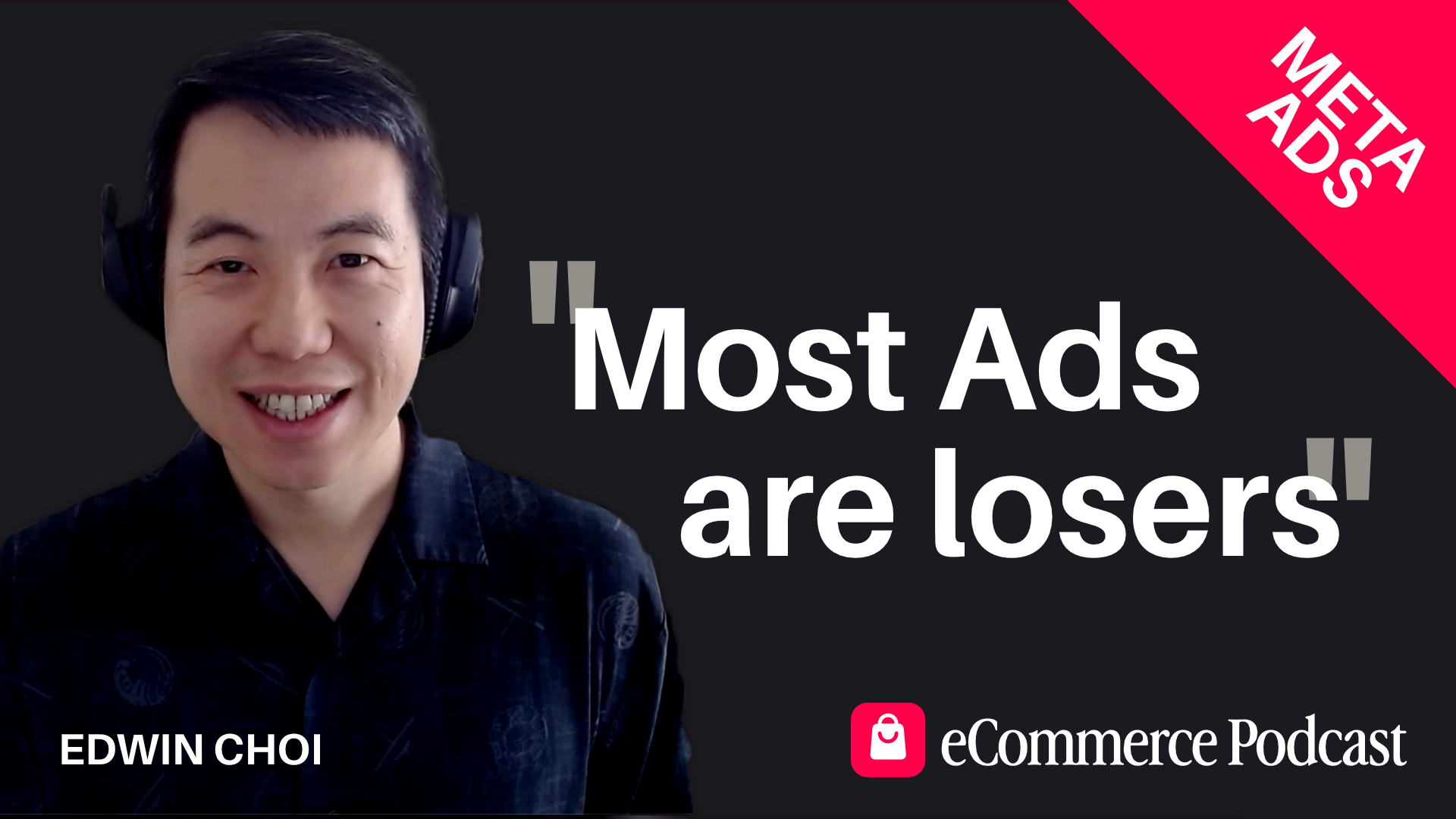
Edwin Choi
Edwin Choi
JetFuel Agency