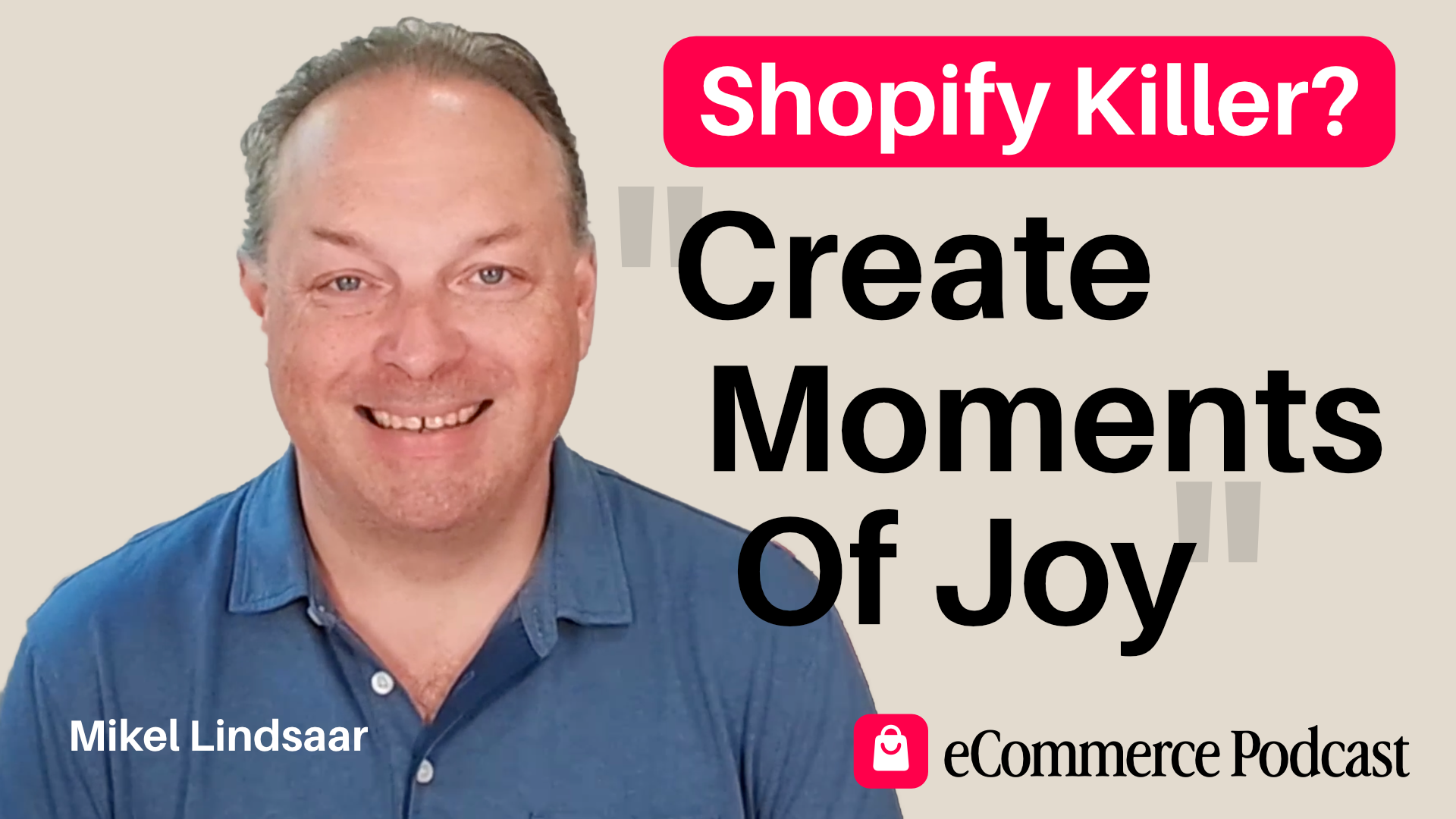
LLM Traffic Converts 5X Better Than Google for eCommerce
With 57% of Google searches now ending without a click, eCommerce brands are seeing organic traffic drop 20-30%. But there's a silver lining: traffic from AI assistants like ChatGPT converts at 5X the rate of traditional search. Matthew Stafford from Build Grow Scale shares the LLM optimisation strategies working for his clients, including buyer-intent FAQs per product and schema markup updates. For smaller brands willing to move quickly, this shift represents the biggest opportunity since the early Google days—a genuine chance to outmanoeuvre larger competitors who are too slow to adapt.
Here's a stat for you: 57% of Google searches now end with no click. So what is happening to those folks who were buying but aren’t anymore? Well, the answer lies with AI, of course. And before you roll your eyes at the team, it’s worth noting that the brands getting traffic from AI assistants like ChatGPT and Claude are seeing conversion rates five times higher than traditional search. Matthew Stafford, who has spent a decade helping eCommerce brands scale through his agency Build Grow Scale, calls this the biggest shift he's seen in his entire career in eCommerce consulting.
Matthew works with brands doing anywhere from £200,000 to £3 million monthly. Across the board, every single US-based client has seen organic traffic drop between 20-30% this year. But the brands that have started optimising for LLMs aren't just recovering that lost traffic. They're converting it at rates that make their old Google numbers look pedestrian.
The Trusted Advisor Shift
Before diving into tactics, we need to understand a fundamental change in how people make buying decisions. Google was always about accessing information. You typed in a query, got a list of links, and did the research yourself. LLMs work completely differently.
"People literally are using these LLMs for their therapist and sharing everything with them," Matthew explains. "And then they're now going there to make their buying decision."
This isn't just a channel shift. It's a relationship shift. When someone asks ChatGPT for a product recommendation, they're not getting a list of ten blue links. They're getting a personalised suggestion from something they've come to trust with their deepest thoughts and concerns. The LLM knows their preferences, their behaviours, and their context. It's not just an information source anymore. It's become a trusted advisor.
And when a trusted advisor recommends something, people buy.
The 57% Problem
Let's talk about what's actually happening to Google traffic. The numbers tell a stark story:
- 57% of searches end with no click – people are getting their answers directly from Google's AI overviews or heading straight to LLMs
- 20-30% organic traffic decline – consistent across every US-based brand Matthew works with
- Rising ad costs – as organic shrinks, paid becomes more competitive and expensive
- Declining trust – users increasingly see Google results as "just a bunch of ads"
The old playbook of keyword optimisation and link building isn't broken exactly. It's just becoming less relevant. As Matthew puts it: "The truth is, if almost 60% of Google searches result in no click, it kind of tells you that these people are no longer trusting Google to give them the information that they want."
The question isn't whether this shift is happening. The question is what you're going to do about it.
The LLM Optimisation Framework
Through testing across dozens of client sites, Matthew and his team have identified what actually works for getting recommended by AI assistants. It's not complicated, but it does require a different mindset.
Buyer Intent FAQs
Most websites have FAQ sections that don't actually answer frequently asked questions. They're thinly veiled sales pitches.
"My question to them is, why would shipping time be on your FAQ?" Matthew challenges. "And they go, well, people ask that all the time. And I said, then that means that you're too lazy to put it on your website."
Real FAQ optimisation for LLMs means creating questions that demonstrate buyer intent. These are questions someone would only ask if they were seriously considering a purchase. For a skincare brand, that might be "Is this safe for sensitive skin around the eyes?" For a supplement company, "Can I take this alongside my current medication?"
The key insight: do this per product, not just site-wide. Start with your top 20% of products that drive 80% of sales. Create specific, buyer-intent FAQs for each one that the LLMs can reference when someone asks about that category.
Seeding LLM Names
Matthew's team has started including references to specific LLMs within their content. The theory is straightforward: if you're creating content that directly addresses how AI assistants might answer questions, those assistants are more likely to cite you as a source.
"We're also seeding those with the different LLM names," Matthew shares. "I believe that that will continue to help and make it even more noticeable."
Early results show promise. Sites that were getting two or three referrals from ChatGPT are now seeing 20 to 30. The numbers aren't huge yet, but the conversion rates on those visitors make them incredibly valuable.
Schema Markup Updates
While Matthew admits this is "above my pay grade" in terms of technical implementation, he's working with specialists who are specifically focused on what they call "agentic engine optimisation." The approach involves updating schema markup in very specific ways that help LLMs understand and cite your content.
The recommendation is to find someone who's actively testing and iterating in this space (Matthew recommended Kasim Aslam), because anyone claiming to be an expert with a fixed playbook is probably selling you something that will be outdated in 90 days.
The Little Hinges Philosophy
What makes this opportunity so compelling for smaller brands is the asymmetric potential. Matthew describes it as finding "the little hinges that swing the big doors."
Consider the maths. If a brand has lost 30% of its organic traffic to the Google-to-LLM shift, and LLM traffic converts at 5X the rate, recovering that traffic through LLM optimisation doesn't just get you back to even. It potentially delivers 150% of your previous revenue from that channel.
"Instead of them losing 30% of their revenue, they're going to gain back 300%," Matthew calculates. "There's a lot of businesses that just make it or they're doing okay, where if you could add 20% to their bottom line, doing what they're already doing, it would just be astronomical."
For brands doing £1 million in annual revenue, that's an extra £200,000. For brands at £10 million, it's £2 million. Same traffic investment, dramatically different returns.
Why Small Brands Have the Advantage
Here's where the Digital David versus Goliath dynamic flips. In the Google era, big brands won through budget. More content, more links, more ad spend. The LLM era rewards something different: speed and specificity.
"I truly believe that for the little guys, this is a level playing field," Matthew argues. "The only thing that is going to allow the bigger ones to outspend you maybe is if they take action sooner. But what I've found is these big companies that we deal with, they know that they need to do it, but they don't do it because they don't know what to do."
Large organisations move slowly. They need committee approval, legal sign-off, and brand guidelines review. By the time they've figured out their LLM strategy, smaller brands could have six months of consistent optimisation under their belts.
Matthew compares it to the early Google days of 2004: "When you got mentioned, you got more traffic, so you made more sales, which meant you got more mentions and it just spiralled upwards."
We're in that same window now with LLMs. The question is whether you'll be ahead of the curve or playing catch-up.
The Consistency Principle
If there's one thing that separates brands that succeed with this shift from those that don't, it's sustainable consistency over heroic bursts of effort.
"People always say, well, what would you do?" Matthew reflects. "And I'm like, well, I would figure out something that's sustainable. Because if you do it really head down every day for 10 days and then you don't come back to it for two, three months, that's not going to do you any good."
His recommendation is to do an hour every Monday doing the exact same optimisation work. Update one product's FAQ. Review your schema markup on another page. Check your LLM referral traffic in analytics. Small, consistent actions that compound over time.
"Six months from now, your site's going to be cited in LLMs all the time," Matthew predicts. "And those conversions are going to be astronomical compared to the normal clicks."
Your Next Steps
Ready to start capturing LLM traffic? Here's where to begin:
- 1Audit your current LLM referrals. Check your analytics for traffic from ChatGPT, Claude, Perplexity, and other AI assistants. This gives you a baseline to measure against.
- 2Identify your top 20% of products. These are the ones that drive 80% of your revenue. They're your starting point for optimisation.
- 3Create buyer-intent FAQs for each. Think about what questions someone would only ask if they were seriously considering a purchase. Be specific, not generic.
- 4Set up a weekly optimisation block. One hour, same day each week. Sustainable beats heroic every time.
- 5Track and iterate. This space is changing rapidly. What works today might need adjusting in 90 days. Stay curious and keep testing.
Nothing Changes If Nothing Changes
Matthew has a sign on his office wall that reads "Nothing changes if nothing changes." It's a reminder he uses with clients who come to him with problems but aren't willing to try different approaches.
"It always amazes me how people come to you or talk about their problems," he says. "And then you ask them, what are you doing to solve it? And the fact of the matter is they're not doing anything different, but yet they want this thing to go away."
The shift from Google to LLMs is happening whether we like it or not. The brands that adapt will thrive. The brands that wait for someone else to figure it out first will find themselves playing catch-up in an increasingly competitive space.
As Matthew puts it: "A rut is just a coffin that doesn't have the top nailed on it."
The opportunity is here. The playing field is level. The only question remaining is whether you'll take action while the advantage is still available.
Full Episode Transcript
Read the complete, unedited conversation between Matt and Matthew Stafford from Build Grow Scale. This transcript provides the full context and details discussed in the episode.
Full Episode Transcript
Read the complete, unedited conversation between Matt and Matthew Stafford from Build Grow Scale. This transcript provides the full context and details discussed in the episode.
Matt Edmundson (00:04)
Well, hello and welcome to the e-commerce podcast. My name is Matt Edmundson And as always, it is great to be with you talking about all things e-commerce. Now, if you're watching the YouTube video, you may question my sweater or jumper choice, as we say here in the UK. It is in fact a Christmas jumper. We are recording this pre-Christmas. I appreciate it will come out post-Christmas. So Merry Christmas, belated Merry Christmas maybe if I've not said it to you yet, but yeah, I've got my Christmas Star Wars jumper.
So if you, if you want to know what that looks like, go check out the YouTube video. It's got glow in the dark bits on it and everything. Not that that's a reason. I just realized actually saying that it's probably not the best reason to go see a YouTube video, but it's as good a reason as any, suppose. Why not? A very warm welcome to you. If this is your first time with us on the e-commerce podcast, great that you join us. Obviously hit the like button, subscribe to all that good stuff. Stay connected with us. We'd love to help you grow your e-commerce business. If you don't know me.
I've been in e-commerce since 2002. I still run my own e-commerce businesses. are still partnering with people. We're still acquiring e-com businesses. We're still running our own. I just love e-com, which is why I do this show. It's a wonderful thing to be involved in something that means when you go to sleep, you wake up richer. It's the most extraordinary thing. And I, I quite like e-commerce.
And it's, it's, it's just been so cool in so many ways. So wherever you are on your journey, you're welcome here. That's for sure. And hopefully you'll find some insights and nuggets, especially from today's guest, who I'm going to introduce in just a second. Welcome back to the show. If you're a regular listener, by the way, and all the cohorters, we've got a lot of cohorters now. If you want to know what cohort is, then go check out the website, e-commerce podcast.net. These are our monthly groups where we get together online on zoom actually.
And we just chat for a couple of hours. Someone usually presents what's going on in their business. We all brainstorm around it, talk about it, ⁓ and have a conversation about it. They're completely free to join peer to peer. It's all mentoring type stuff, which is just great. We've got people literally from all over the world and trying to balance time zones is always fun and games in these groups, but you'd be more than welcome to come join us. But if you're, if you are a cohort to listening to this, very, very warm welcome to you.
In the newsletters that we have, you'll start seeing some of the stories from cohort as appear. It's one of the new things coming along. So check those out and they'll tell you what they found out about cohort and how it's helped their business. Maybe it will help you too. ⁓ but yeah, all that's on e-commerce podcast.net. Right, Matthew, welcome to the show again. Part two, so dun, dun, dun, dun, dun.
Matthew Stafford (02:46)
Thanks for having me. I'm looking forward to the conversation.
Matt Edmundson (02:49)
As always, no, it's always great to chat with you, bud. And we were hitting, we were talking about all kinds of things before we hit the record button as we inevitably are going to do. For those of you who don't know, Matthew has been on the show before we talked about revenue optimization. Let me just check the date actually, because I want to know when that was. That was in February, actually, early part of this year. So it feels like just yesterday, doesn't it really?
Matthew Stafford (03:12)
Yeah.
Yeah.
Matt Edmundson (03:18)
But you were saying you've done a lot of podcasts this year, so maybe it's just blurred into the background.
Matthew Stafford (03:22)
No, I remember it because I read the newsletter too and so keep up with what's going on and yeah, I really enjoy it.
Matt Edmundson (03:30)
Yeah, yeah, yeah, no, it's good fun. It is good fun. We connect on LinkedIn as well, don't we, quite often. Although you've been a bit quiet recently on LinkedIn.
Matthew Stafford (03:36)
Yeah,
I'm going through, we're in the process of acquiring a business until it's been pretty head down for a bit during this Black Friday Cyber Monday for all of our clients.
Matt Edmundson (03:44)
Yeah.
Yeah, yeah, that's we're just on the other side of it now, aren't we? At the time of recording. Was it good? Was it good for you and your clients?
Matthew Stafford (03:54)
yeah, excellent. Yeah, boomer year.
Matt Edmundson (03:57)
What was the, I'm always a big fan of, know, sort of doing these reviews afterwards and going, what did we learn from this? What's going to help us next year? What would you say was some of that? I'd appreciate it's not necessarily what we talk about, but let's ask, what were some of the biggest lessons that you've learned this year?
Matthew Stafford (04:12)
Um, I would say that, uh, it really requires a little more planning, uh, earlier in the year. Cause, uh, you know, we had set it to several of our clients and, and took for granted that they were prepping. And then when it got down to the 11th hour, uh, a lot of, a lot of things are coming out of left field for us to get done for them. So, yeah, I think, uh, realistically just, um,
Matt Edmundson (04:19)
Mm.
Yeah. Yeah.
Matthew Stafford (04:40)
teeing it up a little bit sooner. And it gives you the ability to ⁓ really maximize this time of year. Because for many of the brands, ⁓ there's three, four months of the year that they run at break even or even maybe a loss. And it gets made up for during this period. so maximizing that really is pretty essential to ⁓ enjoying what we do.
Matt Edmundson (04:49)
Mm.
Yeah, no doubt.
No doubt. As you were talking, actually, I've just written a little note for myself. I've just written down accountant because in England, the tax year ends the end of January, January 31st. And so you have to get all your tax returns to the tax office by the end of January. And of course, the accountants are always emailing me in sort of September time going, right, we need your data for last year so we can do your tax return. I've still not done it. ⁓ So you just reminded me ahead of time, just crack on and do it.
Matthew Stafford (05:34)
⁓ yeah.
Matt Edmundson (05:37)
⁓ one of the funny things was this year we did a whole series on Black Friday in August.
Matthew Stafford (05:44)
Yeah,
I really think that's when you start. That's definitely when you start.
Matt Edmundson (05:47)
Yeah.
When you start thinking about it, right. And so we thought, well, let's release this Black Friday series. And the amount of people that have said to me, I listened to it, but then didn't do anything. And I wish I had now.
Matthew Stafford (05:58)
Yeah.
Matt Edmundson (06:00)
⁓ dear, I'm with you. Early preparation is key. Was there anything else that surprised you maybe this Black Friday? Cyber Monday?
Matthew Stafford (06:08)
Um, yeah, and I think that we're going to actually talk about it more on the show. I was surprised to find out that 56 or 57 % of Google searches result in no click now. So, uh, the brands that we deal with typically are doing anywhere from 250,000 a month to three or 4 million a month. And across the board,
Matt Edmundson (06:24)
Okay.
Mm.
Matthew Stafford (06:37)
we see with every one of them that their organic traffic is down almost 20 between 20 and 30 percent. And yeah, and it's literally all of them that are US based. And I believe that what's happening is there's a shift and
Matt Edmundson (06:47)
That's a big fool.
Matthew Stafford (07:02)
people literally are using these LLMs for their therapist and sharing everything with them. And then they're now going there to look for, to make their buying decision. whenever the LLM recommends it, they're saying that the conversion is about 5X what it is on Google when LLM suggests it. So it's becoming...
Matt Edmundson (07:07)
Mm-hmm.
Yeah.
Matthew Stafford (07:28)
not just a resource for information, but the LLMs are really becoming like a trusted advisor for people. And I think that that is going to create a massive shift and a massive advantage for the little guys that ⁓ can pivot quickly and start creating the proper thing, the proper sequences for their websites.
Matt Edmundson (07:34)
Yeah.
Matthew Stafford (07:56)
in order for the all-alums to pick them up.
Matt Edmundson (07:58)
Yeah, yeah. No, I'm with you and I've seen actually similar numbers. So I'm not surprised if I'm honest with you. I think, ⁓ and I, is it one of those things, do you think, where it's a bit like the numbers are so high because it's a unique moment in time? ⁓ or is it going to be this way for a while? Do you think?
Matthew Stafford (08:04)
Yeah.
I think it's going to be this way for a while. don't think that AI is going to go away at all. I think it's going to become more more prolific. And I really believe that as they roll out the shopping inside of them, we're going to find that we're going to continue to make sales, but less and less we'll ever visit our website.
Matt Edmundson (08:27)
Mm.
Yeah.
Matthew Stafford (08:48)
I heard someone say, I don't know, about three, four months ago, they said they believe that this has the potential to actually change the way that websites are even built and that a portion of your website will be built like an ocean dock that the LLMs can grab their information from and then use that rather than a typical website because a typical website is
Matt Edmundson (09:00)
Yeah, it is.
Yeah.
Matthew Stafford (09:17)
trying to do a whole bunch of things that the LLM is 100 % uninterested in. And so I really believe putting in FAQs that have buyer intent, the schema markup of the site, and then, yeah, way more benefit-driven and authority.
Matt Edmundson (09:23)
Hahaha
Mm-hmm.
Matthew Stafford (09:44)
type things matter where before keyword stuffing and all the rest mattered. The truth is, you know, if almost 60 % of Google searches results in no click, it kind of tells you that these people ⁓ are no longer trusting Google to give them the information that they want. And, you know, they just see it as a bunch of ads.
Matt Edmundson (09:45)
Yeah.
Yeah.
Yeah. Yeah. It's interesting, isn't it? And I, you know, when we, I've mentioned on the show before, and I think I told you before we hit the record, we, we've just done a whole bunch of work on the e-commerce podcast website. ⁓ and it's been interesting thinking about this website, certainly the menu structure and the nav and approaching it almost like you would a large catalog econ business, right? And for the first time, we actually, as well as the site map, you know, you, if you're, if you know about SEO, you would put a, you know, a site map.
We've also put a map on there specifically for LLMs. Now, this is the first time that we've done it. I've not got any massive amount of because it's like a couple of weeks. I've not got loads of data back on this yet. But you do look at that and go, hmm, this is interesting. It's a really interesting experiment. It's an interesting part of time where you're now having to think beyond SEO, but also to think about the AI, the LLMs, getting the data.
Matthew Stafford (11:10)
Yeah, we're always looking, I mean, we're very data driven. That's the reason why we create predictable long-term success is because we're not, it's not a gut feeling. It's not everything that worked in the past. It's literally looking at the data and analyzing what people are doing and making decisions, which I'm sure if they go back and listen to the podcast back in February, they'll, they'll hear that process. But so we're looking at the data all the time and we're seeing more and more and more.
Matt Edmundson (11:26)
Yeah.
Matthew Stafford (11:40)
conversions being referred in from the LLMs.
Matt Edmundson (11:44)
Yeah. Yeah. It's fascinating. Isn't it? How, quickly it's happening. So you mentioned, ⁓ and we've talked about this on the show before, but this idea of AI fast becoming a trusted advisor, which is a really interesting, it's not just accessing data now, which is what search engine was. It's actually, like you say, it's becoming this trusted advisor. It's like, you don't even need to access the data. You're letting the AI do it and then tell you on you.
Matthew Stafford (12:12)
Yeah,
and you've told it so much about yourself that it's now doing it based off of your preferences and your behaviors rather than just a keyword.
Matt Edmundson (12:20)
Yeah.
which is just, it's mesmerizing, isn't it? It's mesmerizing. And we were talking about this with, on the show before and it's like, and I think, I mean, I think you mentioned it actually, sort of slightly tongue in cheek, but the amount of people that are using AI now as a counselor, as a coach, not just on buying decisions, but on emotional, you know,
mental well-being kind of decisions is quite extraordinary, really.
Matthew Stafford (12:53)
Yeah, I use it.
I go through all that. Like I learned my attachment style and even, you know, asked it, you know, what are red flags and green flags. I've done that. I do that ⁓ for the simple fact of like once it has enough data on you, it can give you information that no, no counselor is going to ever even get to.
Matt Edmundson (13:14)
Yeah. It's interesting, isn't it? Have you found it? Yeah.
Matthew Stafford (13:18)
I love it. Like I
genuinely love it. Yeah. I don't know if you know Rich Schaffrin. He's a really prolific internet marketer. He's coached all the big, big gurus like Russell Brunson and a bunch of different ones. He has a...
Matt Edmundson (13:25)
No, I don't think so.
Okay.
Matthew Stafford (13:39)
program called Zenith Mind OS. And really it takes you through like, you do about an hour a day or 30 minutes a day or 14, 15 days and it builds out your entire ⁓ psychographic, emotional and profile. And then I've used that, you know, in multitude of ways that has just been, yeah, it's been life changing.
Matt Edmundson (13:56)
Yeah.
That's really fascinating. One of the things that I've done, which I've really enjoyed, and I have to give a shout out to another guest on the show, Andy Hooper, this. I created ⁓ an AI board of advisors. Have you done this one? ⁓ Who's on your board of advisors, if you don't mind me asking?
Matthew Stafford (14:18)
Mm-hmm. Yes. ⁓
I have, who is it, Elon, Peter Thiel. ⁓
Warren Buffett and there's two other ones. One's a psychologist from California and then ⁓ Naval Ravicon is the other one. So yeah, there's five of them in there and so it has the emotional component as well as the business and then ⁓ and Jim Collins. So yeah, so there's six photo.
Matt Edmundson (14:44)
Fascinating.
Mm.
Okay, good choice. Yeah.
Yeah, how do you find it?
Matthew Stafford (14:58)
It's really good. Like I said, going through the acquisition right now, I just asked what they would do and it was really funny. ⁓ They created an entire plan of like the first six months on how to show up and what meetings to run and then gave me a chart and literally that I can check off and work through it. it's really like, it's pretty epic. You know, it brought up several things that I just wouldn't have thought of.
Matt Edmundson (15:22)
Yeah.
Yeah.
Matthew Stafford (15:26)
And just by having it bring that to my attention, ⁓ it shortened, I was able to address it before we even took control. it's, yeah, I think that anyone that's not leveraging it is doing a disservice to themselves.
Matt Edmundson (15:42)
Yeah. It's probably worth saying if you don't have, have no idea what we're talking about. This is where, I mean, I don't know what your AI of choice is, but I do this on Claude, right? And I have a project on Claude, which acts as my AI board of directors and on my board, like Matthew, I have various people, various figures, Steve jobs. I, ⁓ of course I have Jeff Bezos from Amazon, you know, when thinking about e-commerce and stuff like that. And you have various people on your board, Warren Buffett, et cetera.
And you ask the board in effect questions. You can either ask a specific board member or you can ask everyone. And the thing acts as though it's sort of talking to each other, doesn't it? It's like you see conversations pan out between Jeff Bezos and Steve Jobs on screen. And it's insanely insightful was the thing that I realized was like.
This is really clever and actually I don't know how you found it. It was very brutal with some of my ideas. Yeah, yeah, yeah. Yeah, yeah.
Matthew Stafford (16:43)
Yeah, but that's what I wanted. I
would much rather make the mistake in planning than an execution.
Matt Edmundson (16:52)
Yeah, yeah, no, absolutely. So it's one of those things I think if you're, if you're running a business, I'm not saying it's the be all and end all. I'm saying it's a form of, how do I use it? I use it to help me think outside the box and I use it to help me think creatively and.
Matthew Stafford (17:09)
Yeah, I
call it my strategic thought partner. Yeah, so essentially, it's just there to create more awareness because, you know, we all have blind spots. And that's why they're called blind spots. And so having that strategic thought partner brings up things that aren't going to be naturally in our thought process. And when it happens and you're like, ⁓ yeah, I hadn't thought about that. That's that's important.
Matt Edmundson (17:12)
Yeah, yeah, that's exactly it.
Mm.
Mm.
Yeah, really important. So yeah, check out, ⁓ go and enjoy having an AI board. So, I mean, we're getting to the stage now where, like you say, AI is becoming quite quickly a trusted partner. ⁓ And so you mentioned how you're seeing five times the conversion over Google from LLM traffic. What are some of the things that you and your
Matthew Stafford (17:40)
Yeah.
Matt Edmundson (18:07)
because I appreciate you're not an expert in this. I'm not an expert in this. We're all playing, right? It's because it all changes.
Matthew Stafford (18:11)
Yeah, anybody that claims
that they are, ⁓ they may be for 90 days, but then when they do an update and it all changes, it's a matter of, you know, I think my intent with it is that I'll just keep on iterating, ⁓ month after month. And eventually there will be some sort of foundational level that will
Matt Edmundson (18:21)
Yeah.
Mm.
Mm.
Matthew Stafford (18:36)
be able to build off of, but you know, for a while it was like, just get, you know, go into the forums and Reddit and get on the threads in there. And also the LLMs pull you, but then Reddit made an update and now all of a sudden it's not the place to be. so like a whole bunch of different things are going to constantly happen. And so I think anyway, that says they're an expert right now, ⁓ is probably trying to sell you a course because
Matt Edmundson (18:37)
Yeah.
Mm-hmm.
Yeah.
Matthew Stafford (19:02)
The truth of the matter is what's working right now may not be working and probably most likely will not be working 90 days from now. But if you wait until everybody else has it figured out, ⁓ I think you're going to get rid of the lion's share of the advantage that you have by being an early adopter.
Matt Edmundson (19:09)
Yeah.
Yeah.
Yeah, I totally agree. I totally agree. think it's, it's one of those, think there's two, two mechanisms. I'm really curious how AI is working right now. One is like you say on the search. So the people using it to find out and do research on products and how I, from an econ point of view, how I figure that out. Obviously it's got its perks in terms of helping me create content, you know, things like the AI board and stuff like that. ⁓ but the
As well as the search, the area that's really intriguing me at the moment is in the area of coding and using AI to help you understand technical aspects of it is starting to level this whole playing field in quite dramatic ways. I'm, I'm really into it I used to code years ago when we first started out in Ecom. And then I quickly realized there were way better coders than me, ⁓ and didn't code for a long time, but I have played around with.
AI in terms of both the coding and in terms of, you know, trying to be found by the LLMs when searching. And it is extraordinary, you know, and I think there are some, some incredible things that you can do there now. ⁓ they just, they, they blow my mind in so many ways that the technical advances that we can now start to create. So we're starting to lose, I think the excuse for the technology. ⁓
Matthew Stafford (20:47)
Yeah, I have some friends that have created some really cool useful little apps by using the LLMs that compliment their products. And they give them, they give these little apps away for free that are super high value. And it's, it's ended up helping them make a lot more sales for their website because they can give away this free thing that they made that speaks directly to their consumer.
Matt Edmundson (20:57)
Yeah.
Mm.
Mm-hmm.
Matthew Stafford (21:14)
And then
it makes you again, all of sudden now you're doing something out of the box that, you know, most of your competitors are not. So I agree. I haven't done that yet for any of our brands. Um, but, uh, it was just shared with me last week. Something I thought, wow, that's such a great, great way to actually think outside the box and use it. Cause most people go, well, I don't know how I'd use AI to sell physical products. Well, you can create these little apps that, um, address
Matt Edmundson (21:42)
Mm-hmm.
Matthew Stafford (21:44)
a pain point that your customer has and now you become their trusted advisor.
Matt Edmundson (21:49)
Yeah, you do. You do. And it's one of those, I mean, I started, I remember the first bit of coding I did. It wasn't long ago. I just, needed to get something done on a Shopify site that we had and rather than bugging people, just, I just went to Claud and said, can you write me some code that will do this? And I knew enough to go back and forth with it to get what it was that I wanted. And it did it. There you go. 30 minutes. And I've made an update to the website.
Matthew Stafford (22:13)
Yeah.
Matt Edmundson (22:16)
I probably, if I did outsource that, they probably would have charged me six, 700 quid to do what I needed to do. Um, and you're just kind of like, well, that's all right. I just, like I say, it's a bit of a level playing field and I like to use the coding aspect of it for rapid pro prototyping. So I'm like, I think I want the site to do this and I can get AI to quickly mock it up. So that when I talk to the dev guys, it saves them three weeks going back and forth with me, trying to figure out what it is I'm trying to say. That's been super helpful.
Matthew Stafford (22:34)
Yeah.
Yeah.
Matt Edmundson (22:44)
What things have you found? mean, you mentioned FAQ with buyer intent as a way that you've found that's working at the moment. What do you mean by FAQ with buyer intent?
Matthew Stafford (22:56)
So most websites just have an FAQ on them and ⁓ my overwhelming belief is that the majority of them aren't actual FAQs. It's the business owner is trying to use it as a sales tool. Like, because my question to them is, wow, why would shipping time be on your FAQ?
Matt Edmundson (23:15)
Yeah.
Yeah.
Matthew Stafford (23:24)
And they
go, well, people ask that all the time. And I said, then that means that you're too lazy to put it on your website. ⁓
Matt Edmundson (23:33)
That's why we have the notification
bars at the top of the website.
Matthew Stafford (23:36)
Yeah,
it's like, okay, if people are actually asking these questions frequently, then that's telling you that your website is lacking. Why don't you go answer that question on your website in a clear, concise way, instead of using your FAQ as a sales tool, use it as an actual, ⁓ hard to find or things that aren't clear that you that it's necessary for.
Matt Edmundson (23:46)
Mm-hmm.
Mm.
Matthew Stafford (24:04)
or now buyer intent questions that you can ask and answer inside your FAQ. So now we do that per product. So some people go, well, have, you know, hundreds of skews. I'm like, yeah, but every site 20 % makes 80 % of your sales. So let's just start with those 20 products and create a specific FAQ that the LLM can read for that.
Matt Edmundson (24:15)
Right.
Matthew Stafford (24:33)
and it's actually worked really well for us where those are drawing a lot of attention. ⁓ We're also seeding those with the different LLMs names. And so I believe that that will continue to help and make it even more noticeable.
Matt Edmundson (24:52)
So if you don't mind me asking, can you give me an example of, so people can picture exactly what you've done in their minds?
Matthew Stafford (25:01)
Yeah, let me think of, I wanna try to do it without giving away a client site. ⁓
Well, we have supplements that deal with ⁓ female products. And so a lot of times they'll want to know, you know, the ingredients or is it safe for certain areas of the skin, et cetera. And so those are questions that you're only going to ask if your intention is to buy it. And so, ⁓
Matt Edmundson (25:20)
Mm-hmm.
Mm-hmm.
Matthew Stafford (25:43)
instead of just saying that, having that question gives the LLM ⁓ context that, this is going to answer this question that they're asking. And it matches very similar to what people would ask. And so, yeah, it seems to be working well for us. Like we've noticed in the referral traffic since we started doing that, instead of being two or three
Matt Edmundson (26:00)
Mm.
Mm.
Matthew Stafford (26:12)
referrals from chat GPT or grok or whatever. Now we're seeing 20, 30. And so it's still not huge numbers, but it's those 20 or 30 that it refers turn into, you know, quite a few sales. And so I think over time it's just going to build more and more authority.
Matt Edmundson (26:17)
Mm.
Yeah, really good customers. Yeah.
Hmm. It's interesting because as you're talking, I'm thinking, you know, years ago, there was this sort of, they ask you answer. think it was a title of a book that I read, all about answering customer questions, right? So whatever the questions are, answer them on your website, write the question, then answer it. Because obviously people are going to Google and they're typing in the same question. So it helps you with your SEO. ⁓ and it just helps, you know, users get to the answer really quickly.
So what you're talking about here with your FAQs is doing that, isn't it? It's been really hyper-specific with the questions. Yes, per product.
Matthew Stafford (27:06)
per product instead of
like, this is who we take care of. Cause that's so broad. ⁓ LLMs want to be very specific. And so in order to bring back specifics, ⁓ they're gonna, they're gonna recommend or use, they're gonna cite the sites, ⁓ that have done that for them.
Matt Edmundson (27:12)
Mm.
Yeah.
Yeah, yeah, that's interesting. So FAQs with buyer intent is a way to go. What have you noticed with schema markup? You're just keeping it traditional or are there specific things you're doing there for the LLMs?
Matthew Stafford (27:40)
I'm going to be very honest. That's above my pay grade. So I can't talk about it. I definitely have an SOP document of a very, very smart guy that cost him awesome. He used to own the number one ranked Google ads agency in the world. He sold it a couple of years ago and he has planted his flag in this agentic engine optimization and
Matt Edmundson (27:43)
Hahaha
Matthew Stafford (28:08)
Yeah, he has about five people working on it full time to lead and understand it. And so he gave us an SOP and I just send that to my Google guy and say, read this and make our site do this. So yeah, I can't, I can't speak as an expert at all.
Matt Edmundson (28:11)
Mm.
No, fair enough. But it's interesting that there are some experts playing around with that. I'm curious to know what that's going to be, know, in terms of the schema itself is a very good idea because it just levels the playing field in helping, you know, the different search engines understand your site.
Matthew Stafford (28:37)
⁓ yeah. Yeah.
Yeah,
it's a very specific way they're they're having us do it. So we are actually going through our website and updating it according to what they've shown, because he legitimately has five people on his team that are just trying to figure out and play with and test. And he's the only one I know that that.
Matt Edmundson (28:53)
Mm.
Matthew Stafford (29:08)
anything he does is ridiculously good. And so he's the only one that I know that's playing and is that open minded instead of like, this is what I figured out. I'm gonna go sell it. He doesn't even sell it. He gives it away for free. You can join his community and everybody's kind of, it's almost like he's crowdsourcing a lot of smart people to help him figure it out. And then if there are people that want them to do it, then he'll, he can do it, but that's not his.
Matt Edmundson (29:27)
Yeah. Yeah.
Mm.
Matthew Stafford (29:38)
That's not the pitch. It's literally let's figure this out and we all win.
Matt Edmundson (29:39)
Mm. Mm.
Yeah, that's true. What was his name again?
Matthew Stafford (29:45)
Qasim, Aslam, K-A-S-I-M-A-S-L-A-M.
Matt Edmundson (29:53)
Very good. We will find that and put a link into the show now if anyone's interested.
Matthew Stafford (29:56)
Yeah, I can actually,
if you send an email to me and Christine, include in there that you want the link to his school group where they do a weekly call and I can get everybody a link to that school group.
Matt Edmundson (30:11)
Awesome. That'll be great. We'll get that from you and we'll put that in the show notes if people want to go check that out. Who else are you following in this space? I'm kind of curious.
Matthew Stafford (30:20)
⁓ You.
Matt Edmundson (30:25)
Ha
Matthew Stafford (30:26)
Yeah, to be totally honest, ⁓ I don't follow a lot of people in our space. I find that a lot of them are just rehashing old stuff. And so I follow people outside of our industry and then try to use what's working for them in a way that's specific to e-commerce. But to be totally honest, I read your e-commerce newsletter. I follow Cosm.
Matt Edmundson (30:32)
Mm.
Mm.
Matthew Stafford (30:54)
And then the rest of them are really probably not industry specific.
Matt Edmundson (30:58)
Hmm. Hmm. It's interesting.
I like, I remember, ⁓ we're going back a lot of years now, if I'm honest with you, where we were given this exercise. ⁓ bunch of budding entrepreneurs were given this exercise. I think we were given, ⁓ a picture of cheese with holes in it, you know, the Swiss cheese. And the, the challenge was.
to take that concept of Swiss cheese to understand how they marketed it and why they put holes in it and all that sort of stuff and what it does. And then figure out how you could then apply that to your own business, right? This whole idea of, I'll just call it the Swiss cheese model, because that very thing, it's like looking at other industries, looking at what they do, look at how Dyson sells vacuum cleaners, and then ask, well, how does that work for me on my website? What can I learn from that? You get some of your best ideas, I think, from...
Matthew Stafford (31:56)
Mm-hmm.
Matt Edmundson (31:57)
from that right just looking at other industries.
Matthew Stafford (31:58)
Yeah. Yep. 100%. That's where 90 % of our big winning ideas come from is outside of it's not doing what everyone else is doing that people are so already calloused to.
Matt Edmundson (32:06)
Mm.
Yeah. Yeah. Yeah. I'm with you. I love it because as long you've got your foundations, right, you can then go and play a little bit, can't you? And seeing what some of these, these guys do. I was intrigued that you had Elon Musk on your board. We have this phrase in our office, let's musket, in the sense of, let's take whatever scenario we have in front of us and figure out a way to do it at a thousandth of the cost. you know, in,
in much shorter time to get us to where we want to be kind of thing. ⁓ And so when I look at what Musk is doing, politically, obviously, I think there's a different story, but when I look at what he's doing over in other fields, you kind of go, huh, that's interesting. How does that work for my econ business? I, and this again comes back to the AI board of advisors. This is where these, these things can actually really help you start to think outside the box, can't they? And steal ideas from other industries.
Matthew Stafford (33:09)
Yeah, he's got a five step algorithm and I won't remember all five steps, but the very first one is cut out more than you think is necessary. And if you're not adding some back, then you haven't cut out enough. He said, you're not adding, if you're not adding 10 % back, then, you haven't cut out enough. And the other thing that he says over and over is the number one issue that a smart engineer or smart business owner makes.
Matt Edmundson (33:19)
Yeah.
Yeah, you've not cut enough.
Matthew Stafford (33:38)
is that they spend a lot of time optimizing for things that shouldn't even be there. And I think that I'm very guilty of that. You, instead of cutting things out of the process and then optimizing, you tend to try to optimize all these different pieces. And then later on you cut it out anyways. And so all that time.
Matt Edmundson (33:48)
Yeah.
Matthew Stafford (34:02)
You know, you have this sunk cost bias that, ⁓ I've invested this much time in making that. And so I think you end up keeping things a lot longer than, than as what's good for the business. So for me, it's been really good. was in Benjamin Hardy's new book, Scaling, The Science of Scaling. And it's just really, really, really good.
Matt Edmundson (34:08)
Yeah.
Mm.
⁓ Yeah, very powerful. I do like that, that idea. I've heard that algorithm before. I think I heard about it on the Founders podcast. And he went through that and I thought it was really quite an interesting idea. mean, the man is successful. There's no doubt about it. did, you know,
Matthew Stafford (34:44)
Well, over the
last 20 years, he has a track record of creating a multi-billion dollar business every four years. ⁓ Yeah, and he's still running all of them. Like it's insane what he gets done. I wouldn't want his life, ⁓ you know, yeah, no, but obviously what he accomplishes is absolutely insane.
Matt Edmundson (34:51)
I've not done one yet. I'm close. Yeah. Yeah. No. Always relationships. But yeah, you know, it's...
Mm. Yeah, no, absolutely. I agree. Where do you see it's going to go over the next 90 days? Where are the next 90 days, 100 days going, do you think?
Matthew Stafford (35:18)
⁓ well, like I said before we, before we started recording, I truly believe that this shift to the LLMs is probably the biggest thing that I've seen in the 10 years that I've been in e-commerce consulting. I really believe that it's going to, it's like the Google days of back in 2004 when, when you got mentioned.
Matt Edmundson (35:40)
Mm-hmm.
Matthew Stafford (35:42)
You got more traffic, so you made more sales, which meant you got more mentions and it just like spiraled upwards. I truly believe that for the little guys, this is a plane, a level playing field that the only thing that is going to allow the bigger ones to out. I'll be to outspend you maybe as if they take action sooner. But what I've found is these big companies that we deal with.
Matt Edmundson (35:48)
Mm-hmm.
Matthew Stafford (36:12)
They know that they need to do it, but they don't do it because they don't know what to do. And so I think ⁓ as we've helped our different clients do it, I really believe that the little guy has an advantage of quick moving and it doesn't require loads and loads of work and time and all these different things. It just requires like kind of like what you were talking about with your podcast.
Matt Edmundson (36:36)
Mm.
Matthew Stafford (36:41)
You you recorded a podcast every week for five years. I believe that consistent ⁓ stacking month after month of doing the things that are required for it that, you know, six months from now, your site's going to be cited in all alarms all the time. And those conversions are going to be astronomical compared to the normal clicks.
Matt Edmundson (36:59)
Mm.
Yeah. Yeah. Yeah. No, I love that. It is, it's, it is all about the consistency, isn't it? When it comes to this kind of thing, whether you're writing blog posts and videos, podcasts, whatever it is, it's all about consistency and consistency wins every time. ⁓ it's
Matthew Stafford (37:18)
Yup. Junk it down.
I always, that's why, you know, people always say, well, what would you do? And I'm like, well, I would figure out something that's sustainable because if you do it really, you know, head down every day for 10 days and then you don't come back to it for two, three months, ⁓ that's not going to do you any good. It's much better to put in an hour every Monday and do the exact same thing and understand what you're doing and be consistent. I think that goes up in results way faster than, you know, these
Matt Edmundson (37:38)
Mm-hmm.
Yeah.
Matthew Stafford (37:47)
people that hustle.
Matt Edmundson (37:49)
Yeah, I agree. I think it's the same. It's always been the same the world over. And I think I like what you say about the little guy. We call them, Matthew, we call them digital Davids, you know, in reference to the David and Goliath thing. You know, how do you beat the giants, the guys with the big budgets, the end, you know, the deep pockets and all the resource. I think you have to play the game a different way.
Matthew Stafford (38:13)
Mm-hmm.
Matt Edmundson (38:14)
and you
have to play the game in a way that works for you and understand what works for you. And like you, think what's going on at the moment with the LLMs, with AI, it's giving you access to technology, it's leveling the playing field and there's still a lot of unknowns and you can really benefit from that. So why would you not be right? And I think it makes a lot of sense.
An awful lot of sense. So I think if you're listening and you've been struggling with things like SEO, organic search, keep going, keep doing what you know to do, right? Keep doing with the paid media that's working for you and all that sort of stuff. Um, but start to start to put some budget into playing around with the LLMs, whether that's the time, um, whether it's finance resource or what, um, it's going to, I think it's going to pay off.
Matthew Stafford (39:02)
Oh, my God, I can't see how it went.
Matt Edmundson (39:04)
Yeah. Yeah, absolutely. It's going to be one of those things where, ⁓ we'll be having a conversation in a year, time ago. Can you believe we said that a year ago, but look at where we've come as a result, right?
Matthew Stafford (39:14)
Yeah, yeah, that's schedule it. That'd be awesome. I'd love to see it.
Matt Edmundson (39:19)
Christmas 2026. Let's have the conversation where we're but if you think about where we were last year with AI and where we are now, I mean, it's unbelievable the difference. The stuff.
Matthew Stafford (39:29)
Yeah, it's
no longer the big companies that have a $50,000 cinematographer on their staff that can do their product shots and all the rest. a $7 an hour VA from the Philippines that's good with Nano Banana can create you unbelievable stuff.
Matt Edmundson (39:44)
Mm-hmm.
Mm-hmm. Yeah.
Matthew Stafford (39:56)
Yeah, it's
literally leveled the playing field. Like anybody on the planet can produce really good, high quality stuff if they care.
Matt Edmundson (40:05)
Yeah.
Yeah. Wasn't there, I mean, obviously in some respects, we don't, we don't hear about these things over on this side of the pond, Matthew, but as far as I'm aware, there was somebody who did the first AI generated commercial, wasn't there, on the Super Bowl and all the clips were generated by AI. ⁓ And it costs like, yeah, it costs like 2000 bucks to make or something. ⁓ It was, it was just, it was one of those things where you're like, that's really clever.
Matthew Stafford (40:23)
I'm not sure.
Yeah, it won't surprise me.
Yeah.
Matt Edmundson (40:34)
And I think the steps, the step forward in image generation, in video, in content, just in the LLM's ability to reason, it's all taken gargantuan leaves for just encoding alone. know, there's some of the stuff you can do now is, it boggles my mind. So I think we should definitely have a conversation in 12 minutes time and see where we've come from.
And you know where we've ended up with AI and where it's gonna go to the next 12 months What's the one big thing maybe that you're like super excited about that you're you know, really leaning into?
Matthew Stafford (41:14)
not to beat a dead horse, but I really think this is the most important thing for me to be doing right now. ⁓ we don't focus on traffic, but we're always looking for signals of what's creating the highest conversions on the website and trying to understand that and then figure, you know, how to do more of that.
Matt Edmundson (41:24)
Mm.
Mm.
Matthew Stafford (41:39)
And to be totally honest, the conversion percentage of the LLM referrals is so high that if we can capture the 30 % of organic traffic that they lost on Google and get it for them on the LLMs, I believe that it would be a four or five times increase in their sales on that lost traffic. so instead of them losing 30 % of their revenue, they're going to gain back to 300%.
Matt Edmundson (41:51)
Mm. Mm.
Mm. Yeah. Mm.
Mm-hmm.
Matthew Stafford (42:06)
And yeah, that's enough of a metric.
to change their business. There's a lot of businesses that just make it or they're doing okay, where if you could add 20 % to their bottom line, doing what they're already doing, it would just be astronomical. And so for us, we're always looking for the little levers or the little hinges that swing the big doors. And I really think that this is one of those hinges. And I've pretty much staked my...
Matt Edmundson (42:28)
Mm.
Matthew Stafford (42:39)
my commitment and my time commitment to continuing to go deeper with that instead of being distracted by shiny objects.
Matt Edmundson (42:48)
Yeah. Still one of my biggest weaknesses. Shiny object syndrome. It's amazing what you can, what you can get distracted by. Matthew, listen, as always brother, enjoy the conversation. How do people reach you? How do they connect with you? If they want to do that, what's the best way?
Matthew Stafford (42:52)
⁓ all of us. Yeah, all of us. Yeah.
Yeah, the website is buildgrowscale.com and my email is just matt at buildgrowscale.com. So feel free to email me or go check out our website and see if we can do something that would provide some value for you.
Matt Edmundson (43:20)
Yeah. I always thought your domain name was one of the best domain names, buildgrowscale.com. thought that was when you, when, when, when we first connected, I was like, that's clever. That's really clever. And the thing, in closing, ⁓ what I didn't tell you at the start of the show, by the way, I should have done, ⁓ is at the end of this show, I asked our guests for their top tip for those that are sort of still around at the end, like saving the best till last kind of an idea. And we've gone through some pretty cool stuff so far. So I wonder, ⁓ you've got a big poster.
Matthew Stafford (43:28)
Yeah.
Matt Edmundson (43:49)
behind you, ⁓ which I'm assuming says nothing changes if nothing changes. ⁓ Because I can only see the first few letters of that. There we go. Nothing changes if nothing changes. Why is that on your wall? You've got two minutes. Go.
Matthew Stafford (44:07)
It always amazes me how people come to you or talk about their problems. And then you ask them, what are you doing to solve it?
And the fact of the matter is they're not doing anything different, but yet they want this thing to go away. And so I have this here and it now something that I say to people all the time is more of like a response. Well, I hear you and nothing is going to change if nothing changes. So what's a good action plan that we can take from here in order to have a different conversation, you know, a few months from now.
Matt Edmundson (44:51)
That's very good. like the, ⁓ I think it's attributed to Einstein, isn't it? The definition of insanity is doing the same thing over and over again, but expecting different results. ⁓ it's along that same sort of vein, isn't it? And I, and I,
Matthew Stafford (45:00)
Yeah, yeah. Yeah,
and I'm certainly not perfect at it, but having that as a reminder for myself, it's probably a reminder for myself just as much as it is for anyone else.
Matt Edmundson (45:15)
Yeah, yeah, yeah, no, I'm with you, because it's easy just to carry on the same old way and just hope and pray it's going to be different. And hope is good, but it's never a good business strategy, I feel.
Matthew Stafford (45:25)
Yeah,
I have a friend that said a rut is just a coffin that doesn't have the top nailed on it. So if find yourself in a rut, you know, things aren't getting any better than probably the same matters to you know, nothing changes if nothing changes, what do you do different in order to get a different result.
Matt Edmundson (45:35)
Yeah.
Yeah, yeah,
yeah, definitely get out of it ⁓ is what I say. One other thing for those of you stayed till the end, I mentioned earlier how on the e-commerce podcast website, we now have a specific page for the LLMs, a bit like a site map. ⁓ And if you want to go check that out, you can read it e-commerce podcast.net forward slash LLMS.txt. ⁓ And you can see that there.
Feel free to copy it ⁓ because, you know, everything's getting copied these days on the web. But yeah, that's starting to work really well for this site. So it may change by the time this podcast comes out, as we've talked about. But for now it is there. So go have a look at it. Listen, Matt, I genuinely love chatting to you, I love connecting with you on LinkedIn. All the stuff you're doing is great. Thank you so much for sharing and letting us know where you're up to. And I look forward to our next conversation, reminiscing about this coming year.
that makes sense.
Matthew Stafford (46:36)
Yeah, me too.
Thanks for having me. I appreciate it.
Matt Edmundson (46:39)
Awesome.
But thank you so much for joining us, ladies and gentlemen. ⁓ Wow. Yeah. What a great show. Love these kind of sort of high level conversations about stuff that we don't actually know everything about, but we're playing with and experimenting with. And so make sure you go and connect with Matt through Billgroscale.com. We will of course link to him in the show notes and all the stuff that he is doing. You will find there all the things that you mentioned we'll put in the show notes as well. And why not join him?
in the sense of subscribe to the newsletter, cause all this stuff just comes to your inbox anyway. ⁓ and so come check out the newsletter. Everything you need to know is on the website, e-commerce podcast.net. but that is it from me. That's it from Matt. Thank you so much for joining us. Have a phenomenal week, wherever you are in world. I'll see you next time. Bye for now.
Meet your expert
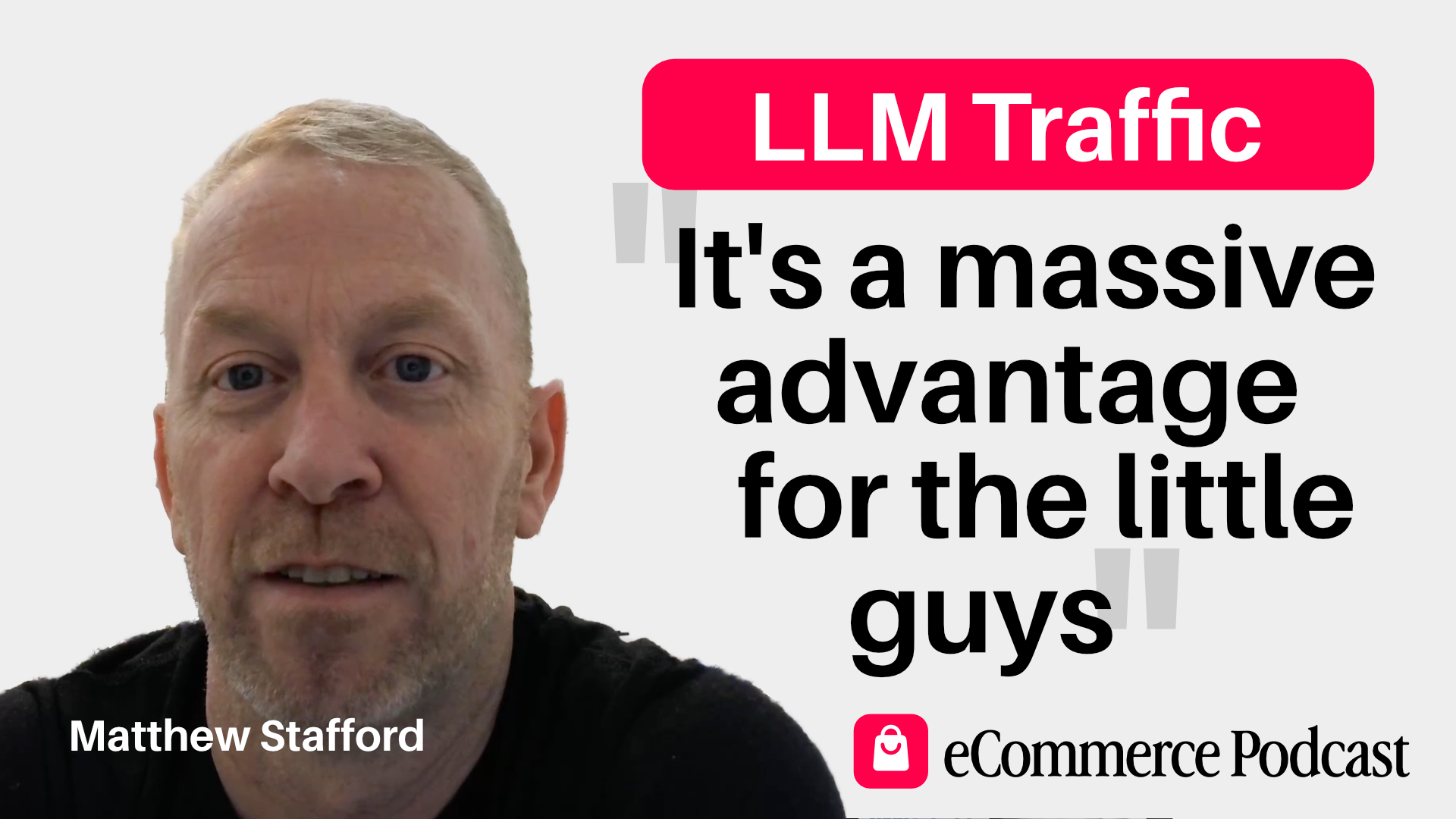
Matthew Stafford
Matthew Stafford
Build Grow Scale
Even more episodes...
From Zero to 5,000 Subscriptions in 10 Months