From Zero to 5,000 Subscriptions in 10 Months
Joe Welstead built OSHUN from zero to 5,000+ subscribers in just ten months, achieving a 42% subscription signup rate and 5% conversion rate. His approach challenges conventional supplement industry wisdom: one product instead of twelve, simplified product pages that spread decisions across the customer journey, and a relentless focus on product quality over retention gimmicks. This episode reveals the exact tech stack, email strategies, and customer experience design that's driving 15% month-over-month growth for this bootstrapped electrolyte brand.
From Zero to 5,000 Subscribers in 10 Months
What if the secret to building a subscription brand isn't clever retention tricks or aggressive discounting? Joe Welstead took his electrolyte company, OSHUN, from zero to over 5,000 subscribers in just 10 months, achieving a 42% subscription signup rate and a 5% conversion rate. The approach that got him there challenges almost everything the supplement industry takes for granted.
Joe isn't new to this game. After a career as a professional swimmer and running his first supplement company for six or seven years (which he sold in 2022), he's seen what works and what doesn't. His previous venture had multiple SKUs, venture backing, and all the complexity that comes with scale. With OSHUN, he deliberately chose the opposite path. One product. Bootstrapped. Subscription-first from day one. The results speak for themselves: 15% month-over-month growth and a loyal customer base that keeps coming back.
The Product-First Philosophy
Before diving into tactics, it's worth understanding the mindset shift that underpins everything OSHUN does.
"We're not in the game of providing gimmicks to keep people roped in," Joe explains. "We have a really good product. We really believe in it. And if you feel the benefits, you're going to be fine and happy with a little bit of money going out every month towards refilling it."
This sounds almost too simple. But in a world where subscription brands obsess over retention hacks, loyalty points, and increasingly desperate win-back campaigns, Joe's approach is refreshingly direct. The product has to work. Everything else follows from there.
It's the difference between building a leaky bucket and constantly trying to plug holes, versus building something people genuinely want to keep using. One approach is exhausting. The other compounds.
The Multi-SKU Trap
Most founders launching in the supplement space think that more products equal more revenue. Joe's experience suggests the opposite.
"The experience as a founder of launching a brand with multiple SKUs is completely different to the experience of launching with one SKU," he shares. "Launching with one SKU for somebody who likes to be creative and who likes to explain the product in the most eloquent way possible is so much more freeing and enjoyable."
With his previous company, Joe had to communicate the benefits of twelve different products simultaneously. Every piece of marketing became diluted. Every customer touchpoint required decisions about which products to highlight. The complexity wasn't just operational; it was creative.
With OSHUN, his entire job became distilling one product's benefits and communicating them beautifully to as many people as possible. That focus shows in everything from their advertising to their website experience.
"Anytime you add a second or marginal product, it's basically like a new company in terms of workload," Joe notes. "All the parts are multiplied." OSHUN held off on launching their second SKU (a magnesium concentrate) until they were well-established with their core electrolyte product. Even then, they only added it because customers were asking whether they could take their existing magnesium supplements alongside OSHUN's electrolytes.
The Decision Fatigue Problem
Joe's obsession with customer experience led him to rethink how most e-commerce sites handle product pages.
"One thing that I really dislike is when a brand overloads you with a bunch of decisions upfront on a product page," he explains. "You land on this product page, you're interested in it. But there's so many choices that you have to make immediately. There's pack size, frequency, flavour, maybe multiple flavours if it's a multi-pack, frequency of subscription. There's all these decisions, bam, in your face before you've really committed to it."
OSHUN's product page doesn't even have a quantity selector. You either click "subscribe and add to cart" or "buy once and add to cart." That's it.
The additional decisions, such as adding multiple bottles, upgrading to subscription, or choosing add-ons, happen later in the cart. Joe describes this as giving people "bite-sized decisions rather than just lumping it all on you right on the product page."
The psychology here is well-documented. Too much choice leads to analysis paralysis and, ultimately, inaction. By spreading decisions across the customer journey, OSHUN makes each individual choice feel manageable.
Building the Subscription Engine
OSHUN's subscription success isn't accidental. It's built on a carefully considered tech stack and customer experience design.
The Platform Choice
Joe started with Shopify's native subscription app (free, good for testing) but moved to Skio after a few months. The key advantage? A single customer login that combines order history and subscription management. "Even if you're not subscribed and you log in, you think you're logging into Shopify, but actually you're logging into Skio," Joe explains. "Everything's there. Your whole order history, your subscription details. It's all in that one login."
This matters because it dramatically reduces customer support tickets. Friction in managing subscriptions is one of the main reasons people cancel.
The Renewal Communication
OSHUN sends a billing reminder five days before each subscription renewal. But here's the clever part: the email includes three quick actions that customers can take without logging into their account.
One of those actions is "skip for two weeks." Joe's reasoning: "If you have a little bit extra, the default might be 'I need to cancel this.' But actually that's not good for us and it's hopefully not good for them either if they're going to keep using it. If there's a really easy skip by two weeks, hopefully it makes sense for everyone."
This small feature likely saves thousands in customer lifetime value by giving people an easy alternative to cancellation.
The Post-Purchase Upsell
For customers who buy once without subscribing, OSHUN uses AfterSell to offer a discounted refill pouch immediately after purchase. The customer has ten minutes to add it to their existing order.
"You haven't subscribed. Basically we want you to have as much supply as possible," Joe explains. The logic is sound because if someone tries the product for 2 months instead of 1, they're more likely to feel the benefits and convert to a subscription later.
The Cart Experience
Using UpCart, OSHUN's cart includes a toggle to add their £5 travel bottle with a single click. "Really easy and hopefully a pretty sensible impulse purchase," Joe notes. For non-subscribers, there's also a call-to-action to upgrade to a subscription right in the cart.
The Accidental Innovation
Sometimes the best ideas come from constraints. In summer 2024, OSHUN was growing fast (June, July, and August were particularly strong months) when they hit a supply chain bottleneck. One component of their packaging couldn't be replenished quickly enough.
Their solution? Send all subscribers a refill pouch instead of their usual bottle for their next renewal.
"That was received very, very well," Joe recalls. "So well that we thought, okay, well now let's just keep this going because people really enjoy not having another bottle every month. They can just refill."
This accidental innovation is now central to their model. OSHUN plans to launch a glass "bottle for life" in early 2026, with all subscribers receiving refill pouches from then on. The environmental benefit is obvious, but it also reinforces the subscription value proposition: you're not just buying a product, you're buying into a system designed for ongoing use.
The Numbers
Here's what OSHUN's approach has delivered:
- 5,000+ subscribers within 10 months of implementing Skio
- 42% subscription signup rate at checkout
- 5% conversion rate (strong for the supplement category)
- 15% month-over-month growth consistently through 2024
- Minimal customer support tickets on the pre-purchase experience
The subscription focus also enabled OSHUN to stay direct-to-consumer. Despite "a lot of requests or inbound queries from retailers," they've said no to everyone. "We really enjoy owning the whole communication channel and the whole touchpoints from before purchase to post purchase with our customers," Joe explains.
Your Subscription Playbook
Based on Joe's experience, here's how to apply these principles:
1. Start with one product that genuinely works. If people don't feel the benefits, no amount of retention tactics will save you. Joe's approach: "Ultimately, it's about whether or not you enjoy the product and you're going to use it ongoing."
2. Simplify your product page. Remove decisions that don't need to happen immediately. Can quantity selection happen in the cart? Can subscription upgrades be offered post-purchase? Spread choices across the journey.
3. Make subscription management frictionless. Invest in a platform that provides a single login experience. Every extra click to manage a subscription is an opportunity for cancellation.
4. Give customers alternatives to cancellation. A "skip" option in your renewal emails is cheaper than a win-back campaign. Think about what your customers actually need when they're considering cancellation.
5. Design for ongoing use from day one. OSHUN's pump format, month's supply sizing, and refill pouch system all reinforce the subscription model. How does your product format support (or undermine) repeat purchase?
The Brand as Decision-Maker
Perhaps the most powerful insight from Joe's approach is his view of what a brand should do for customers.
"I also feel that the whole value of a brand is to make those decisions for your customer," he reflects. "This is the best offer we have for you. We've done all the work. All you have to do is think, yes, this is going to be good for me."
In an era of infinite choice and constant comparison shopping, there's something liberating about a brand that says: here's our one product, here's why it works, here's how to use it. The confidence to simplify is, paradoxically, what builds trust.
For founders drowning in SKU complexity, retention hacks, and conversion optimisation tools, Joe's story offers a different path. Maybe the answer isn't more. Maybe it's less, done exceptionally well.
What would your business look like if you focused all your energy on one product, one customer experience, one clear value proposition?
Full Episode Transcript
Read the complete, unedited conversation between Matt and Joe Welstead from Drink Oshun . This transcript provides the full context and details discussed in the episode.
Full Episode Transcript
Read the complete, unedited conversation between Matt and Joe Welstead from Drink Oshun . This transcript provides the full context and details discussed in the episode.
Matt Edmundson (00:04)
Welcome to the e-commerce podcast. My name is Matt Edmundson and it's great to be with you today talking about all things e-commerce. Now, if you're new to the show, very warm welcome to you. It's always great getting new people every week. We're at that stage now where the snowball effect is taking effect, which is just beautiful. So a warm welcome to all the news listeners joining the show. You can find out more about us, about the stuff that we do, ⁓ about all the past guests we've had on.
All on the website, ecommercepodcast.net. There's a whole archive of episodes there. You can go and search by topic and all kinds of stuff and it will be super, super helpful. And whilst you're there, check out the newsletter, sign up to the newsletter. We email you really cool newsletter every week. And also check out cohorts. I love cohort. Cohort is this thing where we just jump on zoom, a whole bunch of us, e-commerce people, e-commerce, I like to call us. We jump on zoom and we chat about e-commerce, peer to peer to peer.
kind of stuff is just great fun. Great group to be in lots of ideas. The WhatsApp groups are insane. Some of the stuff coming through is just brilliant. Absolutely love it, but you can find out more about that. How you can join. are free to join, but you do have to apply and everyone can get in. But if you run an e-commerce business, go check it out. All the information's at e-commerce podcast.net. Right. That's enough about that. Let's move on. Joe, welcome to the show all the way from sunny France. How are you doing?
Joe (01:30)
Thanks, man, I'm doing great. Happy to be here.
Matt Edmundson (01:33)
You don't sound very French there.
Joe (01:35)
I'm Scottish and American, but I actually grew up in France and yeah, so it's a real mix.
Matt Edmundson (01:42)
It's not your usual mix, is it really?
Joe (01:45)
I guess not, but it's cool. I'm happy to have my heritage. And ⁓ after spending 15 years in the UK, I moved back to France almost two years ago now. I'm happy to be here.
Matt Edmundson (01:56)
Yeah, no doubt. We were talking about this before we hit the record button that the weather is obviously going to be better.
Joe (02:02)
I can't complain and I have two little kids now and I love to see them here because we have a lot of space outside. They can play and run around. It's cool.
Matt Edmundson (02:10)
Yeah, yeah, yeah. No, it's lovely. Lovely. Lovely, lovely, lovely. Well, welcome to the show. Now tell us, you're going to talk to us about your own e-commerce site, your own e-commerce journey. You are an e-commerce founder. You are an e-commerce, sir, as we like to call us, know, someone who practices the art and science of e-commerce. You're doing this in the trenches on a daily basis. So tell us a little bit about OSHUN and what's going on, what you guys do.
Joe (02:35)
Sure. So OSHUN O-S-H-U-N, we launched, I tell you what, we launched about the same week that I moved to France. I think, right, right. A lot of things in 2024. So basically April 24, we launched and the whole idea was to make better hydration accessible to everyone and not necessarily athletes. In fact, we don't talk about sports all.
Matt Edmundson (02:44)
Because you thought, how can I make it more difficult for myself? Let's do that, right?
Mm-hmm.
Joe (03:03)
We talk about better hydration for clear skin, clear mind. And now we have a magnesium concentrate as well as their electrolyte concentrate. So it's not just hydration. It's also better sleep and waking up in a better mood, a happier person. ⁓ I know we basically looked at this whole space and thought electrolytes slash hydration is really interesting. There was a lot of momentum, going into it in terms of new products, new brands, but also public awareness. ⁓ but everything that I saw,
Matt Edmundson (03:10)
Mm-hmm.
Joe (03:33)
was really still geared towards sport endurance, know, triathlon, marathon runners, a lot of running type products. And that's a very small percent of the population. Now, of course, those people, you know, if you, if you do long distance running, you sweat loads. So of course you need to replenish your salts more than the average person, but actually the average person is lacking in things like magnesium and potassium and, ⁓ and even maybe sodium. So that's who we're talking to. It's really, ⁓
Matt Edmundson (03:44)
Yeah.
Joe (04:00)
to be in a better mood, better mental clarity, better skin hydration every day.
Matt Edmundson (04:06)
So you, did you just read about this in a magazine and thought, oh, that sounds interesting. Or was there a reason you, sort of got in, cause you don't just sort of wake up and think, oh, I'm just going to investigate electrolytes. Um, I don't think you do. Maybe you did. I'm kind of curious.
Joe (04:21)
No, no, no. So I actually had a first health supplement company for six or seven years that we sold in 2022. So I had experience of the sort of supplement space. Before that, I was also a professional athlete in swimming. So supplements is something that I've basically been involved in all the way back to like 2009, let's say. And back then there was not so much really understanding or awareness or
Matt Edmundson (04:33)
Mm-hmm.
Joe (04:49)
even talk about supplements. It was almost like a bit more taboo type product. ⁓ So for a lot of my swimming career, I had to do my own research. Even governing bodies at that point didn't really want to talk about supplements because it was just publicly not seen as ⁓ freely as today, I guess. was sort of like, even something like creatine today is like a very benign supplement that loads of people use maybe for mental performance.
Matt Edmundson (05:01)
Okay.
Joe (05:16)
⁓ but back in 2010 to 2015, it was still like, Ooh, is this doping? You know? So, so that was the sort of context. I just naturally did a huge amount of research into this. my first company, we had a hydration product, but really everything was geared more towards sports at that point with that brand. ⁓ so I actually have been in the electrolyte hydration space for, ⁓ I guess 10 years now.
Matt Edmundson (05:21)
Yeah, yeah, yeah, yeah.
Joe (05:41)
But then specifically launching a brand exclusively in this space that that's new to OSHUN. So yeah, I've been sort of in and out of this for a while. And I think what changed is through 2023, I started noticing a lot more grassroots sort of interests and also macro level interests. So this is how I kind of track opportunities. I will look at.
Um, sort of niche experts, what, what people are saying on Twitter, for example, you know, sort of real like, um, frontier sort of health optimizers at that point, 2023, people were talking about mixing different kinds of salts with like watermelon juice and like just interesting stuff, but not something that would take off like at scale. And at the same time, you could just look at Google search trends and see electrolytes going up and up and up every single year. So when you have those two things combining, like the sort of niche experts talking about something and the macro level.
Matt Edmundson (06:15)
Yeah.
Mm-hmm.
Yeah, yeah, yeah.
Joe (06:36)
data, that's an interesting time to enter something.
Matt Edmundson (06:40)
Yeah, absolutely. It's interesting. guess my, first question popping in the back of my head, Joe, and it might be slightly left field. You sold your first supplement company and then got into electrolytes. Was there not an anti-compete clause that you had to abide by here?
Joe (06:57)
⁓
so actually there was, ⁓ there's a two year gap here in between, ⁓ two and a half year gap where I was in a completely different industry. I was running a media production company, ⁓ with my, with my business partner that I have today. ⁓ so really we were more on the service side for those couple of years working with, ⁓ like big, great brands, the North face, ⁓ Aston Martin national geographic, but also fairly early stage sort of CPG companies.
Matt Edmundson (07:01)
Mm.
Right.
Joe (07:26)
And doing that work, we basically realized a lot of the time the founders that we're working with or the teams that we're working with wanted content, but they didn't necessarily have that much strategy behind it. So they'd come to us and say, Hey, can you do a shoot for us? But that was basically as much of a brief we would get. So we'd end up doing strategy work for them. And when Jack and I did this like quite a few times, we sort of thought, Hmm.
Matt Edmundson (07:38)
Mm-hmm.
Yeah, yeah, yeah, yeah.
Joe (07:52)
maybe we should be doing this for ourselves because we're delivering a lot more value than just shooting a picture or video here. And we really enjoyed it. We enjoyed working together. So that was the sort of energy towards building OSHUN.
Matt Edmundson (08:02)
Okay, very good. It's interesting, isn't it? The sort of the pivots that you take on your journey and the things which happen that you never sort of thought would happen. So you launched April 24. At the time of recording, it's December 25. This episode will probably air I think January, early February, 26. If you're watching on YouTube, yes, I'm wearing a Christmas jumper just because I'm being Christmassy.
Joe (08:14)
Mm-hmm.
Matt Edmundson (08:30)
How's it gone? So we're what, about 18, 19 months into the whole process. Are you pleased with the sort of the way it's gone for you guys?
Joe (08:37)
Very pleased. ⁓ I should show you what the product looks like for anybody who's not seen it. It's very different to the typical like electrolyte powder sachets that you might see. This is a liquid pump format. So it's a liquid concentrate. That is important for me to mention because it got us a lot of awareness like from the first day that we launched. ⁓ It almost angered some people. Like we, I'm serious. ⁓
Matt Edmundson (08:48)
Mm-hmm.
Okay.
Joe (09:04)
Yeah, we got a lot of exposure just from people who were either ⁓ they found it interesting, or they found it ⁓ cool, or in some cases, they found it borderline rude. ⁓ So ⁓ one design publication, for example, put an article up about us, bearing in mind we were like month one, like we were a baby company at this stage.
Matt Edmundson (09:30)
Mm.
Joe (09:31)
And they didn't reach out to us. didn't ask us anything. They just put up this article. ⁓ And I remember seeing it and thinking, wow, this is unbelievably rude of you. ⁓ The headline was like, electrolyte brand in a lotion pump bottle, ⁓ bad design, or did they forget to hire a designer? the thought that we'd actually done this on purpose was just impossible for them. It was beyond their imagination.
Matt Edmundson (09:52)
No way.
Joe (09:59)
And actually a pump format is extremely convenient. It's also quite a nice little habit to form. ⁓ And it's very frictionless. It disperses and ⁓ goes into suspension immediately into any drink. You can have it hot or cold. Way easier to use than a powder that you have to mix. Way quicker than using an effervescent tablet that you have to wait two minutes sometimes for it to fully effervesce. ⁓ So this is very much a design choice ⁓ that was made aware and on purpose.
Matt Edmundson (10:08)
Mm-hmm.
Joe (10:29)
⁓ but that got us a lot of attention. So for the first three or four months, we didn't spend any, any money on ads at all. We just got some good awareness, good public attention from the design, I guess, of the brand and the product. ⁓ that was great because that really informed the sort of messaging that was hitting home with people. So we took that and then went into running ads. And that was, that, that allowed us to be really efficient with our ad spend when we, when we started that going.
Matt Edmundson (10:32)
No doubt.
Yeah.
Yeah. Yeah. Yeah. No, absolutely. I, I, and there's that old saying, isn't there? There's no such thing as bad publicity in many ways. So the, I love the fact that design company got involved in this is brilliant. So when they wrote that article and you came across it, I mean, you thought it was rude. Did you do anything about it? Or were you actually, actually after sort of 10 minutes thinking about it, you're like, Oh no, this is great. Actually, this is going to help us. I'm kind of curious of your mindset there.
Joe (11:23)
No, at the time I was pretty annoyed because we were month one and you don't have the hindsight of having 19 months of trading where we've been growing 15 % every month. It's fantastic. We have great customer feedback, really loyal customers. So now I'm able to look back at it and thinking how pathetic of these people to write this. But at the time we didn't really have much empirical evidence to stand on. We were just...
Matt Edmundson (11:32)
Mm-hmm.
Yeah.
Mm-hmm.
Joe (11:52)
We just launched this. thought it was a good idea. We had some feedback, but even before launching, we had a few hundred people take part in surveys and this kind of thing. But, until you ask people to take the credit card out and hand over some money, that stuff is pretty much worthless. So, no, I was, I was pretty annoyed, but now I'm happy with like all the coverage we got at the time. Like it was really, really helpful.
Matt Edmundson (12:05)
Mm-hmm.
Hmm.
Yeah, it's an, I think this is one of the things you learn, isn't it? As you go on in business, you know, the, the, the negative press, the bad comments on Facebook or wherever, the keyboard warriors coming out. I think in the early days you take it quite personally, ⁓ because you, this is not you. That's the exact opposite of the message that, you know, you're trying to convey and they completely misrepresent and completely misunderstand. And I think we do take that personally. think.
Joe (12:30)
Mm-hmm.
Matt Edmundson (12:43)
One of the signs of maybe being around the block a few times is you start to take it a little bit less personally, right?
Joe (12:48)
Definitely, definitely. ⁓ Some of it was more of the ⁓ just interesting content, which was great. So ⁓ there was actually a term that was coined by somebody called Michael Miraflore. About the month that we launched, he posted on Twitter about chaos packaging. This was the first time that term was used. And he posted four products from four different brands in that tweet. And one of them was OSHUN. The three other brands were...
Matt Edmundson (12:56)
Yeah.
Mm-hmm.
and
Joe (13:16)
you know, much larger than us, much more established. ⁓ and that was fantastic because that tweet itself got maybe a million, ⁓ a million impressions, but also then that got sort of pushed out to places like Wall Street Journal. ⁓ we got into, I think the Daily Mail, the Guardian. So there's a lot of coverage off of the, off the back of that. So I think this is where the value of doing something interesting and different and unique is so powerful. it really.
Matt Edmundson (13:22)
Yeah.
Mm-hmm.
Joe (13:46)
The con, the sort of opposite would be if you create a brand that was boring, everything's going to be expensive because nobody's going to talk about you naturally. If you create something that people will talk about, then you're getting a lot of word of mouth, just organically.
Matt Edmundson (13:52)
Yep.
Yeah. Yeah. No, I love that. I mean, fundamentally the product still got to deliver, right? Which obviously yours does. And I was intrigued when I, when I first looked at your website, I thought, I, I, when, when you, cause I didn't realize you were an electrolyte company when I first saw the product, right? And you just like, what is this skincare? Is this a soap? ⁓ how important is it? I love, by the way, I love this phrase, chaos packaging. Totally going to use that thing. That's brilliant. ⁓
How important is it when you go down this road of uniqueness and being remarkable, you know, did you ever read the book, ⁓ purple cow by Seth Godin?
Joe (14:36)
No, I'm pretty sure I've seen extracts and quotes, but I haven't read the book.
Matt Edmundson (14:39)
You would have seen extracts
and it's a really interesting book. So for me, your product is by definition a purple cow, right? So his whole theory is if you see a normal cow, it's just a cow, but if you see a purple cow, that's remarkable. In other words, that causes people to remark, to speak, right? And his whole, you should read it. It's a quick read. It's really good. It will blend really in with what you guys are doing. So with that,
Joe (14:51)
Mm-hmm.
Yep.
Matt Edmundson (15:07)
How do you educate customers in an instant what the product actually is to avoid the confusion or the misunderstanding of what it is? Or do you not, actually? I'm curious how you deal with that dilemma.
Joe (15:21)
So first of all, the design choices and the art direction of the brand are very purposeful. So we specifically, ⁓ we actually wanted to be the ESOP of Electrolyze in terms of the aesthetic. We talked about this before launching. And the reason for that is that we want to convey the benefits to your wellbeing, the health of your skin, the hydration of your skin. People say they get glowing skin after a couple of weeks. This is the sort of emotional cues that we wanted to convey just by the art direction and the format.
Matt Edmundson (15:31)
Mm-hmm.
Mm-hmm.
Mm-hmm.
Yeah.
Joe (15:50)
⁓ now the next thing I'd say is you basically would have gone onto our website out of context, right? So, okay. Same sort of story. You would have seen probably my post out of context. Now, very few people will then see that and go purchase because that's not the sort of acquisition funnel. The typical funnel will be.
Matt Edmundson (15:56)
I think actually I saw it on LinkedIn was the first time I saw a poster and a picture on LinkedIn. ⁓
Mm-hmm.
Joe (16:15)
You'll either see one of our ads or you'll hear one of our ambassadors talk about our product. ⁓ And if everything is working in harmony, you're already in the mindset of I need better hydration or my skin is dry, or I've heard about electrolytes or I've tried electrolytes, but I haven't got the right brand for me. So the mindset is really important here. So we're not coming in here completely like we're not doing billboards out of context on a motorway. There's a lot of context to when
Matt Edmundson (16:34)
Mm-hmm.
Mm. Mm-hmm.
Joe (16:42)
the typical customer will be served our content one way
Matt Edmundson (16:44)
Sure.
Joe (16:45)
or another. And then you have the typical funnel where there's the discovery, there's the understanding, there's the emotional cues, and then there's going to be more of a hard sell at some point. ⁓ That context is extremely important to understanding the product. So whenever we've had pushback, it's never been in that context. It's always been, I'll post something on X and some smart person will say, I will never not see this as a soap bottle.
Matt Edmundson (16:50)
Mm.
Okay.
Joe (17:10)
That's fine because you're not in our funnel. You're not our customer profile. ⁓ But if you were ⁓ somebody, for example, going through breastfeeding, who's got constant thirst and who's suddenly served a content, piece of content that talks about how that's been fixed by a product and it happens to be in a pump format that's very easy to use. mindset is going to be completely different.
Matt Edmundson (17:14)
Yeah.
Yeah, yeah, yeah, absolutely. It's interesting. And again, I mean, I think the packaging is just super smart. One of the things that intrigues me about what you've done, I mean, apart from the design and do go, just tell everybody what the website is. So if they're listening and didn't see the video, just where they can go view it, what's your website?
Joe (17:52)
Sure, it's drinkocean.co. So let's drink and then oshun.co.
Matt Edmundson (17:58)
It's a great spelling of ocean, by the way. I thought that was really cool. One of the things that intrigues me is when I look at your first company, your supplement company, there was, it was, I'm guessing, traditional sort of venture backed business. There's a lot of products. would say like, there's a fair few skews. And then when you come to ocean, you're building this
bootstrapped from what I can see. it's very much a sort of, mean, until you had the magnesium, it was a single product. So now you're technically two. And I know you've got the bottle on there and the refill pouches, it's just sort of the same thing repackaged. Explain the sort of the mental shift in that respect, because you've got two quite different business models and you've got two different skew sets and the thinking behind it and why you've gone that road.
Joe (18:53)
So the experience as a founder of launching a brand with multiple SKUs is completely different to the experience of launching with one SKU. And launching with one SKU for somebody who likes to be creative and for me in particular, who likes to write about the product and explain the product in the most eloquent way possible is so much more freeing and so much more enjoyable than having to explain 12 different products in one go. ⁓ Everything is ⁓ condensed in
Matt Edmundson (19:17)
Mm-hmm.
Joe (19:22)
hopefully the most ⁓ easy and quick way to understand. So my work becomes how can I take this product, distill the benefits and communicate them in the most beautiful and quick way to as many people as possible. That's a great challenge. I really enjoy that. ⁓ That's the sort of marketing side, I guess. Then of course there's the operational side. ⁓
Matt Edmundson (19:39)
Mm-hmm.
Joe (19:46)
It's crazy how complicated things can get even with one skew. So launching with multiple is something else. exactly. ⁓ We held off quite a while before launching our second skew. We really wanted to be well established with our electrolyte concentrate before launching a second. We ended up probably doing it earlier than we'd planned.
Matt Edmundson (19:51)
Yeah. Especially when manufacturing is involved, right?
Mm-hmm.
Joe (20:08)
because a lot of people were asking us about it. A lot of people would ask, can I take my magnesium supplement alongside your electrolytes? And we thought, well, we have a better magnesium product for you. So yes, you can, but we'd rather use stars. ⁓ But yeah, anytime you add a second or a marginal product, it's basically like a new company in terms of workload. All the parts are multiplied. ⁓ You might be able to...
Matt Edmundson (20:10)
Mm-hmm.
Mm. Mm.
Joe (20:35)
have some economies of scale and have some elements that are the same or that use the same process, but it's a lot more work. much simpler operationally, ⁓ the biggest difference for me as a founder is the communicating of the product and the brand is a much more enjoyable task.
Matt Edmundson (20:53)
Yeah, you found it easier.
Joe (20:55)
It's not that it's easier maybe, but it's simpler and more enjoyable.
Matt Edmundson (21:00)
Yeah, okay, that's interesting. And how have you found it bootstrapping the business? Because again, I'm intrigued by, full disclosure, every business I've done has been bootstrapped. We've never gone to seek outside investment. So I understand why I do it. I'm curious as to your thinking on this. Why did you not go down the, I'm going to try and get investment and go super big.
Joe (21:23)
So the way that I look at ⁓ whether you raise or not is basically a question of ⁓ time versus money. So you're either gonna spend time on something or you're gonna spend money to accelerate the process. With OSHUN, our goal from the beginning was to be a profitable company from day one. So that basically shifts the priorities a little bit. ⁓
We wanted this to be a valuable, I guess, company from the beginning and not bet on a future return at any one point. We managed to do that. So we're very pleased. We did actually end up raising a little bit, sort of six months after launching. So back tail end of 2024, but not a huge amount. It was just over a hundred thousands. And the reason for that was, so as I explained, spent the first three or four months essentially working out what sort of messaging was going to hit home with people.
Matt Edmundson (21:53)
Mm-hmm.
Joe (22:16)
Then the next couple of months testing that. The first six or nine months was all testing and iteration basically. Initially, will people spend money on the product? Yes. Have we got the messaging right? We're getting there. And then, okay, now let's try with ads and reach entirely new audiences that are not sort of N plus one. That worked out. And then at some point you have to sort of take a big step up. ⁓
Matt Edmundson (22:19)
Mm-hmm.
Mm-hmm.
Joe (22:41)
I suppose it's again, time versus money, but at that point we were really confident in the product, really confident in the messaging and we knew who we were targeting. And in the background we had probably a dozen different people asking us if they could invest. And so we were in a really good place where we could say yes to five of them. We basically just picked five people that we thought we're going to enjoy working with you. All people that we knew personally, either me or one of my co-founders and that we're going to.
Matt Edmundson (22:44)
Mm-hmm.
Right.
Joe (23:10)
Each one of them has a very different profile, but that would bring something to the table. So it seemed like a really good, sensible decision. And that's been good.
Matt Edmundson (23:18)
Fantastic. how have you found, cause this one, this brand again, from what I can see is very much a DTC brand, right? You're very much going direct to the consumer. Are you going down the sort of the same road of we want to go into Holland and Barrett, which is a sort of supplement chain of stores here in the UK or like Sainsbury is the supermarket or Boots, which is a pharmacy. If you're outside the UK, it's like, what's your strategy?
Joe (23:45)
⁓ We've reviewed that every so often because we get a lot of requests or inbound ⁓ queries from retailers. So far we've said no to everyone. ⁓ It's not been on our roadmap for now anyway. ⁓
We really enjoy sort of owning the whole communication channel and the whole touch points from before purchase to post purchase with our customers. ⁓ And we're also really building with subscription as a sort of North Star. So as soon as you, as soon as you go to retail, even third party retailers online, you sort of deprioritizing that to some extent. ⁓ at the moment, really focused on our own store. It's 90, 90 plus percent of our revenue.
Matt Edmundson (24:06)
Mm-hmm.
Mm-hmm.
Joe (24:33)
⁓ we launched recently on Amazon and we have one or two sort of specialized resellers, ⁓ like something called the natural dispensary. Natural dispensary is a, a marketplace specifically for typically nutritional therapists. So if you go see a nutrition therapist and they have.
three, four or five different products that they would like you to take ⁓ to improve your health for whatever concern. They will typically send you one basket ⁓ with one click to purchase all those products from the natural dispensary. So that's really beneficial because it's not sort of indirect competition with us at all.
Matt Edmundson (25:07)
Yeah, interesting. I've not heard of natural dispense. Go check it out. So you're mainly focusing DTC. And I like this because you're right, you get to control the brand, you get to control the narrative. As soon as other websites start selling it, then that's out of your control and the internet becomes a bit of a free for all. You get exposure, does it do the brand any good long term? I mean, I could argue it both ways, I suppose, having been around a little while. ⁓
So what have you found, like over the last sort of 19, 20 months, that's been surprising in terms of what's worked really well for brand growth for you guys? What are some of the things that you've gone, man, this is great.
Joe (25:53)
So one of the things was, ⁓ this is a really funny episode where the summer, we grew really fast, June, July, and August. And on the 1st of July, we had a, an internal meeting because we were, we were going to run out of stock and, ⁓
Matt Edmundson (26:02)
and
Joe (26:09)
with our format, there's with the bottle, there's a few different elements that we buy separately. There's the bottle, there's the pump, there's the label, there's the, there's also a screw top. So the bottle comes with a screw top and you put the pump in. so there's all these different elements and one of those had a bottleneck. weren't able, we weren't going to be able to get it replenish it fast enough. So we decided that for all of our subscribers, um, the next renewal that they'd get was going to be a refill pouch. And that was received very, very well.
⁓ So well that we thought, okay, well now let's just keep this going because people really enjoy not having another bottle every month. They can just refill. And that was quite pivotal actually, because ⁓ we're going to switch eventually from a plastic bottle to a glass bottle for life essentially, ⁓ which will be at some point early 2026. ⁓ And again, all of that is really tailored towards a great subscription experience. So you're going to get a nice glass bottle frosted empty on your first delivery with a pouch.
Matt Edmundson (26:34)
Mm.
Yeah.
Mm-hmm.
Mm.
Joe (27:04)
So immediately you're in this mindset, you're in a sort of ecosystem where, okay, I understand that I'm going to refill this and I'm probably going to refill this again and again, just manually doing the process. I think is really important to sort of frame the mind a little bit that this is not something that you throw away. This is something that you're to refill a few times.
Matt Edmundson (27:08)
Yeah.
Yeah,
Mm-hmm. Mm-hmm.
That's really clever. And is that how you're delivering value through your subscription model? Because obviously one of the things about subscription is, you know, people get tired of them after a while. And so you have to continually deliver value to make it sort of worthwhile, I think, for the client. The standard way is everyone just discounts, which is okay, but it becomes a little bit boring. Is that one of the ways that you've you sort of found that works for sort of value add? And I'm curious what else you're thinking of around subscriptions.
Joe (27:52)
The thing about subscription is a lot of people will feel awkward as brand holder about pushing people towards subscription, or even consumers will feel awkward about signing up to subscription because they're worried about being stuck in it. Ultimately, it's about whether or not you enjoy the product and you're going to use it ongoing. So we, we design our product to be an everyday electrolyte product or magnesium product. So there's a certain amount, 48 pumps every day. If you do that bottle or a refill pouch is going to last about a month. And
Matt Edmundson (28:08)
Yeah.
Joe (28:22)
The theory and the results is that people feel the benefits from this and they want to keep going. So of course it needs to be fair value and people need to feel like it's a good use of their money, but ultimately it's about the product. We're not in the game of sort of providing gimmicks to keep people roped in. We have a really good product. We really believe in it. And if you feel the benefits, you're going to be fine and happy with a little bit of money going out every month towards refilling it.
Matt Edmundson (28:27)
Mm.
Mm-hmm.
And do you do the, again, I've not checked, I've not subscribed, but I'm, is there a tech stack? Cause you're a Shopify site, right? I'm looking at the site. So is there a tech stack you use for your subscriptions that you found that works super well?
Joe (28:56)
That's right.
Yeah, we use Skio, which I'm really happy with. The first few months, were just on Shopify's own subscription app. It's free. It's great to try things out, but it's pretty limited. And we implemented Skio exactly a year ago, December 24. And I mean, over that year, we went from a couple hundred subscribers to within the space of about 10 months, we were over 5,000. So the growth has been really, really strong. The best thing is that
Matt Edmundson (29:05)
Mm.
Mm-hmm.
Joe (29:30)
From a consumer perspective, it's a single login. even if you're not subscribed, this is where SkiO are really clever. Even if you're not subscribed and you go into our store or any store that uses SkiO and you log in, you think you're logging into Shopify, but actually you're logging into SkiO. So everything's there. Your whole order history, your subscription details. If you are subscribed, it's all in that one login, which is really good in terms of limiting customer support tickets.
Matt Edmundson (29:43)
Mm. Mm.
Yeah.
Yeah, no doubt. ⁓ How do you spell that for those listening? S-K-I-O, Ski-O. ⁓ What other tech stack have you found that's been really good for you actually while using Shopify? Is that it? You're Shopify and Ski-O, your main things?
Joe (30:01)
It's SKIO.
There's a little more, but we try and keep everything pretty lean. It's quite easy to start spending enormous amounts of money on different SaaS products. We use Clavio for our email, and there's a good skill to Clavio integration with, for example, quick actions. So we send a billing reminder five days before your subscription renewal. So hopefully everybody's aware that it's going to go ahead.
Matt Edmundson (30:24)
yes. ⁓ yes.
Joe (30:42)
And we put in three quick actions in that email. So without even having to go to your account and find what you want to do, for example, if you have enough, we have a quick action that's skipped for two weeks. So this is great because from a customer perspective, really easy to do, but also the, sort of avoids, if you have a little bit extra, the default might be, I need to cancel this.
Matt Edmundson (30:54)
Mm.
Mm-hmm.
Joe (31:07)
And actually that's not good for us and it's hopefully not good for them either if they're gonna keep on using it. But if there's a really easy skip by two weeks, hopefully it makes sense for everyone. So we have Skio, have Clavio. And then just a couple simple things on our Shopify store. ⁓ Like we use ⁓ a cart, let me just get the name, a cart editor called UpCart. ⁓ Just to be able to sell the...
Matt Edmundson (31:15)
Yeah.
Joe (31:35)
upsell products but also upsell subscriptions. if you add a product as a one-time product within the cart, you're going to have a little call to action to subscribe. We also have a little add-on, which is, I really like this add-on if you have a sort of relatively cheap product that's complimentary to your mains queue. So we have a little travel bottle, which is here, little glass pipette bottle.
Matt Edmundson (31:39)
Mm-hmm.
Mm-hmm.
Joe (31:56)
We sell it for five pounds and there's a little toggle in the cart. So you just click the toggle and that's it. It's added to your basket. Really, really easy and hopefully a pretty sensible sort of impulse purchase. And then I think it's from the same developer we use after sell. So if you haven't subscribed, but you bought a bottle of electrolytes post purchase, we're going to offer you the chance. You got sort of 10 minutes to do it, to add a refill pouch. And there'll be a little discount on that. So.
You haven't subscribed. basically we want you to have as much, as much supply as possible. If you were subscribed, we wouldn't want you to do this because then you're to have too much with an extra renewal. Just a simple, like simple customer experience of, yeah, I want to try this. maybe I'll try it for two months now. And it's going to be bundled in with the order. So you don't have, you know, another, another shipment fee or anything like that. And that's, that's, that's pretty much it.
Matt Edmundson (32:40)
Mm-hmm. Yeah, yeah,
Yeah. And it's clever, isn't
it? It's clever because actually the moment the customer feels the most vulnerable is right after the point of purchase. you know, the buyer's remorse you're trying to avoid and what you're doing is saying, well, why not, why not double up? Right? Double or nothing. And, you know, in gambling terms, it's that double or nothing type thing, isn't it? And it's a clever piece of psychology. How did you figure out ⁓ this particular step?
Joe (32:58)
Mm-hmm.
Matt Edmundson (33:12)
tech stack. this something you wanted to do from the start? Is this something you figured out along the way? I'm curious as to how you've arrived where you are. Is it just some clever Instagram ads? you know what mean? It's kind of how intentional was it?
Joe (33:26)
fairly intentional. mean, so my job as a founder of OSHUN is to basically look after all of our sort of above the line, guess, performance, ⁓ marketing and customer experience. So I look after our ads, but also our website ecosystem. And I pretty much obsess on the customer experience of that. And one thing that I really dislike is when a brand overloads you with a bunch of decisions upfront on a product page. So you land on this product page, you're interested in it.
But there's so many choices that you have to make immediately on that product page. There's pack size, frequency, flavor, maybe multiple flavors if it's a multiple multi-pack. ⁓ frequency of subscription. There's all these decisions, bam, in your face before you've really committed to it. So personally, I like to spread these out a little bit if I can. So you land on the product page. We don't even have a quantity selector. You're either going to click on subscribe and add to cart or buy once and add to cart.
Matt Edmundson (33:58)
Mm-hmm.
Mm-hmm.
Joe (34:25)
And then in the cart, can choose to have multiple if you want, or you can choose to go up and upgrade to subscription. But basically it just sort of gives people mouth bite sizes of decisions rather than just here lump it all on you right on the product page.
Matt Edmundson (34:37)
Yeah.
Yeah.
Yeah. That's clever. Cause you, there's a term for that, isn't it? The paradox of choice, psychologists call it. It's too much choice causes, what's it they call it analysis paralysis, isn't it? That's the phrase, ⁓ that actually too much causes inaction. And it is one of the secrets of conversion is to, is to reduce the amount of options that people have. ⁓
Joe (34:54)
Mm-hmm.
Matt Edmundson (35:04)
And therefore you'll increase the average value quite considerably when you do that, which is the opposite, I suppose, to how most people would think. It's like if I give them more stuff, then maybe the cut value will go up. Most of the time you find it goes down.
Joe (35:15)
Yes.
I also feel that the whole value of a brand is to make those decisions for your customer. This is the best offer we have for you. We've done all the work. All you have to do is think, yes, this is going to be good for me.
Matt Edmundson (35:24)
Mm.
⁓ Yeah and if you found that successful you found all that works for you guys?
Joe (35:36)
It works. ⁓ I don't have a huge amount of data to compare it to. ⁓ But you know, I can tell you some stuff and maybe other people can decide if we're doing well or not. You for example, we have ⁓ something like 42, 42 % subscription signup rate as part of our checkout. So of course not everybody's going to subscribe. But I think that number is fairly respectable. Conversion rate, thank you. Our conversion rate is healthy, hovers around 5%. ⁓
Matt Edmundson (35:47)
Thank
Mm-hmm. Mm-hmm. Nice.
That's very good. Yeah, very good.
Mm-hmm.
Joe (36:06)
Yeah, I mean, I'm pretty happy with... Right, yeah.
Matt Edmundson (36:08)
Which is good for a supplement site. Let's be real, right?
It's, it is, that 5 % is good. Yes.
Joe (36:14)
I think so, yeah. ⁓ So overall we're doing pretty well. I I'm happy with the flow. We don't have a lot of customer support tickets on that part. know, inevitably we'll have some with managing subscription, even if you make it very easy with Skio, but on the front end pre-purchase, it hopefully all makes sense to people.
Matt Edmundson (36:24)
Mm-hmm.
Yeah and do you, with your marketing then you've obviously got your you've got paid media which you use as well as you know the PR machine working quite well. In terms of the PR side of things you know you've been featured in quite a few magazines haven't you which would be popular here in the UK. Is that something you guys did internally? Is that something that you outsourced like ⁓
I get a lot of questions actually from people going, how in the world do I do PR? How do I find the right person to email at GQ magazines, test my product? And how did you guys do it?
Joe (37:09)
So far, everything we've done has been in-house. ⁓ I'm not necessarily anti-agency, but I am to some extent anti-agency in the early stages. I think for it to be valuable to everyone, you need to have a certain amount of scale for, so that you can pay for the expert advice.
Matt Edmundson (37:12)
Mm-hmm.
Mm-hmm.
Joe (37:26)
And that payment is going to work for you. Otherwise you're paying for something, but your actual performance spend is not high enough to make it all work. The economics don't work. So I'm a big believer in doing the work yourself initially and also learning what's going to work. The PR side of stuff is ⁓ if you're coming out of nowhere and you have no little black book, it's going to be pretty difficult unless you have a world-changing product. ⁓
Matt Edmundson (37:29)
Mm.
Mm.
Joe (37:54)
The sort of advantage we've had with Launching OSHUN is that it wasn't our first time. I had a previous supplement company, my partner Jack, co-founder, he ⁓ worked for a long time as ⁓ various roles, but essentially a sort of community manager for the North Face in the UK and ran all of the UK's events for a while for the North Face. So his network in the PR world is extensive. ⁓
Matt Edmundson (38:21)
Mm-hmm.
Joe (38:22)
I had a lot of credibility because of my previous brand. So between the two of us, basically, we get access to quite a lot of people, either he knows them or there's some, there's sort N plus one, somebody can open the conversation for us. And then we had enough sort of credibility. And then I think the real kicker is we have an interesting product, you know, everything we talked about before.
Matt Edmundson (38:32)
Mm-hmm.
Mm.
Joe (38:43)
you can open the door and have a conversation if they don't have anything that's going to bring them clicks. It's not going to work. So you need to have a story or something interesting, something valuable for the publication to talk about.
Matt Edmundson (38:54)
Yeah, no, absolutely. It's true of e-commerce actually, that e-commerce for me always starts with a product. It's like you've got to have something people want to buy, right? And if you don't, it's simple, know, supply and demand, it? It's Keynesian economics in many ways. If we can, Joe, just circling back right to the beginning.
Joe (39:03)
That's it.
Matt Edmundson (39:18)
When you were developing and designing OSHUN, so here's the electrolyte space, you're thinking, man, we can do something different here. ⁓ We've got this concept called chaos packaging.
How did you know that was a right road for you guys? I mean, it's a heck of a risk in many ways, what you guys did. You've obviously spent time developing this product, which is a liquid-based product, which either, that kind of limits how you can package it. you're narrowing your options. How did you know that that was the right thing to do?
Joe (39:52)
I don't think we knew we were doing chaos packaging necessarily. Our whole thought process was let's make something really convenient to use, as easy as possible, as sensible as possible. ⁓ A format that's gonna be around about a month supply. So everything's sort of designed to make sense. Like, yes, I need a refill every month. Yes, it's really easy to use. I can use it in the morning in my big glass of water that I have after bed.
Matt Edmundson (40:00)
Mm.
Joe (40:17)
⁓ that was a thought process. think we didn't know that this was going to, you know, ruffle some feathers a little bit, but we didn't specifically go out thinking, you know, let's piss people off, but with a crazy design, like, you know, we're not, we're not like a liquid death company at all. ⁓ you know, there was no purposeful, rude or extravagant or, ⁓ you know, in your face marketing.
Matt Edmundson (40:33)
Yeah.
Mm-hmm.
Joe (40:44)
Actually,
I consider everything that we've done very sensible. It's just that it's a surprising format. We mixed a packaging format from a different market or a different product category and took it into the electrolyte space. I don't think that's all that surprising. I think we did something quite sensible, but I think what it showed me is that it doesn't take a lot to get people talking about what you're doing. You just have to do it.
Matt Edmundson (40:54)
Mm.
Yeah, no fair enough.
Yeah, fair enough. So these are all the things then that you've done well, that you've done right. What have you not done so well since though? What's maybe your biggest regret if you're happy to talk about that?
Joe (41:27)
Yeah, I mean, the great thing about doing this the second or third time around is you are aware of a lot of the mistakes you could make. So we haven't made all that many. I'm very pleased to say. And actually I, almost every month this year, I sort of had to like, catch myself and realize we've done exactly what we planned to do. And like every month I'm sort of surprised because I'm like,
Matt Edmundson (41:35)
Mm-hmm. Mm-hmm.
Mm.
Joe (41:56)
Usually it doesn't happen that way. You have a plan which is typically optimistic and ⁓ maybe hard to reach and you slip. so, your line of progress is not quite what you thought it was going to be. ⁓ Actually, we've been very close, if not exactly on our targets every month or every quarter. Of course, we made mistakes. At some point we were ⁓ understocked, other points were overstocked. So we had a lot of money in.
Matt Edmundson (42:15)
Mm.
Joe (42:26)
in the supply chain. ⁓ Those things are really important when you're bootstrapping or when you haven't raised a huge amount of money. ⁓ I think the first year we ran out of stock three times, ⁓ which is of course frustrating, but I think the longest we went was maybe two weeks where we were out of stock. And when it's that short,
Matt Edmundson (42:30)
Mm.
Right.
Joe (42:46)
You can explain to your customers, you're going to order today and it's going to be shipped in one week, two weeks is acceptable. If you go beyond three weeks, I think it's, you shouldn't be taking people's money. But it's never been a huge, a huge gap. ⁓ I think in the early stages, there's things that can happen that are out of your control that can throw you off. So in September 24.
Matt Edmundson (42:48)
Yeah.
Yeah.
Mm.
Joe (43:10)
So were sort of five months in, um, Trini Woodall posted about us and she was flamboyant about it. She loves the product. Uh, we sold like 50 % of our stock on the day that she posted about it. You know, because, because we were, you know, we were growing healthily, but we were nowhere near the scale that we're at today. So, you know, today we have over a million pounds of stock, uh, you know, of cost price stock at that time we had maybe 20 grand or whatever the number was. don't remember, but, um,
Matt Edmundson (43:29)
Yeah.
Mm-hmm.
Mm-hmm. Mm-hmm. Mm-hmm.
Joe (43:40)
anything like that suddenly has a huge impact. Today, like it'll be, it's just as beneficial, but the impact is ⁓ on a scale basis is much smaller. So you can, you can sort of manage those things, but in the early stages, that's probably where it's hard because you can't see those things coming and you can't necessarily be ready for them.
Matt Edmundson (43:43)
Yeah.
Mm.
Yeah.
No, they're quite fun problems though, aren't they? I remember someone doing that with one of our brands and you just walk in the next day and go, what is going on? And you realize somebody has done something somewhere and it's transformed everything.
Joe (44:12)
Finding it is the most fun thing ever. So when you
know, you you have a sort of scale that you expect, you know, your traffic and your velocity of sales and so on. And when something hits that moment, you have like a five minute window usually where you're trying to work out what's going on. That's fun. That's really fun.
Matt Edmundson (44:18)
Yeah.
Yeah, yeah,
yeah. You're like, this is amazing. What's cause I don't know. Let's go find out. ⁓ and we've had, you know, just chaos in the warehouse. and I, I mean, I wouldn't want to do it every day, but it's when you, when it happens, it's, wonderful. You know, there's a, there's an energy, I think about it, which is quite marvelous. ⁓ and it just pumps you up in, so many ways, doesn't it?
Joe (44:33)
Mm-hmm.
Yeah.
Yeah, absolutely.
Matt Edmundson (44:54)
gives you that energy, which is a beautiful thing. Joe, listen, we've got to that point of the show where I'm going to ask you for a question for me. This is where you give me your question. I will go away and answer this on social media at some point in the future. If you want to find me on social media, come find me on LinkedIn at Madman's. Joe, what's your question for me?
Joe (45:14)
All right. I'm going to ask you a pretty selfish question because ⁓ I've talked about OSHUN as being almost like parallel to a skincare brand. So I would ask you where you'd take it next. Would you go down the skincare route or would you go down the sort of water enhancing or sort of overall water hydration route? What would you do? Would you go one way or the other? That would be my question.
Matt Edmundson (45:23)
Mm-hmm.
Very good. Very good. Okay, well, I'll give that some thoughts. It's a really interesting question. I assume you've got some thoughts yourself. Hence the this question is top of mind for you.
Joe (45:46)
Yeah, absolutely. We've discussed it a lot because we basically built a blank canvas of where we could go next, which is again, really fun. ⁓ But now that, you know, once you have scale, you don't want to screw these things up. It's harder than at the beginning.
Matt Edmundson (45:52)
Mm-hmm. Mm-hmm.
No, it's,
because in some respects at the start you've got nothing to lose, right? Whereas now you have, and it's like, actually we need to start making slightly more sensible decisions. ⁓ but I, I, I really do like that. And I think, ⁓ a good on you for having that problem, right? I mean, it's, it's a nice problem to have him in many ways. ⁓ where do you, where do you see, ⁓
Joe (46:04)
That's it.
Matt Edmundson (46:27)
AI is a big topic of conversation at the moment, isn't it? Where do you see that impact in what you guys do? Or is it not really, you might be thinking about AI search, that's about it.
Joe (46:38)
Yep. AI search is definitely a topic with marketers. My take so far is I don't think there's anything smart that I need to be doing because if we're doing a good job, it will clock that we're doing a good job. I think I'm hoping that that's sort of all good. ⁓ Generative AI is interesting. A lot of people talk about it from, know, from the point of view of building your ad catalog.
Matt Edmundson (46:50)
Mm. Mm.
Joe (47:05)
So far, I don't think that it's at a level that we're happy with using, ⁓ bearing in mind that, you know, we come from a media production company, a background, my co-founder is a photographer. So all of our content is done in-house to quite a high level of quality. So, so far, that's not seemed like something that's going to replace what we're doing in-house. Where it's really interesting for a small and lean team is that ⁓ I'm able to do a lot of, ⁓
Matt Edmundson (47:09)
Mm-hmm.
Joe (47:35)
what I would have needed a developer for in the past. And that's great. That gives me a lot of flexibility, a lot of speed. If I want to build a page with very specific ⁓ UX, this kind of thing, I did a very specific Black Friday page ⁓ with some sort of little responsive elements that I built entirely ⁓ in Shopify Sidekick. That was great. That was amazing because...
Matt Edmundson (47:37)
Mm.
Mm-hmm.
Yeah.
Mm-hmm.
Joe (47:59)
It's not so much the cost and sometimes I feel bad, of course, for the developers that we would have hired, but ultimately that wouldn't have been a big job for them. We wouldn't have paid a lot of money for it and it would have just been a lot of admin time, a lot of hassle going back and forth with them. So the speed that that gave us is really, really cool. I do find it a little bit frustrating though that just how much Shopify or other platforms feel like they need to force it upon us. This morning.
Matt Edmundson (48:06)
Mm-hmm. Mm.
Yep. Yeah. Yeah.
I saw you put this on LinkedIn. Three spaces.
Yeah, yeah, I saw that. That made me smile.
Joe (48:28)
Yeah, this,
well, this will probably hopefully change by the time the episode comes up. But right now you log into your Shopify dashboard. There are three places where Shopify is putting sidekick, bottom left, center and top right. I just feel like that's a little bit, you know, a little bit rude, a little bit excessive. Yeah.
Matt Edmundson (48:42)
Mm-hmm.
A bit OTT, maybe,
a bit OTT. Ah, brilliant, Joe, listen, man, thank you so much for coming on the show. Really enjoyed the conversation. If people want to find out, I know you've shared the OSHUN website, but if they want to find out more, if they want to maybe connect with you, got some questions, whatever it is, what's the best way to reach out to you and to reach out to OSHUN?
Joe (49:07)
⁓ to me, Joe Wellsted on LinkedIn, Twitter, Instagram, ⁓ pretty active in all three, ⁓ Wellsted is W E L S T E A D. And OSHUN, on Instagram is, is the platform where the most active at drink ocean. or just head to our website. Hopefully after what I've said, you can understand what we're about just from looking at our website.
Matt Edmundson (49:31)
Yeah, yeah, you'll
go get it. Go subscribe, go test it and see how you get on. And then just give Joe some feedback. Be kind, be polite is the general motto. But Joe, listen, man, genuinely love the conversation. Well done on what you guys are doing. It looks fantastic. Like I say, we came across you on LinkedIn. I thought this is really cool. So great that we could connect and chat it through. Really, really enjoyed it, man. And all the best for the future. I think you guys deserve it.
Joe (49:58)
Thanks Matt, appreciate that a lot.
Matt Edmundson (50:00)
Well, there you go. What another fantastic conversation. Really love that. If you are listening and you are a fan and want to come on the show, I'd love to talk to you as well. Just head over to the website, ecommercepodcast.net, click the be a guest link. Everything's explained there. But yeah, no, it's been great. Loved it. Loved it. Loved it. And of course, if you're not subscribed to the show, make sure you subscribe because we've got more great episodes coming up and I do not want you to miss any of them. But that's it from me. That's it from Joe. Thank you so much for joining us.
Have a phenomenal week wherever you are in the world. I'll see you next time. Bye for now.
Meet your founder
Joe Welstead
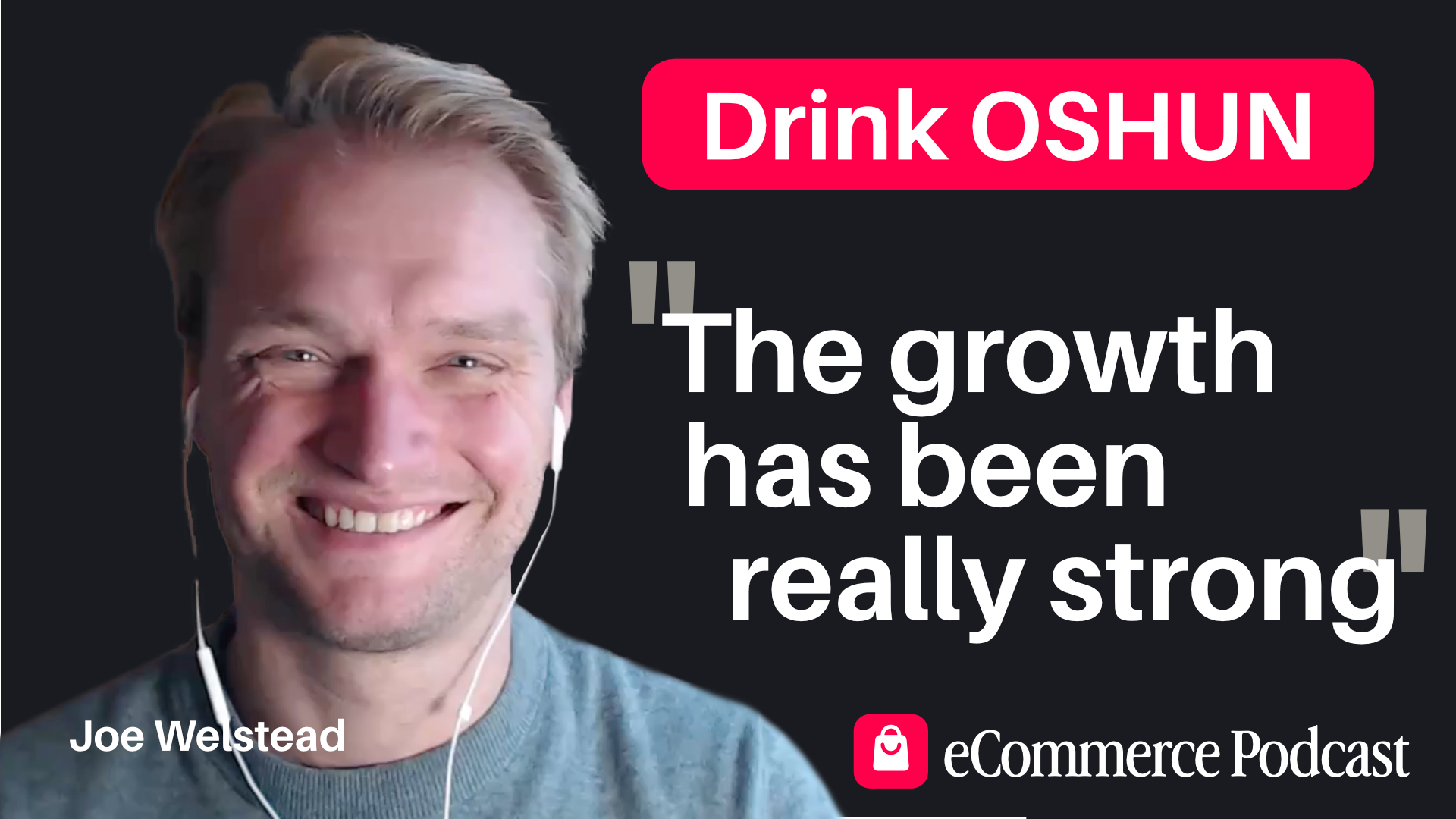
Joe Welstead
Drink Oshun
Even more episodes...