Why Pay an Agency 15k When Your Customers Will Tell You for Free
Cem Atik took a client from $15m to $50m. Then they paid an outside firm 15k to tell them what was going wrong, and his reply was that they already had 100,000 customers who would have told them for free. Cem Atik, Co-Founder of Harucon Ventures in Dusseldorf, joins Matt Edmundson on The eCommerce Podcast to talk about the two mistakes that stall ecommerce growth between $2m and $10m, why a rising customer acquisition cost is not automatically bad news, why retention rather than paid marketing is where the profit actually sits, and the five metrics every operator should be able to recite from memory. He also explains the packaging change that took 25% out of one brand's costs, and the $250,000 he burned on a second business after his first one hit $7m.
A client Harucon Ventures had helped scale from $15m to $50m a year told Cem Atik they had just hired an outside firm for $15,000 to tell them what they were doing wrong. His reply was short. "You have 100,000 customers to ask what you're doing wrong. Why are you hiring a company?" Thirteen years into working with ecommerce brands, and it turns out we are all making similar mistakes. Who knew?!
Cem co-founded Harucon Ventures in Düsseldorf with his partner Tobias Münnich. They act as a growth partner to brands in the UK and the DACH region (Germany, Switzerland and Austria), and they take equity positions in some of the companies they scale. Every engagement starts with two due diligences, one on marketing run by Cem's team and one on finance run by Tobias, and lands in a meeting Cem calls the second roast. What comes out of that meeting is rarely a marketing plan. It is a list of things that are already broken.
Buying Answers You Already Own
The founder in that story, Marcel, justified the $15,000 by saying it was the next step. Cem pushed back. "Who told you this is the next step? You're only increasing your OpEx for no reason."
His argument was about references. The outside firm had impressive ones. So did the 100,000 people who had already handed over money for the product. "They bought your product. So what kind of reference you need more?"
Cancelling the contract wasn't really the point either. Cem had been telling that same founder what was wrong since the day they started working together. Paying for the answer changed nothing except the cost line.
Ego Is the Real Ceiling
Asked for the single biggest mistake ecommerce founders make, Cem named two. The first is having no control of unit economics. The second is ego, and he places it precisely, somewhere between $2m and $5m in annual revenue.
"To scale a business to $2 million, $3 million, or even $5 million in revenue annually, it's a pretty big thing. That's actually a milestone that is not easy to hit." The trouble is that the milestone gets misread as arrival. Founders turn up to calls convinced they have solved ecommerce, when in his view the real game only starts past $10m, where competition and pressure force a different way of playing "or otherwise you die within like a three-month period".
I know that feeling from the inside. When we had our first ecommerce hit and were doing millions online, I thought I'd cracked it. We had a beauty business, Jersey Beauty Company, that was flying, so we copied the code, launched Jersey Gift Company, and watched it die inside about three weeks. I've had more failures than successes.
Cem's scaled his first business to $7m, and also assumed everything he touched would turn to gold, so started a second one alongside it, and went bankrupt in five or six months having burned over $250,000. "People only learn with pain. You just need to feel this pain at least once or twice until you understand."
Jim Collins calls this confronting the brutal facts, and it's an idea from Good to Great that helped me a great deal in my own business career. You look at the data, you accept the criticism, you admit you got it wrong, and you hold on to a belief that the future can and will be different.
Ecommerce Is a Maths Game
Cem opens most first calls with the same question. "What is your customer acquisition cost to LTV ratio?" He asks it to find out whether the person on the other end of the call knows.
Then he runs the arithmetic out loud. Scale a channel at a ROAS of 2. Cost of goods is 25%, marketing spend is 30% of revenue, fulfilment is 15%, tax and transaction costs another 15%. "So how much is left? And we didn't talk about operative costs like salaries and other stuff."
None of that is specific to ecommerce. A handyman spending €500 a week to win customers and getting €1,000 back has exactly the same problem once labour and travel come out of it. "If you don't have any control about your numbers, you're losing from the beginning on."
He isn't arguing for study over action. Start fast, do things. Just do them knowing the maths, because in his experience that lifts your odds "at least like five or even ten times higher".
A Rising CAC Is Not Automatically Bad
Founders bring him the same complaint constantly, that acquisition costs are climbing. His answer depends entirely on one other number.
If repurchase rate is 40%, a rising CAC is fine. If it's 10% or 15%, it isn't. "A raising cost number doesn't mean that something is going bad or good. It more shows you where your business is moving on."
Category matters here too. Beauty tends to run on new customers. Supplements shouldn't. A supplements brand without a repurchase rate somewhere around 30% to 40% is leaving money on the table.
Retention Is Where the Profit Lives
First-order profitability on paid is great when you can get it. Cem's view is that it stops being available at scale. Push spend towards $100m or $200m in revenue and the platform's interest and yours pull apart. "As more your spend is growing, as lower your return of investment will be. Marketing is not made for that."
What's left is the part of the business you can actually move. Retention, conversion rate on the store, signup forms. "This is something that you just can actually have impact on and can take this unprofitable traffic and make them to profit."
Which is why he pushes back on outsourcing retention completely. Hand all of it to an agency and you've handed away a really profitable part of the business.
Scaling Usually Starts With Fixing
"Most of the time scale doesn't begin with just increasing the marketing spend. It starts with fixing the issues in the process that are already done."
A food and beverage brand Harucon works with produces in Poland and Bulgaria, then shipped the product to Germany, unpacked it, repacked it, and sold it from there. Finishing the packaging at the point of production took roughly 25% off packaging costs. A separate change to the same brand's fulfilment saved another 12%. Neither needed an extra penny of ad spend.
That's the shape of most of what the audits turn up. Loopholes and bottlenecks first, growth second.
Cut the Feelings
"Your ecommerce brand is your baby. You just grow it up from the beginning and there is a lot of emotion into it. Cut it."
The practical version is unglamorous. Product coming back at a 15% to 20% return rate? Call the customers and ask why. "You don't need to ask or build fancy dashboards or getting an expert on board."
Still stuck? Message ten people on LinkedIn. If eight say the same thing, fix that. Cem answers his own messages, prompted by his team when one has been sitting for a day or two.
One of Harucon's partners spent two or three weeks worrying about repurchase rate falling away after the third order. The data showed no gifts, no welcome series, no email, no contact of any kind after the first purchase. "It takes us five minutes to fix something you've been thinking about like two, three weeks."
Pace and Execution
One of the bigger private equity operators Cem deals with describes himself this way. "Don't get me wrong, but I'm not a smart guy. The one thing I do right is I just understand how pace and execution working combined."
In practice that means five things running at once, anything not working cut inside a month, and constant rotation. He burns money doing it. Set against his returns it comes to 5% or 6%. "If you are not able to sacrifice 5, 6 or even 10% to generate another 90% which are insanely profitable, you are leaving money on the table and you are just wasting your time."
The same logic scales down. Test something for a week or two, cancel it if it isn't working, run the next strategy. And fix 80% rather than waiting until you can fix all of it, because "the 20% comes over time".
Where AI Actually Helps
Cem is an enthusiastic AI user who doesn't believe it removes the humans. What it does better than he can is read.
He hands Claude a 5,000-keyword list, or 500 search terms from three months of Google Ads, and asks for clusters grouped by the underlying issue rather than by surface wording. He has it build a Notion database of ecommerce benchmarks and KPIs gathered from published sources, then uses that as his reference point. He asks it for a structure for advertorials, feeding it examples and rules first. And he asks it to check Reddit.
"For doing that, for sure, you just need to give them examples." The judgement stays human. The reading gets handed over.
Know Your Own Numbers
Asked which handful of metrics every ecommerce founder should be able to recite, Cem named five.
- Customer acquisition cost. What you pay to win one order.
- Average order value. What that order is worth.
- New customer share. The percentage of orders coming from people who have never bought from you before.
- Lifetime value. What a customer is worth across the whole relationship.
- Repurchase rate. How many of them come back.
"These are not the most important things, but if you just have control about these 5, there is a lot of more control that you just have." The value isn't in any single number. It's in whether they add up to a system that makes sense, with enough margin on each order to work with.
Where to Start
- 1Answer the CAC to LTV question today, from your own data, without asking anyone else.
- 2Call ten customers who sent something back and ask them why. No dashboard, no consultant.
- 3Look at your process before your budget. Packaging, fulfilment, supply chain. Go and find the 12% and the 25%.
- 4Check what happens after a customer's first order, and after their third. If the answer is nothing, that's your five-minute fix.
- 5Pick one test, run it for two weeks, and cancel it on schedule if it isn't working.
Cem left me a question that I'll be answering on social. If you compare your biggest success with your biggest failure, which one taught you more? Failure, obviously. But are you sure about that?
His closing advice was borrowed from another podcast and he passed it straight on. Work so hard and so much that it makes it unreasonable to not succeed, and don't let pace and execution be the last thing you care about.
Full Episode Transcript
Read the complete, unedited conversation between Matt and Cem Atik from Harucon Ventures GmbH. This transcript provides the full context and details discussed in the episode.
Full Episode Transcript
Read the complete, unedited conversation between Matt and Cem Atik from Harucon Ventures GmbH. This transcript provides the full context and details discussed in the episode.
# Transcript — Cem Atik (Harucon Ventures)
**Episode:** The eCommerce Podcast
**Guest:** Cem Atik, Co-Founder, Harucon Ventures GmbH
**Host:** Matt Edmundson
**Recorded:** 2026-07-27 · **Publish:** 2026-08-21
**Duration:** 46:22
> Cleaned transcript. Guest name corrected from the ASR's "Sam" to "Cem" throughout.
> Filler words lightly removed; wording otherwise unchanged.
---
**[00:04] Matt:** So welcome to the eCommerce Podcast. My name is Matt Edmundson, and of course, it is great to be with you on this beautiful day wherever you are in the world. We hope you're having a great time. Now we are going to be talking about ecommerce. That's what we do on this show. So if it's your first time with us, a very warm welcome. Make sure you like and subscribe. And check out the website ecommercepodcast.net and all of that sort of good stuff. And of course, if you're a regular, welcome back, welcome to the show. It's good that you continue to get value out of it. And I do have to give a quick thank you to everyone that reaches out to me during the week, from folks on WhatsApp groups to LinkedIn, all that sort of stuff. I just love the stories. You guys get value out of the show, which is great, keeps me doing it. So if we've not yet connected on LinkedIn or you're not part of our cohort groups, which is— how do I describe cohorts? It's where a bunch of us get together and talk about ecommerce online. It's awesome. You can find out more information about that on the website. But yeah, thank you for all the encouragement. It's been greatly received. Let me tell you, very greatly received. But yeah, of course, if you're new, hopefully we'll connect and you'll be sending me some of that great feedback. Not that I'm asking you to feed my ego, but everything helps. Right. Anyway, that's enough of that. Like I say, the website ecommercepodcast.net, you can find out all the information about the show there. You can find the show notes from today's conversation. You can find all the links to the guests, you can find all the past episodes. There is a whole bunch of stuff on the website. So do go check it out, ecommercepodcast.net. Net. Now, Cem, welcome to the show, man. How are you doing?
**[01:54] Cem:** I'm doing fine, Matt. How about you?
**[01:56] Matt:** Well, yeah I always used to say when people ask me that question, I don't know how you answer that question sort of tongue-in-cheek, but I would always say to people, well, you've got to be doing all right when you're this good looking, right? And then my wife said to me, maybe 2 years ago, 2, 3 years ago, Bearing in mind, we've been married for 28 years. So she said to me 2 years ago, I need to stop saying that. I have to now start saying to people when they say, how you doing? I've got to be, I've got to say, well, I've got to be doing all right when I'm married to such a hot wife. So, so if she is listening to the show, which I doubt very much, but if she's listening to the show, both are true. and so yeah, I'm doing good. Anyway, I think I feel I've just slightly digressed. Cem, tell us a little bit about yourself, where you are and what you're doing, why you're on the show.
**[02:57] Cem:** Sure. yeah, first of all, thank you for being able to be here. my name is Cem. I'm an entrepreneur, or you could say an ecommerce founder also. Who is just helping a lot of brands doing growth from Germany. We are mainly focused on UK and the DACH region. So that means Germany, Switzerland, and Austria. Yeah, just that's pretty it. I'm in the space for 13 years right now. Yeah, worked with a couple of, or better to say, supported a lot of good and yeah, brands that's pretty familiar to most of the listeners for sure here. But yeah, that's pretty much— there's not much to say about me. Pretty boring, actually.
**[03:48] Matt:** I doubt that very much. I doubt that very much. So you're based in Germany. Whereabouts in Germany?
**[03:57] Cem:** Near Cologne, called Düsseldorf. I mean, it's pretty common and familiar, I think.
**[04:01] Matt:** Yeah, I've been there. Düsseldorf. How do you pronounce it in German? Düsseldorf.
**[04:05] Cem:** Düsseldorf.
**[04:06] Matt:** Düsseldorf. Yeah, yeah. And so, yeah, Germany is one of my favourite countries. I really love Germany. Really? Yeah, yeah. It's a great place.
**[04:14] Cem:** I used to—
**[04:16] Matt:** Why is that? Are you sure? Germany? Are you sure? No, lots of good memories in Germany. So my sort of previous work life before becoming an ecommerce guy. I used to install saunas and steam rooms, and health spas, and we used to buy them from a German company called Klafs. Shout out to Klafs if you're looking for a sauna, go check out Klafs. and they were based near Stuttgart, and so I have just lots of good memories of coming over, hanging out with those guys, going and touring health spas, and just, yeah, it was just such good fun. German beer and lots of laughter and all that sort of thing. So, yeah, lots of good memories. That's why I like Germany.
**[05:07] Cem:** That's actually a true thing. To make business with German companies is usually something— I mean, if I just need to choose between having private time with people in Germany that I don't know or doing business with them, I definitely would recommend doing business with them because doing business in Germany can be really fun. Not sure, for sure, not with all, with all companies, but most of them. Yeah, yeah, pretty cool, pretty calmed down. There's no like, yeah, I'm better than you. There's, there's like supporting each other is more important than competition. Yeah, that's something that I really enjoy here too.
**[05:41] Matt:** Yeah, yeah. No, I've got a look. I love the fact that when we were dealing with Klafs, it was all done on the basis of a handshake. Yep. You know, it's very much—
**[05:53] Cem:** Gentleman's agreements are really big.
**[05:54] Matt:** Yeah, yeah. I said it, therefore I'll do it. And that sort of old school, old-fashioned handshake thing I thought was wonderful. Yeah. Yeah, and I really liked it. So yes, I remember, we'll start talking about ecommerce in a minute, Cem, but I remember going to Germany for the very first time with my then boss, a guy called Simon. And Simon and I are still really good friends. And, I remember going to Germany, and this was sort of in the '90s. So this was pre— you've got to remember, this is pre-internet, right? We didn't— I didn't have an iPhone with Google Maps. we had to sort of read a map to figure out where we were going, and we were sort of in the vicinity of where we needed to be. And, Simon said to me, just jump out of the car and go ask that lady over there where this hotel was. Right? And all I had was a pamphlet, like a leaflet of the hotel. And I'm like, I don't know how to say in German, where is this hotel? So I literally, the one phrase I knew how to say in German, Cem, was gehen Sie geradeaus, die erste Straße links, oder die erste Straße rechts, right? And so for those of you listening, don't speak German, it's basically go straight on and take the first left or the first right. So I jump out of the car, right, with this pamphlet. I hold it up in front of this lady and just sort of shrug my shoulders like, where is this? And she said to me, gehen Sie geradeaus, die erste Straße links. And I was like, ah, danke. And so I get back in the car and I said to Simon, right, we've got to go straight down the road and take the first left. And he's like, how do you know that? And so I kind of had this mistaken belief that I was somehow fluent in German.
**[07:45] Cem:** More important is how many times you repeat that until you find the hotel, actually.
**[07:48] Matt:** Yeah, I asked 20 ladies on the way to the hotel until one of them was right. No, it's very good. It's very funny. Anyway, let's talk about ecommerce. So you work with companies to help them grow. in the UK, and different regions. I'm curious, Cem, one of the questions I love to ask guests, right, that come on the show, you've got a very specific skill set, a very good area of expertise in helping ecommerce companies grow. When companies approach you, when you start talking to an ecommerce business, what is the single biggest mistake we're all making? I'm really curious, and how would we solve it?
**[08:33] Cem:** I mean, I think there's two. Okay. So first of all, the biggest, one of the biggest mistakes is that they definitely have no control about their unit economics. The first thing that I just usually ask in calls only for triggering like this inconsistency about like what you ask for, right? Is like, hey, what is your cost of acquisition cost to LTV ratio. And that's the first thing that I usually ask only to see if the person who I'm sitting talking with has at least a bit, yeah, an idea about what is going on in this business. That's the first thing. And the second thing is I think people who are just reaching $2 million, $3 million, even $5 million in revenue annually, they think they have a business in ecommerce, but they actually don't have, yeah. But they came in in these calls and their ego is so loaded. Like I'm the biggest one, the best one. So just, I mean, the first call that I have with people is usually like roasting them for 30 minutes and just telling them like, oh, okay, why that? Yeah, why is that? So, and why you are not shifting your budget if this is your best channel that is performing? Yeah, why you are doing this or X or Y and Z, right? So I think the biggest issues that we just have right now in ecommerce are, yeah, having not enough control about their unit economics And ego.
**[10:06] Matt:** Ego. Love that. Love that. It's like, I remember, I'm just gonna be totally honest now. I remember, when we had our first ecommerce hit and we were doing millions online and I thought I'd cracked it, right? I mean, you talk about, you talk about hubris. We were like, whatever we do is going to touch to gold now because we've cracked it, we figured it out, we're just going to copy our website because this again was sort of pre-Shopify. We'll copy the website, we'll copy the code, and we will just create another website. And we had a beauty company that was doing really well. It was called Jersey Beauty Company. And then we set up Jersey Gift Company. It died within like 3 weeks. It was so rapid, the downfall. And so I often tell people I've had more failures than successes. But it's, I get what you mean. By ego. And what do you think that is though?
**[11:11] Cem:** I think, I mean, to be completely fair, to scale a business to $2 million, $3 million, or even $5 million in revenue annually, yeah, it's a pretty big thing, right? Because that's actually a milestone that is not easy to hit. Definitely not. Yeah, but ecommerce is actually, if you're just asking me, starting after you're passing the $10 million, yeah, because then you just really start to feel pressure, competition, right? And you also, yeah, just need to play the game differently, or otherwise you die within like a 3-month period. I have a really good example, for that. we are working with a company together where we also invested in. We also do investments, by the way. we help them to scale from $15 up to $50 million. Yeah. So revenue annually. And I was talking with the founder like 5, 6 weeks ago and they say like, hey, okay, now we also have, because we just reach a certain milestone, we also have a company which is charging us $15K and tell us what we're doing wrong. And I was just like looking to them and say like, why you did that? Yeah. So yeah, because they just can tell us what we are doing wrong and then we can just do I told him like, Marcel, you have 100,000 customers to ask for what you are doing wrong. Why are you just hiring a company?
**[12:35] Matt:** Yeah, yeah. Why are you paying them 15 grand?
**[12:37] Cem:** Yeah, yeah. These guys have like huge reference. Yeah. And your customers has no reference. They buy, they bought your product. So what kind of reference you need more, right?
**[12:45] Matt:** Yeah.
**[12:45] Cem:** And it was like, yeah, but this is the next step. Who say you that this is the next step? Yeah. You're just only increasing your OpEx cost for no reason.
**[12:53] Matt:** Yeah.
**[12:53] Cem:** Cancel this contract, please. And by the way, I tell you since the beginning what you're doing wrong. So I mean, what are we talking about? Right? And this is really something that a lot of brands need to understand. If you're just having a sparring partner, yeah, like we're doing with Aurion, you just need to be able to accept criticism. Right? But for sure, I mean, logical and criticism that makes sense. Right? I'm not telling you something like, hey, you do this wrong, do this different. I tell you what you do wrong, I tell you why this is wrong, and I usually help you to solve that, right? And that's, that's the difference, right? So that's, that's, that's the ego. Yeah, they think like, hey, I just scaled something to $5 million, I know everything, I can do everything that I touch will be gold, right?
**[13:44] Matt:** Yeah.
**[13:45] Cem:** And that's actually not the case. I just learned this also on the hard way. We scaled up our first business also to $7 million in revenue, and I was like doesn't matter what I'm doing, I will be a millionaire, everything I touch will be gold. Same situation like you. And yeah, we just, with the second business, we, yeah, go bankrupt in 5 months, 6 months. Yeah, really go bankrupt because we just build another business for sure to not, yeah, interrupt the process of the current business, right? And yeah, we, it was a total flop. We just spent over $250K and just really burned money. Nothing else happened there. And that's pretty much it. So it's always the same. People only learn with pain. You just need to feel this pain at least once or twice until you understand.
**[14:34] Matt:** Yeah, I think you're right. I think you have to learn it eventually, don't you? That you are not God's gift to business, that you don't have the Midas touch, and that actually whilst you work hard, a lot of it is also down to luck and being at the right place at the right time. But I'm reminded of a phrase Jim Collins uses in the book Good to Great, which I think is a really— a book that really helped me in my business career. He talks about this idea of if you are a great leader, you confront the brutal facts. Right, so you look at the brutal facts, you take the criticism, you look at the data, and you go, we have got this wrong. but you do so with a hope and belief that the future can and will be different, right? So it's not like, oh, woe is me. You're like, but you have to acknowledge the fact these are the brutal facts. You have, you have got to be that clear with yourself. And that's really hard when the ego's involved, isn't it? To sort of confront the brutal facts, which kind of ties in with what you said, the first problem we've got in terms of being able to answer simple questions like CAC to LTV, or customer acquisition cost to lifetime value. I do wonder whether sometimes we just don't know the brutal facts.
**[16:06] Cem:** But I mean, so that's totally true, but is this not the brutal mistake? Because let's just think about the difference. Let's say we are not in the ecommerce space, you're a handyman, right? You're spending €500 or dollars or pounds, doesn't matter, right? A week to acquire new customers and you get only €1K back, right? Is this worth your time and your cost? If you just only get twice back. Yeah, yeah. So you have, we have labor costs, you have, you just need to drive there. There's like several different factors. So I mean, this is basically a fact or a rule in every business, not only for ecommerce. If you don't have any control about your numbers, you're losing from the beginning on. Just let us say we scaling a channel with ROAS about 2 as example, right?
**[16:53] Matt:** Yeah.
**[16:54] Cem:** But our cost of goods sold are 25%, we have 30% marketing spend on our revenue and yeah, there's like fulfilment costs, like 15%. And taxes, other stuff is another— taxes and transaction costs is another 15%. So how much is left? And we didn't talk about operative costs like salaries and other stuff, right? So the first thing that every founder needs to understand from the beginning, it's important to start fast and do things instead of just trying to learn them first. I totally agree with that. But you just need to realise that ecommerce or even every other business is first of all a math game. So if you know your numbers, if you do the math, you will more likely succeed. At least like 5 or even 10 times higher will be your succession rate if you just have these numbers under control. I mean, you see this every day. As example, a customer is just complaining about like, yeah, my CAC is raising. Yeah, but your repurchase rate is 40%. What is the issue? Yeah. So, but if the CAC is raising and his repurchase rate is by 10 or 15%, right? Then it's bad for sure. But if the repurchase rate is great, yeah, and the retention marketing things like email, WhatsApp, SMS is running great, yeah. So it's no problem to just increase the customer acquisition cost, right? And they need to understand this little differences, yeah. What is good? What is bad? Yeah. A raising cost number doesn't mean that something is going bad or good. Good, right? It more shows you where your business is moving on, right? When you are just selling supplements or just beauty products, yeah, beauty products are more like new customer base, but supplements, yeah, people like your stuff as example and they just repurchase, right? So if you are in supplement business, yeah, and don't have a repurchase rate about like 30, 40%, right? You just do something wrong. You leave money on the table because retention is the only channel that is generating your pure profitability.
**[19:00] Matt:** Yeah, yeah.
**[19:00] Cem:** See, paid channels— I mean, if you just can do paid marketing and be first order profitable, that's amazingly great, right? Yeah, but if you just want to scale this up to 50 or even 100 million, you will just realise that this will not work. You cannot stay always profitable with your marketing if you just reached 100, 150, 200 million. That is not working. Marketing is not made for that, right? So, or better to say, paid marketing is not made for that.
**[19:27] Matt:** Yeah.
**[19:28] Cem:** Their only interest is to get you orders and squeeze more money out of you. That's their focus. So that means as more your spend is growing, as lower your return of investment will be. But the side effects with retention, with conversion rate on your shop, with signup forms, this is something that you just can actually have impact on and can take this unprofitable traffic and make them to profit. Yeah. If you don't understand these things, if you don't have at least a feeling for these numbers or better, if you just outsource this 100% to another person or agency, you're leaving money on the table because that is actually doing your profits, right? Retention is usually most of the times the channels which is doing insanely high profit rates, right?
**[20:15] Matt:** Yeah. Yeah, no, I'd agree. I'd agree. I mean, we've worked very hard to get our retention rate as high as we can, year on year. And actually growing the retention rate is one of the reasons why businesses, I think, just super well. I'm curious, I'm listening to you talk, the metrics that you mentioned, if you approach or you get involved with an ecommerce business, what's your process? How do you get them from point A to 5x.
**[20:45] Cem:** So first of all, when someone is interesting to work with us or looking for an investment where we just can invest on, so first of all, we do an audit for sure. we have two departments, yeah, which do a due diligence. The one is the marketing due diligence, which I do with my team, and the second one is the finance, yeah, which is doing my partner Tobias, right, and his team. So we first of all really scan your business. What are you guys doing? How are your rates? Yeah. How is your supply chain? Yeah, like things like these. Yeah, because maybe it sounds weird, but the scaling is not— most of the time scale doesn't begin with just increasing the marketing spend. It starts with fixing the issues in the process that are already done. Yeah. As example, we work with a food brand together which we're just really deep involved right now. Yeah. And with changing their fulfilment, we saved another 12% in costs.
**[21:44] Matt:** Right.
**[21:44] Cem:** That's 12% that we just saved in the beginning. So then we, they produce in Europe. Yeah, they just produce food and beverage products. And, with a little trick, we just save like 25% of their, of their packaging costs. Because I said like, hey, you guys produce in Poland, you guys produce in Bulgaria. Yeah, so why you are not finishing the packaging there? Why we are just getting this products to Germany? Then unpack it, repack it, and then sell that, right? So, and these are usually little twists where you just begin to fix things. So we just make a really good scan, due diligence on the marketing and the finance side. Yeah. And in this scan, we also realise like, yeah, loopholes and bottlenecks that we just need to fix first.
**[22:29] Matt:** Yeah.
**[22:30] Cem:** So when we have, yeah, a pretty clear view on the business, we usually go in a meeting. Yeah. I call this the second roast meeting. Yeah. Because we are basically telling people what exactly they do wrong.
**[22:42] Matt:** Yeah.
**[22:42] Cem:** How they can fix that. And what we do to fix that. That's also a really important thing. To tell someone how to fix that is usually not enough in these days. You just need to tell them how, right? So to say like, hey, your Google spend is this, yeah, and you just need to do it like this and with X ROAS, yeah, it's telling them, okay, yeah, but to tell them how they do that is something which is much more valuable. Yeah. So give people, yeah, what we do is we just giving people what they do wrong exactly and how they fix that, right? So, and then they have the chance to think about that, digest that first, and then say like, okay, we just want to do this by ourselves or do this stuff with Cem and his team, right? So that's usually the approach. We just came in and yeah, that's actually the beginning, the beginning of the end.
**[23:38] Matt:** Yeah, beginning of the end. So when you When you look at what's wrong in you and you look at how to fix it, are you doing that on the basis of experience? Are you doing that on the basis of research? maybe a mixture of both. I'm like, I guess I'm— if I'm listening to the show and I'm listening to you talk and I'm running my eCommerce, my ecom business, I put my ego aside. How do I figure out what's wrong with my business and how do I figure out how to fix So the first thing that I always recommend is just try to cut as much feelings as possible out of the process.
**[24:18] Cem:** Maybe it sounds weird and we all know your ecommerce brand is your baby. You just grow it up from the beginning and there is a lot of emotion into it. Cut it. It's hard to say, but cut it. The only thing that is really helping is data-driven decisions. So that means that you are just really checking your data out. Yeah, you check out, yeah, like, hey, my product has a return rate about like 15-20%. Why is that? What I can do for that? You can call your customers and ask. That's the easiest thing. I mean, it's logic, right? So you don't need to ask or build fancy dashboards or getting an expert on board. Ask your customer why they're sending their product back. Yeah. So easiest fix. And it's really a mix between experience, I would say, also research. But the most important thing is really doing data-driven decisions. If you see an issue, just think about— don't just overcomplicate it. Think about simple. So when I spend $100K into something and get only $200K back, so what is the problem that I did? So I just look on the numbers, I check benchmarks, right? And if I'm just under these benchmarks, I see at least a bit the direction what could be the issues, right? And that's the thing. People are just always overcomplicating things. But it's really simple. Ecommerce is the basic idea, the ground idea is really simple. The execution is the hard thing. But here's also something to fix. If you are just not sure how you can solve something, asking people, asking your clients, your customers, or here's also one thing, testing things that could be the solution, just checking them out for a week or even two, and if it's not working, just just, yeah, just cancel it and just execute another strategy, right? It's also something. Yeah, I mean, I'm just really talking with a lot of PEs and family offices, and one of the biggest players I know in the space is a guy who always say about himself, like, hey, don't get me wrong, but I'm not a smart guy. Yeah, I'm not smart, but the one thing I do right is I just understand how pace and execution working combined. So what he do is he do things Yeah, like 5 things in the same time and cut things that are not working within a month. Right. And he always rotates this and he built a whole team against that. And he's one of the biggest PEs in the European zone here. Yeah. Because he just understands that. Yeah. Did he burn a lot of money? Yes, he did. Insanely amount of money.
**[26:49] Matt:** Yeah.
**[26:49] Cem:** But if you just compare it with the revenue and the profits that he gets in. Yeah. There is like, it was like 5 or even 6% of the money that he, that he burned.
**[27:00] Matt:** Yeah.
**[27:00] Cem:** If you just compare it to his profits that he's doing. Yeah. And if you are not able to sacrifice 5, 6 or even 10%, right, to generate another 90% which are insanely profitable. Yeah. You are leaving money on the table and you are just wasting your time.
**[27:15] Matt:** Yeah. That's a really interesting point. I love this idea. I mean, the simplicity of it is great. Data-driven decisions. Look at the data, benchmark it, see what's working, what's not working. Talk to your customers probably over both. Why did— why do you think that works? Why do you think that's not working? do some tests and check the data and see what happens as a result. It's, it's not, it's not a complex procedure, Cem, in the sense you— it, I think going back to your point about overthinking or over making things overcomplicated I think it's easy to do that, but the simplicity of that actually has quite a big impact on your business, doesn't it?
**[27:58] Cem:** Yeah, definitely. It happens just pretty frequently. We had a call like last week with one of our partners after the third order, as example, the repurchase rate is decreasing by a lot. So they asked me, yeah, what can we do about that? And the first thing that I tell them, let us just check out the numbers. So what we see is that after the third order, there is no gifts, there is no welcome series, there is no email, there is no getting in touch with them. So they stop approaching their customers, to their audience, right? After the first purchase. And I tell them, it takes us 5 minutes to fix something that you just thinking about like 2, 3 weeks. Keep it simple. It's really simple. Just don't see your business as an ecommerce business and super complex. Just see yourself as a handyman, right? You're just fixing things, yeah. And if you just try to— yeah, if you just go and do this with this mindset, that will help you a lot.
**[29:03] Matt:** Yeah, yeah.
**[29:04] Cem:** So absolutely, if you don't know, like, if you have really no clue, any idea, just go to LinkedIn, just pick a few guys and ask them questions. Yeah, I mean, I just get like tons of questions every day on LinkedIn and I'm just always answering them. Even, even if I don't answer them, yeah, it takes maybe a day or even two. I just get a reminder from my team, hey, there's a, there's a, there's a message open, and then I answer it, right? It takes me only a couple of seconds and also takes you maybe a minute or even two to figure out, yeah, a few experts on LinkedIn and ask them. If you have like asking 5 or even 10 people and from this 10 people, 8 people say the same thing, So what do you just need to do to fix what these 8 people say, right? Yeah. So at least you can try it.
**[29:45] Matt:** Yeah, exactly. And again, everyone, like you say, I love that everyone's quite happy to answer questions on LinkedIn. it's, it's, it's what people want to do. It builds exposure. So I think it's a win-win.
**[29:59] Cem:** Definitely.
**[30:00] Matt:** I'm reminded actually, as I'm listening to you talk, Cem, of Elon Musk, who, I mean, love him or hate him I appreciate he's quite a polarising character. his whole ethos, it seems to me, in business is understand what the biggest problem is we have at the moment right now. Let me put my undivided attention on fixing that problem and getting in people that I need to fix that problem. We fix it, and then I go on to the next biggest problem, and I just rinse and repeat. And he just travels around the world around his companies fixing the biggest single problem that they're facing. and I think it's, it's, I appreciate his approach is not necessarily for everybody, but we can definitely learn from that approach, which says, what's the biggest single problem in my business right now? and how do I go and fix it? I almost wonder actually whether people would be able to answer the first question, what's the biggest single problem in my business right now?
**[31:03] Cem:** I mean, to keep this also simple, look what he does with Starlink. We have an issue on this planet that doesn't matter where you are. There are regions or even countries which have bad connection. Yeah, he fixed that with Starlink.
**[31:20] Matt:** Yeah.
**[31:20] Cem:** If it's the best solution, definitely not. There will be something better in maybe the next years or something. But if it's fixing the problem, Right. That's the only thing that counts.
**[31:29] Matt:** Yeah.
**[31:29] Cem:** Right. So you fix that problem and you can fix it for a reasonable price point, period. That's the point. And this is also something that people need to understand. You don't need to just always fix 100% of it. If you just can fix the core problem, which makes things easier, that's most of the times enough. Just thinking about the Pareto principle. Right.
**[31:52] Matt:** Yeah.
**[31:52] Cem:** So principle. So if you just can fix 80%, yeah, the 20% comes over time. Yeah. But fixing 80% of the issue is usually the things that brings— that let you move forward.
**[32:03] Matt:** Yeah. It's the thing that moves the needle. Definitely.
**[32:06] Cem:** Exactly. Yeah. So did I— I'm a big fan of Starlink. Definitely not. Did I use it? No, I don't need it. But I even know that in my city where I'm living in Düsseldorf, there's a lot of people which has bad connection, just bad internet connection. And I just see how the Starlinks on the roofs are increasing.
**[32:24] Matt:** Yeah.
**[32:25] Cem:** So, and why is this so? Because it solves the solution really simple. You just get it within a few weeks.
**[32:30] Matt:** Yeah.
**[32:30] Cem:** Everything is easy to set up. It solves a real core issue. Yeah. About being online on everywhere. And that's pretty much what he's doing. Right. And I personally, if you just ask me, I'm also not the biggest fan of all everything that he's doing. Yeah. But his approach in business is really impressive.
**[32:50] Matt:** Yeah, no, absolutely. Absolutely. I'm just thinking when you, when your customers see you solve problems as well. So you identify problems, you fix them. But I think when customers see you identify problems and fix them, that helps with retention, which goes back to your point earlier. And it feels to me like this is maybe the foundation of good customer service.
**[33:19] Cem:** Definitely. So something that I just implement with my team a while ago is because with the help of AI for sure, right? Everything is just going much easier in these days. We build a system that is just frequently updating, talking about the pain points and at the same time the system just understand our language really good and we are so proactive. Yeah, so insanely proactive that they basically, yeah, just getting all the information upfront before they even think about a lot of things, right? So, but here's one thing. So the biggest positive reviews that we just get is usually like, hey, you guys changed my thinking, my mindset, and I start to understand things much easier because I don't start to think about them. I go instantly in trying to solve these issues and going in the execution mode, you could say, right?
**[34:21] Matt:** Yeah.
**[34:21] Cem:** So yeah, that's definitely a point, right? So the biggest retention or the biggest feedback that we get is that we just changing how people see certain things in the space.
**[34:32] Matt:** Yeah. Yeah, that's fair point. It's fair point. Fair point. I How are you using AI to help you? I mean, you mentioned it to track— well, maybe not track is the right word, but how are you using AI to help you with this concept of fixing problems, data-driven decisions and stuff like that? Have you found any tricks and hacks with AI, or are you kind of like a non— well, clearly you're not a non-AI fan. I'm just kind of curious where you guys are at.
**[35:10] Cem:** Yeah, I'm just a huge AI fan. Yeah, but I don't think that AI is the one solution that will change everything. I still think that humans need to be involved, otherwise this will not work. How we use AI is also pretty simple, actually. So what AI is doing and what AI can do better than you would ever be able to do is just checking data and figuring out loopholes and see things that you maybe don't think, see. Yeah. So just let us say I'm just looking on the keyword list with 5,000 keywords. Yeah. It takes a while for me to figure out which keywords could be a good cluster or a good topic that I just can talk about in the next ads that I plan for. Right. So, but if you just give this to AI and saying like, hey, just please check our data, just make a research. And also create a Notion database as example, right, about these topics, get references from the internet about benchmarks and other stuff. Yeah, you can just train an AI to speak your language, giving him to understand exactly what you're looking for. Yeah, you just give him now the keyword list, he do the Notion database. Yeah, just create a big database. Yeah, about benchmarks as example in the ecommerce, about KPIs and other stuff. And then you say like, hey, Here's a keyword list, about 500 search terms that we just have in the last 3 months in our Google Ads account. Can you just build up clusters?
**[36:34] Matt:** Yeah.
**[36:35] Cem:** And topics that make sense to talk about because we see good results over these search terms. And in the next step, can you just build us— let us say it's a problem-solving product. Can you help us to build editorials for that? Right. What is AI doing? He just figure you out clusters for keywords that are working good combined together because they're talking about the same issue. And at the same time, you just get a prompt or at least a mind map, a roadmap about like how your advertorials should be structured for, right? But for doing that, for sure, you just need to give them examples. You just need to feed them with advertorials, with rules and advertorials. And see the World Wide Web as a big database for information. So you can just grab basically for every topic these kind of information, right? You just want to know how to do advertorials. Just check competitors and ask the internet. You just want to do listicles, do the same. Yeah, you can just basically do this for every topic.
**[37:29] Matt:** Yeah, yeah.
**[37:29] Cem:** So yeah, even Reddit is one of the best sources that you just can think of, right? So if I have an issue, I usually ask Reddit in past, right?
**[37:39] Matt:** Yeah.
**[37:39] Cem:** So now I ask Reddit and Claude. So what I do is like, hey Claude, can you just check out please how I solve issue XYZ? And also just check out Reddit if you just find something for that. Yeah. So I just telling it specifically again. I'm not sure if this is necessary actually, but for me it's getting better results.
**[37:59] Matt:** Yeah. Yeah. No, I'm the same way. I use Claude. I will check it. I would check, tell it to check Reddit. I used to tell it to check Amazon as well, but to find out problems that people were having with products like ours or similar products. That's not as easy to do now. But yeah, I think it's Like, yeah, AI is just one of those really interesting tools to help you with a lot of this data analysis right now. You don't need to hire, it seems you don't need to hire, depending on the size of your business, of course, a data scientist to help you unpack a lot of this stuff now.
**[38:34] Cem:** Yeah, it's getting even easier, right? So let us say you are just an ecommerce founder and you will start your business. Yeah, everyone just tried to reinvent the wheel. You don't need to. Go to Amazon, check a product out, check the reviews. Yeah. Now you can do with AI. In the past, you was doing it manually. Just figure out what you could do better. Create a product that is doing better. Yeah. Point. Right. You have a new product.
**[39:00] Matt:** Yeah.
**[39:01] Cem:** You don't need to do like reinvent something. Yeah. We are not trying to get billionaires that are just changing in the whole industry or sector. The goal here is to build an ecommerce brand and maybe exit it for 50, 100, or even 200 million in future, right?
**[39:17] Matt:** Yeah.
**[39:17] Cem:** So just check what your competition is doing, figure out what you could do even better, right? Collect all of these reviews, collect all of these points, and do it better based on the data that you already have on their, on their pages, right?
**[39:29] Matt:** Yeah. Yeah. No, absolutely.
**[39:31] Cem:** Simple as it is.
**[39:32] Matt:** Yeah. The, the old simple rules still work. And they work very well. Even in the, in the age of AI, it plays those rules better. Maybe it doesn't really change them. Cem, listen, let me do the question for Matt section while I remember, because I quite often forget. This is where we have reached the section of the show where I ask my guest for a question for me. I will take that question and I will answer it on social media. So if you want to know how I'm going to answer this question, come follow me at Matt Edmundson. LinkedIn or Instagram. But Cem, what's your question for me?
**[40:12] Cem:** Oh, I mean, there are so many questions I would love to ask you, Matt, to be completely honest. If you compare your biggest success with your biggest failure, which one teach you usually more is failure for sure, right? But are you, are you sure about that?
**[40:37] Matt:** Okay, am I sure? That's a really interesting question. Okay, yeah, because, okay, well, no, I'm gonna say social media. I really want to get into that. That's a really fascinating question. well done, Cem. Thank you for that, question. if people, want to reach out to you, if they want to connect with you, find out more about what you do, maybe get you involved in what they're doing What's the best way to do that?
**[41:02] Cem:** I mean, I'm just really active on LinkedIn. So if you have any questions, just type in my name on LinkedIn. Yeah, ask me a question. Just, yeah, let me know what the issue is that you just have and yeah, maybe we can help you to fix this up. Yeah, it's really simple. Yeah, I just posting also a lot of content on LinkedIn. So if you are just in the marketing space, in the growth space, you can also just just, yeah, grab a few free resources, or a lot of resources over the last year, that can help you definitely to optimise and fix a lot of the issues that you have.
**[41:38] Matt:** Yeah, fantastic.
**[41:39] Cem:** Because I'm, I'm not like these personal brands who are talking like, hey, I'm so great because we do this. No, I just only post things that I actually use in my daily business.
**[41:49] Matt:** Yeah, good. Well, make sure you follow Cem on LinkedIn. The link The LinkedIn link. Yeah, that's right. I'm just saying it again in my head. The LinkedIn link or the link for his LinkedIn will be in the show notes, which if you just scroll down on your podcast app will be there. If you're watching on YouTube will be in the description. Of course, if you're on the website will be at ecommercepodcast.net. They will be there. And if you're subscribed to our newsletter, so many options these days. If you're subscribed to the newsletter, you will also find the link to Cem's LinkedIn in your inbox. But Cem, listen, this is the part of the show we call it saving the best till last. And this is where I like to ask my guests, for those that have remained to the end, I'd love your best advice, your top tips. And the thing that I'm thinking of is right back at the start, you talked about not controlling certain key metrics in the business, not knowing certain key numbers. And this seems to be a recurring theme. What are the handful of metrics every ecommerce entrepreneur should know in their business and why?
**[43:02] Cem:** So, the first thing that is coming up to my mind is for sure, what is your customer acquisition cost? What is your AOV? What is your new customer share? Yeah, how much? Yeah, what is the percentage of these customers which are coming in are new? Yeah. What is the LTV for sure? And also one thing that, yeah, a lot of people are just getting more and more on their side is repurchase rate. These are not the most important things, but if you just have control about these 5, yeah, there is a lot of more control that you just have. Yeah, because if you just check out these numbers and they work together in a system and it makes sense, right? So if you see there is enough margin, there is enough revenue, there is enough, the AOV is big enough, the customer acquisition cost, is great. So you're just doing enough profit each order, right? So that's something you just can work with.
**[43:58] Matt:** Yeah, fantastic. Yeah.
**[44:02] Cem:** So that's— but actually, I'm just thinking about the advice also, but because there is one advice that I just basically stole. Yeah. So I hear it in a podcast and it's really true because when I was listening to this podcast, I was like, oh my God, this guy is so goddamn true. He said two things which just really, yeah, hits me. Yeah, he said like, make— just work so hard and so much that it makes it unreasonable to not succeed. Yeah. And, be sure that pace and execution is not the last thing you are just caring of.
**[44:39] Matt:** Yeah.
**[44:41] Cem:** I mean, I was just really impressed about that because, I mean, we all know that, we all think about this, but no one is just talking about that, right? So, and I mean, just thinking about like doing ecommerce and saying like, yeah, I just only do like 5 up to 6 hours a week and my business is still scaling, it's not working. Ecommerce brands are working the best and scaling the fastest if you are just in a position where you're just really feeling yourself uncomfortable. Yeah, that's what is my experience. Yeah, ecommerce is doing fun when you are just testing new things, doing crazy things, just expanding to new countries, doing new channels. Yeah. But only if your core is for sure stable. Yeah, that's actually the thing. Yeah, that I really believe in.
**[45:22] Matt:** Fantastic. Well, Cem, thank you so much, man. lots of notes, again, as always, lots of things to think about, but appreciate you coming on the show. Thank you for sharing your, wisdom and your insights all the way from sunny Germany. It's been, it's been a cracking show. Thank you so much.
**[45:40] Cem:** Thank you so much for your time, and it was also a pleasure to be here.
**[45:43] Matt:** Wonderful, wonderful. Wow, ladies and gentlemen, there you go. Another episode all wrapped up of the eCommerce Podcast. Wasn't that a great conversation with Cem? Make sure you reach out to him. Like I say, the links to do that will be in the show notes wherever you get them from. But that's it from me. That's it from Cem. Thank you so much for joining us wherever you are in the world. We wish you a phenomenal week. But until next time, that's it for me. Bye for now.
Meet your expert
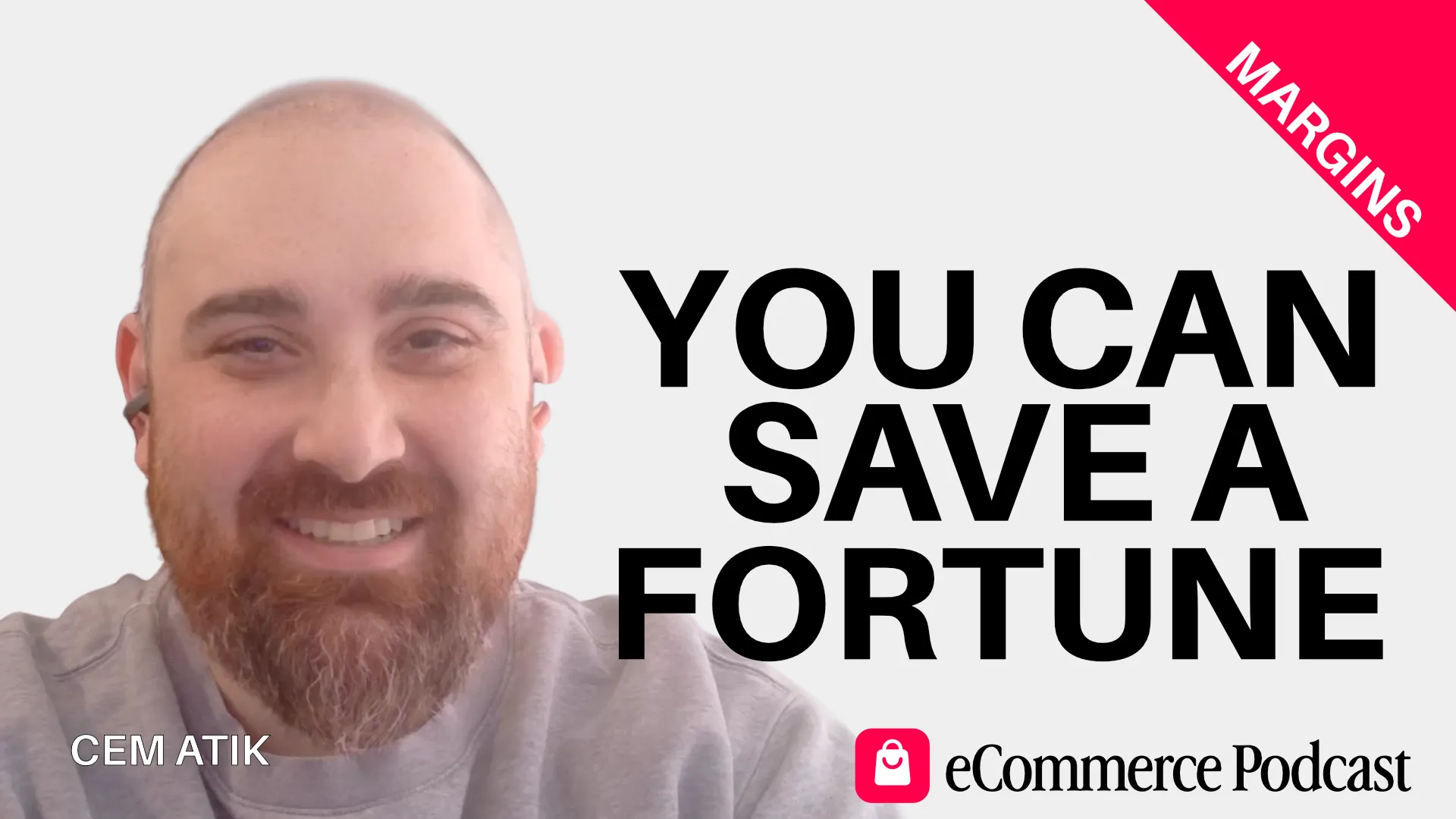
Cem Atik
Cem Atik
Harucon Ventures GmbH