Email Deliverability for Ecommerce Brands: What Actually Works
Everyone suspects email is dead. Laryssa Wirstiuk, who has run email and SMS for a decade, says the channel is fine, it's the way we use it that's broken. In this episode she signs up to 360 brands and finds 44% never send the welcome offer they promised, explains why cutting a list from 20,000 to 1,500 saved a business, and shows why the emails people are actually waiting for aren't the ones you're focused on. Practical, honest and useful whether you send weekly or three times a day.
Tell someone at a dinner party that you do email marketing and watch their face. "Email? People still look at that?" Laryssa Wirstiuk hears it all the time. In 2026, yes, people still open emails. The channel isn't the problem. The way most brands handle email is.
Laryssa runs Joy Joya, a boutique email and SMS agency built on Klaviyo, and she has spent about a decade inside other people's email programs. She hosts the Marketing with Laryssa podcast too. So when she says the biggest mistake in ecommerce email is under-valuing it, that comes from years in the trenches. But even if we do value email, let's not feel smug as most of us still treat it like a newsletter when it is really something closer to a relationship.
Why "Email" Is the Wrong Word for It
Part of the trouble is the name. "Email" sounds like 2010. It sounds like a chore.
Strip that away though and you will see that it is the one channel you actually own. The list, the CRM, the lifecycle. You own that data. And that's really important. As Laryssa put it, these are "people who have opted in to receive messages from you. They have expressed interest." Compare that to social ads, SEO or the newer AI-driven channels, where, in her words, people "are basically being shouted at." With email and SMS the audience has already raised a hand. They want you. The hard part is keeping the relationship going once they have.
That reframe matters because it changes what "annoying" means. A lot of us say some version of "I understand the importance of email marketing, but I don't want to bother people. I hate receiving marketing emails myself." It's a common fear. But it also judges every customer by our own inbox habits.
I'm one of those people who signs up for every marketing email going. My team is even upgrading a system that analyses them, because to me it's free training. You get to see what competitors are offering, how often they send, what the designs look like over time. But if I took that hat off, I'd probably unsubscribe from most of them, and it's easy to assume customers will behave the same way I would.
But...
"The unsubscribe rates are never as high as someone would imagine," Laryssa said. Most people on a list want to be there. And the ones who don't are not doing you any favours by staying.
Why You Shouldn't Fear the Unsubscribe (It Protects Your Deliverability)
We work hard to build a list, so watching people leave feels like loss. Laryssa sees it differently, because she is watching the actual data rather than the story in her own head. Disengaged subscribers who never open and never click are not neutral. They are damaging you.
When you keep sending to people who never engage, you signal to inbox providers, Gmail chief among them, that your mail has no value. Gmail then starts treating you accordingly and your emails slide into spam folders. Recovering from that takes a long time.
So the maths flips. It is better to send to 100 people who genuinely care about your brand than to 100,000 where the same 100 open it and the other 99,900 sit there dragging down your deliverability. Wish the leavers well and let them go.
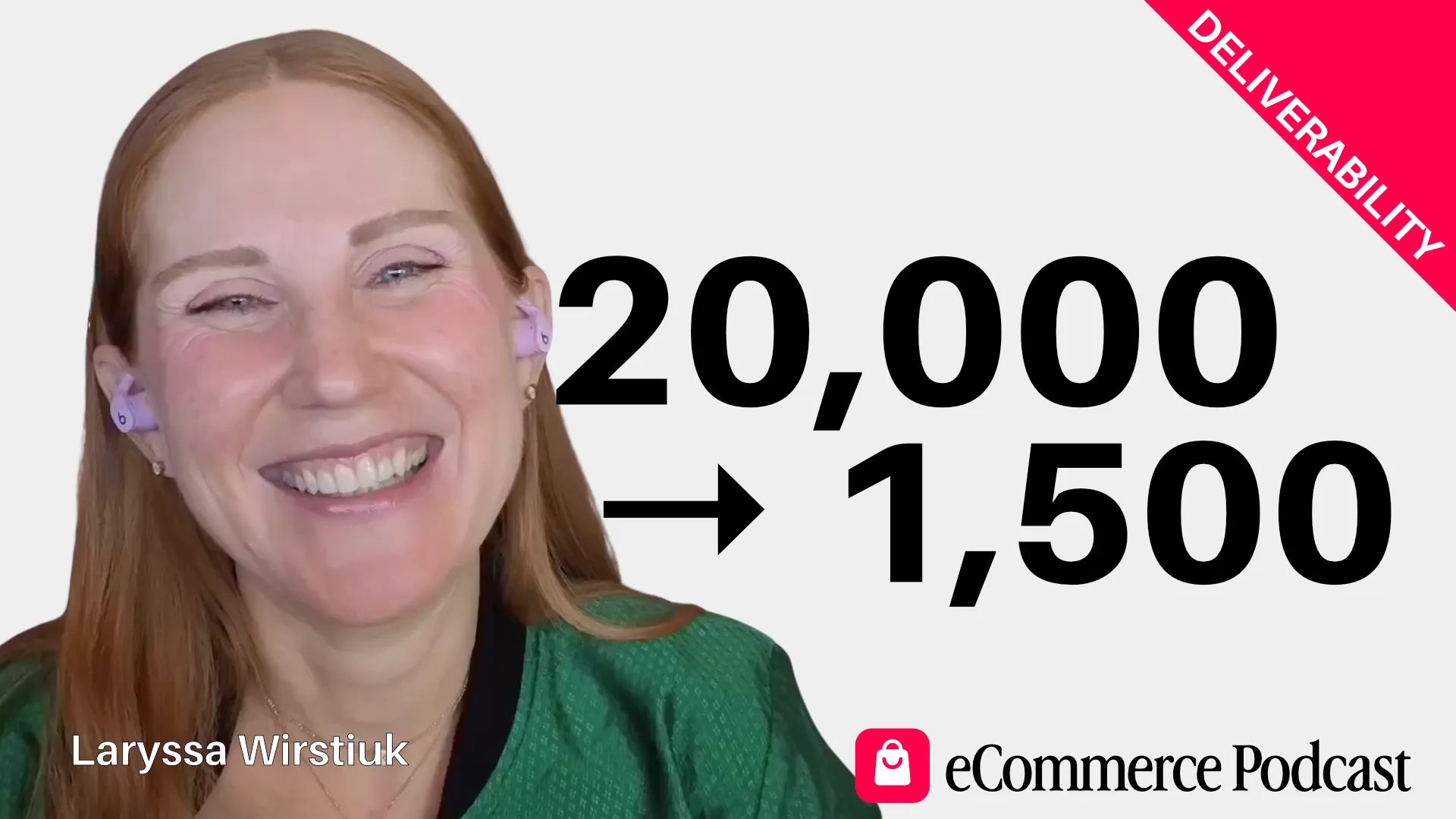
Laryssa has lived the extreme version of this. A client came to her with roughly 20,000 people on the list and some of the worst open rates she had seen in her career, around 5%. They were landing in spam. Over multiple rounds of work, she and the team identified the genuinely engaged subscribers and cut the list to about 1,500. They effectively started over, pulled the program out of spam, and got revenue and conversion moving again.
Imagine being told you need to delete 19,000 people. As she said, "it's better to speak to the people that want to hear from you rather than trying to somehow win back or convince people that just don't care."
What Separates Spam From Value
If you send more often, aren't you closer to being a spammer? This is the murky bit founders worry about, so it's worth drawing a clear line.
Spam, Laryssa argues, is a concerted effort. "You have to be trying to exploit someone or harassing them for it to be spam." The Nigerian prince that still owes us both a fortune. That's spam. A brand showing up with styling tips, gift ideas, new arrivals, promotions and genuine education about how to use a product is doing something else entirely. That is painting a full 360-degree picture of what you offer, and that is value.
The place frequency becomes a real question is as the list grows, and the answer there is segmentation rather than silence.
When you should segment your email list. Two conditions, roughly together. You're sending two to three times a week, and your list is somewhere north of 10,000 to 15,000. Under that, Laryssa says, a weekly send to the whole list is usually fine, as long as you're minding the people who have gone quiet. Over it, you have occasional engagers you don't want to blast four times a week, but who might happily take the single most important email you send that week.
How to segment. Not on one signal but a blend. Email engagement, site activity, purchase activity and how new someone is to the list, grouped into engagement windows. A 90-day engaged segment, then 180-day, then 365-day. The exact day counts flex with the age and size of your list, but those windows are a sensible standard.
The Email You're Most Likely Getting Wrong
Ask what's actually working now, and Laryssa goes back to basics rather than anything fancy. She ran what she cheerfully called an "unhinged study" to prove the point. She signed up to the welcome offers of around 360 ecommerce brands across different verticals, through popups and forms, on both email and SMS, and logged everything. Did the welcome email arrive? Did the offer match what was promised? Did it land in spam?
44% of that sample never sent the welcome offer they had promised. Around 12% went straight to spam.
That's the first impression we're talking about. "For someone new to come to your website and not receive what you've promised them, goodbye. You've lost them." The welcome email or text is the only message in your entire program that a subscriber is genuinely waiting for. No one is sitting by their inbox for your Tuesday promo. They are waiting for the thing they just signed up to get.
The fix costs nothing. Sign up to your own form. Get a friend to do it. On our side we run a small Claude script that regularly tests all the email forms with multiple test addresses, because forms break silently and no one tells you. 44% is a lot of brands failing at the one email that matters most.
Then there are transactional emails. The order confirmation and the shipping notification are among the most-read emails you'll ever send. I read order confirmations myself even though I just saw the same information on the website, a bit like reading the instructions on a shampoo bottle I already know how to use. Most brands ship the raw Shopify default and hand the shipping notification off to the courier. Brand them, make them personal, and you've improved the journey at exactly the moment attention is highest. As Laryssa said, when you set up a Shopify store it isn't obvious you should go and enhance those notifications, "but if you take the step, it's a more branded, a more personal experience."
Why Simple Keeps Winning
On both content and design, Laryssa's answer is the same. Simple beats elaborate. One idea, one desired action. "You don't want people sitting there reading your email as if it's some epic novel. It's a means to an end."
I've watched this hold true beyond email. On one of our sites we made a rule that no block of text on the main pages could run more than three lines. It forced an instant, elevator-pitch version of every point, and conversion went up noticeably. The shorter it is, the harder it is to write, which is exactly why people avoid it. A longer email is easier to write and a little bit lazy. You can tell a story in three or four lines. It's just difficult.
There is one exception. A rare, long-form email works when it's genuinely a one-off, like a founder's annual state-of-the-nation to customers. People who care about the brand will read it precisely because you don't do it every week. Even then, it has to stay customer-focused. As Laryssa said, "if you just went blah blah blah, me me me, I I I, not so interesting."
On design, the emerging best practice is a hybrid. Some text rendered as real text, some HTML elements, so that if something fails to load, part of the email still arrives. Image-based emails give you the most brand control, since the design renders exactly as intended, but the images must be sized and compressed properly or they crawl to load on a phone on a patchy data connection. Whatever you try, A/B test the fancy version against the simple one. The more you add, the more there is to break across dark mode, mobile and different devices.
Dark mode earns its own mention. It inverts colours, and an email that looks great in light mode can become unreadable, dark blue text on a near-black background, or that lazy white-background PNG signature glowing in a box. The test is free. Send yourself the email in dark mode and look. Then, as Laryssa put it, "just fix it with no judgment."
One newer wrinkle. Gmail now runs its own AI to summarise emails in the inbox. If your email is a single image with no real text and no alt text, the AI has nothing to read and nothing to summarise. So giving it genuine text, or at least good alt text, is now part of the job. Optimise for AI as well as for the human.
The Metrics That Actually Tell You Something
Open rate needs an asterisk now. Since Apple introduced Mail Privacy Protection a few years ago, Apple Mail on an iPhone auto-marks emails as opened whether the person opened them or not. So open rate is useful for spotting broad patterns over time, not for trusting any single number.
Click rate is the more honest signal, because someone actually did something. Laryssa's benchmark is 2 to 3% as a healthy click rate. Under 2% and it's time to look at CTA placement, colour contrast and layout, and find what actually inspires a click. Revenue per recipient is a good newer metric, though the healthy average depends entirely on your price point. And keep unsubscribe rate under 1%. At 1% you're in the danger zone and need to look hard at what you're sending and who you're sending it to.
The Podcast Email Nobody Predicts
Worth ending on the one that caught me out. One of our ecommerce brands launched a podcast. Whenever a new episode drops, we email the list. No offer, no product push, just here's the episode and here's why you'll find it interesting. Those podcast emails are our highest-grossing revenue emails. They outperform most of our offer emails.
Laryssa's response was the important caveat. If that were the only kind of email we ever sent, it almost certainly wouldn't work. It performs because it sits inside a mix that still includes the offers and the promotions. The value isn't the trick. The value is the whole system.
Where to Start This Week
If you take four things from this conversation, take these.
- 1Test your welcome flow today. Sign up to your own form on email and SMS. Confirm the promised offer actually arrives and doesn't land in spam. This is the one email people are waiting for.
- 2Brand your transactional emails. Enhance the order confirmation and shipping notification instead of leaving the Shopify default and the courier to do it. High attention, low effort.
- 3Let disengaged subscribers go. Set up a sunset flow for people who never open or click, then suppress or archive them. Protect your deliverability instead of protecting a vanity number.
- 4Simplify, then A/B test. One idea, one action, three lines where you'd normally write ten. Test the elaborate version against the plain one and let the data decide.
When did you last sign up to your own list and watch what happens? If you can't remember, that's probably where the work is.
You can find Laryssa's "unhinged study" as a free report at joyjoya.com/frontdoor, and more of her thinking on the Marketing with Laryssa podcast.
Full Episode Transcript
Read the complete, unedited conversation between Matt and Laryssa Wirstiuk from Joy Joya. This transcript provides the full context and details discussed in the episode.
Full Episode Transcript
Read the complete, unedited conversation between Matt and Laryssa Wirstiuk from Joy Joya. This transcript provides the full context and details discussed in the episode.
# Transcript — Laryssa Wirstiuk (Joy Joya)
*eCommerce Podcast · recorded 2026-08-07 · 53 min · speaker-labelled, cleaned.*
[00:05] **Matt**: So hello and welcome to the eCommerce Podcast. My name is Matt Edmundson and it is great to be with you today. Hopefully wherever you are in the world, you are enjoying yourself today. I know I am. We're recording this whilst the World Cup is going on and I, if you're watching the video, you'll see I'm wearing my England shirt because at this stage we're still in it. It might date this podcast a little bit if we get knocked out on Saturday, but who knows? Anyway, welcome to the show. It's great to be with you. Hopefully you're having a bit of World Cup fun. Now if you're new to the show, let me just give you a heads up on a few things. We talk about ecommerce. That's what we do. Everything you want to know about the show is on the website ecommercepodcast.net. All our past episodes are there. You can find out information about the cohort groups if you want to join one of those. Which is basically where we get together with other ecommerce entrepreneurs from around the globe and chat about ecommerce. They're great Zoom calls. Love them. Absolutely love those. We do those every month. We have the AI stuff, which is on there. Yeah, there's a whole bunch of stuff on there. Just go check it out, ecommercepodcast.net. And the other thing you'll find on there, of course, are today's show notes, the blog posts we do, the video links, everything will be on there as well. So that's ecommercepodcast.net. And of course, if you're returning to the show, you are a returning listener, You, my friend, are a legend. Great to have you back. Great that you're here. Thanks for keeping on listening. It means that we get to do what we do. And I genuinely, my favourite part of the week is doing the podcast recordings. And because like you guys, I run my own ecommerce businesses and I love to have people on the show like today's guest, Laryssa, where I can just grill them about ecom topics and see how I can figure out stuff that's going to help make my business better. So Laryssa, welcome to the show. How are we doing?
[01:56] **Laryssa**: Thanks, Matt. I'm doing great. I love the energy. I'm excited to be here.
[02:00] **Matt**: Yeah, yeah, that's it now. I'm done.
[02:04] **Laryssa**: It's over to you. Well, it's really good to be on the show. I'm Laryssa. Yeah. Now I gotta bring that energy. Oh man, that's a lot of pressure.
[02:16] **Matt**: Yeah, it's just how we rock and roll here. Laryssa, if for those that might not know you, just give us the brief sort of elevator pitch into all things in Laryssa's world and what you do and what you get up to.
[02:28] **Laryssa**: Sure, happy to do that. So hello everyone, I'm Laryssa Wirstiuk. I'm a Klaviyo expert. I have an email and SMS marketing agency called Joy Joya. I also have my own podcast called Marketing with Laryssa where we talk about all things email and SMS marketing. Yeah, and I'm just excited to be here to talk about email marketing, what's new, what's working, what is trending in Klaviyo right now, and share all that with the audience.
[02:56] **Matt**: Fantastic. Have you— how long have you been podcasting?
[02:59] **Laryssa**: About 8 years now.
[03:01] **Matt**: 8 years? Wow. That's, when did I start podcasting? I want to say 2012, so 14 years ago, I think.
[03:13] **Laryssa**: Oh, you got me beat then.
[03:14] **Matt**: Yeah, it wasn't in this podcast. We didn't start this one until 2019. So if I look at this podcast, you, you've You've definitely been doing, your podcast longer than me.
[03:24] **Laryssa**: Sure. It's hard to keep things fresh. There's a lot of evolutions. Podcasting has changed a lot. It's been a journey.
[03:31] **Matt**: It has. It's been, it's, it's been a fascinating journey. Someone asked me, you know, once, like, why do I do the pod? Because I don't, we don't, I don't know how you do it, Laryssa, but we're just talking shop a little bit, guys. Sorry, we'll get back to ecommerce in a few minutes.
[03:44] **Laryssa**: Sure, sure.
[03:45] **Matt**: But the We don't have show sponsors. Like, you know, and I appreciate some people do. I don't know if you do, but, we don't do the show sponsors. So there's no direct income from the podcast for what we do. And we do it week in, week out. There's obviously a lot of, as you know, a lot of work in putting a podcast together and getting it out there. And so why do we do it? Because we're crazy. Because we're absolutely bonkers. I would venture to say I was talking to someone about this the other day. If I was to try and put a monetary value on what I've got out of podcasts, bearing in mind there's no direct sponsorship of the show, so it's all a bit anecdotal. How do you measure it? But I would say it's millions, right? It's absolutely had a multi-million pound impact on our business without any shadow of any doubt. And so this is why I'm a big fan of it. This is why we've started now doing podcasting for all our e-com brands. As well. And we started to see the impact actually for— and we should maybe— maybe I'll do something on this in the foreseeable future on why every e-com brand should have its own podcast. But yeah, have you found it?
[05:00] **Laryssa**: Well, you know, I've never actually thought about putting a dollar amount to it. It kind of is just part of the marketing mix for my agency and part of thought leadership. And like you, I don't have sponsors, so there's not that. Measurable ROI. But yeah, that would be a good exercise for me to do for sure.
[05:18] **Matt**: Yeah, just try and figure it out. Like the doors that it's opened, the people that I've met, the work that it's led to, even things like the changes that have happened on my website because of people like yourself who come on the show and say, well, if you try this, or this is what's going on at the moment, I go, oh, that's a good idea. You go back to the team and go, let's try this. And you can see the measurable impact. So Yeah, that's why we do it. Anyway, let's talk about email marketing.
[05:43] **Laryssa**: Yeah, let's talk about it.
[05:44] **Matt**: Everyone's like, I don't care about the podcast stuff. Let's get to email marketing, Matt. Tell me about Klaviyo. So I love to ask this question, right, of every guest that comes on the show. You obviously have been around email marketing for a while. You're a Klaviyo expert. You've got the agency, you've got the t-shirt, you got the badge. What is the biggest mistake we're all making when it comes to email marketing and maybe specifically when it comes to email marketing on the Klaviyo Sure. What are we doing wrong?
[06:14] **Laryssa**: I think the biggest mistake that brands are making with email marketing is they're not valuing it enough. I mean, that's at least that's what I see. We work with brands, they already come in, they have a need, they know the value of their Klaviyo platform, they want to take it to the next level. But then there's this whole percentage of ecommerce business owners that are kind of like, half in, half out on email marketing. And I do hear this all the time, even at like, let's say a dinner party or I'm out, people ask me what I do. I do email marketing. Oh, really? People look at emails like that still works? I'm like, yeah, it does.
[06:55] **Matt**: That's still a thing?
[06:56] **Laryssa**: It does. Yeah. In 2026, people look at emails. So for someone that doesn't, for an ecommerce brand that doesn't already have the belief in it, It's kind of a hard sell.
[07:08] **Matt**: Yeah. Yeah, it's interesting. I, and it always amazes me actually when you meet people that don't have necessarily the same perceived value that I do, right? In the sense that, like you say, people might think it was like, so 10 years ago, right? You know, surely everyone's doing something else right now. And I think there are other things obviously like SMS, there's WhatsApp, there's voice marketing, there's all these kind of things which we, you know, you can sort of throw into the mix. But foundation to all of this has always been email. And I don't see that changing anytime soon.
[07:47] **Laryssa**: Yeah, I think the word email is the thing that makes it so unsexy. But behind it all, it's just the owned list, the CRM, the lifecycle of it that I don't think is ever going to go away. And I, as someone with the agency, it's kind of a shame that I have to call it email because that's, that's the most recognizable term for it. But it's also somehow the least sexy term for what I do, you know? Yeah.
[08:18] **Matt**: What would you change it to if you could?
[08:20] **Laryssa**: Oh gosh. I mean, there are already like marketing jargony terms for it, like the lifecycle, the CRM, the retention. But those don't mean anything to people who are outside of ecommerce or marketing. So it's a bit of a tough position I'm in, in trying to be the champion of email marketing.
[08:44] **Matt**: I'd love to do a survey actually amongst our audience, if I could just sort of do these magic surveys. How many of them actually do do email marketing? And so let's, for those maybe who are new to ecommerce, who are thinking of entering ecommerce, how would you define email marketing? What is it? What, what are you talking about when you're talking about that phrase?
[09:08] **Laryssa**: Sure. Yeah. And we can lump SMS or text, whatever, all those text message platforms into this, but basically it's different from any other form of digital marketing in that you are the true owner of the list and kind of the steward of the customer behaviour that comes along with that. So these are people who have opted in to receive messages from you. They have expressed interest. And in that way, it's different from social ads, SEO, like AI marketing. Those people are basically being shouted at to some extent.
[09:45] **Matt**: Yeah.
[09:45] **Laryssa**: With email and SMS, these are people that have expressed interest in hearing from you. So you're building a relationship. With them. And I consider myself lucky in being able to handle that part of the customer journey because in some ways it's, it's easier because they already want you. You just have to figure out how to like keep that relationship going, which is the hard part.
[10:10] **Matt**: Yeah, always the hard part, right? Always the hard part. So if the biggest mistake that we're doing is not valuing the email list, what's the biggest mistake we're making if we do see the importance of email marketing?
[10:24] **Laryssa**: Yes, I also hear so often in discovery calls, I understand the importance of this, but at the same time, I don't want to bother people. Like, I, they say, I hate receiving marketing text messages. I can't stand receiving emails. So is there a way we can do this without annoying people? And that's already a barrier that they're coming into it with that is—
[10:50] **Matt**: Yeah.
[10:52] **Laryssa**: It really limits us. And we can talk more about what quote unquote annoying your customers means, but that's also a mindset barrier that I hear a lot.
[11:02] **Matt**: Yeah. And again, I can empathize with it, but I think when it comes to ecommerce, because we're so close to our own businesses, right? It's a really important thing to us, really close to our hearts. Or at least it should be. We start to judge our own customers by our own personal behaviour and preferences, right? So—
[11:27] **Laryssa**: Yes.
[11:28] **Matt**: Now that said, I'm one of these crazy guys who signs up for every email possible, right? If there's a marketing email, I'm signed up to that. And in fact, now we've got our team, they're developing Well, they're upgrading the system that analyzes those emails because I just think it's, it's just, it's just, maybe it's just me, Laura. So I just, maybe you do the same thing. I, it's just like free training, right?
[11:57] **Laryssa**: 100%.
[11:58] **Matt**: And you can see the emails, you can see what happens over time. You can see your competitors, what offers they're doing, what the designs are like, what the frequency is like and all that sort of stuff. And it's such a treasure trove of information. That said, going back to my original point, if I didn't have that hat on, I'd probably unsubscribe from a lot of emails. And so you do think, you do think there's that behaviour, isn't there, that your customers are going to respond the same way?
[12:25] **Laryssa**: It's so true. People are kind of afraid of the unsubscribe though. And I think maybe it's easier for me to feel confident about this because I'm looking at the numbers, I'm monitoring the performance, I'm seeing the actual unsubscribes. And whatever the founder or the e-com marketing team has thought in their head about what people are going to do, it's, it's not the reality in the numbers. Like the unsubscribe rates are never as high as someone would imagine they would be. Most of the people on that list, they want to be there. And you know what, if they don't want to be, that's a good thing because they're just holding you down. They're potentially harming your deliverability. They're not for you. You know, so let them, let them go, let them unsubscribe.
[13:12] **Matt**: Yeah, and wish them well on their way.
[13:15] **Laryssa**: Yes.
[13:17] **Matt**: Goodbye, God bless. Yeah, let's dig into this. Your phrase, they're afraid of the unsubscribe. And again, it's something that's an obvious statement. And I get it that people are going, we've worked hard to build the email list. We don't want to hack people off so that they unsubscribe. Because we want to keep them on the list as long as possible. Explain to us why maybe that's perhaps not the best mindset and how we can— well, how do you lead clients to get over that fear?
[13:47] **Laryssa**: Yeah, well, it starts a lot with the content strategy. I mean, if you are offering value and those people want to be there, you're doing— you're providing a service. It's like sales as a service, but through your Email messages.
[14:03] **Matt**: Yeah.
[14:04] **Laryssa**: If you're literally spamming people, well, yeah, then you are being a bother, and yes, people should unsubscribe. But I think it comes with the confidence of knowing your voice, knowing your content strategy, knowing that you're providing value even beyond the email piece, and then communicating that through email. And the customers who love you are gonna just. Appreciate that so much.
[14:31] **Matt**: Yeah. And you raise an important distinction there with spam. So how do I— and I suppose this is maybe what people are fearing, is if I start sending more emails, people feel that they're spamming people, which is a very gray, undefined, murky area. What's the difference between spam and genuine email marketing? How would you separate those 2 in people's minds?
[14:55] **Laryssa**: Yes. Well, you know, there are those Nigerian prince I've still not had my money, Laryssa.
[15:04] **Matt**: I'm waiting. I should be getting about $5 trillion soon, I think. Yeah.
[15:09] **Laryssa**: Those are true spam. I mean, I really think spam is a concerted effort. Like, you have to be trying to exploit someone or harassing them for it to be spam. But if you're a brand that's showing up with like I mean, obviously depending on what you sell, but styling tips, gift ideas, new arrivals, promotions, education about how to use this product, like really painting a full 360-degree picture of what you offer. I mean, that's just value at the end of the day. You could argue that maybe frequency is spam, but that's what segmentation can help with once your list grows and grows, because then you can decide how frequently to send certain emails to certain people on the list, and there's a whole strategy around that. So yeah, there's many levels of kind of providing value to the right people at the right time.
[16:17] **Matt**: Yeah, yeah, I'd agree. And it all comes down to providing value, doesn't it? Like, is this genuinely providing value for the people that I'm sending it to?
[16:25] **Laryssa**: Yeah.
[16:25] **Matt**: One of the most interesting things we've discovered recently, which I didn't predict, but I'm fascinated by, going back to the podcast, one of our e-com brands, we've launched a podcast. We're on like episode, I don't even know, 30, 40, something like that. It's doing well. The podcast has got great download numbers, et cetera, et cetera. So one of the ways that we promote that podcast is we send an email whenever a new episode comes out to our Email list. We don't talk about offers. We don't talk about products. It's just literally here's the product podcast. Here's what we talked about. Here's where you're going to find it interesting, right? Those podcast episode emails are our highest grossing revenue emails. So they outperform our sales emails, our offer emails. Well, most of the offer emails. You know when you send out an email about a podcast episode. You're going to sell considerably more than if I sent an offer email out to the same audience.
[17:26] **Laryssa**: That's very interesting. And on the flip side of that, though, if that was the only type of email you ever sent, I'm sure it probably wouldn't perform as well. So it has to be part of this whole system too.
[17:38] **Matt**: Exactly. Yeah.
[17:40] **Laryssa**: Yeah.
[17:40] **Matt**: You're exactly right. And it's not like we stopped sending the other emails.
[17:43] **Laryssa**: Yes.
[17:44] **Matt**: They're still being sent.
[17:45] **Laryssa**: Right. Yeah. Yeah.
[17:46] **Matt**: Yeah.
[17:46] **Laryssa**: Because there are also brands that ones that are kind of afraid of being spammy, afraid of selling, where they're almost like trying to disguise the fact that they sell something. You know, they go so, they go so far in the opposite direction that it's like, we're just gonna educate or entertain all the time and pretend we don't actually sell anything. You know?
[18:08] **Matt**: That's really funny. That's really funny. I, yeah, that's true. I've seen those emails. To be fair, Actually, I've probably been tempted to write those kind of emails myself because I just assumed it was a British thing. Maybe it isn't. It's just like, we don't want to come across as pushy. No, no, no, we don't want to do that. We like to be polite, you know, but there's an invitation if you'd like to find out more about something, then there's a link somewhere buried. But no, you're right. It is funny, isn't it? That whole disguising the sales thing. You mentioned segmentation as a way to not be spammy, perhaps as your list grows. How do I, how do I do segmentation well? Do I need like a minimum list size? Do I need to think about different customer types? How do I do segmentation well?
[19:04] **Laryssa**: Yeah, I would say, well, anyone can do segmentation theoretically. But what we have seen, it works best In 2 scenarios. One, it depends how often you're sending. So I would say if they're sending 2 to 3 times a week, that's when segmentation starts to be important. Plus having a list size probably over like 10 or 15,000. Under than that, under that number, you could probably just send once a week and for the most part send to your whole list. Obviously paying attention to people who may have disengaged, but I think you could be okay under that number. Over that segmentation becomes important because there are going to be people in that list size who are only occasional engagers and you don't want to keep like blasting those people 3, 4 times a week, but maybe they want that like one most important email that you send. That week. So that's when that starts coming into play.
[20:08] **Matt**: So how would I segment? Would I segment on the basis of frequency of purchase, like an occasional buyer, a regular buyer, like your red-hot VIP kind of buyers?
[20:21] **Laryssa**: Sure. We typically recommend like a combination of things by frequency. So let's pretend we're saying 90-day engaged is your most engaged segment. It's kind of a mix of email engagement, site activity, purchase activity, newness to the list. It's a combination of different engagement factors. And then you can do 90-day, like 180-day, 365-day. These day numbers that I'm saying kind of depend again how young your list is, how big your list is, there's some variation there, but those are kind of standard, like, engagement timeline checks, I guess you could call them.
[21:08] **Matt**: So these are people that have purchased in the last 90 days, people that have purchased in the last 3 months, 6 months, and 12 months, right?
[21:15] **Laryssa**: Yeah, or they have engaged with your email. So like open, clicked, browsed site, added to cart, started checkout, placed order, exhibited some sort of meaningful activity.
[21:27] **Matt**: Okay. Can we deal with the other elephant in the room while we're talking about this? Because, email list cleanup, right? The dreaded word cleanup where people go, you want me to delete emails from my email? I'm sorry. Excuse me. Should we do email list cleanup? If we should, when should we think about it? What are the rules of engagement there?
[21:55] **Laryssa**: Oh yes, email list cleanup is so important. And it is one of these other like scary mindset things that people have about email marketing, just exactly like you said. I worked so hard to build this list and now you want me to delete hundreds, thousands of people? But it's so, so, so important because there is kind of a natural lifespan of an email list. People Email addresses change. People stop looking at their inboxes. People don't care about you anymore, but they're too lazy to unsubscribe. That's just what happens, and you need to have a system in place to figure out who those people are. And usually you send them a sunset flow, which is kind of this like last chance effort to keep them, and then suppress. Or archive them. You do not want those people in your active file of who you're sending to. And there's, there's a number of reasons for that.
[22:56] **Matt**: Which are?
[22:57] **Laryssa**: The most important one being, if you are sending to people who just don't ever open, don't ever click, you're sending signals to inbox providers like Gmail being the most prominent one that Oh, this email must not have value. This email must be spam. Look at all these people not opening or clicking it. And that's when your emails slowly start ending up in spam folders because Gmail has decided you are not a valuable or legitimate sender.
[23:33] **Matt**: Yeah.
[23:33] **Laryssa**: And it's really hard to come back from that.
[23:35] **Matt**: Yeah. I mean, it takes a while. It's an important point, isn't it? Because It's better to send an email to 100 people who are highly motivated about your brand than to send an email to 100,000 people where the same 100 still open it and you might pick up 1 or 2 from the other 100,000. It's the 987,000 that aren't opening that are gonna cause some real damage where Gmail and Outlook and people are concerned, right?
[24:02] **Laryssa**: 100%. In one of the most extreme examples of this with a client that we took over their email program. Let's say, I think they had 20,000 people they were sending to. We don't really know the full history of like how this list was grown, but we took it over. They were certainly ending up in spam. It was some of the worst open rates I had ever seen in my career, like 5% or something.
[24:30] **Matt**: Oh wow.
[24:30] **Laryssa**: It was horrible. It was horrible. We did like multiple rounds of trying to figure out who were the true engaged people. We cut it down, I want to say, to like 1,500 from 20,000. And I'm very grateful for this business owner to like trust me on this because could you imagine someone telling you, we have to get rid of like 19,000 people on your list? We basically started over and turned it around, got it out of spam, started getting revenue conversion rates back up, but it was a very extreme.
[25:08] **Matt**: Yeah.
[25:09] **Laryssa**: Case. And that's really hard for people to hear. But like you're saying, it's better to speak to the people that want to hear from you rather than trying to somehow like win back or convince people that just don't care.
[25:24] **Matt**: Yeah, yeah, absolutely. I'm intrigued then, what are some of the best practices, some of the things that we should be thinking about? We're halfway through 2026.
[25:37] **Laryssa**: Mhm.
[25:38] **Matt**: What is working now? What are some of the, the things maybe we've not thought about that are working now? Some of the things that we should still keep doing?
[25:48] **Laryssa**: I—
[25:48] **Matt**: What, what are your thoughts?
[25:49] **Laryssa**: Sure. I always like going back to the basics. So I recently did this kind of unhinged study. It was like, it was similar to what you were saying where you like—
[26:01] **Matt**: I'm really curious what I What a Hinge study would look like.
[26:05] **Laryssa**: Well, maybe you wouldn't find this unhinged because you said you subscribe to like every ecommerce email under the sun, but I was really curious to know. I was monitoring and following, it was like 360 ecommerce brands in different verticals. I signed up for each one of their welcome offers through a popup or whatever it may be. And that was through Email and SMS, and I took notes about everything that happened. Whether I got the welcome email, whether the offer matched or not, whether it ended up in spam, all of this kind of stuff. And 44% of this random sample did not send anything, even though it was promised to me. And the reason I mention this to your question. Is I think we just need to go back to the basics. Like it's, it's always shocking to me when I audit, when I meet new brands, how they think they need to go to some fancy new level, like in their email program. But when we pick apart the system or the foundation that's already there, there are things that have never been checked or looked at, just very basic. Things that have a huge impact on the customer experience. You know, for someone new to come to your website and not receive what you've promised them, goodbye. Like, you've, you've lost them, you know? And it surprises me that there are so many brands out there that are not checking this. It's as simple as signing up for your own email or having a friend do it just to make sure.
[27:52] **Matt**: Mm-hmm.
[27:53] **Laryssa**: It works. Yeah.
[27:56] **Matt**: Yeah. No, absolutely. We have a little Claude script actually that now tests all the email forms on a regular basis and knows how to do multiple test emails.
[28:05] **Laryssa**: Yes.
[28:06] **Matt**: Because you just, you never know if they've broken. It's just, no one tells you. It's 44% is a lot, man.
[28:15] **Laryssa**: I mean, I was pretty shocked by it. Yeah.
[28:20] **Matt**: Okay, that's unhinged. Yeah, I'll give you that.
[28:22] **Laryssa**: And there, there was more stuff like, I can't remember, like 12% just went right to my spam folder, which who even knows what's happening there? You know, there was a lot of different things that I found. So it's just that first touchpoint. Like if you can nail that, that is truly the most important email or text message you're ever gonna send in your whole email program because that's the only time someone is gonna be Waiting. No other time is someone waiting for your email, you know?
[28:56] **Matt**: Yeah, yeah, yeah. No, it's true. I, I suppose the— well, the, the only one I maybe would add to that, the email that we found works really well is the order confirmation and the shipping notification, right? So everybody reads the order confirmation. It's a bit Which always fascinates me. I do it and I'm kind of going, why am I reading this? Because I've just seen it on the website, but I just want to make sure for some reason, you know, that it's connected.
[29:27] **Laryssa**: Yes.
[29:28] **Matt**: It's a bit like I still read the instructions on the back of a shampoo bottle if it's a shampoo I've not used before. It's like, it doesn't make sense, right? Why am I reading this? I have no idea why I'm reading this. I know how to use shampoo. I've done it a lot anyway. So I, I, I think the order confirmation, but also the shipping notification email. Are two of the most read emails that we send out, right? And so the default is, if you use Shopify, I'm just going to literally send you that template. Here's your name, here's your address, like I don't know it. Here's you know what you've ordered, and that's it. And then the shipping notification is usually these days because we're all lazy, we leave to the courier to send that notification going. Oh yeah, your parcel's on its way. And you kind of think— I, my experience is there's a lot of possibility just in those 2 emails. I don't know if you found that.
[30:22] **Laryssa**: Yes, I'm so glad you brought this up because those transactional emails are very overlooked. Marketing emails are the things everyone's focused on, but you're very right. I think a lot of people who just set up a Shopify store, it's not intuitive to go in there and like update all your Notification emails or what to do with them. But if you take the step to enhance them, like you're saying, it's a more branded, a more personal experience enhances the customer journey. So yes, I that's a really good point.
[30:58] **Matt**: What do you see then in terms of emails, marketing emails, transactional emails, whichever ones? What's working well in terms of There's 2 questions people always ask, isn't there? What should I put in the emails and what should they look like, right? What are you seeing working well in, in the content channel? And then we'll come to the design channel later.
[31:19] **Laryssa**: Sure. I think simple is best. I know we're not talking about design yet, but both for content and design, some brands, they're trying to reinvent the wheel. How can we make this like the most interesting thing anyone has ever Consumed all the topics, but like one idea, one desired action. Keep it simple. You don't want people to be sitting there like reading your email as if it's some epic novel. It's, it's, I mean, it's a means to an end. You want them to do something else and the faster you can get them to do that, the better.
[31:57] **Matt**: Yeah, we found, Going back to conversion, we found on one particular website, we cut every single paragraph down on all the main pages, like the homepage, the category pages. You had to drill down to the product page. On all the other pages, we had a rule that no paragraph could be more than 3 lines, right? Or no block of text could be more than 3 lines. And so you had a heading, you had 3 lines, And it really forced us to create the instant sort of elevator kind of statement for each thing. By doing that, by reducing massively the amount of text, our conversion rate went up quite a lot. Because to your point, simple wins. And I'm— it works on the website. And my experience is also, like you say, it works in email as well. Right.
[32:54] **Laryssa**: It's, I work with a lot of like creative entrepreneurs with more creative ecommerce businesses. It's always so hard to convince them that the simple version is better because they want everything to be so branded, so creative, so story-driven. But yes, it works. If we A/B test it, I guarantee that it will outperform something more elaborate.
[33:18] **Matt**: Yeah. Yeah, it's true. It's a fascinating one, isn't it? You can do storytelling just within 3 or 4 lines, right?
[33:25] **Laryssa**: Yes, exactly. And that's hard.
[33:28] **Matt**: It's hard. Yeah, it always is. And the shorter it is, the harder it is to write. That's the problem. And I think sometimes we like longer emails because they're easier to write. You can be a little bit lazy, right? That's true. I don't know if you ever do public speaking, but public speaking, if someone asks me to speak for an hour, it's the easiest thing in the world to do. I understand them talk for an hour. It's not a problem. You asked me to talk 15 minutes. I'm in a cold sweat, right? Because that's a much harder thing to prep for. Do you know what I mean?
[33:54] **Laryssa**: Very true.
[33:55] **Matt**: Because you've got to cut out a whole bunch of stuff. I suppose the only, to be slightly contrarian, the only emails I've seen work well where there's longer form content, certainly in our business, is when I've done like a founder's update, like an annual sort of state of the nation to all our customers from the founder. And I do this in our brand, so I'll write an email To our customers, and it's usually—it's not an insignificant email, but it's the only time we do it, and people do read that because it's a one-off. It's just like a state of a nation type thing. People who are really interested in the brand want to know what's going on. They would not want to do that week in, week out.
[34:35] **Laryssa**: No, no, no, no. But there is there is sort of an art to that type of email too. Like if you just went blah blah blah me me me I I I like. Not so interesting. Like, you still have to make it customer-focused while sharing the information that you want to share about your brand.
[34:52] **Matt**: Yeah, you do. Yeah, you have to put in a way where they're going to care, right? It's, it's such an important point. So simple works. What else should we be thinking about with content? Again, I still see a variety of different emails from plain text to full-on HTML, beautifully designed emails with animations to emails with now embedded videos and all kinds of stuff. So in terms of the actual content, keep it simple, but how, what else should we be thinking about with the content of the email?
[35:30] **Laryssa**: Yeah, I think if you're gonna try, I guess, more fancy formats like what you're talking about, I would always A/B test against a format or a layout that is more simple and straightforward, because while it might look cooler and more branded, you have no idea how that's going to perform with your audience. The more that you add to it, the higher risk also that it's not going to render correctly. So it's definitely not for the, the, the beginner email person. I would say there's more that could potentially break, you know, to optimise for dark mode, to optimise for mobile, to different devices. So if you're DIYing this or you have a smaller team, keep it simple. You'll do great with that. If you're working with an expert, maybe you can try other formats, but even then I would say A/B testing them against like a simpler, more straightforward layout.
[36:30] **Matt**: Yeah, I love that. Always A/B test. What do you mean when you say, for those that might not know, optimise for dark mode?
[36:40] **Laryssa**: Yes. So dark mode is a thing on smartphones where you can flip it to have the background white or black. And what that happens is it inverts colours in email marketing. And it can look really horrible if you, if you are not, if in the testing phase of the email, you are not also previewing it in dark mode to see what it looks like.
[37:05] **Matt**: Yeah.
[37:06] **Laryssa**: Sometimes, I mean, actually the majority of times, it's hard to design an email that will look 100% perfect in light mode, in dark mode, on this phone, on that phone, on desktop. There's always some kind of compromise you have to make. And that's why it's, it's better to keep it simple.
[37:25] **Matt**: Mm-hmm.
[37:26] **Laryssa**: But it is important to test it on multiple devices because Sometimes images don't load correctly or they get broken or for accessibility reasons, the way colours get inverted, someone can't even like read what's in your email. So it's important to be aware of that. I think that's a big hurdle I do get from clients is people think an email design is like a flyer or something like it looks the same everywhere you see the design, it's going to look.
[38:01] **Matt**: Yeah.
[38:02] **Laryssa**: Perfect. And people don't realise there are often compromises that need to happen. It's hard. That can be a hard pill to swallow for people. They're like, what do you mean it's gonna change colours on dark mode? We don't like that. Well, I can't change dark mode, you know what I mean?
[38:22] **Matt**: Yeah, we definitely need to play to it. Because like you say, I mean, I am actually a fan of dark mode. Everything I have is in dark mode.
[38:29] **Laryssa**: Yeah.
[38:29] **Matt**: Including my sense of humor, probably. But it's, but the amount of times I've got emails and got, I just can't read it because it's in some weird dark blue font and you kind of like, dude, delete, right? Because I just— or the other thing that a real pet peeve, I'm just gonna get on my soapbox now. A real pet peeve is when someone puts a signature on an email as a PNG with a white background. So they've, you know, they've got their handwritten signature, but the PNG graphic has got the white background and you're like, oh, that's just lazy.
[39:01] **Laryssa**: Exactly. Exactly. Well, they didn't test it on dark mode, that's for sure. Because they would have seen that. Yes.
[39:07] **Matt**: I don't think dark mode was done when maybe when they put their signatures together. I suppose that's something else that I've found, just even on your own emails, your email signature. The amount of people that send me emails You know, with a signature that's 10 years old. It's like technology's moved on, guys. I just, I just want to point that out, right? Maybe have a think about that.
[39:27] **Laryssa**: That's, that's a good exercise for everyone. Go send yourself an email on dark mode and see what it looks like. And it's okay. Just fix it with no judgment.
[39:36] **Matt**: Yeah. No, there is judgment. Fix it. Come on. So in terms of design, if we can switch slightly. Again, we're keeping it simple. I get the point that it's going to render differently in dark mode, light mode. It's going to render differently, say, on an Android to an iPhone, to an iPad, to a desktop. So what are some of the other things that we should think about? Should we— well, let's go and start with the basics. Should we still be using HTML, CSS, and images in emails, or should we be Well, I think, yes, all of the above.
[40:17] **Laryssa**: I think what is popular and emerging as a best practice right now is kind of a hybrid approach where text elements of the email are rendered more plain text, and then you have some HTML elements. So, oops, sorry, my phone was ringing. So that In case something doesn't load, you know, still some elements of the email will render and be delivered to the subscriber.
[40:47] **Matt**: Okay. And is that something you can do easily in Klaviyo?
[40:51] **Laryssa**: Oh, definitely. Yeah. Klaviyo, pretty much any email platform, whether it be Klaviyo or whatever else, they, they have similar builders. So there's the option to do HTML. There's the option to do a drag and drop. There's option to just do plain text. So that would be true across any email marketing platform that you use. I would just say, well, image-based for someone that's maybe DIYing their emails or has a small team, that's kind of how you can ensure the most stability. I don't know if that's the right word, but the most ensure that it looks like the design you intend because it's going to match exactly. Whereas HTML or plain text has more chances to kind of be responsive or invert in dark mode, et cetera, et cetera. So if you are really stuck on having a certain look, really making sure your brand is communicated, those image-based emails are going to be for you. But the trick with that is making sure that the image files are sized appropriately, that they are compressed appropriately, because otherwise, you know, your email is going to take forever to load in an inbox, especially if you're sending a lot of them.
[42:04] **Matt**: Mm-hmm.
[42:05] **Laryssa**: Especially if someone's on a slow internet connection.
[42:07] **Matt**: Yeah, which still happens, obviously, because a lot of people are seeing emails on mobile. They're doing that on their data plan on their mobile phone. And if they're out of signal somewhere, that email is going to be a nightmare. And so, and I, I'm convinced, I don't know if I have any direct evidence of this or whether I've even cared to look, but I think the slower the email takes to load, the more likely Google is just to put it in the bottom of somewhere that it doesn't need to be, right?
[42:33] **Laryssa**: Yeah, definitely. Oh, and one thing we didn't even touch upon now, because I just thought of this because you're talking about Google and the decision it's making, is now in the Gmail inbox, Google has its own AI that is summarizing emails. And the benefit of doing HTML, plain text, or even an image-based email that has really good alt text is like AI doesn't have anything to read unless there's text there that it can.
[43:01] **Matt**: Yeah.
[43:02] **Laryssa**: Access. So now you have to think about optimising for AI as well.
[43:06] **Matt**: Yeah, that's interesting. It's— AI is everywhere, isn't it? Because even now, I, you know, we've been playing around with it a little bit. Claude Code has an MCP with Klaviyo. So you can now get this sort of direct interaction in terms of metrics. So we've talked a bit about design, which has been great. But in terms of metrics, what should I be tracking where my email is concerned? How do I know my email Sure.
[43:37] **Laryssa**: Basics would be open and click rate. So open rate with a caveat. So I can't even remember now what year, maybe 3 years ago now, iPhone released this version that has mail privacy protection. So what happens is if someone uses Apple Mail on an iPhone and they receive your branded email, It automatically marks it as opened, whether or not that person actually opened your email or not. So there is now this bit of like a veil of not knowing for sure about opens. There are some tools like within Klaviyo and other platforms that can help you identify who is using Apple Mail Privacy Protection. So it's, I'm just saying that to take open rate with a grain of salt. Yeah.
[44:29] **Matt**: Yeah.
[44:29] **Laryssa**: However, it is reliable in the sense you can monitor big patterns up and down. Click rate is still reliable. And it's the most, I guess, it's the best way to tell that someone is truly engaged with your email because they took the time to actually click something and go to your website or to wherever you're sending them. And I would say 2 to 3% is a great, healthy click rate. More than that, great, amazing. If you're under 2%, it's time to kind of start to look at ways to try to maybe manipulate your CTAs, move them higher up in the email, look at like colour contrast, look at your layouts. What can inspire people to click, basically?
[45:18] **Matt**: Yeah, yeah, yeah. No, what about, what do they call it now? Revenue per recipient is one of the new metrics I'm hearing a lot about.
[45:30] **Laryssa**: Yeah, definitely. So that is a measure. I mean, it is exactly what it says. So based on how many people received it, how much revenue, like per each person. I mean, that would obviously vary depending on like what you sell, what your price point is. So you would have to figure out what that average That healthy average would be for you. But yeah, that's a great metric. Generally conversion rate, unsubscribe rate is a good thing to monitor also, but open and click is kind of like the standard basic email metric health. Yeah, KPIs.
[46:14] **Matt**: Keep looking at them. And what's subscribe rate? What does that need to be under these days?
[46:22] **Laryssa**: Unsubscribe rate would be under 1%. I mean, 1% would be very high if that's where you were. That's a danger zone, but that's kind of like, oh, okay, we need to really pay attention to what we're doing and who we're sending to.
[46:37] **Matt**: Yeah, no, fair enough. Fair enough. Listen, Laryssa, I'm looking at the clock going, oh my Lord, time has just gone by at 1,000 miles an hour. If people want to connect with you, if they want to find out more about what you guys do at Joy Joya, if they— which is a great name, but where did that name come from?
[46:58] **Laryssa**: Thank you. So we used to be a marketing agency that specialized in the jewelry industry before I niched into email marketing, and Joy Joya is kind of a play on that because joya or joya means jewel in Spanish, and then just I liked I liked the joy connection there, and we just kept the name. We no longer just specialize in jewelry, but the name the name stuck around.
[47:24] **Matt**: Joy Joya. I just love the name. Anything with joy in is just a great name. Thank you. It's just let's be joyful people. If people want to find out more about you, connect with you, what's where do we go?
[47:39] **Laryssa**: Yeah, go to joyjoya.com. J O Y J O Y A dot com. And actually that unhinged thing I talked about earlier is a report that your listeners or viewers can download. They can go to joyjoya.com/frontdoor, all one word, frontdoor. And they could read about all the unhinged things I found. And I also have a podcast called Marketing with Laryssa that's on Audio everywhere you listen to podcasts and on YouTube if you want to hear more about me nerding out on email and SMS marketing.
[48:17] **Matt**: Fantastic. We'll of course link to those in the show notes. So if you're listening on the podcast, just scroll down, they'll be in the show description there. Or of course, if you're on YouTube, just look at the description, the links will all be in there as well. So you can click through to those. If you're subscribed to the newsletter, they'll be in your inbox. If you are a Slingshot AI user, just ask Sam to put you in touch with Laryssa and he will Gladly help you. And of course, they'll all be on the website as well. Listen, I always love talking about email marketing. I don't think we talk about it enough, if I'm honest with you. But it's great to have you on the show. It's got to that stage of the show though, where I need to ask you 2 more questions for those who are listening. Question number 1, what's your question for me? As odd as that sounds, this is where you give me a question. I take that question, and I will go and answer it on social media. So, Laryssa, what's your question for me?
[49:07] **Laryssa**: Okay, hopefully this isn't too tough, but if you were to start an ecommerce brand today, this, on this day, what would you personally do to try to grow an email list from scratch? I'm really curious to know what your, what your effort would look like.
[49:26] **Matt**: Okay, that's a great question, and I'll tell you why that's a great question. I'll happily answer that. If you want to know how I'm going to answer that, come follow me on social media @MattEdmundson. Now, the reason why I I think this is a great question because my second question, saving the best till last, this is where, for those that have stuck around, I just want you to deliver your high value. My genuine question for you is going to be, how do I build my email list?
[49:50] **Laryssa**: Okay.
[49:51] **Matt**: So you get to go first, and if it's good, I'll steal your answer.
[49:58] **Laryssa**: Okay. That's a great question. Well, I want to say there's no one blanket answer. It's really going to depend on the brand. I think the main, most efficient way right now, you have to be in paid ads because to grow the email list, you need to get traffic to the site for any sort of opt-in to convert. So you need some kind of system lever to be driving traffic. The other thing I really have liked lately, and I've been experimenting with my clients, especially on Klaviyo, They have a new Klaviyo social integration, which to me is amazing because prior to this, the 2 channels, organic social and email, you had to kind of like work around it to try to convert email subscribers from say Instagram. But now with this new integration, there's like a Klaviyo native opt-in that happens in the DMs. So you can tell people like, oh, comment. Yeah. Whatever, promo and you'll get this special Instagram follower only discount and they have to like opt in through the DM. And then, so that's a really great way to leverage an organic social following if you have that. Before it was more difficult to do that. And then just making sure you have an offer that like is truly going to resonate with your customers. Obviously, if you go around the internet and look at ecommerce brands, most people are doing whatever 20% off your first purchase, blah, blah, blah. Sure. That's a great place to start, but you have to know for your customers what's going to be enticing for them. And if you don't have the margin to offer a welcome discount, can you get creative with offering something that people are actually going to want once you get them in front of that form or whatever that opt-in might be?
[51:52] **Matt**: Yeah. Brilliant. Great advice. There you go. Can I improve on that? Come find out on social media. I doubt it. But Laryssa, thank you so much for coming on the show. Genuinely loved it. I've not talked about the colour of the walls behind you, but whatever colour that is, I'm a big fan. That's a lush colour on those walls.
[52:11] **Laryssa**: Thank you.
[52:12] **Matt**: But thank you so much. A bizarre way to end the show. I'm really sorry. But thank you for coming on. It's been great to chat with you.
[52:20] **Laryssa**: It's been so fun. Thanks for having me, Matt. I loved it. Great.
[52:23] **Matt**: Well, there you go. Fantastic. Another amazing conversation all wrapped up here on the eCommerce Podcast. Make sure you subscribe and like and follow and all that good stuff because we've got more great conversations coming up. And of course, I don't want you to miss any of them. And like I said at the start of the show, anything you need to know, anything you want to find out about the show, go to ecommercepodcast.net. On there will be the blog post from today's show with Laryssa. All of the stuff, all the notes will be there if you want to download that. And of course, if you're subscribed to Sam, the Slingshot AI system we've got, just ask Sam, how's, how's what Laryssa said today going to help my business? And it will get to work helping you out. So all of that said, that's it from me. That's it from Laryssa. Thank you so much for joining us this week. Have a phenomenal week wherever you are in the world. I'll see you next time. Bye for now. Bye.
Meet your expert
Laryssa Wirstiuk
Laryssa Wirstiuk
Joy Joya