The 90-Minute Massage That Cost Him Half a Million
Jayden Clark, founder of Camper Nation, joins Matt Edmundson on The eCommerce Podcast to talk about the exit nobody sees from the outside. He built a high-ticket garden store in the evenings around his job at Sky, hit seven figures in year one, and sold two and a half years later for £500,000 — roughly half what he believes it was worth with another eighteen months of operations work behind it. The decision came during a 90-minute massage. He explains how a founder builds a brilliant demand engine and no operations, what the fund that bought him taught him during a six-month earn-out, and how Camper Nation now runs on lead magnets, ruthless 80/20 calls and a deliberate 0.3% conversion rate at a £2,000 average order value.
Two and a half years after starting an ecommerce business in the evenings around a corporate job, Jayden Clark sold it for £500,000 (about $700,000). On paper, a win. He reckons another 18 months of operations work would have made it a seven-figure exit, and he knew that at the time. He sold anyway. The decision arrived during a 90-minute massage.
Jayden spent around a decade at Sky before building Woodlark Garden Luxury, a high-ticket store selling garden products from UK manufacturers. It reached seven figures in its first year, which got both him and his wife out of their jobs. What it never had was anything holding it up underneath. He now runs Camper Nation, another high-ticket retail business, built deliberately on the lessons the first one taught him the hard way.
The Gap Between What You Sell and What You Can Support
Jayden is a marketer. Demand generation, ads, SEO, everything up to the point of conversion — that's where his skill sits and where he enjoys the work.
So that's what he did. All of it.
"What I am not very good at and what I don't enjoy is what happens after the sale, basically. And so you keep doing this, this, this, this with the demand, and the gap between what the business is doing and what the business can realistically sustain just gets bigger and bigger and bigger."
Two forces widened that gap. The first was skill — he leaned into what he was good at, which is what most founders do. The second was money. He and his wife had both left good corporate salaries, and the business needed to produce roughly £10,000 a month to cover a lifestyle two salaries had already inflated. Eighteen months into a business, that's a lot of pressure.
"I don't think financially stressed people and financially scarce people tend to make the best business owners."
So he pushed for a 30 to 50% buffer above what they actually needed, which meant pushing the marketing engine even harder. And every time profit went up, the same choice appeared. Hire someone at £3,000 a month to take the operational load, or keep the £5,000 and work another twenty hours a week.
He kept choosing the twenty hours.
The Massage
About two years in, Jayden and his wife married. They had a UK ceremony, then a spa day to mark it. He booked a 90-minute massage.
"For me at this time that was like hell, because it was 90 minutes in silence with my own thoughts, thinking about all the liabilities that exist, all the things I'm stressed about, worried about, all the hires that I'm frustrated that I've done a poor job training or a poor job hiring, onboarding."
He came out of the room and said he needed to sell.
Not because the numbers said sell. Because he had done the arithmetic on the work required to make the business sustainable and concluded he did not have the mental headspace to do it.
"To give up probably half a million quid for 18 months' work is not ideal. But I was willing to do it because I just didn't think I had the capability to do that work based on where my mental state was."
There's a version of this story that gets told as a triumph — side hustle to exit in under three years, which is genuinely impressive. Jayden tells the other version too, and he's straight about the fact that both are true at once.
What the Buyer Taught Him
The fund that bought the business made him stay on for six months. He describes it as indentured servitude, and also as the best education he could have had.
His acquirers were specialists in precisely what he wasn't. Their whole model is buying businesses and plugging them into an existing operational team, which meant they had to extract everything from his head and turn it into something a team could run.
"They basically showed me how they took all these things that made my business tick and give them to the right teams, departments, build the processes with me, basically pulled everything out of my head and into an operating model."
Worth noticing why they had to do that in the first place. He'd created a large owner-dependency liability — a business that only worked because he was in it. That's the thing that suppressed the price. Founders who want to sell one day are, in effect, being paid to build a business that runs without them, and Jayden paid the invoice for finding that out late.
The Two Non-Negotiables
Camper Nation runs on rules he didn't have before.
He doesn't touch customer service. Not because it doesn't matter, but because it drains him and because it's the easiest thing in the world for a founder to cling to.
He's also honest about the competence question. Every business owner assumes they'd do it better. "The extent to which I can better support a customer who's looking to buy or who has bought versus one of my team — I'm honestly probably at the point where they are better than me, but even if I'm being my most arrogant business owner self, there's a very small gap." Where the gap between him and a hire is large is the marketing engine. So that's where his hours go.
They cut ruthlessly to the 80/20. Camper Nation retails on behalf of other brands and holds very little stock, which means it can pivot fast. They recently stopped selling their second best-selling brand — high revenue, but a high return rate, complex products, and by far the worst ratio of team time to profit in the business.
Stopping felt uncomfortable. They have a standing rule that they make those calls anyway, and that they make them on profitability and scalability rather than revenue.
Why Conversion Is the Plan
Here's the number that makes most ecommerce operators wince. Camper Nation converts at about 0.3 to 0.4%. The benchmark everyone quotes is 1 to 2%.
Average order value is around £2,000.
At that price, conversion rate is the wrong scoreboard. Nobody drops two grand on a first visit from a Google search, so the metric Jayden actually runs the business on is traffic-to-lead conversion, not traffic-to-purchase.
"What we have found moves the needle massively is relationship with the customer. By that I mean getting them into our ecosystem and then building the right kind of touch points that exist in that ecosystem."
The mechanic is simpler than it sounds. Someone wants an awning for their camper. The thing standing between them and the purchase isn't price and it isn't a lack of retargeting — it's the fear of ordering the wrong thing and finding out on the first trip that it doesn't fit.
So Camper Nation asks for the registration and vehicle type, and sends back a list of products guaranteed to be compatible. Then they reverse the risk. If it doesn't fit, they sort it and pay the return shipping.
Compare that to the standard playbook, which is to show someone the same awning again and again and remind them they left it in the basket.
"If they don't feel confident that awning is right for their vehicle, no matter how many times you bombard them with the product and more traditional remarketing, they are never going to get to the point where they're ready to purchase."
They're a retailer. The same product is available elsewhere. So the thing they compete on is depth of relationship — every customer problem solved buys another layer of it.
I've been drawing a quadrant on whiteboards for years that says the same thing from a different angle. Trust on one axis, knowledge on the other. Customers with high trust and high knowledge are your best customers and always will be. The ones where you can actually make a difference are the ones low on one axis or the other. Camper Nation's lead magnets build knowledge (which awning fits your van) and trust (and if we get it wrong, we'll fix it) at the same time.
Jayden also nods to George Bryant's APPLE framework, which we covered on the show last year — the nurture-sequence logic where helping someone toward a solution makes them more likely to buy your version of it, not less.
Most Conversion Problems Are Traffic Problems
There's a catch, and it's the part Jayden says gets missed.
A lead magnet pointed at the wrong traffic doesn't work either. When people come to him with a conversion problem, he says at least two times out of three the real issue is the intent of the traffic arriving.
"There is a night and day difference between the intent" of someone searching for a sleep supplement with two specific active ingredients and someone searching for something to help them sleep better. Same category. Completely different buyer.
Camper Nation's whole model is built on a narrow set of keywords that are long-tail enough and commercial enough to signal real buying intent, dominated in both paid and organic. Top-of-funnel traffic has its place, but paid spend goes where intent is highest.
"You can optimise on-page and conversion rate and lead magnets as much as you want, you are always going to be running uphill if your traffic source is not intended correctly."
How to Build One
Asked for his best advice on building a lead magnet that works, Jayden gave a sequence anyone can run this week.
- 1Pick one product. Not the catalogue. If you could only sell one thing tomorrow, what would it be? Start there.
- 2Describe the dream lead. If a lead came in tomorrow and told you five things about themselves, what would make you think this person is an open goal? Write those five things down.
- 3Reverse-engineer how to reach them. Which long-tail searches, demographics, or affiliate routes put that specific person on the page?
- 4Write down where they are now. What don't they know? What are they worried about? What's blocking them? If you can't answer, go and talk to your customer service team or listen to call recordings.
- 5Solve the biggest blocker. Pick the single thing worrying them most and build the lead magnet around solving it. Give away so much it feels uncomfortable.
- 6Do it manually first. Serve the first leads by hand. Once you know what good looks like, automate the emails, the messages, the reminders — and keep the human touch points that earn their keep.
Then do it again for the next product.
Where to Start
Two things worth taking from this conversation, and they pull in different directions.
The tactical one is straightforward. Your website's first job is to make the sale. Its second job is to get an email address from the people who aren't ready yet, and high-value lead magnets built around real purchase anxiety are the best way to do it. That's a job for this week.
The other one is slower. Jayden built a seven-figure business in a year and then spent two more years discovering that a business only he could run was worth about half what it might have been. The demand engine was never the constraint. What sat behind it was.
Which of those two are you currently better at, and what is that costing you?
Full Episode Transcript
Read the complete, unedited conversation between Matt and Jayden Clark from Camper Nation. This transcript provides the full context and details discussed in the episode.
Full Episode Transcript
Read the complete, unedited conversation between Matt and Jayden Clark from Camper Nation. This transcript provides the full context and details discussed in the episode.
---
episode: EP — Jayden Clark
guest: Jayden Clark
company: Camper Nation (campernation.co.uk)
recorded: 2026-07-06
publish_date: 2026-08-06
duration: 49:14
speakers: Matt Edmundson (host), Jayden Clark (guest)
---
# Transcript — Jayden Clark
[00:04] **Matt**: Well, hello and welcome to the eCommerce Podcast. My name is Matt Edmundson. And of course, it is great to be with you today, as it is every time we record a podcast here on the show. And today is no exception. A very warm welcome to wherever you are in the world. I'm based in Liverpool, England. For those of you who don't know me, have not listened to the show before, I also run my own e-com businesses. I've been doing it since 2002, which makes me a bit of an e-com dinosaur. That's normally what I tell people. I've been around a while and I just love doing this show because on the show I get to talk to experts and founders about their insights, about their own stories in ecommerce. And I, like you, get to learn from them so I can make my own ecommerce business run better. And this year, let me tell you, if I was to If I was to put together the value of the advice that I've got, I wonder whether I'd be hitting a million now, based on what we've seen in our own business. I, I don't know. It's an interesting question that I don't have the answer to, but it's close. Yours might not be quite the same, but certainly as we've seen a lot of value from this show, so I do love doing it. If you want to know more about the show, if it is your first time with us, check out the website ecommercepodcast.net. You can find a whole archive of episodes there. You'll also be able to find the notes from today's conversation with Jayden. Any links, any stuff that he mentions will go in those show notes and you can get those for free on the website at ecommercepodcast.net, where incidentally, you can sign up to the newsletter and have all of this stuff wing its way to your inbox automagically every week like thousands of those. You can go and join that list. We only send one email a week and it's just literally about the eCommerce Podcast. That's all it is. That's what you get. That's what you sign up for. Before, but it's all great value included in that newsletter. By the way, the email is a little thin, this a new section. If you're on the newsletter, you'll see it's called SAM. And we give you a prompt to give SAM if you're using our sort of our, what we call SAM, our sort of ecommerce layer that sits on top of Claude Code. If you're using that, God bless you. But that's the command you can put into Claude Code and it will help you dissect and understand how all the insights from the podcast can really impact your business. It's such a cool thing. That's one of my favourite features at the moment. I use it all the time. So do check that out in the newsletter if you're subscribed to it. Have a go with that. And of course, if you want to know what SAM is or want to find out more about how you could maybe get SAM yourself, check out ecommercepodcast.net. It's all on there. Yes, it is. So without further ado, Jayden, welcome to the show, man. How are we doing?
[02:54] **Jayden**: Yeah, good, thank you. Thanks very much for having me.
[02:56] **Matt**: No problem. I'm looking forward to the conversation, as always. We always do this thing, the pre-call, where we talk to each other before we do the podcast recording. The pre-call is great. We find out a bit about each other. Mainly we want to find out if we actually want you on the show.
[03:10] **Jayden**: I'm glad I'm here then.
[03:12] **Matt**: Yeah, yeah, yeah, yeah, yeah, yeah. And so since the pre-call, you know, you go, well, if we— if actually we, we've agreed that this is going to be a good thing, then, I always look forward to it. In fact, we have this thing, now thanks to AI. Whenever someone applies to be on the show, I don't know if I mentioned this to you actually on the call, but, we get a full, like, 3 or 4 page research document, which AI does, on all our guests. And AI scores our guests, in terms of fit. You were 17 out of 18.
[03:46] **Jayden**: You'd be pleased to know. The classic out of 18 scorecard that you score.
[03:53] **Matt**: Yeah, that's exactly what it is. Yeah, yeah, yeah.
[03:56] **Jayden**: Because I'll be honest, I was a bit disappointed when you said 17 because I'm thinking out of 20, okay, out of 100, I'm really not happy. But out of 18, I'll take that.
[04:05] **Matt**: Take that. Yeah, yeah, yeah. Take that. So you scored very well. So anyway, all of that said, welcome to the show. It's great to have you on. Thanks for coming on. Now, for those that don't know you, just give us the sort of the brief elevator pitch of who Jayden is.
[04:20] **Jayden**: Yeah. So 4 years ago, Jayden was someone working at Sky, which certainly your British listeners will know of. But for those that don't, part of NBC, Comcast, one of those kind of big corporate giants, pretty miserable doing it, even though it's a great employer and looked after me fantastically. I'd been there my whole working career, a couple of 10 years. And so took a big plunge, started building an ecommerce business alongside that. Very risk-averse person, so I did it alongside the job for about a year, built that first store which was selling high-ticket garden products, and that was from UK manufacturers. And yeah, essentially it grew very quickly, got to about 7 figures in the first year, which got me out the job and my wife as well. And then from there it's been a bit of a whirlwind from continuing to grow that to having a bit of a mental breakdown and therefore taking an exit that looks great on paper. Sounds awesome. Yeah, sold for half a million after a couple of years, but that was a bit of a veiled, okay, I've burnt myself out to the point that I had to give my, my baby away to a private fund. Yeah. And then building a couple more from there and learning as I go. So yeah, that's the, the last 4 years in 5 sentences.
[05:32] **Matt**: It's a heck of a 5 years, dude. I mean, you packed a lot in.
[05:35] **Jayden**: Yeah, it's been, it's been brilliant. It's been higher highs than I ever had in the job, obviously more stressed than I ever had. The fact that I look back and laugh now to think that I was ever stressed in my 9-to-5 job, because— but also the fulfilment of what I'm working on now versus that is also— yeah, different. So, and I'm also pretty proud of the self-development journey. I'm sure all of your listeners who are entrepreneurs will agree that whilst it's a corny thing to say, like, the growth of yourself as a person is probably more satisfying than that of your businesses. But yeah, I'm pretty proud of the growth in both.
[06:10] **Matt**: Yeah, that's a fair comment. And it's one of those things with the— I think when you undertake the entrepreneurial journey is you, you do sit there and you listen to people talk about stress in their job and you just think, oh wow, if only you knew what I go through every day running my own company. Not that it ever comes out of your mouth. I mean, it's not like I'm trying to win one up on who's the most stressed. Who has the most stressing in life? But it is the fulfilment side of things, isn't it? It's the contentment, it's the, it's the ability maybe to live life by a different set of rules. I think you still— you fight. I think you work harder than you would in a job, but it is by a different set of rules, right?
[06:52] **Jayden**: That was one of the big things that, left me kind of demotivated in my job was I kind of worked out that what success meant in my job was actually just what a couple of people, or a handful of people, thought about me. So it was a case of if the few people that mattered most to my career, were impressed with me in the couple of hours per week I spent in front of them, then things went well. Yeah, which makes it sound really easy. It's like, well, just game the system and just enjoy that. But actually, that's not very fulfilling to think actually what I do for 38 out of the 40 hours per week is kind of irrelevant as long as I don't really annoy anyone or screw anything up. And it's just how I show up for those 2 hours. And for me, that was like, okay, on the one hand, it's quite liberating and I could have quite an easy life here, but I kind of decided that an easy life didn't sound that fulfilling. And it was just, I had a holiday with my, my wife that I was excited for about a year, and we took 2 weeks, and then I kind of thought, great, I'll be so excited and refreshed to go back. And I was— it was like a mental breakdown in terms of, wait, so is this just the next 40 years now? I do 50 weeks to earn 2, and then I kind of go again. Or I really got to that place where I was just like marking the calendar on when was the next respite from this, and that was when I was like, okay, something has to change. I have to accept, yeah, the greater stresses and, you know, some of the greater burdens that come with it in order to, as you say, live life by different set of rules, which— and now I'm, I would say, psychologically unemployable. The idea of now going back to, to a job is, is unthinkable for me.
[08:31] **Matt**: Yeah, you do laugh, don't you? I, I do, I do wonder every now and again what it would be like to employ me. I think I would be a nightmare. I think I'd be an absolute unmitigated nightmare to employ. I, you know, I, I never say never, but I, I, like you, I— well, I, I've, I've run my business maybe a little bit longer. I, I guess we're coming up for Oh, jeez, we must be coming up for 30 years when it— almost 28, 29 years now. So you kind of think, well, yeah, this is, it kind of makes you who you are a little bit. And yeah, an easy life is not necessarily a fulfilling life, which is ironic because I think a lot of entrepreneurs do what they do because of the dream of the sales to get the easy life, right? So it's the, I want to build this company, I want to sell it, I want to get my million bucks or whatever it is so I can get a house on the beach, a yacht, and just have people bring me margaritas all day, every day, or whatever the vision is that people have for their lives. Only to find out when you get there, actually, that's not what you really want.
[09:33] **Jayden**: 100%. Yeah, no, I agree.
[09:36] **Matt**: I think—
[09:38] **Jayden**: But I actually think that's kind of liberating because I think if it was that, you would just chase an end state, get there.
[09:44] **Matt**: Yeah.
[09:45] **Jayden**: And then, or probably, to be honest, not get there because you actually have to make a really large amount of money. To, have the yacht and sit on them. Yes, a long, long life. But even if you could make, you know, that insane money, I think there's very few people who could do all the work to get there, enjoy all the fulfilment of ticking off all the different kind of goals and milestones on that, and then go, right, I'm never going to do anything. I, I think if I— if you told me tomorrow I have to stop working and I can't work on businesses, I can't do any— I can't do charity work, I can't do anything, I would probably just become one of those people who does, you know, Ironmans and speaks 12 languages and whatever. So I would just swap it for a different type type of addiction that also comes with sacrifice, right? So I think, yeah, yeah, yeah, you kind of have to buy into the idea that obviously there's the times where you want to sit on the beach, right, and, and reap the enjoyment of the, of the work you've done. But I think you kind of— part of the fun is in the, in the work and the journey as well.
[10:39] **Matt**: I totally agree. And actually, I think that the, the thing that I've realised over the years, it's— whilst I think it's good to have a vision, it's good to have a goal, and it's, you know, to try and achieve something and, and, and to understand growth and what growth means for you, and your business. The thing that I've realised is actually the lifestyle— I don't have a yacht, don't get me wrong, I don't want a yacht, but the lifestyle that I was chasing, I can live in some respects now whilst I still run my business if I run it in a smart way, right? It's not like I need to sell up to get that goal. And I think that's quite liberating in many ways that you get to a place in business where you can go, Actually, no, it's not what I'm chasing. It's what, what this affords me, what I can, what I can do now. And it's that relative freedom just to go, well, actually, like last week I went, to the, to Aberafon, which is sort of a site in Caernarfon, the North Wales, North Wales sort of peninsula. And I was, I was up there just for 2 days. I needed to get some work done. I thought, why, it's 2 hours from Liverpool. I've got a van, I can camp in it. It's got a Starlink, it'll be quiet, it's got its own private beach, beautiful place. And it's the ability to go, actually, this is— I, I'm living what a lot of people want at this point, right?
[12:04] **Jayden**: Absolutely, 100%. Yeah, and I think I do have to check myself sometimes because we, we actually had this last week, me and my business partner. One of our stores, has done really well this year in terms of revenue, but it's fallen probably about 5% short of where, where we wanted it to be. For net profitability. So we've got some stuff to overcome. And we were both kind of going through a little bit of the disappointment in that because we were— we'd done a tremendous amount of work to go up to that point. And we were saying, oh, it's very frustrating that we've missed by, you know, a not insignificant number where we wanted to be in terms of net profitability. And then we kind of had to check ourselves and say, you know what, we've still come a really long way. We've taken a massive chunk of where we need— you know, we know what's between us and that number now because there's these things we have to solve. To make up that difference in margin. And actually, ultimately, if it takes us 6 months longer to get there, you know, bills are paid, we're both working for ourselves, we both get to do— we both manage to engineer the work we do as well to be a good portion of what we actually enjoy. Probably flipped it from doing 80% of stuff that we don't enjoy and 20% we do, to the inverse. And, you know, there's always stuff you don't want to do, but we've certainly got the majority of stuff that we enjoy and fulfils us. And so we had to kind of say, you know what, if we want to take a holiday, we can do it relatively stress-free. We built the team that can look after things. We didn't have that 2 years ago. We struggled to take leave and switch off, for example. So that's a big win. If one of our family members or whatever needs us, we can just, you know, at the drop of a hat say, right, we're not going to work for the next few days, and just do that. Because sometimes things come up, and those are massive wins. So sometimes you just get so intent on chasing the next set of goalposts that you set for yourself that you forget how far you've come versus the previous of yourself. Yeah. And I do think peaks and troughs are nice as well. Like sometimes I want to be in a phase where I work a lot, and I'm, I'm actually happy to do that, and I enjoy that routine. And then sometimes I'm in a phase where I just want to put my feet up, but I don't really want either all the time. I think I really enjoy the ability to kind of— and we try and work in that way. We try and work in sprints, so we'll set a short-term set of goals and work to get there, and then maybe have a slightly more relaxed period after that.
[14:14] **Matt**: That's a really interesting way of doing it. The sprints idea. And I, I've, I've sort of followed similar protocol in the sense that you'd say have— I don't know how long your sprints are for, Jayden, but let's say you have a, a 3-week sprint every month and then you have 1 week where it's a little bit quieter and you can catch up with yourself. I tend to like, I tend to like that rhythm of the sort of the 1 quiet week every month. But I, I, I guess I'm curious because, you know, you build an ecommerce business, you sold it, not for a massive amount of cash, but not an insignificant amount of cash. And then you, you obviously have this sort of, this breakdown, and you've rebuilt, your second— or you've, you know, you've built your second business, not rebuilt, but you've built your second business. What are you taking into this second build that you wish you'd knew in the first one, knowing what you sort of, you've been through? What are the, the boundaries, I suppose? What are the protocols, if we want to get fancy terminology. You know, what are the things that you've got in place?
[15:19] **Jayden**: Yeah, for sure. So, so with the first business, what caused the kind of burnout and the breakdown was the fact that I focused entirely on the marketing engine, the, the demand, the sales. And that was largely born out of firstly financial anxiety. I was— it was a fast growth trajectory, which was fantastic, but it's also very intimidating because you're then terrified, especially when you're only 1 year, 18 months in, of it being taken away.
[15:47] **Matt**: Yeah.
[15:47] **Jayden**: So there was that. And also, me and my wife, we were fortunate, we both had good corporate jobs, which meant that, you know, naturally, like, lifestyle inflates. And so the amount of money we needed to rely on from the business was not insignificant either. We probably needed about $10K a month to come out of the business. So, you know, there's— it's a reasonable sum only 18 months into the trajectory of that business, right? So there was a lot of financial anxiety there, to the point where I wanted to have at least 30 or 50% above where we needed to be regularly, so that I didn't have to start running my business in a way that became very kind of short-term. I don't think financially stressed people and financially scarce people tend to make the best business owners. So I really tried to kind of push the business as hard as possible. And then also, I think that's my background, that's what I'm good at, that's what I enjoy. So, you know, you naturally lean into more of where your skill set is, which happened to be that sort of marketing are marketing and demand, and therefore all the way through to conversion side of things. What I am not very good at and what I don't enjoy is what happens after the, the sale, basically. And so you keep doing this, this, this, this, this with the demand, and the gap between what the business is doing and what the business can realistically sustain just gets bigger and bigger and bigger. And I just keep trying to compensate for that gap by just doing more work and just trying to continually roll my sleeves up rather than finding systems, processes, hires, all that sort of thing. Again, kind of plays into the whole financial anxiety. Well, if I've added 5K a month to the net profitability, I can either hire someone for 3K a month to support with that, or I can take that in my back pocket and feel better about the fact that the bills will definitely be paid and just work an extra 20 hours a week. At some point that became completely unsustainable.
[17:36] **Matt**: Yeah.
[17:36] **Jayden**: So it sounds a bit like a funny story, but me and my wife, we got, we got married and we had abroad weddings. We had a UK ceremony, and after that we— this was about 2 years into the business, so I was pretty cooked at this point. And because we wanted to celebrate and mark the day, we just had a little spa day after the UK ceremony. And so I was having a massage, 90-minute massage, and for me at this time that was like hell because it was 90 minutes in silence with my own thoughts, thinking about all the liabilities that exist. Yeah, all things I'm stressed about, worried about. Yeah, all the hires that I'm frustrated that I've done a poor job training or a poor job hiring, onboarding, etc. And I came out of it and I just, I remember I just sat down there and said, I, I need this to sell, because I just, I just thought about everything I need to do to get from here to where the business needs to be to actually sustainably support what we've done in terms of growth. And the idea of doing that work just, I was like, I've just I haven't got the mental headspace for it. And so even though I think we probably left, well, a significant amount of money on the table, I think it would have been very realistic to expect a 7-figure exit if I'd have been able to do that work and probably stay on for another 18 months maybe. And so if you think about it, you know, to give up probably half a million quid for 18 months' work is, is not ideal. Yeah. But I was willing to do it because I just didn't think I had the capability to do that work based on where my mental state was. And so even though the exit, in my mind anyway, versus the potential of the business felt semi-modest, and I still have to remind myself that you'd have absolutely taken a half million pound exit 2 and a half years in when you started this business alongside your job. So I mustn't be too, you know, downbeat on it. But also, luckily, looking back on it, to get back to your original question, in. They made me stay on for 6 months, the fund that bought it. Fair enough, because I created a massive owner's liability because I hadn't systematised what happened. And actually, that was what— it was painful because imagine, you know, just desperately wanting to run this business and having to stay on, indentured servitude sort of thing. But luckily, the business that bought my business, I would say, were experts in the complete opposite of what I was. And so they were very, very good at the operations, the systems, how everything works, because their whole system is to buy businesses and plug them into this existing team. So they basically showed me how they took all these things that made my business tick and give them to the right teams, departments, build the processes with me, basically pulled everything out of my head and into an operating model. And that is essentially what I've taken into this new business. I kind of feel confident in my ability to build the demand, the conversions, all that sort of thing. And now I feel like they've at least given me the tools to know how I then take that and distill that out into a team that can support it. So that is why I would say this second business, Camper Nation, is kind of enjoying all the similar growth curves in terms of, you know, demand generation and revenue, but is actually doing it in a sustainable fashion, which is a massive— in terms of the longevity of this business, is huge.
[20:50] **Matt**: Yeah, it's really fascinating. I, I guess that you, by the time you do it the second time, you, you bring all the lessons you learn from the first time, right? And so you're doing it in a much more sustainable fashion. What are some of the things then that are non-negotiable for you in terms of having this sustainable business, and sustainable lifestyle?
[21:10] **Jayden**: So one thing for me is I, I hate doing, customer service, you know, sales or post-fulfilment stuff. So that's like one non-negotiable for me is I, I don't touch that. And I therefore— because that's a very easy thing to cling on to, in my opinion. That's one of the reasons. And I I personally, whilst I believe that if you're an ecommerce business owner you have to accept that customer service and good customer service is part of your business model, is something that drains me. So that's one non-negotiable for me as a business owner, is I have to completely trust the team to manage that. I— it's also a non-negotiable because I know that how to— you, you always think as the business owner you can do things better, right? But the extent to which I can better support a customer who's looking to buy or who has bought versus one of my team I'm honestly probably at the point where they are better than me, but even if I'm being my most arrogant business owner self, there's a very small gap. But yeah, I would all— I would like to think the leverage I can create when it comes to building the marketing engine, whether it be inside the ad account, whether it be, you know, looking at our SEO strategies, whether it be looking at how we're going to pull growth levers there, I would like to think that that's my biggest gap between, you know, if you kind of say someone you would hire and me. So like, that's One non-negotiable is that I spend as much of my time there because that's where the biggest return on my time investment comes. And then the other kind of non-negotiable that we have is that we are really, really strict with, kind of the 80/20 of our business on a regular basis. So we try and make— like, we, we have just— and to be clear, just to give context to listeners, we work in a kind of domestic high-ticket kind of I'm hesitant to say dropshipping because it's very, very different in terms of the business and what people associate with that business model. Sure. But in essence, we retail on behalf of other brands. Yeah. And so because of that, we hold very little stock, and therefore we can pivot very, very quickly. So we really try and use that advantage. On Camper Nation, we've literally just stopped selling our second best-selling brand, which feels uncomfortable, but we mandate that we have these decisions because it was one of the big it has by far the worst relationship between team time and profitability, even though in terms of revenue value we sell a lot on behalf of them because they're very difficult, because they have a reasonably high return rate. And by difficult I mean they're complex, they take a lot of support for the customers, therefore sometimes it's wrong. And so actually once you kind of look at that relationship between profitability and how much the team is spending, and so we've made that. And so we, we— another non-negotiable is we make sometimes difficult but very, very, kind of brutal decisions where we need to, to really try and funnel into the 80/20 of the business, and always with kind of profitability and scalability in mind rather than, you know, kind of vanity metrics like revenue.
[24:06] **Matt**: That's really interesting. What I'm listening to you talk, about your two non-negotiables, actually what you're doing, the, the first one you know, where you, you're in effect understanding what drains you and what your strengths are and playing to your strengths, right? How do you avoid stress? You play to your strengths, okay? Because that's where you find your mojo. How you avoid stress— you're going to get stressed. I think how you have the ability maybe to deal with stress better is if the stress is in an area where you feel competent and, and good, and this is your field, right?
[24:42] **Jayden**: This is what you do.
[24:45] **Matt**: I always remember when I used to be, on the ambos years ago, you'd get off an ambulance and people would be all kinds of stressed, and I'd be under the same stress, but it was a good stress, and I actually enjoyed it because I'm like, I know what I'm doing here, right? This is, this is good. And the second thing, you're actually removing the stress out of the suppliers. So this actually, this supplier here is stressful right? So yes, is the— we, we— and, and, and bad stress is there's a lot of aggravation from this product or a lot of involvement and not so much of a return on reward. So I guess my question is, listening to you talk about those two things, are these two things then that you didn't do in your first business and that's what resulted in the burnout?
[25:37] **Jayden**: Maybe Yeah, not, not even close, to be perfectly honest. I would say on my first business, the first thing was I never really had the headspace to step back and do this. So that, to begin with, is massive. I feel like in, in this current business, I behave much closer— I'm not, I'm not going to pretend I'm doing it perfectly by any means— but much closer to a business owner. And therefore, I'm able to so much more frequently sit in that seat of Okay, what, what direction should we be going in? What— where are we not getting the right rewards? And I think I'm still just close enough to the team to understand, or at the very least have a good enough relationship with the team to be able to understand on the day-to-day what's— even if it's not abundantly clear in the numbers— what's sapping us, what is taking a disproportionate amount of time, resource, energy, and then what is really working. And we, we're trying to be much, much better at just doing as much as we can before we hit a constraint of things that are working, rather than trying to go as broad as possible in order to find more things that might work. So we try and just go, you know, we, we know on Camper Nation our entire business model is built around— we have a very, very clear set of keywords that are long tail enough and commercial enough that they are very, very high buying intent, and we just try and dominate those both paid and organically. And then we put a huge amount of emphasis on lead magnets and leads. I think that the value— also, we, we are high ticket, so we're dealing with less transactions, so we can, to an extent, a little bit. But one of our most important metrics in the whole business is percentage of traffic to lead conversion rate rather than traffic to purchase conversion rate. And that is because we know our on-site conversion is, is pretty, I wouldn't say poor, but most people would look at it— we convert about 0.3, 0.4%, right? Which, you know, most people will pull a benchmark of maybe 1 or 2% in ecommerce, right? Now luckily, we— our SEO and paid advertising efforts are strong, we get a good amount of traffic, and our average order value is very high, it's about £2,000. So ultimately we're still able to do well over £100K at 4.3% conversion rate. But we know that because of the fact that our purchase is a high ticket, they take a lot to get the customer over the line. We know that our conversion rate is always going to be low, and traditional conversion rate optimisation can help with that. But what we have found moves the needle massively is relationship with the customer. By that I mean getting them into our ecosystem and then building the right kind of touch points that exist in that ecosystem. So for example, someone wants to buy an awning for their vehicle, and they've got a camper, sort of like you were saying, you went down to the beach that you work in, and they want to buy an awning to go off the side so they can have some shade, or they can have a tent to sleep in off the side, whatever, right? We always try and look at, okay, what are the biggest things that are between— they're on our product page looking at that— what are the biggest things between them and being able to pull the trigger and purchase that with confidence. And then essentially we just try and build all our lead magnets around solving those issues. So it— one thing that really stresses them out is, is it going to be the right size for my vehicle? Is it going to be compatible? Or am I going to order this, get on my trip, and find out, you know, it doesn't work properly? Yeah, yeah. So just really simple: give us your registration, give us your vehicle type, and we'll just give you a list of products that you can guarantee are compatible. Then we do some risk reversal that if it doesn't if it doesn't fit for whatever reason, we're going to sort it all out. We'll get you the right one out, we'll pay for the return shipping, all that sort of thing. To be honest, we have such a— we do so many of these that we kind of know we're going to get it wrong so infrequently, but it's there for the risk reversal. Now what I see often is people, right, they've been on page, they want to buy, right? Now let's essentially hammer them with the more traditional— let's show them the awning again and again, show them the fact that they left it at check out, all that sort of thing. But if they don't feel confident that awning is right for their vehicle, no matter how many times you bombard them with the product and more traditional remarketing, they are never going to get to the point where they're ready to purchase. And we're a retailer, so people can buy this same product elsewhere, right? So we don't really want to compete on price or other things like that. What we want to compete on is, depth of relationship with the customer. So every time we solve a customer issue we get another level of depth of relationship with that customer. We're more memorable to them. Yeah, their desire to come back to us is higher because we've helped them along that journey. So that's, that's something we're absolutely massive on. And I do fear that I've gone on a tangent away from the original question here. Can you help me remind what I was—
[30:24] **Matt**: No, no, this is, this is perfect because you've actually, and you've answered my question that I was going to ask, ask you, when you start talking about lead magnets, because the Like you say, the standard route for ecommerce is I have a product, I'm gonna do a really great product page, you will buy the product, and I will measure how many people go on that page, how many people buy the product from that page. That's my conversion rate, and I will know if I'm winning or losing based on that, right? And if I can increase that conversion rate, I'm doing well. I like the pivot that you have done, which says actually sometimes that's fine if you're selling a $10 widget, right? But your average order value is $2 grand, an awning, let's say, is £1,000. I don't know how much they are off the top of my head, but I'm guessing they're gonna be about— everything's £1,000 these days, right? So let's say it's about a grand. Well, that's a very different purchase journey that you're gonna go on, right? It just is. And so understanding that customer journey, I think, is genius. And I love the fact you've pivoted towards focusing on your lead That's very marketing, right? That's very, we understand there's a journey, let's deal with that journey and be the best people at doing that. I always draw out, Jayden, on a board when I'm with people, a quadrant. So on the horizontal axis, you have trust, and on the vertical axis, you have knowledge. And so, and that gives you 4 quadrants. Right? So you have customers in the bottom quadrants, the bottom left quadrant, where they have no knowledge of what it is they need or the problem they're trying to solve, and they have no trust in you, right? These are almost impossible to convert to anything. And then on the far right, you've got clients, visitors to your site who are both high trust— they know you, they trust you, they've purchased from you before— but they're also high knowledge. They know exactly what it is they need to solve their problem. They're your best clients. They're always going to be your best clients, they're always going to have highest lifetime value, right? But the clients where you can really make a difference are the clients where there's either low knowledge or low trust. So if they know what they want but they don't really trust you yet, how do we build trust? But I love how you're working on this idea that actually you, you're a bit unsure. So knowledge is low and trust in us is also a bit low. So we're going to onboard you with these, lead magnets, and we're going to build that relationship where we build your knowledge so you're going to choose the right awning, and we're going to build that trust by giving you this guarantee, and we're going to show you reviews, and when it goes wrong, we're going to give you an incredible customer service. So the next time you want to buy something that's going to cost a grand, you're going to come back to us without any drama whatsoever. I think it's a genius business move. It must be. Do you find— I say it must be. I'm kind of curious. Do you get tempted to veer off it? Because the reason I ask it is because it's a longer journey, right? It's a little bit more nuanced than the standard route.
[33:33] **Jayden**: 100%. And also, we find me and my business partner on Camper Nation, we bang on about lead magnets and the importance of them all the time. And it is one of the things— so we have a community where we teach other business owners who have very similar businesses, and we teach them all sorts, from our SEO strategies and what's working there, ads, lead magnets, conversion, whatever, right? And we consistently get the least interest if we run a workshop on lead magnets versus ads. We will get such lower attendance on the lead magnets. Yeah, because it's not sexy. And people's idea, in my opinion, of ecommerce sometimes— and I'm sure this isn't the case with you because you've been it from probably even like when maybe even direct mail was still like a thing.
[34:16] **Matt**: Oh yes, yeah.
[34:18] **Jayden**: So yeah, you kind of know the principles that stay true without it. And I think if you start to see ecommerce as, okay, I basically just— I get to sit behind a screen and kind of act like a pilot who just sort of turns knobs and then suddenly, you know, conversion rate goes up a bit and traffic goes up a bit— there are elements of that, but there are still kind of business fundamentals and And that is, I think, why lead magnets aren't very sexy. But yeah, what they do to your bottom line is, is very, very sexy. So it's a shame because I think sometimes people don't give them the respect they deserve. But someone who I'd massively recommend is George Bryant, is a marketer who speaks—
[34:56] **Matt**: George has been on the show. Yeah, yeah.
[34:58] **Jayden**: Oh really? I love his approach to, yeah, this sort of thing. And I think he once spoke about, sleeping supplements and how he would do, yeah, a nurture sequence for those. And I absolutely I actually loved that. And I think what he talked about in terms of if someone's considered your sleep supplement, how can you keep them warm by giving them some breathing exercises to do to help them sleep better or giving them, you know, whatever it might be, some sort of everyday thing they can add to their diet now. And a lot of people would feel a little bit nervous about that. Well, I don't want to help someone solve a problem that my product solves because then they're not going to need my product. But it's actually what you've done is you've told them them either consciously or subconsciously that you are, you are the experts in this stuff because you've helped them take a step towards solving their issue, their trust in the fact that your supplement, for example, is going to help solve that issue further has just gone through the absolute roof. Yeah, it's also a lot more engaging than, you forgot this thing at checkout, can you—
[35:55] **Matt**: Yeah, it is, it is.
[35:58] **Jayden**: So yeah, we, we talk a lot, a lot about that. And yes, it is sometimes a little bit uncomfortable, but another thing that— and by uncomfortable I mean knowing that you're elongating what you have to do to try and get the sale from, you know, simple push traffic, get conversion, to push traffic, get lead, support lead, get conversion. But ultimately, we've got enough data now that the numbers in terms of conversion rate with lead magnet versus conversion rate without are absolutely ridiculous in terms of the, multiplier of conversion rate when they do, fall into that sequence. And we're in a very, very fortunate position where we can take what our team does on a closer to one-to-one level. So when we first push a lead magnet out, we always have the team fulfil it manually, you know, manually send the emails, manually create what the customer needs, manually follow up, etc. And then when that evolves into something that's working, we just say, right now, how do we systematise and automate as much of what that person has done. They've shown us the kind of gold standard, and now how do we make sure that, you know, we're essentially using a system that automates the, the emails, the WhatsApp messages, the SMSs, the touch points? And there will still sometimes need to be human touch points in there, but even how do we automate when those happen, and reminders? So we can kind of start— we can start to take some of the burden away from that but still feel like we're pretty omnipresent and doing a great at this, which I think, you know, obviously things like being able to set up flows within Claude, etc., has helped us with massively.
[37:32] **Matt**: Oh yeah, I mean, the, the AI and flows and, and, and what it can do is incredible. Just to circle back, George, who is a friend actually, George, if you're listening, you're a legend. I really like George. George and I get on really well. He was on the show talking about the sequences you're talking about. If you want to check that episode out, it's called Apple Sequencers, A-double-P-L-E, nothing to do with the Mac company, but it's just his anagram for how he does emails. So do check out that episode with George. And the thing that I like about what you're saying here, Jayden, I've— it's a drum I suppose I've been banging for a number of years. Your ecommerce website, its primary purpose is to make the sale, right? That's how we know if it didn't make the sale, you kind of screwed us a bit. You've got to get the money in. In, right? So the primary purpose of any ecommerce business is to get the sale online. It sounds an obvious statement, but you'll be amazed how many people forget this fundamental point. The secondary purpose— so if I go down to— that's the primary. What's, what's next on the rung of the ladder? What's the next one in the hierarchy? The next one is to get the email address of the person that's been on the website. So if they're not ready to buy, they give you the email. And the best way by far to do that is with with, high-value lead magnets, right? So, I, I love it. I think it's, it's a great strategy. And I love your strategy of understanding what are the bottlenecks, what are the problems, what are they suffering with as customers. Let's build lead magnets around that. It's going to answer their questions and it's going to build trust.
[39:04] **Jayden**: Genius.
[39:04] **Matt**: This is— it doesn't have to be anything more complicated, I don't think.
[39:10] **Jayden**: I agree. And then probably to put a bow on this, because obviously we need to push lead magnets to traffic. The other piece of this is also that if the intent of the traffic is off, the performance of the lead magnets are going to be that much poorer. And that sounds like quite a simple and obvious statement, but that's the other thing that we heavily interrogate. It's how well are our lead magnets performing, how well are the flows off the back of that performing, but also do we have a lead magnet problem in terms of are they not compelling or do we have a traffic intent problem? And that's the other— if there were two things that I could optimise in my business, I'm going to say three things because I was getting dangerously close to old Jayden there and saying I'd optimise the intent of the traffic and I'd optimise the effectiveness of the lead magnet. And if those two things are right, I have no concerns about conversion. The numbers are going to look brilliantly, look going to look brilliant. The third thing is obviously the ability to support that afterwards. Of course, yeah, you can still scale it. But a lot of people come to me and say, I've got a conversion rate problem, can you help me with conversion optimisation, lead magnets, that sort of thing? And, and I would say at least 2 out of 3 times, maybe more, we discover that actually primarily they have a conversion intent problem. Yeah. And they say to me, oh shit, you know, I'm getting X number of, clicks and visitors, I should be converting more. They believe that they have this kind of like like almost right to convert, you know, whatever it is. And it's like, yes, absolutely, we have to do the job on page to support that. But also there is a huge difference between, you know, for example, if we take pure keyword as a proxy for intent, someone who has searched for a sleep supplement with two particular active ingredients they're interested in versus someone who searched something to help me sleep better. But there is a night and day difference between the intent of those two customers. Yeah. And therefore, if you're, if you're paid advertising and your SEO strategy, etc., is not geared towards trying to optimise for the customers that— and obviously top of the funnel traffic has its place, but especially where we're investing in advertising, we need to be really clear on how are we getting the best possible proxy, whether that's by the like audience signals, the demographics, search interest, or keyword itself. As in my opinion often the best proxy for intent. But if we're not optimising those towards people who have the greatest— they are essentially ideally either they have the greatest desire for what we're offering or they have the greatest extent of the problem that we're solving. And often the traffic can look like it is optimised towards the problem you're solving, but actually it is kind of one or two steps removed. And in that case, you can kind of optimise on-page and conversion rate and lead magnets as much as you want, you are always going to be running uphill if your traffic source is not intended correctly.
[41:57] **Matt**: Yeah, so true. So true. Jayden, listen, I'm loving the conversation, man, but I'm also aware of time. So let me do this. Let me just pause here and say, if people want to reach out to you, if they want to connect with you, what's the best way to do that? Maybe they want to come to your, your course or whatever's going on there. How do they, how do they reach out?
[42:19] **Jayden**: Yes, the first thing is you can literally just, just email me. That's fine. So jayden@foundersclubhouse.co.uk — sorry, I forgot what country I was in there. We can also obviously— I'm sure it's okay to drop that below as well. So that's fine if you've got a question, just want to chat, anything like that, it's fine. And then also you You can find me on YouTube as Jayden Clark Ecom. So I talk about a lot of this stuff in my videos there. And then also I have a community, as I mentioned, 1% Ecom Club, which is on Skool, S-K-O-O-L. And that is the kind of where we have these members who are running these businesses, all running ecommerce and want kind of close access to us. So any of those places, depending on what suits you right now, is all good.
[43:08] **Matt**: Fantastic. We will of course put all of those links in the show notes, which will be in your inbox if you're on the newsletter. Or of course, if you listen on a podcast, just scroll down in the podcast app or on YouTube, look in the description. Or if you're on the website, ecommercepodcast.net, they'll be there as well. Jayden, listen, before we go, let me ask you a few more questions. Number one, I like to ask all of my guests for a question for me. This is where I take your question and I will go away and answer on social media. What's your question for me?
[43:38] **Jayden**: I would like to know, please, what you think is the most underrated, or overlooked ecom practice in 2026, versus when you started, and something that you think has been evergreen but has become unsexy over time, and you think, you know what, this mattered hugely in 2002 and it still matters hugely now even though ecom looks radically different.
[44:01] **Matt**: Fantastic. Of course I will answer that question on social media. Come follow me. I'm at Matt Edmundson, and you'll hear me talk all about that at some point in the non-too-distant future. But Jayden, secondly, we like to do this thing called saving the best till last, and I love the conversation about traffic. I love the conversation that we've had about lead magnets. So based on what you've talked about so far, Jayden, what is your best advice for someone who's listening to the shows going, right, I'm gonna do lead magnets, help me create the best lead magnet possible? How would you answer that question? The microphone for the next 2 minutes is yours.
[44:40] **Jayden**: Okay, I'm going to try and do it in a nice organised flow. So I'm going to say the first thing I'd have them do is get really narrow on what we're going to do this for, first and foremost. So I don't want to think about every product or every SKU. Let's just first go with the one that if you could only sell one product, service, whatever it is you might be selling tomorrow, what what is the one thing you would sell? And we're just going to focus on that. Then I want you to look at the traffic that is currently coming to the landing page, product page, whatever it is for that one thing that you've selected, and think, how am I getting— what, what does the dream lead-in look like? If I could see a lead come in tomorrow and they told me 5 things about themselves, what does that dream person look like that I would be licking my lips thinking, if a person's got that problem them, or they are that sort of person, they are an absolute open goal for us. We will sell them every single time. So think about what's— and then let's reverse engineer how do we get them on the page. Do they have specific long-tail keywords and search terms that they search that tell us that they have a particular use case, a particular need, a particular feature they want, whatever it might be for yours? Let's reverse engineer. Or indeed, do they belong to the individual individual demographics. Like, how can we best get in front of them, whether that be organically, paid advertising, affiliate traffic, whatever it might be? How do we get as many of those on this landing page as possible? And then finally, write down where this person are— where this person is, rather. Where are they? Where this dream lead, in terms of what do they not know yet, what do they have in terms of issues, what are their problems? And then write down all the different ways you can help solve those to help move them towards the end state that your product delivers, right? So if there's someone that wants to buy a sleep supplement, what position are they in right now? What are they concerned about? What do they not know? That could be everything from, is this sleep supplement going to work for me? If I have— is it going to not help me get up in the morning? I'm groggy, drowsy, that sort of thing. It could be, can I take it with everything else that I've got going on? Is it going to affect my training? Is it going to affect my, you know, medication that I'm taking? Or a thousand other things. You will know your customer best here. If you don't, you need to go and speak to customer service team or go listen to your call recordings, get on the phone, whatever. But where are they now? Where do they need to get to? Then pick the one that you think is either worrying them the most, blocking them the most. That is what your lead magnet should solve. And then give, give as much— give, give so much away it feels uncomfortable. Acceptable in the lead magnet and then put it live. And I think, and then after that, think about in an unscalable way, how do you do the best job serving that person now you have their information, then automate it. And I think you, you have that ready to go and then just roll it out to more products.
[47:27] **Matt**: And it's as easy as that. The framework is great. And actually, as I'm listening to you talk, I'm going, this is It's brilliant because you could just take that part of the transcript, put that into Claude who knows your business, assuming you've got Claude connected to your company and go, Claude, help me do this for my client, right? And half an hour later you've got where you need to start, I would've thought. Such is the world in which we live now. But Jayden, love it, man. Thank you so much for coming on the show. Really, really appreciate it. It's been an absolute blast and just love talking to you about this stuff, It's been a pleasure.
[48:05] **Jayden**: Thank you very much for having me. Wow.
[48:08] **Matt**: There you go. What another phenomenal episode of the eCommerce Podcast. Love that. Do go and think about your own lead magnets on your own ecom website, what you could do there. How do you get someone's email address if they're not ready to buy? What's the best way for you and your business? Go and have a play. And obviously do reach out to Jayden. I'm sure he would love to hear from you. Whatever mechanism works for you. But do reach out to him. And like I said at the start of the show, everything you need to know about eCommerce Podcast is on the eCommerce Podcast website, which is ecommercepodcast.net. That's ecommercepodcast.net. You can find everything from today's show notes, a really detailed blog post will be on there, the links to Jayden, everything. Do go check that out. But that's it for me. Thank you so much for joining us, wherever you are in the world. Have a phenomenal week. I will see you next time.
[49:02] **Jayden**: Bye for now.
Meet your founder
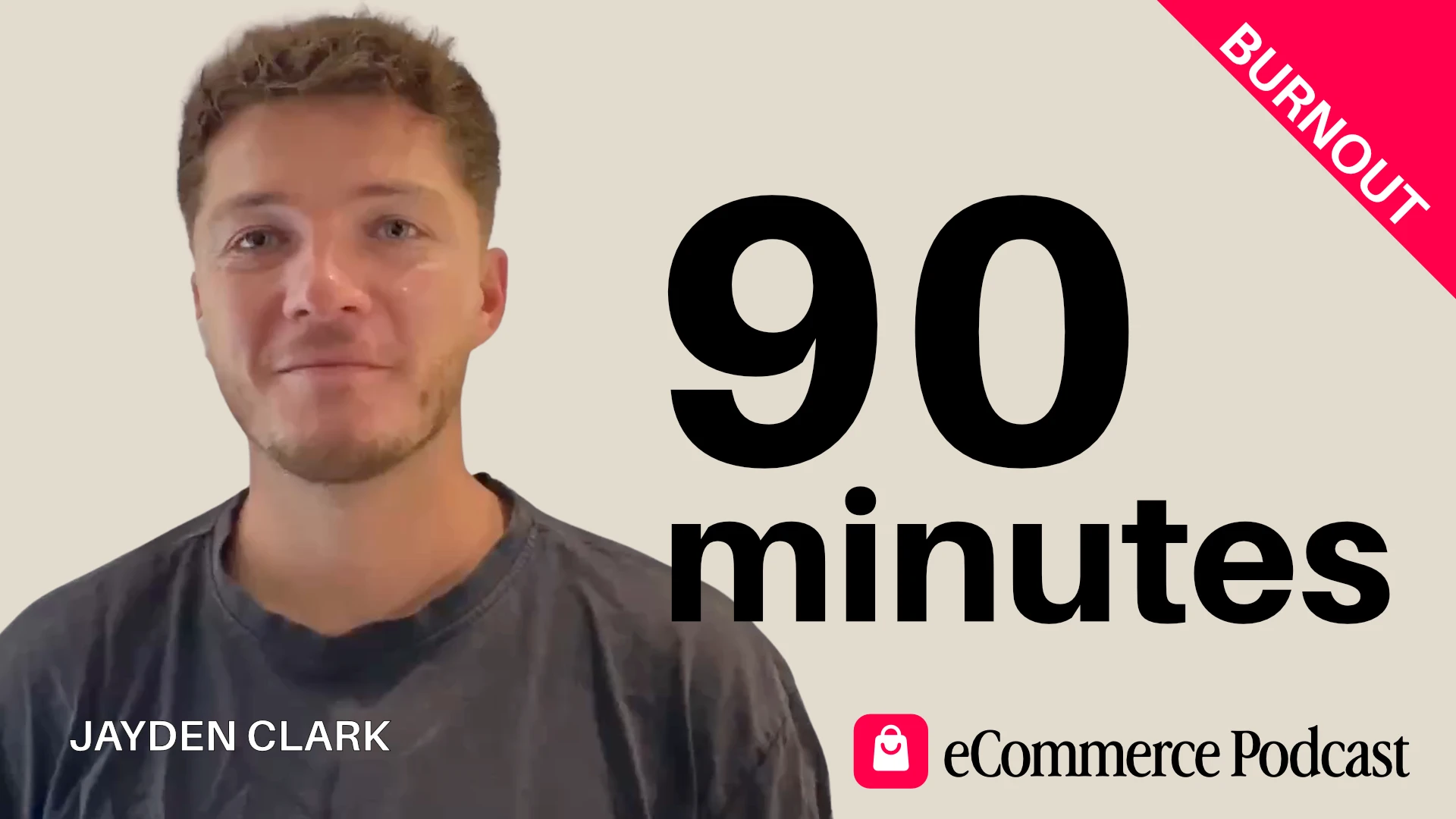
Jayden Clark
Jayden Clark
Camper Nation
Even more episodes...