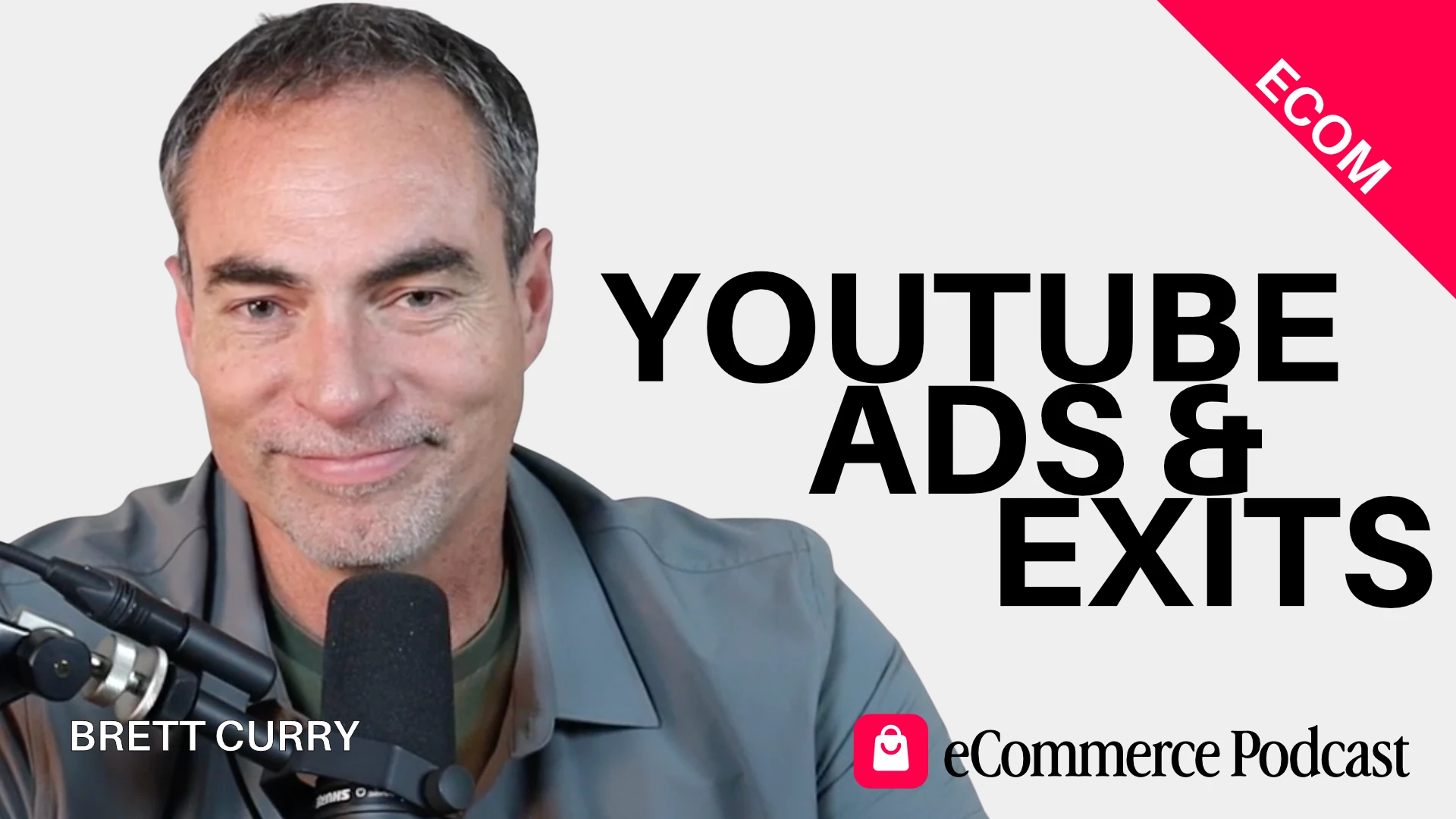
The Elastic Band That Became a Global Brand
Emma Burke spotted Laceeze on the touchline of her son's football training, where a parent had looped an elastic band around a boy's boots to stop his laces coming undone. She joins Matt to share how a £6 band became a global brand, how to market a product nobody is searching for, why she pulled her best seller right before Christmas, and how she turns angry customers into five-star reviews.
Emma Burke was standing on the touchline of a football training session, in the wind and the rain and the mud that England reliably serves up, when she saw the thing that would become her business. A parent had looped an elastic band around a boy's football boots. Someone asked why. "Stops laces from coming undone," the man said. So the whole sidelines watched that one boy for the rest of the session. His laces stayed done. Everyone else's came undone three, four, five times a game, double-knotted or not.
That was the moment Laceeze started. Emma didn't invent the elastic-band trick — she saw a parent do it, recognised a problem worth solving, and asked a better question. "I wonder if we can get a product that kids will want to wear, parents will want to buy." She launched in 2017 with a £6 band, has never written a business plan in her life, and now sells around the world. In this episode she and Matt get into the marketing problem we often don't see coming, the brave call she made right before her best Christmas, and how she turns angry customers into five-star reviews.
The Accidental Founder
Emma is quick to say she's not an inventor. "Save that for Mr Dyson." But she does keep a little black book of ideas (which is exactly what an inventor would do!), and she's built businesses before. Her first career was as a vet nurse — a job she loved, on £80 a week, working every hour going. Something in her couldn't keep doing it. So she set up a contract-cleaning company knowing, by her own admission, almost nothing about running a business. Off the back of a Dorset property boom she reached out to local builders, picked up the builders' cleans, then some local-authority contracts, and before long she had 60 members of staff.
"I'm not your textbook business builder," she said. "I've never written a business plan in my life."
Matt's reaction was simple. "Me either." He told the story of a woman who once came to him for advice and laid every form she thought she needed to start a business across his boardroom table — business plan, registrations, the lot, until the whole table was covered. So he fetched the bin and swept the lot into it. "Right, now we can start to talk." There's so much you can get bogged down with before you've done the one thing that matters. Stand on the sidelines, have a crazy idea, and see where it goes.
Which is more or less how Laceeze was validated. Emma didn't commission a research firm. She talked to parents every time a game stopped because a kid's laces had come undone. Would you buy something that stops this happening? Yes. Would your kids wear it? Yes, Mum, we would. "Okay, market research, tick, done." The product was never meant to change the world. "There's a problem, here's a solution, and let's just take that to market."
The cleaning company, for the record, didn't survive. It was successful but, as Emma put it, "it just didn't light me up" — a truth she only saw clearly years later, by contrast with how much she loves what she does now.
When Your Customers Don't Know They Need You
In November 2022 Emma's co-founder exited, and she decided to go all-in — new product lines, full-time effort, and a push into the United States. That's where she hit the marketing problem at the centre of this episode, and it's a problem any operator with a genuinely new product will recognise.
A vacuum cleaner sells itself, because people know they need one. A lace band does not. Parents retie their kids' laces five times a match and never once think, there must be something for this. As Matt put it, the whole game is building solution awareness — making people aware they have a problem they've stopped noticing.
"You've hit the nail on the head," Emma said. "We've got a solution to a problem, but parents don't go looking for the solution."
Her answer in the UK, built with zero marketing budget, was an ambassador programme. Gift a £9.99 pair to a parent who documents their kid's football journey on social media, and in return they post and tag — some once, some for months off a single pair. That has since grown into a proper points-based platform with monthly challenges. Now she's replicating it in the States, the slow and manual way, with a VA who spends every day finding American parent-run accounts and reaching out.
There's a real-world constraint baked into all of this. The audience is children, so Emma only sends product to parent-run or clearly-flagged accounts, and she's careful never to exploit a child to sell a band. The platforms aren't always so careful. A recent TikTok post — just the product being worn on a pitch — was flagged for "exploiting children," and the appeal was auto-rejected by a bot within about 15 seconds. It's one of the boundaries she has to play inside, and she plays inside it deliberately.
Build the Community, Not Just the Customer Base
The grassroots game is where Laceeze actually lives. Every pair sold through the UK website gives back to grassroots causes — raffle prizes, kit, the occasional GoFundMe when a club's pitch gets vandalised. Emma's boys are grown now, but some of her fondest memories are of the teams and parents they met along the way, and that affection runs right through the brand.
"Grassroots is the heart," she said. "There's millions of kids out there kicking a ball on a Saturday and Sunday," and almost none of the money in football reaches them.
That community is also why Emma now puts herself in front of the camera, despite finding it cringe-inducing at first. When she launched, founder-led branding wasn't really a thing. Now she'll post in her dog-walking clothes without a second thought, because people need to know there's a real person and a real reason behind every product. "You could put that on the packaging, but nobody's going to read that. So you have to put yourself out there to tell that story." Every Sunday a grassroots round-up email goes out with a hero in it — a kid who won a trophy, or let their little brother have a kick around.
Her advice for founders doing the same thing is one line long. "Just tell the truth." Share the wins, the awards, the fancy events. But share it when a container's stuck somewhere or a shipment's delayed too, because that's the reality of building a brand, and people connect with it.
Win Them For Life When It Goes Wrong
Matt has lived the upside of that honesty. One of his sites had its best month ever this year, and part of it traces to a stock problem he was completely straight about. A favourite product had supply issues, so the team emailed customers to explain — you ordered six, we'll send one now and the other five later, at our expense, so everyone has at least a month's supply. Sales of that product, he said, "went mental." People responded to the honesty, and the customer-service team found everyone lovely about it.
"Having conversation with your customer is beyond important," Emma agreed. "And when things are going wrong, it's even more important, like tenfold."
Both of them came to the same conviction — that going wrong is an opportunity, not just a risk. "I think you can win that person for life depending on how well you treat them when it's going wrong," Matt said. Some of his most loyal customers are people who once had a problem.
Emma's example was a customer who'd posted an upset comment under a Laceeze ad on Facebook, despite never having contacted the brand directly. Rather than argue, Emma pulled them into the DMs, apologised, and sent product. Two weeks later that same person asked where they could leave a review. "Take the more negative, unhappy ones and see what you can do to resolve that," she said, "because let's be honest, they're the ones that shout the loudest." And, as Matt added, they're the ones actually telling you what the problem is — the silent unhappy customers are far harder to win back.
The counter-example came from Matt's own basket. He's a genuine fan of Vivobarefoot, the barefoot-shoe brand, and not a cheap habit. He recently ordered four pairs and only three arrived. Two emails later, with no reply from a company whose service is usually excellent, the goodwill starts to curdle. "It's easy to take that for granted when you're the brand. Going out of your way to solve problems for customers is one of the secret marketing tools that no one really talks about. Go and find everyone that's got a problem with you right now and solve it in an exceptional way."
(Editor's note - before this episode went live Vivobarefoot reached out to Matt, apologised and the whole thing was resolved! Phew, Vivo's excellent example of service continues.)
Free Market Research Is Everywhere
There's a habit worth stealing here. Whenever Matt buys something online, he treats it as research. He'll screen-record himself using a competitor's site, analyse their email flow, photograph the box when it lands, note which courier delivered it, then open it and check how the unboxing actually feels. "This is what my customers are doing," he said. He has to shop anyway, so it's free market research.
Emma runs a lighter version of the same instinct. She keeps a folder in her inbox labelled "inspirational emails" — Harry's Razors get a mention — for any email good enough that she stopped to read it rather than delete it. "Why did that not go straight to the delete box? What is it?" And when she spots a broken link or an error page on a small brand's site, she tells them, founder to founder, because she'd want to know the same about her own.
The Christmas She Pulled Her Best Seller
Asked what she wishes she'd known sooner, Emma went right back to the start. They'd found a manufacturer, launched the product, and reached their first Christmas — peak season for a £6 stocking filler — when the bands started snapping. So they pulled everything.
The maths was uncomfortable. This was the most lucrative time of the year, and everything in her gut said sell it and replace the faulty ones as they came up. But the real risk wasn't the 10% who'd complain. It was the ones who'd quietly decide the product was rubbish and tell their friends, without ever telling Laceeze. "You just can't afford to have that happen." Pulling the lot at peak, as painful as it was, is probably what saved the reputation that carried the brand into the following year.
"You think, oh, it's just a rubber band. It's not. There's a lot more to it." She's now filming a behind-the-scenes video of how the bands are actually made, precisely to make that point.
That episode also taught her the value of the relationship she rates above almost any other in the business — her manufacturer. After the recall she switched suppliers and has stayed put ever since. They run a UK office alongside their factory in China, on her time zone, close enough to pick up the phone. She still periodically tests the market to check the process and the pricing, and they keep coming out ahead. "Without them, we don't have the product."
Rapid Fire
A quick run through the stack for the operators reading. Emma is on Shopify and a fan — though she noticed when it went down recently, mostly because Gymshark went down too, which told her it was a big one. Email runs on Klaviyo, and she's a fan "-ish" — it's pricey, and at a dinner she challenged Mailchimp to give her one good reason to switch. They couldn't.
On AI, Emma is honest about being a late adopter. The noise put her off at first, then she started leaning on ChatGPT, and now she's bringing Claude into the business — trying to get past "write me an email" towards real workflow improvement. Matt, for his part, runs a shared Claude setup across the office where brand voice and documents live in one repo that updates on everyone's machine, so handovers between team members stay clean. "My Claude talks to Jen's Claude," he said. "It's bonkers."
The Dream
The plan from here is to keep cracking the US and to land a brand collaboration Emma can't yet name — not a sports brand, but one that shares Laceeze's values, which to her is a far better fit than chasing a Nike or Adidas badge. After that, she keeps building, because she still gets the warm fuzzy feeling every time a parent shares a proud moment from the sidelines.
"Whilst I've got that feeling, we keep going."
That's the throughline of the whole conversation, really. A £6 elastic band became a global brand not because of a clever plan, but because someone noticed a real problem, told the truth about her product, looked after people when things went wrong, and protected the reputation even when it cost her a Christmas. None of that needs a business plan. It needs paying attention and meaning it.
So here's the question to think about: if a customer had a problem with you today, would the way you handled it win them for life — or quietly send them somewhere else? The answer is worth more than any ad you could buy this afternoon.
Full Episode Transcript
Read the complete, unedited conversation between Matt and Emma Burke from Laceeze. This transcript provides the full context and details discussed in the episode.
Full Episode Transcript
Read the complete, unedited conversation between Matt and Emma Burke from Laceeze. This transcript provides the full context and details discussed in the episode.
**Matt**: Well, hello and welcome to the eCommerce Podcast. My name is Matt Edmundson. It is great to be with you on this beautiful sunny day, all the way from Liverpool, England. I am really looking forward to today's show. It's taken us a little while to get this one in the diary, but we got there in the end. And so make sure you are in a place where you can take notes. Of course, if you're driving or out walking the dog, You can get the notes from the description, just scroll down, it will give you a link to the website. There'll be very detailed notes on the website. You can go find all of that at ecommercepodcast.net. Now, if you're a new listener, very warm welcome to you. It's great to have you join us. And if you're a faithful regular, welcome back, you legend you are. Yes, you are. It's great to have you as part of the journey. Thanks for the comments. Thanks for getting in touch. Course, if you ever want to reach out to me, just go find me on LinkedIn, Matt Edmundson, or you can find me on Instagram, Matt Edmundson. Either one works. I will see you on there. But that's enough spiel from me. Emma, welcome to the show. How are we doing today?
**Emma**: Yeah, I'm great. Thank you. Finally, we finally get this recording date together. So, yes, schedules have been busy.
**Matt**: Yes, it's been one of those where persistence has definitely paid off. And so thank you for joining us. Whereabouts are you?
**Emma**: I'm in Bournemouth. So, I just kind of thought when you said live from Liverpool, I thought, well, I am actually at the opposite end of the country to you.
**Matt**: It's live from Liverpool and a Bournemouth studio. Yeah, for those of you outside of England, Bournemouth is literally right on the south coast, and Liverpool's there kind of, I suppose, two-thirds of the way up the country. so, depending on whereabouts you are in the world, that's either a really long distance from each other or it's really tiny.
**Emma**: Yeah, for us Brits, it feels like it's a really long way away.
**Matt**: Yeah, like, like separate country and everything, isn't it really? but welcome to the show, man. Tell us a little bit about your company, what you do as an ecommerce founder yourself.
**Emma**: Yeah, so my company is called Laceeze. it's quite a niche product, something that was designed— I have spent, sort of most of the last 10 to 5 years on the sidelines of a football pitch. and in true kind of footy mum style, I am there in the, the wind and the rain and the mud and everything else that England brings to us. And it was during a training session when my youngest was playing and somebody came and they put an elastic band around their kids' football boots. And somebody said to the guy, what are you doing that for? He's like, stops laces from coming undone. So lo and behold, we all watched that boy, not our own kids, for that whole training session. And his shoelaces didn't come undone, whereas ours probably 3, 4, 5 times, regardless of who was tying the laces, regardless of whether they had a double knot, they came undone. And literally it was just like one of those moments like, hmm, that works. Now I wonder if we can get a product that kids will want to wear, parents will want to buy. And lo and behold, that's where Laceeze came from., and we launched that in 2017, and we're still going strong today.
**Matt**: This is amazing. I'm really curious, Emma, if I can ask, why would you stand on the sidelines of your kids' football and think, I wonder if there's a product there? Are you kind of entrepreneurial background? Was it what Michael Gerber calls an entrepreneurial seizure? What was going on in that moment?
**Emma**: Yeah. Do you know what? I do have like this, little black book of like crazy ideas. So not like I wouldn't say I'm like an inventor and I'd like, I would never use that. I wouldn't sort of coin myself with that. Save that for Mr. Dyson. But I, yeah, I do kind of like sit there and think, I wonder if that's a, you know, that could be a thing or that could be a thing. But so prior to launching Laceeze, I have had some other businesses. So I ran a contract cleaning company. Prior to that, my first career was I was— I trained as a vet nurse, so entrepreneurial. probably the spark of entrepreneurialism came when I absolutely loved that job. I love being around animals, but I did not love earning £80 a week and like working every hour that, that was given. So something in me, I was like, I just can't do this. I need, I need to kind of be doing something for myself. So my first business I set up was a contract cleaning company. knew absolutely nothing, to be honest, about running a business. I knew how to look after animals, but I didn't know how to clean. And set up this company, didn't know how to do invoicing, but built quite a big business. So my husband was involved in property, and at the time in Dorset where I'm based, there was like this huge property boom. So I just started kind of reaching out to every builder, and we started doing all the builders' cleans. Then we picked up some local authority contracts. Then before I knew it, I had 60 members of staff, and that was quite a— yeah, it became quite a big thing. So, kind of just learned, you know, how to run businesses just from giving it a go, really. I'm not your textbook kind of, business builder. I've never written a business plan in my life.
**Matt**: So, well, I love that. Me either.
**Emma**: Emma, to be fair.
**Matt**: Yeah, yeah, yeah. Never. I remember, I remember one lady, I don't know if you have this when you run a business, a lot of people who want to start a business come talk to you and they, they want that, your advice. And I remember a few years ago, one lady came, she said, can I come talk to you? I want to start this business, but I'm a bit confused about a few things. I'm like, sure, come on to the office. And she came to the office and we had this, at the time we had this boardroom table, and she came and I sat down at the table and I'm like, right, how are we getting on? What's going on? And she goes, well, just a second, let me show you something. And she pulls out of a bag a stack of papers and she lays them out on the boardroom table in different piles. And I'm, I'm not joking, the, the whole board table was covered with stacks of papers. And I'm like, what is all this? And she's going, well, from my research, these are all the bits of paper that I have to fill out, right? All the different things I've got to do to get my business started. One of them was a business plan, one of them— I mean, and all of these different things going on. And I said, do you mind if I help you? She said, no, what are you going to do? I'm going to make your job really easy. And I went and got the trash can and I scooped all the bits of paper into the trash can. I said, right, now we can start to talk. Because I think there's so much stuff you can get bogged down with. Right, with business plans and those ideas. Just start with standing on the sidelines of a football pitch and just have a crazy idea and see where it goes.
**Emma**: Yeah, and it, and it really was. I mean, I think, I suppose the things were, well, can we, can we get something made and how, you know, where do we go? But I think when you have a question, it's very easy to get an answer nowadays. Like, if you've got a network, you can reach out to people and get an answer. So like Shopify, okay, so 'Can we make a product?' 'Okay, probably needs— what material does it need to be?' Find a manufacturer. Started speaking, like, just exactly what you've said. Started having conversations. 'Okay, what sort of price point is it going to be?' 'So, are parents going to buy it?' Started talking to parents on the sidelines every time the game stopped because a kid's shoelaces come undone and the ref or the parent or the coach would reattach them. We're like, would you buy something that would stop this from happening? Yeah. Okay, brilliant. Okay, market research, tick, done. That's, that's that job done. Will the kids wear it? Started, you know, my boys were young. Would you wear this? Yes, Mum, we would wear it. Next kid, would you? If we could find you a product that stops this? Yeah. Okay, brilliant. So there's the market research element of it done. And it was quite honestly, it was very much like that. And then the rest just kind of comes naturally, you know, sort of snowballs. Yeah, done for a bit of fun, really.
**Matt**: Yeah, yeah.
**Emma**: It was never, it was never done like, oh, we're going to create this product and it's, you know, gonna go global and it's gonna change lives. It was literally, there's a problem, here's a solution, and let's, let's just take that to market.
**Matt**: It's brilliant, isn't it? And that's how the best products are made. You just go, well, here's a problem, how do I figure out a solution? question, just so I can, square the circle. the, the contract cleaning company, is that still going?
**Emma**: No, no. so when my— so my boys are 18 and 20 now, but when they came along, newborn babies and 60 team members, quite a lot of problems on your plate on a Monday morning. And I've— it's really funny because people sort of say what went wrong. You know, when people go, if, if you love what you do, it doesn't feel like work.
**Matt**: It's, it's just that cliché.
**Emma**: But I absolutely dreaded a Monday morning, and I realised that although the contract cleaning company was successful, it just didn't light me up. And it's really funny because I— it's on reflection that I know that now. It's, it's on reflection when I absolutely love the business that I've got now that actually I didn't really love that so much. So local authority contract, we lost that at the end of a tender process. So that was a really kind of big lucrative contract. So that kind of started me thinking, we haven't got that one anymore, do I really want all the others? So some of my team members actually took on some of the contracts themselves and became their own, had their own independent businesses, sort of one and two man bands, which was really great. And then the rest of it just just, yeah, we sold those contracts and the rest kind of ended.
**Matt**: So then Laceeze comes along. Yeah, right. And, it's obviously been going around a while, if your kids started young and they're now in their 18s and 20s.
**Emma**: Yeah.
**Matt**: So just— we'll get into the journey, but we've got the start point. Where are things at the moment for you in terms of the business?
**Emma**: We are so in terms of business, I originally— the business was a little bit of a sideline hobby business. like I said, nobody really expected it to kind of blow up. And I had a co-founder who exited in '22, November 2022, is when he left. And it was at that point I kind of thought, well, shall I see where I can take this? Like, yeah, it's either, you know, I'm on my own. Let's, let's just see if I actually kind of put that full-time effort into it and treat it like a proper business. So we then— well, we— me really started sort of pushing a lot harder, new product lines, moving into the USA as well. So yeah, that's where I'm at the moment, trying to crack that USA nut, which has been harder than I would have anticipated.
**Matt**: Yes, and probably made harder with the tariffs, I would have thought.
**Emma**: Yeah, there's a, you know, a kind of, landscape that moves on a daily basis. But, really, really fortunate just to be in some sort of quite good networks where we all kind of feel that pain together and solutions and problem solving. But, but yeah, you, you have— you do have to sort of ask yourself, is it worth it? Like, yeah, but there is like an amazing market there.
**Matt**: And, and a growing market too. Football is becoming a big thing, or soccer to our American—
**Emma**: yeah, yeah. But also, like parent attitude, like what parents will spend on their kids' sport in the US is quite mind-blowing. Like, yes. So my boys, when they were like school holidays, they'd go and do like a, like a football camp, probably 3 out of 5 days of a, you know, of a week. Holiday. And I don't know, I think it costs like £20 a day or something. They'll spend $200 a day on their kids' sport. Like, they think nothing of it, you know, just touring them around the States. And they want the best for their kids in their sport. So to kind of say to them, well, here's a sports accessory that makes your kid's life a lot easier, they love it.
**Matt**: Yeah, yeah, it's interesting. So how long have you been trying to crack the American nut?
**Emma**: Probably for about, like, if I was really pushing hard at it, for the last 12 months. Prior to that, we have had like Amazon.com listings, so we've had the product in the States. But Amazon is a big part of our business. In the UK and we sell on Amazon in the US, but our product sells from people knowing what it is.
**Matt**: Yeah, it's a brand recognition thing.
**Emma**: And we— and, and I think that's— I was like, why chuck the PPC at the, the Amazon listings? Like, why is it not growing? Why is it not growing? And it's because we need the brand recognition. So that kind of, you know, campaign of doing that has probably been for the last 12 months, and I've kind of— I've had to sort of sit back and reflect, like, how do we do this in the UK? How do we get parents and kids to know about us? Yeah. and let's try and replicate that if possible in the States.
**Matt**: How are you— I'm intrigued then, Emma, if I can ask, how, how are you doing that? Because obviously, if you, if you sell a vacuum cleaner then people know they need a vacuum cleaner, right? I'm kind of figuring that the mum at the sideline can see the kids tying the shoelaces but kind of doesn't think twice about, oh, you've just got to tie your shoelaces. It's not like it's an instant, oh, I need laces. Do you see what I mean? It's like, how are you building that solution awareness, as we'd like to call it?
**Emma**: And you've, you have sort of hit the nail on the head because we've got a solution to a problem, but parents don't go looking for the solution. They don't see, oh, we've tied his shoelaces 5 times this match, oh, there must be something there. That's what we've built in the UK over the last 7, 8 years. Yeah. But when we launched in the UK, like, we had zero marketing budget. It was kind of like a couple of mums on the sidelines talking to people putting the posts on social media. And then the— we started using, ambassadors. So we're like, do you want a pair of bands? To somebody that's— yeah, you know, a parent that might be, documenting their kids' football journey. And it was relatively inexpensive to do that. You know, our product— our product now is £9.99. I think when we launched it was £6. So we're able to just gift a pair and in return we were getting them popping it on their socials and tagging us. Some would tag us once, but some would tag us for, you know, months and months with that one pair of bands. So the ambassador program that's evolved, that's still very much part of our business in the UK. We run it on a really nice kind of platform now, and every month there's new ambassador challenges and the ones that work really hard with that, they earn points and they get more product. So we've just decided that the way forward in the States is to replicate that program. So it's a very manual task what we're doing at the moment, but we are literally outreaching. I've got a VA that spends every day going, going in, looking at our followers, the American ones. Who are they following? Oh, there's another child-parent-run account. Let's reach out to them. Do they want to try the product? And from that, we're just growing our ambassador program.
**Matt**: It's an interesting one, isn't it? Because I, again, you're dealing with kids, aren't you? So it's in my head, ambassador program, you're kind of like, okay, well, I'm just gonna go find 100 people on Instagram and I'll go market to them, to join the program. But of course, these are kids, so then there's all kinds of issues associated with that, right? Because your ambassadors are teenagers, I'm assuming, who are playing football on a Sunday.
**Emma**: Yeah, it's younger children. However, There's— and I think very much in the USA, there's a massive trend for parents to have a, like a soccer Instagram account. Parents in the States are thinking about the next step for their children, and the next step for their children is usually going to uni and getting a soccer scholarship. So there's nothing to document their kids' journey from, right? 7 years of age.
**Matt**: such is the world in which we live now.
**Emma**: Yeah, but the issue that we do have is that it's, it's kids and it's kids' accounts. And in the UK, we're like talking about potential social media bans. So we have to make sure as a brand that we're really, really responsible and we're not exploiting children in any way, and that the accounts that we are sending bans to are the parent accounts or they're ones that are literally flagged parent-run account. It's just, it's sharing the journey of their child. So yeah, we, we have to be super, super careful.
**Matt**: It's getting— yeah, no doubt.
**Emma**: So the— so with this week, we had a, a TikTok post and there was a violation on that, and it literally was our product being worn on a pitch, and TikTok said you're exploiting, children and I don't know if anybody that's listening has had any experience of TikTok violations, but you can appeal that, and within about 15 seconds of submitting an appeal, it's appeal rejected. So, it's just bots that are, yeah, reading that. So yeah, it's, it's one of the challenges, but I, I feel like from a brand's perspective, you know, I'm a parent, we're, you know, the ethos is the community that we've got behind the brand, so we just had to careful.
**Matt**: Yeah, that's fair, it's fair. I mean, we've all got boundaries which we have to play in, right? And it's just learning to, to play in those well. So you've got your ambassador program. What else? I mean, you've mentioned this idea of community a couple of times. Are you quite active in trying to build a community, and how are you doing that?
**Emma**: Yeah, I think so. The grassroots community is sort of first and foremost. That, that's— we built the product, we were sideline parents at the grassroots level, you know, and we've always supported that. That's kind of like really like at the heart of what we do. Every pair of Laceeze bands that get sold in the UK via our website, we donate back to grassroots causes. So at the moment, all these clubs and teams, they're fundraising for next season. They need equipment, they need kits. We're donating to them, whether that's like raffle prizes or sometimes there's GoFundMes that they need because something thinks horrendous has happened. They've had a pitch vandalized or something. So that part of the brand is super important for me. Like, even my boys are all grown up now, but some of our fondest memories are kind of with the teams that we met along the way in the journey and the parents and what sport did for them, team sport. You know, as they've grown into young adults has been phenomenal. So the Grassroots will always, always be like this big family, and that's what we always want to— like, we want that to come through in what we tell people in The Voice. So community, family, it's just one— it's one big piece of Laceeze really. And obviously as the, as the brand grows, the, the more we can do to help. So, it's It's really important. Like, grassroots is so underfunded, and, you know, it— you sort of got this massive sort of pyramid, the hierarchy, the Premier League at the top, and as it filters down, there's so little that goes to— yeah, and, and grassroots is the heart, you know. Your professional teams and the academies, it's such a tiny, tiny percentage. Yeah, you know, there's millions of kids out there kicking a ball on a Saturday and Sunday.
**Matt**: Yeah, and it's great to see, actually. I, I, I do. It's, it's curious, isn't it? I, I— how do you find then this idea of building community? I mean, how do you— are you active on social media? Are you kind of in, email a lot? How are you staying connected with people, I guess, is a question.
**Emma**: Yeah, I mean, as active as I can be on social media, probably in the last 2 or 3 years. When I launched Laceeze, this whole founder-led, you know, founder-led business wasn't really a thing. And then it's become really trendy, hasn't it? Like, yeah, founder needs to be there. But I have put myself forward, but now a lot more. I'm like, I thought I was like cringed. I wouldn't have even wanted to pick up my phone and like, I don't care now. It's like, if I, if I do it, it doesn't matter if I'm in my dog walking clothes or if I've got myself, you know, semi-presentable. But I do like to share that, kind of let people know it's me and I'm a mum. And even though the boys are a bit older, you know, people need to know that there's a kind of a face behind— it's not just this brand, we're not just another fancy sports— sportswear brand. There's, there's a story behind everything that we do. Like, every product that we've brought out since Laceeze, it's there's a reason behind it. And you could put that on the packaging, but nobody's going to read that. So you have to put yourself out there to tell that story. Yeah. And we're in the emails, you know, every Sunday there's a little, like, a little grassroots roundup email that goes out. There's a hero in there, and that's somebody that has, you know, lit us up, that we've seen on our socials, whether it's they, you know, they've won a trophy, or they've, you know, they've had their little brother on the sidelines and they've let him have a kick around. There's always something like— it's one of these lovely heartwarming grassroots stories, and we get them weekly, and then we share those out.
**Matt**: Yeah. So are you yourself on Instagram every day posting stuff, or are you once, twice a week? What's your kind of—
**Emma**: yeah, personally on Instagram, no, a couple of times a week really.
**Matt**: and what kind of things have you found work well for you? Because I'm thinking, you know, people running their own ecommerce businesses are in the same similar boat listening to this, and I'm, I'm kind of curious what you've discovered as doing the founder-led brand on Instagram that, that kind of works.
**Emma**: Just like, tell the truth, okay? And I think also we all love to share the wins, and if you've got an award and you're at those sort of like fancy events, that's great because at that point you look great. But actually when people are in the— to see you in the thick of it. And let's be honest, not every day things do not go as well as they should do. Share that because people can connect that, like, oh, okay, you are having— you know, I'm not a person that will sit there and do like the, the bawling my eyes out and go on to camera. And I know some people do it, and like, that's for them, and that's absolutely fine. I won't do that, but I will be really honest as well. It's like We've had a really great month, brilliant, let's, let's share that. But also if we've had something that's gone a bit tits up or a container's like stuck somewhere or a ship's been delayed, I'll share that as well because that's truly the reality of building a brand.
**Matt**: Yeah, yeah, yeah. It's an interesting one because I mean, this month, we've had one of our— on one of our sites, we've had one of our best months ever, right? And It started, I mean, there's a number of reasons why sales are going up quite dramatically and I, I won't bore you with all of them, but one of them which intrigues me is the message we sent out to customers saying, by the way, the favourite product which we have, there's been some stock issues and here's what's happened and here's why there's a bit of an issue. And so we know you order 6, but we're only going to send you 1 and we'll send you the other 5 when the stock comes back in. Right? And it'll be at our expense. We'll pay the extra shipping. And so in that way, everyone's gonna get, you know, at least a month's supply of this product. And we anticipate this is gonna be sorted out in a couple of months. So it should all be a couple of weeks. So it should all be fine. And we were just really honest about that. And we were just telling the community. Sales of that product just went mental. And you're just like, I'm like, what is going on? It's just really interesting, isn't it? How people respond to the honesty and people like this. And the customer service have gone, people have been lovely. They've been absolutely lovely, really supportive of what's going on because we just, we have the community, we have that open conversation and the honest conversation and we tell it in a good way, obviously. But the, yeah, I just thought it was intriguing that we've sold more of that product now than we ever have.
**Emma**: Yeah, that's quite curious. That kind of says something about human nature to a certain extent. But I do think like having conversation with your customer is beyond important. And when things are going wrong, it's even more important, like tenfold. Also, you know, just people being able to know when something's gonna come. As soon as somebody hasn't got something, it just— I don't know, it just creates all these emotions. And I think as brands, we're constantly opposing Amazon Prime, like people have become very, very impatient. They can order something whilst they're watching, eating their dinner or watching the television and it's ordered. And if it's done on Amazon, it's probably going to be on their doorstep the next day. And, you know, as brands, when we're kind of doing that DTC element, we can't quite get to prime levels, you know, we dispatch 6 days a week. But I think it's when it goes wrong or something's late, I, I feel like if you can respond very, very quickly, appease that person, it's when they're having to send an email or make a phone call and then they don't get a response very quickly and have to go again. That is where the, the problems start arising.
**Matt**: I agree. I think actually I don't mind when things start going wrong because I think you can win that person for life depending on how well you treat them when it's going wrong, right? And I think some of our most loyal customers have had issues with us at some point. Yeah. It's just how we've responded to them in that moment.
**Emma**: Yeah. So for me, I ordered something last week. I'm not gonna name the brand. They're doing very well, but it's a cleaning product and it was arriving with Evri, so we don't need to say too much more.
**Matt**: Yeah, everything that can go wrong.
**Emma**: Yeah, yeah, it came late, but I'd actually run out of this product. I really did kind of want it, and it was supposed to come, then it was delayed, and then I sat there and it's like, your parcel has arrived. I was like, No, no, it hasn't. And we've got cameras, and I looked in all the kind of potential hiding places. There was no sign. And then the photograph that was on the tracking site was just like, like a, just a blank thing, like colored, like taking a picture of a box or something. Yeah. And I contacted the brand, and they were like, oh, really? Sorry, you need to contact the courier. And I was like, well, that's— yeah, that should be your responsibility.
**Matt**: Yeah.
**Emma**: So then the courier came, said, actually, yeah, we're aware it hasn't arrived. The GPS shows that the driver was somewhere else. So they came back, they were quite quite honest with me. And then the brand asked me to fill out— fill out a form. That's why I'm like no, no, no, no, no, no! But actually when these things happen I'm like okay this is everything I am not going to do. Yeah. This brand has blown up a lot in the last few years and I just feel like they probably need to kind of look at some of their comms and take it back to what it was a couple of years before, because I think we can all be at risk if we're growing and growing and growing. But ultimately, you just, you have to remember what you, what you gave when you started out. And, you know, when you start out, every customer's like, wow, thank you so much for buying my product, thank you for putting that on your feet, or, you know, wearing my jumper or whatever it is. Just try and remember that feeling. Like that, that feeling of like how much you appreciated that that person spent their money to buy your product and don't ever, ever let that go. And for us, that community piece is all about that. So sometimes I'll go and like watch them kind of pack orders and I'll do a few myself because I remember that feeling of like packing my first order and just kind of having all that gratitude in with that as you put that, that package into, you know, the mail sack, just that level of thanks and gratitude that somebody has, you know, seen your product, something that lived in my mind once, it's now a physical thing and now somebody wants to buy it.
**Matt**: Like, that's cool. Yeah, it's so true. It's so true. I bought some shoes from, I don't mind naming the brands actually, Vivobarefoot, because it's a true story and I'm a big fan of Vivobarefoot. I really like their shoes, but they're not cheap. And I ordered 4 pairs of shoes from them recently, only 3 turned up. And so I emailed them going, where's the 4th one? I've emailed them twice and there's been no response. Now this is really unusual from a company that has exceptional— I think they have exceptional customer service, Vivo. And, I think therefore something has happened because I've had really good customer service with them in the past. For them to not even respond to any of my emails is quite, is quite unusual. But you're starting now to get that distaste in your mouth, aren't you? You're kind of going, this is— I'm starting to get a little bit annoyed now.
**Emma**: Yeah, by the second email, that definitely starts to—
**Matt**: yeah. Yeah. And it's a bit odd. And so now I've got to go to the next level. And you just kind of think, I'm a brand advocate on every level. I'm what you would call a brand advocate for those shoes. But I think it's easy to take that for granted when you're the brand. And going out of your way to solve problems for customers, I think, is one of the secret marketing tools that no one really talks about. It's like, how do you do better marketing? Go and find everyone that's got a problem with you right now and solve it in an exceptional way. And you'll be amazed what that will do to your business in the next 6 to 12 months, right?
**Emma**: Yeah. Yeah. I had one. We had a complaint that somebody had written a comment on Facebook and they were upset by something, and I thought, how did— how— well, for one, how have we missed that comment? Because we're normally pretty hot on tracking everything. But I just said to them, can you send me a DM? So I got them into the DMs, and I was like, so sorry that— that for one, we've— we've seen this— this comment. Two, we haven't seen any communication from you on any other platform. And they hadn't. They— they literally had not reached out to us. Our ad had popped up and they decided that was the moment to write. Yeah, yeah. I would like to solve this for you. I would like to rectify the way you feel about us. So sent them some product, and 2 weeks later they said, how can we review you as a brand? Like, where can we send it? Where's the best place to put a review? That person was blown away that we actually— yeah, I'm to do it. So yeah, I think actually happy customers are what we want, but take the kind of more negative, unhappy ones and see what you can do to resolve that. Because let's be honest, they're the ones that shout the loudest.
**Matt**: They are. And actually, they're the ones that are telling you what the problem is. Yeah. So, and you can— the ones that are silent, they're, they're really hard to crack because you don't know what the problem is, right? It's the ones where they're going, oh, this was rubbish. And you go, right, well, at least I know now. Can I do something about that? Yes or no?
**Emma**: Yeah.
**Matt**: This is not a blame game. This is not me going, well, you didn't really say that, did you? This is me going, right, at least I know now. What can I do to resolve this here? Do you do this thing, Emma, where I'm a bugger for it? Whenever I order something off the web now, I like to shop on other people's websites, not just Amazon. I like to go and look at other people's websites where I'm buying that sort of product. I will screen record me using that website and all that. I like that bit. That bit's not great. Do you know what I mean? There's something about this website that's working well. Something, what can I name? And is there something I could learn? And then I see the emails and I analyze the emails and I get the parcel. And before I get the parcel, I take a photo of the box. What was the box like? Which courier did they use? Do you know what I mean? And I do this with all my competitors all the time. And I open the box. What's the inside of the box? How do I feel right now? And I'm doing this constant checklist. Of my emotional and mental process whenever I buy something online because I'm like, this is what my customers are doing and this is— I mean, I've got to shop, so I guess it's free market research for me, right?
**Emma**: Yeah. Okay. I don't do the screen recording bit, but I have got a folder in my emails where I put— so when I get email marketing from other companies, I'm like, inspirational emails. So I do, I actually do. Love. There's some like Harry's Razors are—
**Matt**: they do really well.
**Emma**: Epic. Yeah. And I do think like, this is not plagiarism. This is that email was cool. Like, come on, guys, we get thousands of emails. So if there is one that like you, that really piques your attention, there's definitely something in that. And that's what I do. I look at that. Why did that not go straight to the delete box? Why did I take the time to read that? What is it? So I really analyze things like that. Yeah. The service from kind of the start to finish on the website, I am quite keen on. And there are times I find myself like, oh, should I let them know? Like, should I? And if it's quite a small brand, like sometimes I've had like gone to like error pages on websites. I'm like, I just think you should know this link isn't working. This has got an error page. And I'm like, I just want you to know this and you might think this is really weird, but I'm just telling you it because I've got a brand myself. So I would like to know if there was a broken link on my website. So they probably think I'm completely flipping bonkers. But yeah, it's fine. And then again, yeah, like shipping, I think, yeah, all of those elements, that whole journey is like, it's super important. Yeah. If things are great then, and I will try, I think, yeah, I should put that into what I'm doing. And if they're really bad, I make sure that that doesn't go into what I'm doing. But that we're aware of it. So yeah, without the screen record bit.
**Matt**: No, that's fair play. I just find listening to you talk, I think they're great learning opportunities, aren't they, for us as ecommerce founders? Let me ask you, Emma, if I can. You've run this business for a while. It's doing well. You're selling globally, trying to crack America. I love the, I love the story. You know, my kids tying shoelaces, simple, elegant. Beautiful in many ways. What's one thing, looking back on the story, where you kind of go, I wish I knew this sooner? Like, this would have really helped me if someone had got alongside me as an ecommerce owner and told me this. It would have— it would have saved however much time, pain, anguish, agony.
**Emma**: Oh God, there's just so many things that come up. Like, every year there's always something different, isn't there? Like, this year it's been tariffs and, you know, just you think you've kind of got everything sussed and then it changes. I suppose if I go like way back to the start. So we found a manufacturer, started producing the product, and then we got to our first Christmas and we realised we started to have some problems with the bands and they were snapping. And it was whether they were being cut. And in the end, we pulled— we literally pulled everything because the biggest risk for us was to have product out there that kids were getting in stocking fillers at Christmas, and then by the first week of January, they were snapping. Because your reputation at that stage, if everybody goes, oh, they're terrible quality and they snap really quickly, so I think that was a bit of a drama actually. And then we went with a new manufacturer and we've had to learn a lot more about the sort of the, the manufacturing process. And, you know, you think, oh, it's just a rubber band. It's not. There's a lot more to it. You know, I'm actually— we're creating a bit of a sort of behind-the-scenes video at the moment of how they're made so that people can understand, like, it's not just a rubber band. so for us really, it's probably to have had that understanding earlier on would have solved quite a lot of stressful nights during that period. But I also feel like the fact that we, we took the decision to pull that product at Christmas is when we were, you know, making the most sort of money. It was a— it's a great stocking filler, to go, actually, no, it's not for sale, we're not selling it, was probably the right thing to do, or as painful as it was at the time. because it probably saved our reputation. Yeah, the next year.
**Matt**: Yeah, it's a brave move. Yeah, I think pulling the products, isn't it?
**Emma**: Yeah, brave, sensible. Everything in your guts telling you to not do that though. It's like, well, you know, let's just sell it, and if, you know, 10% have issues, we could replace them for the customer. But I think we've already just sort of said, what about the ones that don't tell you it's broken? Yeah, that's a pile of rubbish, that product, you know. And but then go and tell somebody else that. You just can't afford to have that happen, really.
**Matt**: No, no, it's an interesting— in— I mean, yeah, brave, and I think it's always the right thing to do in many ways. you, you know, it's interesting though that that's where you've gone in terms of the manufacturing side of things. How do you— I mean, you've learned a lot over the years. Are you Are you with the same manufacturer now?
**Emma**: So after that incident, we went with another manufacturer, and I have been with them since, and they, they have just— they're brilliant.
**Matt**: How important is that relationship?
**Emma**: Oh, probably the most important relationship that we've had and that we've got to date. You know, without them, we don't have the product. Now, we could get it made elsewhere, and I have done exercises over the years of just kind of putting it out to other manufacturers, just to, one, to check if the process is still as it is, and two, you know, we're getting the best prices. But we are. And yeah, they're just— they're— the thing with them is that they have a factory in the UK and they have a factory in China. Our products are made in China, but the, the people that we're having a relationship with are in the UK continuously going over to the factory. So I just feel like we've got that kind of, pick up the telephone, just have a chat, they're on our time zone, you know, everything else. So yeah, that, that if you were to kind of like rank all of the relationships that we've got within the business, that, that's probably right up there.
**Matt**: That's one of the most important ones. Yeah. let me, just a few rapid questions if I can. What platform do you use? Shopify. Do you, a fan? I mean, you're still on it, I assume so.
**Emma**: Sorry?
**Matt**: Are you a fan of Shopify?
**Emma**: Yes, I am. Yeah. It went down yesterday.
**Matt**: Did you know that? It did.
**Emma**: Yeah, I did.
**Matt**: Yeah. We, yeah, yeah, no, it's normally pretty good. We have something called the eCommerce Cohort. So it's just like this monthly group of ecommerce founders. We all get together, shoot the breeze about ecom, and they're from all over the world and it's great. And the WhatsApp group was going nuts yesterday and just like, it's down, it's down, it's down, mine's down too. Where's your— and trying to figure out what was going on.
**Emma**: Yeah, no, I was in a kind of probably similar WhatsApp group. And when somebody put Gymshark down, I was like, oh God, this is a big problem.
**Matt**: Yeah, yeah. Just go check the big boy. Yeah, they're all down.
**Emma**: Okay. Yeah. Okay.
**Matt**: Yeah, yeah. No, that's fair play. What do you use for your email marketing?
**Emma**: Klaviyo.
**Matt**: A fan?
**Emma**: ish. Yeah. I mean, can you be a great fan of, you know, email? They always seem to be more expensive than, than everybody else. And I've looked at some of the other sort of competitor ones, and I was in a dinner with Mailchimp, and I was like, tell me this— to the guys from Mailchimp, I was like, tell me the reason why I should move from Klaviyo to Mailchimp. Like, give, give me like 'Come on, let's go for it.' They couldn't tell me.
**Matt**: Oh dear. That's not a good sign, is it? Yeah, that's not a good sign. But fascinating that they couldn't do that. What's a piece of tech that you're really enjoying at the moment?
**Emma**: Oh, this is what everyone's going to say, but it's kind of trying to streamline processes with my Claude Cowork friend. That's kind of what everybody is saying. And I sort of thought when the whole like AI blew up, I was like, do I need to like, do I need to be looking at this? And then there was just so much noise. It's like, yeah, probably should actually pay attention to this. So, you know, ChatGPT just sort of kind of sat there and helped with a lot. And then I was at an event and somebody said, oh, well, I'm using Claude for this and Claude for that. And I was like, okay. Need to kind of start introducing Claude into my life as well. But I now, I worry that I've been just kind of that sort of not an early adopter, shall we put it that way? And just so now it's kind of like, actually, how can I do this and actually really use it to help improve what we're doing within the business rather than just, you know, write me an email, that type of, yeah, rather than fiddle.
**Matt**: How can it be? Yeah, yeah, important to us as a business. It's really— I, yeah, I mean, we're, we're big fans of Claude Code. We have a quite a complex Claude system in our office now that's wired, so everybody pulls the documents from the same repo. so all our brand voice, for example, is all in the same filing system that everyone connects to. And whenever someone makes changes to it, it's on everyone's machine. And so you can go, oh, Laura made these changes. What did she do? And so you can understand what's going on. And it means handovers are really clean and slick. So my Claude talks to Jen's Claude and it just— it's bonkers. But you're right. I think you go from a place of fiddling to going, actually, what can it do really?
**Emma**: Yeah.
**Matt**: How can this really help me with the business? What's the dream? Where are we going in the next few years, Emma? What's the plan?
**Emma**: What is the dream? So, continue cracking the US. I've got sort of brand collaboration, which I can't give the name, but there is a very big brand that's collaborating with us, and I just can't wait for that. Actually, it's taking forever for it to come to fruition, but when it does, and we're getting close, I'm really excited. One, because it's a collaboration where if you talk about sort of like collabs, like who do you want to collab with? And, you know, sports brand, you go, what do you want to do with Nike or Adidas? This is like, this is, it's not a sports brand. It's, it's a brand that shares the same brand values as us. Right.
**Matt**: And that's a better choice. Yeah.
**Emma**: And it's, it's so, it's really interesting how it's come about. where we go with it is really, really exciting. So That's, that's going to be great. And then, yeah, who knows? Just keep, keep building it, building it. I love it. I love what I do. It kind of lights me up. The boys aren't on the sidelines so much anymore. Still, I don't know. I think because I've got such wonderful warm memories of that, every time I see a post and something's exciting or somebody's done something lovely and they're sharing that with us, I just get that lovely warm fuzzy feeling. So yeah, whilst I've got that, that feeling, we keep going.
**Matt**: That's brilliant, that's brilliant. Well, we've got the warm fuzzy feeling, we keep going. it's such beautiful business advice right there. Emma, listen, we've got to that stage of the show where I'm going to ask you for a question for me. This is where I get a question from you, and I will go away and answer it on social media. So Emma, what's your question for me?
**Emma**: Okay, so I was thinking about this. So I haven't got the warm fuzzy feeling anymore and I'm handing my brand to you What is the first thing you would do with it, Matt?
**Matt**: Okay, this is such a good question. If you want to know how I'm going to answer that question, what would I do to Emma's business, then come follow me on social media. I will gladly tell you, what I would do. Emma, listen, I genuinely have loved this conversation. How do people find you? How do they connect with you? How do they find out more about Laceeze? Where do we go? What do we do? And all of that good stuff.
**Emma**: Okey-dokey. So if you want to find me personally, I'm really active on LinkedIn. So it's Emma Burke on LinkedIn. And if you want to find about the product, the brand, it's Laceeze, and we're on Facebook, Instagram, TikTok now as well. So you can find us there.
**Matt**: Fantastic. We will of course link to Emma's LinkedIn and to the Lacy website and all of that good stuff in the show notes. So just scroll down on your podcast app, look in the YouTube description, if you're watching this on YouTube, and they should be there. Of course, you'll also find them on the website ecommercepodcast.net. Just go find this episode, click the links to your heart's content. But Emma, thank you so much for being on the show. Genuinely love the conversation.
**Emma**: Brilliant. No, thank you very much. It's been great.
**Matt**: It's been really good hearing what you guys are up to. And I see nothing but good things in your future, subject to US tariffs, of course, with the US market.
**Emma**: Things tend to test us.
**Matt**: Yeah, yeah, they really do. But no, it's been great. Thank you so much. Loved it.
**Emma**: Super, thank you.
**Matt**: No, no, it's been great, isn't it? There you go, another episode. Thank you so much for joining us on the eCommerce Podcast this week. It's been great. Make sure you like and subscribe and all of that good stuff. If you'd like to know more about eCommerce Podcast, like I said, just go to ecommercepodcast.net, all one word. And you can also find information there about the cohort group I mentioned. If you'd like to come and join the cohort groups, you're more than welcome. They're totally free. Come and hang out with other e-commercers. It'll be great to see you in there. And of course, if you want to deep dive into our AI solutions, that's also on the eCommerce Podcast website as well. All of that said, let me stop the conversation. It's been great. It's been a great week. I'll see you next time. my thanks again to Emma, but that's it from me. That's it from Liverpool and from Bournemouth. Thank you so much for joining us. Have a great week. Bye for now.
Meet your founder
Emma Burke
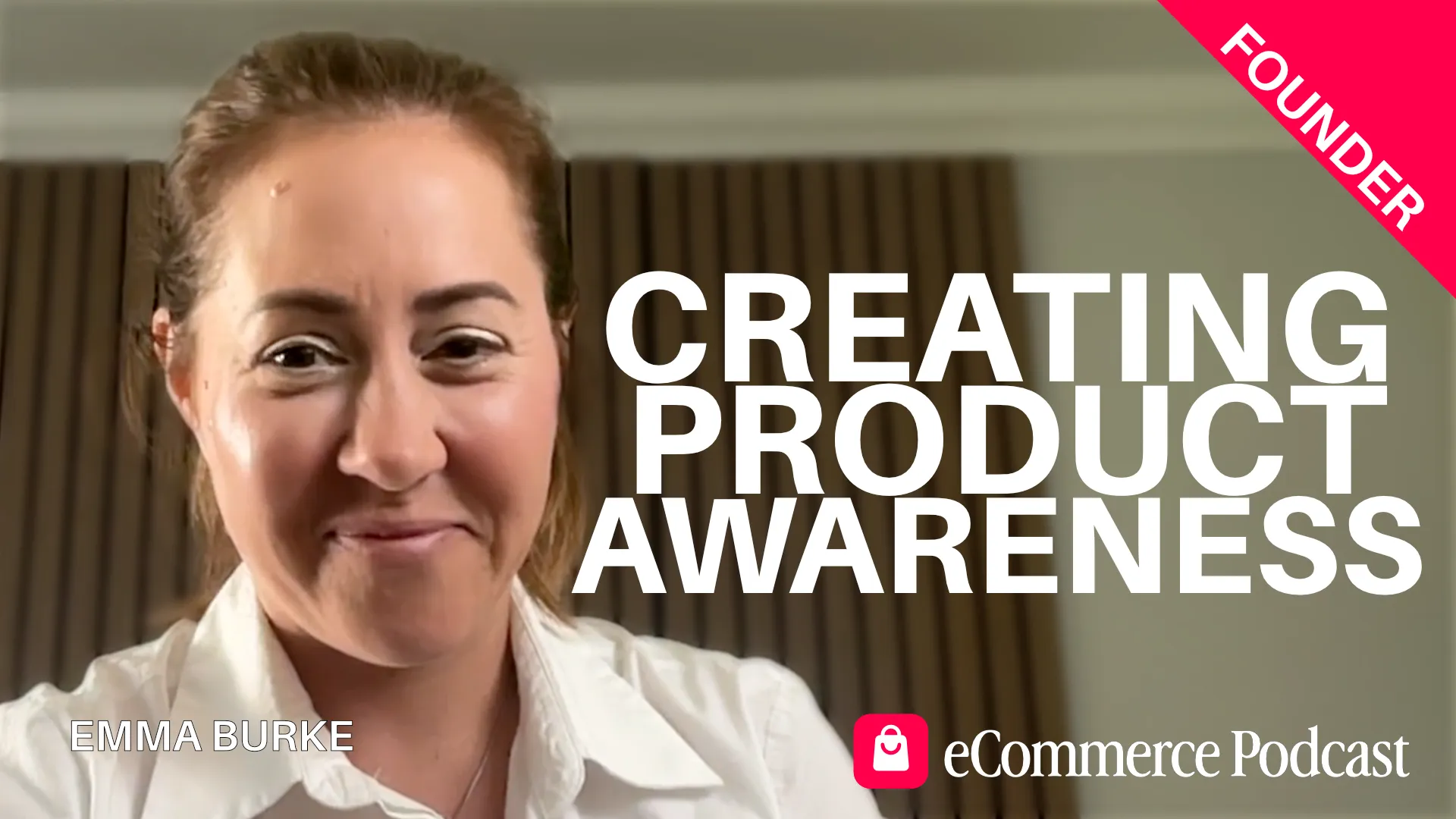
Emma Burke
Laceeze
Even more episodes...
Why Your 2-Pound Parcel Ships Like It Weighs 18