Two Ecommerce Podcasters Walk Into a Studio…
Brett Curry of OMG Commerce and Matt Edmundson each host a top ecommerce podcast, so they recorded one conversation for both shows. The first half is about building a business worth buying — thinking like an investor, Jay Abraham's three ways to grow, why a 5% price rise can mean roughly 40% more net profit, and how turning buyers into subscribers and members can lift an exit from a 3x to an 8x multiple. The second half is a 2026 YouTube ads masterclass: why half of YouTube is watched on a TV, the five things every ad needs, turning Meta winners into YouTube creative, and the measurement trap.
What happens when two ecommerce podcast hosts sit down at the same desk? Normally one interviews the other. This time, Matt Edmundson and Brett Curry decided to interview each other and put the result on both shows at once. The conversation that came out covered why a 5% price rise can mean roughly 40% more net profit, the single change that takes a business from a 3x to an 8x exit multiple, and why half of all YouTube is now watched on a TV.
Brett runs OMG Commerce, one of the most respected Google and YouTube ad agencies in ecommerce, and hosts the eCommerce Evolution podcast. He’s been running YouTube ads since around 2016, and his team are treated as some of the platform’s go-to experts. Matt, meanwhile, has spent two decades buying, selling and building ecommerce businesses through Aurion. So the two halves of this episode split neatly along their strengths — valuation and exits from Matt, YouTube ads from Brett — and both halves are worth your time whether you ever plan to sell or not.
Start Looking at Your Brand Like an Investor Would
Brett’s talked about how when he started exploring mergers and acquisitions for his agency and began talking to private equity groups, he started looking at his own books the way an investor would. The result wasn’t an exit, though. But it was a better business.
“When I started looking at my agency the way that an investor would,” he said, “I thought, I need to run a tighter ship. It shifted my mentality a little bit and I built a better business.”
That’s the takeaway for any Digital David reading this. Thinking like a buyer either prepares you for an eventual sale or, if you never sell, just makes you run something more profitable and more durable in the meantime. There’s no downside.
Culture and the Founder Come Before the Numbers
Ask Matt what he looks for when acquiring an ecommerce business and the numbers aren’t the first thing he names. The first questions are whether he actually likes the business, whether it fits the Aurion ecosystem, and what the culture is like.
He compared it to hiring. Years ago, when one of his job adverts pulled 400 applicants, he learned that a CV only tells you how competent someone thinks they’ll be. It says nothing about whether they fit culturally. So Aurion rebuilt its application process around culture rather than competence — and Matt applies exactly the same lens to businesses.
“It’s more culturally, what have they created, which doesn’t fit that well on a piece of paper,” he said. “It’s the vibe. It’s the hidden. It’s the unknown.”
It matters because Aurion rarely takes 100% of a business. They prefer partnerships, keeping founders involved as minority shareholders, folding distribution into their own warehouse and handling the marketing. If you’re going into business together, you’d better get on. Or, as Matt put it in plainer English, if you’re a “plonker,” he doesn’t want to be in business with you.
Stay in Your Lane
Aurion knows exactly what it’s good at — small, repeatable products like beauty, supplements and gifts, typically businesses turning over between half a million and three million, often run by a husband-and-wife team who’ve hit a ceiling. What Aurion won’t touch is a couch company. One large, single purchase is a different game entirely, and it’s not their expertise.
Brett, a lifelong NFL fan, reached for a football analogy. Great coaches have a style — pass-heavy or run-heavy, offence-first or defence-first — and then they get the personnel to match. Trouble starts when you try to play every style at once.
The same clarity makes marketing easier, and it’s Matt’s answer to the question he hears most often — how do you compete with Amazon?
“Amazon can do everything better than you can apart from one thing,” he said. “Which is be you. So figure out who you are, what your identity is, what your lane is. Do that so well that the one thing Amazon cannot compete on, they’ve got no chance.”
The Three Ways to Grow a Business
When the conversation turned to the financial levers, Matt reached for something he heard aged 18 in a lecture by the marketing strategist Jay Abraham. There are only three ways to grow a business.
- More customers — split into new acquisition and repeat buyers
- More frequency — get each customer to buy more often (turn a once-a-year buyer into a twice-a-year buyer and you’ve doubled the business)
- Higher average order value — get them to spend more each time they buy
Grow any one of them by 10% and the business grows by 10%. But grow all three at once and you don’t get 30%, you get roughly 33%, because each lever compounds the others. That geometric effect is the whole point. As Brett noted, a 10–30% lift across all three feels far more attainable than trying to double any single number.
The Price Rise Founders Are Too Scared to Make
One lever sits almost untouched in most businesses Aurion looks at — price. Owners haven’t raised prices in years, usually out of fear of losing customers.
When Matt runs the maths, the fear rarely holds up.
“99 times out of 100, when I run the maths, we always make a lot more money from the increase in price than we do from the reduction in customers,” he said. The numbers are stark. A 5% price rise has only a minor impact on customer loss but, depending on your margins, can mean something like a 40% increase in net profit. That’s a large amount of money for a change you can make this afternoon.
How a Business Is Really Valued
Matt’s first lesson in valuation came from a billionaire client, decades ago, long before ecommerce. “You value a business by looking at its net profit, times it by three,” the man told him. He only ever bought at three times net profit.
The simple formula raises a harder question — how do you define net profit? That’s why people start reaching for EBITDA (earnings before interest, tax, depreciation and amortisation). But in ecommerce, Matt argues, there’s a second number people rarely talk about.
Turn Buyers Into Members and the Multiple Jumps
Picture a supplement business making a million in EBITDA. At a standard ecommerce multiple of two to three, it sells for two to three million. Now change one thing — convert those same customers into subscribers, or better still, paid members.
“Now I’m making the same sales to the same people,” Matt said, “but the way the mechanism of sale is so different, and the value therefore shoots up.” That business isn’t worth three million any more. It’s worth eight. Investors pay for predictability, and recurring revenue is predictable.
Brett confirmed it from the other side of a recent deal. A friend who’d just done a partial exit told him that what the private equity group really cared about was the durability of the revenue. Risk mitigation aside, durability sets the multiple. One-time purchasers are fragile. Subscribers are durable, so a three-times multiple becomes five, or eight.
The Inverse Buyer-Pyramid and the Roll-Up
There’s a structural problem with small businesses — almost nobody wants to buy them. Matt describes it as an inverse pyramid. There are a million tiny businesses for sale and very few buyers. Go up the pyramid and the buyers multiply. List a company like Apple and ten million people want in.
So Aurion’s strategy is to group businesses together. Find four or five companies that will merge, turn a one-million business into a five-million one, and suddenly there are far more buyers — and the multiple climbs too. Build a group turning over twenty million and you’ve got a genuinely strong exit, even if every company in it is doing exactly what it did before.
Why the Strategic Buyer Pays the Most
When Aurion sold its beauty business, the buyers were competitors — and that turned out to matter enormously. A normal buyer has to worry about EBITDA, staff, rent, all of it. A competitor already had the warehouse, the distribution and the same products. In effect they were just buying the goodwill and the database, so they valued it on gross profit rather than EBITDA. That made it worth far more to them than to anyone else.
Build a Business That Runs Without You
Matt’s one closing book recommendation for this half of the conversation was Michael Gerber’s The E-Myth. Be in the business, don’t be enslaved by it. You’re building something that needs to function without you in the room.
It’s a hard lesson for entrepreneurs, as Brett pointed out, because we like to be the hero, the fixer, the indispensable one. It’s good for the ego. It’s terrible for the valuation. A business that depends on its founder is worth less than one that doesn’t.
Matt left a sobering statistic to underline the point — on average, around 80% of businesses that get listed for sale don’t sell. The way to beat those odds is to think strategically and get creative. He pointed to US-style seller financing as an example of the kind of free thinking that opens up options most founders never consider.
Why Half of YouTube Is Now Watched on a TV
The second half of the episode moved to Brett’s home turf. And his headline fact reframes the whole platform — somewhere between 50% and 60% of all YouTube views now happen on a smart TV. Not YouTube TV, just the regular YouTube app on the big screen in the living room.
It’s also the number one platform for podcasts, ahead of Spotify and Apple. Which means YouTube now behaves, in large part, like television. People watch with the sound on, often in landscape, frequently from the sofa.
Brett has shifted his guidance on who YouTube is for. A couple of years ago he’d have said it wasn’t worth it under five million in revenue. Now he’ll point brands in the one-to-five-million range towards it, depending on category and where their buyer actually researches. He works with a truck-accessory brand whose customers do all their research on YouTube — for them, the platform is the obvious move. For many others still finding their feet, the advice holds — go deeper on Meta and Google before splitting your focus.
The Five Things Every YouTube Ad Needs
The most encouraging part of Brett’s section is that you may not need to start from scratch. Winning creative from Meta, TikTok or Instagram can now work on YouTube — including in vertical formats — provided it meets a few criteria. He listed five.
- Thirty seconds or longer. Brett’s team has almost never seen a video asset under 30 seconds drive meaningful scale on YouTube. The platform rewards longer watch times, and longer engagement means more action.
- A voiceover or someone speaking on camera. We watch YouTube with the sound on. Adding a voice that explains what we’re seeing lifts engagement by around 30%.
- A product demonstration. Show the product in action. Most good Meta ads already do this.
- Social proof. Reviews, or user-generated content woven into the ad itself.
- A clear call to action. Unlike Meta, YouTube doesn’t surround the ad with click prompts. You have to tell people what to do, and for the most part they’ll do it.
If your best Meta ads already tick those boxes, Brett has seen them move straight across to YouTube and reach scale. Captions help too — YouTube adds them automatically, but adding your own reinforces the message and matters for in-feed placements that play silently.
Where to Start — Mashups of Your Top Moments
Beyond porting Meta winners across, the format Brett’s team sees perform most consistently is the mashup. Take the best moments from your top 10 to 15 videos and stitch them into a single narrative — hook, demo, proof, desire, objections handled, then a call to action.
Because the core of YouTube is still 16:9, these mashups open up huge amounts of TV and landscape inventory. You can run them as a split screen, with a creator talking on one side and B-roll, the logo and the URL on the other. Get into a monthly rhythm of building a couple of mashups from your top five ads and you can build real volume. Both Matt and Brett noted how doable this sounds, and Brett confirmed teams are already using Claude skills to help assemble these edits.
One catch worth knowing — researching competitors’ YouTube ads is harder than on Meta. There’s no equivalent to the Meta ad library, so Brett still heads to Meta for creative ideas, then adapts them. Tools like VidTao exist but aren’t as good.
The Measurement Trap
The thing that trips most founders up, and makes them abandon YouTube too soon, is measurement. If you judge YouTube by in-platform metrics or your favourite multi-touch attribution tool — Northbeam, Triple Whale — you’ll severely undercount it. Those tools are click-based, and most people don’t click a YouTube ad. They watch it on a TV, where clicking isn’t even possible, and then they search for the brand instead.
Brett’s fixes come in two layers. For larger advertisers, incrementality studies are the gold standard — a service like Haus runs rigorous geo holdouts, showing ads in some regions and withholding them in others to measure the true lift. Meta and Google both offer user-level versions (Google calls them conversion lift studies). Haus found that an in-platform ROAS of 1 on YouTube was actually delivering around 3.4x once incremental impact was counted.
For everyone else, there’s one metric Brett says you must ask your Google rep for — attributed brand search. It shows how many brand searches each campaign drove after someone saw the ad, capturing exactly the behaviour click-based tools miss.
What to Do This Week
If you take nothing else from this conversation, take these:
- Run your business through an investor’s eyes. Look at your own books the way a buyer would, even if you never plan to sell. It will tighten the ship either way.
- Test a price rise. Model what a 5% increase does to your net profit before assuming you’ll lose customers. The maths usually surprises people.
- Build recurring revenue. Moving customers to subscriptions or memberships is the single change most likely to move your multiple from 3x towards 8x.
- If you’re ready for YouTube, start with what works. Test your best Meta creatives that hit the five criteria, then build mashups of your top moments — and measure with attributed brand search, not just clicks.
So here’s the question to think about as you close the laptop. If a buyer looked at your business tomorrow, would they see durable, predictable revenue and a company that runs without you — or a job you’ve given yourself? The work of changing that answer is the same work that makes the business better to run today.
New episodes of the eCommerce Podcast land every Thursday. If you want to keep building a business worth buying, join the free eCommerce Cohort (https://www.ecommerce-podcast.com/cohort)
Full Episode Transcript
Read the complete, unedited conversation between Matt and Brett Curry from OMG Commerce. This transcript provides the full context and details discussed in the episode.
Full Episode Transcript
Read the complete, unedited conversation between Matt and Brett Curry from OMG Commerce. This transcript provides the full context and details discussed in the episode.
Matt: Well, hello and welcome to what I think is going to be the eCommerce Podcast. I've got my good friend Brett Curry, on the other side of the camera, and we've decided, because Brett, you have a podcast as well, right? Exactly. and we're like, let's call— record one episode and we'll put it on both podcasts. and so it's the first time in history I've ever done this. And so welcome to Matt's bretspodcast. it's great to have you, with us.
Brett: Yeah, I'm excited. Like, it's like, what, what do you do when you got two podcast hosts together on the same show? I guess you just interview each other. You just interview each other and, and see what happens. And I think it'll be— I think it'll be a lot of fun.
Matt: So it's going to be fun, isn't it? So today we're going to be talking about YouTube, we're going to be talking about what a valuable eCommerce business is, and who else knows what we're going to get up to. But I'm so looking forward to this, man.
Brett: This is gonna be, this is gonna be an Anything Goes Podcast. I'm confident, Matt, like there will be some golden nugget bits of information here that will really help the ecommerce store owner out there. So yeah, let's, let's dive right in, man. This is gonna be fun.
Matt: Yeah, absolutely. Let's dive into it. Where do you wanna start?
Brett: I, I think, so here's what, let, let's start, let's start with the broader topic here of running a valuable ecommerce enterprise. How to think about your brand like an investor would. And this is where I love your perspective, Matt, because you're— I know you've sold ecommerce companies, you're actively acquiring ecommerce companies, you're building a portfolio, things like that. And one thing I noticed, I'm on the agency side, I've invested in a number of ecommerce brands, but I'm on the agency side in the day-to-day. When we first started talking to private equity groups and we were looking at like, hey, do we want to Shoot, I was on a tear there. Unbelievable. My battery is messed up on this camera. Let me— it showed full power when I turned it on. Hold on one second. Yeah, sure it did.
Matt: I love that Brett's now been replaced by change the battery pack. Is that the camera or you, Brett? I'm not quite sure.
Brett: It's the camera.
Matt: Yeah, I mean, I don't know.
Brett: It's hard to say. Yeah, yeah.
Matt: Well, you crack on. It's the professionalism of it all, which I enjoy.
Brett: All right, there we go. Okay. So I think I can pick up mid-flow there. But I run an agency day to day. But I remember when we first started looking at M&A because we were considering acquiring some agencies and start talking to private equity groups and looked at other— talk to other investors and like, just went really deep on M&A. And what I noticed, Matt, is when I started to look at my agency the way that an investor would, when I started looking at my books the way that a private equity group would, yeah, I thought, hmm, I need to run a tighter ship. Like, we're really good at like a lot of things, but it shifted my mentality a little bit and I built a better business. So here's what I believe. I believe that if you can start looking at your brand like an investor would, Yeah. That either prepares you for an eventual exit, which a lot of people want, or if you're not interested in exit, it just helps you run a better, more profitable business.
Matt: Yeah.
Brett: That's going to give you the lifestyle you want. So, let's talk about this from an investor perspective, Matt. When you are looking at an ecommerce business to acquire, what are you looking for? Like, what are the top things you're looking for? And then we'll go deep on some of these.
Matt: Well, I think there's two ways to look at it. there's the investor side of things, so there's the things there that you're looking for. but I think there's the other side of it, which is, yes, there's the numbers, right? And is the due diligence done and blah blah blah. But there's a side which says, do I, do I actually fundamentally like this business, right? Is this a business that I actually like? And so for me as an investor, it's understanding what it is that we're good at and how that business can then fit into our ecosystem. I'm not so bothered if the business is not making as much money as it should because it's gonna be a cheaper price. It's a bit of a bargain, right? In that sense.
Brett: And you can fix some of those things.
Matt: Exactly. Exactly. So are there, are there dials that I can turn? are there ways that I can add value? and I suppose that's one of my key questions is like, how would we bring value to this? and I think the second thing that I'm looking for, all about the founder, right? The guy running the ship. Like, what, what ship is he running? Now, when— I don't know how you do staff hires, right, at OMG. The way that I do staff hires, it used to be that we would advertise a job, right? And I remember one time we advertised a job, we had 400 applicants for for the job, right? And I'm like, oh my goodness, how in the world am I going to sift through 400 applications? And so I did the usual thing. If there was no CV— or we call it CV, you call it a resume, right? If there was no CV, they're out. If there's no cover letter, they're out. If the cover letter said Dear Sir, it was out. And I, I started to filter, and I realized what a resume tells me is how competent you think you will be at this job, right? What it doesn't tell me, and the key thing I need to know, is culturally where you sit, right? Because you can have the best technical person, but culturally, if they're misaligned, we call them terrorists. It's probably not very PC, but that's what we call them here. Yeah. And so our application process changed radically, and it— we started asking questions that didn't look at competence. We started asking questions, look, looked at culture. Yeah. And how they would fit from a cultural point of view. And the reason I'm telling you this is because it's exactly the same for me with the business owners. It's more culturally, what have they created, which doesn't fit that well on a piece of paper. But it's, I suppose, it's the vibe. It's the hidden. It's the unknown, isn't it? And that's, they're the two things that I want to know. Is what's the culture of the company and where can I add value?
Brett: Yeah, that, that makes a whole lot of sense, right? You got to think at, at the strategy piece. Is this a product? Is this a category that we feel like, one, we understand, we can get our, we can get our head around it, we can add value here, right? You're, you're a strategic buyer in a lot of ways, but then that, that culture piece. Yeah, I mean, we, we've all, we've all made bad hires, right? And, and so think about M&A as like we're making a group of good or bad hires, right? And depending on the size of the brand or the agency you're acquiring or merging with, whatever term you want to use, like that could dramatically shift the entire culture.
Matt: Oh, without a doubt. Yeah. Without a doubt.
Brett: Really, really interesting.
Matt: No, it's important too because when we— other people do it differently, right? Some people might come in and take 100% equity in the business. We don't. We, we're like, we like partnerships. We like to keep people involved. It may be like with a company we acquired, we put all of their distribution in our warehouse system, we handled all the marketing, and so the current owners, became part of minority partners, I suppose is the best way to describe them, minority shareholders in the business. But they— I still want them involved, right? It's still their business, it's still their story. And so culture becomes really important because, like you say, it becomes a partnership in many ways. Yeah. And that's, that's a crucial thing, right? If you're, if you're a plonker, as we like to say in England, then I definitely do not want to be in business with you, right?
Brett: So it's important to understand— plonker— for those of us that have never heard that term, like myself, I, I can, I can picture something in my mind, but, but describe a plonker to me.
Matt: Plonker is someone who's a little bit, how would you describe another word to describe someone as plonker is they're stupid or you're a fool or you're an idiot. You know, those kinds of words. It's just a bit more fun, I suppose. You plonker.
Brett: Yeah. I'm gonna use that. I'm gonna start with trying to, how can I weave in plonker to my everyday vernacular? Absolutely. Love it. Yeah. Yeah. That's amazing. So then what are the things? So when you're looking at How can we add value to this? Is that more based on your experience or categories well? Is that, is that what's driving that piece of it?
Matt: Yeah, so I know that we're good at small repeatable products, beauty supplements, gifts, things like that. Where we struggle, I think I would have a lot of questions if we were looking at buying a couch company. Do what I mean? It's, it's not our, it's not our expertise. It's one large single purchase and we're like, I not got any expertise there. And so I know the lane which we do well in, and so we tend to operate there. And so we've got it had down now. We're like, right, we want small repeatable products. We want businesses operating between half a million and 3 million because that's a really sweet spot, usually run by a husband and a wife who have taken it to a level and they feel stuck, and they, they think, oh, to get to the next level, I've got to go hire an agency. They go hire an agency who charges them 4 or 5 grand a month and it doesn't work. And the cash flow runs out real quick and it all goes a bit, Pete Tong, as we like to say in England, which is rhyming slang for wrong. so it all goes— you had to slow down a lot today, Brett. but it all, it just all goes a bit wrong. And so yeah, we, we've honed down our specialty, to a a real good niche there.
Brett: I mean, there's so many valuable lessons there in understanding what is the game that you are really good at playing, right? What is your style of business and not getting outside of that, right? I'm a huge NFL football fan. I know football means something very different to you. You're a Liverpool FC fan. We did a fun thing, Matt. We did an exchange of gear where you sent me some Liverpool jerseys from their championship run. My kids love them. I sent you some Kansas City Chiefs jerseys. After one of their Super Bowl runs. And so, this was super fun. But I think— and I think this analogy would probably apply to you guys as well, but like their coaches have a style of playing the game, right? Are we a pass-heavy offense? Are we a run-heavy offense? Are we more of a defensive or offensive first type of approach? And then, you got to get the personnel, you got to get the team to line up with that, right? So where I think you come into— get into trouble is just when you're not clear on those things, right? When you try to do— well, we'll do a little bit of this, we'll do a little bit of that. Like, yeah, I mean, some of them will be small and repeatable, but we're going to try the couches, right? We're going to— like, that's when things just get super messy, right? So, yeah, clarity and conviction and confidence in this is who we are. This is what we're— we can win this game. And so we're gonna keep playing this game. And I think what's cool is, you're thinking more like investment, this is our investment thesis, right? This is our approach to how we invest. But I think brands need it too, right? Like this is who we are, this is what we're really good at. And so as we're expanding our service line, as we're adding team members, this is the game we win, this is the culture we have, this is how we grow it. And that will for sure make your business more valuable if you think about it.
Matt: Oh, without a doubt. And it also, it makes marketing so much easier. Right? Because your voice, right? You know what it is you're trying to achieve. So stay in your lane and just own that lane. It's a really, it's a really powerful marketing strategy and it makes it so much easier. It is like one of the big questions I, I get asked a lot is like, how do I compete with Amazon, right? If I'm a small ecommerce brand and the same product is being sold on Amazon, how do I compete with Amazon? And the answer is Amazon can do everything better than you can apart from one thing. Which is be you, right? So figure out who you are, what your identity is, what your lane is. Do that so well that the one thing Amazon cannot compete on— they've got no chance, right? They're a commodity broker. They're just going to put it in a box, ship it, it's depersonalized. But you be you, own that space. But to own that space, you have to understand the space that you're trying to own, right? Yeah. And so it's such a good point, bro. Yeah, yeah, yeah. I totally agree with you.
Brett: Love it. Well, let's get into the finances a little bit and some of the key metrics. I love that that's not the first thing you look at because culture and overall category and the overall strategy, that's most important. But I would have to think that there's some numbers where you're like, "Hey, we can fix these numbers. These numbers we maybe can't fix or it's going to be so hard to fix. I don't know that I want to go there." Walk me through, like, what are those financial metrics you look at? Maybe what's a hierarchy there and what's fixable versus maybe not so fixable?
Matt: So the things which I'm interested in there, I was told years ago, there's only 3 ways to grow a business, right? This was in an old— I was in a lecture years ago by Jay Abraham.
Brett: Jay Abraham.
Matt: Yeah, yeah, yeah.
Brett: Jay Abraham. I love this.
Matt: Yeah, yeah. And he said there's only 3 ways to grow a business. And I always remember I was like 18 when I heard this. You grow the number of customers, you grow the frequency with which a customer buys. So in terms of if a customer buys once a year, you can increase that to twice a year, you double your business, right? If all else being equal.
Brett: Yep.
Matt: So what he called the number of customers, the average order frequency, sometimes referred to as average order count, and then the average order value, right? So how much they purchase at any one point in time. And the thing was, if you grew your customer base by 10%, your business grew by 10%. If you grew the frequency by 10%, your business grows by 10%, right? If you grow the average order value by 10%, your business grows by 10%. But if you can grow all 3 things at the same time, your business grows by 33% because you start to see this geometric effect of everything affecting everything else.
Brett: It's so brilliant.
Matt: Yeah. Oh, it's genius. And the simplicity of it is phenomenal, right? So the questions we— the numbers that I'm always looking at Number of customers. I break that down into two sections: new customer acquisition and repeat customers, right? Yep. What's the average order count or average order frequency? And what's the average order value? How can I increase those four numbers or into those, those three areas? You know, breaking customers down into two areas. Can I play in those areas? Yes or no? If I can, I think great. The second question then is, If I can grow that, can I reduce the expenses over here, right? And for me, the obvious ones are, well, if I ship it from my warehouse, all of a sudden I don't have to pay rent for that warehouse, right? we've got our own picking and pack staff. It's like, if we can do the marketing, I've got economies of scale, right? And this is how we bring a lot of value, to be fair, to our deals, is our value comes from these services which people are paying for, which we just throw in. And so we just take, we, we take advantage of the, the the economies of scale. So again, the bathtub analogy, you got money coming in, which are your taps, your water coming in. You've got money going out, which is a plug. Can I make it go out slower? Can I make it come in quicker? Bish bash bosh, jobs are good. And yes I can, no I can't, and it's as simple as that really.
Brett: Yeah, I, I love that. And, and yeah, then you want to look at like, how do we, double the business? Mm-hmm. You don't have to double the number of new customers. I think it's something more like, you create a 30% growth across all 3 of those main— and then you start to see some really impressive growth. And so, that, that's a brilliant way to look at it. And, and then you're— if you're looking at like that 10 to 30% improvement in each of those areas, that feels very attainable, right? Like, hey, I don't need to suddenly double my AOV, I just need 10% increase, right? Can I, can I get 1 out of 10 people to add something else to their basket, or, can, can I do something creative with upsells and cross-sells and things like that?
Matt: Or— and to be honest with you, most businesses we look at, they've not, they've not increased their prices. And so they're—
Brett: I'm—
Matt: And they've not done it for a while because of fear, right?
Brett: Right.
Matt: And one of the first things I look at is, can I put the prices up by 10%? If I can, what's the impact of that? Now, we may lose some customers over here, but I, 99 times out of 100, when I run the maths we always make a lot more money from the increase in price than we do from the reduction in customers, especially if that price increases. I, I can't remember what the number is. We, we've tested it a lot. For us, I think if we can increase price by about 4 or 5%, it's— it has such a minor impact on customer loss. Well, 5, 5% increase in price is something like a 40% increase in net profit depending on your profit margins, right? Yeah. That's a massive chunk of change right there.
Brett: Right. Yeah. It's just huge. And that's where you've done this now enough times that how it usually plays out. You've got the confidence to test it where some operators, and especially if you're in a small growth phase, you feel like you're stuck, you feel a little more trepidation to do that. So then I would have to also think, Matt, that going into all of this is quality of the product, right? Like quality of the product and your conviction, your belief in the product has got to be really, really high. Yeah, totally. Any insights there?
Matt: Yeah. Again, it comes down to culture and value connection. Like, I wouldn't go and buy a cigarette company. It just doesn't sit right with me. Right. There are small repeatable products. Sure. And I could probably sell them if I really wanted to, but it's not where I'm at. right. So I, I, I understand where I work, I understand my lane. And I think if you're looking for investors, if you're looking to grow, if you're looking to get equity partners involved, go and find someone that matches your brand values, right? Don't go to a guy that invests in cigarette businesses if you sell Care Bears, because it's— right, it— I mean, in theory it could work, but you— everybody needs to be aligned on what it is that you're selling. And again, that comes back to the owner. I remember, I, well, there's lots of stories I could share of people going, would you like to get involved in my business? And basically all they've done is buy a container load of stuff from China because they thought they could sell it on the cheap. And I'm like, yeah, no, that's not a business.
Brett: Yeah, that's just like, this is a project.
Matt: Yeah, it was commodity, isn't it? I'll buy this cheap, I'll sell it high. You go, well, fair play to you, but arbitrage, yeah, that's, that's not my— I appreciate that's good for a lot of people, not for me.
Brett: Yeah, totally makes sense. Great. And then what are the— Aside from those 3 big buckets, what are some of the numbers you're really trying to improve upon or turn around so that you can eventually sell that brand you acquire or just continue to take out dividends or whatever? Are you focused on gross margin? Are you focusing on EBITDA? Are you looking closer at the cash conversion cycle? Like, what are some of those key metrics that you're really optimizing for as you grow?
Matt: Yeah, I think the obvious one, if you want to sell your business, let's say you, everybody wants to sell their business in 5 years, right? That's always when you want to sell your business, 5 years.
Brett: How much do you want to sell it for? It's always 5 years.
Matt: It's always 5 years. And it's like, how much do you want to sell it for? A million or 5? It's, they're the two answers, right? It's really funny. which one do I feel? I don't know. Anyway. I think the obvious answer, is you have got to look at net profits. Now, I remember, years ago, one of my clients, and this is pre-e-commerce, right? This is how long ago this is, it became a good friend of mine. He was a billionaire here in the UK, right? Made a lot of money, and he'd bought and sold a lot of businesses. And he says, Matt, you value a business by looking at its net profit, times it by 3, that's the value. Right? And this was 20, 30 years ago when he said this. And I was like, well, this is a really simple formula. And he says, I only ever buy business 3 times net profit. Of course, how do you define net profit? That becomes a very interesting question, which is why people now start talking about EBITDA, isn't it? Which is your earnings before interest and tax depreciation, depreciation and amortization. Yeah, that's— and so you, you, you look at that number, but I think in ecommerce there's another number which people don't really talk about, which is quite an interesting number. So case in point, I think there's two numbers. So the first one is, we have a supplement company which we are looking to grow and sell in the next 2 to 5 years, like everybody else, right?
Brett: And hoping for 1 to 5 million, on that exit value.
Matt: A lot more than 5 million anyway, but it's another story. So we're growing this business, right? And, what we realized is, let's say we make a million dollars in profit, right, in EBITDA. So our EBITDA is a million because it's easy maths. And you go, right, well, at the moment you would probably be able to sell that business for around $2 to $3 million. So you're going to go for multiple between 2 and 3, standard ecommerce multiple. So, okay, you go, well, I've made $3 million, great. But if I make one change to the business, which is how many subscribers there are, how many people, and even more so now if you want to go deeper, memberships, people paying to be a member, right? If I do nothing else, if I take the same business but convert all of my customers to being a subscriber or even better, a paid member of that website, my business is not worth $3 million. It's worth $8. Now I'm making the same sales to the same people, but the way I— the mechanism of sale is so different, and the value therefore shoots up, especially to investors, because they go, well, this, this becomes much more predictable, and they're willing to sell a lot more as a result. I think the other thing to think about is, one of the things that we've noticed, it's very, very hard to sell a business, a small business, right? So let's say there are a million small businesses on the market at the moment all want to sell, and they want to sell for various prices. Let's pick a million bucks because everyone wants to sell for a million, right? And so the competition is fierce, man. But the people willing to buy a small business is tiny. It's a tiny, tiny percentage. And the way I was told about this, and it's quite true, is it's an inverse pyramid. So The smaller your business, you're at the bottom of the pyramid. As your business gets bigger, there are less and less, right? So the pyramid is created. So you got a million really small businesses, 10,000 businesses that are doing over 10 million, you've got whatever the numbers are, right? And you go up. the number of buyers wanting to buy those businesses is an inverse pyramid, right? So the higher the, the higher the, the, the businesses go up on the pyramid, the more people are wanting to buy them. Right. And so, and you see this, right? You put a company like Apple on the stock exchange, there are 10 million people that want to buy into that business, right? and so you can see that the, the, the inverse pyramid system going on. So we found the best way to sell businesses is to group together with other businesses that want to sell. Yeah, yeah, right. So you go and put together, you go and find 4 or 5 companies that will merge with you, and instead of turning over a million, you're turning over 5 million. There's a lot more people wanting to buy a business turning over 5 million than one. Completely changes. Yeah, changes everything. Everything. And again, the multiple goes up, right? Right. And so, and again, you, you put together a group, $20 million. I mean, ultimately our strategy is to put together a group. If we've got a group turning over $20 million a year, well, that's a really good exit for us. And it may be every company in that group is turning over exactly what they're turning over now, but you put it together in a group, not only do you find the buyer, but they're willing to pay more for it. Yeah. So when a company gets listed, if you go that far, you're looking at what, a multiple of around 25, 30. Yes, it's insane.
Brett: So it's insane.
Matt: They're the, they're the things that you can look at. And then one other trick we did when we sold our beauty business— I wish I could tell you this was intentional, it really wasn't, it just is the way it was. The guys that bought the beauty business, great guys, a lot of respect for them. They were my competitors. And so what this meant was Whilst every— like, if you were going to buy that beauty business, you'll be going, right, Matt, what's, what's the EBITDA? How much do you have to pay the staff? What's the rent cost? What's it— do you mean it's like there's a lot you have to think about? Whereas he was a competitor, he already had the products, we sold the same product, you're out of the warehouse, he'd already got the distribution. It's like, in effect, I'm just buying the goodwill of the business, Matt. You bring in the database, we'll run the website, we'll buy your remaining stock, bish bash bosh. Well, the value of the business to him was so much greater because he was looking at more gross profits than somebody who might be looking at EBITDA. Do you see what I mean?
Brett: Totally. Totally. That's why often the strategic buyer is the— they're the ones that are willing to pay the most. But there's several things you talked about there that I want to highlight because it's all really, really valuable. A good friend of mine sold his agency or did a partial exit recently. Most people listening would know who this is, but nice exit. And been talking to him quite a bit. You know what he said? Really, all the private equity company cares about that did this deal is the durability of the revenue, right? So I was asking about like, what about AI and all these things and like durability of the revenue? That's really all they care about, right? So there is an element of mitigating risk, like, hey, we're going to protect ourselves just in case there's like lawsuits or undisclosed things, like your books aren't what they say they are. Like there's some risk mitigation stuff that investors really care about, but ultimately, it's the durability of the revenue. And that is exactly what you were talking about, where if you take the same revenue and that revenue is all just one-time purchasers or people you've got to get to come back month after month versus subscribers, subscribers, much more durable. It's predictable. We believe that revenue is going to be there next month and the month after. And so, yeah, instead of 3 turns or 3 times multiple, we'll pay you 5 times multiple. Or 8 times multiple. And then as, and then as you grow the overall EBITDA, then yeah, there's more people that, that want to buy and it's just a more valuable enterprise. So yeah, it's understanding those things that really in a lot of ways doesn't make it any harder to run your business. But you make it way, way more valuable.
Matt: And so you do just by being smarter, right? And these are all things we've learned over the years in the scene. I wish I knew this 20 years ago. Life would be very different, right?
Brett: Yeah, for sure.
Matt: For sure. For sure. It is what it is.
Brett: Fantastic. Well, anything to like wrap a bow? So I love that you talk about those 3 ways, more new customers, get them to buy more frequently, get them to buy more when they do buy. That'll be a nice transition into YouTube and some growth opportunities there. But anything else you would share to wrap a bow around, hey, how do I build a more valuable enterprise?
Matt: The only thing I'd say is read Michael Gerber's The E-Myth, right? Be in the business, don't work on it. But don't, be enslaved by— this is more than a job. You're building something that needs to function without you there. Yeah. And you, it does take a little bit of time. Get your paperwork together, get your stuff in line, get everything in order, and be strategic, and you'll— I think you'll do all right.
Brett: Yeah, yeah. We, we sometimes as entrepreneurs, we want to be heroes, we want to be fixers. We, we like for the, the business to be dependent upon us, Well, it's a good ego thing, isn't it?
Matt: Yeah, it's a good ego thing.
Brett: Yeah, exactly, exactly. That does not make your business more valuable. You want to be not dependent on yourself to be more valuable.
Matt: The stat is— and I don't know how accurate this stat is currently, I've not checked it today— but on average, 80% of businesses that get listed don't sell, right? 80%. That's a lot. It's a lot. And so I think, think strategically. Go and talk to people who maybe think a little bit differently than the train track of, I'm in this business, I'll sell it for a million bucks, and then I'll leave and go live in Tahiti, right? Yeah. Get off that. Yeah. And talk to people who think differently, because otherwise there's an 80% chance you're not going to sell that business. And I just think, there are, there are so many creative ways. One of the things I love about the States, right, is the way you do mortgages is so creative. In England It's like you want to buy a house. I know this because I've just gone and sold my house, right? So you're like, I want to buy a house. I have to go to the bank. I have to get a mortgage. I have to have this much deposit. Whereas in the States, you've got seller finance, you've got all kinds of things and possibilities, right? And I love that free thinking about it. If you take that and apply it to your business, you've got an awful lot of opportunity, whether you're in England or the US.
Brett: Great call out. Love that. Love that.
Matt: Awesome. Let's talk about YouTube. I've talked about YouTube. Yeah, yeah. Let's go to your specialty, YouTube. Other than looking good, let's talk about your other specialty.
Brett: That's awesome, man. Thank you. Yeah. And I want to underscore it this way. I'm a huge Jay Abraham fan. I'm so glad you mentioned that quote. I've always been obsessed, fascinated by how do you grow businesses, right? Yeah. How do you influence people to stop buying what they are buying and to buy your product instead. Right. And I was at an event recently that a couple of thoughts came to mind as I was sitting there. I was like, I think, I think one of the keys to life is if you can find a problem to solve that you're infinitely fascinated by, I think you've won. Right. And so, yeah, I've got these, these two problems that just fascinate me and I don't get tired of trying to solve them. One of those is How do you make marketing work, right? How do you run ads, campaigns, channels, whatever offers to get people to buy your stuff? Yeah, super interesting to me. It's a problem that I love solving. The other piece is how do you then prove that you did that? Because as an agency or as a brand owner, you're like, well, yeah, I think that— I mean, I'm making more money, I'm selling more stuff, but did this thing work or did that thing work? Did this channel—
Matt: Was that Yeah.
Brett: And so, there's math there, there's critical thinking, there's statistics, there's all kinds of stuff that play into that. So, to me, I feel like those two problems will be fun to solve forever. And so, that's why I love this game. That's why I love agency life so much. But let's talk YouTube. Now, I will say, and I've been running YouTube since 2016, 2017. I think I know it really well. My team, we're seen as some of the YouTube experts, on the planet. But ultimately, like, I, I want stuff that works. And I, I just tweeted that, retweeted a buddy of mine's post today, and I'm like, hey, the DTC world needs Meta. Meta is like foundational for a lot of DTC brands. And I think if you're in that 1 to 5 million stage of growth, you may not need YouTube yet. You may just need to go deeper on Meta and on Google Ads and things like that. But if you are ready for YouTube, It's extremely powerful. It is a different beast. It's a different platform. There are areas of it that function more like TV right now. Half of all YouTube views are on a smart TV.
Matt: Really?
Brett: Part of it. Yeah, yeah. Wow. And, this just shifted in the last couple years, but it's something like I've seen different numbers but somewhere between 50% and 60% of all views on YouTube. And, this is just the YouTube app and not YouTube TV. They take place on TVs.
Matt: Yeah, it's pretty crazy.
Brett: Incredible. Yeah, it's the number one podcast platform. Like, people engage with podcasts on YouTube more than Spotify or, the Apple Podcasts.
Matt: Well, it's interesting, Apple now do video, haven't they? They've started doing video. It's like, guys, you— there's a— there's— it's trying to bolt the gate— the door after the horse has bolted, isn't it? Or whatever the phrase is. I'm like, might be a little bit late, Apple.
Brett: A little bit late. A little bit late there. Yeah, for sure. You know, YouTube Shorts functions like a little more like TikTok, a little more like Instagram Reels. And so there's like different areas of YouTube, but it's got unmatched reach. It's got crazy levels of engagement. You know, we were just— I was just talking to one of our clients recently where they got some ads that are working really well on YouTube right now. And the average watch time per impression is like 23 or 24 seconds. Wow. Meaning we're reaching millions of people on a daily basis. And so meaning the average for someone who sees the ad watches 24 seconds of the ad, right? That's almost unheard of on any other platform. Meta's very, very performant, but a lot of times the average, people will watch for 3 seconds or something, right? So it's like, it's just a different, it's a different animal, it's a different platform. It can be highly leveraged. So we might want to dig into a couple things related to creative that I think are new and interesting. And then some ways to measure that I think are— it's really hard with YouTube, but we can talk about that as well.
Matt: No, I'm looking— this would be great because, I mean, a few weeks ago I did a podcast where we talked about 6 areas that I think you have to absolutely look at, one of which was YouTube. So I've been looking forward to this conversation. now when we spoke about this a few years ago, I remember the first conversation. Again, you were like, if you turn over under 5 million, then YouTube is not for you. You seem to have moved that parameter down to like a million to 5 million now. So obviously it's changed.
Brett: Yeah, I think it depends on your category, your level of expertise. I think sometimes it's just easier because a lot of brands know meta or they have a team member that knows meta or they have an agency that knows meta. Just go deeper there and just to like, don't divide your focus, don't divide your time, just push harder there. So we do see some brands at a smaller scale that just do really well on, YouTube, some of that is because they need a little more time to explain the product or their positioning. Sometimes they just feel like their buyer is on YouTube. You know, working with a brand right now, they sell a lot of truck accessories. Meta's going great for them, but their customer, guys that own 4x4s and wanna, add accessories, they're researching on YouTube. And so like finding, how can we do that and how can we do that maybe sooner rather than later? yeah, I think it's valuable.
Matt: So, and so is it a case, Brett, that if I wanted to start doing YouTube ads, that actually audience— because the big thing was always how do you find the audience, you can connect with. And obviously, Apple and Facebook had their big falling out, didn't they? but it's like, is it a case of actually YouTube is fairly straightforward to do that because you can you can go, well, that video is my ideal audience. Whoever watches that, that's who I want to advertise to.
Brett: That does— that is an angle you can take with YouTube, and it is really interesting. And in some ways, like, I did TV back in the day, and so if you were going to run TV ads, you would pick your programming, right? You'd pick, hey, I want to be— I want to run my ad next to Friends, or I want my ad to show up in the local news, or NFL football, or whatever. So you're picking, yeah, you're picking the channel or the programming based on your brand avatar and whatnot. So you can still do that with YouTube. You can do that more when you're running like view-based campaigns. This is likely going to shift, but if you're running conversion-focused campaigns or demand gen campaigns, those need to be a little more audience-focused rather than channel-focused. Google's got some restrictions there. But yeah, it is still, what I would hear from all my Meta friends and even the Meta buyers that we we work with, going broad is ideal and really the creative is the targeting, right? So it's like if you craft an ad just for this avatar and it's really brilliant and it converts and stuff, Meta's gonna find that person that wants to see that ad, right? with YouTube, that's true. Like the algorithm is pretty good and if you have a lot of conversion data in your account, it'll find people. But a lot of times it needs a little bit of direction, a little bit of guidance. Right. And so we're, We're creating audiences that are based on people's search behavior. We're creating audiences based on types of websites they visit. Occasionally we're throwing like, interests and things like that, but that's, that's actually pretty rare. or we're saying like, hey, I want someone who's in the market for truck accessories and I want to run ads to them as a starting point.
Matt: Yeah.
Brett: And so that really still matters.
Matt: Yeah. So we've got our audience, creative. How do we do YouTube creative for ads? Because I'm guessing, right, it's going to be a little bit different to how you would do it for Meta.
Brett: Yeah, it is. It takes— so it takes a different mindset. But the really exciting thing is, man, I would— last time we chatted about this, that like whatever you're running on Meta, it can maybe inform what you're doing on YouTube, but you can't run the same stuff. Well, that's true, but there are, there are some exceptions. And so what we're finding now is that sometimes you can take your winning Meta creative or your winning creative that is crushing on Facebook and Instagram or on TikTok. And with the right criteria, you can run that on YouTube and find success. And so we've seen this now with a couple of bigger brands from supplements to pets to home goods where taking the right creative winners from Meta, you can run on YouTube and it's going to perform on YouTube Shorts, but also on mobile non-Shorts as well, right? And so even in that like vertical 9:16 or 4:5 setup, but it needs to have a couple things to be true about that creative. I was just doing an audit the other day chatting with the owner of a pajama brand and really fun, really fun creative. So that some creative, it was just like all animated, it was like the prints of the pajamas and they were throwing stuff on a bed and you saw the pajamas there, it was cool. But I'm like, that's not going to work on YouTube, right? There's no— there's not much there that will work as good B-roll, but that won't be the ad. So here's what your ad needs. One, it probably needs to be 30 seconds or longer. We just haven't seen any video asset on YouTube get any meaningful scale, drive any conversions if it's under 30 seconds.
Matt: It just almost never happens.
Brett: Yeah. So, and, and what YouTube is good at is driving longer watch times. And so Makes sense. If someone engages with your content for 15 or 20 or 25 seconds, they're more likely to take action than if they engage with it for 3 or 5. So, over 30 seconds. There needs to be either a voiceover or someone speaking on camera. So, if I'm going to show the fun pajama prints and I'm throwing stuff onto a bed and it looks cool visually, I need someone to explain what it is that I'm seeing. Why is this interesting? Why would I want this? What makes this unique? What is the positioning here? Why is my life not good enough without these pajamas? You know, and because we, we watch YouTube with the sound on, right? Even if it's YouTube Shorts, the sound is on. If we're watching on TV, the sound is on. and, and so when you add the voiceover or someone speaking on camera, engagement goes up like 30%. Wow. Click-through goes way up, even though people still don't largely click YouTube, and just performance goes way up. So, so we need, we need that. We do need a product demonstration. Most Meta ads I've found do have that, right? Seeing the product in action or whatever. So that, that's usually there, but that needs to be there. We need some social proof. So whether that's just showing reviews or maybe it's just UGC in the ad, great. We need some social proof and then we need some call to action. So with Meta, we've got some stuff around the ad that can drive someone to click. With YouTube, you need to tell someone what to do, right? So, sometimes we run YouTube to drive retail sales, sometimes it's to drive DTC sales. Whatever you ask someone to do is what they're going to do for the most part. And so, you want some call to action, click here, try this thing on, see what this will look like in your living room, do this to see how this is going to transform the smell of your laundry, whatever. So, a call to action there. So, If your top Meta ads have those components, yeah, they will, it will probably work on YouTube. And we've seen them, we've seen ads go directly from Meta to YouTube and, and achieve scale if they meet those criteria.
Matt: That's really interesting. And so I, I guess the question is, right, the, the, I'm sitting here listening to you think 30 seconds, you go, well, that's definitely, we're all programmed now to do everything in 15 seconds or under, isn't it? And so, yeah. Are we watching? So we're, we're listening to YouTube rather than just watching it, which is, on Instagram Reels, you've always got the captions on the, on the video. Are we doing that on YouTube as well? Are we not having the captions?
Brett: Like to add captions as well. YouTube will do that automatically if you don't add them. So there's the, and that's getting better all the time, but generally speaking, we're, we're adding captions. Yeah.
Matt: Yeah. So you've still got the text on the screen as people are talking.
Brett: Yeah.
Matt: Yeah.
Brett: Because there, there are a couple of, one, I think text on the screen can reinforce what's being spoken and what you're hearing. There are a couple of placements, like if we're scrolling through our home feed on the mobile version of YouTube, those are called in-feed ads or one type of in-feed ad. Those don't play automatically with the sound on, so that's where captions are useful as well. So generally speaking, yes, we want captions to be there.
Matt: Okay, so if I'm in ecommerce and I'm thinking, I need to get into this whole YouTube thing. Where do you start? I mean, you've got the creative, it's like, how do you even be— I mean, other than calling you, obviously, right? How do we—
Brett: How do we start? Always, always step number one.
Matt: Yeah.
Brett: No, I, I think, I think it is— so it's looking at what are my top meta creatives. If they follow those criteria, let's test those on YouTube. We can test with a small budget, but then let's also look at all of our top videos, and maybe then what is, what is our pipeline from creators that are coming in? Because the other type of video, Matt, that just is consistently a top performer or the top performer, yeah, is creating a mashup of those top moments. And so we'll— and also the core of YouTube is still 16:9, so like the, the, the landscape, video. So what we'll do here is we'll, we'll take some of that vertical video and we'll look at, hey, what are the best moments from these top 10 or 15 videos, how can we order those in such a way that it tells a story? Yeah, you got a hook, a demo, proof, you're creating desire, you're overcoming objections, and then you get a call to action. How can we weave those moments from these top 10 or 15 ads into one narrative? Yeah. And, and then you can either do that like on a split screen where like half the screen is the creator, talking, the other half is still images or B-roll, with, with, listing the, with the logo of the, the brand and maybe the, the URL, that thing. So then if you can build mashups of those moments and now you've got a 16:9, that's still open. That opens up so much inventory with YouTube, right, on, on TV screens. A lot of people, they're watching a podcast even on their phone, they're watching it in landscape, mode. So running your top ads just like they are, testing those, but then also taking your top ads and creating mashups. We see so much success there. And, and then you can get into a regular rhythm where, all right, we're taking our top 5 ads every month and we're creating a couple mashups with those. Those 2 things can really unlock some volume on YouTube. And then you can maybe go bigger and do, do a bigger production, like once you've got some learnings and once you've got some budget. But those are the best places to start from a creative standpoint.
Matt: It sounds— well, I'm listening to you talk, Brett, I'm thinking, well, that, that sounds actually quite doable.
Brett: Yeah, that's—
Matt: It's a beauty, right? It's simple.
Brett: Wow, it is, it is. Yeah, I, I think, it helps to have someone who's edited and done that before for YouTube, but you can also just find good examples and, and, and learn and, and iterate and try. But yeah, that— I think that's, that's what's really exciting about where I think YouTube is right now is the creative piece is so important and it's not a one-to-one thing, with all your Meta winners are going to be YouTube winners. But there is now, I think, a clear path to go from Meta to YouTube.
Matt: Is it okay, like on Meta, I can go and find my competitors and I can see all their ads, right? And I can download them, I can analyze them, I can, what I say, me, I get Claude to do all that these days.
Brett: Yeah.
Matt: Is there a mechanism for doing that on YouTube?
Brett: It's much harder, yeah. I find I'm still, even though I do a lot with YouTube, I always go to the Meta ad library to look at ideas. So I'm also thinking about like, hey, how am I gonna create a mashup for this new client? Well, I'm gonna look at all their top-performing Meta ads and I'll get ideas. There are a couple of ways and it's like part of the ad privacy or ad transparency I don't remember, you have to Google it. It's not as robust. Yeah, so I guess the short answer is not really, but there you can find some ads or you can use like, there's a program called VidTao and there's another one, but they're not as good. Yeah, the bottom line is it's just not as good as what Meta offers. Yeah.
Matt: Because the thing, what I've noticed my son do, right, who's an Instagram genius, What we've— what we have developed together, me and Zak, is we now have Claude, it will pull down all the videos from our competitors from Instagram and actually YouTube as well if we've got their YouTube channel, and it will analyze them. What's the top performing videos? And then it pulls out the top performing videos and it breaks it down scene by scene. Like, that this video, this worked because this scene lasted 1.7 seconds. There's no scene under 2 sec— over 2 seconds, and they're all like, "Duh, la la." And I'm like, it would be interesting, I suppose, for me— it's just how my brain works— let's go and find some really good performing YouTube ads, get Claude Code to analyze them, and give me a script for how we could do that for our business.
Brett: Yep, yep. I think it's a great idea. I think it's a great idea. Yeah. and, and that's, that's one really exciting thing, or even, even creating mashups, or even understanding like How can I weave this together? Use Claude to do that, right? We built some Claude skills that do that for us, right? And so that's what's really exciting about right now. And the one thing I'll mention, I do, I'm watching the clock, I do have a hard stop, but the other piece, so like solving creative is super important with YouTube, but the other piece, Matt, that trips a lot of people up and prevents them from starting with YouTube or causes them to abandon YouTube too soon is just that measurement is really hard. And so I've got a couple of quick callouts there, a couple of quick tips.
Matt: Go for it, man.
Brett: But yeah, yeah, so one, I think the best way to measure performance of marketing now is with incrementality studies and there's a few ways to approach those. If you're a really big advertiser, then maybe using a service like Haus where they do scientifically, rigorous geo holdouts where I'm running ads to these geos and I'm holding out these geos and I'm gonna compare the difference, scientifically to see what lift did this advertising effort bring? You can also do stuff at a user level, right? So now Meta, will run incrementality tests. So will Google. Google calls them conversion lift studies where they will show the ad to a certain group of people. They'll hold the ad from certain group of people that qualify to see the ad, like based on your audience targeting and stuff. And then they'll measure the behavioral difference. How do the people that saw the ad behave differently from those that didn't? And you can start to get a truer picture because what we see, if you just look at in-platform metrics for YouTube, severely undercounted. If you look at your favorite MTA tool, right? Northbeam, Triple Whale, whatever, severely undercounted because at the core, those are still click-based measurements, right? And with YouTube, most people don't click. Most people are on YouTube to watch their favorite podcast or to watch a funny video or music video or learn how to, trick out their 4x4. 4x4, whatever, even when they're good, YouTube ads have half or less the click-through rate that Meta ads have. Oh, wow. So what a lot of people do when they see a YouTube ad, and especially if I'm on TV, I'm watching it on TV, how am I going to click? You can't click. So, but what people do is they see the ad, their follow-up action is they'll search for it. So they'll go and say, hey, show me about that truck bed accessory, right? Or show me this new supplement. And so one of the ways we like to measure now, and Google's getting better at this, is looking at what a lift in search does YouTube drive. And so there's one key metric that if you don't have this and you're running YouTube, you need to ask your, your Google rep for this. It's called attributed brand search. And what it will do is it will look at each campaign and will say this campaign drove 100 brand searches for your brand after someone saw the ad. And so it's a really key metric because we can start looking at, hey, how impactful is this campaign versus that campaign in driving people, getting people into my funnel? And so the key with YouTube is you can't just rely on your favorite measurement tool. Haus did a study where they said, hey, on average, if you see like a 1 ROAS in platform for YouTube, you're probably getting like a 3.4x ROAS. Wow. Based on like the incremental impact. Yeah. and so, so you, you've gotta look at this a few different ways or else you're gonna become discouraged. And so that, that's also a heavier lift piece where it's like, I don't have the energy for that. Okay, well then maybe YouTube isn't, isn't right for you right now. But, but, yeah, the creative and the measurement, those coming together, really, really important.
Matt: So good. So you've got a, a hard stop, so I, we should probably end this cuz we'll just keep, we'll just keep going.
Brett: Let's keep going, man. We'll just, We'll look up, it'll be 2 hours in and we're still going strong, still excited, no loss of energy.
Matt: Yeah, none whatsoever. Always great talking to you, Brett. How do people find you? How do they connect with you if they want to do that?
Brett: Absolutely. So trying to be more active on LinkedIn and a little bit on X, but just Brett Curry on those places. But then omgcommerce.com, that's the best place to connect if you want to nerd out on YouTube or get an audit for, Google Google or Amazon or YouTube or whatever, that's the best place. And then what, what about for you, Matt? Like, if someone was like, hey, I want to maybe sell my business, or I, I want to, I want to get in touch with Matt, do you even allow that? Can people even reach out to you these days?
Matt: No, they have to call my wife first.
Brett: That's, that's smart. That's really smart.
Matt: Yeah. No, mattedmundson.com. Just go to mattedmundson.com or ecommercepodcast.net. Either one, you'll, you'll find everything you need to find there.
Brett: Love it, love it.
Matt: Brett, you're a legend, man.
Brett: Love it, man. Love it. Super fun. Thank you.
Matt: All right, God bless you.
Brett: You, you as well.
Matt: See you. So there you have it, my conversation with the legend that is Brett Curry. What a phenomenal chap he is. I really enjoyed this, doing this podcast, where we're doing it on his and mine at the same time. Let me know, right? Does it work? Does it not work? I don't know. I'm, I'm intrigued. It's a new way of doing it, like I said. So what a legend. Just what a great guy Brett is. But a big thank you, Brett, for joining me on the show. if you are new, make sure you like and subscribe to the show and do all of that good stuff because we've got new episodes coming out every week. And of course, we don't want you to miss any of them. Make sure you've signed up to the newsletter. Make sure you've checked out what Cohort is, our monthly group for ecommerce founders. And if you're into AI, go check out Slingshot, our new AI membership for ecommerce. We're really excited about that, some of the stuff that's going on. Anyway, all the plugs are over ecommercepodcast.net. That's where you find all the information that you need to know. But thank you so much for joining us, wherever you are in the world. I will see you next time. That's it from me. Bye for now.
Meet your expert
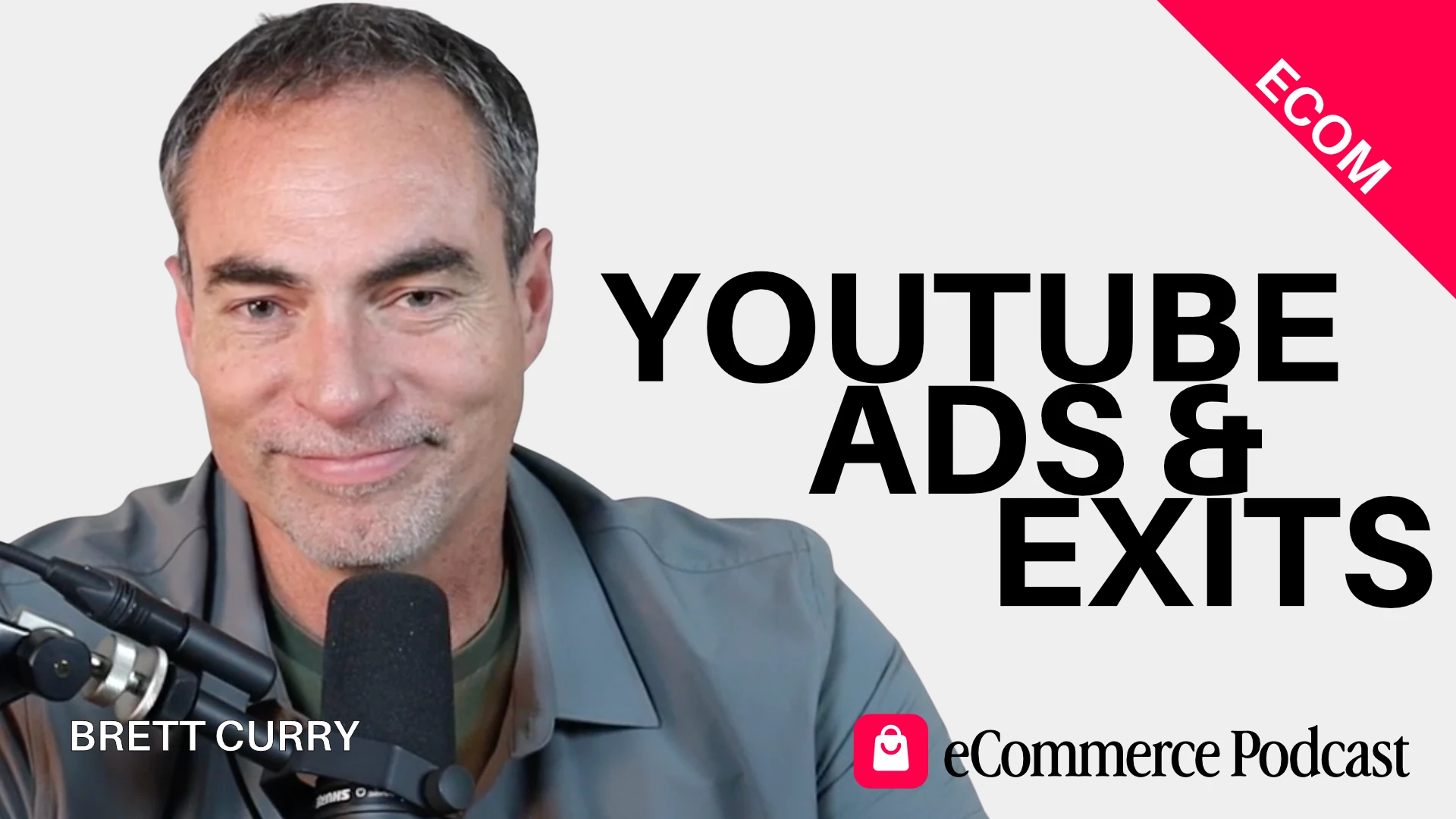
Brett Curry
Brett Curry
OMG Commerce
Even more episodes...
The Elastic Band That Became a Global Brand