The Metric Nobody Tracks That Drives 56x Subscriber Growth
Jay Myers has been in eCommerce since 1998, and the data his team has collected from thousands of Shopify merchants tells a story most founders haven't heard. Every subscription business hits a flatline — and doubling your ad spend or reducing churn won't break it. What does? A 0.4 increase in referral rate produced fifty-six times more subscribers at the thirty-month mark. In this episode, Jay unpacks the Subscription Death Curve, explains why most referral programmes don't work, and shares the golden ticket strategy behind Bold Commerce's AI reorder app, RePete.
What if the metric most likely to transform your eCommerce business is one you've never once looked at? Jay Myers has been in eCommerce since 1998 — back when he was scanning print catalogues for product images because most brands didn't even have a website yet. Today he leads Bold Commerce, a suite of apps used by thousands of Shopify merchants, and he's spent years staring at subscription data that tells a story most founders don't want to hear.
In 2022, I heard Jay gave a talk at SubSummit called "The Subscription Death Curve." He asked a room full of eCommerce operators — founders, marketers, heads of growth — what their most important metric was. LTV. Churn. CAC. ARPU. Every metric you'd expect came up. Then he asked one more question. Does anyone know their referral rate? Not one person raised their hand. Except one guy, who laughed and said, "Mine's zero." And yet, as Jay would go on to show, referral rate is arguably the single most impactful number in a subscription business. This episode is the full story.
The Flatline Nobody Warned You About
Every subscription business eventually faces what Jay calls the death curve. It's not a dramatic crash. It's a flatline — and that's almost worse, because it creeps up slowly and feels inevitable once you're in it.
The mechanics are straightforward. Every subscription business has churn. Even the healthiest brands are losing somewhere between two and ten percent of subscribers every month. As a business grows, there comes a point where the number of customers churning out exactly equals the number being acquired in. The business stops growing. It flatlines.
The instinctive response is to spend more on acquisition. Jay modelled it. If a store acquiring a hundred customers a month — with ten percent churn — doubles its acquisition to a thousand, the flatline moves higher. Instead of flatlining at a thousand subscribers, it flatlines at around 2,200. But it still flatlines. At exactly the same time. Thirty-two months in, same as before.
"You still flatline. You just flatline at a higher number."
So what about reducing churn? That helps too — but it just pushes the flatline further into the future. Drop churn from ten percent to five percent and instead of flatlining at month thirty-two, it happens at month forty-seven. Still a flatline. Still inevitable.
More acquisition moves the ceiling up. Lower churn moves the deadline out. But neither actually breaks the curve.
The Third Variable
In Jay's model, he introduced a third store. Same churn as the worst-case scenario. Lower acquisition numbers than either of the other two. By every conventional measure, it looked like the weakest performer in the group.
At the thirty-month mark, both comparison stores had a few thousand subscribers each. The third store had 56,000.
The only thing Jay changed was the referral rate — and not by much. In the other models, the average customer referred 0.8 other people. In the third store, that number was 1.2. A difference of 0.4. That single change, compounded over thirty months, produced fifty-six times the subscribers.
"There is no bigger thing you can do to your business to change the long-term health of it than increasing customers who refer other customers."
And yet almost no-one tracks it. When Jay asked the room at SubSummit how much of their budget went to referral programmes, the answer was less than three percent. Their acquisition teams were enormous. Their ad budgets were substantial. Referral was an afterthought — usually a generic "share ten, get ten" link sitting somewhere in the account portal that nobody clicked.
As Jay puts it, the thing brands are spending the least on has the biggest impact. It's completely backwards.
Why Generic Referral Programmes Don't Work
There's a crucial distinction Jay draws between intrinsic motivation and extrinsic motivation.
When a brand emails a customer a code that gives their friends ten percent off, two things happen. First, the customer shares it indiscriminately — there's no reason not to, since anyone can use it. Second, the friend who receives it isn't a new customer. They were probably already going to buy. The discount just reduced the margin on a sale that would have happened anyway. The referral didn't change buying behaviour. It just subsidised it.
Real referral growth works differently. It requires customers to be intrinsically motivated — to share because they genuinely want to recommend something to someone specific, not because there's a reward waiting at the other end.
The mechanism Jay uses at Bold Commerce's new app, RePete, is what they call golden tickets. When a merchant installs the app and starts seeing reorders come in, they receive a single invite code. The message is simple: if you know someone else who runs a store and might benefit from this, here's $300 credit to give them.
No mention of any reward for the person sharing. No promise of anything in return. Just one code, one chance to do something good for someone else.
Because there's only one, the merchant thinks carefully. They reach out to someone specific. Someone they actually believe will benefit. That specificity is the whole point — it finds the ideal customer rather than just anyone willing to take a discount.
The Psychology of Scarcity in Referrals
Jay uses the Starbucks analogy to explain why unexpected rewards land differently to expected ones. If you have a loyalty punch card and you buy your tenth coffee, you get it free. But it doesn't feel like a gift. You earned it. It was baked into the price before you even started. That tenth coffee hits the same as any other.
But if you walk in, order your usual, and the barista just says "this one's on me" — that feels different. Same coffee. Completely different emotional response.
When a merchant shares their golden ticket and the referred store activates, Bold Commerce sends a thank-you to the original person. Surprise. $300 credit, because they shared. The reward comes after, unexpectedly, once the right behaviour has already happened.
For brands thinking about applying this beyond an app — Jay's approach works for any subscription or membership product. Export a list of single-use discount codes from Shopify (or whatever platform you're on). Make the offer genuinely valuable — not ten percent off, but three months free, or a dollar amount that would actually make someone stop and think. Merge those codes into an email to your best customers, one or two codes per person. Keep the email personal, keep the scarcity real, and don't mention any benefit for the person sharing — at least not upfront.
"Dollar discounts always convert better than percentages. And credit is even one step better than that."
The reason credit works better comes down to ownership. If someone tells you there's $50 credit sitting in your account, you feel like you own it. Every time you shop elsewhere, you feel the loss — you're leaving money on the table. A percentage-off coupon doesn't trigger that. It's a future earnings possibility, not a present asset. The psychology is entirely different.
Super-Referrers and the Viral Coefficient
For a referral programme to produce compounding growth, the viral coefficient needs to be greater than one. That means the average customer, across the whole base, needs to refer at least one other person. In practice, that's a mix — some customers will refer ten, many will refer zero.
The implication is that brands need to make space for super-referrers to operate. Capping the number of referrals, or making every subsequent referral feel the same as the first, kills the compounding effect. The customers who are most enthusiastic need a mechanism that unlocks as they refer more — not one that treats them the same as someone who's never shared at all.
Jay's model at RePete does exactly this. After the first referral validates — the new store is legitimate, generates seven orders or fifty nudges through the app — the original merchant receives both the surprise reward and three more golden tickets. Each successful referral unlocks more. The exclusivity stays intact because the codes are finite at any given moment. But the ceiling is removed for the customers who genuinely want to champion the product.
Paid Membership and the Sunk Cost Shift
Referral strategy aside, Jay also makes a case for a different model altogether: paid membership over free loyalty.
Walk through any shopping mall and you'll be asked to join a loyalty programme at almost every till. Most people decline. They can't be bothered, and they already have too many cards. And yet those same people are probably paying for Amazon Prime, Costco, and Restoration Hardware's membership. They'll take out their wallet for that.
Restoration Hardware launched their paid membership in 2016. You pay $125 a year and receive twenty percent off everything on the site, plus access to design services. They only run sales for members. As a publicly traded company, their numbers are open — at the time Jay references, they had a hundred thousand members who made up ninety-five percent of all revenue and spent four hundred percent more than non-members.
The $125 fee isn't where the money is. The money is in what the membership does to buying behaviour.
The mechanism is sunk cost. Humans consistently make decisions based on what they've already invested rather than purely on what makes the most rational sense going forward. Once you've paid that annual fee, you check Restoration Hardware first — every time. Not because they're always the cheapest or even the best option, but because you've already committed. Shopping elsewhere feels like waste.
Fabletics does the same thing differently. Pay $50 a month, receive $70 in shopping credit. The credit sits in your account. If you buy gym shorts from Nike or Lululemon instead, you're not just missing out on a future discount — you're actively leaving money you already own on the table. The sunk cost is already there. (Any of this sound familiar?)
Amazon Prime is the most powerful version of this. It's almost never the cheapest option. But Prime members don't price-shop. The membership creates brand affinity — the likelihood to choose a brand without comparing it to alternatives. Members don't weigh up Amazon against Walmart. They just buy on Amazon. The comparison behaviour switches off entirely.
What to Do With All of This
Jay's framework, stripped back, points to three practical actions for any eCommerce brand:
- 1Find out your referral rate. Calculate how many new customers, on average, each existing customer brings in. If you don't know this number, you're making growth decisions blind. Start tracking it this week.
- 2Run a manual golden ticket campaign. Export single-use discount codes from your platform. Identify your best customers. Email them with a limited number of codes to give away — make the offer genuinely valuable (three months free, not ten percent off). Don't mention a reward for the sender. Measure what happens.
- 3Look seriously at paid membership. If you run a subscription or membership programme, consider whether moving to a paid-access model would shift buying behaviour more than your current free loyalty setup. The data from Restoration Hardware, Fabletics, and Amazon Prime all point in the same direction.
The bigger question Jay's talk raises isn't really about tactics. It's about where attention goes. Most eCommerce brands have built their entire marketing infrastructure around acquisition — their teams, their budgets, their dashboards. Referral gets a token programme and a small line in the budget. The data suggests that's the wrong way round.
Increasing referral rate by 0.4 produced fifty-six times more subscribers than doubling acquisition spend. The lever is there. Most brands just aren't pulling it.
Today's Guest
Today's guest: Jay Myers
Company: Bold Commerce
Website: boldcommerce.com
LinkedIn: Connect with Jay on LinkedIn
Full Episode Transcript
Read the complete, unedited conversation between Matt and Jay Myers from Bold Commerce. This transcript provides the full context and details discussed in the episode.
Full Episode Transcript
Read the complete, unedited conversation between Matt and Jay Myers from Bold Commerce. This transcript provides the full context and details discussed in the episode.
Matt Edmundson (00:04)
Welcome to the e-commerce podcast. My name is Matt Emerson and it is great to be with you this beautiful day. We're talking all things e-commerce with, well, how do we describe Jay Meyers? Just the fabuloso, just all round good egg, which is Jay.
Jay Myers (00:04)
There we go.
Matt Edmundson (00:24)
I've been looking forward to this conversation man. It's so good to have you on the show. But before we get into it, let me just give a quick shout out. Welcome to the show. If this is your first time with us, make sure you hit the like, subscribe and all that sort of good stuff button. And of course, if you're regular, a very, very warm welcome back to you. And of course, if you haven't done so already, check out the website, ecommercepodcast.net, because there you can sign up to things like the newsletter, which I still don't understand why people haven't done that.
⁓ And you can also come find out about the cohort groups. If you are in e-commerce, running an e-commerce business, come check out the cohort groups. They are free to join and I love them. They're great fun. all that aside, Jay, welcome to the show, man. Been looking forward to this. It's about time.
Jay Myers (01:05)
You know Matt some days. Do you ever wake up some days and then you look at your calendar and you got a bunch of meetings and you feel like like some stress in your chest and it's like, I got this this client call this one. And then I actually had a back to back call like one minute before this call. So like no break. I did. I managed to get a glass of water, but that was it. And then it was like it's like one of those days. And then I just thought for a moment like how lucky am I like?
Matt Edmundson (01:15)
yeah. yes.
huh.
Jay Myers (01:35)
I'm in, I get to like, get to come on your podcast. I get to be in this space, like with people that I just, love working with. I'm, doing what I love. I just love the commerce community. And I just had this moment this morning, cause like, I had this like full calendar and looking at it and just, I'm grateful to be here and thankful I've gotten to know you over the years. And it's, ⁓ it's such a joy, this commerce world that we're in. So thank you for having me on.
Matt Edmundson (02:04)
No, it's great. I'm with you, You wake up, feel lucky every day, don't you? You feel like God was shining down on me when he gave me this career option.
Jay Myers (02:12)
We have these, I don't know they do them in the UK, but these roll up the Tim Hortons is a coffee chain here and they do like roll up the rim to win. And you know, you can win another coffee or sometimes you can win a car or something. I never win. My, my son's like, dad, you never win. And I was like, I go, you know, I got everything. I, what else would I want in life? I, I don't need a roll up. I don't need another donut or a coffee. So, no, I agree. I got everything I want.
Matt Edmundson (02:24)
Right. Yeah.
Exactly,
Yeah,
yeah, yeah, no, it's it's good to be grateful. Well, ⁓ let's jump into it. Well, first of all, let's tell everybody a little bit about what you do, bold commerce, which is a great system. Let's let's get into that. And then we'll jump into the conversation.
Jay Myers (02:56)
Sure. ⁓ Well, I personally am an e-commerce operator where I have. I was since 1998, so I'll age myself real quick. Built my first.
Matt Edmundson (03:04)
Wow. That's longer
than me. I started in 2002.
Jay Myers (03:09)
⁓ you're just a just a rookie. ⁓ look at you. So my first website didn't even have a checkout. It had a phone number and I built it with Microsoft front page back in 98. And I was I was scanning catalogs for product images because like most brands didn't even have their own website at the time. Like we would get I ran an archery store like a family archery business and then as we would get we would get
Matt Edmundson (03:11)
I'm a newbie. Yeah, yeah, yeah.
with it. Excellent.
Excellent. ⁓ wow. Wow.
Okay.
Jay Myers (03:39)
⁓ the, the print catalogs and I got a scanner and we'd scan them because like you'd go to the brand's website and they wouldn't even have a website yet. It's like that started anyways. ⁓ fast forward, I ran e-commerce brands all my life, 2009, ⁓ put one of them on Shopify. ⁓ they had this concept of an app store, which was kind of new at the time. ⁓ now every software platform has an app store, but back then that wasn't the case and looked at the app store and I wanted to.
Matt Edmundson (03:59)
Yeah.
Yeah.
Jay Myers (04:07)
Originally do some stuff for my my own brands. I thought I want to build this this tool this tool. We launched an app as an experiment. Me and three buddies. The first app we built was an upsell app. We just we literally thought well that's what's the easiest thing we can kind of build and it might make an impact on on the stores and it was super simple. It was like you click add to cart and a pop up comes up and says you're buying a leather jacket. Do you want this leather treatment kit or whatever? And it took off it like.
Merchants loved it every it was all five star reviews on it and we were using it on our stores. But the three of us kind of looked at each other and said, maybe there's a maybe there's some potential here for like the app, not just and to put into perspective at the time, I think Shopify had around 30,000 merchants like now they're 4 million something. So we didn't know if there was any potential for it to make money. ⁓ We just thought if it made a little bit.
Matt Edmundson (04:55)
Right. Yeah.
Jay Myers (05:03)
that's bonus, like some big, some beer money or whatever. Right. So anyways, um, it started to do well. And then we kind of thought, what's another app we could build? And we're like, wow, there's no easy way to run flash sales on Shopify, like schedule a sale, change prices, change it back automatically, put a countdown timer on or whatever, you know, there's, no way we built that. And then the next we're like, well, what can we build next? And then we're like, oh, there's no way to do
Matt Edmundson (05:04)
Yeah.
Jay Myers (05:29)
product options well, like color swatches and if enter initials and for monograms and like you could just have a dropdown product option. So we built that. Then we built a store locator app. Then we built a membership apps, then the subscription app. The list goes on. We, at one point had 32 apps in the Shopify app store, which in hindsight, it was a bit of a disaster. ⁓ cause maintaining it became very hard. ⁓ so we've become more focused over the years. We, we just sunset.
Matt Edmundson (05:54)
Yeah.
Jay Myers (05:59)
some of them, we sold some of them that weren't kind of core to our strategy of what we're trying to do. ⁓ Sometimes we would get referred to as like the Swiss army knife for Shopify. And while that might be helpful to brands as a company, it doesn't, it's, it's not a story that resonates. And there's a lot of reasons why you don't want to be a Swiss army knife as a brand. Like if there's a brand listening to this podcast,
You want to be known. So say you are selling a green supplement or your site like you want to be the greens supplement for women over 40. Let's just whatever you pick a niche, right? You don't want to be greens for everybody. You're you always do better when you have a story that you know, this is branding kind of 101 and we just built everything. We're like we see a problem. Let's build it. We see a problem. Let's solve it. ⁓ But we got a lot more focused over the years and
Matt Edmundson (06:38)
Yeah.
Jay Myers (06:57)
And now we're we have eight apps as of a couple of weeks ago, but last week we launched a new one. So now nine and we're really focused on ⁓ the the repeat commerce of helping brands get customers, keeping them coming back through through all of the tools we have kind of help with that in some some way. Like that's our goal. How can we help brands?
not just getting new customers. Actually, we don't do much in that space at all. The acquisition, it's once they're in through whether that's through subscription or through membership or through a VIP pricing program or our new app we launched last week, Repeat, or ⁓ we're at this weird time right now where ⁓ there's three big things happening. Actually, maybe four, but three. One is most brands I talk to, say they're double what they were spending four to five years ago to acquire customers. it's
way more expensive to get a customer in. ⁓ Two is ⁓ search traffic's down. Like I talked to some brands and it's down over 50%, which is people just aren't going to Google search anymore to find you. They're going to their AI agent of choice. And then you've got agent at commerce kind of around the corner, which is meaning people are just going to AI to find products. not the, they now can.
Matt Edmundson (07:57)
Yeah. Yeah.
Jay Myers (08:25)
potentially complete the purchase that that's still early. And I know open AI, depending when this podcast is released, but they just roll back, they're purchasing within it, but they're going to turn it back on. They're just figuring it out. But the ability to purchase within whatever your chat bought and potentially never even go to your website, it will happen. ⁓ so all that to say, like when you do get a customer, it becomes really important. So we're focusing on helping brands with that. And that's like our, our mission right now.
Matt Edmundson (08:33)
Yeah.
Mm-hmm.
Yeah.
Jay Myers (08:55)
I talked for a long time. went from 1998 to present day there in one monologue. I got a sip of water after that one.
Matt Edmundson (09:04)
I mean, it's great to listen to your story, Jay. And I love how the stuff that you talk about, the solutions all came out of your own experience, right? I was always amazed. I've said this a few times on the show, but when we were doing our own e-commerce businesses and we were doing well, we found a lot of people would come and ask us for advice. So we started doing the coaching, the consulting side of the business. And I was always amazed when you go visit a customer and...
You go, who have you talked to about this in the past? And they go, well, we talked to our web design company and you go, hmm. It's really interesting how you're listening to somebody who knows how to build websites, asking them questions on how to run a business. You know, it's a bit like, it's a bit like going to a midwife and asking for parenting advice, right? It's, it's, they're good at this bit right at the start, but it doesn't mean they can do everything else. And I, and I, it always intrigued me. So I'm always intrigued when real life scenarios bring about solutions to.
Jay Myers (09:49)
Yeah.
Matt Edmundson (10:03)
problems, don't they?
Jay Myers (10:04)
It's
always a challenge because I sometimes find myself telling people like, you can be passionate about something, but there might not be a good business opportunity there. So there's a little bit of luck and timing as well too, right? ⁓ So you have to have, it's kind of this overlapping three circles. You need passion and skill and there needs to be market opportunity.
Matt Edmundson (10:19)
Yeah.
Jay Myers (10:32)
And that's like the Venn diagram overlap. And sometimes there's passion. Like I could be a rock mountain climber, love mountain climbing, and I want to build a new shoe, but there just isn't the opportunity. Like the shoes are good. There's no opportunity, but when they do overlap and if you have the passion for something and the expertise and the skill ⁓ and the market opportunities there and there's overlap, that's.
That's when great businesses are built and we got lucky. Like we, our timing was honestly a big factor of that, right? Like we were early.
Matt Edmundson (11:06)
Yeah. Yeah.
Yeah. Very good. How did the launch of repeat go? I've not asked you since we chatted last.
Jay Myers (11:14)
Yeah,
it went amazing. Honestly, better than we had hoped. ⁓ You know how ⁓ sometimes when you're when you're building something, whether you're a product company, like you're building clothing or something that you have like an ideal customer, you're like if they bought it, if they then then that validates it, you know. And I had I have a few customers like that. But
Matt Edmundson (11:17)
Mm.
Mm-hmm.
Jay Myers (11:43)
there was one that I kind of thought in my head like, okay, if these guys buy into it, then I know it's something good. So I had a call with them last week. I probably can't say who it is. I don't know. It's a very well known brand, but anyways, I had a call with them last week and at the end of the call, was a 30 minute call. was hard to get this person's time. He's very busy and at end of the 30 minute call, he said, yep.
I love it. Let's go forward. I'm going to bring in our CTO next week. Let's schedule the setup. and like it was just super validating. Like we've, we've actually, ⁓ every single person that I've talked to has basically either said, can we just turn it on right now? Or when can we, when can we schedule onboarding, which onboarding is really only like a 10 minute thing, but, ⁓ I'm not used to that. Like I'm used to this big, long sales cycle.
Matt Edmundson (12:21)
Yeah.
Jay Myers (12:42)
and having multiple meetings and someone sending an RFP and quotes and back and forth and the way that the install kind of works, it's completely frictionless. And then there isn't that cost upfront. There's nothing unless it actually works. And so it's very, it's very fun ⁓ getting on a phone showing someone saying, Hey, we could just try it. doesn't, you know, so ⁓ it went really well. Thank you for the support, by the way, on everything.
Matt Edmundson (13:03)
Yeah, yeah.
Yeah.
No, no, no. No, I've, I've given away my codes. Now this is one of the things I wanted to mention actually, uh, a couple of years ago. I don't know if you remember, Jay, we sat down, we had breakfast at subsummit and, um, I said to you, listen, Jay, I have a question for you. If you were going to do a beauty brand today. Um, and I think I was asking this cause I just sold my beauty business. I think that's why, um, how would you do it? And you said, uh, I'd make it members only and I'd make it so that, um,
to be a member you had to be invited and if you were an existing customer you could only invite five people. think I mean that's just summarizing some of the things. So basically I was limited yeah limited referral cost and I when we talked whenever it was last week the week before about repeat and what you were doing there you said that you were doing this thing where you would only give five refer it as members only you have to be invited and you
Jay Myers (13:51)
Mm hmm. Good memory.
Matt Edmundson (14:09)
you had to get the invite codes off specific people and I was sent three. I wasn't like sent like a thousand codes like a giveaway for free on the podcast. It was like, here's your three, choose the best. And there was psychology behind this and I get it after our breakfast. And I was like, I was so stoked man, because you were living your own advice.
Jay Myers (14:32)
It yes, and you know, it's funny we've I'll give a little bit of context to it. So I did a talk at subsummit in 2022 ⁓ Called the subscription death curve. Were you at Orlando subsummit? ⁓ Okay, okay because our breakfast was I think the following year or two. Yeah, okay ⁓ But we see this thing with almost
Matt Edmundson (14:48)
Yeah, I was in there. I have got notes from that talk. Yeah.
was the year after. Yeah.
Jay Myers (15:01)
all of our subscription brands and the death curve is basically flatline. So they grow, it's healthy. And then any company that is subscription has a subscription component to it. Like you're going to have churn and nobody has zero churn. Like the best brands maybe might have two or 3 % churn, but that's like, usually it's like seven or eight or whatever. And so eventually you get to a point, let's say you can, you can acquire
whether you're acquiring 100 customers a day, 1000 customers a day, when your customer base hits a certain point, your churn and your acquisition are the same. So like it might be at a million customers, which is awesome, even million subscribers. But if you have 10 % churn, that means you got to acquire, ⁓ hundred thousand customers a year just to balance that out. Right? So like it, you'll eventually flatline and we see the data, like almost 90 % more of our brands as they grow, it starts to
Matt Edmundson (15:39)
Mm-hmm.
Jay Myers (16:01)
go towards this flat line. gets more and more and more. And then a lot of them are actually in a flat line. ⁓ and so there's only a few that like have this really healthy, healthy growth. And you know, the bottom line of that talk, we did a lot of research for that and we looked into, ⁓ some of our stores that were doing really well, but then we also looked outside of our brands. ⁓ what we found was there's really, ⁓
I made it a little bit more simple in that talk. There's a little bit more to it, but there's two big things. But the one big thing is I remember before the talk, I asked everyone, I said, put up your hand and tell me what's your most important metric you track. And like people said, like, it's just a yell it out LTV or customer acquisition costs churn. ⁓ Like all these different numbers, like average ARPU, average revenue per user or per customer. And ⁓ I said, okay.
Matt Edmundson (16:54)
Yeah.
Jay Myers (16:59)
Interesting. And then I said, hold that thought. And then in the presentation, there was this one slide where we took these customers that had flat line growth and we said, okay, well, what happens if we double the acquisition? Like, can we break out of this flat line? And so doubling the acquisition just moves the flat line up. So if you acquire instead of a hundred customers a month, if you acquire a thousand, like you pay Meta more to acquire,
but you still have like 7 % churn. Instead of flatlining at, you know, a thousand customers, you flatline at, I don't know exactly the math, but like 2200 customers. You still flatline. You just flatline at a higher number. And then actually you flatline at the exact same time. So if the flatline is after 32 months, it's exactly the same. And then we said, well, what if you reduce churn? Okay, so like, what if your churn is only.
5 % or 2 % or 1%. Well, if you, when we punched it into the model, reducing churn did reduce the flatline, but it actually just pushed it further out. So you still flatline, but instead of flatlining after 32 months, you might flatline after 47 months or 62 months or whatever. So acquiring more customers moves the flatline higher for more customers. Reducing the churn moves it
further into the future, but either way you still hit that flat line. And then I took this third example of the store that was doing, I can't remember exactly what it was. It was like a hundred new customers a month. And I think I had the churn at like 10 % and it was acquiring a hundred customers a month. I took a third store and it had this growth curve that was like this. And it was like both of the other stores at the end of 30 months, they ended up with
a few thousand subscribers, but this third store was like 56,000 subscribers or something. And it had ⁓ the high level of churn. was like the top. wasn't like the 1%. And it had the lowest number of customers per month. There was only one thing that we changed about that store in the model is we increased the referral rates by 0.4. So
Matt Edmundson (19:01)
Mm.
Jay Myers (19:22)
In the previous models, had the formula was the average subscriber was referring point eight people. So meaning some people might refer three, some people might for one, but on average point eight. And we just changed that to one point two. Like not that much. Like we just changed it to one point two and the impact in the 30 month difference of customers was like
56 X like it was insane. Right. And the bottom line is like there is no bigger thing you can do to your business to change the long-term health of it than increasing customers who refer other customers. And then what was interesting is not one person said that that was a metric they track. And I asked, I asked the whole, I don't know, there's like, there was a pretty full room and I asked the whole room. was like, does anybody know their referral rate? Like what?
Matt Edmundson (19:54)
Yeah.
Yeah.
Jay Myers (20:22)
the average customer refers and nobody put up their hand and one guy kind of laughed and he put up his hand and he goes, okay, I know mine it's zero. But other than that, nobody knew like it is arguably one of the most impactful things you can do to your business, but yet almost no one tracks it. Um, without going into all the details of the talk, but we, we looked at what brands spend their time, money and resources on.
And for most brands, it's like 90 % is spent on acquisition. you have like, your entire marketing team is generally acquisition. Like you run ads, you run paid meets, ⁓ your social marketing team, your email marketing, you go to events, like that's all acquisition. ⁓ And your budget, like your budget that you spend on ads. Some brands had a, ⁓ then there's like retention.
So retention is when you cancel something, like you go to cancel your phone bill and someone might call you or not your phone bill, your phone plan. And someone might call and say, Hey Matt, we can offer you this discount if you stay. So that's retention. So it's acquisition, retention. And then remember the acquisition is if we acquire more customers a month, retention is can we reduce the churn? And then referral, meaning what percentage of money, resources, time are brands spending on
increasing referral was less than three 3%. So like it and I bet you people listening to this right now if I said like what what budget or how many headcounts do you have on your referral program? Like you might be like, well, we have a referral program, we have a share 10 get 10 or whatever. But like, that's it. Like they're not actually spending. Even those share 10 get 10s don't do anything by the way. But ⁓ so it's actually exact. It's it's opposite. It's flipped around. It's the the
Matt Edmundson (21:52)
Yeah. Yeah.
Jay Myers (22:20)
The thing that people are spending the least amount of money on has the biggest impact on a business. It's completely backwards. And so to our breakfast there, that's why I thought if I was starting a brand, I would still do some acquisition to get a bit of a base, but then I would make it 100 % invite only. And there are...
Matt Edmundson (22:41)
Mm-hmm.
Jay Myers (22:48)
some things that I would want to do like you the invites need to be intrinsically motivated, not extrinsically motivated, meaning ⁓ if it's purely incentivized by ⁓ reward based like the carrot versus the thank you, ⁓ it doesn't work the same. And so actually something that we're doing, I don't mind saying this, like it's, well, whatever if people know, but so we built this model into our app. And so when you when you log into repeat,
⁓ you as a customer, you get one invite code. And the way it works is so repeats just people know I don't know if repeat is a ⁓ it's an AI reorder agent. You install it in your store and it predicts when customers need to refill ⁓ and it nudges them to reorder through all kinds of channels. Push on site browser, push SMS email and then it gets smarter over time and then it each time each cycle it gets get smarter on that.
it's completely free the way the pricing model is it only as a fee. If it makes a sale, if it doesn't make a sale, there's no cost. ⁓ and so what we did is we built into the app, we called them golden tickets and now when a merchant installs it, they get one, one golden ticket and it says, Hey Matt, ⁓ and they get an email as well too. Like, thank you. Like after you've had a successful,
some reorders come in. So not day one, but after you've had seen some success, it will message you and say, Matt, so excited. You're getting some reorders. Is there anyone you know that also has a store? Any, but any friends in any communities that you think could benefit from this? We have a golden ticket. You can give them, that'll give them $300 repeat credit, which is super valuable. $300. just so people know the fee is like a 1 % commission. So like you could do $300 is what's the math on that? 30,000.
Matt Edmundson (24:47)
Very grand, yeah.
Jay Myers (24:48)
Like
it could generate $30,000 in orders of, and we cover all the SMS and other feeds. So, so you're just thinking about who you can share it with. doesn't say anything about any reward or anything for you. It's just, you're thinking who could use this. And then you're thinking who's the ideal customer. And then you might reach out to a friend and say, Hey, John, I'm using this like app on my store seems to be working pretty good. I can give you.
Um, a referral code that'll give you $300 credit. Like, are you interested? Let me know. And they, you you're validating, you're finding the ICP, like the IDL customer profile for the app. If it's, um, if it's a share 10, get 10 or give someone 10 % off, like you just share those with anyone. And all those referrals do is it rewards people that are already buying. It's like, have you ever bought something online or you're telling you,
Matt Edmundson (25:29)
Yeah.
Yeah.
Jay Myers (25:45)
you're talking to your friend, you're buying something and then your friend's like, ⁓ I have a, I have a code for that to get you 10 % off. Here's my code. Well, that didn't change your buying behavior. It just gave you a discount on something you were already going to buy. Right? This is you're proactively reaching out to someone to find the ideal customer. Now for e-commerce brands, like imagine you have a skincare subscription, same thing. You log into your skincare subscription and there's one offer there and it's
Matt Edmundson (25:57)
Yeah.
Jay Myers (26:13)
Would you like, is there someone you would like to give this skincare subscription free for three months? Like not 10 % off, like three months, completely free. Well then because you only know you have one, you're going to reach out to someone who has a skincare issue and you might say like, Hey Matt, I know you, were talking about dry skin the other day and I, can, I have, I've got this three month offer. Are you interested? But let me know if you're going to use it. Cause if you aren't, I'll give it to someone else.
Cause I'm actually, I only have one. So you really find the perfect customer. And then once that customer activates and either subscribes or in our case, installs the app and, um, and goes through onboarding, installs it. We send a thank you to the original person saying, Hey, Matt, thank you so much for sharing it. Steve over at Nike.com just installed it and activated. And we wanted to give you $300 too.
⁓ as a, as a thank you. And then you're like, ⁓ well, that's awesome. Cause you didn't even do it for the $300. Right? It's like, you know, those coffee punch cards, buy 10 coffees, get your 10th one free. When you buy your 10 coffees and you get your 10th one free, you don't come out of the store going, I got a 10th free coffee. my goodness. But imagine you go to Starbucks, I go to Starbucks all the time and I walk in and I order my latte and the barista is just like,
Matt Edmundson (27:22)
Yeah.
Jay Myers (27:42)
Hey Jay, this one's on me. It hits different, you know? Like.
Matt Edmundson (27:46)
No, does. I totally
agree. I just, I posted about this actually the other day, because I think when you, with the 10th form free, I've noticed like there's a restaurant here in Liverpool. I regularly eat at when I'm in town. ⁓ And it's like your 10th burrito is free. Well, I'm expecting that, right? That's, ⁓ I'm earning it. It's now part of the price. It's not a gift. This is, this has become a transactional thing. And so, but when I go to Five Guys,
Jay Myers (28:06)
Right, you're earning it, it's transactional.
Yeah.
Matt Edmundson (28:16)
destroy the extra fries in the bag right and you're kind of like that's interesting but they the trouble with five guys is they do it every time so now you expect it and so they've again they've built that into an expectation if you don't get it you're like well why have I not got that I'm not happy and so yeah I think you're right I think it's really interesting psychology you've got going here
Jay Myers (28:19)
Yes.
Yeah, yeah.
Yeah. Well, and then to go one step further, ⁓ every brand and this, this is like applies to e-commerce brands, not just us as an app company, but, ⁓ you will have a small percentage of your customers that will always spend way more, but they'll also refer way more customers too. And so the goal is to find those customers and then
unlock more and more for them, but keep it exclusive for everyone else. So every time you share and refer someone, it's like, Matt, thank you so much. We wanted to give you this roar too. And you know what, since you shared, if there's anyone else, I wanted to give you three more golden tickets. Same thing. They get $300 credit free like on us. Thank you so much. And then, so there's only three, you share those again, unlocks another three, but
Matt Edmundson (29:11)
Right.
Jay Myers (29:35)
Like imagine if you just logged in and you just saw share this code with anyone and anyone gets this like there's no exclusivity. It doesn't feel limited. You don't feel so now the goal is to find ⁓ because you to have healthy that viral growth. There's what's called the viral coefficient and if a viral coefficient is greater than one, you have viral growth, meaning all you need is on average ⁓ a customer to refer one.
0.0001 customers and you've got viral growth. Some customers will refer 10 and a lot of customers will refer zero. If you don't have a way for your super customers to refer 10 or 20, you'll never make it. Like you're going to be relying on 20 % of your customers that refer a lot and 80 % that hardly refer any. ⁓ And so you just need a mechanism for them, like don't cap it for them.
⁓ but still make it in a way that is, yeah. So no, I'm a big believer in it. We're trying it. I'm excited because we're literally putting our money where my mouth is with this idea and we're gonna, and we're gonna do it. And, ⁓ there is a real reason just for the, ⁓ release of this app though is, is it does take when, when a store installs it, it takes the longest we've had last week. We had one store
Matt Edmundson (30:44)
Yeah, yeah, yeah.
Jay Myers (31:03)
They were a very large store, like millions of orders. ⁓ took five days to process. ⁓ Most stores take 24 hours-ish, ⁓ but it goes through your entire store. It ingests every order, and then it looks at every single customer, and it starts to build ⁓ confidence levels for reorder predictions. Like lot of customers that won't have any reorder confidence level or prediction. ⁓
but then when a customer does have a high enough confidence level in a prediction for reorder, it then uses AI to what we call our AI gut check. it's like algorithmic based at first, then AI layered on top of it. Cause algorithms can be wrong. can, don't know, good examples, like I might buy a couch for my house. I think we were talking about this the other day, but I buy a couch for my house. And then I buy a couch for my cabin. And then my daughter goes to college and I buy her a couch.
Matt Edmundson (31:54)
Yeah.
Jay Myers (32:01)
It doesn't mean I need a couch every three months. So even though an algorithm might say we have a 77 % confidence that this person needs a couch every three months, then it checks with AI is a couch a reasonable product to reorder? It might give back a one, 2 % confidence level on that. And then that blended together creates the, there's actually more that goes into that. Then we also look at that customer if on everywhere else they order, are they, ⁓
an over consumer or an under consumer. I always say like some people squeeze the toothpaste bottle harder than others. So we apply also a ratio of how they consume and then we come up with a prediction level and then that all takes time and then even when it's done, we still have a human verify every store just just in case like AI is awesome, but we still have it. So. So there is a legitimate reason we kept it invite only for now, so yeah.
Matt Edmundson (32:54)
Yeah, you still want to get to, yeah, yeah.
But even so, I'm curious, the high performers, the small percentage you spread a lot and you give them three golden tickets, the next time they refer someone, are you still giving them the $300 credit? Are you creating that expectation or are you just doing something different or you're not giving the credit to them every time?
Jay Myers (33:21)
We do after they have done the first one, which there is a little bit of a test here. ⁓ but the whole idea is the first one, it weeds out, ⁓ people trying to game, game something like there is no other than people who listened to this podcast now. They'll know whatever that's fine. I don't care. Whatever. You know what? People are going to, people are going to know it anyway. So, ⁓ but
Matt Edmundson (33:43)
For the poor people listening, Jay, you're okay. Yeah.
Jay Myers (33:50)
In general, when a merchant installs it, it is the only call to action is give someone if you have a friend that runs a store and you think they could benefit, they can get $300 credit. There's nothing no mention of any benefit for you. So you would have no motivation to try to game it by installing it on a test store or something to like just trigger the referral or something or like refer a link to a friend. Cause you get like people try to game stuff and in any.
Matt Edmundson (34:14)
Yeah. ⁓
Jay Myers (34:20)
referral program, there's always a percentage of abuse and that's that happens. But ⁓ the initial one, there would be no ⁓ incentive for that. ⁓ After that, we are making it known like, thank you so much. If there's anyone else, you know that you could ⁓ could use it. We love you to share it. Same deal. Happy to give the same reward. And here's three more tickets. So we're making it we're not
Matt Edmundson (34:46)
Yeah. Yeah.
Jay Myers (34:48)
hiding it at that point because we feel that they, that person has shown that they're not gaming the system. We do have a check. ⁓ it there, there's two things that have to happen for it to be validated. They have to share it with someone and the store has to generate seven orders through the app, which for a lot of stores that happens the first day. Like, ⁓ so as long as the store is a legitimate store,
⁓ seven orders or it needs to send 50 nudges. So it just means like that has to be a store that actually has customers actually has ⁓ orders. ⁓ If it doesn't, then it would never trigger the reward for the share. So we do a little bit to check that. But I mean, we're just trying to make sure it's a legit story. As long as it's a legit store, we want to reward that first person and not
Matt Edmundson (35:25)
Yeah.
Jay Myers (35:45)
keep it a secret after that initial one. And I think this like for brands running this, I would do the exact same thing too. Like once you, once a person was ⁓ intrinsically motivated the first time, not extrinsically from some carrot, they're doing it because they want to share it. I think it's fine to share it openly after that.
Matt Edmundson (36:05)
Yeah, yeah,
which makes it because you've got you've, I mean, going back to your R coefficient, which we all learned in COVID, didn't we? You know, you're, suppose once they've referred one person, well, then then you've hit one and anything after that's now a bonus, isn't it? And you just you wanted to get them to the second or third.
Jay Myers (36:12)
Mm-hmm.
Well, because you're going to have a large percentage of your customers that don't refer any. So you need those, that group to refer as many to make up for everyone else.
Matt Edmundson (36:33)
Yeah, absolutely. Absolutely. That's really intriguing. I'm really intrigued to see the results for you, on the whole thing and measuring that out. For people who are listening, maybe they don't have a membership site, maybe it's just a straightforward e-commerce site. How would it work for them, do you think? The strategy.
Jay Myers (36:40)
Yeah.
⁓ there's actually a very easy way you can do this without, cause I, this came up at subsummit and I've done a few talks on this and what I would do is whatever most platforms you can export a list of coupon codes. ⁓ I know in Shopify, this is really easy to do. I'm pretty sure in other platforms, it doesn't matter where you are, but I would export a list of, ⁓
Discount codes single use discount codes for as much as you can give something very valuable ⁓ I like three months feels like the right amount to me like give something that's like Actually like when someone hears it they're gonna say ⁓ three months of the subscription like that's that's big That's a big deal. But just remember like I know it seems big but most of our subscription brands are paying
Matt Edmundson (37:41)
That's a big deal.
Jay Myers (37:48)
hundred to $200 acquisition cost through Metta. it's expensive to require customers. So just think of this as your acquisition cost. So if you export this, you have this as a CSV, almost every email tool I use, you can merge in. So literally take your email customers, have a call in with your customers, their email, the coupon codes, and have maybe three per customer or just one or two or whatever. And then
Matt Edmundson (37:51)
Yeah.
Yeah. Yeah.
Jay Myers (38:17)
create an email that you send to all your customers and just like, Hey Matt, I wanted to give a special offer for you where you've been one of our best customers and we wanted to give you three coupon codes to give a hundred dollars off something or a three months free or something very special. Like we're not giving this to everyone, but you've bought a few times from us in the past. And, you're a subscriber or you're a member or find something that validates it.
and then merge in those codes below are three codes you can share. Each one can only be used one time. ⁓ unfortunately we can't give more because there's real value here. It's like a hundred dollars per code or whatever. ⁓ and then that's it. Like you don't even need an app to do this. You could just do it through, a mail campaign, merging them in. That's the simplest way. we do have a membership app that if someone
Matt Edmundson (39:08)
Yeah. Yeah.
Jay Myers (39:15)
is on Shopify and they are running a membership program, we can put these offers behind like in their member portal and it's feels really nice. But like, I mean, I'm always like, I would rather someone listening do it if they want to use our app. That's great. But you can even do this without an app. The point is it needs to feel exclusive. So ⁓ only like maximum, maximum three dollar values are better than ⁓ discounts.
Matt Edmundson (39:30)
Yeah.
Jay Myers (39:45)
And like, I don't care what anyone says. I know people debate what's better, discount, dollar. Like the data, dollar discounts always, always convert better because you own, or even better, ⁓ you can do this with our app, but you can't do this with a discount code, but credit is even one step better. ⁓ Because credit, you own, you own a credit versus a discount. A percentage discount is something that you can earn later.
Matt Edmundson (40:08)
Yeah.
Jay Myers (40:14)
So if I said to you, Hey Matt, I've put a $50 credit in your account. You do have to spend a hundred dollars to use it, but there's a $50 credit in your account. I've put it there for you. You own that credit. You feel like ownership of it. Now, if you need to, but say I sell sports leggings or something. Now, if you buy sports leggings somewhere else, you kind of feel like you're losing money because you're not using the credit that I put in your account versus if I said, Hey Matt, here's a coupon for
Matt Edmundson (40:27)
Yeah. Yeah.
Exactly. Yeah.
Jay Myers (40:44)
25 % off anything up to $200. It's still the same $50 credit, but it doesn't, doesn't hit the same. one taps into the ownership part of the brain. The other taps into like the future earnings and it just doesn't drive the same. So the dollar discount is somewhere in between like percentage discounts, the worst credit is the best, but if you, it's hard to do credit. you,
depending on which tools you're using. it's, you can't put credit in someone's count that's never ordered from you before, but like you could do with existing customers. But anyways, so a dollar amount, it's like a $50 you can give to someone like an actual dollar amount. That's what I would do. Like simple and just, you don't even need any tools to do it. Yeah.
Matt Edmundson (41:27)
Yeah. Yeah. I love that. Yeah.
Easy.
Yeah. And I, as you're talking about the dollar amount, I'm laughing because I got an email last week from Lucy at Tom jewelry. You won't know Lucy necessarily or Tom. I mean, maybe you do, but Lucy has been on the show, right? She's been, she's on the show last year, I think, talking about her jewelry store. She sent me an email the other day and it was just one these automated emails saying, Matt, you've got nine pounds, 83 in your account. And I was like, have I? Wouldn't a full.
Jay Myers (41:59)
Right.
Matt Edmundson (42:03)
And the first thing I did was go onto the website and thought, how the bloody hell am I going to spend this nine pines 83, right? And you're just like, that was smart. ⁓ That was, I don't know where that nine pines 83 came from, but I thought that was smart.
Jay Myers (42:03)
you
Holy
Yes.
So this like, this taps into ⁓ this concept of sunk cost. if you can get someone to have, so you can just issue credits. ⁓ One of the most powerful, powerful things you can do as a brand is have a membership program where customers get monthly credit. And so like, we do this. This is like our bread and butter with our subscriptions app.
Matt Edmundson (42:24)
Mm.
Jay Myers (42:46)
is like gold. ⁓ If you so every month, rather than as a customer, you get or a member, you get a potential discount or some like, still think VIP pricing is awesome. I'm not saying don't do it. But when you have a credit every month, issued in your account, if you shop somewhere else, you you feel like you're losing money, like it will drastically change the buying behavior and it's ⁓
it's what's called the sunk cost fallacy. People make irrational decisions based off of sunk cost. And it's why, ⁓ people say there's 80 % of the clothes in your closet you never wear, but you won't give away cause you bought them. ⁓ some people say it's why they're in marriages for longer than they should. Cause while you've been here this long, or, ⁓ it's also why people make bad decisions in their business. Like you've spent a year working on something. And, I, and like,
most businesses are going through this right now. We're going through this at both. Like we've spent a year working on something. Now comes AI. We probably should scrap everything we've done with this one product for the last year and rebuild it AI native, but that would be wasting a year of, of, of sunk cost. The right decision is to do it. But anyways, humans make wrong decisions because of sunk cost all the time. And
Matt Edmundson (44:05)
Yeah.
Jay Myers (44:16)
It's one of those things that it's a super strong ⁓ behavioral impact, but brands have not tapped into it. Like brands tap into everything else. FOMO, like fear of missing out, ⁓ urgency, social proof. Like you buy something cause you want status, social status. mean, not proof. ⁓ Sunk cost is, is hard to tap into. Like it's like, are the, what are the mechanics on your store? You, car dealerships do it. You go look at a car, they ask you to leave a deposit.
Cause then if you go look somewhere else, you gotta ask for your deposit back and it's awkward and that's why they get you to leave it, right? So the mechanics are hard, but membership, paid membership does it. if you're paying and Fabletics actually does this really well. You pay like $50 a month, but you get $70 shopping credit every month. So are you gonna buy your gym shorts at Nike or Lululemon or?
Matt Edmundson (44:48)
Yeah, yeah, yeah, yeah, exactly.
Jay Myers (45:14)
Fabletics where you're getting this credit every month, right? It's not a potential future earnings. So ⁓ I'm a huge fan of any way you can work sunk cost or credit into your business model.
Matt Edmundson (45:16)
Yeah, yeah, yeah. Yeah.
Yeah. ⁓
was what I remembered also from your subsummit talk because you talked a lot about how memberships were better than subscriptions. Better is maybe the wrong word, but different because of the sunk cost fallacy and using all kinds of examples which I thought was quite genius actually. I'd not thought that way.
Jay Myers (45:45)
Yeah.
Well, paid membership is better than free loyalty. subscription plays into it, but that's the biggest comparison is like almost every store has a loyalty program and you go through the shopping mall, you buy something, you get to the cash register and everywhere you go now, they ask you, are you part of our loyalty program? And you're just like, no, I can't be bothered. I got too many loyalty programs. But yet at the same time,
Matt Edmundson (46:08)
Yeah. Yeah. Yeah.
Jay Myers (46:14)
you're probably paying for Amazon prime. You're probably paying for other programs. So you'll take out your wallet, like restoration hardware we pay for. We pay for, uh, um, Costco we pay for, we pay for Amazon. These are membership programs that we pay for. But at the other ones, I just like, I can't even take 90 seconds to sign up for free. So, um, the reason why actually restoration hardware is a very, do you guys have that in the UK? Okay.
Matt Edmundson (46:34)
Yeah. ⁓
No, but I know what you mean.
Jay Myers (46:44)
They're,
they're a very like high end furniture brand in America and, uh, they have this program. They started it in 2016. They were kind of one of the pioneers in this, in this paid membership space. You pay $125 a year and that gives you 20 % discount on the site. Cause like their prices are super expensive. Like a coach is $10,000 or something like it's, um, so, um, that gives you member pricing, but also gives you access to, um,
design services. So if you're doing your room, you want to talk to a designer, can consult them. They don't do sales for non-members. They only do sales for their members. And so anyway, so we pay this $125 a year fee, me and my wife, ⁓ the biggest, so they're, they're publicly traded company. So they're open with their numbers. They have a hundred. This was a couple of years ago. It's probably different now, but it was a hundred thousand members.
Made 95 % of all the revenue and they spent 400 % more than non members and so it's it's not the hundred and twenty five dollars a year that they're making I mean they make a little bit of money off of that It's the impact it has on the buying behavior of the customers like every time we buy furniture now We check there first because dog on it. We paid our membership You know, we're gonna check there. So
Matt Edmundson (47:47)
Wow.
Jay Myers (48:09)
It has a real impact on what's called brand affinity. And that's the likelihood you are to choose a brand without comparing it to other brands. Amazon prime is the best example of this. Like it's almost never the cheapest. Like the next thing you buy on Amazon, go look somewhere else, go look at Walmart or go it's, never the cheapest, never. But you pay your prime membership. You know, the shipping is going to be there in two days or whatever. You just don't even.
Matt Edmundson (48:24)
Yeah.
It will be cheap. Yeah. No.
Jay Myers (48:39)
price chop around. You've got very high brand affinity with Amazon and the Prime membership is a big component of that.
Matt Edmundson (48:43)
Yeah.
It's crazy when you think about it. It's like, do have this high brand affinity and I'm paying you for it too. I'm paying you to give me that brand affinity. And Jeff Baybos is going, that's awesome. Thank you very much, Matthew.
Jay Myers (48:53)
Yes, yes. It only works if you pay for it.
Yeah, well, because it only works that way, right? If it's free, it doesn't have that sunk cost. Yeah, that's the beauty of it. It's crazy. Yeah.
Matt Edmundson (49:01)
Yeah. Yeah. didn't work. Yeah. Yeah.
Yeah, it's
crazy. It's reverse. Like it's just brilliant. Brilliant. listen, man. ⁓ again, we have to scratch the surface, but I'm aware of time and you're a busy chap. You've got a full day in front of you. So, if, people, ⁓ want to reach out to you, if they want to find out more, connect with you, find out more about bold commerce or the repeat app. What's the best way to do that, bro?
Jay Myers (49:21)
Yes.
I am an open book. I don't mind giving my anyone's welcome to shoot me an email. J a y at bold commerce.com bold commerce.com is our main site. There's information on everything there. Repeat has its own website and I should have mentioned this, but Pete is P E T E. So he's like a character. We actually debated between naming him refill PHIL or repeat refill felt like it was only for pharmaceuticals if it was refill. So
Matt Edmundson (49:54)
Yeah. Yeah.
Yeah.
Jay Myers (50:01)
Repeat is repeat is for everything. Yes. ⁓ so it's repeat R E P E T E dot me is all about repeat. So right now, ⁓ if anyone wants to try that, ⁓ like I said, there's no costs to have it on. There's only a fee. If it makes a sale, you can go there and get in the queue and the queue is going pretty quick. Like it's only a couple of days. We're getting through as many stores per day as we can. ⁓ but I know, did you, do you have any golden tickets left? Are you
Matt Edmundson (50:01)
drugs. Yeah. Yeah.
I've given them all out.
Jay Myers (50:32)
Okay, well I'll get you hooked up with some more. if any listeners are interested, reach out to me or Matt and we'll get you hooked up so you don't have to wait.
Matt Edmundson (50:40)
Yeah, absolutely. That's awesome. And you're on LinkedIn as well, aren't you?
Jay Myers (50:45)
LinkedIn is probably my main channel these days.
Matt Edmundson (50:49)
Yeah. And you have a podcast.
Jay Myers (50:51)
And I have a podcast which you're coming on in a month or so. Yeah, I'm going over I'm coming over to London actually in a couple weeks. Yeah, but you're not by London. Are you? How cool she? Well, I know I know I know.
Matt Edmundson (50:55)
Apparently, yeah, yeah. Just tell everybody about you. No way. You should let me know when. Mate, have you been to England? It's so small. can see. I'm
two hours outside of London. It's pretty easy to get.
Jay Myers (51:12)
Okay, we're
doing the whole family thing. We're bringing the kids, we're gonna go to the Harry Potter studio, do all that, and then we're gonna go to Paris. It's our spring break, so that's our trip. Yeah.
Matt Edmundson (51:18)
wow. Yeah.
Yeah, nice. Nice. Well, that sounds
awesome. Listen, Jay, thank you so much for coming on the show, man. Genuinely, really appreciate it. We should definitely do this more often. It's taken us too long to get this far, but you're a legend, man. Really appreciate you coming on. Really, really, really. No, no, it's awesome. Well, there you go. Another fantastic episode of the e-commerce podcast with a legend from the industry of e-commerce, Mr. Jay Myers. Do go check him out.
Jay Myers (51:29)
Thank you.
Yes. Thank you so much. ⁓ Thank you for having me.
Matt Edmundson (51:50)
Do connect with him, do check out Repeat and Bold Commerce and all of that sort of good stuff. But that's it from me. Have a phenomenal week wherever you are in the world. I will see you next time. Bye for now.
Meet your expert
Jay Myers
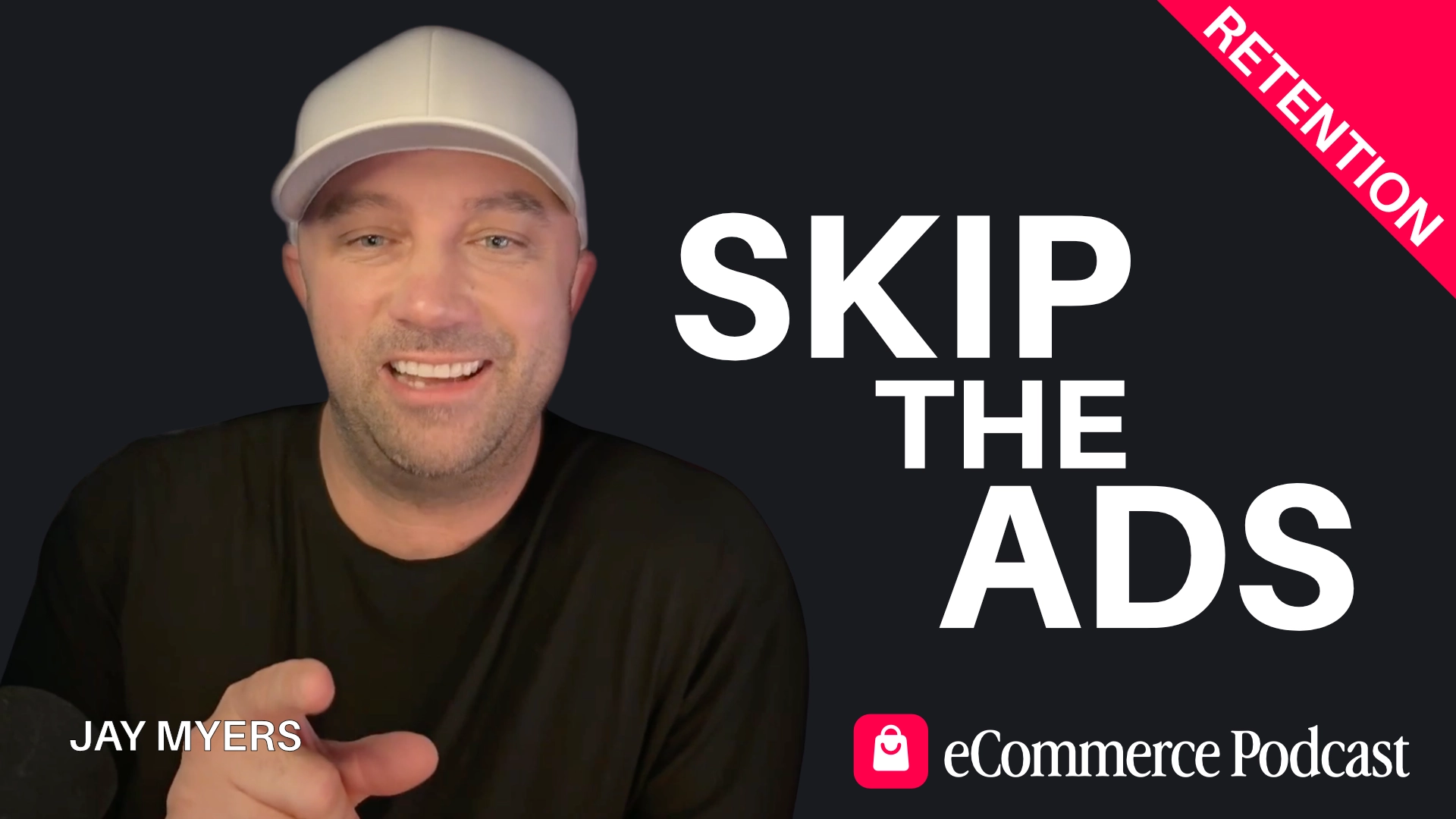
Jay Myers
Bold Commerce