The £500 Tool She Uses to Fact-Check Her Marketing Agency
Rachel Hanretty ships 25,000 macarons a week — and pays £500 a month for a tool that fact-checks what her marketing agency is telling her. In this episode, she explains why Klaviyo overstates its impact, how she caught agencies dodging accountability, and why every seasonal ecommerce founder feels "gaslit" by their own business between April and September. Rachel is the founder of Mademoiselle Macaron, a Scottish macaron brand she built from a St Andrews student flat in 2013 after learning the craft in Paris. Thirteen years on, she ships UK-wide, colour-matches macarons to Charlotte Tilbury lipstick launches, and runs the attribution gauntlet every seasonal ecommerce brand knows well. Subscribe for weekly conversations with founders and experts who've built the kind of ecommerce businesses worth listening to.
Rachel Hanretty pays £500 ($650) a month for a software tool. Not to run her marketing. Not to send her emails. She pays it so she can fact-check what her marketing agency is telling her. And when you run the numbers on her business — 25,000 macarons a week, a team of 13, 50% returning customer rate — it turns out that £500 might be the most important line item on her P&L.
Rachel is the founder of Mademoiselle Macaron, a Scottish brand she started in a St Andrews student flat in 2013 after learning the craft in Paris. Thirteen years on, she ships UK-wide, colour-matches macarons to Charlotte Tilbury lipstick launches, and is in the middle of shifting her revenue mix from 60% DTC to 80% DTC. She's also, in her own words, "being gaslighted by my own business" every year from April to September. This is her field report from inside the attribution wars — and the tools and phrases she uses to keep her head.
The Attribution Problem Nobody Has Actually Solved
Ask any honest ecommerce founder what their biggest ongoing headache is, and a lot of them will land in the same place Rachel did when Matt asked the question on the podcast.
"I want to say transparency over attribution or budget control."
Here's the thing. Every platform, every agency, every app wants to tell you it's responsible for the sale. Klaviyo claims a huge chunk. Meta claims a huge chunk. Google claims a huge chunk. Add them all up and you're somewhere north of 200% of your actual revenue. Someone is lying, or at least, someone is being very creative with the maths.
Rachel put it plainly on the show. "Klaviyo is way too generous. But then it's not just the platforms, it's also the agencies."
Matt had Neil Hoyne — Google's chief data scientist and author of the 2022 book Converted — on the show a while back. Neil told a story that stuck. His team traced every interaction one single customer had before buying one single pair of shoes. Instagram, Facebook, Google Ads, the website, blogs, search. 236 touchpoints. 236. And every single one of those platforms, if asked, would happily claim credit for the sale.
So who gets it? That's the trillion-pound question nobody's cracked.
Why Rachel Pays £500 a Month for a Second Opinion
Rachel's answer isn't a perfect attribution model — because no such thing exists. Her answer is a tool that gives her enough ammunition to sit in a meeting with an agency and push back.
The tool is Triple Whale. At £500 ($650) a month, it's not cheap. But here's what Rachel said about it, and this is worth reading twice.
"Until I started to use Triple Whale, I've not really been able to, or I haven't had the knowledge with which I can call an agency out on their beep, fill in the blank."
That's the actual value proposition. Not "better attribution." Not "unified dashboards." It's "I can now call out the agency when the numbers don't match my bank account."
She also made an interesting point about why she's getting her £500's worth, and it's not the reason you'd expect. Her favourite feature isn't the attribution modelling. It's a feature called MobiChat — essentially an AI assistant that explains the data back to her in plain English.
"I can just say, can you explain what's going on with the Meta ROAS? Should I just cut the budget? This doesn't make sense. And then it'll throw up a, well, yes, you could, but here's the model of the halo effect of Meta on Google. And if we find that this drops, and your new customer... I feel like I've been improving my own knowledge just by having that tool to learn from. So I've been paying £500 a month, as much to get coached as I have to have access to data in a way that makes sense to me."
Read that again. She's paying for coaching disguised as software. She's using it as a personal trainer for ecommerce analytics. And when an agency tells her something that sounds iffy, she literally copy-pastes the claim into MobiChat and asks, "Is that right?"
The Blended ROAS Question
There's a nuance here worth naming. Triple Whale is brilliant at surfacing the data. It's less brilliant — as Rachel acknowledged — at producing one true attribution number, because nobody's brilliant at that.
The one metric Matt keeps coming back to is blended ROAS — a number that tracks total revenue against total marketing spend across every channel, not just the one your paid ads agency is looking at. Matt Putra talked about this on an earlier EP episode, and it's the one figure you can genuinely trust because it can't be inflated by any single channel's reporting.
The problem, as Matt pointed out, is that blended ROAS becomes political the moment you have multiple agencies. Because now everyone's fighting over whose slice of the blended number is biggest. "They're all wanting their share of the pie," as he put it. At $4,000 a month for a paid ads agency, that's $25,000 of your money you're gambling on their story being true for six months before you can even tell if it worked.
Which is exactly why Rachel's £500 Triple Whale subscription looks like a bargain. It pays for itself the first time you catch an agency overclaiming — or the first time you stop yourself cutting a channel that was actually working.
"Gaslit by My Own Business"
Attribution is one headache. Seasonality is the other. And Rachel has the best line on this that I've heard in a long time.
"Sometimes I feel like I'm being gaslighted by my own business."
Here's the setup. Mademoiselle Macaron is fantastic from October to March. Halloween, Christmas, Valentine's Day, Mother's Day, Easter — gift after gift after gift. Look at the accounts in March and you'd happily write a cheque for the business. Look at them in September and you'd think it was a completely different company.
"Trying to become a different business or operate differently April to September is really, really difficult," she said. "Yes, we offer the same product, but you have to suddenly shift audience really quickly, and that means changing strategy for your paid media, your email segmentation. You'd think I'd know better by now, but April to September, every time I'm just like, no, why have I not planned this better?"
Matt's been there too — one of his businesses is in the gift space. Father's Day is a polite nod compared to Christmas. The summer is weddings, graduations, corporate events. And the moment you catch your breath, it's September and you're supposed to be building Black Friday.
The Pinterest Lesson
Last summer, Rachel tried to solve the April-to-September gap with Pinterest. She put meaningful money into wedding ads. It didn't work, and the reason it didn't work is worth capturing.
"We realised that doing Pinterest with the aim of attracting wedding-based customers is too late because they're all getting married then."
Weddings are planned a year out, sometimes longer. By the time someone's googling "wedding macaron favours" in July, they've already booked the venue, the dress, the caterer, and probably the napkins. The Pinterest discovery moment for weddings happens in September or October of the year before. Rachel was fishing in the wrong pond at the wrong time of year.
She burned through thousands before pulling the plug. It's an expensive lesson, but it's the lesson every seasonal business has to learn: figure out when your customer actually starts thinking, not when they actually buy.
Freeze the Macarons (and Other Heresies)
Running a food business at Rachel's scale means having operational flexibility most founders don't think about. One of the more unexpected reveals on the show was that Mademoiselle Macaron ships frozen product and no one is any the wiser.
Rachel was a little hesitant to say it out loud — "people think, oh my goodness, freezer, like frozen, that's not premium" — until she pulled out her safety net. A quote from Pierre Hermé, the Parisian pastry god himself.
"Pierre Hermé said that anyone who says they don't freeze their macarons is a liar because it improves the texture. It makes it more mallow."
It's a brilliant little business lesson hidden inside a confession. The thing she was worried would be perceived as corner-cutting is actually the thing the best pastry chef in France recommends. Sometimes the "heresy" in your operation is genuinely better than the polished alternative — you just need the right authority figure to say it first so your customers don't flinch.
The practical upshot is that when Rachel wants Christmas sorted in June, she can. She doesn't have to hold thousands of finished units in stock; she can bake to capacity, freeze, and ship fresh from the freezer on the last postal day. Most ecommerce founders dream of that kind of flexibility.
Every Company Needs an Alan
When Matt asked Rachel what she was most proud of, she didn't say the product or the press or the Charlotte Tilbury collaboration. She said her team. Half of them have been with her for around five years, which in a 12-year-old business is something to pay attention to.
But inside that team answer was another answer — the one about Alan.
Alan is Rachel's fractional CFO. She described him as "our token bald man" and, more seriously, as "the adult in the room." He's been with her for four years, and he built the dashboards that link every website order back to grams of sugar, macaron count, and capacity. He can tell her, before she runs a 20% off promo, whether the kitchen can actually deliver what the promo will generate.
"Every company needs an Alan."
It's a throwaway line with a serious principle inside it. Rachel started the business at 23. She's brilliant at the brand, the story, the creative. She's open about being less comfortable with spreadsheets and team management. She brought in Alan — and two leadership coaches over the years — to be strong where she's weak.
Matt's take, which feels right, is that the hard skill isn't hiring someone smarter than you. It's having the ego strength not to resent them when they shine. Andrew Carnegie's reported epitaph wish was "here lies a man who knew how to hire people smarter than himself." Easier said than done, but Rachel's doing it.
The Three Moments Framework
One of the quieter but more useful frameworks Rachel shared was the way she's now segmenting Mademoiselle Macaron's market. Rather than chasing "everyone who likes macarons," she's identified three distinct customer moments:
- The moment of celebration — weddings, birthdays, events. This is the wedding market Pinterest didn't crack, but it's a real revenue pool if approached earlier in the planning cycle.
- The moment to impress — corporate gifting and brand activation. This is the Charlotte Tilbury territory. Rachel calls the spend here ROMS — Return on Macarons Spent — where a PR agency hires her to colour-match macarons to a product launch (say, lipsticks at H Beauty), and the macaron is really there to end up in an Instagram post.
- The moment of thoughtfulness — standard DTC gifting. The 50% returning customer base. The "you're my go-to for a friend's birthday" crowd.
Each moment has a completely different customer journey, marketing channel, and price point. Treating them as one blob of demand is what gets seasonal businesses into trouble. Treating them as three distinct markets — each with its own planning calendar — is how you stop being gaslit by your own P&L.
The Instagram Authenticity Trap
Towards the end of the conversation, Rachel asked Matt a question that a lot of founders will recognise. How do you show up authentically on Instagram when your niche — Paris, pastry, elegance — is aesthetically demanding? How do you feed the algorithm without becoming one of those polished influencers you can't stand?
She used a Scottish phrase that Matt (and probably most non-Scots) had to have translated.
"Gies me the boak."
Which roughly means "makes me feel sick." Rachel's point being that the polished, filtered, influencer aesthetic is a real turn-off for her — and yet she wonders if that's the price of entry for her market.
Matt's answer drew on a story close to home. His son Zak ("Zak the Nutritionist") started an Instagram account six months ago after graduating. He specialised in IBS content because he'd lived with it for years. Six months in, he has 70,000 followers and enough income from his recipe book to make a 22-year-old's eyes water. None of it is polished. It's all shot on an iPhone in the back garden.
The videos doing one to two million views aren't the ones with the ring lights and the edit suite. They're the ones where the person on camera actually sounds like themselves.
Matt's practical suggestion to Rachel was to go find five or six accounts doing well in her adjacent space — female solopreneurs in bakery, food, Paris-adjacent lifestyle — reverse-engineer what they're doing, and start posting a short video a day. Wrapping a macaron. Testing a new flavour. Walking through a Parisian market. She'll be bad at it for the first week. She'll find her stride. Consistency wins.
And as Rachel said with a laugh, "Can you see now why I laughed about this being a therapy session? The thing that could be holding the business back is my internal monologue and concerns and insecurities."
To which Matt's answer was the right one. That's true of every entrepreneur. They're the ones holding the business back and the ones driving it forward. Usually at the same time, usually before coffee.
What To Actually Do With All This
There's a lot in this conversation, so here are the things worth writing down and trying:
- 1Audit your attribution claims. Add up what Klaviyo, your paid ads platform, your SEO agency, and any affiliate tool claim for the same month. If the total is more than 100% of revenue, something is wrong and it's worth £500 a month to find out what.
- 2Track blended ROAS as your North Star. Total revenue divided by total marketing spend. It can't be gamed by a single channel. Everything else is supporting evidence.
- 3If you're seasonal, plan earlier than feels reasonable. Sort Christmas in June. Prospect wedding customers in September. The business that plans a full cycle ahead wins, because the business that plans three months ahead keeps learning the same lessons every year.
- 4Segment by customer moment, not customer demographic. Rachel's three moments — celebration, impress, thoughtfulness — give her three distinct marketing calendars. What are yours?
- 5Hire your Alan. Find the fractional specialist who's genuinely stronger than you in your weakest area. Pay them properly. Don't get precious about them outshining you in their domain — that's the whole point.
- 6Stop waiting to be polished. The businesses winning on Instagram right now are the ones being real on an iPhone, not the ones spending £2,000 on photography. "Gies me the boak" is a brand asset.
A Final Thought
The genuinely interesting thing about Rachel's story is that the £500 tool isn't really about the tool. It's about what it represents — a founder deciding she's no longer going to take anyone else's story about her business as gospel. She's going to look at the numbers herself, ask them questions in plain English, and push back on anyone whose version of events doesn't match her bank statement.
That's a posture, not a piece of software. The software just makes the posture easier.
And if you're running a seasonal ecommerce business and you're tired of feeling gaslit by your own P&L, that posture might be the most valuable thing you take from this whole conversation.
Full Episode Transcript
Read the complete, unedited conversation between Matt and Rachel Hanretty from Mademoiselle Macaron.. This transcript provides the full context and details discussed in the episode.
Full Episode Transcript
Read the complete, unedited conversation between Matt and Rachel Hanretty from Mademoiselle Macaron.. This transcript provides the full context and details discussed in the episode.
**Matt**: Well, hello and welcome to the eCommerce Podcast. My name is Matt Edmundson. It's great to be with you today. Thank you so much for joining us wherever you are in the world, wherever you're listening from, or whether you— wherever you're watching from. It's great to be with you. Hope you're having a good day. Now, if you don't know, eCommerce Podcast, the — the clue's in the title. We talk about all things ecommerce. Yes, we do. And I love doing this show because I get to talk to some amazing people. And today is no exception. I've been looking forward to this one since tasting her tasty macarons a few weeks ago. So we're gonna— I will explain all in just a wee second. Now, if you're new to the show, make sure you hit that like and subscribe button because every week we've got more stuff coming. And I don't obviously want you to miss any of it. It'd be great to connect with you and all that good stuff, make sure you check out the website ecommercepodcast.net. Everything about the show is on there, all the past episodes, all the show notes, the links to the guests, everything is on there. And there's a few other cool things you can do on said website. You can sign up to the newsletter every week, we email you the links and notes from the show. We've also got information on there about Cohort, which is our monthly groups. Where you just get together with other like-minded ecommerce entrepreneurs from around the world and talk about ecommerce, what's going on in your business, get feedback, give feedback. I genuinely love them. One of my favourite times of the week is when I get to do these groups and chat to some amazing people. So if you would like to become part of those groups, they are free to join. You can find out more information on the websites. Yes, you can. and some exciting news coming up, ladies and gentlemen. Very, very soon, I will be talking to you about some new AI initiatives we've got going on. If you've been thinking about AI and how it connects with ecommerce, and you've been hearing all kinds of things going on, and you're like, I don't get it, I don't understand it, I've not really been keeping up, we're going to be helping you very soon. So stay connected with us for that. And of course, if you're a purist and not a big fan of AI, stay connected anyway, because we'll do that separately and you'll be fine. Anyway, that's enough preamble. Let's bring on today's guest. Rachel, how are we doing?
**Rachel**: Yeah, very well. Very well. Very excited to speak with you today. And I made the joke when we spoke earlier about this being like a therapy session. So, I mean, I'm ready. I don't know if you are.
**Matt**: No, I, I am very much ready. I genuinely been really looking forward to this. And thank you, by the way, for the I don't know if I secret shopped on your website. I bought my wife some macarons and she was very, very grateful.
**Rachel**: Well, I don't know if she was grateful that they were from this company or grateful because you bought her a present.
**Matt**: Well, either way it worked.
**Rachel**: Worked for both of us, eh?
**Matt**: Yeah, that's very true. For those that haven't got a clue what we're talking about, Rachel, just explain what you do.
**Rachel**: Yeah, of course. So I am the founder of Mademoiselle Macaron and It all started in 2010 when I was living in Paris, where I learned how to make French macarons. I came back to Scotland, finished my degree, couldn't find a full-time job, started making macarons at home. That was in 2013. Now, 2026, we have a team of 13 making— oh gosh, depends on the time of year, but up to 25,000 macarons a week. And we are at the moment That's not even that big a number. It's been bigger. At the moment where we're at is we were, we were 60% DTC ecommerce, but now we're moving to 80% DTC ecommerce, 20% trade. So we used to do a lot more wholesale white label trade. But there is a lot less margin in it.
**Matt**: So yes, and a lot more hassle maybe.
**Rachel**: I don't know. Mrs. Smith in Yorkshire is also a lot of hassle for her niece's birthday present of 6 macarons. So yeah, but you— we deliver. One of our brand values is your priority, your moment, our priority. So whether it's 6 macarons or 6,000, we will deliver.
**Matt**: Wow. And, let's get a few housekeeping get things sorted out. Your website, what's the— what's your website of choice, your platform?
**Rachel**: It's Shopify.
**Matt**: So you're a Shopify site. And do you just sell online or do you have like a store?
**Rachel**: So we did have a bricks-and-mortar retail cafe for 4 and a half years from 2014 to 2018, city centre of Edinburgh. But we launched the website in 2015. It was originally WordPress, but we moved quite swiftly over to Shopify.
**Matt**: I bet you did too.
**Rachel**: And, so we've been there 10 years. And as soon as you launch a website and had trade sales, the argument for continuing on with retail in its traditional form just faded away. And when the rent went up and the lease came up for renewal, it was a no-brainer that we just went online. And so it's actually, it was really sad. I love speaking to people. It's a very visual product. And what we've done with the website is try to take that in-store experience of choosing the flavours you want and making it very personal into our hero product, which is, we call it the Create Your Own Box. So you choose the size, the box you would want, so 6, 12, 18, or 24 macarons, and you get to choose from what's on the menu. So at the moment, I think there's at least 20 flavours, I did a count though that we've got 105 flavours in our repertoire, so at any one point there are 20.
**Matt**: Very good. And you do change them out regular to try and keep things a bit spicy and a bit interesting?
**Rachel**: Yeah, I mean, of course you've got the whole seasonal element, the, Christmas and pumpkin spice, and then into Easter we had our cream egg and our mini egg macarons, and our hot cross fun. And then now we're in spring, we'll go into summer cocktails. Yeah, we just have fun. We just— we've got this huge recipe book, that, that we just, yeah, like to play about with.
**Matt**: So I guess my first question is, do you get to spend all day tasting new, macaron ideas and recipes? Is that— is that— because this is my— this is almost like a dream job in, in many ways.
**Rachel**: Oh gosh, yeah, that's what they all say. no, but I'm not going to lie to you, it's been a long time since I made macarons that were for the masses. I do macaron classes, but I'm behind spreadsheets. I'm in Shopify, I'm doing that side of things. And yeah, I get to taste the macarons maybe like once a week. We do formal taste testing. But then today after lunch, I'd finished my lunch and I was like, oh, I need a wee something. So just our offices in one unit and in industrial estate, and then the kitchen's just around the corner. So I just crossed over the car park, got my macarons and came back. But I only take the ones that are like damaged or broken.
**Matt**: Yeah, it's the standard protocol, isn't it? Like, we have one of our businesses is a supplement business, and the guys in the warehouse can take whatever supplements they want, but they usually take the ones that got damaged or, do what I mean? The bottles aren't quite right and that you're never going to sell them. So have those all day long. but yeah, it's fascinating, isn't it? I'm— yeah, what was your degree, if you don't mind me asking? Did you say? I can't—
**Rachel**: no, it was in English and French literature. So I either have or I haven't used my degree. It's, it's the degree that took me to Paris. I speak French and, and I learned how to make macarons in French. So you the leap is not too far to go from there.
**Matt**: Right.
**Rachel**: And being in Scotland, I didn't have to pay for the degree. So it's a very high return on investment here. Yeah.
**Matt**: That's one of the reasons my daughter's like, I want to go do university in Edinburgh. And she was trying to figure out if she moved to Edinburgh for like a year or two, would she get the tuition then for free? Because, why we don't have that in England, I have no idea. There are so many reasons why Scotland seems to be better than England right now.
**Rachel**: We can talk about that if you want. I would actually say that.
**Matt**: Can I just say that on Monday, I will be travelling to St Andrews. My son is getting married at St Andrews University because that's where he went to. And as an alumni— That's where I went to. Well, there you go. And as an alumni, you can use the chapel there to get married. Very nice. And so, yeah, we're heading up and I'm very looking forward to it.
**Rachel**: That'll be lovely. So, it's a great university and that's actually where the business began that I, they had the career centre sent out an email saying, have you got a business idea? And I was feeling very sad and missing Paris and, looking in my recipe books and decided that I'd make them at home in the student flat. Pitched for some money at the business competition, won that, and then didn't really think much about it. Had to finish my degree and please my parents, obviously. And then Yeah, I couldn't get a full-time job, so the idea of building a career on icing sugar, ground almonds, chocolate, and whatnot was very legitimate. And I think that what's going to be really interesting as we go through, whatever it is we're about to go through with AI overtaking everything, be it for better or worse, is are there going to be students coming out of uni or not going to uni who can then actually turn flour and eggs and whatever into to pounds and pennies. I actually don't want them to because that would really upset my dominance on the market. And during COVID there were so many people who started to run online bakeries that we saw, yeah, we saw a massive surge in competitors because of COVID Yeah, no doubt.
**Matt**: No doubt. And I imagine quite a lot of them aren't around anymore.
**Rachel**: No, there are still a few, I think. I think what's really interesting for me to have been in the game so long now is that I built the website and all of, all that goes with it, old school. nowadays the people who set up during COVID it was TikTok, it was an immediate launchpad and they grew it through being a content maker, that it was first and foremost content, whereas being growing through in-person markets It was growth through word of mouth, people in front of me tasting it and doing that all online, you just lose a little bit.
**Matt**: Yeah, no, fair enough. What's your biggest challenge at the moment, Rachel, in the, in the online space?
**Rachel**: I want to say transparency over attribution or budget control. We're a very seasonal business, so if you wanted to look at our accounts in September, you might be more concerned than if you look at them in March, because October to March you've got Halloween, Christmas, Valentine's Day, Mother's Day, Easter, and that's amazing. Trying to become a different business or operate differently April to September is, is really, really difficult. and it's funny because yes, we offer the same product, but you have to suddenly shift audience really quickly, and that means changing strategy for your paid media, your email segmentation. It's— yeah, the whole— you'd think I'd know better by now, but April to September, every time I'm just like, no, why, why have I not planned this better? but yeah, so to give you an example, I guess that, like we lose a lot of traffic when there's no seasonal push. So Easter was great, and then it goes very, very quiet. and but then things were picking up again, but through fewer purchases. It was just a larger, average order value because then everyone's switching to events, parties. They're, buying branded stuff, little favor boxes of 2 macarons, . Perhaps they've got family getting married in St Andrews that want little finishing touches for the reception. So then we can go from your granny buying you a wee box of macarons for Easter to someone last week ordering £1,000 worth just like that for an event. So sometimes I feel like I'm being gaslighted by my own business.
**Matt**: what? There's a whole bunch of people around the world going, yes, we feel exactly the same way. One of the companies we've got is a gift company, and that's quite seasonal as well. And you're right, April time, you go, well, there's Father's Day, but we know it's a Father's Day feels like a bit of a token gesture in many ways to the other events throughout the year, doesn't it? And so then it becomes about the weddings and the graduations. And the whatever is going to happen, during the summer, summer months, really. And so then you start thinking, well, right now I need to start thinking Black Friday, gearing up September, back to school, blah, blah. And so it's an interesting one, isn't it? The whole seasonality and how it affects your business. How have you coped with that over the years?
**Rachel**: well, I don't think we do cope. We always just Well, we co-open so far as we get through it. Every year we've tried to do something slightly different. Last summer we put a lot of money into Pinterest, but we realised that doing Pinterest with the aim of attracting wedding-based customers is too late because they're all getting married then.
**Matt**: You almost have to plan a year in advance, don't you, with weddings?
**Rachel**: Yeah. And we just didn't quite— because we were so used to seeing a return of, 5, 6, 8x ROAS. although what I've learned lately is it's the cost per acquisition, not the ROAS, that's important. yeah, so we're just so used to seeing a return that we thought, oh great, Pinterest, tick, tick, tick. And then we got to 3 months in and we'd burned through so many thousands of pounds and just thought we can't we can't sustain this, even though for all I know, there's someone who's placed an order for their wedding this summer who contacted us through Pinterest last year. So, yeah, but it's hard.
**Matt**: Yeah, it is. And that's where I think where you have to play the long game, isn't it?
**Rachel**: We've not been good at long game at all. And I think because We are a seasonal business. You're on the little treadmill or little train that you go, and we've got this copy and paste. We make the flavour, we test the flavour, we pack it up, and you just get into a false sense of security that we've never had to ever really plan anything any further than 4 months in advance. We always missed Christmas PR deadlines because we're never ready early enough. This year we're going to have Christmas sorted in June.
**Matt**: Ah, okay.
**Rachel**: But unlike other companies, we don't have to buy the stock. We just have to make the stock, which we have flexibility to manage economically because of the fact that you make macarons and can freeze them. So you don't have to, like, you've ordered 100 chocolate, we don't have to make 100 chocolate that morning. It's not like a cupcake or a birthday cake, nothing like that at all. So we're able to— we will take pre-orders for Christmas from October and we'll build up stock until you get to the last posting day before Christmas because everyone wants fresh macarons. And then we ship them from the freezer. And people are probably— oh, maybe I shouldn't say that because people think, oh my goodness, freezer, like frozen. Oh, that's not premium, that's not luxury. But fortunately for me, as my little insurance, is that the French chef, and it's also quoted elsewhere in a newspaper article, that Pierre Hermé said that anyone who says they don't freeze their macarons is a liar because it improves the texture. It does. It's a real thing. It improves the texture, that it makes it more mallow. So it's just also very convenient for us to be able to.
**Matt**: It works super well. I'm learning a lot today, Rachel, about microservices. So the, so you're coming, well, at the time of recording, it's mid-April, early April. And so I guess in the next couple of months, and you're going to start thinking about Christmas. That's what you're saying. What, what do you, when you say you want Christmas sorted in June, what does that mean to you?
**Rachel**: it means flavors and design, and the hardest bit is actually the packaging design. so, excuse me, we are holding at the moment over £30,000 worth in packaging, just gift boxes, because we have to buy them in such huge quantity.
**Matt**: Yeah.
**Rachel**: Now, for us to— and it's shipped from China— and now for us to to get Christmas-themed packaging in time, we need to do it now. And we— that's probably the biggest, hardest, and most obvious reason why we've never been very well prepared for Christmas, because we just completely missed the packaging timeline. We've got workarounds to it, but— and at the moment we're going to try and find a new supplier And because I'm sure there's a lot of other people listening who might be thinking the same, that anything you're, you're getting from China that's going on, on the seven seas, might be getting blocked somewhere, . Everything's, just getting so, so expensive. So the, the UK manufacturers, packaging manufacturers, seem to be few and far between now, but we haven't ruled it out. And I think that for our product, It's a beautiful, obviously I'm biased, but wonderful product, and we want that experience to start with the packaging. So it's got a little magnetic clasp that you open, you see them laid out. The idea is it's a wee bit like a jewellery box, it's premium feel. People say, oh, I keep the boxes and I put like my like stationery in it, or I, kept this and that in it, don't want to throw out the box, it's so nice. That was really, really important to us, and so we're at a a point now where do we go for a packaging design for Christmas that we can get manufactured cheaper or manufactured at an affordable unit price in the UK but compensate on the little finishing touch? Or do we just stomach the cost and commitment of ordering tens of thousands of units from China? I don't know.
**Matt**: It's an interesting one, isn't it? Because I think my experience with that is you tend to find a different route forward. So if you're presented with the, the the challenge, using UK manufacturing, which I mean obviously we would all say is inherently a good thing, but it is expensive, and so you go, well, is there a different way we can do this while still maintaining the, the feel that we want? Without spending a small fortune? 9 times out of 10 there is. It's just, there's just, I think it's the, the ability to think outside the box, which I, I, which is why I enjoy talking to founders, because anybody that's a founder has got the ability to think outside the box on quite a, in quite a massive way and go, wow, what if you did put it in Wellingtons? I don't know, some really random thing. And all of a sudden your brain just starts going 25 different directions, isn't it? So I'm intrigued by that. I'm intrigued by the comment you made about transparency around attribution being a bit of a challenge. Explain that a little bit more.
**Rachel**: Yeah, so now I'm wandering into territory where I could upset people. I'm gonna plow on through. So I think that everyone wants to tell you that it's them that's doing the great, fantastic, wonderful job and they're, they're 50% of your revenue and blah, blah, blah. And so the software is trying to do that. Like, Klaviyo is way too, generous. Yeah, I agree. But then it's not just the platforms, it's also the agencies.
**Matt**: Yeah.
**Rachel**: So we have struggled, with different agencies and how external marketing support looks and different setups. And until I started to use Triple Whale, I've not really been able to, or I haven't had the knowledge with which I can call an agency out on their beep, fill in the blank. Yeah. And that sounds so negative. I'm not really too much of a negative person. It's just the truth. Because when you're being charged thousands of pounds for a service or whatever, you're like, no, I'm really sorry, but I don't think that number— that number doesn't match up with the number in my bank. So really just trying to see the land and just find a true north. And say, this is how I see it.
**Matt**: Everyone be quiet.
**Rachel**: Yeah.
**Matt**: It's, well, again, it's a fascinating problem. We had Neil Hines on the show last year. Was it last year? Maybe a little bit longer. Neil is the chief data scientist at Google, right? He wrote a book called Converted. He understands data. And he, I always remember talking to Neil and he came up with this story. He said, we traced a lady who was buying a pair of shoes. So one lady buying one pair of shoes from one single website, and he said we traced every interaction that she had, whether that was through the website, through the Facebook, through their Instagram, through Google Ads, through search engines, through blogs. There were 236 interactions or something like that, that this lady had just in buying one pair of shoes. And Neil's question was quite profound in many ways because he just basically said, so where do I attribute the sale? Who gets that sale? Was it when she saw the Instagram ad? Was it when she was on the website? When was that decision made? And the reality of it is you've got 236 points of contact all saying that that sale is due to me. Thank you very much. which of course it isn't. And so, yeah, having some conversation with various agency owners the other day about all of this, the one number I think you can absolutely positively track with 100% certainty is what they call the blended ROAS. So this number which covers everything. And I think it was Matt Putra came on the show to talk about this. Forgive me if I've attributed that wrong. But I'm a big fan of this number, rather than— because like you, I look at Klaviyo's data and I'm going, there's no way you are responsible for that amount of— there's just— I know I'm not, I'm not going to have it. And then you look at Google and the agencies or the paid ad specialist, and you're right. And everybody has this problem, don't they? But we've not solved the whole attribution thing, which is why I think blended ROAS is helpful, but it becomes problematic then. If you have multiple agencies involved, because they're all, they're all wanting their— they all want to prove they're the bigger share of the pie thing. And so, and you, you have this problem, don't you, where you either have a really good agency or you just get a really bad agency, and it— and they're going to tell you, oh, you need to leave it 6 months to find out. And you're like, yeah, but at $4,000 a month, dude, that's $25,000 I'm gambling here. Right. And so I think it's a bit of a nightmare. I do. And I think, have you navigated it?
**Rachel**: So I do love Triple Whale. That is my— because I know, so it's for attribution modeling first and foremost, but you can plug everything into it. But for me, what it does is, because I'm sure there are people out there that argue that actually it's not a great platform for attribution modeling, whatever. But for me, the value comes in its MobiChat. So I can just say, can you explain what's going on with the Meta ROAS? Should I like, just, cut the budget? This doesn't make sense. And then it'll throw up a, well, yes, you could, but here's the model of the halo effect of Meta on Google. And if we find that this drops, and your new customer, and I'm like, oh, thank you so much for explaining it because you're not paying by the hour for this mobile chat. Whereas if you get a fortnightly call with your agency or a weekly call with your agency and you just need someone to hold your hand for a little bit and explain that correlation, you're not really going to get that because everyone's got stuff to do. So doing that in my own time, it has been over the past 6 to 9 months, whatever, I feel like I've been improving my own knowledge just by having that tool to learn from. So I've been paying £500 a month, as much to get coached as I have to have access to data in a way that makes sense to me. So, and I just like put in prompts like copy and paste. This is what they told me. Is that right?
**Matt**: No, no, no, no. That's fascinating. And Triple Whale is a fascinating platform. It's unfortunate because I mean, Unless I'm— unless they've changed, it's a Shopify-only platform. so people like me can't use it because, for reasons which I won't go into on this podcast again, don't want to upset anybody, but I don't use Shopify. at least not at the moment. We don't use Shopify. So if that's your biggest challenge, what's your biggest success?
**Rachel**: Probably the product, I think. the And I hear, I speak to other business owners who may be let down by a supplier, or, the delivery on their product launch is going to be missed, whatever. But they look at me and they say, the power you have to control the thing you make is fantastic, like, that's so special. I'm like, well, let me give you all my operational woes and then we can compare. our oven's broke before Christmas. It was the worst possible time to have it happen. But I would say that the success is making the thing that we sell and being able to react very, very quickly. And for me, I guess I don't always think that the word bakery aligns with online because there's such different worlds in your head. You've got different connotations. Bakery, warm, friendly, smell, the senses. Online clinical convert, take my money. And we're really, I guess, the success is taking, taking both together and trying to curate a nice shopping experience with a delicious product at the end. But it's, yeah, yeah, I'd say it's the product. It's won an award or quite a few awards.
**Matt**: So I can attest the fact that they're tasty. Definitely. And is that what you're most proud of? With regard to your business is your product?
**Rachel**: Oh gosh, see, now we're getting into therapy territory. I think I'm very proud of my team. So, is it half or quite— maybe about half of the people have been here for around 5 years. So in a business that's 12, nearly 13 years old, and the world. There's a lot that's happened in 5 years, and for someone to have stayed for as long as they have and continue to grow the business with me is something I'm very proud of. Yeah, I think that's like what, well, what my mom says when people ask her what she's most proud of, just say, oh, my children. And for me, it's my team.
**Matt**: Yeah, that's interesting. Is it? What do you— how do you— I guess then What have you learned about managing team?
**Rachel**: I'm terrible at it. And I think those two things can be true at the same time. You can appreciate your team but be terrible at managing them. No, I don't think that's quite true.
**Matt**: I think, I think if I'd been around for over 5 years, I probably think there's an element of this truth about that, Rachel.
**Rachel**: But it's all about empowering other people. And to be fair, like, I got myself out of the kitchen really early on. That was not going to be my strength. My strength is being ambitious and the brand and the story and being me. And so, yeah, very quickly delegated that. But I think so when I was— I was 23 when I started and I really struggled to manage people from such a young age. And I've got very little reference point because although I'd worked prior to setting up the business, it was as a, like, a kid, a student. And I've taken on leadership coaches twice to help. And I also brought in, what are they called, fractional CFO, Alan. Alan is our token bald man. Every company needs one. He is—
**Matt**: you heard it here first, ladies and gentlemen.
**Rachel**: He's our, he's our, yeah, he's our like adult in the room. So, I've, I've worked with Alan now for over 4 years, and I chose to work with him when I knew I needed that, joking aside, but like that adult in the room when it came to filling a, a gap in my skill set, which is the finances. And Like, he built these beautiful reports and dashboards that really help us understand the link between that, that order on the website and what that means in terms of number of macarons, grams of sugar, everything. And trying to, to really understand the full impact of even offering 20% off or things like that. Or if you run this promo, we won't— we'll reach capacity to do this. So Yeah. I don't know if that answers any of your questions or where I was heading with that thread. No, it's very good.
**Matt**: I'm intrigued. Yeah, everyone needs an Alan.
**Rachel**: Everyone does need an Alan.
**Matt**: I think you need people who think differently to you. And I think you need people that are strong where you're weak, right? And actually, one of the skills you've got to learn is to not be afraid of that. Because if you're really good at finance and I'm bad, when you're shining, I tend to look bad. Bad or inept, do what I mean? And, and actually, if I've not got the, I suppose, the, the capacity to deal with that, then I can start to become resentful and, and all kinds of things, and it becomes a bit more about ego than anything else. So, I always remember Andrew Carnegie said— I think it was Andrew Carnegie— here lies a man— he wanted his epitaph to read, here lies a man that knew how to hire people smarter than himself, thing. and I thought that was actually quite a smart thing. I mean, it's all about getting people cleverer than you. So like you, I mean, I got out of coding years ago. absolutely. I mean, I'm a little bit into it a bit more now with AI because it can help a Luddite like me do little bits here and there. but yeah, we, we definitely, like Mark, who's, who heads up our tech team, he's definitely leaps and bounds ahead of where I used to be. by, by far. but no, everyone needs an Alan. Everyone needs, an— where do you see, the opportunities for you? You're online, you're building DTC, you're doing less trade, you're, you're increasing DTC as, as your, percentage-wise of income. which I understand, totally understand that and why you would do that. I'm But where are the opportunities for you over the next 12 to 18 months, do you think?
**Rachel**: I think the opportunities are really for us to, well, I guess 3 areas. so our belief is that every Mademoiselle and Monsieur deserves a moment of luxury. So there are 3 moments. One is moment of celebration, so weddings, birthdays, events. And, and like I was saying earlier, that We have, being such a seasonally minded business, we are sometimes neglectful of those events that also can contribute massively to our revenue. And I'd really like to give them, give the wedding opportunity, the wedding customers, that market the time and attention it deserves. So that's definitely opportunity number one, and that can include going offline to wedding events, trying to find that very personal experience of choosing what you're going to serve your guests at your wedding. Finding a way to bridge the, the in-person and the online experience and, and work out a strategy behind that. And then the second moment is a moment to impress. So impress clients, colleagues with branded goods. So corporate gifting. And also, yes, there's corporate gifting for Christmas, but quite niche into that is being part of a PR or brand activation campaign run by a PR agency for a brand that features macarons. So experiential retail is on the rise, and we get contacted quite frequently by brands to say, can you create this macaron? Little Box Macarons, the flavour has to be this to match the product that they're launching, the shade has to be this to match the product and the theme. Can you Create that. And like, we've, we worked with Charlotte Tilbury this time last year, across H Beauty stores, in the UK. We sent like thousands of boxes, and it was lipstick colour matched to, the macarons were matched to lipsticks. and so we did that. We've done similar things like that all over the UK specifically for this moment to impress. And I like to talk about ROMS, return on macarons spent.
**Matt**: Or ROME, return on macarons eaten.
**Rachel**: Well, no, I'm going with ROMS.
**Matt**: You do you. Sorry, I shouldn't interrupt. Carry on. ROMS.
**Rachel**: No, there is a return on macarons eat it is because our customer, the brand, wants their customer who buys the lipstick to take the macaron home with them, the little box, and then they take a post, put on social media of the macarons with the product. And that's how— so sometimes I don't even know if the macarons get eaten, frankly. I'm okay with it as long as they were paid for.
**Matt**: Yeah, yeah, yeah.
**Rachel**: So yeah, so that's our second thing, to really lean into that and just put actual strategy and thought behind these moments to impress. And then lastly, the— this moment of thoughtfulness is our gifting. But opportunity, more opportunity within the gifting is, looking at the customer journey, especially at the checkout. like upselling— we just don't really do enough upselling. we don't— I'm, I'm happy with the website and it works well and we've got a good conversion rate and whatnot, but I just think that we could do so much more to make it a lot nicer. and just— we're potentially gonna move our lowest box value from 6 macarons to 12 macarons. not Not too sure about that at the moment. But yeah, just going in a wee bit deeper and playing about and tweaking little things. And like, we don't have a loyalty app, so I want to build this Manosil Macaron community subscriber loyalty point scheme and just, yeah, really just do more things or do things better. Not more things, the same things, but better.
**Matt**: Sorry. Do you do memberships? Because you'd be right for membership, wouldn't you? I mean, it's the gift that I would definitely buy for my— which is every time we go to France, the first thing, got to go get some macarons. Okay, let's do that. and I get it, and these little taste bombs that go off in your mouth. So for me, a membership, I could buy like a 12-month gift thing, or something like that. I don't know if that's ever worked.
**Rachel**: Yeah, we did. We did. we retired it a couple of years ago because the ReCharge app fees were just getting like silly and it wasn't quite enough. It didn't. But then equally, it was one of those things that we're very guilty of doing of like, oh, let's try it. Cool. We tried it. Oh yeah, it works. works. It just takes care of itself. We didn't really promote it massively. It was just something that people told us we should do. So we put it on the website and then we got hit with a rise in our rent and other— obviously not alone with this— rise in other overheads where I just went through line by line on our ledger and our profit and loss and went, that is too much money, that is too much money. And I think there's probably— if we would have to launch a macaron subscription club very mindfully and with proper effort behind it. It makes us sound lazy. We're not lazy. We're just a wee bit scatty.
**Matt**: Scatty is a very fine line between that and genius, I find, Rachel.
**Rachel**: I'll take it. Thank you very much.
**Matt**: Very, very fine line. But no, I think I mean, listening to you talk, I would almost go membership seems to be like a no-brainer. you pay your whatever, $20, I get free delivery and extra macarons in every box I order and all that stuff and buy them as gifts. I, yeah, I guess if you do, you have, well, let me ask that question actually. I don't need exact numbers, but then do you have a significant proportion of returning customers or is it all? Yeah, first time?
**Rachel**: No, it's 50% return customer rate. So once we get people in, yeah. I've spoken to quite a few people who'll say, oh, you're my go-to person for buying gifts for a friend. So we always see the little messages coming in. Like one of them today was her friend, like, so proud of your promotion, get well soon, happy birthday. And it's the same people every time. It's great. But we wanted to do offline, what do you call it when it's like old school leaflets? Direct mail. That's what it's called. I wanted to do direct mail. I trialed it with, I don't know, it was 150 or 200 credits on a website, but everyone buys them for gifts. So the way it was set up, it went to the shipping address, not the billing address. So people who'd received the macarons as gifts were getting this postcard saying, bonjour, thank you for your order. So we need to work out a way to do that properly because yeah, we're very, very, very lucky that with such a strong, healthy repeat customer rate that we've got a nice solid base there.
**Matt**: Yeah, that's a really good number, I think, for the the sphere and niche that you're in. I think that's a, I mean, obviously, all these things can be improved. But I think that's a really, really good thing. We noticed actually that, that it was harder to get a returning customer on the gift site than obviously on the supplement site. It's an obvious thing to say, especially on gift sites where it's a bit— it's different, it's unique, because people didn't want to order the same gift for the same person twice, if that makes sense. Whereas supplements, you just order them all day, every day, don't you really? and so it was one of those things you were like, huh, that's interesting. there's a big discrepancy between those two numbers. And so I've got some interesting benchmarks, in that whole thing. What's the dream, Rachel, in , if you could fast forward 3, 4, 5 years, what's the dream? Is it to sell up and retire? Is it to carry on doing what you're doing? Is it— where are you at?
**Rachel**: The dream is probably to spend a lot more time in Paris. I would love to get myself into position in the business where I can just do lots of creative, fun marketing, like, the ideas, the fun stuff, less of the dreary budget numbers, spreadsheets, KPIs, just frolic about in the Jardin des Tuileries and write some poetry. Maybe not, but I'd like to write a recipe book, that's for sure. I think with our 105 flavors, we could do something. So I think that I would like to, like what I said about our 3 opportunities around these moments, to really own that space, to be less , oh, that was good though, well done us, and actually like, yeah, we worked hard, we said we were going to do it and we did it. I'd love to sit here in, a year's time and say, went on to told, man, I was going to do this, this, and this. Oh, and we've done it. I'll give you a wee call. We're like, hello.
**Matt**: We'll get you back on the show, Rachel, and go, how did you do? How did it go? And I mean, listening to you talk, right? And I mean, I don't know the ins and outs of your business, Rachel, but one thing I can guarantee you is the more you can put yourself out there as you, that authentic poetry writing, taking rides down the Seine, drinking coffee, eating macarons, whilst looking at the Eiffel Tower and putting those videos out on Instagram, the better your business will do without a doubt, because I think your personality, your authenticness, that's, that's what really shines through, right? And that's what no one else can copy. And so I think do that, do a lot more of that.
**Rachel**: So I have a question for you on this.
**Matt**: Okay.
**Rachel**: And that is that your advice is to find a way for my authenticity and me and my story about Paris to shine through more. But my question is, how do I do that in a non-sickeningly Instagram artificial way? Because it has to look polished, right?
**Matt**: No.
**Rachel**: Well, it does. It has to. I went to Paris in January for 36 hours and paid an Airbnb experienced photographer to follow me about and take photos, and it was awful. It was so bad. But part of the reason it was bad was because I just don't lean in or prescribe to the influencer lifestyle. And so, sorry, to come to get this back into a question, is that how do you feed the algorithm what it wants while being true to yourself?
**Matt**: I think it's a, it's a really interesting question that people struggle with a lot, right? So if you think about the EP, so here we are inside my studio, which is a glorified shed at the bottom of my garden, right? And when you look at the— it's, it's a beautiful camera. It's an expensive camera. We've got nice lenses, good lighting. We've been doing this 6 years. We've evolved over time. Does that mean if someone was starting a podcast today they have to have the same equipment? No. Does it look— needs to look as polished? No, not at all. It's just the the nature of where we've come. And but I'm still sat here in a t-shirt and a gilet, right? So it's not like I've got all suited and booted. I think my, my son, not the one that's getting married, my other son, he came out of university and he started an Instagram channel, right? September last year, so 6 months ago. He's got 70,000 followers, and he— what he did was he, he just went on there. He suffered for years with IBS, right? And it really, it had a dramatic impact on him when he was growing up. And so he went to university, he did his nutrition, he went and did a specialism in IBS, and he's like, I'm just going to help people. And so he just shares these 60-second clips all designed around IBS to help people, right? Not in a preachy way, but it's like, this is an onion, you can't eat that, so take the green bit of leek, you can eat that. And people are going, this is amazing, right? And you should— I see the comments he gets, he shows them to me, it's unbelievable. But not once has he tried to do anything super polished. It's all— all the videos are shot in my back garden. In my outdoor kitchen, which is definitely not polished because I built it. And I, I think there's a rawness about shooting video on your phone and learning to tell story that people really resonate with. So if you look at all the videos doing 1 to 2 million views, they're all shot on iPhones. They're not professionally shot, they're not professionally edited. The best thing I can recommend you do, honestly, is go find 5, 6, 7 accounts that are doing really well in this space. like the , not the mac— not necessarily the macaron space, but this, the female solopreneur bakery cooking, those things. What are they doing? Understand how they're doing it. and AI can analyse it all for you these days. and just, just use that as a template and go, yeah, I can do that. And I think if you put a video out every day, and some days it will just be you wrapping, wrapping a macaron, or it might be tasting a new flavour, it might be saying, listen, if you want to make a macaron, this is how we make this, and you show like 5 different stages. You might be going on a plane to Paris and going, this is where it all started, guys. Do what I mean? I think, I think you would probably spend the first 5 hours going I'm really awful at this, and then you'll find a stride and you'll hit it. And I think consistency wins every single day and authenticity wins every single day. You don't, it does not have to be polished at all because people buy you.
**Rachel**: I think, yes, I agree logically. I do. My rational brain does. I think in my particular niche of Paris, Paris being so aesthetically pleasing and beautiful. I mean, it's actually quite a dirty city now, but what I mean? Like, very polished. I find that's the tricky bit, to be so aesthetically pleasing but also a bit mad and authentic. And then the other thing is, I'm going to teach you— maybe it's a Scottish phrase you already know, but you can have this one for free. Do what the phrase is? It gie's me the book. Geez me the bulk. Well, geez me the bulk means like, oh, like makes me feel ill, it makes me want to be sick. And I would say that, looking at other female entrepreneurs, especially in bakery, there's some women I just like, if I met them, I'd be like, oh my God, hi! But the the idea of being as polished as them or as beautiful or whatever gives me the bock. I just don't know. There's just some barrier there, which makes no sense because if you ask me to do a 5-minute set in a comedy club, I would do it. I don't have any qualms about that. Maybe that's what you should do.
**Matt**: Just do comedy and film it and just put it on your channel.
**Rachel**: I think because a lot of comedy comes from some of our customer service emails.
**Matt**: I even just showing some of those, but I mean, obviously not revealing names, but just some of the things that come through. I think people love the whole behind the scenes thing. They love the story. They love the journey. And I think if you could crack that, you would genuinely do well. And it might make you feel, gives you the bulk, give you the bulk. Sorry if I'm just butchering your fine Scottish saying. Yeah, it's one of those, isn't it? Where If you ask Zach, my son, he hates doing the, the every video he doesn't like doing.
**Rachel**: Oh, really? Oh, interesting.
**Matt**: He would do anything if he could not be behind camera. But what he did was he built his Instagram following, then he did a recipe book and he started putting some of the recipes on Instagram. Some of them had over 1-2 million views. And now he creates quite a significant income, which is not bad for a 22-year-old lad selling his recipe book. To his Instagram followers.
**Rachel**: Amazing. That's really, really cool.
**Matt**: It is. I think— but I'm not— I mean, I'm proud of him and happy to brag on him. And if you want to go follow, go follow Zach the Nutritionist. but it's more the strategy that I, that he, that he spent some time looking at and researching and we chatted about, and it's really worked well for him, and I can see it working going well for you. I absolutely can see you killing it. I genuinely—
**Rachel**: can you see now though why I, I laughed about this being a therapy session? Because we're getting to this point where the thing that could be holding the business back is my internal monologue and concerns and insecurities.
**Matt**: Yeah, but that's true of every entrepreneur, isn't it? We're all the ones that are holding the business back, but we're also the ones driving it forward. And so, credit where credit's due. It's important. Rachel, listen, I am aware of time and I appreciate you, you have given me a hard deadline. So if people want to find out more about them, where do they go? Where do they go find out more about you, to find out more about your, your amazing macarons? I genuinely will highly recommend them. Audience, do go buy some, especially I assume you only ship to England. Or the UK, sorry.
**Rachel**: Yeah, no, we ship all across the UK and you can buy from us at mademoisellemacaron.co.uk. And yes, we can bring a little bit of Paris to you wherever you are.
**Matt**: Ah, the joie de vivre. Joie de Paris. Joie de Paris. Is that what you'd say? I don't know. In my best franglais.
**Rachel**: I don't know. I mean, I love my My best, most favourite thing about the French language is the guttural "bleh." No? Yeah.
**Matt**: Oh, I love the French language. I really do. I wish I could speak it better. I know how to swear really well in French, but that's, that's what you learn when you're a teenager, isn't it? But listen, Rachel, thank you so much for sharing your story and coming on the show. And genuinely, in a year's time, I would love to have you back to see how it's all gone and see what you've conquered and, and, and what you've blown up in a beautiful way. I think it would be amazing. but thank you for coming on. Thank you for smiling. Thank you for the joy.
**Rachel**: And thank you for sharing. Thank you. Thank you for holding space for me.
**Matt**: Always a pleasure. Now, I just— I didn't tell you this before we hit recording, so we're gonna— I'm gonna close out the show. Don't go anywhere, Rachel. You'll hear a little bit of music play, and then I'll come back and tell you what's going to happen next. All the listeners are going, why have we just heard that? Because I was— I didn't tell her beforehand. But ladies and gentlemen, thank you so much for joining us. I hope you've enjoyed this week's episode. What a wonderful, wonderful guest and what a wonderful story. Make sure, like I say, you like and subscribe and do all of that good stuff. But that's it from me. I'll see you next time. Bye for now.
Meet your expert
Rachel Hanretty
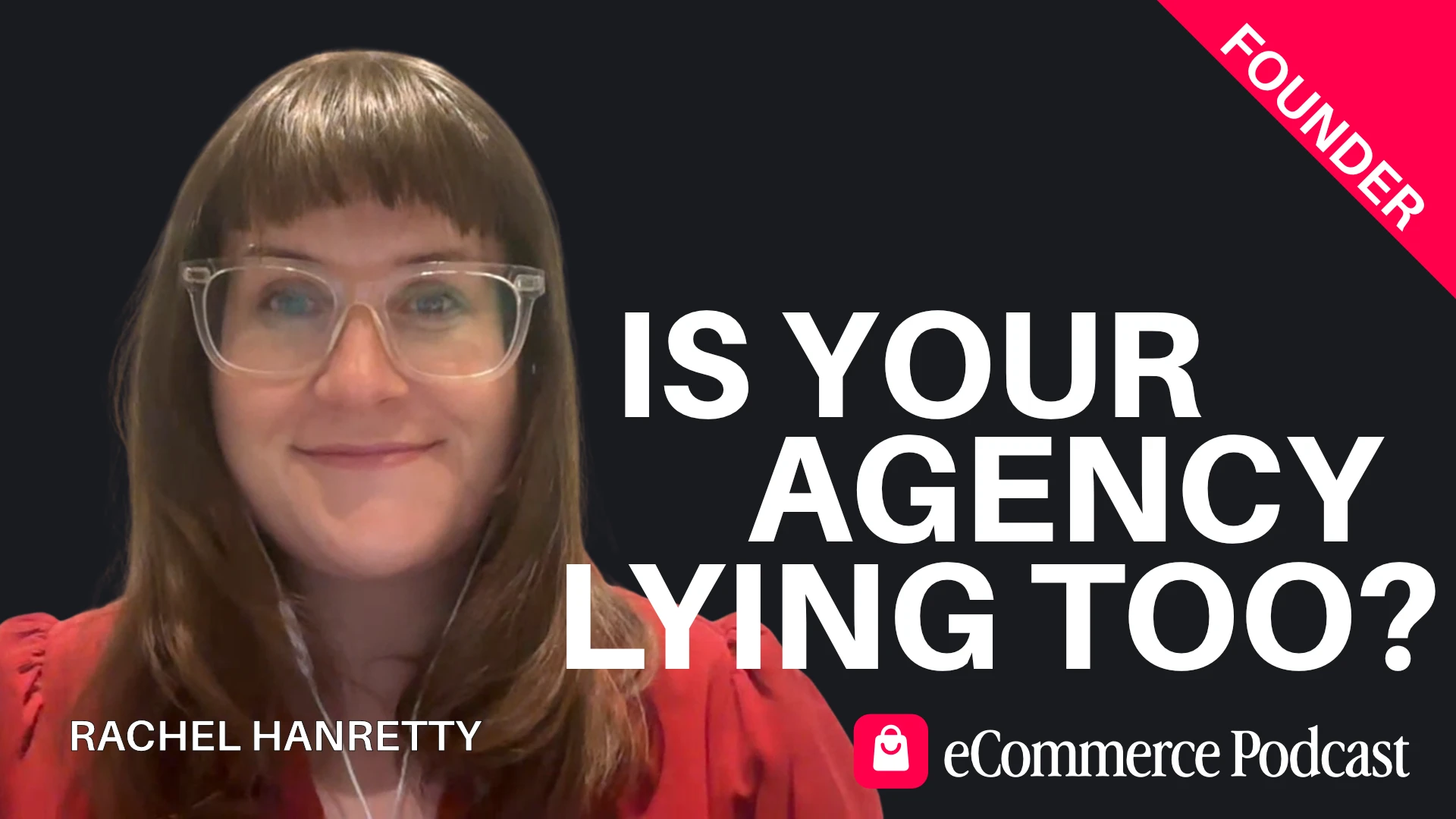
Rachel Hanretty
Mademoiselle Macaron.