Why Your Best Customers Leave After the First Order
Max Beech has spent years building personalisation features at Revolut and Yahoo, and he has identified the exact moment most ecommerce brands lose their best customers — the first 14 days after purchase. In this conversation, Max explains why that window of highest trust gets wasted on silence or premature discount codes, how asking one simple post-purchase question gives better segmentation data than months of behavioural tracking, and why being human beats being a brand every time. From the coffee shop test to the Ritz Carlton giraffe story, this episode is packed with practical ways to keep your customers coming back.
Most ecommerce brands know a staggering amount about their customers. Purchase history. LTV. Repeat rates. Browsing behaviour. The data is all there. And yet, as Max Beech points out, most of those brands communicate with their customers like they know absolutely nothing about them.
Max is the founder of Athenic, a startup built on the observation that the gap between what brands know and what they actually do with that knowledge is where customers quietly disappear. Before Athenic, Max spent time in product management at Revolut and Yahoo, building personalisation features at scale. He’s seen what works inside tech companies — and what ecommerce businesses are consistently getting wrong.
Silence Is Not Always Golden
There’s a window after someone places their first order — roughly the first 14 days — that most brands either ignore completely or fill with exactly the wrong thing.
Some treat it as dead air. The order’s been placed, the product’s on its way, and so there is nothing to do until next time. Others jump straight into selling mode (any sound familiar?) — a 10% off code on day three, a cross-sell email on day five. But the customer has still to receive their order.
“Don’t try and sell them anything,” Max says. “Everyone’s been in that experience where they’ve been inside a store and that salesperson is just nagging them trying to be too salesy. It’s exactly the same experience that a lot of customers feel when they’re online.”
The irony is that this 14-day window is the moment of highest trust. The customer has just handed over their money. They’ve made a decision. They’re open, engaged, and paying attention. And most brands respond with either silence or a sales pitch.
The Coffee Shop Test
If you walk into a good coffee shop, you will see that everything is designed to get you to the counter. There is beautiful decor, a glass case full of pastries. On the wall is a well-designed menu board and of course, the friendly staff who take your order with a smile. We’ve all had this experience — the experience up to the point of purchase is considered, inviting, and personal.
Then you pay. And everything changes.
You’re directed to stand in a formless queue with no sense of order. There’s no decor. No chairs. No engagement. Nothing to look at except your phone while you wait for someone to shout your name. The entire experience after the transaction is an afterthought.
“Everything is geared to getting your coffee order,” Matt explains. “And then of course they want to make you a good coffee. But at the end of the day, the experience while they deliver is rubbish.”
The parallel with ecommerce is hard to miss. Beautiful websites. Considered product pages. Clever ads. Everything is engineered to get that first purchase. Then the order is placed and it’s crickets. Maybe a shipping confirmation. Maybe that premature discount code. But no onboarding. No relationship building. No thought about what happens between the purchase and the delivery — let alone after it.
The Running Shoes Problem
One of the most practical points Max raises is about segmentation — specifically, how most brands do it badly because they never bother to ask a simple question.
Someone buys a pair of running shoes. Standard segmentation puts them in a bucket — “bought running shoes.” They’ll get emails about running shoes, probably some socks, maybe a water bottle.
But why did they buy those shoes? They might be training for a marathon next week. Or they might have just got a new dog and need something comfortable for walks. These are two completely different customers with completely different needs, buying the exact same product.
“If you’re trying to segment customers, you’re probably putting those two people into the same bucket,” Max explains. “Whilst in reality, it needs to be a very different experience.”
The fix isn’t complicated. Just ask them. A single question in a post-purchase email — “Why did you buy this?” — gives you more useful information than months of behavioural tracking. And yet most brands never ask.
You Don’t Need Scale to Be Personal
There’s a common objection to this kind of personalisation and it’s the belief that it doesn’t scale. If you’ve got 10,000 customers, you can’t have personal conversations with all of them.
Max’s response is straightforward. You don’t need to.
“You can pick your top 10 customers and just send them a WhatsApp if you’ve got permission for that, or give them a call,” he says. “If you reach out to about 10 people, that’s probably enough where you’re going to start to see some kind of trend.”
He gives us a simple solution, just put a handwritten letter in your next product delivery. The open rate is 100%. Sure, it’s not scalable. But it doesn’t need to be. The goal isn’t to automate empathy, it’s to understand your customers well enough to serve them better.
Max references Stitch Fix, the personal styling company that built a billion-dollar business on the premise that your personal stylist remembers you. Every profile update, every kept item, every returned item, every note was stored, and they were all used. Their algorithm wasn’t really an algorithm. It was just being incredibly organised with customer data so that a human could use it at the right moment.
Fix the Leak Before Adding More Water
Most ecommerce founders are brilliant at watching their numbers. Conversion rates. Churn. LTV. Average order value. The dashboards are always open and always full of data. But it’s easy to get so focused on the metrics that the customer’s actual experience gets forgotten.
“It’s easy to look at a pop-up and think, right, if we move this further ahead in the flow or make it a little bit bigger, it’ll boost our numbers,” Max says. “But what is that doing to the customer’s experience?”
The alternative is to start from the customer’s perspective and work backwards. What does the journey actually feel like? Where are people getting frustrated? Where are they being ignored? One suggestion Max offers is to order your own product, to your own home, and go through the entire experience as a customer. Read every email. Open every notification. See what it actually feels like when you’re on the receiving end.
If the experience has gaps — and it probably does — those gaps are where the leak is. Sending another discount code won’t fix it. Understanding the experience and addressing the actual friction will.
The Ritz Carlton Giraffe and Why Being Human Goes Viral
Max shared a story that’s become a Harvard Business School case study — and it started with a stuffed giraffe left behind in a hotel room.
A family stayed at the Ritz Carlton. Their child left behind a beloved stuffed giraffe called Joshi. The parents told the boy that Joshi had stayed behind for a holiday. The hotel staff found Joshi and ran with it. They photographed him by the pool, in a spa robe, driving a golf buggy, lounging with sunglasses. They created a full photo album of Joshi’s extended vacation and returned him to the family with the album.
It wasn’t efficient. It wasn’t scalable. It wasn’t in any brand guidelines document. But it went viral — because it was human.
“There are lots of examples where a company just allows either themselves or their customer service team to be human and to break the rules,” Max says. “And that’s where you can really change it.”
This connects directly to the competitive advantage that smaller ecommerce businesses hold over the giants. Amazon can’t do this. Large brands with centralised customer service teams and brand-safe response templates can’t do this. But a founder who picks up the phone, who writes a personal note, who responds to a review with genuine care — that’s something that can’t be bought, and something customers remember.
The 20-Minute Audit That Changes Everything
Max’s parting challenge is disarmingly simple. Go into your email platform and look at the last five messages you sent to customers. For each one, ask, “is this about what I want as a brand, or about what they need right now?”
“If the answer is mostly what I want — and it probably is — then you’ve got a really clear brief of what to fix first,” Max says. “It takes probably 20 minutes. Most brands will never do it.”
That 20 minutes might be the most valuable thing you do this week. Not because it gives you a new tool or a new tactic, but because it forces a shift in perspective — from thinking about how to grow the brand, to thinking about how to make the customer feel closer to it.
Because in a world where every brand has access to the same data, the same tools, and the same AI, the ones that win will be the ones that remember there’s a person on the other end. And that person doesn’t want a discount code on day three. They want to feel like you know who they are.
Today’s Guest
Today’s guest: Max Beech
Company: Athenic
Website: getathenic.com
LinkedIn: Connect with Max on LinkedIn
Full Episode Transcript
Read the complete, unedited conversation between Matt and Max Beech from Athenic. This transcript provides the full context and details discussed in the episode.
Full Episode Transcript
Read the complete, unedited conversation between Matt and Max Beech from Athenic. This transcript provides the full context and details discussed in the episode.
Matt Edmundson (00:04)
So welcome to the e-commerce podcast. My name is Matt Edmondson and it is great to be with you this fine fettle of a day. It's always fun to be with you actually. I really quite enjoy doing these shows and today is no exception. We've got a great guest coming up but before we talk to Max, let me just give a quick shout out and a warm welcome to you. If this is your first time with us on the e-commerce podcast.
It's great. We just talk about all things e-commerce from every kind of angle that we can possibly think about because like you, I'm also an e-commerce. I run my own e-commerce business. Well, businesses actually. And I just love these shows because we get to find out all kinds of weird, wonderful things from our guests. So Max, welcome to the show. It's good to have you on.
Max Beech (00:49)
Yeah, it's lovely to be here. Thanks so much for having me. Been a long time listener, so it's lovely to be here with you.
Matt Edmundson (00:57)
Good, very good. For those of the listeners that might not know who Max Beach is, why don't you give us the quick 20 second low down.
Max Beech (01:07)
Yeah, so I'm currently running my own startup, which is sort of basically on the grounds that most e-commerce brands know a lot about their customers, but communicate with them like they know nothing. And so the goal of Athenic, which is the startup, it closes the gap, it builds a profile of every customer over time, and it uses that to make every message feel personal. And before that, I was working at a couple of startups in product management, working at
Revolut and Yahoo in their various sort of app and website teams respectively.
Matt Edmundson (01:43)
I love how you called Revolut a startup and Yahoo a startup. That was great. Yeah, one point it was a startup, right? We've all had to start somewhere. So why not? Let's go for that. Well, welcome to the show. Now we're going to be talking a little bit about personalization, which is your area of expertise from these various ventures, from your own to the things that you have done. Obviously you've set
Max Beech (01:47)
Yahoo's a little bit more of a stretch.
Matt Edmundson (02:10)
your software because you see a gap in the market, right? You see some possibilities, but I'm curious Max, if there's one thing, right? If you could wave your proverbial e-commerce magic wand, as I like to say, and solve the one key thing that we all seem to be suffering from, what would that one thing be?
Max Beech (02:30)
For me, I think it would be just to give every founder sort of five minutes inside the head of the most recently churned customer and not the data about them. So I think e-commerce founders are brilliant about, you know, knowing their cat, their LTV, their repeat customer rate, but, actually the experience, you know, what did that customer feel when their first email arrived from the brand? What did they feel like when no one followed up potentially? What would have made them stay? Because I think most founders
Matt Edmundson (02:31)
Thank you.
Max Beech (02:57)
probably actually know what they'd see. And that's the problem. They know that their communications are often a little bit too generic. It's one of those things that might feel like a nice to have, ⁓ but they just either don't feel like they've got the time or the tools to do anything about it. But it's something that really makes the difference. And so, you you might look at your ⁓ churn rate or your lack of retention and you see that dropping, but by then it's already too late and you really have to work back and look at that experience.
Matt Edmundson (03:23)
Mm.
That's a really interesting ⁓ idea to get inside the head for five minutes of the customer who last churned. What sort of things would we discover if we could do that?
Max Beech (03:43)
I think it would be a lot of the basics. A key moment here is the first 14 days after someone's purchased. A lot of brands might treat that period either as dead air before the next sale. They might also think, okay, maybe we're a one-time purchase product. There's no huge value in really communicating with that customer other than dealing with them if they've got a problem. But this is the moment of highest trust. Very often,
these brands waste that opportunity. ⁓ But if they do tap in, they might be thinking, right, we'll send them an email, maybe with a 10 % off code to get their next purchase. But the key is, don't try and sell them anything. I think everyone's been in that experience where they've been inside a store and that salesperson is just nagging them trying to be too salesy. And it's exactly the same experience that a lot of customers.
I believe Phil, when they're online, they've purchased something from a brand and the first message they get is a 10 % off code, you know, on day three, for example. ⁓ but, but it doesn't need to be that way. You can build the rapport and think about the lifetime value of the customer, whether the goal is to sell them something again, whether to keep them as a subscription or whether to leverage them to, to then, you know, recommend that product to the next three, five people.
Matt Edmundson (05:04)
It's a really interesting point, isn't it? I think I've mentioned this before on EP on the e-commerce podcast and what you're making me think of is my favorite coffee shop, right? In the sense that when I go into, there's a coffee shop in Liverpool and if you're in Liverpool, go to Bean, it's in town, it's in Liverpool one, it's a great coffee shop.
I don't drink coffee, but I really like the teas and stuff. Anyway, I go to this coffee shop, And I go at least probably two, three times a month when I'm in town and I just want to go sit and work. I'll go work and be, and the guys that own it are great. And I've known them for years. You go in the coffee shop, right? It's beautiful. You sort of got very good coffee shop vibes. They care very deeply about coffee. And so they attract, you know, the coffee lovers, which is good.
Max Beech (05:30)
Really?
Matt Edmundson (05:56)
And you walk up to the counter and you walk past to sort of a drinks dispenser, you know, where you can get your can of Coke or whatever it is. They've got this sort of beautiful glass presentation case with all the pastries and things that I could buy until my heart's content. I've got a beautifully designed kind of price board above me and the lady or gentleman behind the till who takes my order is usually quite chirpy, very pleasant and lovely. I place my order.
Because at this point, I'm happy. I'm enjoying the experience, right? I'm quite a happy chap. And then everything changes in an instant. And it's not just been, it's every coffee shop I've been into. It's like, right, we've got your money. Now go stand over there in a queue, which has no sense of order about it. It's just like, and you'll stand there until somebody shouts your name. Now, if you're bored, do something on your phone, but there's no decor, there's no chairs, there's no...
way of engaging me. There's no onboarding. There's nothing. It's just like sit and wait. ⁓ and then eventually I get my coffee, you know, at some point, never quite sure if it's mine or I went up my coffee, my tea or whatever. I suppose that's one of the benefits of not drinking coffee. I know when my drink gets called, I'm not going to confuse it, but it's a really interesting analogy for me. This, and I've often stood there when I'm waiting on my drink and I smile every time it happens.
because it happens in coffee shops all over. Everything is geared to getting your coffee order. And then of course they want to make you a good coffee. They do want to deliver. But at the end of the day, the experience while they deliver is rubbish. And so in e-comm, there's a very similar vibe, right? In other words, we create these beautiful websites, these beautiful experiences. Everybody sort of is all about getting that first order. Then once the order is placed, ⁓
It's like crickets, you know, there's no onboarding. And like you say, what I might get is thanks for your order. And some forward thinking e-commerce brands then send me an email saying, here's 10 % off your next order. I've not received, like you say, I've not received the first one yet. So down to your classic email. So I get what you're saying. It's about creating this experience, isn't it? Between, well, one of the things is about creating an experience between point of purchase and point of delivery, I would have thought.
Max Beech (08:10)
Yeah.
100%. And I think it's such ⁓ a good idea to look at other industries like you did with the coffee shop. Maybe that's not the correct experience, but ⁓ some, some industries, some products do this actually really well. And when I was at Revolut, I saw this, you know, tech companies in general are so good at retention and it does help that they perhaps don't feel they need to sell the next product straight away. But in fact,
Matt Edmundson (08:23)
Hmm.
Max Beech (08:50)
You know, if I went into the, ⁓ you know, into the next design review and pitched that we were going to try to upsell a premium subscription to day five customers, I'll be laughed out of the room. so, ⁓ you know, the goal where in companies like that was identify, you know, the magic moment that will make this person sticky and then work out how can we get that person to that point as quickly as we can. then.
Matt Edmundson (09:02)
If.
Max Beech (09:17)
identify the moment where they're most likely to feel happy enough with the product that they're then willing to refer the next three people. And then how can we then get that person to that point as quickly as possible? And so it's all about identifying what is the user journey. And that's not just getting the person into the product or, you know, if it's e-com, it's getting the person to buy the product. It's actually how can we take them through that experience and just
Matt Edmundson (09:43)
Yeah.
Max Beech (09:43)
sitting down and really thinking what is that journey looking like is incredibly valuable.
Matt Edmundson (09:49)
So how would I think about that journey? What are some of the things that I need to think about as an e-commerce entrepreneur?
Max Beech (09:57)
I think, I mean, you can look and see at your attention like this. I'm not saying don't look at the data because it might give you some good hints at where people might be dropping off if it's a subscription product where you can get that sort of minutiae of data. ⁓ But I think what a lot of people miss is just actually just asking the customer. And I think for me, when I'm thinking about personalization, ⁓ we did a couple of really interesting personalization products.
⁓ at Yahoo, for example, and one we submitted for a patent, the other one we probably should have done. ⁓ And we spent a long time trying to collect all of these small little points of data, which people were perhaps putting out there and we were trying to use that to build a picture. But I think one thing that was actually much more helpful than that was when we sent a little ⁓ form to them that was just like, tell us about the last seven days.
tell us about this product. And I think it's something that e-comm founders don't do nearly enough is just ask them, you know, it could be in the post purchase email. Why did you buy this product? You know, and just trying to be very straight up to understand what is this customer and what, do they want? Because, you know, someone is buying running shoes. They could be doing that because they just need to walk their dog next week. So they've just bought a new dog or it might be because they're training for a marathon next week. But, you if you're trying to segment.
Matt Edmundson (11:15)
Mm.
Max Beech (11:23)
customers, you're probably putting those two people into the same bucket, whilst in reality,
Matt Edmundson (11:26)
Mm.
Max Beech (11:28)
it needs to be a very different experience. And so you need to understand what are the typical user journeys for the type of people buying your products and how can you then guide, identify who those different people are as best you can, and then guide them through that user journey.
Matt Edmundson (11:44)
That's a really valuable point, isn't it? Talk to your customers and find out why they're buying. And actually, by doing that, I guess you will find out what the user journeys are. I we can all hypothesize, right? And we can all go, well, we think it's this. But I guess we don't actually know, do we? And we function a lot on assumption without clarifying sometimes. I guess my slight hesitation.
Max, if I can put it this way, is...
When we have historically asked customers questions, it is a little bit like trying to pull teeth, right? So I get for Yahoo, for example, who will have millions of people, you can send out a million surveys and you'll get 10,000 back or whatever it is. And that's actually quite a significant number. If I'm a small econ business with, I don't know, a hundred or a thousand, maybe 10,000 customers, you can send out,
you know, these sort of requests to ask why people buy. Getting people to fill that in is a trick in its own right, isn't it? I don't know if you've had any experience with that or how you get people to answer those questions.
Max Beech (13:02)
Yeah, but it, you know, it doesn't need to be something where you say, right, well, I need to create this sort of survey and find statistical significance. You know, you can pick your top 10 customers and just, you know, send them a WhatsApp if you've got permission for that or give them a call. And I think when you break through and be that much more personal, then the response rate changes. You know, we talk about open rates. Well, you know, if you stick a, a handwritten letter in your next product delivery, then
Matt Edmundson (13:16)
Hmm.
Max Beech (13:31)
The open rate is going to be 100%. So there are ways to do it that aren't scalable and they don't need to be scalable to get a good sense. know, the sort of the benchmark we used is, you if you reach out to about 10 people, that's probably enough where you're going to start to see some kind of trend in just the answers that they give. Obviously depends on the sort of scope you're asking. ⁓ But I think another thing that's just very important for businesses to do and what I see is
Matt Edmundson (13:51)
Hmm.
Max Beech (14:00)
Econ businesses are not the best at this is just trying to help them understand where is all of their customer data. So if they're not reaching out to these people individually, let's just lay the groundwork and just understand where do we have all of the customer data? Because at the moment, you know, there might be data spread out across ⁓ Mailchimp, Shopify, maybe something like WordPress or Clavio and all of these different
touch points where if the customer then comes to them or they want to go out to the customer, they've got no chance at trying to have a cohesive understanding of who that customer is. And, ⁓ know, we think about sort of segmentation as being one to many. Well, really what we want is to get to a point where it's sort of more memory like where it's one to one. And we actually understand that that person, you know, if they say that they're buying running shoes, we can connect the dots to understand.
That is for a marathon, it's not for walking the dog.
Matt Edmundson (15:02)
That's a really interesting point, isn't it? And I guess with ⁓ AI, with software like yours, with technology the way it is, this is becoming easier and easier.
because Google Analytics definitely doesn't tell you that information. Well, at least I don't think it does. And if it does, someone needs to correct my thinking very quickly. But I think it's an interesting thing to track. And this leads into your idea of dynamic customer knowledge bases,
Max Beech (15:29)
Yeah. And, you know, for me, when I'm building the product, I'm trying to build something that is scalable and that essentially tries to build sort of memories about each customer. ⁓ And that works at scale, but it doesn't have to be at scale, you know, even if ⁓ someone doesn't have any technology, really just trying to have a framework so that when a customer reaches out to them, they can at least understand.
Okay, right. Well, these are the places I need to go so that I'm not, you know, embarrassing myself when they, ⁓ that they've been a customer for five years and I don't understand that loyalty. ⁓ and another, actually a great industry example of this is a company, I don't know if you're aware of Stitch Fix. ⁓ but essentially they built a, they were in the UK actually, they, they've refocused back into the U S but they re, they built a $1 billion business.
Matt Edmundson (15:59)
Hmm. you
Max Beech (16:23)
on the very simple premise that your personal stylist remembers you. So every time you fill in your profile, every time you keep an item, return an item, write a note, they store it. ⁓ And their algorithm wasn't really an algorithm at all. It was being incredibly organized on their backend with how they keep this data and organize it. And so when they then go to next purchase or when the customer then goes to next purchase a product, there's actually a human there that has that data to hand.
and can utilize it to offer a personalized product. And whilst most people don't need to be on the scale of that to personalize their products, the point still stands that even if you don't invest in software to automate this at scale, there are ways that you can still build a good understanding of each customer just by being a little bit more organized with where you store data, where you know to look for data when someone does reach out and you want to.
Just have a little bit more context before you send a generic reply.
Matt Edmundson (17:26)
Well, let's let me ask you about that then because let's assume right I'm just I don't know I'm starting out ⁓ and I'm selling
I'm just looking randomly around my desk. Here we go. I've got Lego Iron Man. why would you not have I just need to. There you go. If you're watching on YouTube, can see Lego Iron Man. So I've got Lego Iron Man on my desk. That's a question as to why a grown man has Lego on it. Anyway, I've started a business and I'm selling small plastic toys. ⁓ I've got I'm just starting out. So I'm being budget conscious. What
Max Beech (17:44)
Nice.
Yeah.
Matt Edmundson (18:02)
How would you tell me to start to organize this data? What are some of the things that I can do before I start subscribing to like various different things? But what are some of the basics that I can do to help myself? Max? Yeah.
Max Beech (18:16)
Yeah. And
I think the one thing is just trying to like understand where these different data points are. know, if you're, if you're selling this product, just trying to know when someone reaches out, you know, how long have they been a customer? And so I think there's some, basic data points that people don't necessarily have. If someone reaches out on a direct message on Instagram, is there a way that you can easily, you know,
get yourself in a position where you can look up their Shopify order history. And it might just be as simple as your personal sort of flow of if you're the one doing it or if you've got someone to help you reply to customer responses, how can you just make sure that you design yourself a system where you can tap into this information so that the customer isn't having to repeat themselves? So as much as it's, you know,
would be great to have this additional data point to really differentiate. And of course, it never hurts to have that data. A lot of it is just trying to better leverage the data that companies already have, but it might well be spread out across all of these different channels.
Matt Edmundson (19:27)
It's really interesting, isn't it? And I guess, I guess I'm just thinking slightly if I...
If I'm listening to this and I've not done this before, I'm kind of thinking, well, how much data is enough data? part of the problem I think we have in e-commerce, right, is too much data and not knowing what to do with it. If there's one thing I hear over and over again, it's like, I've got access to all this data. I don't know what it's telling me. I don't know what I'm supposed to do as a result of it. And so I guess understanding
How do I avoid that sense of data overwhelm? What are the key things I should be looking at? I appreciate I'm asking you how long is a piece of string, because it's obviously going to depend on your industry. But what are some of the generic things that I should definitely be looking at maybe? And how do I avoid that sense of data overwhelm?
Max Beech (20:27)
think you avoid it by just, you know, like it sounds a little bit cliche at this stage, but just thinking back to the customer and who they are and who you believe they are and really trying to get into the head of ⁓ what is their current experience. Obviously what type of products that you have and what type of ⁓ retention you're hoping to get from them is important for this, but what is the ideal journey that you've got for them? And then where.
Where you currently having a sort of, you know, in the tech term, we sort of call it a leaky bucket, but essentially, you know, where are people being dissatisfied? And that's where you can then focus on and just understand, okay, well, what data do we have? For example, maybe it is that 14 day period after they've purchased a product. ⁓ and maybe we're better communicating how we can actually, ⁓ use the product. Maybe it's something as simple as, ⁓ we identified that this
that this product's got a high return rate and we just need to put like a A4 piece of paper printed with our next product, which just explains maybe it's signed by the founder and it just says exactly how to use this product. ⁓ And then they can take that and they can see, okay, well the brand has actually thought a little bit about this experience ⁓ and there we can go from there. ⁓
Specific data points are hard to say, but I think it's really just about the brand stepping back and not being overwhelmed by trying to look at all of these charts and understand where there might be a leaky bucket. was something that we focused on a lot at Yahoo. I was in charge of their finance apps. Essentially, what we had was a huge amount of scope to try to
improve the experience from when a user first understood that there was a finance app to downloading it, to using it, and to actually try to build a picture of this user journey, incredibly difficult. that we had pretty good data tools to our hand, still extremely difficult to actually understand from this point, this customer is then doing this. And it really took us just speaking with customers.
trying to step back and understand what are they likely doing as the best way of really understanding what the journeys were and where we needed to spend our time.
Matt Edmundson (22:55)
Yeah, I'd say that's fascinating. I mean, I love the fact you said we have the in tech, we call it a leaky bucket like leaky bucket is a tech term.
you
Max Beech (23:03)
Yeah, there's a lot of cliché terms we take it from elsewhere. yeah, adopted perhaps.
Matt Edmundson (23:05)
Yeah, it's
funny, isn't it? And I mean, I was always told you never fix a leaky bucket by adding more water. You've got to fix the leak. And so it's, yeah, it's, I mean, that aside, I'm just, I'm sorry, I've gone off one in my head now. I'm imagining code, you know, the sort of the, the code, code brackets we like to use, says leaky bucket.
forward slash close leaky bucket. Anyway, I'd love to understand what some of the things that you, you were surprised at them when you were working with Yahoo on this journey, what are some of the sort of expectations or assumptions that you had that actually by the end of it, they'd got reversed? Because I'm guessing, ⁓ you know, if we're going to integrate this well,
Max Beech (23:38)
Funny how simple.
Matt Edmundson (24:03)
its ideology well in our own e-commerce businesses. We actually have to start by making a reasonable assumption. Like we're going to make our best guess based on what we know. And then we're going to go and have a look at the data and what that tells us. I'm imagining on a regular basis and we're going to adjust our assumptions, right? We're going to, rather than waiting for everything to all for all our ducks to be in a line and then make an assumption.
Maybe I'm wrong. I guess that would be how I would do it. I would make an assumption, best guess assumption, test that hypothesis, iterate it as I go along as much as I hate the word iterate. Sorry, everybody. I shouldn't say that. In my head, iterate and ping are two words which should be banned from the English language. But that's another story. Is that a good assumption to make or is that a good place to start, maybe?
Max Beech (24:42)
Hehehehe
Yeah, I think it's good to have those and actually, know, lot of the times, as much as we'd like to say that, you know, we were looking at the data, looking for a problem and then trying to solve it. So hard to do that realistically with the amount of data that we have, but also trying to really properly understand it. So a lot of the time it came from an assumption and then taking that, trying to look in the data and then see if there was a case to try to solve it. ⁓ And so I think it's something that
you know, is just as common in Ecom where you can look at the data and try to understand, okay, right. Well, you know, these customers aren't coming back and trying to solve it that way. But, you know, as we've both said, like there's so much data that you can look at and it's great that Ecom owners are so good at keeping such a great eye on all of these data points in case they move. But I think it's also to the detriment of
actually stepping back and just seeing what is going to annoy the customer, you know, if we do this, like, and it's something that you see time and time again in tech. And certainly I experienced it as well, where you think, right, well, if we just move this pop up, you know, further ahead in the flow or make it a little bit bigger and the same with Ecom, you know, if we send another 20 % discount, ⁓ sort of two days earlier, it's going to boost our numbers.
But what is that doing to the user journey and what's that doing to the customer's experience? so it's easy to say you're repeating things, but it just doesn't hurt to just go back and think, right, as a true customer, can I stand back and actually feel what would this be like if I received this pushy promotional code or promotional message? Or what would it be like if actually the brand didn't try to do that?
Matt Edmundson (26:34)
Mm. Mm.
Max Beech (26:45)
Maybe they tried to send
some information about the product, or maybe it was just as simple as sending something human. I think there are lot of examples where a company has just tried to be innocent. I don't know how many international listeners will know the brand Innocent, but a really great drinks company in the UK. What they ⁓ became quite viral for early was just putting sort of funny, quirky messages on their bottles.
Matt Edmundson (27:12)
Okay.
Max Beech (27:12)
that would then occasionally go viral. But what made them special was they were all very human messages.
Matt Edmundson (27:13)
⁓
Max Beech (27:20)
that was something which stuck with me when I read about that because it's something that I think in the age of technology and obviously in AI, it's very easy just to be obsessed about the next metric. But just trying to make your brand feel a little bit more human is very undervalued.
Matt Edmundson (27:38)
That's a really good point, because again, like you say, I think it's easy in some respects to make an assumption about how a customer is going to function on our website and then forget we've made that assumption because we're so busy doing other things and not improving it or testing that theory about the journey.
Max Beech (27:54)
Yeah. And it's something which when we were in a, you know, when we moved to a new tech product, you know, it's the first like two weeks, three weeks you've got where you can really be a customer of that product. And then after that, you understand too much about it that you're too in the weeds. You you understand why there was this funny awkward sort of user experience sort of decision because it made the backend sort of three times ⁓ more efficient. Or you understood why.
we hadn't done this big onboarding flow because we tried it three times and it hadn't worked. ⁓ and so it's really only those first few weeks where you can truly understand, ⁓ the product as a user. And so we were always trying to work out ways to step back and appreciate the product as a user again. And so it's absolutely the same in e-comm that I'd recommend founders try and do that. Maybe it's as simple as ordering their own product to their own home and just.
try to understand what does it feel like? What does the full journey feel like?
Matt Edmundson (28:57)
Yeah, that's a really good idea and actually also order your customers products and do that on a regular basis ⁓ would be my advice to just to see how what their service is like what they deliver like
What's it like when you try and return to them? I think you learn so much just from buying from your competitors. What are their landing pages like? What are their ads like? Just record all that information. Anyway, we're digressing, but I think you can learn a lot from that. I suppose another good place to look at what customers think is in the reviews, right? Because there's language that customers will use in that, both good and bad, about the product.
Max Beech (29:11)
Hmm.
Matt Edmundson (29:37)
That would be another great data source. But let me circle back to the question I asked. What were some of the things that, ⁓ some of the assumptions that you had at Yahoo that surprised you? I'm kind of curious when you, you know, as you went through the process, those assumptions were challenged and you're like, ⁓ I didn't predict that.
Max Beech (29:57)
Yeah, think what actually on reviews, it was quite an interesting assumption where ⁓ we
had a team dedicated across all of the Yahoo apps to replying to reviews. ⁓ what my kind of assumption going in was, okay, right. Well, you know, if they're replying to every review, great, we've got a team dedicated to it. We're maximizing what we can on that. ⁓ But, you know, to be frank,
⁓ They did as well, you know, as good a job as they could, but they were covering a lot of different products and to do it effectively ⁓ at scale for them was a challenge. And so ⁓ it was a problem that I spotted when I joined the team ⁓ and the finance app at the time was at, I think it was a 3.5 stars out of five on the Android Play Store. So, you know, really in a bad state in terms of the, the ⁓
Matt Edmundson (30:29)
Yeah.
Max Beech (30:53)
the reviews. ⁓ I just dove deep after that and trying to just understand why people are leaving these poor reviews. It got to the stage where it wasn't just about reading the reviews, but I was going in and spending at least an hour of every single day replying to every single review. You could imagine that it's all been well doing that for one product, but the scale that the app was, Yahoo! ⁓
you might like to say is a bit of a legacy brand, but it's still got a huge number of users. And so to spend and reply to every single review took a huge amount of time. But I learned so much from just reading every review, replying to every review, and then going away and actually taking that piece of information, trying to put it in our feedback and our roadmap. ⁓ And then even going up and updating that review to say when we've deployed a fix or made an improvement. And ⁓ that was something that was
Matt Edmundson (31:27)
I mean.
Max Beech (31:53)
not particularly scalable. I managed to do it for about a year until I handed it back over to the original team. But it was something where I learned how even at the stretches of not really doing something at scale, can learn a huge amount and really sort of transform your assumptions and what the customer might assume that you might do. Because whether it is at the scale of that or whether it's the scale of a small e-com store,
Customers aren't necessarily expecting you to, to kind of break out of what they assume is not really something that's scalable and replying to every review, particularly if it's personalized, whatever store state scale you have doesn't necessarily seem that scalable or that expected. And it's something that I think everyone needs to just step back in and just try not to be too much like these big companies, because there's a reason why, you know, they.
Matt Edmundson (32:26)
Mm. Mm.
Yeah.
Max Beech (32:47)
They can't reply to every single review as personalized as possible because they've just got the scale of it. so I think, you know, it's where Econ businesses have such an opportunity to be more personal and to try to find those opportunities that the bigger brands aren't able to fulfill.
Matt Edmundson (33:05)
I think it's such a power... I might drop moment right there. I think it's so true. We try and be like the big companies because that's what we've been conditioned to do. But I think actually our superpower is being like ourselves really. I think it's such a good point Max. I guess... ⁓
As you're talking, one of the things I'm thinking is actually what tends to happen is as your econ business grows and you get busier, your team grows, right? So one of the things that you do is I'll go and get somebody to do the customer service. So they start doing the customer service responses, which is great because it is like you say, it's a lot of admin work, but I...
And this is where those sort of TV shows come into play, it? Where the massive companies, where the CEO goes work and works on the shop floor. I think there's something about answering the phone still as the CEO. still think there's something about talking to customers. There's still something about... ⁓
sending them emails and doing the WhatsApp and not just trying to automate it just because I've done it and can check it off my list but actually taking an active interest that I think is almost one of your superpowers as a small e-com business and not neglecting that seems to be quite an important thing.
Max Beech (34:19)
Yeah.
Yeah. And as you say, like it doesn't need to be every single message. ⁓ But I think it's, ⁓ it is also those opportunities where you can be that much more human and something might just go viral. I mean, there are so many stories online of companies who have ⁓ just given their customer services team the breathing room to be human and ⁓ to deal with problems that might come up. ⁓
and just respond in a human way. There's a good example, the Ritz Carlton. Essentially, there was a family whose kid left a little stuffed giraffe, which was a kid absolutely loved the giraffe. He forgot it, left it at the hotel. The staff found it and then they created, and essentially the parents of this stuffed giraffe said they stayed.
Joshi was its name, stayed behind for a holiday, right? And so the staff found the gift, the giraffe, sorry, and they created a little dossier of Joshi's extended vacation. They photographed him by the pool in a spa robe, driving a golf buddy buggy, and they put him on a lounge with sunglasses and they made this full album and they returned Joshi to this boy with the full album. And that was...
so popular didn't just go viral. think it was a Harvard Business School case study. And ⁓ it was an example, and there are lots more like this, where a company just allows either themselves or their customer service team to be human and to break the rules with what seems like ⁓ an efficient brand safe response and just go a little bit beyond what the customer expects. And that's where you can just
Matt Edmundson (36:18)
Yeah. Yeah.
Max Beech (36:22)
really change it. so whether it's for you as an income business, it's you as the founder picking up the phone or whether it's trying to be a little bit more elaborate like that. It's trying to just be a little bit more unexpected, but come back to that thing of trying to have a much more human connection with your customers. And that's really where I've been trying to focus my time is how can we try to bring that back, that human connection back.
Um, because it was there a hundred years, a hundred, 150 years ago where you having to go customers into stores. But, but these days it's, it's much more of a challenge.
Matt Edmundson (37:01)
Such a powerful, powerful, I love that story of the giraffe. you know, there's, like you say, there's lots of stories where you're not measuring ROI, but ironically, it creates one. It's not your standard textbook play. But it is quite fascinating how those things, they demonstrate culture and they demonstrate values. And this is interesting because, and again, I come back to the point you made earlier. If I try and be like Amazon,
I'm going to treat all my products like a commodity and I'm going to treat all my customers like a number. And it's not that Amazon's bad, but it's they don't know me. They don't know who I am. Their algorithm knows what I like, but that's about it. But I know what I get with Amazon. I'm going to go on there. There are certain things that I'll go to Amazon and buy and I go, bish, bash, bosh, jobs are good. And they sell on convenience, which is great. For a small business, it's like the small corner shop where you get to know your customers, right?
old TV show, you're probably too young Max, but there's a TV show called Cheers which had the theme tune where everybody knows your name about a pub and you kind of go that's brilliant if you can create that because that creates that sense of community, that creates that sense of belonging, that sense of connection, it differentiates you in so many ways from bigger brands. I think it's really really powerful.
Max Beech (38:24)
It is. you know, the brands are slowly getting better at it. And I think there's an opportunity with them, with AI, to try to catch up. I think, you use your Amazon example. I think that they're starting slowly to get there, trying to build a picture of this customer's loyalty. And so it's just as important as ever that we make sure that, you know, as smaller businesses, we are doubling down on that experience and.
recognizing the loyalty ⁓ because there will come a time, I do feel, with the way that AI is developing where businesses that are much larger are able to get at least a little bit closer to the same experience that we can deliver.
Matt Edmundson (39:11)
Yeah, that's such a good point. I think one of the quick wins here, obviously I don't want to detract from what you guys do with your company, but I appreciate one of the quick wins that you can do, that we've tried quite successfully, is to create a board of customers. So you pick like, I don't know, three or four different customer personas that you've got that you know exist in your business and you put them into AI.
And we use Claude a lot. I use Claude code all the time. And it's like, it's amazing. And so you can put stuff into that and go, right, I need you to push back as a customer, right? And it will help you understand the customer journey and what they think. And again, it's all very hypothetical. You've genuinely got to find out. But if you're not sure, that's a good place to start. And it will start to give you, I think, some of these.
Max Beech (39:42)
great yeah
Matt Edmundson (40:06)
these ways to think through some of these insights. like I say, we've used that with great success, not as a finisher, but as a good starter to get you to start thinking.
Max Beech (40:16)
Yeah. And you can absolutely do that. And I think I love that you use Clause as example, because I think it's particularly good at ⁓ being able to put in a lot of data, but also it has quite a large output token sort of max. So it means you can stick in a lot, but also it'll put out quite a lot as well. ⁓ And I've done that quite a lot. You can do it with your own data. You can use your competitors' public data and just collect.
Matt Edmundson (40:28)
Hmm.
Max Beech (40:44)
All of that information, put it in there and you can get all sorts of good information out. you know, going back to your earlier point of what sort of data could we have about our customer? Well, you know, doesn't need to be these days. It doesn't need to be a sort of ⁓ a closed style quiz that you're, sending your customers to understand ⁓ how they're finding their product. Because now you can just ask a free form, why did you buy this? ⁓ And then.
Matt Edmundson (40:47)
Hmm. you
Max Beech (41:11)
Couple months later, you can stick all of that information into something like Claude and you can get some really interesting insights. It's not sort of hugely scalable, but it doesn't necessarily need to be if you're just trying to break out of your sort of rhythm of going about your day to day and just try to understand your customers from a slightly different angle.
Matt Edmundson (41:19)
⁓
Yeah, yeah, that's a really powerful point. Just yeah, it just even going into Claude and say, help me define my customer journeys as a starting point, and getting that pushback and then figuring out and testing and proving those things is a good idea.
Max, listen, I am aware of time, my good friend. How do people reach you? How do they connect with you if they want to do that?
Max Beech (41:57)
Yeah. So
you can find me on LinkedIn. You could also find me through my website, is getathenic.com. ⁓ And there are links to connect to me through that. And yeah, very happy to chat and keep the conversation going.
Matt Edmundson (42:12)
And how are you spelling a-thi-nic?
Max Beech (42:14)
Yeah, that's a good question. That is a T H E N I C.
Matt Edmundson (42:22)
getathenic.com, we will of course link to that in the show notes, which you know, will be on the transcript, not the transcript, the show notes. If you're on the podcast player, just scroll down to the description, it will show you them. If you're on YouTube, go to the description, they'll be there. All of Max links will be in there. And of course, if you're subscribed to the newsletter, it'll be in the newsletter. And if you're subscribed to the newsletter, I feel like I've gone on about this quite a bit now, but the newsletter is available at ecommercepodcast.net.
And we just email you the show notes every week. It's all we do. it's they're all in there with takeaways and actually links to other episodes as well and connecting topics together. so quite a lot of work goes into that newsletter. So do go check it out. It's very worthwhile ⁓ subscribing to Max two questions for you, but before we close out for the show, question number one, a question I've started to ask my guess is what's your question for me? This is where you give me a question and I will go away and answer on social media. So what's your question for me?
Max Beech (43:19)
Yeah. Well, I'd love for you to think of the last brand you bought from that you actually told someone else about afterwards. And not because they asked you to, not because you had a discount code, just because you wanted to tell them. And what did they do to make you feel and do that?
Matt Edmundson (43:36)
That's a really good question. I would love to answer that and I know the answer already. So we are going to be doing that on social media. If you'd like to see me answer that question, come find me on LinkedIn at Matt Edmondson. All the stuff will be there at some point in the
future. know I keep saying that but they genuinely are coming. Max, saving the best or less. This is where I like to hand over the mic to the guest for the last two minutes of the show to give us your top tips, top values for those that have stayed till the end, who are listening to the end. Everything that you've said, which I think is really good, really powerful, really challenging. What's the best way to supercharge that? What's your top tip for everyone that stayed here?
this far to really supercharge what you've told us today. The microphone is yours my friend. Over to you. Yeah.
Max Beech (44:25)
Yeah, I mean, I think
we've sort of touched on, there are plenty of ways, whether tools like mine or tools like Clavio, where you can try different ways to personalize at scale. But I think there are plenty of ways, and we've talked about a few of them, where anyone here can do something that's not at scale, but still ⁓ potentially very valuable. going back to what we said at the start, really thinking through ⁓ that customer journey and really deeply thinking about
your customer and it's one of the main pillars at Revolut was to think deeper. And it really did resonate with me that one. So what I would recommend is go into your email platform, look at the last five messages you sent to customers and for each one ask, is this about what I want as a brand or about what they need right now? ⁓ And if the answer is mostly what I want and it probably is, then you've got a really clear brief.
of what to fix first. It takes probably 20 minutes. ⁓ Most brands will never do it, but it's one of the most ⁓ effective ways you can do to try to just change your brain from going from thinking about the brand and how to grow the brand to trying to work out how to make that customer feel closer to my brand and recommend me buy from me more in the future.
Matt Edmundson (45:46)
Very good. I love that. I love that little exercise. Now that's great. Max, listen, thank you so much for coming on the show, man. Genuinely appreciate it. Really great to hear your thoughts and your stories.
and just bring in some great value. Genuinely appreciate it. Thanks for coming on. Well, there you go. Another fantastic conversation on the wonderful e-commerce podcast, even if I do say so myself. I've just realized what I've said. Thank you so much for joining us. Have a phenomenal week wherever you are in the world. But I will see you next time. That's it for me. That's it for Max. Bye for now.
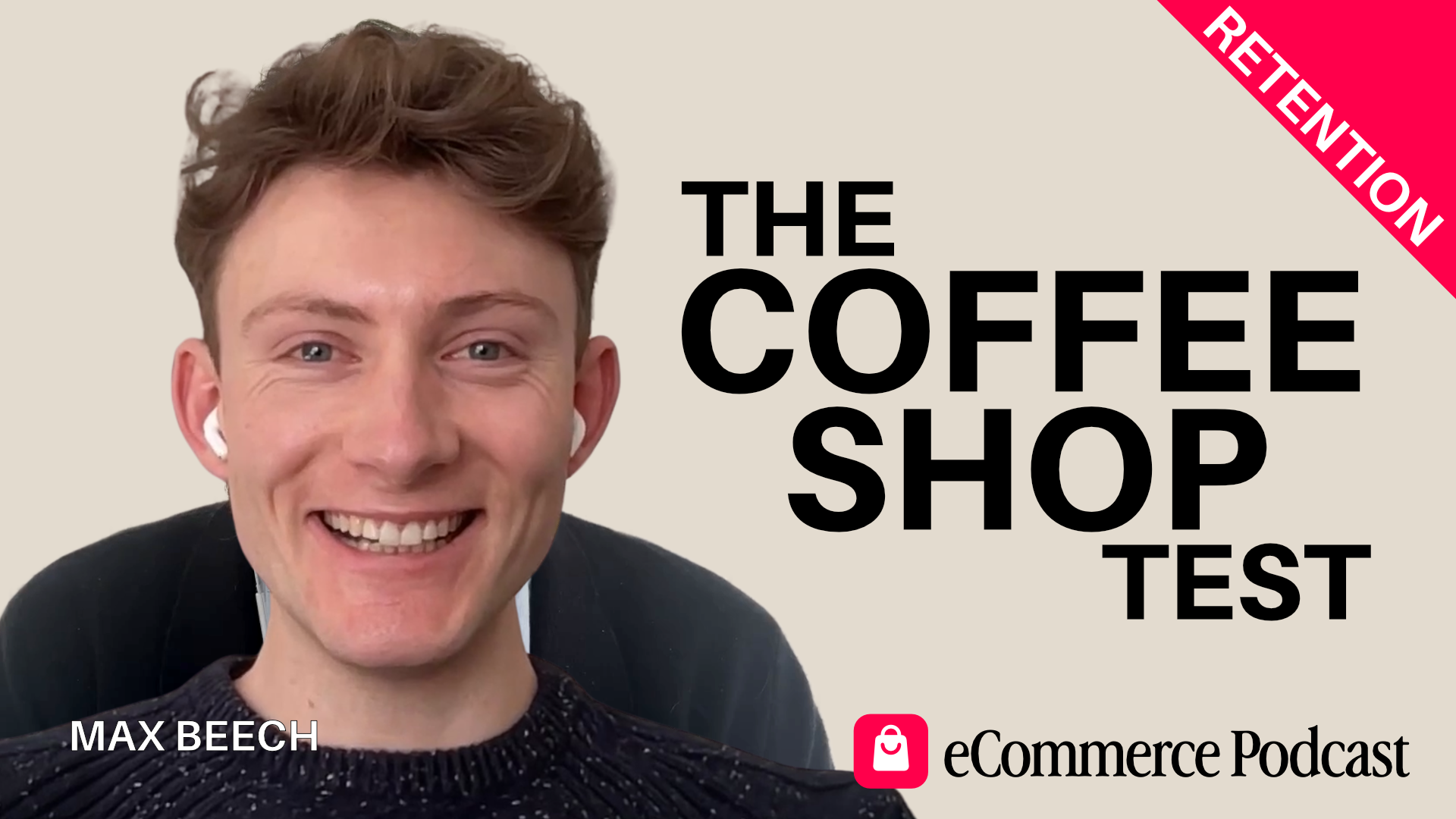
Meet your expert
Max Beech
Max Beech
Athenic
Even more episodes...