The $20K Loan That Turned Into an Ecommerce Death Spiral
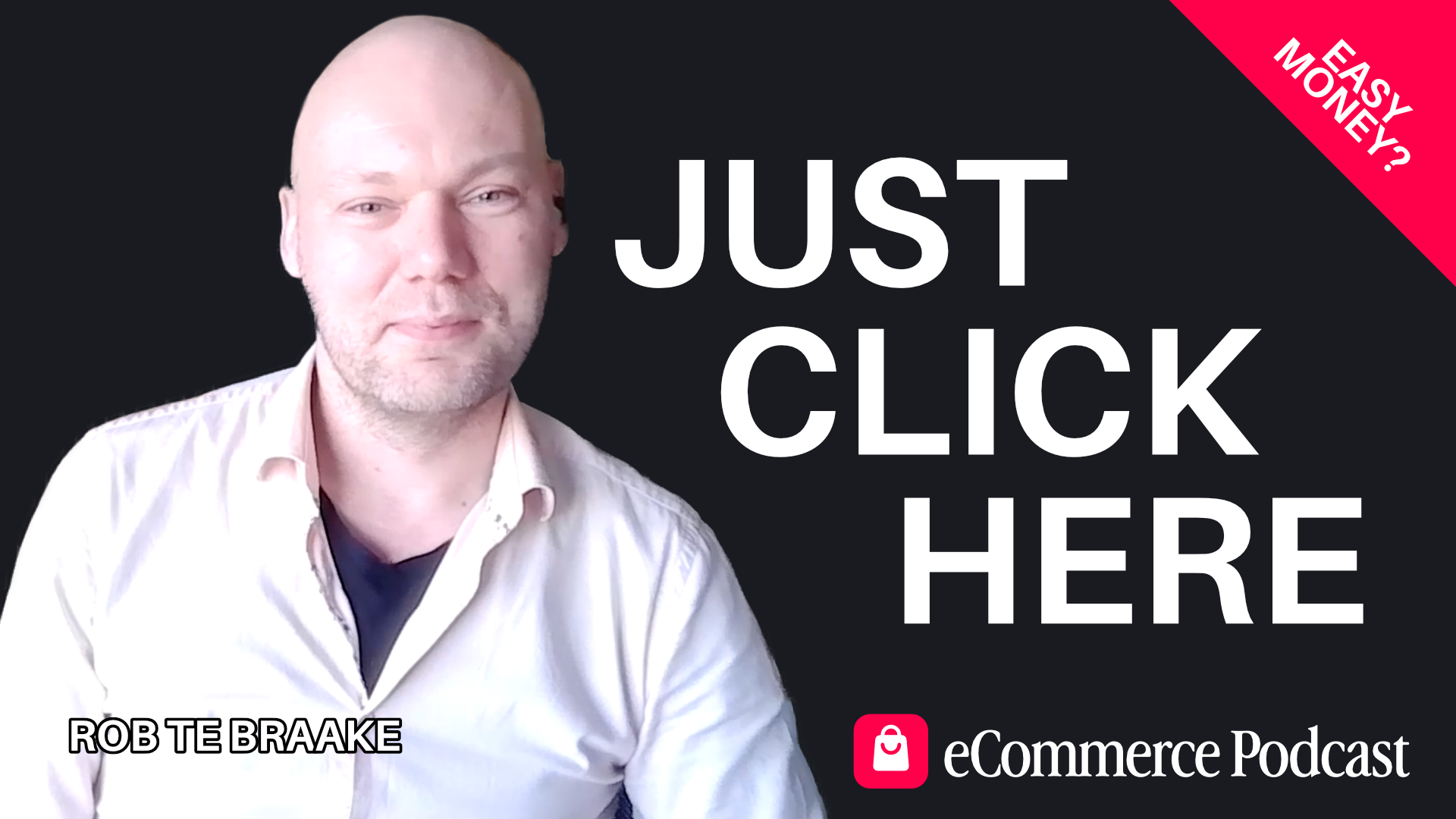
Rob Te Braake is a fractional CFO for seven and eight-figure ecommerce brands — and one of his eight-figure clients might not make it to the end of the year. The reason? A debt cycle that started with one easy, pre-approved platform loan. In this conversation, Rob breaks down the three numbers every ecommerce owner needs to know, explains why he walks away from any business with less than 60% gross margin, and unpacks why Shopify and Stripe loans can quietly eat your business alive. If you've ever been tempted by that "just click here" offer, listen to this first.
Imagine turning over eight-figures but knowing you might not make it to the end of the year. Not because sales are bad. Not because the product isn't selling. But because the debt from platform loans has grown so large that the interest payments are eating the business alive. Rob, a fractional CFO who works with seven and eight-figure ecommerce brands through his company Insight Matters, has seen this pattern enough times to give it a name: the death spiral.
It starts innocently enough. Shopify or Stripe offers a pre-approved loan. $20,000. Just click here. The money lands in your account, and a percentage of future sales quietly starts flowing back to the platform. A year later, you need more. The next offer is $40,000. Then $80,000. Before long, more cash goes to repaying loans than it does to marketing, growth, or paying yourself. Rob has spent years helping ecommerce founders understand the financial side of their businesses, and the pattern he describes should give anyone with an outstanding platform loan pause for thought.
Is Finance an Afterthought?
Most ecommerce entrepreneurs are brilliant at one of two things: marketing or product. Finance, as Rob puts it, "tends to be an afterthought. And for some, that is a very expensive afterthought because they're going to leave a lot of money on the table."
It's not hard to understand why. Marketing is the nice images, the creative campaigns, the direct response you can see in real time. Finance is spreadsheets and ratios and forecasts that might tell you things you don't want to hear.
Think about stepping on the weighing scales. Most of us don't enjoy it. The number rarely tells us what we want it to. But what gets measured gets managed. Finance works the same way. We avoid looking at the numbers because we suspect they'll be uncomfortable. But that discomfort is precisely why we need to look.
"Even I think it's less sexy," Rob admits. "Marketing is more sexy. It's the nice images. It's selling the dream." But then he reframes it: "You run the business to make a living, to build up personal wealth, to build up family wealth. So money should be much more central to the decisions on how you run the business and not just how you push the revenue."
The Three Numbers You Should Know in Your Sleep
Rob boils the financial health of an ecommerce business down to three numbers. If you can't recite these in the middle of the night, he says, you're not on top of it.
1. Gross Margin (Per Product Group)
This is your net revenue minus your cost of goods sold (COGS) — product costs, inbound shipping, warehousing, labelling, packaging. Everything it costs to get the product to your warehouse. If this number is too low, you simply don't have the budget for meaningful ad spend, a good operations team, or growth.
Rob's threshold? "If the gross margin is less than 60%, I'm out."
That's not arbitrary. His target breakdown looks like this: 40% cost of goods sold, 30% overhead and marketing, 30% profit. Not many businesses hit that, he acknowledges, but it's the benchmark worth chasing. And if you're running B2C on paid traffic with a 20% gross margin? "I think you're in a very tough spot," he says, with characteristic Dutch directness.
2. CAC to LTV Ratio
Customer acquisition cost versus lifetime value. The conventional wisdom says 3:1 is good. Rob prefers 4:1. But the real insight is that this ratio depends entirely on your gross margin. A 3:1 ratio means something very different for a business with 70% gross margin versus one scraping by at 30%.
The type of product matters too. Selling microwaves? Your LTV will look very different from someone selling consumables with high repeat purchase rates. Context is everything.
3. Working Capital Cycle
How long does it take from buying a batch of inventory to becoming cash-flow positive on that batch? This is the number that determines whether growth feeds your business or starves it.
Rob shares an example of a seasonal Australian client whose European supplier requires orders six months before the selling season. They pay 50% upfront, the rest when it ships, then wait three months for it to arrive. Only then can they start selling. That's an extraordinarily capital-intensive cycle.
The solution isn't always about better margins. Sometimes it's about renegotiating when you pay. If you can shift supplier terms from 50% upfront to payment on arrival, or even 60 days after arrival, you free up cash without changing your profitability at all. You just changed the timing.
The Death Spiral of Platform Loans
Shopify, Stripe, QuickBooks — they all offer pre-approved loans with seductive simplicity. "If anybody offers you money with such convenience, just click here and you get it," Rob warns, "you know there is a catch."
The catch is interest rates around 20%. On a business running 10% margins, every dollar borrowed actively shrinks your profits.
But that's only part of the problem. The real danger is the repayment structure. These loans typically take a percentage of all future sales. In the UK, that means for every £100 of revenue, you might lose £17 to VAT, then another £17 to loan repayment. That's nearly £34 gone before you've covered a single cost of goods, paid for a single ad, or taken a penny in salary.
"Effectively you're below zero," Rob explains. "And then you haven't paid your own salary."
The psychology makes it worse. Because the business is growing, Shopify offers a bigger loan next year. You need it because you haven't recovered from the first one. So you take it. "They think, I don't have to pay the supplier now. I can just postpone that," Rob says. "And then because business is doing well, Shopify will offer me a better loan. Yes, they're going to offer you a bigger loan, but I wouldn't call it better."
That's the death spiral. Ever-bigger loans. The more you grow, the more you borrow. The less you end up with yourself.
The £38 Million Lesson
Matt shared about his old beauty company, Jersey Beauty. Over 95% of sales came through one supplier. Then one day in January 2012, a letter arrived announcing a new pricing policy: the more you buy, the more you pay.
Overnight, gross margin dropped from over 40% to about 16%.
The business halved in value. Sales declined year on year. The brand started selling direct to consumers, offering gifts with purchase and value that a reseller on 16% margins simply couldn't match. The decline was slow, painful, and relentless.
It's a stark reminder. Whether it's a supplier squeezing your margins or a loan eating your cash flow, the result is the same. Without healthy gross margins, there's nothing left to build with.
Getting Off the Roller Coaster
If you're already in the spiral, Rob doesn't sugarcoat it: getting out is "remarkably difficult once you're on it far enough."
One option is refinancing. In the US, community banks and credit unions may refinance platform loans at more sustainable rates. Rob mentions a client refinancing 20% loans down to 8% with a community bank, over a longer period. That alone can make the difference between survival and collapse.
But ultimately, the exit strategy is painful and simple. "You have to bite the bullet," Rob says. "Cut every cost you can cut. Make sure they're paid off. And then hit the throttle again in a more sustainable way."
That means lowering your own salary. Cutting staff you don't need. Keeping the company cash-flow positive until everything is cleared. Only then, ideally with a buffer rebuilt, can you start investing in growth again.
"That's the non-sexy, that's the hard way," Rob acknowledges. "But you have to clean it out first before you can double down."
The Sales Forecast as Your Financial Foundation
Rob's Saving The Best Till Last was to make a sales forecast.
What revenue are you targeting? What product is that coming from? What does that mean for inventory? For purchasing timing? For cash flow?
And he insists you do it in a spreadsheet, not with AI.
"The thinking behind it is critical," Rob explains. "Thinking about what you plan to sell, in what period of the year and why, and how that cascades down to your purchasing and your cash flow. It is an eye opener."
The forecast will be wrong. That's fine. The value isn't in the accuracy — it's in the thinking. If you're planning a November campaign, when do you need to place the purchase order? May? July? Could you shift that? What if you swapped one product for another?
This thought process is where the real value lives. Not in the numbers themselves, but in understanding how, on the financial side, your business actually works. If you hand that thinking to AI, you get numbers without understanding. You miss the "what if" questions that lead to better decisions.
"The more accurate the forecast is, the more certainty you have about the future, the more confidence you can have to make big decisions," Rob says. "It should reduce anxiety and it allows you to do more because you have less risk."
Your Next Steps
- 1Calculate your gross margin per product group. Not a blended average — break it down. Include product cost, inbound shipping, warehousing, labelling, and packaging. If you're below 60%, it's time to seriously examine your pricing, positioning, or cost structure.
- 2Know your CAC to LTV ratio. And understand it in the context of your gross margin. A 3:1 ratio means nothing if your margins can't support the acquisition cost.
- 3Map your working capital cycle. From the moment you pay for inventory to the moment that batch turns cash-flow positive — how long is that? And can you shorten it by renegotiating supplier terms?
- 4Build a simple sales forecast in Excel. Monthly revenue targets, by product. Then cascade that into purchasing timing, inventory needs, and cash flow. Update it monthly. The thinking matters more than the precision.
- 5Audit any existing platform loans. What's the true cost? What percentage of sales is going to repayment? Could you refinance at a lower rate through a traditional lender? If you're considering taking a new one, run the numbers first — including the impact on your effective gross margin.
The Weighing Scales Problem
There's a reason we avoid our finances the same way we avoid the bathroom scales. The number might not be what we want it to be. It might demand uncomfortable changes. It might mean cutting back on things we enjoy.
But finance is where everything in your business connects. Marketing, purchasing, operations, hiring — it all flows through to the same bank account. Ignore it, and you're making decisions in the dark. Understand it, and suddenly you can take bigger, smarter risks because you know exactly what you can afford.
You don't need a full-time finance director unless you're over £20 million. But you do need someone — whether that's a fractional CFO, a sharp bookkeeper, or even an AI tool that helps you visualise the data (just don't blindly trust it when it tells you to take the loan).
The question worth sitting with is this: do you know your three numbers? Gross margin. CAC to LTV. Working capital cycle. If you can't recite them right now, that's not a failure. It's just the starting point.
Because the businesses that survive aren't always the ones with the best products or the cleverest marketing. They're the ones whose founders understood the money.
Full Episode Transcript
Read the complete, unedited conversation between Matt and Rob te Braake from Insight Matters. This transcript provides the full context and details discussed in the episode.
Full Episode Transcript
Read the complete, unedited conversation between Matt and Rob te Braake from Insight Matters. This transcript provides the full context and details discussed in the episode.
Matt Edmundson (00:04)
Well, hello and welcome to the e commerce podcast. My name is Matt Edmundson and it is great to be with you on this.
Well, let's just say it could be sunny day if the clouds weren't blocking the sunshine, but it's a beautiful day nonetheless. And it's great that you're with us. Forgive my nasal tones. I do have a slight head cold, but you know, we've soldiered on. didn't need to call the paramedics, which is an important thing ⁓ with this sort of bouts of man flu, but you know, it was a close call, but I'm surviving. Thank you for all your letters of encouragement. ⁓
Anyway, welcome to this. It's great to have you with us. If you're new to the show, very warm welcome to you. I appreciate we get new people every week, which is just fantastic. So great to have you with us. We just talk about e-commerce. We love e-commerce. We have great fun talking about e-commerce. And today's guest is no exception to the rule. We have lots of great guests on the show. And Rob, it's fair to say since we did the pre-call, because we always do this sort of pre-call with guests where we just check.
you know, do we get on? Is it going to be all right? You know, that kind of thing. I've been looking to our conversation, looking forward to it. Whether this is what we call the podcast or not, Rob, I just love the fact that I've jotted down in my notes that ⁓ the death spiral of Shopify or Stripe loans is going to be the key topic. Welcome to the show, man. Good to have you. How you doing?
Rob Te Braake (01:28)
yes.
I'm doing good. Thanks for immediately linking me to the death spiral. That's... If that's how people are gonna remember me, that's not a good thing.
Matt Edmundson (01:39)
Yeah.
Hey,
just take it however it comes, right? It's like, if people think Shopify loans, they need to think of Rob first, right? This is the way it is. So Rob, tell us a little bit about yourself and why you're on the show, man.
Rob Te Braake (01:59)
I'll spare the whole backstory, I'm Rob. I'm originally from the Netherlands, but I've moved out 15 years ago, currently living in my sixth country. And I run a company called Inside Matters. We do fractional CFO and accounting. And when I say accounting, I mean management accounting. So we don't care about tax. We care about management information, owner decision-making. And we do that for seven and eight figure online businesses, mainly e-commerce.
Matt Edmundson (02:23)
Fantastic.
Very good. Is your sixth country, sorry, out of all of that I heard, don't care about tax and I've lived in six countries. Is that why you don't care about tax? Is that why you're living six countries? Because you don't care about tax. And the other five after you maybe.
Rob Te Braake (02:31)
Yes.
Well, there is a relation.
I've done everything by the book. I've been creative, but I've done everything by the book. No, the thing is, I run my team completely remote. We are set up officially in Hong Kong with a subsidiary in the US. Our clients, like most of the listeners here, you can work from anywhere. So quite a few of the people in the e-commerce space work from random countries with companies incorporated in random countries.
Matt Edmundson (02:45)
Yeah.
Absolutely.
Yeah.
Yeah.
Rob Te Braake (03:06)
I don't know anything about UK tax. I don't know anything about BVI tax. I don't want to know. I care about the business side and people, there's a of people, people a lot smarter than I am who can help you optimize for the taxes. But that is such a weird and different world. ⁓ I'm very aware of the things that I don't know and that's definitely one of them.
Matt Edmundson (03:19)
Yeah.
Yes, I think it's a good statement to stay right off the bat actually. It's good to be aware of what you don't know. Right. And stay in your lane. It's critical. Yeah, absolutely. So what country are you in at the moment?
Rob Te Braake (03:36)
It's critical.
⁓ So if you are fed up with the clouds there, move over. Same time zone, better weather.
Matt Edmundson (03:47)
May I have,
I have thought of, I, I, I'm not going to lie. I have looked at, ⁓ longterm let's in Portugal recently, cause you're just like this time of the year, at the time of recording, it's, it's mid-Feb. And I think this podcast will come out at some point in early March, but you just, at this time of the year, I'm always like, I need to escape. I need to get out. So you, you may well have me as a neighbor next year.
Rob Te Braake (04:11)
would be nice.
Matt Edmundson (04:13)
say that now. Let's see if you say the same in about 45 minutes. So let's jump straight into it Rob. Like the question I like to ask all of my guests, right, one of the questions I've started to ask I suppose, is you obviously work with the seven, eight figure brands, econ brands, you help them with their accounting and understanding the business side of things. Now if you could wave a magic wand
Rob Te Braake (04:15)
you
Matt Edmundson (04:41)
and solve the biggest single problem that your customers face or have, what would be the problem that you would solve?
Rob Te Braake (04:50)
There is a couple of them. One of them is just awareness of the finances. That's not a problem to solve. That's an attitude to solve. Access to working capital is a key one. In e-commerce, we are struggling always with weird supplier payment terms, a lack of access to capital because we're still a bit of a weird industry in the traditional eyes. So we are always bound to our clients always have to resort to less than ideal financing options.
Matt Edmundson (04:58)
Yeah.
Rob Te Braake (05:20)
And I'd love to break down the duopoly of Shopify and Amazon, but that is a whole different conversation.
Matt Edmundson (05:30)
I'm with you. I'm with you. I would love to see that broken massively. get that they're helpful and people play the systems well. I think, yeah, there's a few duopolis that I would like to break down and that would definitely be one of them. So awareness of finance. You say that's an attitude issue. What do you mean?
Rob Te Braake (05:53)
Yeah.
So typically most e-commerce entrepreneurs that we work with, they are either really good at marketing or they are really in love with their product or both. Finance typically tends to be an afterthought. It's at the end of the year, look at their revenue. Revenue is typically the one they know because that's the vanity metric that everybody cares about. But being an understanding of what is the actual gross margin, what's the actual working capital situation and how to optimize for that.
Matt Edmundson (06:12)
Yeah.
Rob Te Braake (06:20)
That tends to be an afterthought. And for some, that is a very expensive afterthought because they're going to leave a lot of money on the table. It's perceived as less sexy. And I think that's not justified. But it's perceived as less sexy than improving your ad campaign or improving your email marketing.
Matt Edmundson (06:40)
Why do you think that is? Why do you think it's less sexy or perceived as less sexy?
Rob Te Braake (06:45)
Oh, even I think it's less sexy. Marketing is more sexy. It's the nice images. It's selling the dream. It's tinkering with everything and you see direct response. The financial perspective is a bit more, okay, let's take a step back. Let's analyze bit more rational. And there's factors in play that tend to be a little bit, might be a little bit more complicated. There's more moving parts. And especially if you're a marketeer, that number side is less intuitive for most people. So I don't blame them for thinking it's less sexy.
But in the end, you run the business to make a living, to build up personal wealth, to build up family wealth, to pay the rent or to live in Thailand, wherever. But money is part of the motivation to have the business. So it should be much more central to the decision on how do you run the business and not just how do I push the revenue.
Matt Edmundson (07:15)
Yeah.
Yeah.
Yeah. Yeah. I'm kind of thinking as you're talking, actually, there's a, there's another metric, which pretty much everybody tracks, but it's not very sexy. And I wonder when you, when you know it, how many of you are disappointed by it? And that would be your weight, right? So you, you take your weight. If I, when I stand on the scales, I'm like, most of the time I'm like, still got a ways to go. Right. It's just, it doesn't.
It doesn't thrill me, but I also appreciate that what gets measured gets managed. so I wonder if we perceive finance to be a bit like that. It's not really telling me what I want it to tell me just yet. So I don't actually want to know.
Rob Te Braake (08:20)
I think that's true and I think it's like the way you have control over it, but not completely. You have to probably do a few painful things or not so nice things to improve it. ⁓ So there is some validity in that argument.
Matt Edmundson (08:26)
Mm.
So what would you say, ⁓ like if you think about your clients or you think about anybody running an e-commerce site, what are the key, I don't know, three, four, five finance metrics that we all need to know just like that, that we just need to have our finger on the pulse with?
Rob Te Braake (08:54)
Gross margin, per product group or per SKU, depending a bit on your business, gross margin is absolutely critical. If your gross margin is too low, you're gonna have a really, really hard time scaling the business profitably. Your custom requisition costing your lifetime value and the relation between those two. If you can't recite those in the middle of the night, you're not on top of it. And your working capital, your working capital cycle. How does, you buy inventory,
How long does it take before that batch of inventory starts making you cash? Before you've like cashflow positive on that batch of inventory. ⁓ Because cashflow is the number one killer in e-commerce. If a business goes bad or if it goes too well, cashflow becomes a problem. It's not your P &L, but it's the cashflow that kills you.
Matt Edmundson (09:37)
Mm-hmm.
Yeah,
or the lack of it is always the thing that kills me. So gross margin for those that don't know, Robin, I don't want to overs. I don't want to. It's not a school lesson, obviously, but I appreciate there are people who may be just starting out who are going is what's gross. I always remember listening to an interview with Richard Branson. You know, he's made a few, a few bucks, hasn't he? He's not shy of a few quid, as they say. But I remember listening to an interview where he was like.
Rob Te Braake (09:47)
Yes.
Matt Edmundson (10:12)
I never really understood the difference between gross margin and net margin. You're like, holy cow. So for those that are listening that maybe struggle with gross margin, net margin, what do you mean by it? Just walk me through the basics.
Rob Te Braake (10:26)
So let's start with net revenue. That's your revenue, your gross revenue minus all your refunds and discounts. That's net revenue. And then minus your cost of goods sold. So that's your product costs, your inbound shipping, your warehousing, your labeling, your packaging, all these things. That is your gross margin. So that does not include ad spend or customer acquisition costs. It's really the cost of getting the product
Matt Edmundson (10:35)
Mm-hmm.
Rob Te Braake (10:55)
to your warehouse. That is cost of goods sold. And if your gross margin, so your revenue minus your cost of goods sold, is too low, you don't have the budget for significant ad spend. You don't have the budget for a good operations team. So pushing that gross margin higher is usually priority number one.
Matt Edmundson (11:17)
Very good. And do you have like, like if you were going to look at an econ business, say you were going to buy an econ business for whatever reason. And ⁓ one came up and you looked at a gross margin. Do you have in your head a minimum number that should be really based on what you know for that business to be able to be not only viable, but also to have some chance of scaling in future.
Rob Te Braake (11:41)
It depends a bit. So there's a lot of nuance there depending on the type of product, the market, the competitive landscape, the brand value, et cetera. Not knowing anything else about the business. If the gross margin is less than 60%, I'm out.
So ideally you have it higher. And there are situations, if it's a very high volume and very high repeat purchase rates, a lower gross margin might be acceptable. But in a vacuum, it has to be at least 60%, at least. Because you have to count on your advertising and your marketing and sales costs. You have to work with the overhead. You as the owner have to get a salary. You have other expenses as well. ⁓
Typically what we would see is 40 % cost of goods sold, 30 % overhead and marketing and sales, and 30 % profit. That's the target. Now, there's not many that make that, because especially marketing and sales tends to be way higher than that. But that's the holy grail, basically.
Matt Edmundson (12:33)
Mm-hmm.
Yeah, it's the one everyone's chasing, isn't it? They always used to, when I, back in the old days, Rob, sort of pre-e-commerce really, when I was sort of first starting out in business, they always talked about the rule of thirds, where you did costs, where it was basically a third, as a sort of third in effect cost of goods sold, a third overhead, a third profit, you know, and that was in effect what you...
Rob Te Braake (12:56)
Yes.
Yeah, approximately
Matt Edmundson (13:23)
or you're saying
Rob Te Braake (13:23)
the same.
Matt Edmundson (13:24)
the same thing. It's interesting. I think the companies that make a third profit, I don't come across many of them. I tend to see people doing maybe 10 to 20 % net profit and they are investing heavily, I think the net profits into more ad spend to try and grow new customer acquisition. And so they're...
there's sort of the cost of acquisition. There's that, what's that ratio? There's a ratio, isn't there? Where you track. Yeah, that's the one CAC2LTV where we were always told three to one was good. And if it was more than three to one, you probably need to spend more on ads.
Rob Te Braake (13:59)
Cocktailed again.
That depends on your gross margin. I find that...
Matt Edmundson (14:14)
Mm.
Rob Te Braake (14:19)
Yes, that is oversimplified because there's a lot more new ones that are depending on your products. If you're selling microwaves, your LTV is going to be very different than if you sell consumables. So it has to have a bit more context than that. again, in the vacuum, that kind of makes sense. I would prefer four to one. Well, fair.
Matt Edmundson (14:23)
Yeah.
Yeah.
Yeah. Are you I'm kind of curious to you. I suppose a good question here is when I think about the guys that do our accounts, Steve and the team. Great. Michelle, who's our Ops Director, she does a wonderful job. Quite risk averse compared to me. You know, I'm like, let's just go do it. We might lose everything, but let's go have a bit of fun.
Rob Te Braake (15:07)
Yes.
Matt Edmundson (15:10)
And this is where I also wonder, coming back to your first point, whether we don't think they're sexy, because do we find numbers a little bit ⁓ inhibiting in some way?
Rob Te Braake (15:23)
That's the perception and it should be the other way around. you know, so one of my personal pet peeves is the importance of accurate forecasting. If you make a sales forecast for the rest of this year, maybe this month is pretty accurate, but the closer you get to the end of the year, the more wrong you're going to be. And that's fine. That's normal. But building the muscle of making a forecast, reviewing your progress against the forecast,
Matt Edmundson (15:25)
Mm.
Okay.
Rob Te Braake (15:50)
and then understanding where you were wrong and then iterating and next month being a little bit more accurate, the more accurate the forecast is, the more certainty you have about the future, the more confidence you can have to make big decisions. If you want to launch a new product or you want to add a new channel or a new country, that's going to take an investment. Can you afford that? Well, that kind of depends on how much buffer you have. But realistically speaking, you probably don't have a lot of buffer because you're reinvesting everything.
Matt Edmundson (15:57)
Mm.
Yeah.
Yeah.
you
Rob Te Braake (16:20)
So the more confidence you can have in your forecast, the more risk you can take with new investments, with new growth initiatives, because you are much more comfortable with this is what the main business or this is what the existing business is going to deliver. So it should reduce that anxiety and it allows you to do more because you have less risk.
Matt Edmundson (16:27)
Yeah.
Yeah, yeah, no, I agree. I agree. I'm just sorry. I'm just playing devil's advocate slightly. I'm kind of, let me just rewind if I can. Cost of goods sold. So we're looking at around 40 % there. In other words, we're looking for a gross margin of around 60%. Two questions. One, are you including shipping in cost of goods sold? And two, well, let me ask that question first before I come into my second one.
Rob Te Braake (16:47)
Hmm.
Yeah.
So inbound shipping. So from your manufacturer to your warehouse, that should be included in cost of goods sold. Shipping from the warehouse to the final customer. Technically, if you're a purist accountant, that should be in operating expenses.
Matt Edmundson (17:24)
Okay, very good.
Rob Te Braake (17:26)
I don't
mind putting in a cost of goods sold. I personally would prefer to put it there because it feels more closely connected to cost of goods sold, but strictly accounting speaking, it's operating expenses.
Matt Edmundson (17:28)
Mm-hmm.
Yeah.
Yeah. Okay. My second question, given that you've given this magic number of 60 % in an ideal world, and I appreciate it is in an ideal world. There will be people listening to the show and I know who they are. I've had conversations with some of them who are on gross margins of 20%, some are on 30%, some are on 40%. They're going to be crying right now.
And ⁓ especially if they're watching YouTube, giving your reaction, I'm kind of like, do you, how do you deal with companies that have such low gross margin?
Rob Te Braake (18:15)
So this is where context is so important. We have a client in that kind of space, but they're almost more like a wholesaler rather than a retailer. it's business to business. They have larger clients, ⁓ bigger order volumes. They can afford to have the lower gross margin because they have less inventory risk. They have less inventory to hold because it's longer term clients that have a pretty accurate sales forecast of what they will purchase in the next year.
Matt Edmundson (18:24)
Yeah.
Rob Te Braake (18:44)
So their risk profile is very different. They're not gonna have Facebook ads that all of a sudden stop working and then you're stuck with a boatload of inventory. So it really depends on the context on what is acceptable or not. If you're B2C and you're depending on paid traffic and you're running a 20 % gross margin, I think you're in a very tough spot.
Matt Edmundson (18:47)
Yeah.
Yeah.
Rob Te Braake (19:09)
the question then really becomes like, how can you maneuver out of that spot? Can you change the product? Can you change the positioning? Can you change the cost structure of the product? Because this is not a sustainable, scalable model.
Matt Edmundson (19:21)
Yeah, that's a good home truth. I like that Rob. I remember, if I can interject a story here. We had our website called Jersey Beauty Company. And I don't have it anymore. We sold it during COVID. And years ago, over 10 years ago now, we were doing really well with that business. It was doing millions every year and it was scaling, it was growing and we were loving it. Now, one problem that we had,
which I didn't realize until it was too late was
we, I would say over 95 % of our sales were through one supplier. Okay, so we bought products off one supplier, which accounted for 95 % of our sales. The other 5 % came from the other suppliers that we had on the site and try as we could to grow those other suppliers, it just wasn't working. We were, you know, we were with this sort of one supplier and there were that one supplier.
Dermalogica, if you know the skincare trade, they were supplying other websites as well. So we were all competing and we're all doing quite well. Until one day, we got a letter from them. It was January 2012. I always remember this. We got a letter from them saying, basically guys, we're changing our pricing policy. The more you buy, the more you pay. And so, yeah, yeah. was, yeah, yeah.
Rob Te Braake (20:47)
Interesting one. I haven't
seen that one before.
Matt Edmundson (20:49)
I looking back, I have all kinds of ideas as to why Dermalogica did this. ⁓ Looking back.
Part of me thinks it was quite an immoral thing. Part of me thinks actually this was quite a shrewd move. Because what it meant was I paid overnight 30 % more for the products I was buying. Because we were one of the biggest worldwide suppliers. So what that did, going back to gross margin, my gross margin shrunk from 40 some percent all the way down to about 16%. And
let me tell you that business halved in value at that point. Sales dropped off a cliff and what I couldn't do because Dermalogica started selling direct to consumers themselves because at this point they weren't really, it wasn't their business model. They were able to offer value to customers that I wasn't like gifts with purchase and so on and so forth and it became problematic.
So I fully appreciate what it's like trying to run a business on search type margins. And in essence, the Dermalogica sales of that business declined year on year after that. And it's really hard to manage a business, I think with any kind of energy, there is a perpetual decline in business. So that business declined in sales with Dermalogica feet.
several years and we tried everything that we could do to rethink it and to redo it. It was just really really hard and soul destroying in many ways. So I feel for you if you're out there and you're working on sort 15, 20, 25 percent gross margins because that's not easy.
Rob Te Braake (22:41)
think that's a very polite way of putting it.
Matt Edmundson (22:43)
It really is. It really is. ⁓ But yeah, it's a fascinating one. ⁓ Let's go to working capital, because this is an interesting phrase that people might not understand straight away. So you talked about the cycle between buying stock, that stock going onto your shelves, and then selling that stock. Is that what you mean by working capital cycle? Let's just dig into that a little bit.
Rob Te Braake (22:57)
Yes.
Yes.
Yes, essentially yes, because basically if you're running a business, you have money tied up in inventory. You have bills that you have to pay to your supplier. And if you're doing wholesale or B2B, you might have receivables of money that you get from your customers. The balance of those three, that's your working capital. So how much cash do you have tied up in actually running the business? And you need to understand and manage that to actually scale because changing the payment terms,
On the customer side, it's typically not an option, but changing the payment terms on your supplier side may make a really, really big impact. Case in point, we have a client in ⁓ Australia for a seasonal business. Their supplier is in Europe, so they have to order inventory six months before they plan to sell it. It's, from a working capital perspective, disaster as a business. They managed to run it really well, but the working capital is horrible because you have to...
Matt Edmundson (24:06)
Yeah.
Rob Te Braake (24:12)
Define now what you plan to sell six, nine, 12 months from now, pay part of it now, and then three months from now when the stuff gets on the boat, you pay the rest and then you wait and you wait and you wait for three months before the stuff hits your warehouse. And then you can start selling it. So that's insanely capital intensive. If you're having ways to, for example, with your suppliers, you change the payment terms, not pay 30%, sorry, 50%.
Matt Edmundson (24:32)
Yeah.
Rob Te Braake (24:42)
before shipment, but when it arrives or 60 days after it arrives, it frees up a lot of cash. It doesn't change your margin, but it frees up a lot of cash. So if you want to, if you're growing fast, you can afford to buy more inventory because you have more cash in the bank accounts that you can use to spend on ads or buy inventory. So even if it doesn't change your profitability, it does change how fast or how healthy your business can grow.
Matt Edmundson (25:09)
⁓ Yeah, it's an interesting one. Again, I'm reminded of a chap called Albert Gube. AG was a bit of a mentor to me years ago. And he's passed away now. And he was a really interesting guy because he was his whole business model was the quick safe supermarket in the UK in the 60s and 70s. And his whole idea was
I'll buy a pallet of baked beans. I'll put the pallet out in the shop. I won't unpack them. I'll leave them on the pallet because then that saves me paying somebody to unpack them. And when I buy them, ⁓ I'll get it on a 90 day invoice rather than a 30 day invoice. And then I'll take actually maybe 92 days to pay them. And he just offset everything constantly, which just freed up so much money for him to expand quite rapidly. It was quite an interesting strategy. I don't know if I would have the
⁓ the courage maybe the full hardiness, I don't know, ⁓ to, pull that off.
Rob Te Braake (26:11)
So
probably, if I understand what he did correctly, if that pallet goes in the supermarket, it doesn't take him 90 days to sell out that pallet. So he has what we call negative working capital. He has money from the customer before he pays the supplier. That is every finance person's wet dream, because that means you can scale unlimited. The faster you grow, the more money you have in a bank account. Well, typically with e-commerce, the faster you grow,
and the more cash it takes because you have to pre-finance all the inventory. So the more you can get that amount to zero or even negative, the better it is.
Matt Edmundson (26:51)
Yeah, that's exactly what he did. ⁓ That's exactly. Here's the interesting thing. I want to contrast this slightly. So when it came to the beauty company, for example, Andy, who was my business partner ⁓ and I, we very much were a part of the cam, which said when we order the stock, pay for it. Cause then everything on the shelves I owe is mine.
just because we'd heard the horror stories of people struggling later on down the lives to pay, not to pay, because they've not sold the stock quick enough, if that makes sense. So Jersey was a bootstrap company. didn't owe anybody anything. And so when we sold it, it had no liabilities other than obviously we had to pay the VAT. But that was about it. And so,
That though creates this longer working capital cycle that you talked about.
And I don't think it's because we're wrong. I'm curious to know what you think about how that strategy in itself and how we can do that well.
Rob Te Braake (28:05)
So it's not about wrong or right because neither is wrong and neither is right. It's about priorities. It's about what's fit for you, for your risk profile, for your confidence and what actually fits the business and what is actually practically possible with suppliers and the situation. The approach you take is very, very conservative. You have no external risks. You don't owe anybody anything, but that means that you're paying for it. If you're
keeping the payable to your supplier open for longer, that means you owe them money. And that gives some people don't mind, some people lose sleep over that. So that's where the personal preference comes in. It's more capital efficient, but it comes with a higher risk because you're basically trading on money that you borrow from your supplier. You're not paying interest over it, so it's free money, but it is still money that you owe to somebody else.
If you neither is wrong or right, it's about risk profile. What are you comfortable with? Do you sleep better at night if you know that everything on the shelf is yours and you don't owe anybody from it? Or do you sleep better at night knowing that you don't have as much money tied up in the business and that is somebody else's money?
Matt Edmundson (29:10)
Yeah.
Yeah, it's an interesting one, isn't it? I there's no right or wrong. think it's an interesting. It's just, guess I'm unique in that sense. Unique is probably the wrong word. There are people out there like me, but I like the idea of buying the stock straight away. And I tell you what happens because people say to me, well, why don't you just buy on credit? say you're going to buy 10 grand worth of stock, but the 10 grand in the bank.
get the interest and at least then when the stocks due payment you interest. I've always found that actually if I'm going to give them 10k straight away, I can call them up and say, can we do a deal whereby I don't pay you the 10 grand I'll pay you nine and a half, but I'll pay cash upfront.
I always have much bigger negotiations, more, what's the word I'm looking for? Much more weighty, much more power. Yes. In the negotiations, if I'm willing to pay cash upfront.
Rob Te Braake (30:23)
bargaining power. Yes.
Yes, but again, every business has a constraint. So for some it's cash, for some it's other things, it's profitability. So there's a, what you've done is you've traded timing of cashflow for more profit. So you can, I pay you upfront, but I'm going to get a lower price. For other businesses, it might be better to say, you know what, I'll pay a little bit higher price, but I only want to pay 20 % now and 80 % in net 90.
Matt Edmundson (30:34)
Mm.
Yeah.
Rob Te Braake (30:59)
If you're having a gross margin problem, increasing your profitability is probably the most important thing. But if your profitability is good and your growth is good, but you don't have access to capital, then getting cash or a loan essentially from your supplier might be the more valuable thing. So that's why there is no wrong or right. It's about what is appropriate for that business, for that risk profile.
Matt Edmundson (31:25)
Yeah, that's true. So true. Let's talk a little bit then. I mean, I mentioned this at the start of the show. And this leads me nicely, Rob, into the, what did we call it? The death spiral of short-term things. So I've seen this recently whereby you have a company starting to trade. It's not making enough to cover salaries necessarily.
Rob Te Braake (31:38)
The death spiral, yes.
Matt Edmundson (31:54)
And, but it's starting to make some money. Shopify comes along and says, Hey, would you like a Shopify loan? It's all pre-approved. Here's whatever $20,000. Just click here. And in the small print somewhere, these will be the fees. And what we're going to do is we're going to take a percentage of your sales going forward to pay back that loan. And you kind of go, ⁓ that'd be nice to have the 20,000 pounds. I could give myself a little bit of extra cash.
So you take the 20 grand next year, you find you're in the same boat. Only this time Shopify are offering you 40,000. And you need to borrow the 40,000 because you still really, you've not really recovered from borrowing the 20,000 and everything sort of compounded a bit that year. And this is why we called it, I think when we talked to the death spiral, because the year after that, all of a sudden I have to borrow 80,000. And it seems like we, we, we jump into this perpetual borrowing more and more money. You could argue.
⁓ that money is unsecured from Shopify and it is secured on the business. So if it all goes peat-tongue, you don't lose your house. But I'm curious what your experience with Shopify loans is Rob, because I've never really talked about them on the show. I've just seen the effect of them and I'm excited to talk to you about them.
Rob Te Braake (33:12)
I'm not so sure Shopify is going to be excited to talk about it because just to clarify, we're calling it Shopify here, but it's also Stripe, it's also QuickBooks, it's also... Basically, if anybody offers you money with such convenience, just click here and you get it. And by the way, there are some fixed terms. If it's so easy, you know there is a catch. And the interest rates, the cost of the capital, it is absolutely bat shit crazy high.
Matt Edmundson (33:16)
They're not concerned about you.
Rob Te Braake (33:41)
Are there situations where that is the best or the right thing to do? Sure. But they are exceptions. You're essentially paying typically 20 % or so of interest on that money. Now, we just spoke about borrowing money from your suppliers at 0%. Or if you're borrowing it from your, if you privately lend it to the company so the company can use it, you're probably paying yourself maybe 8 or 10%.
Matt Edmundson (33:48)
Yeah.
Rob Te Braake (34:10)
These guys, you're gonna pay 20%. On a business that's running at 10 % margins, every dollar you use from them shrinks your profits. We buy two.
So like you said, you borrow one next year, your sales grow a bit, you take another bigger loan and you take out a bigger loan. And before you know it, more cash goes to repaying the loans than it goes to spending on marketing or spending on growth or paying your own salary. It is, we have a client and now I have to be a little bit careful how I describe it so that nobody can actually deduce it. They are now in eight figures in revenue.
And I would not be surprised if they're not going to make it till the end of the year because they have so much external debt. The business, the gross margin is doing pretty okay, but their interest cost, their cost of financing is so high that I don't think they're going to survive.
Matt Edmundson (35:10)
really interesting isn't it really powerful like i i mean again not to ⁓ i again want to be careful with what i say but ⁓
We've seen businesses go into administration because really the cost of that loan is crippling the business. Especially because it's not just the cost of the interest. It's the fact that there is a I am taking 17 % of all your future sales. And so in the UK, it was kind of like, well, for every hundred pounds, I have to pay 16, 17 pounds in VAT to the, you know, the taxman.
Plus you're now taking 16, 17 pounds. So all of a sudden I'm down almost 40 quid. And that's before I've even got out of bed. And so from, so now you talk about great, if I had a 60 % growth margin, now it's down to 20 % and I've not done anything. You know, it's, it's proper crazy.
Rob Te Braake (36:02)
Yep.
and probably
your marketing spend is more than 20 % of your revenue as well. So then effectively you're below zero and then you haven't paid your own salary.
Matt Edmundson (36:20)
without it.
Yeah, and you're or you're not paying the creditors. You're not paying your suppliers and there's everything is just getting put back on back.
Rob Te Braake (36:28)
Yeah. You
don't have to pay your suppliers because you can just take a new loan next year when you need to buy a new batch of inventory. So that's the psychology that I've seen happen. So they think, I don't have to pay the supplier now. I can just postpone that. I don't have to put money aside for that. And then because business is doing well, Shopify will offer me a better loan. Yes, they're going to offer you a bigger loan, but I wouldn't call it better.
Matt Edmundson (36:37)
Yeah
Yeah, yeah.
Rob Te Braake (36:58)
And that's why I call it the death spiral because you get stuck into taking out ever bigger loans. The more the company grows, the more you have to borrow. And the less you're going to end up with yourself.
Matt Edmundson (37:05)
Yeah. ⁓
Yeah, absolutely. It is crazy. So how do we, suppose if now we've identified this and we've labeled it, how do we mitigate for it? How do we prevent ourselves going down that road or if we're on that roller coaster, how do we get off it?
Rob Te Braake (37:32)
getting off it is actually remarkably difficult once you're on it far enough. know, especially in the US, there are a couple of local credit unions that actually help to refinance those things at more sustainable rates. One of our clients is now refinancing a batch of those loans that were going at 20 % at a community bank for, I think he's going to refinance it for eight in a longer period. So that makes it a lot more manageable. ⁓ In the end.
Matt Edmundson (37:55)
Right.
Rob Te Braake (38:01)
What you're going to have to get out of it, you have to bite the bullet, cut everything, every cost that you can cut, make sure they paid off and then hit the throttle again in a more sustainable way. So that means lowering your own salary, cutting staff you don't need. Make sure that the company stays cashflow positive until everything's paid off and only if it's paid off. ideally you build up a little bit of a buffer again.
Matt Edmundson (38:12)
Yeah. ⁓
Rob Te Braake (38:28)
then you can start putting the foot on the gas again. But that's the non-sexy, that's the hard way, but you have to clean it out first before you can double down.
Matt Edmundson (38:31)
⁓ Yeah.
Yeah, it is.
That's bit that, ⁓ that they don't talk about when you take out the loans. It's like, you know, at some point that the debt comes calling and there will be stories of people that like, ⁓ this loan saved my life. You know, we took out the loan and enabled us to buy some stock. sold all that stock out. It kickstarted our business and now we're doing this, that and the other. I would say that's the exception and not the norm personally.
Rob Te Braake (38:46)
No. No.
Matt Edmundson (39:07)
But there is this horrible, uncomfortable space where you have to start to think, how do I pay this back and what's the strategy for that? And it's, I don't know, maybe you've got some experience here, Rob, that can help us, but it doesn't feel like it's gonna take just a couple of weeks to do that.
Rob Te Braake (39:27)
Depends on the scale. Depends on the scale. If you're a million dollar business and it's a $10,000 loan, that's a couple of weeks. Or maybe that's one month of not paying your own salary, get rid of the loan, get it over with. If you're talking about a million dollar business with 500K in loans, please don't let those exist. You're gonna talk about a lot longer periods. So the earlier you tackle this problem, the easier it is to do. But this all starts with the awareness of
Matt Edmundson (39:29)
Mm. ⁓
Mm. Yeah.
Yeah.
Rob Te Braake (39:58)
What does my profitability look like? How am I financing this? Am I borrowing money from the supplier? Am I funding everything myself? Because if you think I want to increase my profit with 2 % by paying my supplier upfront and making sure I can bargain hard there, but I'm paying for that with a Shopify loan, you're shooting yourself in the foot. So if you have the cash, you can do that. If you have to borrow the cash, I would rather have a slightly higher price for my supplier.
Matt Edmundson (40:18)
Yeah.
Rob Te Braake (40:28)
but not have to borrow money elsewhere to pay for it.
Matt Edmundson (40:31)
Yeah, no, absolutely. So how do we stop ourselves maybe getting into the needs to sort of fall into this spiral?
Rob Te Braake (40:35)
So.
very clear understanding of gross margin. What's your revenue, what's your gross margin, and how is like for every batch of inventory that you buy, what's the cash profile there? When do you spend how much? When do you pay the shipping? When do you pay the VAT? When do you pay customs? When do you start receiving money? How does that profile look like and can you change that?
The second thing is make sure you have enough gross margin because a higher gross margin solves for a lot of problems. If your gross margin is high enough, you can afford a little bit higher cost of capital or you can afford to spend more on marketing to push up the sales faster. If you don't know your margins and you don't know your own capital, then you're blind on this part and you might push yourself in the corner that all of a sudden you have an empty bank account and you have to use that kind of loans.
Matt Edmundson (41:10)
Yeah.
Mm-hmm.
Yeah.
Rob Te Braake (41:33)
So it's really staying on top of it, having everything transparent. That's the best recipe.
Matt Edmundson (41:39)
Yeah, I mean, what you're saying in essence, Rob, is you have to plan. And we're notoriously bad at planning, aren't we? And I think especially if you're entrepreneurial, planning is not something you'd like to do or think about because you this blind optimism guides everything, which is both good and bad, I think, in many ways. ⁓ But we have to sit down and we have to take it seriously and we have to plan and start to think about how are we going to achieve what we're going to achieve.
Rob Te Braake (41:44)
Yes.
Yep.
Yes.
Matt Edmundson (42:08)
And this is why, again, when we're going back to old school weights here, Rob, they said to us right at the start, it came to business, you needed, I think it was three or four key people, one of which was a finance guy, finance director.
Obviously when you're a young company, unless you're a finance guy, you're not going to go out and get a finance director. And this is why the fractional CMO type things work. think quite well, don't they? Why you guys do quite well is because it's like, you don't need to now. We'll do that for you. We'll be specialist here, but finance is a really key pillar as his operations, ⁓ as his sales and marketing, right? So, ⁓ I think you have to see finance in your business as important as marketing.
Rob Te Braake (42:37)
this.
No.
Yes.
Yes. From my perspective, and I'll admit I'm biased here, finance is the one part of the business where everything comes together. Where you're purchasing and you're marketing and you're sales and you're HR, everything comes together in the finance part. Because in the end, you have an X amount of dollars in the bank account and you can spend that on marketing. You can pay your supplier, you can hire a new person. But finance is where it all comes together. It's like the centerpiece that everything connects to.
Matt Edmundson (43:24)
Yeah.
Rob Te Braake (43:24)
So
you have to be on top of that. And it's not rocket science. mean, you don't need a finance director unless you're over 20 million. ⁓ You really don't need a full-time finance director. But make sure you have somebody surrounding you on your side that knows what they're talking about. Could be a fractional CFO like us. Maybe you like it yourself. To some extent, chat GPT is actually, or any AI tool can do part of that. Just make sure you're aware when it's hallucinating.
Matt Edmundson (43:55)
especially when it says, yes, take the loan.
Rob Te Braake (43:57)
Exactly,
So don't blindly trust it, but it can do 70-80 % of it.
Matt Edmundson (44:05)
really interesting point, isn't it, about AI and where, especially now where you've got things like Claude Cowork, which is just fascinating me right now. And the ability for it to analyze finance information. It's like, I need to understand this data. Give me a dashboard with these numbers. I think is a great place to start if you're just starting out in Ecom and you don't want to do finance. Just plug everything into, I use Claude, I don't use chat GPT, but I think that kind of thing makes sense to me. But like you say,
Rob Te Braake (44:25)
Yeah. Yes.
Matt Edmundson (44:35)
You have to have the ability to check what is making up.
Rob Te Braake (44:38)
Yes.
AI is really good with the data, the interpretation of the data. What does that mean? And how does it compare to your plans and your vision and your market positioning? That is where the human side still is very, very critical. ⁓ The visualization of the data, extracting all the data and making that accessible and visible. AI can do that pretty damn well. But how does that relate to, am I comfortable to launch a new product?
Matt Edmundson (44:53)
Mm.
Yeah.
Rob Te Braake (45:08)
How much
is that going to cost me and can I? That's where it's still human judgment.
Matt Edmundson (45:12)
Yeah, still need that nuance, don't you? But it's I mean, all the things you talked about earlier, gross margin, CAC12 TV and working capital cycle. AI actually can help you figure out those numbers pretty reasonably well, I would have thought.
Rob Te Braake (45:25)
Yes. Yes. If the data is clean, yes.
Matt Edmundson (45:27)
Yeah, you don't need to.
Yeah, yeah, absolutely. Rob, listen, man, I'm aware of time. We're just getting started. And I feel like we probably I don't know, do you think we'll get lawyers ⁓ like those from the Shopify lawyers? I don't think we will. I think we've been okay. Just to reiterate, it's just gonna go up on my wall. If it does cease and desist orders talking about Shopify loans.
Rob Te Braake (45:48)
I'll take them as a badge of honor if they do.
Matt Edmundson (45:56)
I think it is worth saying, obviously, we are not criticizing Shopify per se or its company practices. We are questioning whether high interest loans are suitable or right for your business. And please do think twice before doing so. I that's probably a good enough sort of get out clause, isn't it really?
Rob Te Braake (46:14)
Speak with your finance professional. Yes.
Matt Edmundson (46:25)
⁓ but I love that. Rob, I've got to that part of the show where I ask for a question for me. This is where I ask my guests for a question. You're going to give me a question, Rob, and I'm going to go away and answer it on social media. So if you want to know how I'm going to answer the question coming up from Rob, come follow me on LinkedIn. You'll find me there answering questions. But Rob, what is your question for me?
Rob Te Braake (46:49)
It's a two part one. When is the AI bubble going to burst? And what's the impact of that on e-commerce in your view?
Matt Edmundson (46:50)
Ooh.
Ooh, very good. Okay, if you want to know my answers those questions, I said, come follow me on LinkedIn, I'm Edmondson. Just find me there. We're gonna have some fun with that. But Rob, listen, I love the show, man. I love the conversation. Thank you for just being so candid with us genuinely. This is why I love and I know it's I know I'm stereotyping when I talk about people from the Netherlands just being utterly candid. But this is why I love talking to people.
My son lives in the Netherlands and I just love the just the sheer, no, this is the truth. What's wrong with you? Just accept it and get on with it. Right. I love that. So thanks for coming on, man. If people want to reach out to you, if they want to find out more about what you do, maybe they've got questions for you. I don't know. What's the best way to do it.
Rob Te Braake (47:40)
Yep.
The easiest way is to either connect with me on LinkedIn or go to connectrob.com. There is a scheduling link there to just schedule a call with me. That's the easiest way.
Matt Edmundson (47:51)
Awesome. We will of course have those links in the show notes as well. And if you're watching on YouTube, you can just read for those in the description. If you're on your podcast player, they will just scroll down, they'll be there somewhere. And of course, they'll also be on the website at ecommercepodcast.net. And if you're subscribed to the newsletter, they'll be in your inbox. Of course, if you're not subscribed to the newsletter, why not? You should be. Absolutely, you should be. That's just what I'm saying. That's my marketing spiel over. Yes, well done Matt for the marketing.
Rob listen, at the end of the show, for those that have stayed, we love to do this section called saving the best till last. This is where I like to hand over the microphone metaphorically to you my guest for the next two or three minutes and just ask of all the things that we've talked about, what are your top tips for our listeners? What is the best value that you can give them? The mic is yours my friend, over to you.
Rob Te Braake (48:48)
We have already covered it, the most important, the most impactful low hanging fruit, make a sales forecast. What revenue are you targeting for? What product is that coming from? What does that mean for your inventory? What does that mean for your purchasing timing? What does that mean for your cash flow?
It is a manual model. You can use AI tools for it, but I would really recommend you to do a simplified version of this in Excel because the thinking behind it is critical. Thinking about what you plan to sell, in what period in the year and why, and how that cascades down to your purchasing and your cash flow. It is an eye opener. You're going to be wrong and that's fine, but just a thought process and ideally iterating that every month.
and updating it based on the actual information so you get a little bit closer, it's going to make you feel so much more in control of your business. If you're having a gross margin issue, it's not going to magically solve everything, but it gives you much more clarity and much more comfort, and therefore it makes it easier to make decisions. So simple forecast, sales, ⁓ inventory and purchasing, and you're already halfway there.
Matt Edmundson (50:05)
That's wonderful. The sales forecast. And do you use Excel, not AI ⁓ or whatever spreadsheet you particularly use, but yeah. Yeah.
Rob Te Braake (50:15)
Because the thought process, the thinking
about, if I'm gonna run this campaign in November, I'm gonna have to make the purchase in May. But what if I can do that in July? Or what if I can change that with this product, whatever. That thought process is where the value is. Not the actual numbers help, and of course they give clarity, but it's the thought process of you understanding how on the finer side your business works. That's where the value is.
Matt Edmundson (50:32)
Yeah.
Rob Te Braake (50:41)
And if you move that part to AI, you're just gonna get the numbers and you don't know if they're true and you're missing out on the value of you understanding the finance side of your own business.
Matt Edmundson (50:51)
So cool. That's like, think what I'm hearing you're saying, what you're saying, Rob is once you've got the base in, you're asking what if, and something that gives you the ability to ask what if is actually really freeing and it's quite creative and it removes bottlenecks. It enables you to dream a little bit and it enables you to find solutions that you wouldn't have thought of. And you're right. I actually think in that through that you don't get that with AI.
Rob Te Braake (50:58)
Yeah.
Matt Edmundson (51:21)
and it's the thought process which is critical. Rob, thank you so much for coming on man. Loved it, loved it, loved it. Really appreciate it. We'll have to get you on again at some point to tell us the rest of the things that we need to be thinking about. And who knows what country you'll be in when that happens. ⁓ But thank you.
Rob Te Braake (51:39)
My pleasure. Thanks for having me.
Matt Edmundson (51:42)
Well, there you go. That's another wrap on a phenomenal podcast. Thanks for joining me wherever you are in the world. I hope you've enjoyed it. Make sure you like, subscribe and do all of that good stuff. As I said, the links to ⁓ Rob will be in the show notes and that also be on the website and that also be in the newsletter. In all seriousness, we do have a newsletter if you're not yet subscribed and would like to get that. It's not a spam thing. We just send you the notes and the links from the podcast. And it's as simple as that.
So do come and join us on that. also have more cohort groups opening. So with cohort, we basically get e-commerce entrepreneurs together every month on Zoom. We just chat about e-commerce. It's a totally free group to join. We have people present their websites, what they're doing, what they're up to. The whole group sort of joins in and goes, have you thought about this or that? And we critique each other and we support each other. And it's just phenomenal. There are more cohort groups now opening up. So if you're interested in cohorts, ⁓ come.
to the website ecommercepodcast.net and find out more about it. But that is it from me. That's it from Rob. Thank you so much for joining us. Have a phenomenal week wherever you are in world. I'll see you next time. Bye for now.
Meet your expert
Rob te Braake
Rob te Braake
Insight Matters
Even more episodes...
You Get Three Thumb Scrolls Before They Buy or Leave