The One Video Per Week YouTube Strategy for eCommerce Businesses
Nate Woodbury reveals how eCommerce businesses can generate referral-quality leads with just one strategic YouTube video per week. By focusing on search rather than virality, answering specific 8+ word questions with low competition, and creating 10-12 minute educational videos that build trust, small eCommerce brands can consistently attract dream customers who are actively searching for their expertise. The Leaf Strategy prioritises quality over quantity, turning YouTube into a powerful lead generation tool rather than a quest for viral views.
What if one video per week could generate referral-quality leads for your eCommerce business? Not millions of views. Not viral content. Just consistent, strategic videos that bring your dream customers directly to you. Nate Woodbury has produced over 60 YouTube channels using this exact approach, and the businesses making it work aren't creating Hollywood-level productions—they're answering questions their customers are already asking.
After spending a decade helping coaches, consultants, and eCommerce brands leverage YouTube for lead generation, Nate discovered that most YouTube advice focuses on entertainment, like how to get views, go viral, and earn ad revenue. But there's a completely different algorithm at play, one that prioritises search over virality, education over entertainment, and quality leads over massive audiences. This is the strategy that gets people showing up with their credit card in hand, ready to work with you because they've already spent time learning from you.
The Entertainment Trap Most eCommerce Brands Fall Into
We've all seen the advice. Post everywhere. Make it go viral. Follow Gary Vaynerchuk's lead and spam the planet with content. Create shorts, reels, TikToks—be everywhere at once.
Here's the problem with that approach. When you're chasing views and trying to entertain, you're competing with Mr Beast and his 100 million-view videos. You're playing a game where the rules favour big budgets, professional productions, and content that appeals to the broadest possible audience.
But your eCommerce business doesn't need millions of views. You need the right people to find you at the exact moment they're searching for the solutions you provide.
Nate puts it simply: "There's multiple algorithms on YouTube. Most of the advice we hear is geared towards having our videos go viral so we can get as many views as possible. But we can actually focus instead on search."
This distinction matters more than you might think. Entertainment content interrupts people. Educational content serves people actively seeking answers. One requires you to break through resistance. The other meets people exactly where they are.
How Small Questions Lead to Big Results
Think of your expertise as a tree. The trunk represents your broad topic—let's say nutrition for your supplements business. The branches are different ways people think about that topic: nutrition for weight loss, nutrition for disease prevention, and nutrition for athletic performance. And the leaves? Those are the very specific questions people type into search engines.
Most businesses make the mistake of going after the trunk or the big branches first. They want to rank for "nutrition", "supplements", or "eCommerce"—terms with thousands of monthly searches and massive competition.
Nate's approach flips this entirely. Start with the leaves. Find questions with just 10 searches per month. "I consider that gold," Nate explains. "That's probably going to turn into lead generation every single month, even if there's just 10 searches a month."
The beauty of this strategy is speed and certainty. When you create a video answering a specific question that only gets 10 searches monthly, your video will rank at the top of YouTube and Google within a day or two. There's simply not much competition for these highly specific questions.
Then you move to questions with 20 searches. Then 30. Then 50. As you dominate more and more of these specific questions on a particular branch, YouTube and Google start seeing you as an authority on that entire branch. Eventually, you can rank for the bigger terms—but you've built your authority from the ground up.
Finding Your Golden Questions
The key is knowing which questions to answer. Nate recommends using keyword research tools, but not in the traditional way. Instead of looking for short, high-volume keywords, you're hunting for questions that are eight words or longer.
Why? Because longer questions tell you so much more about who's searching and what stage they're at. Compare "get promoted" with "how to prepare for a promotion interview at work in 2025." The second question reveals the person's situation, their intent, and their timeline.
Your customer service emails are another goldmine. What questions do people ask before buying? What concerns come up repeatedly? These are the exact topics your potential customers are searching for online.
The research tool Nate recommends is Semrush's Keyword Magic Tool (he's set up a free trial at herokeywordtool.com). Filter for questions. Filter for eight or more words. Suddenly, you've got hundreds of highly specific questions your dream customers are actually asking.
The 10 to 12 Minute Sweet Spot
How long should your videos be? It's tempting to look at trends—Andrew Huberman's three-hour podcasts or the explosion of YouTube Shorts—and feel pulled in different directions.
Nate's tested extensively and consistently recommends 10 to 12 minutes. Not because of any algorithm preference, but because of psychology.
"With a short, you'll never build that trust," Nate points out. "But if someone spends 10 minutes with you, they start to feel like they know you."
This length gives you enough time to provide genuine value, share a story or two, and go deeper than a surface-level answer. It's long enough for someone to decide whether they trust you, but short enough that someone searching for an answer will commit to watching.
Compare this to paid advertising, where you're interrupting people and they put up their defences. With educational content, they've chosen to spend time with you. By the end of your video, there's a relationship. They've gained value. They appreciate what you've shared.
That's when you offer your free resource—a downloadable guide, a template, a checklist—something that helps them implement what they've just learned. This isn't a sales pitch. It's a natural next step that moves them from YouTube to your website, where they'll see your logo, explore your brand, and encounter your promotional content without feeling sold to.
Why Your Studio Doesn't Matter (But Your Expertise Does)
Nate has a professional studio with multiple YouTube plaques on the wall. Impressive lighting. Quality equipment. But here's what he tells people who are just getting started: none of that matters nearly as much as you think.
Imagine you're trying to improve your acting skills. You search online and find two videos. One is a Hollywood-produced masterclass with perfect lighting and multiple camera angles. The other is Harrison Ford in his living room, shot on his phone, saying, "I get asked about acting a lot, so I'm going to answer this question for you."
Which one would you watch?
People aren't looking for production value when they're searching for answers. They're looking for someone with real expertise who's willing to share it. Your customer service experience, your product knowledge, your years running an eCommerce business—that's what matters.
Start with your phone. Start with natural lighting from a window. Start with the camera you already have. The barrier to entry is far lower than you imagine.
The Entrance Point Strategy
Here's where many eCommerce brands get confused about content distribution. They create a YouTube video and then immediately share it on Facebook, email their list about it, post it on LinkedIn, and wonder why it's not getting traction.
Nate's perspective shifts everything: "Your website and your email list, that's your core. All these other resources—Facebook, LinkedIn, YouTube—those are entrance points."
Think about it this way. Someone discovers you through YouTube. They watch your video. They're intrigued. At the end, you offer them a free resource. Where does that link go? To your website. To a landing page where they join your email list.
You don't send people from one entrance point to another. You don't send your Facebook audience to YouTube or your YouTube audience to Instagram. Every entry point should lead to your core—your email list —where you can nurture that relationship and move them towards becoming a customer.
This also means you shouldn't waste energy promoting your YouTube channel on other platforms. Let YouTube be discovered through search. Let it do what it does best—pull in new people who are actively looking for what you offer.
The Reality of Repurposing Content
Can you turn your YouTube videos into shorts? Into Instagram reels? Into Twitter clips?
Nate tested this extensively across multiple channels for several months. They created 20 YouTube Shorts per month alongside 20 long-form videos, specifically designed to drive viewers from the short to the full video.
The result? A 0.1% increase in long-form video views.
For context, the end screens you can add to videos (those little thumbnails that appear in the last few seconds) generate about 0.9% of views.
If your goal is views and subscriber numbers, shorts work brilliantly. But if your goal is lead generation and attracting dream clients, shorts aren't worth the effort.
That said, if you've found a successful content strategy on another platform—if Instagram really works for your brand—then absolutely take pieces of your YouTube content and adapt them for that platform. The keyword is adapt. You're not just posting the same content everywhere. You're customising it for each platform's unique formula.
When Going Viral Hurts Your Business
Every creator dreams of a viral video. Millions of views. Thousands of new subscribers. The validation that comes with massive reach.
Nate had that experience. And it nearly destroyed his channel.
He created a video about hiring people in the Philippines. His regular audience enjoyed it, but then something unexpected happened. The video went viral among people living in the Philippines—people who loved that he was talking about their country and hoped he might hire them.
The first video hit 1.5 million views. Tens of thousands of new subscribers. Exciting stuff. So Nate made more videos about the Philippines.
Here's the problem. When he posted videos about YouTube strategy—his actual expertise, his actual business—this new audience didn't watch. The YouTube algorithm noticed. It started suggesting: "Nate, stop making videos about YouTube strategy. Make more videos about the Philippines."
Eventually, Nate had to make the painful decision to delete all those Philippines videos and move them to a different channel. It took years to redirect his main channel back to YouTube strategy content.
The lesson? Wrong audience growth is worse than slow growth. If you do have a video takeoff, look closely at who's watching and what they're commenting on. If it's not your dream customer, you might need to be brave enough to delete that video before it steers your entire channel in the wrong direction.
Making It Doable for Small eCommerce Businesses
One video per week. That's it.
Not five videos. Not daily content. Not shorts and reels and posts across seventeen platforms. One 10-to-12-minute video answering one specific question your dream customers are asking.
Within a couple of months, you'll start generating leads. Not hundreds of thousands of views. Not millions of subscribers. But consistent, high-quality leads from people who've already spent time learning from you, who trust you, and who are ready to take the next step.
Nate's clients describe these leads as "referral quality." People show up to sales calls saying they've watched multiple videos. They understand the methodology. They're excited to work with the person they've been learning from. As one client put it: "It's as if they're coming to me with their credit card in hand. They don't know what they're buying, but they want to buy something because they know they want to work with me."
That's the power of educational content. That's the difference between interrupting strangers with ads and being found by people actively searching for what you offer.
Your Next Steps
If you're ready to test this strategy, here's where to start:
1. Choose your branch. What specific aspect of your business has consistent questions? For a supplements company, that might be "post-workout recovery nutrition" or "supplements for better sleep." Don't try to own the entire tree. Pick one branch.
2. Research your questions. Use the Hero Keyword Tool (herokeywordtool.com) or dig through your customer service emails. Find 10 to 20 specific questions (eight words or longer) that people are actually asking. Start with the ones that only have 10 searches per month.
3. Create your first video. Answer one question. Ten to twelve minutes. Jump straight into the answer—no lengthy introductions about who you are or what your company does. At the end, offer a free resource that helps them implement what they've learned. Link to a landing page that captures their email.
4. Commit to consistency. One video per week. Same day, same time if possible. You're not trying to go viral. You're building authority, one specific question at a time.
5. Watch what happens. Within a couple of months, you should start seeing leads. Track where they come from. Notice what they say when they reach out. Pay attention to which videos are ranking and which questions generate the most engagement.
The businesses winning with YouTube aren't the ones with the most significant budgets or the most subscribers. They're the ones consistently showing up, answering real questions, and making it easy for dream customers to take the next step.
It really is doable. Even if you're a small eCommerce business with limited time and resources. Even if you've never made a video before. Even if the thought of being on camera makes you uncomfortable.
Because here's the truth: your ideal customers are searching right now for answers to questions you could easily answer. The only question is whether they'll find you or your competitor.
Full Episode Transcript
Read the complete, unedited conversation between Matt and Nate Woodbury from Be The Hero Studios. This transcript provides the full context and details discussed in the episode.
Full Episode Transcript
Read the complete, unedited conversation between Matt and Nate Woodbury from Be The Hero Studios. This transcript provides the full context and details discussed in the episode.
Matt Edmundson (00:01.137)
Wow. Hello and welcome to the e-commerce podcast. My name is Matt Edmondson and it is great to be with you. today is actually evening at the time of recording. So it's great to be with you this evening. and a real, real treat today. We're to be talking about e-commerce, but we're going to be talking about YouTube, the YouTube gap, which is one of those statements. If you're in Britain and you watch a certain TV show, you will know exactly what I've just quoted.
but if you're not, you'll be like, Matt, what are you talking about? That's okay. That's okay. Stick with us and find out a very warm welcome to you. If you are new to the show, it's great to be with you and, hope you get some value out of this on e-commerce. It's I say this every week because I'm genuinely humbled by the amount of people that listen to the show and download it. And, the stories we get, the comments we get, it's great. And it's why we do what we do.
Uh, so thank you for subscribing. Thank you for being part of our journey. If you're a regular to the show, everything you need to know can be found at e-commerce podcast.net. can find out more about the show. can find out how to get on our newsletter list, which you really, really want to do. Um, trust me. And also how to join cohort. If that's something that's of interest to you, come and join us on cohorts where
We talk about, well, it's just a bunch of guys. We just get together a bunch of e-commerce entrepreneurs. We just chat about e-commerce. Totally free to join. Find out more at ecommercepodcast.net. I think I filled the space there, Nate. I don't think people noticed that.
Nate Woodbury (01:44.27)
Good.
Matt Edmundson (01:45.737)
Absolutely. If people are, I mean, 99.9 % of the people listen to this show and they'll be like, Matt, what are you talking about? But there was this, as I was reading the intro, if you watched the video, I guess there was a phone ringing or something that you had to go deal with.
Nate Woodbury (01:57.826)
Yeah, I had to turn off an alarm.
Matt Edmundson (02:01.105)
Yeah. So Nate quickly stood up and skulked off, which you wouldn't have seen obviously on the video, but Nate's great. It's great to have you. thought, I wonder if Nate's coming back. I've never actually, I've never actually offended a guest by reading out the intro, but apparently I can do that. No, no, no, not at all. But Nate, welcome to the show, man. Great to have you. How are we doing today?
Nate Woodbury (02:23.276)
Yeah, doing well. Thanks for having me.
Matt Edmundson (02:25.351)
No, no, it's great to be here. Now your expertise is in YouTube, which I'm absolutely intrigued to talk to you about for a number of reasons. Mainly we want to grow our YouTube channel. So it's very fortuitous that you're with us, but also I'm just convinced that actually
You know, we've had guests on the show like Brett Curry and people like that who absolute legends in this space. But I'm convinced that for every e-commerce entrepreneur, YouTube is a golden opportunity in so many ways. It seems to be feeding AI. It seems to be feed in search. But more than that, it's also a way to connect with your customers. So thank you for being here.
Nate Woodbury (03:21.292)
Yeah, it's an interesting conversation to dive into when it's, because a lot of times we were talking about YouTube or the conversation has had from the entertainment perspective. How can we a video go viral? How can we become a YouTuber? And I come at it from a pretty unique perspective in the world of YouTube experts. And I've come to really differentiate it between
two different strategies right is your goal to entertain do you want as many views as possible do you want your your video to go viral
Matt Edmundson (03:53.673)
Mm-hmm.
Nate Woodbury (04:00.654)
so that you can generate ad revenue or is it the opposite? Meaning is it really going the opposite direction? Are we trying to leverage YouTube to generate leads? Do we have a business so we're not trying to become a YouTuber as our career? We have a business already but we're leveraging YouTube as a lead generation tool.
Matt Edmundson (04:03.72)
Yep.
Nate Woodbury (04:22.402)
The reason that there is such a drastic difference is there's multiple algorithms on YouTube and most of the advice that we hear is towards to have our videos go viral so that we can get a lot of attention and get as many views as possible. But we can actually focus instead on search.
Matt Edmundson (04:40.583)
Yeah.
Nate Woodbury (04:41.218)
we can focus on our ideal clients, like what questions are they searching for online, whether on Google, on YouTube, on ChatGPT, and we can gear our content specifically to them and have them find us and really build a relationship before they get any promotional type message or anything like that.
Matt Edmundson (04:56.99)
Mm.
Matt Edmundson (05:04.819)
So do you deal with both types of video content or do you specialize more on the lead side?
Nate Woodbury (05:11.502)
Yeah, I focus 100 % on the lead side.
Matt Edmundson (05:14.289)
Right. And this is interesting, isn't it? Because I mean, I, when you stood up and your, background became a little less blurry. I saw a lot of YouTube, you know, the little plaques they send that I see on a lot of YouTubers. So obviously you're doing something right, But, one of the things which has intrigued me about podcasting, and this is, this is definitely not a conversation about podcasting, but there's a link here. One of the things that I've noticed about podcasting.
is you don't have to have a lot of downloads. You don't have to have a big audience for it to do well for your business. If your focus is lead generation, if your focus is reaching a big audience, I think that's a different thing. But if your focus is lead generation, it's not necessarily about the size of the audience. And I'm, and this is my experience with running a podcast. have, you know, thousands of downloads. We don't have millions of downloads.
You know, I can't imagine there's that many people interested in what we've got to say. But I'm intrigued. Is it the same on YouTube? It's not a numbers game, maybe with lead generation.
Nate Woodbury (06:24.654)
It's definitely, you know, we've heard the cliche quantity or quality, right? It's definitely a quality thing that we're focusing on here, but YouTube does have some distinct advantages in that the content that we put on YouTube is indexed or it's searchable by topic. And just to illustrate what I mean by that, let's compare it to any social media platform like Facebook or LinkedIn.
Matt Edmundson (06:30.995)
Mm-hmm.
Matt Edmundson (06:46.857)
Mm-hmm.
Matt Edmundson (06:54.611)
Mm-hmm.
Nate Woodbury (06:54.708)
and we can have an amazing article or an amazing video and if we post it there it's not searchable by topic. People to find it would have to search for it by my name or something like that. But all the content that we put on YouTube is searchable and it's indexed so that it can be searched for by topic on YouTube but it's also picked up by Google and it's also picked up by ChatGPT.
Matt Edmundson (07:09.459)
Mm-hmm.
Nate Woodbury (07:24.528)
that even though my audience is much more narrow, you know, I'm not making a video that's so entertaining that I'm hoping that within the first week it gets 100 million views like the Mr. Beast video, there might be just a dozen people that week or even that month that are typing in that specific topic.
Matt Edmundson (07:45.715)
Mm-hmm.
Nate Woodbury (07:46.306)
But when I launched that video, I know that those people are going to find it because I've made the video targeted specifically for them.
Matt Edmundson (07:56.113)
Okay. So this is, and this is where it starts to get interesting, isn't it? Because you're, you're from what the sounds of what you're saying that you're finding out what the questions are, your ideal client is asking. And you're creating content around that, which in the world of e-commerce is a genius thing to do because those kinds of videos also help with your website, right? So, you know, what the questions people are asking. You can do a video.
I'm answering that question on your website, which increases your overall engagement actually increase increases your overall conversion rate. So, I'm intrigued by this. How, let's say I'm, let's deal with the obvious stuff first, right? Right. Let's assume I'm not really connected into, I connected into YouTube. I obviously watch hours of it. but let's say I don't have a YouTube channel at the moment. you've got a beautiful studio with beautiful lighting. do I need that?
To get started, there high barriers to entry? So let's talk basic stuff first, then let's get into tactics.
Nate Woodbury (08:59.202)
Yeah, from that perspective, what people really want more than the professional studio, the good camera, the good lighting, is they're just looking for an answer. And so they want to find somebody who's got that expertise. They've got real value to share. And so an example that I can just make up here is I'll pick Harrison Ford as an actor. So let's say I was really interested in becoming an actor.
And I went online and I was trying to get some advice. How do I improve my acting skills? And imagine if I found a video, not a Hollywood produced video, but a video of Harrison Ford in his home. he, you know, it's the lighting might not be the best, but I've got the expert. don't know. He's just one of my favorite actors, right? So, but if it's a selfie video of him just saying, Hey, you know, I've, I'm going to answer a question that I get asked a lot about acting.
Matt Edmundson (09:49.309)
Yeah, now I'm with you. And so, like, what's not to love,
Nate Woodbury (09:59.104)
and I'm just gonna talk to you for a minute here, you know, and something like that would, you know, I'd be leaning forward, I'd be like, oh, what's he gonna share? Oh, he's invited me into his home, you know, that type of thing. So that's really what's most important. If you can let people know right off the bat, this is what we're gonna be talking about, I'm gonna answer this, I'm gonna answer that. You know, somebody like Harrison Ford has celebrity factor, right? And that's not the important part here, but the...
Matt Edmundson (10:06.77)
Mm. Mm.
Matt Edmundson (10:25.02)
Yeah.
Nate Woodbury (10:28.846)
The part that I would like to emphasize is somebody that's got a lot of acting experience would be really good to be able to share an answer to that. And so whatever the question is that people are asking, they're looking for somebody who's really got experience to be willing to answer those questions.
Matt Edmundson (10:36.52)
Yeah.
Matt Edmundson (10:44.189)
Mm-hmm.
Okay. So I had, guess the next question then is if I don't need, you know, I'm obviously studios help, but they're not essential to get started. think is probably what I'm hearing you say. and I totally agree with you about Harrison Ford. What a great guy. He is definitely welcome on the podcast. I don't know how much he knows about e-commerce, but Harrison, if you're listening, come on the show, man. It'd be great. How do we, how do we find then?
the questions that people are asking. Cause that seems like to be a bit of a key to all of this. Like, like I can go to my customer service emails, for example, and I can see there's probably about 20 common questions that people ask. And maybe, there's common questions about the business. There's common questions about the products. do I start there or is it, is there a better way or a better system to do this?
Nate Woodbury (11:41.698)
Yeah, that's a great place to start. You can look in your comments on YouTube. You can look in your customer support department, like you mentioned. There's a website called Answer the Public that can help kind of get these ideas going. But ultimately, I found one tool and I can share a link. I became an affiliate with them so I can give people a free trial. So the free trial is at hero keyword tool, herokeywordtool.com.
it to the website semrush and they have a tool called the keyword magic tool
Matt Edmundson (12:17.17)
Right.
Nate Woodbury (12:17.292)
Now what this tool does, it's built for more traditional website SEO and they're updating it with things like AI and stuff lately. How I use it is I go a little bit deeper. When you type in a topic and it starts giving you the keyword ideas, I turn on the questions button because I don't want typical keywords. I'm looking for questions obviously. Another filter I turn on is word count and I turn it up to eight or higher.
Matt Edmundson (12:43.987)
Mm-hmm.
Nate Woodbury (12:46.73)
So if you catch what I'm doing there, I'm looking for questions that have eight words or more that have consistent search volume, right? And this tool is fantastic because you'll find thousands of questions on various different topics. And so you can really dial in and find the questions that your target audience is asking. When you type in more words or when people are typing in more words like that, they're giving us more information about who they are, what stage they're at.
Matt Edmundson (13:15.123)
Mm.
Nate Woodbury (13:16.278)
And so we know a lot more about them. And so when we're making a video, I'll just give you a real example, I'm gonna have to paraphrase exactly the wording that's used, but on the topic of increasing productivity, I found a couple that I remember. One is how to increase productivity in a dental office or best way to improve productivity on a construction site.
You know those questions that I found that are somewhere like eight or nine words in length. They let me know what people are trying to do. But by who and in what situation and so it's important to do that type of research first. I still call it keyword research even though I do it differently than like keyword research for SEO. But you do that first. You find the question that your target audience is asking.
Matt Edmundson (13:46.014)
Mm-hmm.
Nate Woodbury (14:05.546)
and then you outline your content and everything so that the content that you deliver is specific to that unique audience. And it works out so well to be able to find hundreds of videos that are for your dream clients. And so it's a way of pulling in this dream client.
Matt Edmundson (14:20.862)
Mm-hmm.
Matt Edmundson (14:26.867)
So you, you, obviously you can use these tools to find these questions. And are you, I've used these kinds of things before, Nate, and you, get 50 good ideas all quite quickly. Is it a simple case of the ones with the biggest search volume are probably the ones to hit first, or is there again, more to it than that?
Nate Woodbury (14:51.33)
You know, it's interesting that you ask that. I've made a default rule for myself and for my clients that we start with what I call the low hanging fruit, which are the lower search volume phrases.
the higher the number is the one that we're tempted to go after first, but there's naturally gonna be more competition for those phrases. And so even if there's only 10 searches a month, I consider that gold. That's probably gonna turn into lead generation every single month, even if there's just 10 searches a month.
Matt Edmundson (15:22.366)
Mm.
Nate Woodbury (15:24.366)
But we have more of a guarantee that if we make a video answering that specific question, our video is going to rank at the top of these search engines almost immediately, within a day or two. And the more of those we cover, then we go after the 20s, then we go after the 30s, then the 50s, then the 100s.
Matt Edmundson (15:35.655)
Mm.
Nate Woodbury (15:41.902)
So somebody that wanted to go to YouTube right now and test this out, can find, if you type in this two word phrase in YouTube search, what one is it?
Product, let's see, construction management. Type in construction management, and I bet you'll see Jason Schroeder ranking at the top. But if you look at the length of his title, it's not just a two-word title. We got him there by focusing on a lot of the tens first, meaning questions that have 10 searches a month, then the 20s, then the 30s. Construction management itself, just the two-word phrase, has thousands of searches a month, but we didn't start there, if that makes sense.
Matt Edmundson (16:22.727)
Yeah. So in effect, you're doing with YouTube, what we call, or what we've called for years in terms of building your rank authority, aren't you? you're, you're ranking well for something small, which makes it easier to rank for something slightly larger, which makes it easier to rank. And so you're building your credibility, I suppose, with, with, if I can use that word, with Google, with YouTube. And as the more you do that, then
the more likely you can get ranked on the bigger keywords. I guess where I've struggled in the past is just go, that's a really good keyword. E-commerce, let me rank number one. And of course, no one's gonna, what? No, it's just not gonna work, right? And so it's a really interesting strategy. How long, I guess, does that process take?
Nate Woodbury (17:10.936)
to where you can really rely on lead generation from this strategy, it typically just takes a couple of months. So I also, so I use a whole tree analogy and I'll just, introduce it quickly. So a tree has a trunk that goes out to branches, it goes out to the leaves. If we compare the trunk to your broad topic, the branches are different ways we could categorize it and then the leaves represent these very specific questions.
When I do this keyword research and I'm finding all these questions, I group them according to branch. And I look at, OK.
this branch here and maybe there's 30 different leaves on this specific branch, I look at them and I have to decide if I like that branch compared to the one next to it in terms of are they my target audience? they is the subject matter really in my area of expertise? Because sometimes there's a branch and we find one leaf on it that seems perfect. It's like, yeah, that's that's a really good question. I could answer that easily. But if you look at all
the other questions on that branch, maybe it's not necessarily my target audience. So by doing this comparison, grouping these questions together on different branches, and then deciding, okay, this branch, I want to dominate for sure. Anytime anyone's asking a question on this branch, I want to dominate. So if you can be that focused on a branch,
then you can realistically plan to dominate it. Meaning any question that people are asking on that branch, you can dominate. the reason I went into that much detail on it is for many years, I've been implementing the strategy for about a dozen years now, but it's evolved and search engines have gotten better and better, so the strategies work better. But for the majority of that time, I'll say for 10 out of those 12 years,
Matt Edmundson (18:45.193)
Mm-hmm.
Matt Edmundson (18:58.109)
Wow.
Nate Woodbury (19:08.75)
We've had to launch five episodes a week on YouTube in order for the strategy to get results because we had to put enough content out there to get traction. But now, if you have that much focus on one branch, even if you're going to launch one episode per week, you're that focused that you can actually get to a point where you're dominating that branch within a couple of months.
Matt Edmundson (19:15.356)
Right.
Matt Edmundson (19:32.968)
Mm.
That's really interesting, isn't it? It's, so I actually, what you're saying and what I'm hearing, Nate, is this is actually quite doable because a lot of the, a lot of the, the rhetoric maybe that I see on the web about, you know, this guy's got a course selling me how to do Instagram. This guy's got a course selling me how to do Tik TOK. This guy's talk, you know, you're talking about YouTube. Somebody over here is talking about email marketing and I get from the
marketeers point of view or someone who's running an e-commerce business, they're going where slow down dude, because there's so much going on. Like, what am I actually supposed to do here? and especially if you're a small e-com company, you know, you may be doing less than a million, maybe it's just you and a partner or a couple guys or whatever, you know, just running this business. but what I'm hearing
actually the stuff that you'll talk about seems eminently doable or have I misunderstood?
Nate Woodbury (20:35.084)
Yeah, that's why I really like to try and differentiate from the beginning who this strategy is for or why this strategy is unique. You know, I talk about the difference between an entertaining versus an educational channel for lead generation. The people that this strategy really does work well for are coaches, consultants, speakers, authors, course creators, or if your business has a strong educational component like your
you know, financial advisor or, you know, anything like that, or you have a software, you have a software as a service type business that you need to educate people, like how to use it or whatnot. And there's a lot of questions online. So there's a lot of type businesses that that would apply to, but there's also a lot of businesses that that would not apply to.
and so it's, becomes very realistic. We've heard from marketing gurus like Gary Vaynerchuk, who's had wild success. And I've heard a lot of his advice that is just fantastic. You know, he's, he's really a brilliant marketing genius. However, some of the advice that he shares, I would say is not very helpful, such as, I'll paraphrase spam the planet. Just put your content everywhere as much as possible.
I don't agree with that. don't think that that's how, well, I know that that's not how he became successful. He went all in on one platform. Exactly. So I look at, I love to look at the end result and we need to find a way to get that end result starting with just one platform.
Matt Edmundson (21:57.778)
Mm.
Matt Edmundson (22:04.317)
Yeah, Wine Library TV, wasn't it?
Matt Edmundson (22:13.641)
Mm.
Nate Woodbury (22:20.054)
And I've chosen YouTube. We talked about earlier how YouTube content is indexed and it's searchable.
it's, it's a way honestly, that I stumbled across by accident. I was doing website SEO and getting websites ranked on the top of Google. A YouTube video was just a piece of it. But I found while looking at the data, like, wow, this YouTube video is getting 50 times more views than this page I have ranking number one on Google. So I love to follow the results. So I pivoted my business, and for the last decade or over have, have really just focused on, on that piece.
Matt Edmundson (22:44.553)
Mm.
Nate Woodbury (22:57.432)
But still YouTube is not the end goal. The end goal is I want to get people that are searching for my expertise to find it and if you put it on YouTube it ends up showing up on YouTube search but also Google and chat GPT and so forth. So it really is doable if you're a small business. You know, I would I would commit to one episode a week and really get clear on the strategy of how to make the right type of content that will be found by your dream
Matt Edmundson (22:59.881)
Mm-hmm.
Matt Edmundson (23:12.679)
Yeah.
Nate Woodbury (23:27.002)
clients and as it starts working and generating leads at that point you could look at increasing maybe to two episodes a week or growing when I've you know most of the channels that I produce I produce over 60 different YouTube channels most of the ones that I produce we do launch five episodes a week still but
that's for businesses that are already above that seven figure level. know, for my clients that come to me that want to leverage it, they see the power of this strategy and they're not there yet, they're not at that seven figure mark. It's like, well, no problem. Now we have a way. You can follow the leaf strategy, but just to start with one episode a week and you can get there.
Matt Edmundson (24:06.729)
That's really, really good. I'm curious. One of those, suppose, one of the questions I've just jotted down on my little notes here. What's the difference? I pictorially, I get it between a trunk and a branch. So, for example, we have a supplements business, right? Every man and his dog's got a supplement business, apparently. Selling supplements online. but we've got quite a reasonable one. And actually one of the things that I've noticed,
is the thing that does really well is our educational content, right? Whether it's an educational email, whether it's an educational video, whether it's a blog post, just that educational content does super well.
But as I'm listening to you talk, I get the analogy of the tree. How do I distinguish the trunk from the branch? So I guess...
in my supplements business is nutrition, the trunk. And then there are specific branches off of that. I'm kind of curious how you distinguish what a trunk and a branch is, if that makes sense.
Nate Woodbury (25:15.104)
Right, so the more that you can differentiate it, so nutrition might be a great trunk of the tree, and you know, the reality is you might have multiple trees or whatnot, but when you take nutrition itself, we then ask ourselves, well what questions are people asking about nutrition in your final summer, or asking nutrition for weight loss, or some are asking nutrition for, you know, combat disease.
or prevent or and so just there's different ways that people are asking questions and so if you look at okay when I'm using the this research tool what words am I entering in and and the more words you can enter in to narrow it down but still have a good variety of questions that's really what I'm going for
Matt Edmundson (25:58.537)
Mm.
Matt Edmundson (26:06.536)
Right.
Nate Woodbury (26:07.222)
And so I mean, I can give you some examples. I'll pull up a client, Jennifer Kenny, just on my computer screen and I'll tell you, I'll just describe to what I'm seeing. So Jennifer is really good at helping people earn promotions in their business to advance in their career. And so, you know, just a two word branch is all I narrowed it down for. It's get promoted. People are using the word get promoted.
And we found that that's a really good branch for her that she's been able to get a lot of traction. Another branch would be promotion work or promotion job or ready for promotion. So those are just examples of different branches that we found different ways that people are searching for the promotion tree, if that makes sense.
Matt Edmundson (26:57.469)
Yeah. Yeah. No, it's all super helpful. So once I figured that out, right. And I'm like, right, I'm going to do a video a week. I've got my questions. How do I think about stricturing the content? Because this is probably with the podcast. This is maybe one of the questions I get asked the most. How long should my podcast be? And my usual response is, well, as long as it's interesting, which I appreciate is not necessarily the most helpful of answers.
But is there something with YouTube that I need to be thinking about? I've and the reason I'm asking this one, because I'm sure a lot of people are wondering and two, I've seen the dramatic rise in three hour long videos from Andrew Huberman, you know, and folks like that, as well as the dramatic rise in YouTube shorts. And even even those now are slightly longer, aren't they? I think you can do two, three minutes or something like that on a short.
So even the shorts on as short as they, you know, they were. So I'm curious where you sit on this.
Nate Woodbury (28:02.284)
Yeah, it's a very important question and you're looking at it from the right perspective because we see different trends and the YouTube algorithms really are built on trends or well, from the perspective of MrBeast, we'll just use his channel as an example. If we rewind three years ago and you look at the average length of his video compared to today, today they're about twice as long.
Matt Edmundson (28:20.275)
Mm-hmm.
Matt Edmundson (28:27.899)
Okay.
Nate Woodbury (28:28.006)
and many of the channels that I watch for entertainment purposes they they've done that exact same thing they've they've increased the length excuse me many
There's a travel vlog that I follow and they used to do some big epic adventure or in fact he did this ultra marathon one time and he broke it up and do it to a series like maybe a three or a five part video series. Today he's even shared online. Yeah, I can't do that anymore. Now I just make it a 90 minute episode.
Matt Edmundson (29:04.297)
Mm.
Nate Woodbury (29:04.558)
because it just gets better views. The views don't do as good on the series as they used to. So with all that, we might be thinking, okay, I've got to go really long. I've got to keep people engaged super long. But then on the other hand, you bring up YouTube shorts and we hear all the...
telling of people's attention spans are getting shorter so you've just got to you make it concise and short get their attention and and shorts are more likely to go viral you can post shorts and have them get a lot more views than you can a long format video
Alright, so now here's my bias, my opinion, my experience. I recommend videos within the 10 to 12 minute range. I've been in that range for a long time and I haven't really adjusted it that much. I've done a lot of experimenting, but my recommendations keep coming back to that length of time and here's why. So when people are looking for an answer, you can on occasion give them a valuable answer in a short amount of time.
Matt Edmundson (30:11.145)
Mm-hmm.
Nate Woodbury (30:11.96)
they're going to spend 10 minutes with you, can go deeper, right? You're not giving them the whole book, but you're giving them enough context to share a few points of how to accomplish whatever the question is, share a story, but here's another important part. It's enough time that they can spend with you to where they kind of feel like they know you. They start to build a level of trust with a short that will never happen.
Matt Edmundson (30:36.009)
Thank
Matt Edmundson (30:41.085)
Yeah.
Nate Woodbury (30:41.397)
If you compare this to paid advertising, paid advertising were interrupting people, were annoying them. People put up their defenses. And so an advertisement like a Super Bowl commercial or, you know, anything like that, it has to be short because we've only got a couple moments to get their attention. I'm not, I'm not an advertising expert, but I've seen plenty of it and I've been annoyed by plenty of it. what we're doing instead, we're at the beginning of our videos, we're not announcing our name.
our business, our services, we're not listing off our credentials. We're jumping right into the question that they asked and we're letting them know, hey, in this video, I'm going to answer this question. I'm going to cover these things. We're going to learn this first. We're going to go there and then we're going to go there. And I dive right in. I don't really, I don't promote myself at all. At the end of the video,
Matt Edmundson (31:30.185)
Mm-hmm.
Matt Edmundson (31:33.544)
Yeah.
Nate Woodbury (31:37.1)
We've now established a relationship. They've gained value and they appreciate that. And so there's this level of trust. At that point, we then offer them a free gift. It's like, hey, now that you've learned such and such, I've got a free resource that I want to share with you that's going to help you implement what we've talked about. Go ahead and go to this link.
Matt Edmundson (31:44.765)
Mm-hmm.
Nate Woodbury (31:57.262)
And what that does is it has them take the next step. There's this trust, but now they're going to your website where they're going to see your logo. They're going to be curious. They're going to explore around. And so they'll see your promo videos and they don't feel like they're being sold to all of a sudden. They're on your website. They're seeing your promotional content without feeling like they're being sold to. So it's a very long way of hopefully painting the picture of
Matt Edmundson (32:01.801)
Mm-hmm.
Nate Woodbury (32:25.198)
what's possible on YouTube, these people that have never heard of you before are now trusting you and seeing you. And so you need enough time to be able to do that. I liked your response of like, it's gotta be long enough to, as long as you can still keep their attention. You said it better than me. But so if that ends up being seven minutes, then great. If another video ends up being 15 minutes, then great. I typically shoot for that average around 10 to 12 minutes.
Matt Edmundson (32:31.614)
Mm-hmm.
Matt Edmundson (32:52.147)
Really good. And I like the idea of the freebie. And this is, this is one of those strategies in e-commerce, which I don't think is utilized enough, right? In the sense that every e-commerce site exists to sell you something. I, you come to my site, my primary aim for you when you're there is for you to click the buy now button and buy the right product for you. I don't want you to return it. I want you to keep it. I want you to love it. And I want you to buy it again, but that in essence is what I want you to do.
It's an obvious statement. But one of the things that we don't do as well at in e-commerce is the building of the email list, right? So you go to any e-commerce website and it's typically buy my product or subscribe to this really bad newsletter. Or I'm just going to spam the crap out of you. Get back to Gary Vaynerchuk to spam you.
And so we started to employ few strategies. Like if you put your email in here, you'll get a 10 % discount, right? You give me your email, I'll give you something in return, a 10 % discount. That's okay. I think one of the key strategies that we should have in e-commerce is the primary strategy is getting you to buy, but our strong secondary strategy is to get your email address, right? It always has to be the secondary call to action. And so by delivering value in the video,
And then connecting that to a freebie, like a download where 99 times out of a hundred, you're going to get someone's email address to give them that freebie. Sounds like a really, really smart strategy, especially if there's education around your products that you're selling. This sounds like a really good way to build your email list. Is that what you find? That the YouTube channel exists to build the email list, which is where you get your leads. Then you have to have a whole
separate conversation, I guess, about a lead nurturing process.
Nate Woodbury (34:48.268)
Yeah, we found it works so well that the quality of leads that come in are as if they're referral quality leads.
We, you know, if a lot of my clients like to get people into a one-on-one conversation, some type of a discovery caller strategy session. And when we're talking with somebody that discovers us through YouTube, they've typically watched several videos and people will say that to me a lot. Yeah, I've watched a lot of your videos. I understand your leaf strategy and they're, they're excited that they get to talk to the guy in the video or the woman in the video. And so they're, they're
Matt Edmundson (35:23.624)
Yeah.
Nate Woodbury (35:26.562)
of impressed my my client one of my clients Chris Cron he said that it's as if they're coming to me with their credit card in hand they don't know what they're buying but they want to buy something because they they know they want to work with me so to have to have that quality of lead come from this it works really well something else that I can tie in that I've I've observed is people will think well you know they might have it ingrained in their mind that I've got to do something
Matt Edmundson (35:37.833)
Mm-hmm. Mm-hmm.
Nate Woodbury (35:56.474)
to promote or push my YouTube channel? Can I share my videos on Facebook or should I email my list and let them know about my YouTube videos? And you know there are exceptions to this but my default rule is I'm going to say no don't do that and here's why. So your website or your landing pages or your email list that's your core.
Matt Edmundson (36:04.766)
Yeah.
Nate Woodbury (36:20.294)
and all these other resources, your Facebook page, your LinkedIn page, your YouTube channel, those are all entrance points.
And so if somebody's coming to you and they see you through an entrance point, you don't want to send them from one entrance point to another entrance point. You want to send them to your core. And like you said, get them to join your email list. Now there's another differentiator in really being honest with yourself and saying, is this a marketing entrance point or is this actually a nurturing vehicle?
If I've got a lot of friends on Facebook and I post something there, they already know who I am. So it's not, I'm not marketing there. I'm nurturing. really putting things in perspective of, okay, I'm leveraging this tool for nurturing. I'm leveraging this tool for marketing. And how is it marketing? Am I doing paid ads? Am I hoping something will go viral? That's not the best type of marketing. But am I pulling in people through search, right?
Matt Edmundson (37:01.939)
Yeah.
Nate Woodbury (37:24.528)
pull people in through search. It's an entrance point. Send them to your core. Get them to grow your email list.
Matt Edmundson (37:30.791)
Yeah. I love that. You started to answer my question a little bit. My next question, Nate, and that's then this whole idea of repurposing content, right? So the beautiful thing I have about this particular podcast, so not necessarily with e-commerce right now, but with this podcast, we're recording, we've been recording, what about 38 minutes somewhere around there. We get the YouTube video, we get the blog post, which we can obviously create from the transcript.
And we can, and also repurpose the content into the audio, which gives us the podcast. We can repurpose some of the videos into shorts or Instagram reels. We can repurpose some of the quotes into tweets or whatever they're called now X's. don't know. Do you think that works? And there's a, I appreciate this is maybe slightly the leading question. Having done some experiments with.
this where you have a long form podcast, the shorts get you views. I just don't know if those then lead to the actual podcast itself. Right. I don't, I'm not really noticed an uptake on the podcast views on YouTube. it may be that I'm doing it wrong. Hence the reason I'm asking the question.
Nate Woodbury (38:56.438)
Yeah, so two things to discuss there. One, I'll come back and I'll talk specifically about YouTube Shorts. And then the other point about repurposing. If you've got a successful content strategy on another platform, we'll just say Instagram.
It's totally, I love efficiency, so it's totally fine for you to take your podcast recording or your YouTube video and take pieces of it to implement into whatever successful strategy you found.
on Instagram. So totally recommend that if you find something that's working. Every platform has its own unique formula. And so you've just got to follow that formula for success. On the other hand, if you're if you're thinking, okay, well, I've got this amazing YouTube video, I've got some AI software that will chop it up into pieces for me, and it will allow me to just post it everywhere. I mean, it's not really going to hurt you to try it. But I haven't seen any
benefit whatsoever come from that. So yeah, mean you've really got to customize it to the audience and that unique platform. Now talking specifically about YouTube Shorts, about a year ago I saw that YouTube had come out with a feature that was recent, recently brand new, and I saw how somebody was using it and that was about a year ago.
Matt Edmundson (39:58.875)
Yeah, yeah.
Nate Woodbury (40:22.222)
The feature was on YouTube shorts. They would actually display a Full-length video on the screen if when you set it up you could put in a related video And so I saw that feature and I thought you know that in my mind I'm wondering is YouTube trying to get viewers to go from shorts to videos. I want to experiment with that so across multiple channels, I'd say about a half dozen We did an experiment
experiment for several months and these were all channels that we were launching five episodes a week so that's roughly 20 episodes a month. What we started doing is we're going to create 20 shorts a month as well, not
Matt Edmundson (41:05.789)
Right.
Nate Woodbury (41:06.35)
not extracted from the YouTube content. I really wanted to put my energy into these shorts. And the goal of the short was to get people to watch the full length video because we'd come to a lot more depth on the subject. So after doing this on all these channels for several months, I looked at the data and the data said the increase of views on our videos was 0.1%. So it's a very low number.
Matt Edmundson (41:30.707)
yeah.
Nate Woodbury (41:35.168)
I mean, you know, some of the sources of traffic are low numbers. if you put a in the end screen, you can display a video on the screen for people to click and watch next. You know, it's so easy to do. I do recommend you do it. But really, the
Matt Edmundson (41:46.057)
Mm-hmm.
Nate Woodbury (41:52.62)
the volume on that is typically as low as 0.9%. So that's still a low number. But when I saw 0.1%, I'm like, it's like 1 ninth of the end screen views. So once I saw that, I'm like, all right, there's another, you know, because I've come back.
every year or so and done more experimenting with shorts. But that's the most recent one that I did. And so early in this year, 2025, I decided, all right, we're not going to waste our energy on shorts.
Matt Edmundson (42:21.277)
Mm.
Matt Edmundson (42:24.593)
Yeah, it sounds like it's a lot of effort for a very little return. think that's what we discovered ourselves through a little bit of testing. so it's good to know I'm not going nuts, or I'm doing it wrong. You know, that's, that's always helpful. Now you listen.
Nate Woodbury (42:36.674)
I mean, and don't get me wrong, you're gonna hear a lot of YouTube experts that love shorts and shorts are so helpful for them, but their goal is different. So I like to clarify, my goal is I'm trying to curate the right type of audience. I don't want my videos to go viral. And maybe I can share a story about a video that went viral that really hurt my channel. But to sum up this point,
Matt Edmundson (42:47.591)
Yeah.
Nate Woodbury (43:03.054)
Shorts are great if your end goal is views, if your end goal is subscribers and your end goal is ad revenue, but that's not my end goal or my clients. We want to bring in the right people who are dream clients and so forth.
Matt Edmundson (43:06.92)
Mm.
Matt Edmundson (43:16.029)
Yeah.
Matt Edmundson (43:20.125)
So how did a viral video hurt your channel? That's a really interesting question.
Nate Woodbury (43:23.758)
Alright. Yeah, it's crazy. So, this is several years ago. I was making videos talking about YouTube strategy, talking about entrepreneurship. I made a video titled, I hire people in the Philippines.
And my audience liked it. But the video took off. went viral among a new audience. These are people that reside in the Philippines. They loved that I was talking about their country. Many of them would comment and hope that I would hire them. And that first video, when it took off, it was exciting. I let it get to me. I made more videos talking about the Philippines. The first video ended up getting a million and a half views and over a period
period of time, I added several tens of thousands of subscribers to my channel. Here's why this is a problem. When I posted a video talking about YouTube strategy, this new audience didn't like it. They wouldn't watch it. And the YouTube algorithm is making suggestions to me saying, Nate, don't make videos on YouTube strategy. You need to talk about the Philippines.
Matt Edmundson (44:31.241)
Right.
Nate Woodbury (44:34.442)
And I ended up, it was a hard decision to do, but I ended up deleting all those videos about the Philippines, moving them to a different YouTube channel.
It was really really hard. In fact, it took years to redirect my main Nate Woodbury channel to get it back to where I could talk about YouTube strategy and have those videos succeed. I also, in addition to wrestling to redirect that channel, I launched a different channel, a secondary channel talking about YouTube strategy. Yeah, it was a mistake that I wish I'd never made. So if you do ever have a video that goes viral, you're gonna feel excited about it, but you want to look closely to see, okay, who are these people?
Matt Edmundson (44:59.431)
Mm.
Matt Edmundson (45:12.936)
Yeah.
Nate Woodbury (45:13.282)
What are they commenting about? Is this bringing in the right audience? And you've got to be brave enough to delete the video if it's going to hurt you like that video did me.
Matt Edmundson (45:22.825)
Yeah, that's thank listen, I would just getting started brother. I feel like I've got a whole bunch more questions, but I'm aware of the time. If people want to reach you, if they want to connect with you, if they want to find out more about the stuff that you guys do or your strategies, what's the best thing to do?
Nate Woodbury (45:44.013)
Yeah, I'll invite you to my webinar. do a live webinar most every week. You can go to theleafstrategy.com and I'll teach you the analogy of the tree, but then I'll actually take you behind the scenes and we'll do keyword research together and I'll show you a lot of examples so that people can really start to implement this on their own. So that's theleafstrategy.com.
Matt Edmundson (46:07.881)
Okay. We will of course link to that in the show notes, which you can get along for free with the transcripts with all the show notes today on the website, ecommercepodcast.net. They'll be in your, let's face it, you don't have to go to the website. They're actually going to bring your podcast player on there. If you watch it, if you're listening to this on iTunes, just scroll down, it'll be in there. If you watch it on YouTube, it'll be in the description. Go click, theleafstrategy.com and connect with Nate and, and see how it actually can work for you guys. Nate, listen.
We're at that part of the show where in the dying minutes of the show, we like to have this new section now called saving the best till last, where we ask you the guest, what's your top tip? Like your best tip, especially for those people that have stayed right until the end. There's a good YouTube thing here, isn't there? But those that have stayed right till the end, what's your top tip? You've got the mic for two minutes over to you, bud.
Nate Woodbury (47:02.808)
All right, so some other good advice I could share is when the video starts, meaning that your camera, you hit record, what do you say at the beginning of a video to really engage people and keep them going? You want to create some type of a hook.
If you give away the secrets in the beginning of the video, it can backfire on you. They'll think that they've got their answer and so they'll just leave. And so if you can let them know what's coming, but do it in a way that creates curiosity, you can actually get people to commit right in the beginning that they're going to stick around and watch the full episode. So I could spend a lot more time on that and perhaps you can find a video where I've talked about setting curiosity hooks. That's what I'd recommend.
Matt Edmundson (47:52.893)
Fantastic. I should probably start doing this on this show. No, we're gonna have to have a conversation I feel. But listen, but thank you so much for coming on the show. Genuinely love the conversation. And I'm super excited by YouTube. We're doing a lot of stuff actually, ladies and gentlemen, behind the scenes, you won't know about this, but EP or eCommerce podcast, we're doing some changes to that. But also my eCommerce business, we've just gone and built a brand new studio down at Nottingham HQ.
We're building a new studio in the next couple of months at our Liverpool HQ. We're investing a fair bit of time and energy into the old YouTube. It's something that I'm really curious to see what happens for our own business. So go check it out. Go check out Nate's stuff and see how you get on. Share your stories. But Nate, thank you for coming on the show, man. Really, really appreciate it. Appreciate you taking the time to share your expertise with us.
Wonderful. Wow. Have you got a lot of that ladies and gentlemen? Fantastic conversation. Like I said, if you want to know more, to ecommercepodcast.net, but that's it from me. That's it from Nate. Thank you so much for joining us. Have a phenomenal week wherever you are in the world. I'll see you next time. Bye for now.
Meet your expert
Nate Woodbury
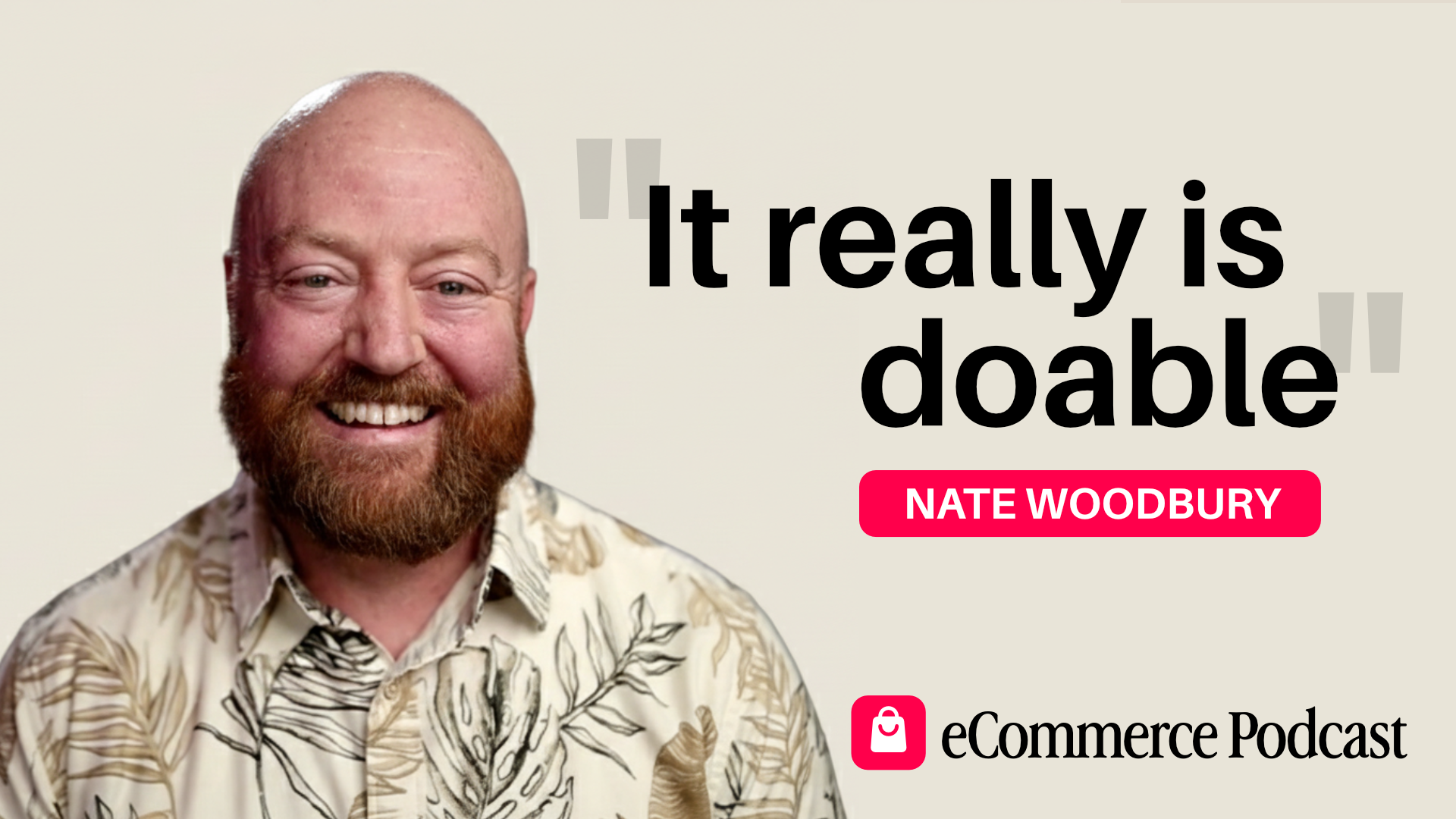
Nate Woodbury
Be The Hero Studios
Even more episodes...

Stop Guessing Your Site Structure and Fix Your SEO